
647 Total Views
There is a Turkish proverb that says a cup of coffee creates a friendship that lasts forty years. If a single cup of coffee carries that kind of weight, imagine what an entire cuisine holds. Turkish foods are not simply a collection of recipes—they are centuries of empire, migration, trade, and memory pressed into dough, grilled over coals, and poured into small tulip-shaped glasses. To eat Turkish food is to sit at a table that has been set and reset across three continents, shaped by the trade corridors of Anatolia, the palace kitchens of Istanbul, the culinary inheritance of the Byzantine world, the food traditions of the Levant and the Arabian Peninsula, and Anatolian farmers who have worked the same land for thousands of years.
This isn’t a list of dishes. It’s a journey—region by region—through one of the most layered, generous, and underrepresented cuisines on earth.
The Historic Roots of Turkish Foods
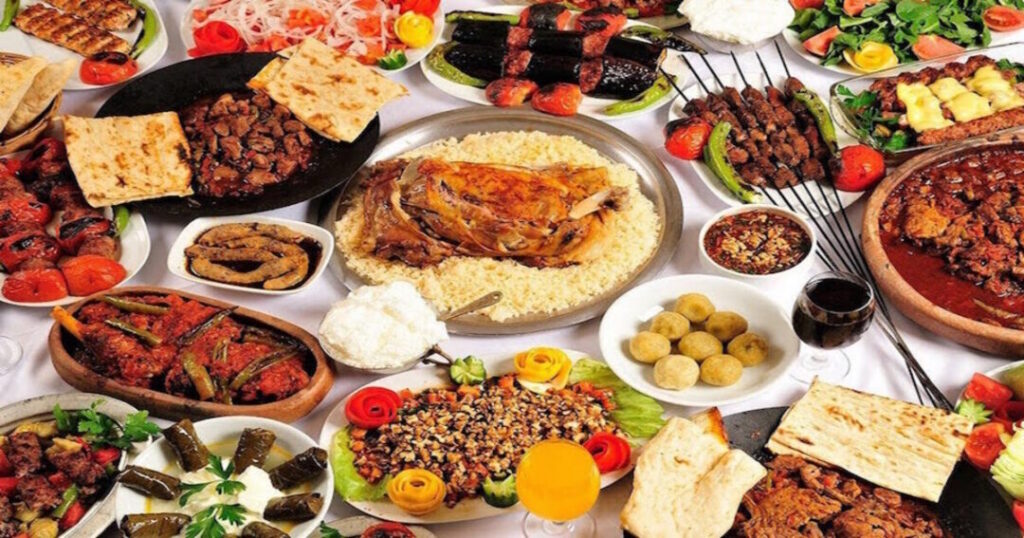
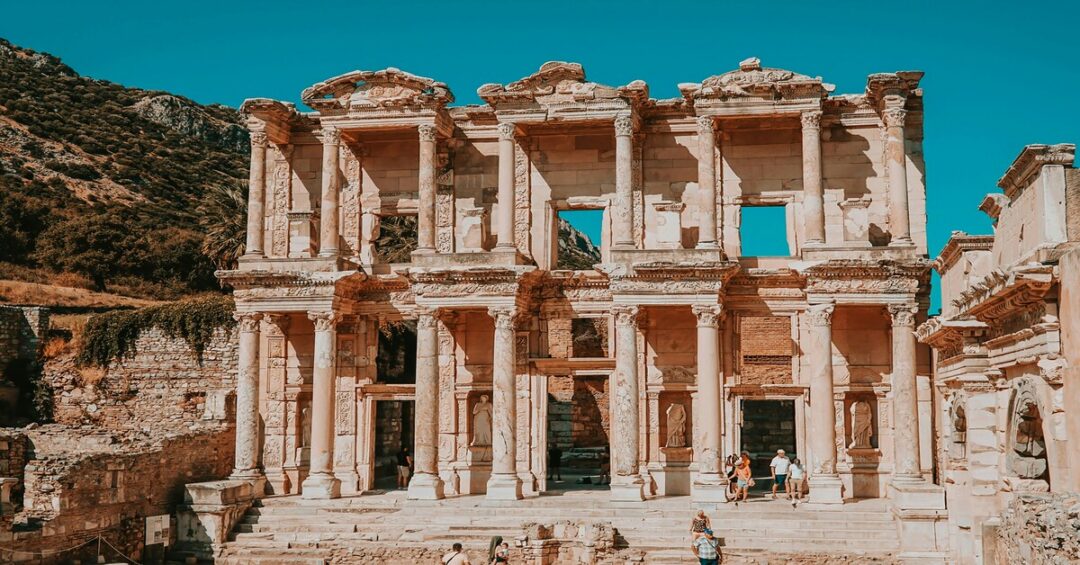
Turkish foods carry the full weight of their history in every dish. Turkish cuisine developed primarily from Ottoman cuisine, which synthesised Central Asian culinary traditions with Mediterranean and West Asian influences. The Ottoman Empire, at its height spanning from the Balkans and North Africa in the west to the Arabian Peninsula and the Caucasus in the east, ran its kitchens like embassies—absorbing, refining, and reinventing ingredients and techniques from every territory it administered.
The Topkapi Palace kitchens in Istanbul employed hundreds of cooks organised into specialist corps—one dedicated to soups, another to Turkish kebab, and another to Turkish sweets and pastries. Centuries of agricultural knowledge and culinary exchange moved through the empire’s own trade corridors—the routes connecting the Arabian Peninsula, Persia, and Central Asia to Istanbul. The culinary inheritance of the Byzantine world—the sophisticated food culture of the Eastern Roman cities the Ottomans inherited—shaped the way Istanbul approached spicing, preservation, and hospitality. Levantine techniques, West Asian ingredients, and Anatolian agricultural traditions all found their way into the same kitchen.
During the Ottoman period, Turkish cuisine played a central role in influencing the cuisines of the former Ottoman territories, particularly in the Balkans, the Levant, Mesopotamia, North Africa, the South Caucasus, and Crimea—a shared culinary heritage that communities across the region continue to claim, adapt, and celebrate as their own.
Modern Turkey inherited this complexity and added its own. Seven distinct geographical regions, each with different climates, coastlines, mountains, and agricultural traditions, produce cuisines so different from one another that a dish beloved in Istanbul can be utterly foreign on the southeastern border with Syria. Understanding popular Turkish food means understanding Turkey’s landscape first.
Istanbul & the Marmara Region: Where Empires Ate
Istanbul—seat of empire for over a millennium and the city that gave the world the first recorded coffeehouse—carries the weight of its history in every market stall and meyhane (tavern).
Meze—The Art of Beginning
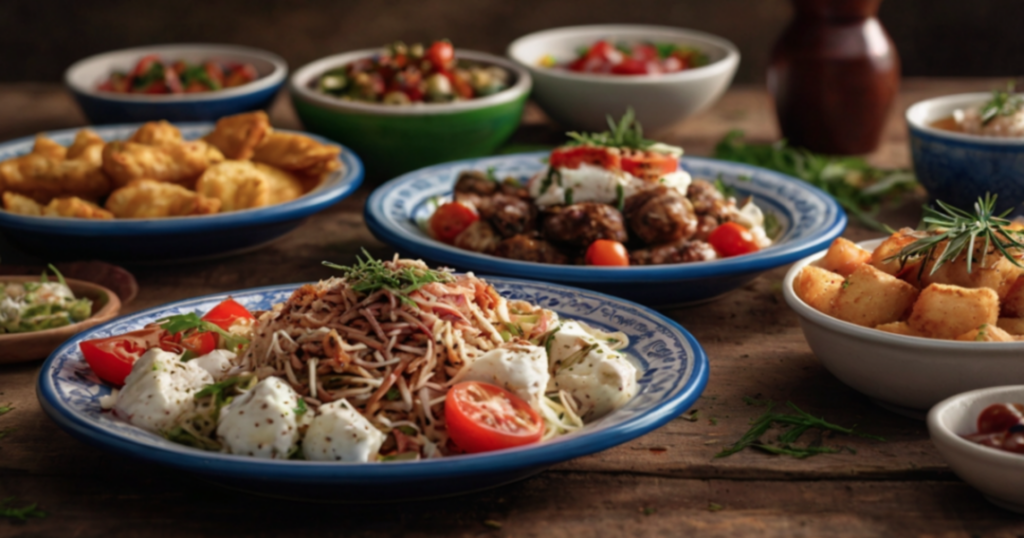
In Istanbul, no serious meal begins without meze—a spread of small dishes that can easily become the meal itself. Cold mezes include haydari (thick strained yoghurt with herbs), acılı ezme (spicy tomato and pepper spread), tarama (cured fish roe), stuffed grape leaves (zeytinyağlı yaprak dolması), and smoked eggplant dips. Hot mezes follow: börek (flaky pastry filled with cheese or meat), fried mussels, grilled halloumi.
The word “dolma” comes directly from the Turkish verb “dolmak”—”to fill. “It is one of the most fundamental expressions of Ottoman culinary philosophy: take an ingredient, hollow it, fill it with something more complex, and present it whole. Grape leaves, peppers, tomatoes, zucchini, and mussels—the Ottoman kitchen filled them all. Dolma is among the most enduring and famous Turkish dishes across the entire region.
İskender Kebab—The Dish That Invented the Vertical Spit
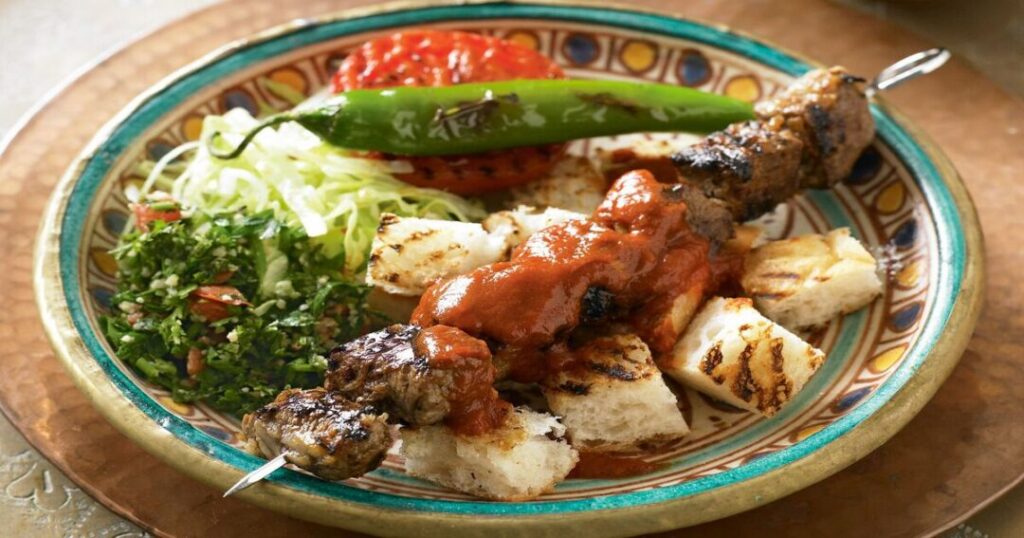
Technically a Bursa dish but beloved across the Marmara region, İskender kebab is one of the most historically significant and famous Turkish food entries in this entire guide. The vertical rotisserie was invented in the 19th-century Ottoman Empire, and dishes such as the Arab shawarma, Greek gyros, Canadian donair, and Mexican al pastor are all derived from it.
İskender Efendi of Bursa is credited with pioneering the vertical grilling method in 1867, serving the meat over torn pide bread with tomato sauce and browned butter—a dish his family still serves in Bursa today under the İskender brand, now in its fourth generation. Döner, in Turkish, means “to rotate”—and this single innovation changed the way the world eats meat.
İskender kebab takes that rotating meat, slices it thin, and lays it over torn pide soaked in tomato sauce and browned sheep’s butter, with yoghurt alongside. It is one of the richest, most indulgent, and most popular Turkish food experiences available—and it was born in a market bazaar in Bursa over 150 years ago.
Börek — Layers of History
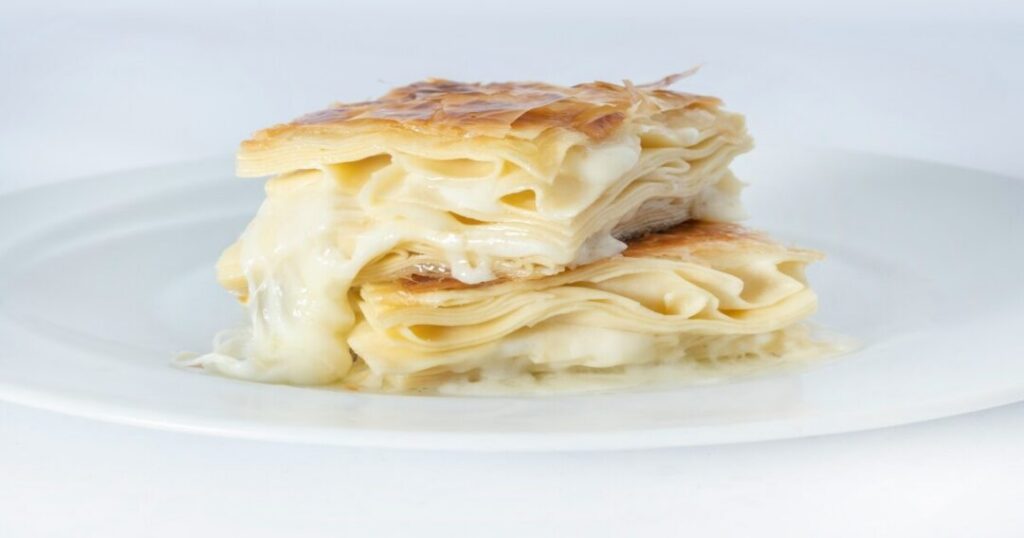
Börek is Turkey’s great all-day food—eaten for breakfast, as a snack, as a side dish, and as late-night comfort. At its core, it is phyllo pastry (yufka) layered with fillings and baked or fried until golden. The fillings vary: white cheese and parsley, spiced minced meat, potato, and spinach. The forms vary too: rolled into cylinders (sigara böreği), layered in trays (su böreği), and twisted into coils (kol böreği).
Börek is Istanbul at 7 AM—a börekçi opening its shutters, the smell of butter and baked cheese drifting into the street, people queuing before work with a glass of tea in one hand and a folded triangle of pastry in the other.
Also read: Spanish Street Food: The Ultimate Guide to Eating Like a Local in Spain
Southeastern Anatolia: The Kebab Heartland
The cuisine of southeastern Turkey—including Urfa, Gaziantep, Adıyaman, and Adana—is famous for its variety of Turkish kebabs, mezes, and dough-based Turkish desserts such as baklava. This is where Anatolian, Arab, and Kurdish food traditions have been in dialogue for centuries, along territories that border present-day Syria and Iraq.
Adana Kebab — Fire and Lamb
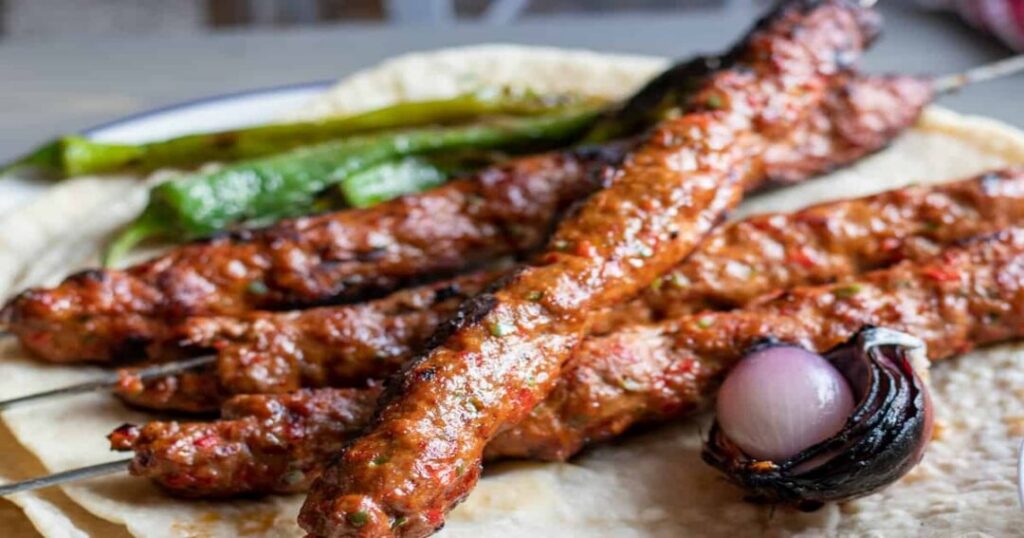
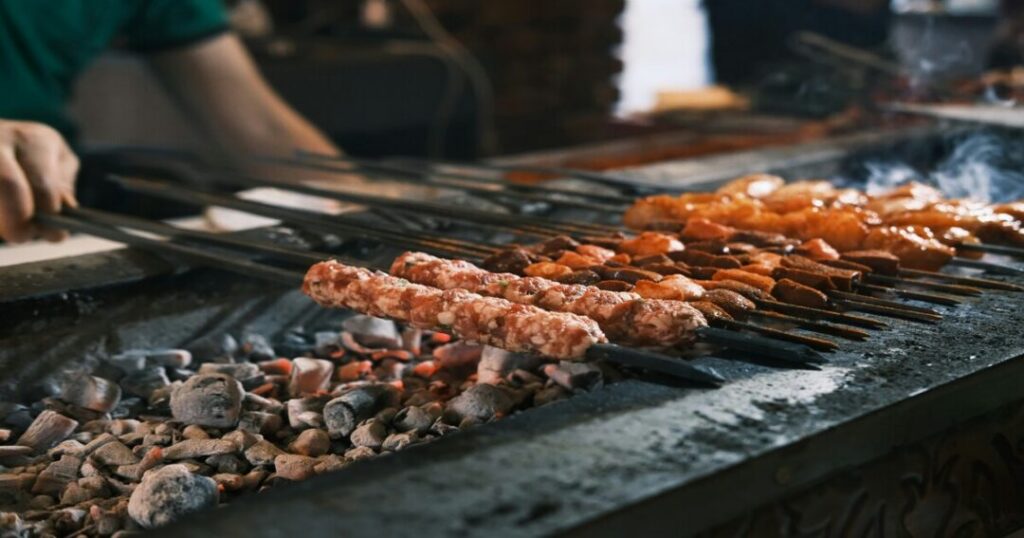
Adana kebab consists of a long strip of hand-minced meat, mounted on a wide iron skewer and grilled on an open mangal filled with burning charcoal. It takes its name from Adana, one of Turkey’s major cities in the Mediterranean region. According to food historians, this kebab was born from a centuries-long dialogue between Turkish and Arab culinary cultures—a dish that carries two traditions in a single skewer.
The key is in the technique: the meat—traditionally lamb and tail fat—is hand-minced, not machine-ground. The fat-to-meat ratio, the spicing, the width of the skewer, and the temperature of the charcoal—all of it is craft passed through generations of ustalar (master cooks). In Adana, ordering a kebab is not ordering food. It is asking someone to demonstrate their lineage.
Gaziantep Baklava — The Standard by Which All Others Are Judged
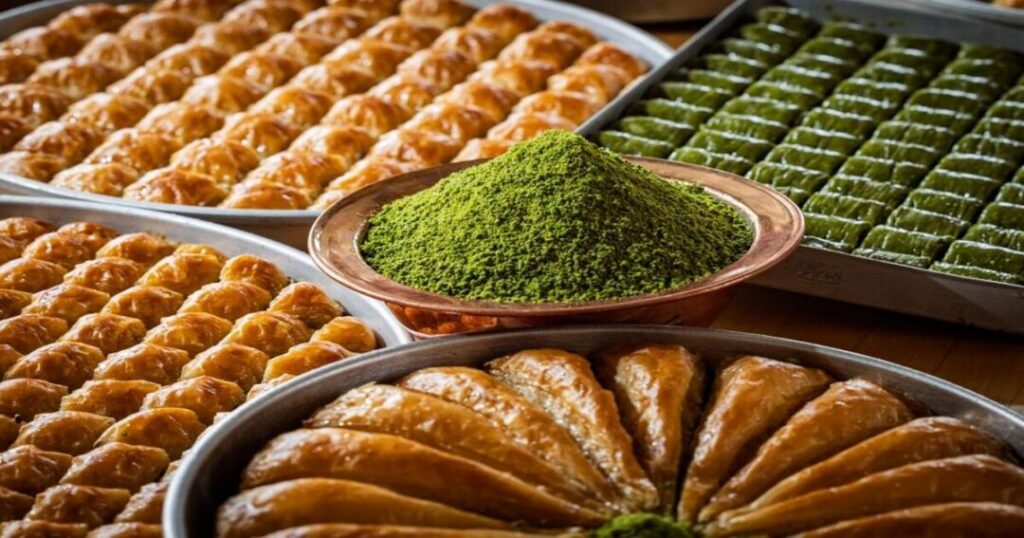
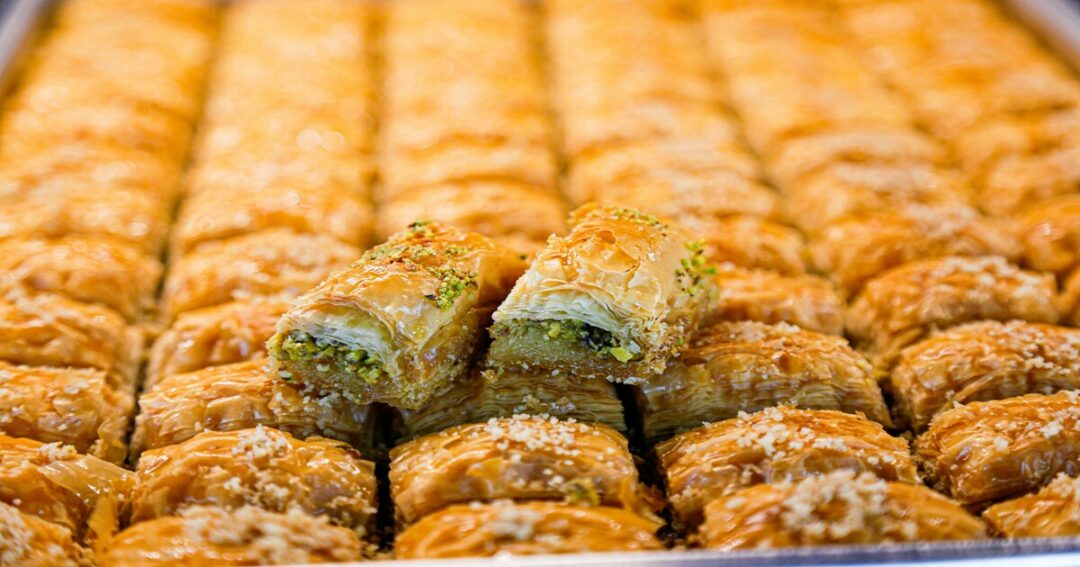
Gaziantep is to baklava what Naples is to pizza—except Gaziantep’s claim is older, better documented, and backed by a UNESCO Creative City of Gastronomy designation the city received in 2015. The city’s pistachio orchards produce the Antep fıstığı variety—a small, intensely flavored pistachio that is the non-negotiable defining ingredient of authentic southeastern baklava.
Although the dessert’s ultimate origin is disputed—with Turkic Central Asian, Ottoman, and Levantine traditions all contributing to its development—the earliest known written reference to baklava appears in a poem by the 15th-century Anatolian mystic Kaygusuz Abdal. In Gaziantep, the craft of rolling yufka (filo) so thin you can read through it is a skill that apprentice bakers spend years mastering before they are trusted with the filling. The dessert is layered—dozens of paper-thin sheets brushed with butter, filled with ground pistachio, baked until golden, then drenched with a light sugar syrup.
Gaziantep baklava stands among the most celebrated Turkish sweets on earth—and the city itself has more baklava shops per street than almost any place in the world.
Lahmacun—One of the Great Flatbreads of the Region
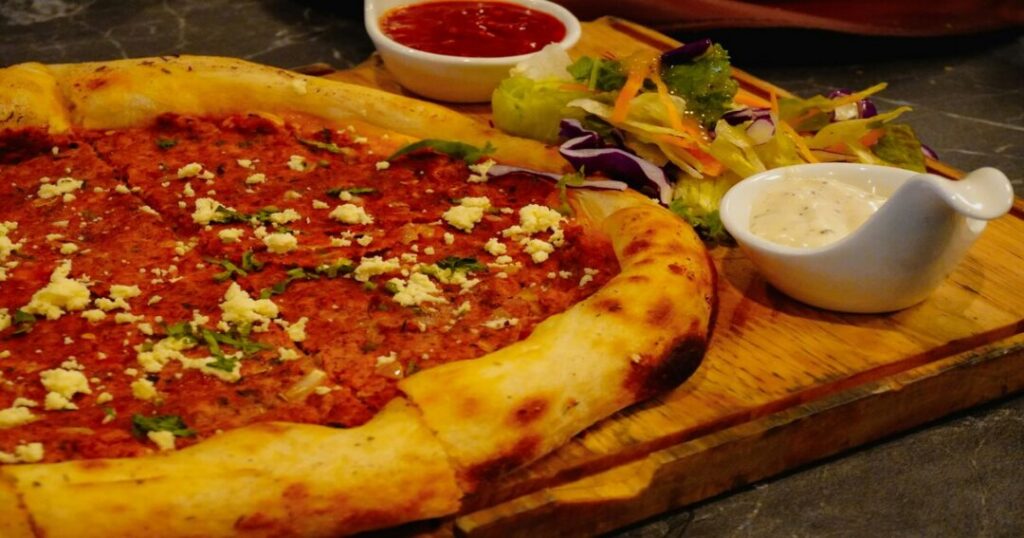
Thin, crispy, and about the size of your arm span, lahmacun is one of the great flatbreads of Anatolia and the broader Levant. Minced meat (lamb or beef), tomatoes, onion, parsley, and spices are spread paper-thin on unleavened dough and baked in a wood-fired oven in under two minutes. It is served with a squeeze of lemon and fresh parsley, rolled up and eaten standing.
The dish reflects the deep culinary conversation between Anatolian and Levantine food traditions—its exact origins are claimed by multiple communities along this cultural corridor, which is precisely what makes it significant. It belongs to a shared table, not a single nation.
Black Sea Region: The Coast That Feeds Itself
The Black Sea coast is Turkey’s green lung—humid, rainy, forested, and fertile in ways that the rest of the country is not. It is a world apart from any other Turkish regional cuisine, and it knows it.
Hamsi—The Anchovy That Built a Culture
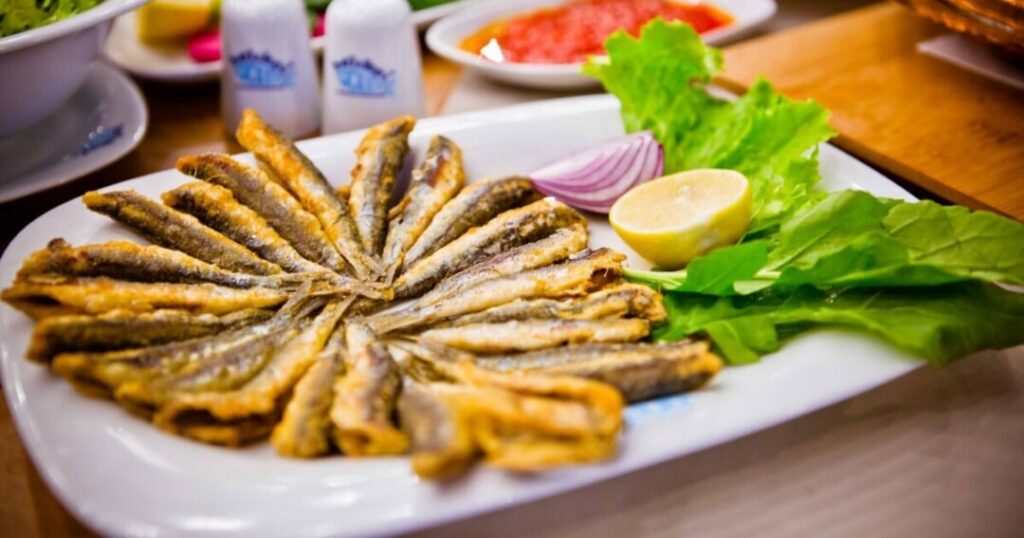
The cuisine of the Black Sea Region uses fish extensively, especially the Black Sea anchovy (hamsi), and includes maize-based dishes that reflect the region’s own agricultural rhythms. Hamsi is not merely a fish in this region—it is an identity. The people of the Black Sea are called hamsi people. There are over forty recorded ways to cook it: pan-fried in cornmeal, baked in bread (hamsili ekmek), made into pilaf, or turned into dessert (hamsili tatlı exists and is eaten with pride).
The anchovy season runs from November to February, and during those months, the Black Sea coast operates on its own calendar. Restaurants change their menus. Families gather for hamsi fries. The smell of cornmeal and fish oil becomes the smell of winter itself.
Muhlama—Cornmeal, Butter, and Cheese
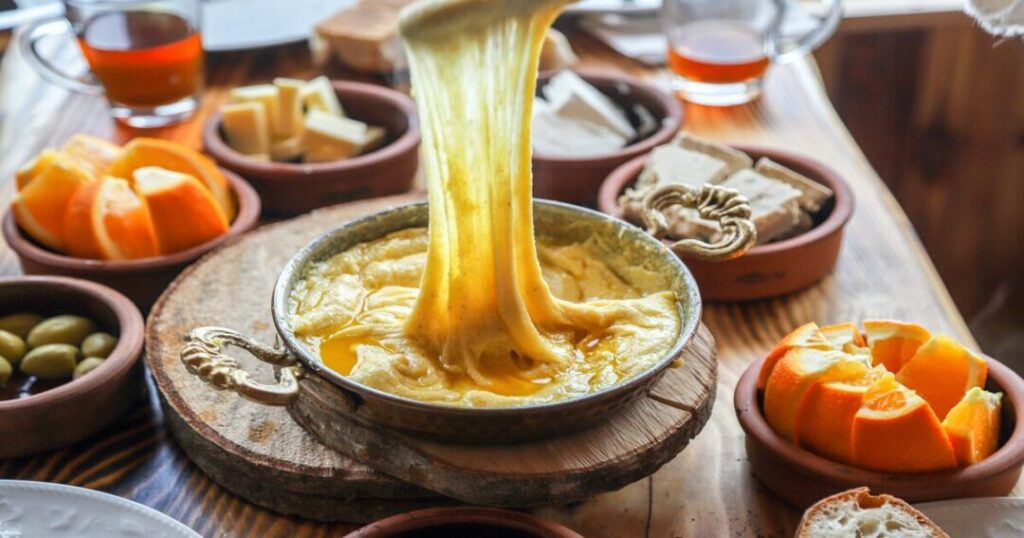
Muhlama (also spelt “mıhlama”) is the Black Sea’s most iconic contribution to Turkish meals: cornmeal cooked down with butter and local cheese until it becomes a molten, stretchy, impossibly rich dish—closer to a cheese fondue than anything else. It is eaten with bread on a cold morning, preferably while looking at mist-covered mountains.
It is not subtle. It is not light. It is exactly what the Black Sea climate demands.
The Aegean Region: Olive Oil, Herbs, and the Oldest Table
The Aegean coast of Turkey—İzmir, Bodrum, and Çeşme—is where Turkish foods become most clearly Mediterranean in character. Olive oil replaces butter. Fresh herbs replace heavy spices. The sea provides protein; the land, with its ancient olive groves and wild herb fields, provides everything else.
Zeytinyağlılar — The Olive Oil Dishes
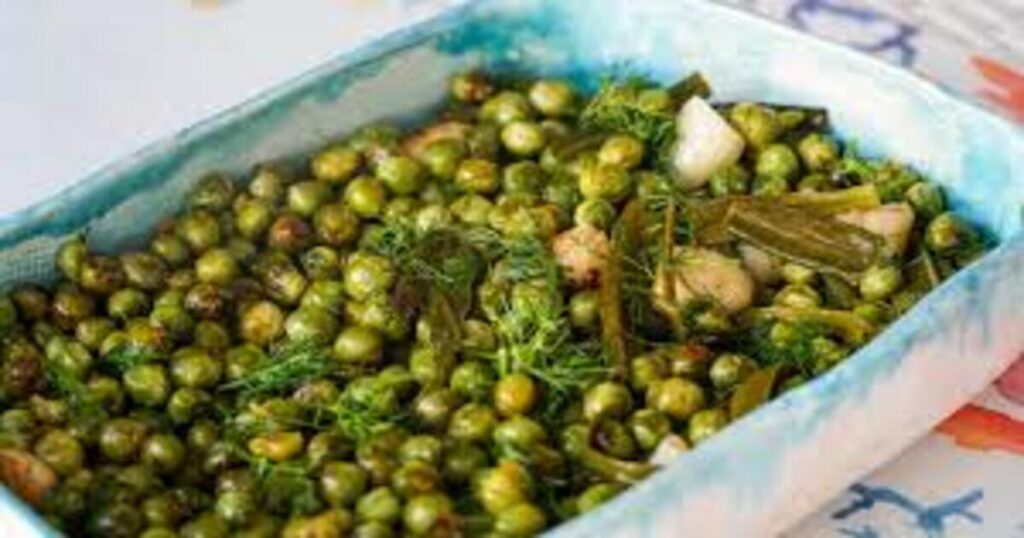
Zeytinyağlı means “cooked in olive oil,” and in the Aegean, it is an entire philosophy of cooking. Stuffed grape leaves with rice and herbs, braised artichokes, white beans in tomato, and imam bayıldı (eggplant stuffed with onion and tomato)—all served at room temperature, dressed with good oil, and eaten slowly. These popular Turkish food preparations are among the healthiest and most ancient in the entire region.
İmam bayıldı—literally “the imam fainted,” though many Turks prefer the interpretation “the imam was overcome with delight”—is one of the most famous Turkish dishes of the Aegean. An eggplant, split and filled with a slow-cooked mixture of onion, tomato, and olive oil, is then baked until it collapses into itself. The name is debated; the flavour is not.
Aegean Herbs & Mezes
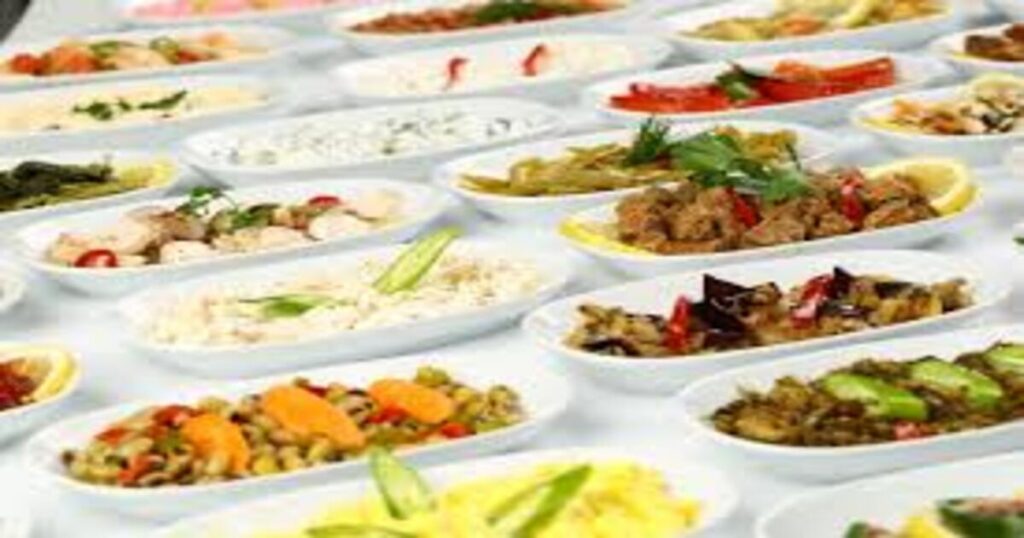
The Aegean coastline produces wild herbs—purslane, samphire, wild fennel, and capers—that appear in no other regional cuisine. The Aegean meze table is gentler than Istanbul’s, lighter than the southeast’s: herb-heavy salads, fresh çiğ köfte (bulgur and spice), grilled octopus, and sea bass with pomegranate. These are Turkish meals shaped entirely by season and shoreline.
Also read: Famous Korean Food: A Cultural Guide to Eating Authentically in Korea
Central Anatolia: The Heartland’s Comfort Food
Central Anatolia—Konya, Kayseri, and Ankara—is Turkey’s breadbasket and its culinary soul. This is where the oldest Anatolian cooking traditions survive intact, shaped by altitude, wheat, and the particular generosity of landlocked communities.
Mantı—The Hand-Folded Dumpling of Central Anatolia
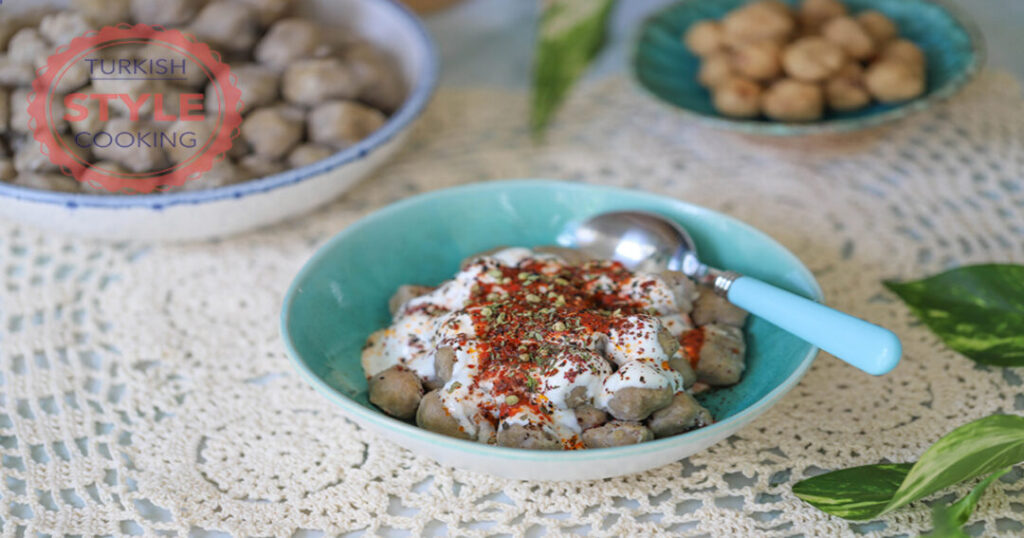
Mantı is a hand-folded dumpling of minced lamb sealed in thin dough—one of the oldest and most labour-intensive famous Turkish dishes in Anatolian cooking. A Kayseri mantı is the size of your thumbnail; each one is hand-folded and filled with the tiniest possible pinch of spiced lamb mince. They are boiled and served under a waterfall of garlic yoghurt, browned butter, dried mint, and red pepper flakes.
The cultural logic matters: in Central Anatolia, the smaller the mantı, the greater the skill of the cook. A bride’s culinary worth was once partly judged by how many she could fold per hour—forty to a spoon was the standard of excellence. This is a dish that requires patience, precision, and community—and it remains one of the most deeply significant popular Turkish food traditions in the country.
Testi Kebab—Clay Pot Cooking from Cappadocia
In Cappadocia, testi kebab—pottery kebab—arrives at the table in a sealed clay pot. The meat, vegetables, and spices have been slow-cooked inside for hours. The waiter cracks it open at the table with a small hammer. The steam carries an aroma that has been building since morning.
The pottery tradition is ancient — Cappadocian clay has been used for cooking vessels since Hittite times. This dish is theatre and continuity in one.
What to Drink: The Full Turkish Table
No guide to Turkish foods is complete without the drinks that frame and complete the meal.
Çay—Tea Above All
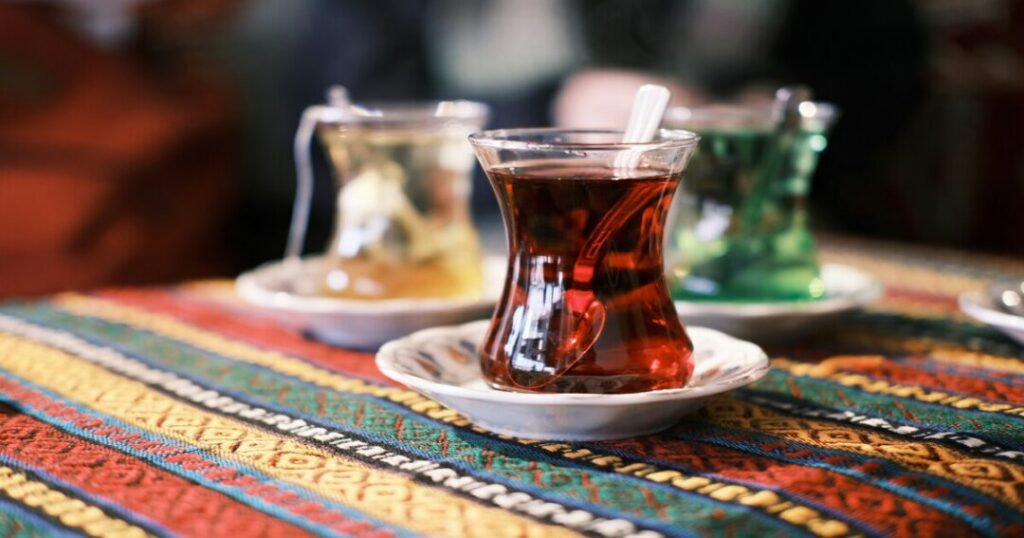
Turkey has the highest per-capita tea consumption in the world, with an annual total consumption of over 3 kilograms per person. Since the mid-20th century, most of the tea produced in Turkey has come from Rize Province on the Eastern Black Sea coast, where the humid climate produces a distinctly strong, amber-colored brew. Tea is not a preference in Turkey—it is a social framework. It opens negotiations, marks the end of a meal, and signals that a conversation is worth continuing. Served in small tulip-shaped glasses, always with two sugar cubes on the saucer.
Türk Kahvesi—Coffee With UNESCO Status
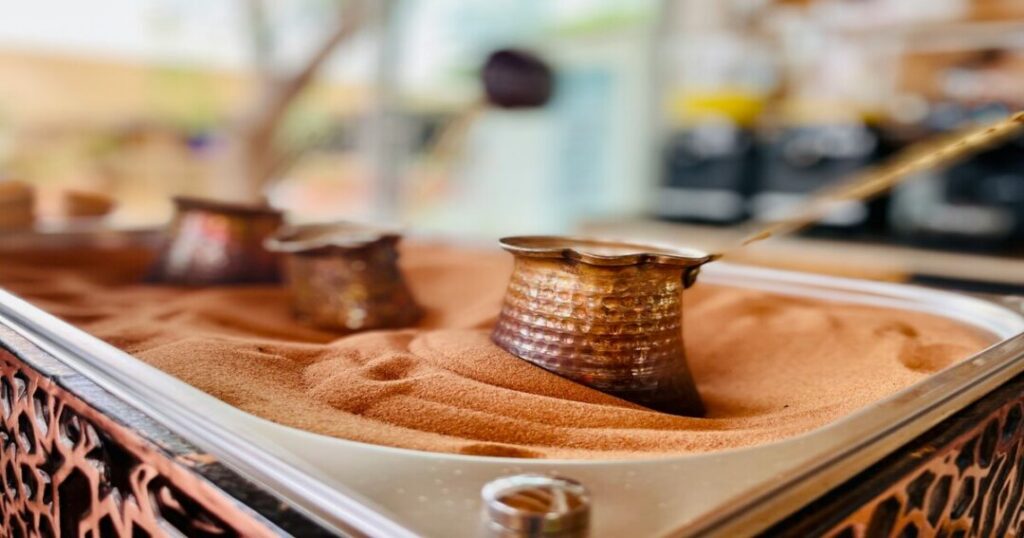
Turkish coffee culture and tradition were inscribed in 2013 on the UNESCO Representative List of the Intangible Cultural Heritage of Humanity—the first beverage in history to receive this designation. Finely ground coffee beans are brewed slowly in a small copper cezve with water and sugar, then poured—grounds and all—into tiny porcelain cups. You drink slowly, stop before the grounds, and, according to tradition, turn the cup over when finished so the grounds can be read for fortune.
Coffee was introduced to the Ottoman Empire in the 16th century from Yemen, and the first coffeehouse in Istanbul opened in 1554–55 during the reign of Suleiman the Magnificent. Within decades, hundreds of coffeehouses operated across the city—social institutions where men gathered to play backgammon, debate ideas, and conduct commerce. The proverb endures: a cup of coffee creates a friendship that lasts forty years.
Ayran—The Ancient Drink
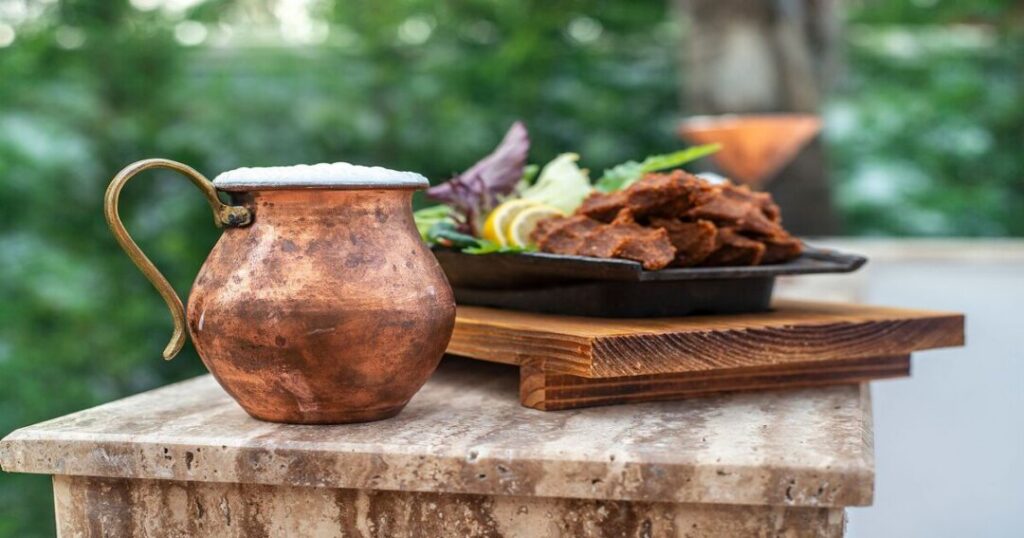
Ayran was developed in Central Asia by Turkic tribes and mentioned in the 11th-century Dīwān Lughāt al-Turk—one of the earliest comprehensive dictionaries of the Turkic languages. It is yoghurt thinned with iced water and lightly salted. Simple, ancient, and irreplaceable alongside grilled meat—the natural counterpart to the heat of an Adana kebab. It is one of Turkey’s national drinks and one of the region’s oldest living food traditions.
Rakı—The National Spirit
Rakı is made of twice-distilled grape pomace flavoured with aniseed. It is the national drink of Turkey, especially popular in the coastal regions and in the meyhane culture of Istanbul. Add cold water, and it turns milky white—earning its nickname aslan sütü (“lion’s milk”). Rakı is never drunk alone; it belongs to long tables, slow evenings, and conversations that run past midnight.
First-Timer’s Guide to Turkish Food
If you are encountering Turkish foods for the first time—at a restaurant, in a market, or while traveling through Turkey—here is where to begin:
- Start here: A proper Turkish breakfast (kahvaltı) includes cheeses, olives, tomatoes, cucumbers, eggs, honey, clotted cream (kaymak), and freshly baked bread. It is the most generous introduction to Turkish food culture available
- Order this by region: İskender kebab in Bursa, Adana kebab in the southeast, mantı in Kayseri, hamsi on the Black Sea coast—each dish earns full meaning in its home territory
- Don’t skip the meze spread before a main course. In Turkey, the appetisers are frequently the main event
- Drink this: Begin with çay, end with türk kahvesi. Have ayran alongside your kebab
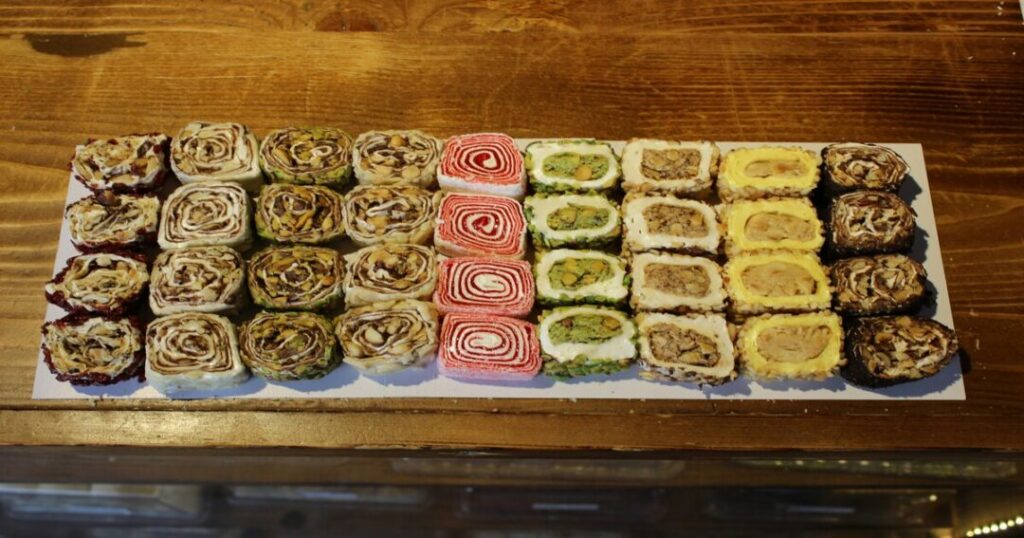
- For Turkish desserts: Gaziantep baklava for the definitive version; sütlaç (baked rice pudding with a caramelised top) for something gentler; künefe (cheese-filled shredded wheat soaked in syrup) for something you will not stop thinking about; lokum (Turkish delight—rose, pistachio, and mastic) for something to carry home
Also read: Experience the Magic of Ramzan/Eid 2026 Through Travel
Best Time to Visit Turkey for Food
- October to February is ideal—cooler temperatures, seasonal produce, and the quiet between tourist surges means restaurant experiences are more authentic and unhurried
- December brings the Margazhi season to Istanbul’s cultural calendar and the height of olive harvest in the Aegean
- Spring (April–May) is herb season in the Aegean and Mediterranean regions—wild purslane, fennel, and samphire appear on tables that won’t carry them at any other time of year
- Ramadan is a powerful time to experience Turkish food culture—the iftar table (the meal breaking the fast) is one of the most generous and communal expressions of turkish meals you will encounter
How to Reach Turkey
- By Air: Istanbul Airport (IST) and Sabiha Gökçen (SAW) both serve Istanbul; Gaziantep (GZT), Adana (ADA), Trabzon (TZX), and Izmir (ADB) serve the regions covered in this guide
- Between regions: Domestic flights are the most practical for covering Istanbul to Gaziantep or Trabzon; intercity buses are extensive and comfortable for shorter routes
- Within cities: Metro and tram systems in Istanbul; taxis and app-based rides everywhere
FAQs About Turkish Foods
2. What makes Turkish cuisine distinct from other West Asian or Mediterranean cuisines?
Turkish cuisine sits at the intersection of Central Asian, West Asian, Balkan, and Mediterranean traditions without belonging fully to any of them. Its range is extraordinary: from the butter-and-cheese richness of the Black Sea coast to the herb-lightness of the Aegean to the charcoal intensity of the southeastern kebab belt. What makes it distinctive is the layering — nomadic Turkic techniques (yoghurt, dried meat, dairy), Ottoman palace refinement, Byzantine culinary inheritance, and hyper-local Anatolian agricultural knowledge, all operating simultaneously within one national cuisine.
3. What is the cultural significance of Turkish tea and coffee?
Tea (çay) and coffee (türk kahvesi) are not beverages in Turkey — they are social architecture. Turkey has the highest per-capita tea consumption in the world. Turkish coffee was inscribed on UNESCO's Intangible Cultural Heritage list in 2013 — the first beverage globally to receive this recognition — acknowledging its role in hospitality, ceremony, and community cohesion. Offering tea or coffee to a guest is an act of welcome that carries genuine cultural weight. Coffee cups are traditionally read for fortune after the drink is finished, a practice rooted in centuries of coffeehouse culture.
4. Which region of Turkey has the best food?
No honest answer is possible because the regions are genuinely incomparable. Gaziantep is widely considered Turkey's greatest food city — its baklava, kebabs, and regional specialities earned it a UNESCO Creative City of Gastronomy designation in 2015. But the Black Sea coast's hamsi culture, the Aegean's olive oil dishes, Central Anatolia's mantı, and Istanbul's meze tradition each represent peaks that the others cannot replicate. The most useful answer: visit each region and eat specifically what it is known for.
5. What are the must-try Turkish desserts and Turkish sweets?
Beyond the famous baklava, essential Turkish desserts include: künefe (hot, cheese-filled shredded wheat soaked in sugar syrup, a specialty of the south), sütlaç (baked rice pudding with a caramelised top), kazandibi (milk pudding with a deliberately scorched base), lokum (Turkish delight — rose, pistachio, and mastic are the classic varieties), and ashure (a porridge of grains, dried fruits, and nuts with deep significance in Islamic and Anatolian tradition).
6. Is Turkish food heavily spiced?
This depends entirely on the region. Istanbul and the Aegean use spices moderately — flavour comes from ingredient quality and technique. The southeastern kitchen (Adana, Gaziantep, Urfa) uses dried chilli, cumin, and sumac more assertively. Urfa biber — a dark, smoky, mildly spicy dried pepper from Şanlıurfa — is one of the most significant spice contributions of Anatolian cuisine to the global pantry. In general, turkish meals are more aromatic and herb-driven than they are hot.