
836 Total Views
Delhi moves fast. The traffic, the noise, the endless scroll of the city — it catches up with you. If you’ve been searching for national parks near me to escape the capital’s chaos, you don’t have to travel far. Some of North India’s most rewarding wildlife destinations sit within a few hours’ drive from Delhi, offering everything from Bengal tiger sightings and migratory bird congregations to river dolphin safaris and dense Himalayan foothills.
Whether you’re planning a weekend getaway or a longer wildlife break, these national parks deliver unforgettable experiences without demanding a week-long itinerary.
What are the Best Tips for Visiting National Parks Near Delhi?
- Book safaris in advance — Ranthambore and Jim Corbett have capped daily visitor numbers, and zones fill up weeks ahead during peak season (October to February)
- Best season overall—Winter (October to March) brings pleasant temperatures and peak wildlife activity across most parks; summer is better for tiger sightings when water sources concentrate animals
- What to carry — Binoculars, a telephoto lens if you’re shooting, layered clothing for early morning drives, and water
- Respect park rules—Stay in the vehicle during safaris, maintain silence near wildlife, and carry out all waste
- Check zone availability — Parks like Corbett and Ranthambore have multiple zones; some are seasonally restricted
Sultanpur National Park — Best National Park for Birdwatching Near Delhi
Distance from Delhi: ~50 km
Nearest Airport: Indira Gandhi International Airport, New Delhi (~35 km from the park)
Nearest Railway Station: Garhi Harsaru Junction (~10 km)
Best Time to Visit: October to March
Located in the Gurugram district of Haryana, Sultanpur is one of the most accessible national parks near Delhi for a day trip or quick weekend escape. It’s a designated Ramsar Site, recognized for its wetland ecosystem that supports over 250 species of resident and migratory birds.
Why Visit
- Spot flamingos, pelicans, painted storks, demoiselle cranes, and numerous waterfowl species during winter months
- Four watchtowers and well-maintained raised walkways make observation easy and accessible
- Ideal for families, photographers, and first-time wildlife visitors
- Low-effort day trip from Delhi — reachable in under an hour
Keoladeo National Park — UNESCO World Heritage Birdwatching Destination
Distance from Delhi: ~180–200 km
Nearest Airport: Agra Airport (~56 km) or Delhi IGI (~200 km)
Nearest Railway Station: Bharatpur Junction (~5 km)
Best Time to Visit: October to February
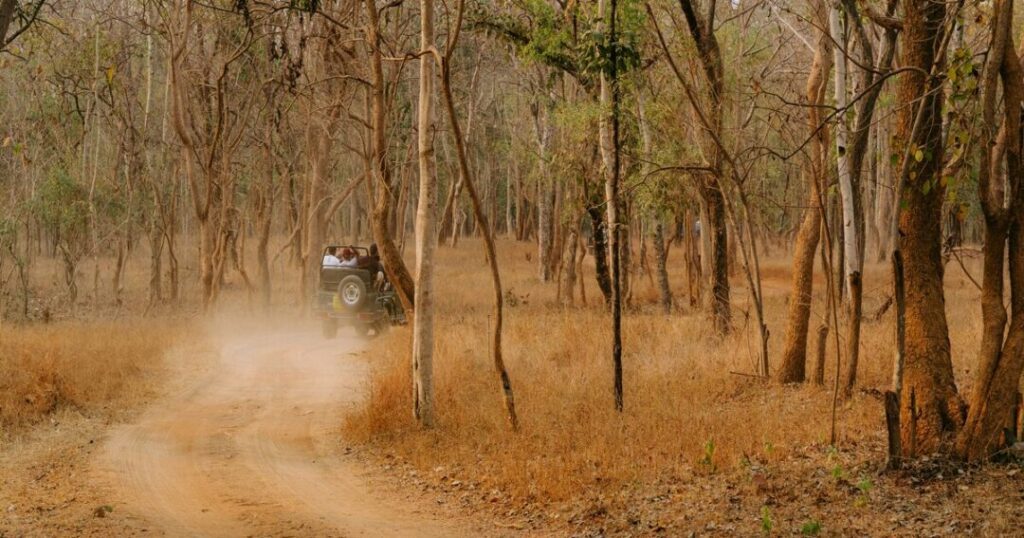
Keoladeo National Park in Bharatpur, Rajasthan, is one of India’s most celebrated national parks—and one of the world’s great bird sanctuaries. Inscribed as a UNESCO World Heritage Site in 1985, this man-made and man-managed wetland spans approximately 29 sq km and shelters over 370 species of birds, including migratory visitors from Central Asia, Afghanistan, and Siberia.
Why Visit
- Navigate the park by cycle, rickshaw, or on foot—no motorised safaris here, which keeps the experience genuinely intimate
- Spot painted storks, sarus cranes, rare Siberian cranes (winter), and dozens of aquatic bird species
- One of the finest wildlife photography destinations in North India
- Trained rickshaw pullers double as knowledgeable birding guides—a uniquely local experience
Also read: UNESCO’s Newest Geoparks: Remarkable New Sites Added to the Global Network
Ranthambore National Park — Top Tiger Safari Destination Near Delhi
Distance from Delhi: ~380 km by road
Nearest Airport: Jaipur International Airport (~160–180 km)
Nearest Railway Station: Sawai Madhopur (~10–15 km)
Best Time to Visit: October to June (park partially closes during monsoon)
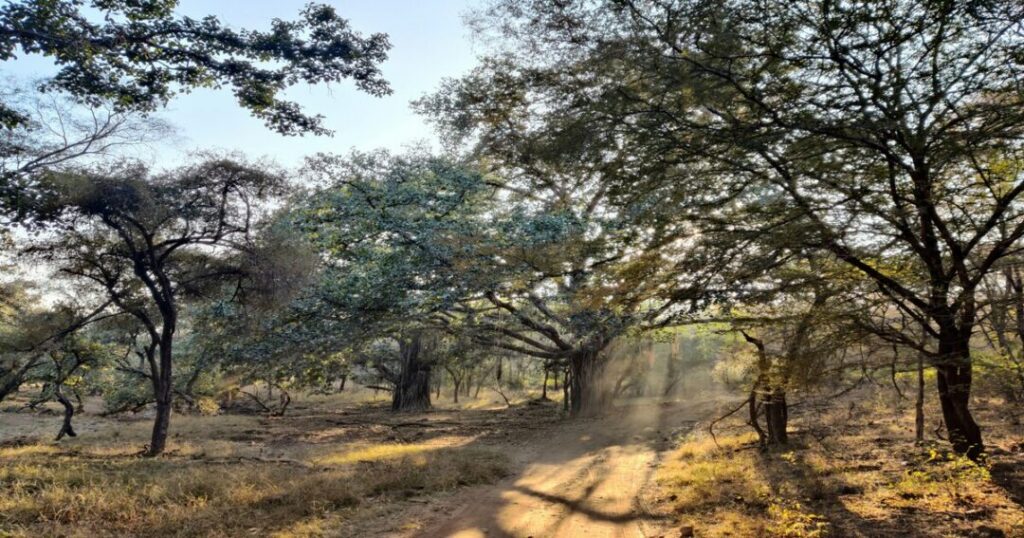
Ranthambore is arguably the most iconic of all national parks accessible from Delhi for wildlife enthusiasts. Set against the dramatic backdrop of the ancient Ranthambore Fort, the reserve’s lakes, ruins, and dense forests have made it one of India’s most photographed tiger habitats.
Why Visit
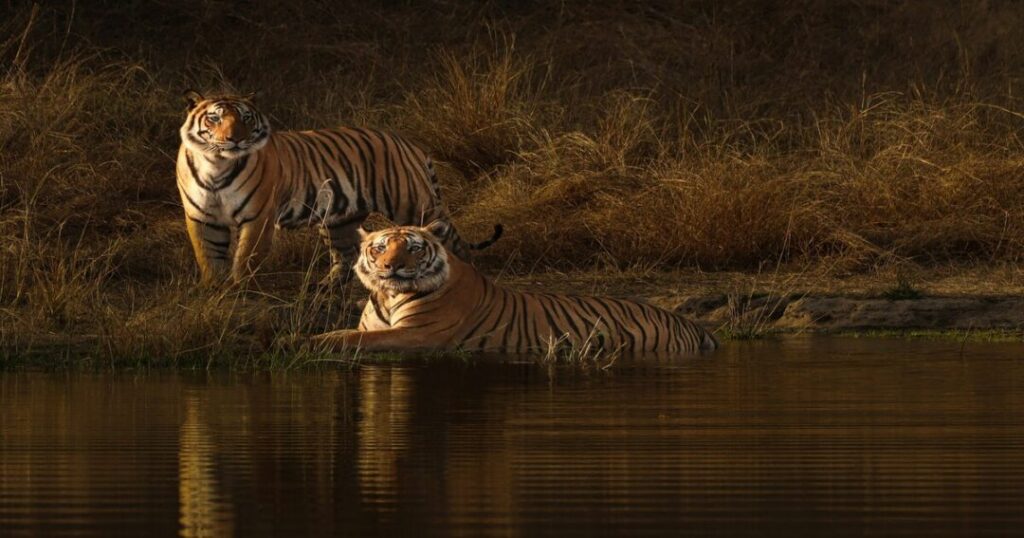
- One of the best places in India for Bengal tiger sightings in the wild
- The historic Ranthambore Fort sits within the reserve—a rare combination of wildlife and heritage
- Jeep and canter safaris cover multiple zones, each with different terrain and wildlife density
- Also shelters leopards, sloth bears, marsh crocodiles, chital, and over 300 bird species
Sariska National Park — A Conservation Success Story in the Aravallis
Distance from Delhi: ~200 km
Nearest Airport: Jaipur International Airport (~120 km)
Nearest Railway Station: Alwar Junction (~37 km)
Best Time to Visit: October to June
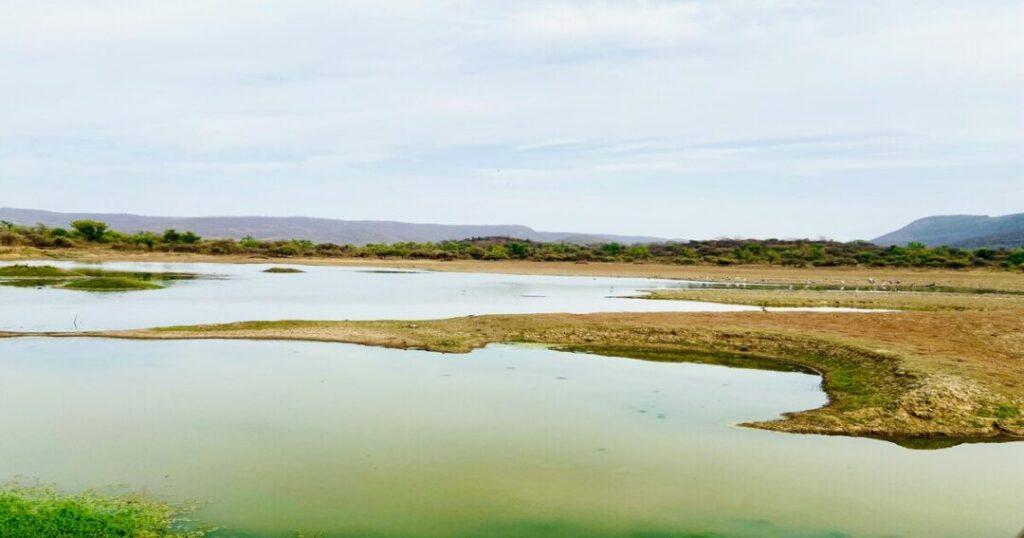
Sariska sits in the rugged terrain of the Aravalli Hills in Rajasthan and carries one of Indian conservation’s most compelling comeback stories. After losing its entire tiger population to poaching in the early 2000s, Sariska became the first reserve in India to successfully reintroduce tigers—a milestone for Project Tiger and a landmark moment in wildlife conservation globally.
Why Visit
- Watch tigers in a landscape of rocky ridges, valleys, and dry deciduous forest—visually distinct from central India’s parks
- Ancient temples lie within the reserve itself, including the Pandupole and Neelkanth temples
- Leopards, hyenas, jackals, sambar, and nilgai are regularly sighted
- Closer to Delhi than Ranthambore, making it a more practical option for a short weekend trip
Also read: Ranthambore National Park Travel Guide 2026: Safari, Tickets & Timings
National Chambal Sanctuary — India’s Most Unique Aquatic Wildlife Reserve
Distance from Delhi: ~250 km
Nearest Airport: Agra Airport (~70 km from the sanctuary’s Agra zone)
Nearest Railway Station: Agra Cantonment or Dholpur (~30–40 km)
Best Time to Visit: October to March
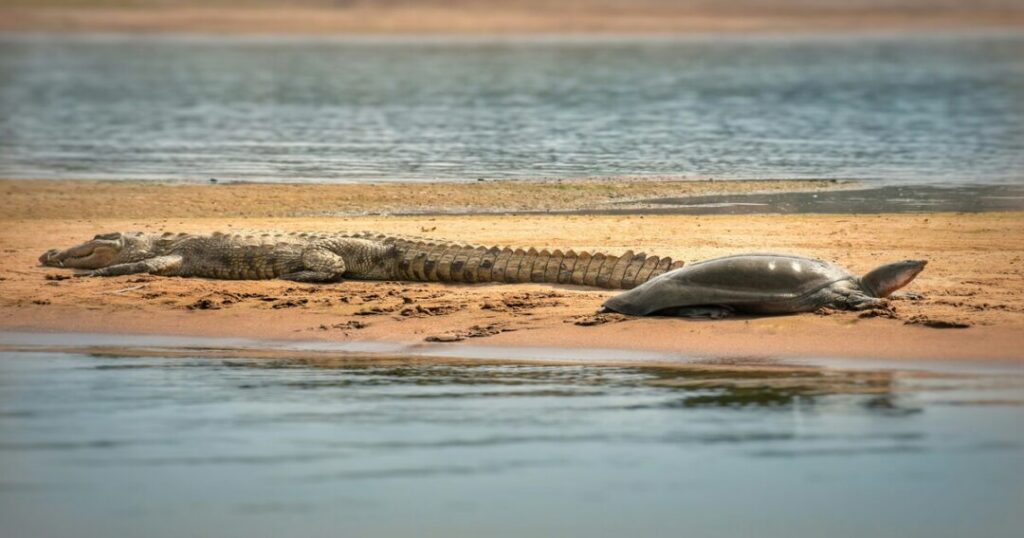
The National Chambal Sanctuary offers something none of the other national parks near me searches typically surface—an entire protected ecosystem built around a river. Stretching across Rajasthan, Madhya Pradesh, and Uttar Pradesh along the Chambal River, this sanctuary protects one of India’s cleanest river stretches and its remarkable aquatic biodiversity.
Why Visit
- Home to the critically endangered gharial, one of the rarest crocodilians on earth
- Spot Gangetic river dolphins, marsh mugger crocodiles, Indian skimmers, and over 300 bird species
- Boat safaris along the Chambal offer a genuinely rare wildlife experience unavailable elsewhere in North India
- [STAT: Chambal River is one of the last free-flowing, relatively unpolluted rivers in the Gangetic plains—source: Wildlife Institute of India / WWF India]
Kalesar National Park — The Offbeat Shivalik Forest Escape
Distance from Delhi: ~250 km
Nearest Airport: Chandigarh Airport (~80 km)
Nearest Railway Station: Yamunanagar-Jagadhri (~30 km)
Best Time to Visit: October to March
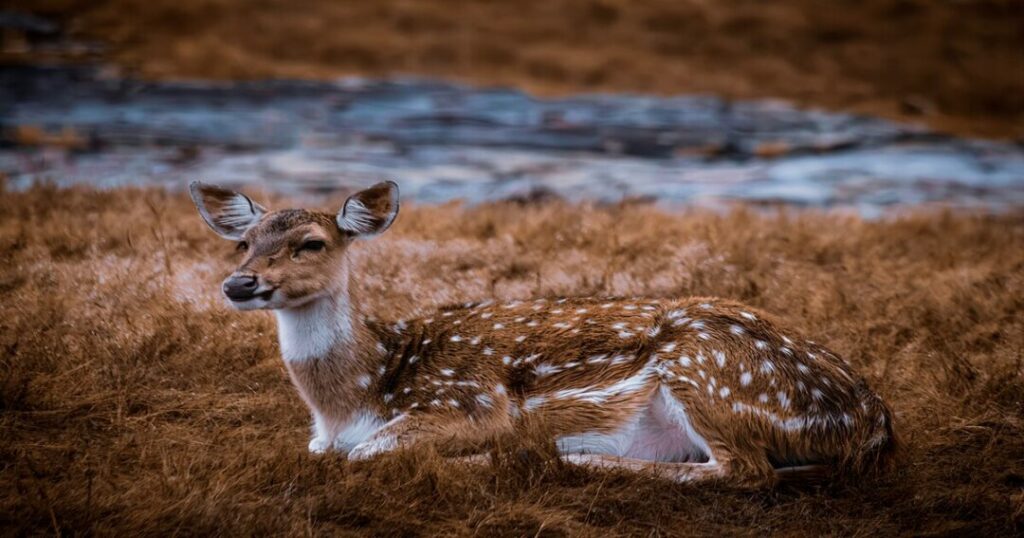
Tucked against the Shivalik Range in Haryana near the Himachal Pradesh border, Kalesar is the least visited park on this list—which is precisely its appeal. Dense sal forests, minimal tourist footfall, and a genuine sense of wilderness make Kalesar a strong choice for travelers who want the atmosphere of a serious wildlife destination without the crowds.
Why Visit
- Elephants, leopards, sambar deer, wild boar, and Indian pangolin have all been recorded here
- One of the few places near Delhi where elephants roam in their natural habitat
- Rich birdlife across multiple forest layers, including hornbills and pied kingfishers
- An unhurried pace compared to more popular reserves
Jim Corbett National Park — India’s Oldest National Park and a Tiger Haven
Distance from Delhi: ~250–260 km
Nearest Airport: Pantnagar Airport, Uttarakhand (~80 km) or Delhi IGI (~295 km)
Nearest Railway Station: Ramnagar (~12–15 km)
Best Time to Visit: November to June (Dhikala zone closes July–October)
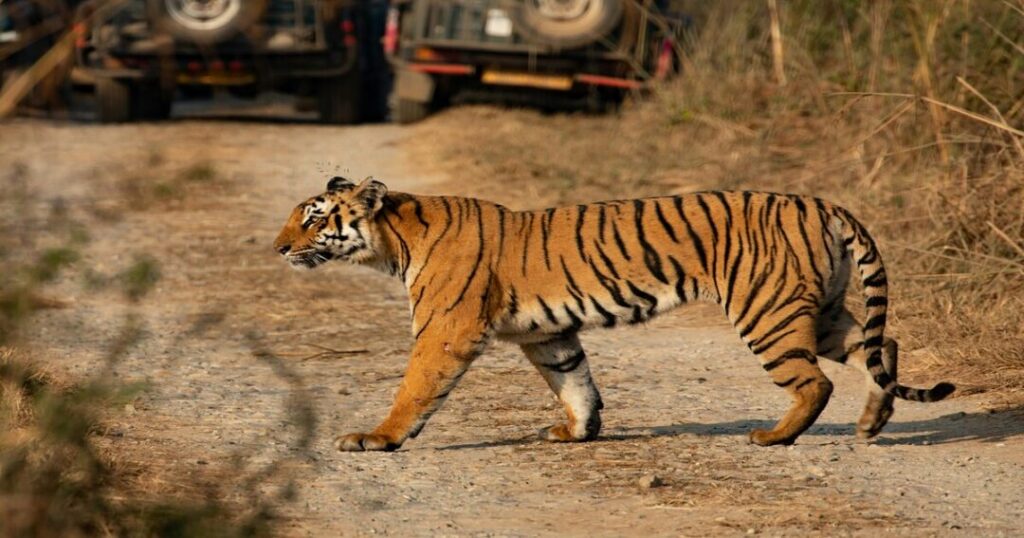
Established in 1936 as Hailey National Park, Jim Corbett holds the distinction of being India’s oldest national park and the first to come under Project Tiger. Set in the Himalayan foothills of Uttarakhand, the park spreads over 520 sq km of riverine forest, grasslands, and high ridges — diverse enough to support over 600 bird species alongside its celebrated tiger population.
Why Visit
- Nine distinct safari zones offer different terrain, wildlife density, and experience levels
- Dhikala zone—accessible only via permit—offers one of the most immersive overnight forest lodge experiences in India
- Diverse wildlife: tigers, elephants, leopards, gharials, otters, and over 600 bird species
- A serious destination for both tiger watching and birding in a single trip
Also read: Top Endangered Animals That You Can See in Indian National Parks
Conclusion: About National Parks
Delhi sits at the heart of one of North India’s richest wildlife corridors. Within a day’s drive, you can be watching tigers at dawn in Ranthambore, counting cranes at Keoladeo, or drifting down the Chambal beside a gharial. These national parks aren’t just weekend escapes — they’re some of India’s most serious conservation areas, and visiting them thoughtfully contributes to the communities and ecosystems that sustain them.
Explore these destinations, share your wildlife moments, and discover fellow nature travellers — download the Explurger Travel app before your next safari.
Before your next nature break, bookmark the parks that match your interests—and go while the wild is still wild.
FAQs About National Parks
2. Which national park near Delhi offers the best chance of seeing a tiger?
Ranthambore National Park in Rajasthan offers the best tiger sighting opportunities among national parks accessible from Delhi. The park has a well-established tiger population and multiple safari zones. Sariska National Park is a closer alternative, with successfully reintroduced tigers and a less crowded safari experience. Both parks require advance safari bookings, especially between October and February.
3. What is the best time to visit national parks near Delhi?
The ideal window is October to March. Temperatures are cooler, migratory birds arrive at wetland parks like Sultanpur and Keoladeo, and wildlife tends to be more active and visible. For tiger sightings specifically, April to June can also be productive since animals gather near water sources as temperatures rise. Most parks see reduced activity during the monsoon (July to September), and some zones close entirely.
4. Are there any UNESCO World Heritage national parks near Delhi?
Yes. Keoladeo National Park in Bharatpur, Rajasthan, is a UNESCO World Heritage Site inscribed in 1985. Located approximately 180–200 km from Delhi, it is one of the world's most important bird breeding and wintering grounds, supporting over 370 species. Visitors can explore the park by cycle, rickshaw, or on foot, accompanied by trained local guides.
5. Which national park near Delhi is best for a first-time wildlife visitor?
Sultanpur National Park is the most accessible option for first-timers — it's within 50 km of Delhi, requires no safari booking, has well-maintained walking trails and watchtowers, and offers impressive birdlife especially between November and February. For those wanting a longer trip with more dramatic wildlife encounters, Sariska National Park at ~200 km is a manageable and rewarding choice.
6. Is Jim Corbett National Park within 300 km of Delhi?
Jim Corbett is approximately 250–260 km from Delhi by road, which puts it comfortably within range for a Delhi-based weekend trip, usually a 5–6 hour drive. The nearest railway station is Ramnagar, about 12–15 km from the main park entrance, with direct trains available from Delhi. The nearest airport is Pantnagar in Uttarakhand, roughly 80 km from the park.