
![Andharban trek dense forest canopy Western Ghats Maharashtra]](https://blog.explurger.com/wp-content/uploads/2026/05/cover-13-1.jpg)
1,019 Total Views
There are treks where you climb up to a summit and take in the view. And then there’s Andharban trek— where you walk into a forest so thick and dark that sunlight barely makes it through the canopy overhead.
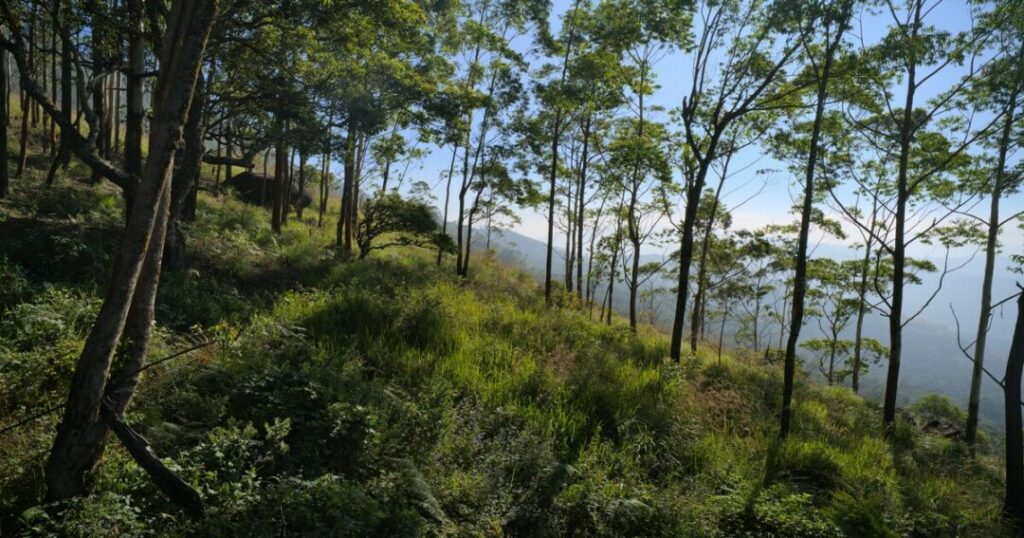
“Andharban” literally means The Dark Forest in Marathi. The name earns itself within the first kilometre. The trail winds through dense evergreen forest in the Sahyadri range of the Western Ghats, with towering trees on both sides, mist rolling through the gaps, and the sound of waterfalls somewhere beneath you. It’s not about reaching a peak — it’s about losing yourself in a place that genuinely feels wild.
Here’s everything you need to know before you go.
Best Time to Do the Andharban Trek
The Andharban jungle trek is a year-round trail, but the experience changes dramatically by season:
Monsoon (June–September): The best time for most trekkers. The **andharban forest** is at its most dramatic — waterfalls at full flow, the entire forest dripping green, and mist filling the gaps between trees. The trail gets slippery, so proper grip shoes are non-negotiable.
Post-Monsoon (October–January): The forest stays dense and lush. Winter adds a chill and extra mist — some trekkers prefer this for the mystical, quieter atmosphere.
Summer (February–May): The trail is drier and firmer, but the forest loses some of its magic. Still doable, but not the classic experience.
Verdict: Go during the monsoon if you can handle slightly slippery terrain. It’s worth it.
How to Reach Andharban Forest
The Andharban forest location is near Pimpri village in Tamhini Ghat, Maharashtra.
From Pune: Approximately 70 km from Pune Railway Station. Drive via Mulshi Dam → Tamhini Ghat → Pimpri village. Takes around 2–2.5 hours by road.
From Mumbai: Approximately 130–150 km away. The drive via Khopoli or Lonavala → Tamhini Ghat takes roughly 3.5–4 hours.
By Public Transport:
Take a bus plying the Tamhini Ghat road and get off near the GMCKS Ashram Road junction
Pimpri village (the trek start) is about 3–4 km from this stop
Shared autos and local transport are available but limited — a private vehicle is strongly recommended
Pro Tip: Search “Andharban Homestay” on Google Maps for accurate navigation to the Pimpri village start point.
Entry Fee: ₹50 per person, collected at a temporary counter near the forest entry. You get a formal receipt.
Also Read: Top Winter Treks in India–Best Trails From North to South
Andharban Trek — Key Facts at a Glance | Detail | Info |
| Trek Distance | ~13–14 km (point to point) |
| Duration | 5–7 hours at a comfortable pace |
| Difficulty | Easy to Moderate |
| Start Point | Pimpri Village (near Pimpri Dam) |
| End Point | Bhira Dam (Bhira/Patnus Village) |
| Max Altitude | ~2,160 ft (660 m) |
| Trek Type | Descending trail |
| Best Season | June to September (Monsoon) |
| Entry Fee | ₹50 per person |
| Kids Allowed | Yes — ages 8 and above |
The Andharban Jungle Trek Route — What to Expect Step by Step
One of the things that makes the Andharban jungle trek stand out from every other Maharashtra trail is this: you don’t climb. The entire route is a gradual descent, making it genuinely beginner-friendly in terms of physical exertion. The challenge comes from distance and wet terrain, not altitude.
Pimpri Village to Hirdi (6–8 km)
This first stretch is the heart of the Andharban forest experience.
– The trail enters through a broken chain-link fence near Independence Point, just 200 metres from Pimpri village
– Within minutes, the canopy closes in. On monsoon mornings, fog fills the forest floor and natural streams cross the path every few hundred metres
– Blue Mormon butterflies — the State butterfly of Maharashtra — are commonly spotted in this section, along with a wide variety of birds and forest insects
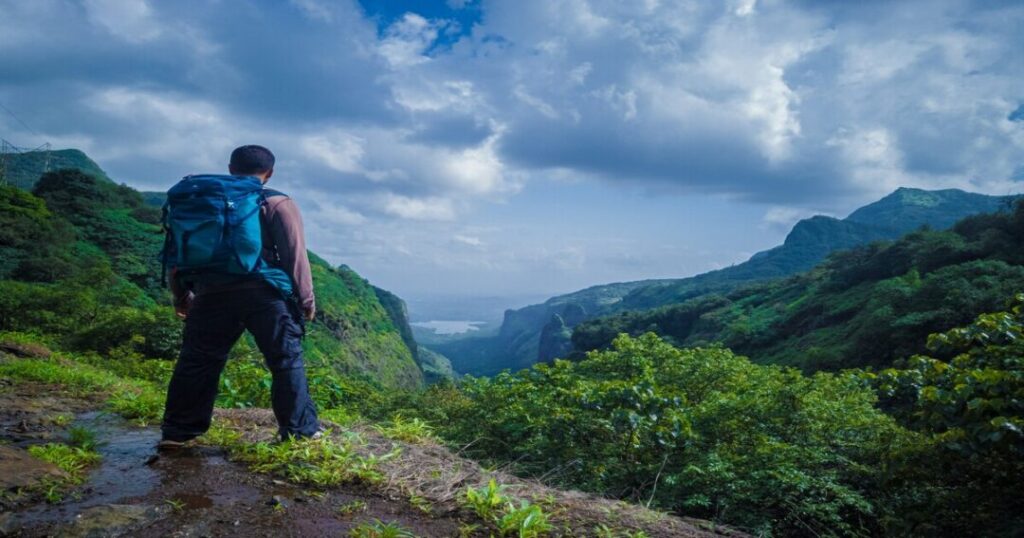
– Partway through, clearings open up to stunning panoramic views of the Plus Valley and the Kundalika Valley far below
– Local food is available at Hirdi village, which falls midway along the route — a good place to rest and refuel
Hirdi to Bhira Dam (4–5 km)
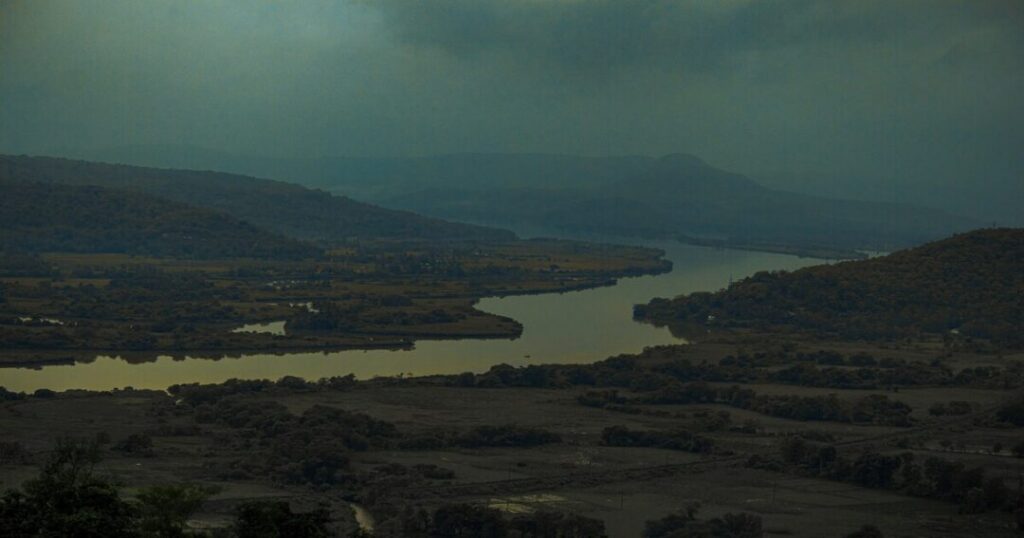
The trail shifts from deep forest to Konkan-style landscape as you descend toward the backwaters.
– The forest gradually opens up, revealing views of Bhira Dam reservoir glinting through the trees
– The final stretch brings you to Bhira village (also called Patnus village), where the trek officially ends
– Local dhabas here serve hot food — perfect after 5–7 hours on the trail
What Makes Andharban Forest Special
The Dark Forest Experience
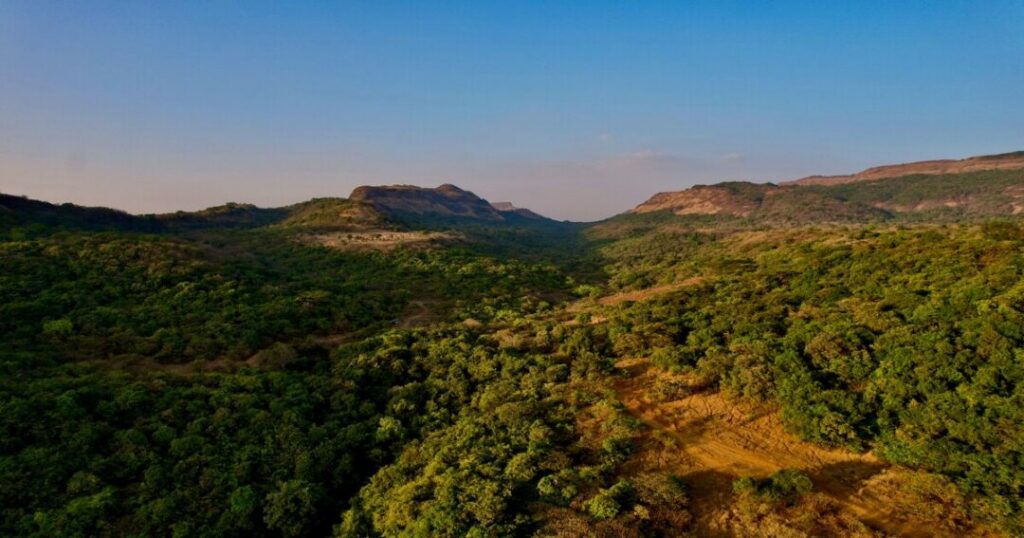
The name is not poetic licence. In peak monsoon, the andharban forest canopy is so thick that you genuinely walk in near-darkness even at noon. Combine that with mist, the sound of unseen waterfalls, and a trail that keeps descending into the valley — it feels like a different world.
[QUOTE: “The forest gets darker faster here — start early and don’t linger after 4 PM” — advised by local trek guides at Pimpri village]
Wildlife — Blue Mormon Butterfly & Biodiversity
The Andharban jungle is home to rich biodiversity:
Blue Mormon butterfly — Maharashtra’s State butterfly, easily spotted in the first half of the trek
– Various species of birds, reptiles, and insects endemic to the Western Ghats
– Dense ferns, mosses, and wild orchids in the monsoon season
Note: Parts of the trail fall within protected ecological zones. Follow leave-no-trace principles and avoid littering.
Views of the Plus Valley and Bhira Dam
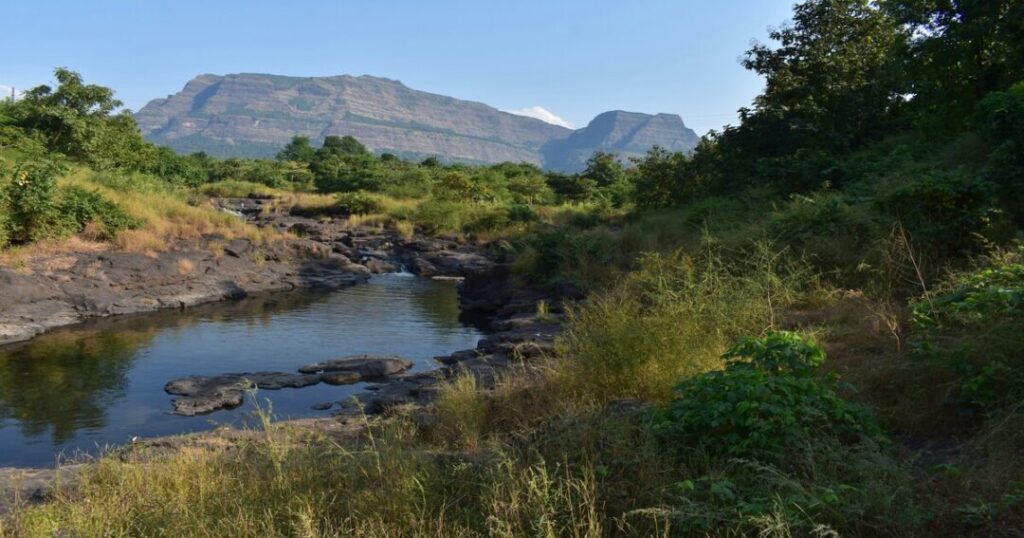
The forest periodically opens into clearings that offer views of the Plus Valley (a V-shaped valley visible from the Hirdi ridge) and the Bhira Dam reservoir. These viewpoints are among the most photographed spots on the trek.
Also Read: Top Waterfalls in India: 10 Stunning Places You Can’t Miss
Andharban Camping & Stay Options
Camping at Bhira Dam
Andharban camping at Bhira Dam is one of the most popular ways to extend the experience. Several trekking operators offer organised overnight camping at the lakeside campsite near Bhira Dam, including:
– Tent accommodation on a sharing basis
– Dinner, morning tea, and breakfast
– Evening BBQ sessions and campfire
– Sunset and stargazing views over the reservoir
– Cost (organised camping): ₹1,299 per adult, approximately, varies by operator
– Best for: Those who want to combine the Andharban trek with the Devkund waterfall the next morning
Homestays at Patnus / Pimpri Village
If camping isn’t your thing, local families in Patnus and Pimpri villages offer basic homestay and lodge accommodation. Staying with a local family, eating home-cooked Maharashtrian food, and experiencing village life is a genuinely memorable add-on.
Alternative: Return to Lonavala or Pune and stay at budget hotels (₹1,200–₹3,000 per night)
Andharban Devkund Trek — The Perfect Add-On
If you have an extra day, the Andharban Devkund trek combination is the ideal two-day itinerary. Devkund Waterfall starts right where Andharban ends — at Bhira Dam.
Devkund Waterfall — What to Know
– Distance from Bhira Dam: Approximately 4.5 km one way
– Duration: Around 2 hours each way
– Difficulty: Easy to Moderate — mostly flat with a short ascent near the end
– The waterfall drops into a large turquoise pool where you can swim
– The trail passes through forest cover, open fields, and a small stream crossing
Tip: Camp overnight at Bhira Dam, do Andharban on Day 1, and tackle Devkund on Day 2 for the perfect Maharashtra weekend trek package.
Also Read: Hidden Weekend Getaways from Mumbai for Explorers Who Hate the Obvious
What to Carry for the Andharban Trek
Pack light — this is a single-day descent trek, not a multi-day expedition. Here’s a focused list:
Essential:
– Trekking shoes with good grip (non-negotiable for monsoon)
– 2–3 litres of water (no refill points except natural streams — drink carefully)
– Light rain jacket or poncho (monsoon season)
– Quick-dry clothing — avoid denim
– Waterproof pouch for your phone and electronics
– Snacks and energy bars for the trail
– Small first aid kit with antiseptic and bandages
Good to Have:
– Trekking pole (helps on slippery descents)
– Insect repellent
– Offline maps downloaded before entering the forest (mobile signal is very weak inside)
– Extra pair of dry socks and footwear for the endpoint
Leave Behind:
– Heavy bags or large backpacks
– Plastic disposables — carry reusable bottles and bags
Conclusion About Andharban Trek
The Andharban trek is genuinely unlike anything else in Maharashtra’s trekking circuit. No exhausting summit push, no crowds at the top — just you, a 13 km trail, and one of the most beautiful patches of forest in the Western Ghats. Here’s a quick summary:
– What it is: A 13–14 km descending trail through dense evergreen forest in the Sahyadri range
– Where: Pimpri Village to Bhira Dam, Tamhini Ghat, Maharashtra
– Distance from Pune/Mumbai: ~70 km / ~130–150 km
– Best season: Monsoon (June–September) for the full dark forest experience
– Difficulty: Easy to Moderate — suitable for beginners with basic fitness
– Top add-on: Combine with the Andharban Devkund trek for a perfect 2-day itinerary
– Camping: Overnight tents at Bhira Dam lakeside; homestays at Patnus village
Whether you’re a first-time trekker or a seasoned hiker looking for something different, the Andharban jungle trek will stay with you long after the mud dries off your shoes.
Track your trail, capture every moment, and plan your next adventure — download the Explurger app before you head into the dark forest.
The forest is waiting. Go find it.
FAQs About Andharban Trek
2: What is the distance of the Andharban trek?
The andharban trek distance is approximately 13–14 km one way, from Pimpri Village to Bhira Dam. At a comfortable pace with breaks, this takes around 5–7 hours to complete. The trail is a point-to-point descending route, so you'll need a vehicle pick-up or transport arranged at the Bhira Dam end point.
3: What is the best time to visit Andharban?
The best time for the andharban forest trek is during the monsoon season — June to September. The forest is at its most lush and atmospheric, with waterfalls running at full force and the canopy heavy with green. October to January is a good alternative for those who prefer drier, cooler conditions with winter mist. Summer (February–May) is possible but the forest loses much of its signature dark, misty character.
4: How do I reach Andharban from Pune?
Andharban forest is approximately 70 km from Pune Railway Station. Drive via Mulshi Dam and Tamhini Ghat to reach Pimpri village, the trek's start point. The drive takes roughly 2–2.5 hours. Public transport buses on the Tamhini Ghat route stop near the GMCKS Ashram Road junction, from where Pimpri village is 3–4 km away. A private vehicle is strongly recommended as public transport is limited and infrequent.
5: Is camping available at Andharban?
Yes — andharban camping is available at the Bhira Dam campsite near the trek's end point. Several operators offer organised overnight camping packages including tents, meals, and campfire. Alternatively, basic homestay and lodge options are available at Patnus village. Camping at Bhira Dam is especially popular among trekkers who want to combine Andharban with the Devkund waterfall trek the next day.
6: What is the Devkund waterfall trek near Andharban?
The andharban devkund trek is a natural two-day combination. The Devkund waterfall starts at Bhira Dam — the same point where the Andharban trek ends. The trek to Devkund is approximately 4.5 km one way and takes about 2 hours. It leads to a large turquoise waterfall pool where swimming is possible. Most trekkers camp overnight at Bhira Dam and tackle Devkund the following morning.