
10,806 Total Views
Namibia is the kind of destination that feels almost otherworldly. From towering red dunes and ancient deserts to remote waterholes, historic towns, and abandoned buildings slowly disappearing beneath the sand, the Best Places to Visit in Namibia reveal a landscape shaped by nature, wildlife, and history.
For travellers looking for something beyond the usual African safari, Namibia offers an extraordinary mix of landscapes, wildlife, adventure, and history. The challenge is deciding where to go first. Distances are vast, and a Namibia holiday is as much about the journey between destinations as it is about the places themselves.
This guide to the best places to visit in Namibia covers the country’s must-see destinations, its top 10 attractions, where they are located, and what to experience at each stop. We’ve also included a dedicated section on Windhoek for travellers beginning or ending their journey in the capital.
Best Places to Visit in Namibia
From desert landscapes and wildlife reserves to historic towns and ancient rock art, these are some of the destinations that deserve a place on your Namibia itinerary.
Sossusvlei and Deadvlei
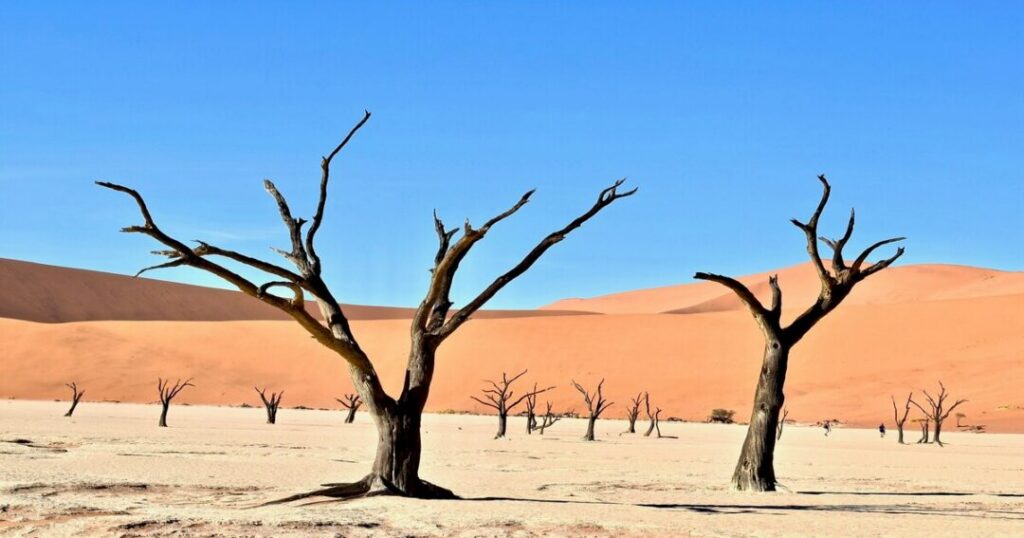
If there is one landscape that instantly comes to mind when people think of Namibia, it is the towering red dunes of Sossusvlei.
Located inside Namib-Naukluft National Park, Sossusvlei sits in the heart of the Namib Desert and is surrounded by some of the tallest sand dunes on the planet. Big Daddy rises to around 325 meters, while the famous Dune 45 stands at about 80 meters and is one of the most popular dunes to climb.
Nearby, Deadvlei offers an even more surreal sight. The white clay pan is scattered with the dark, skeletal remains of ancient camelthorn trees. The trees died after the Tsauchab River changed course, but the exceptionally dry conditions prevented them from decomposing. Against the white pan and orange dunes, the result is one of Namibia’s most unforgettable landscapes.
Arrive around sunrise or sunset, and the dunes shift dramatically in color, making Sossusvlei and Deadvlei essential stops for photographers and nature lovers.
Also Read: Tanzania Is Africa’s Most Underrated Travel Experience—Here’s Why You Should Visit Next
Etosha National Park
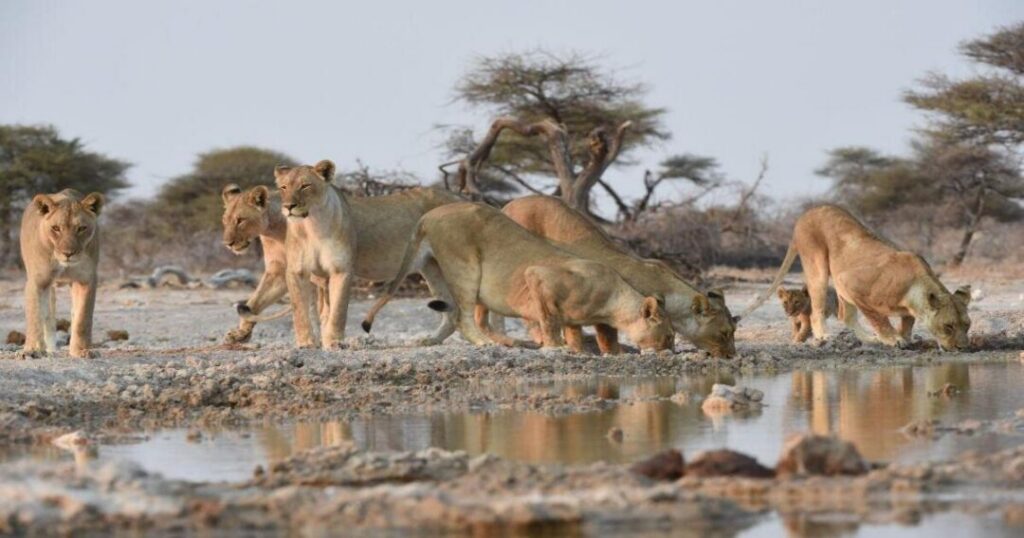
For wildlife, few places in Namibia compare with Etosha National Park.
Covering around 22,269 square kilometers, the park revolves around the enormous Etosha Pan, a vast salt flat that dominates the landscape. During the dry season, wildlife congregates around the remaining waterholes, creating some of the country’s most rewarding game-viewing opportunities.
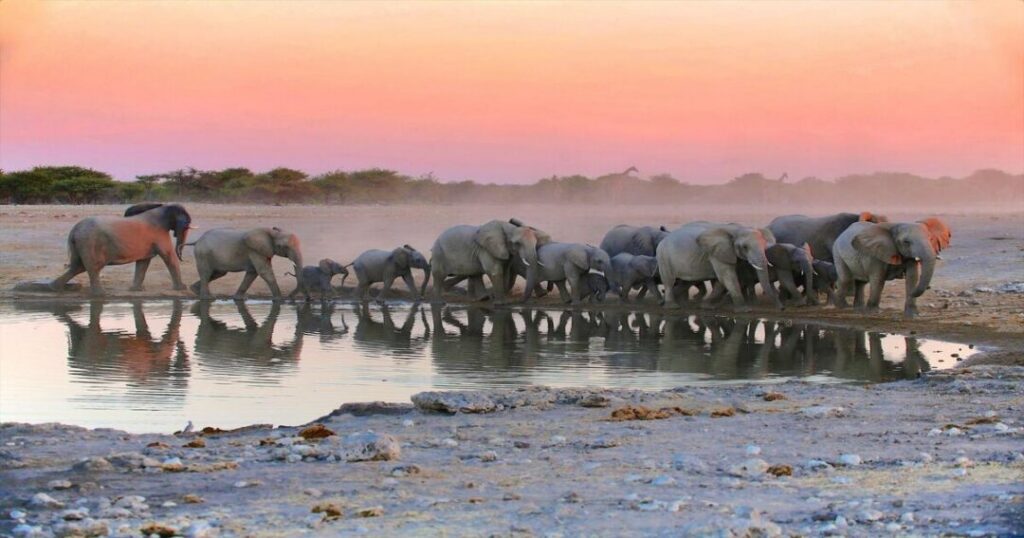
Visitors can encounter lions, elephants, black and white rhinos, zebras, springbok, and eland, along with numerous other species. When seasonal rains fill parts of the pan, the landscape can also attract large numbers of flamingos.
One of the park’s historic landmarks is Namutoni, a former German colonial fort. Originally built in 1901, it was destroyed in 1904 and rebuilt by 1907. Today, it forms part of the park’s accommodation and visitor infrastructure.
Etosha is particularly well suited to travellers who want the freedom of a self-drive safari, with a network of roads connecting waterholes and camps across the park.
Swakopmund
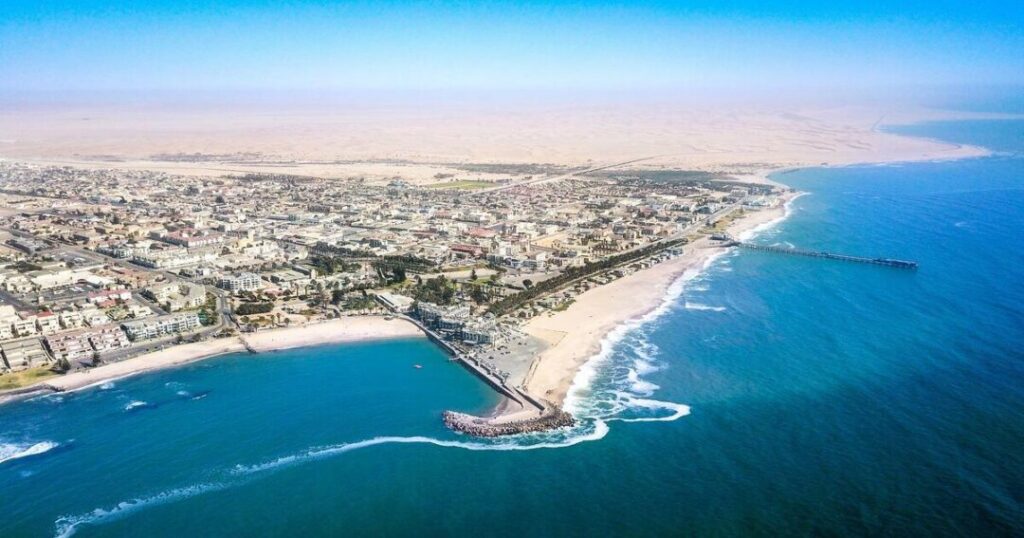
Where else can you go from a desert dune to the Atlantic Ocean in the same afternoon?
Swakopmund is one of Namibia’s most distinctive towns, combining German colonial architecture with an adventurous coastal atmosphere. Founded in 1892 by German commander Curt von François, it was established as a port for German South West Africa at a time when nearby Walvis Bay was under British control.
Today, Swakopmund is one of Namibia’s leading adventure destinations.
Travellers can go sandboarding and quad biking across the surrounding dunes, take to the skies for a skydive or paraglide, or head out onto the Atlantic for boat trips where dolphins and seals can often be spotted.
The town itself is worth exploring, with historic buildings, cafés, restaurants, and a distinctly European character that contrasts dramatically with the desert surrounding it.
Fish River Canyon
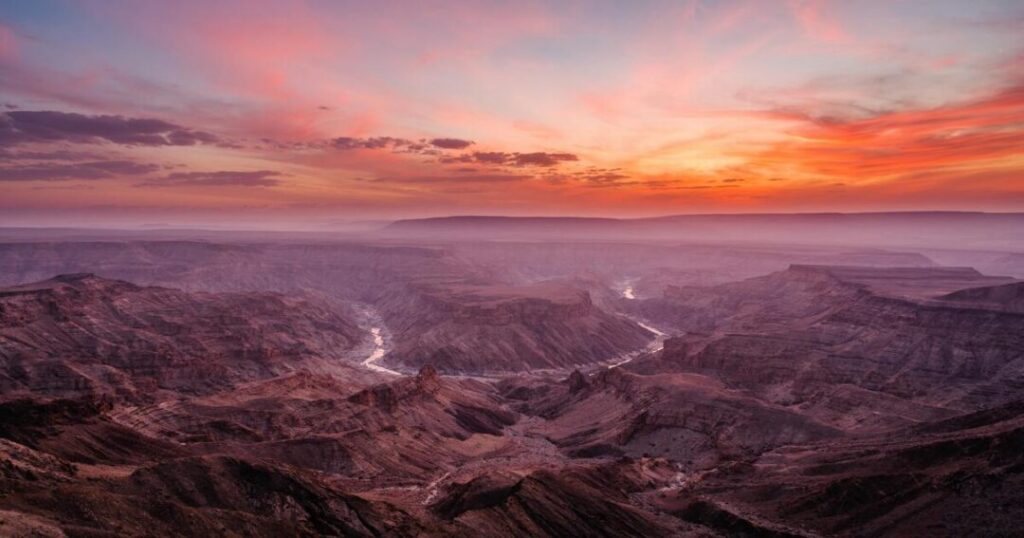
Massive, ancient, and almost impossibly rugged, Fish River Canyon is one of Namibia’s great natural wonders.
Stretching for around 160 kilometers, the canyon reaches up to 27 kilometers in width and almost 550 meters in depth at its deepest points. It is widely recognized as Africa’s largest canyon.
The landscape is particularly impressive from the viewpoints along the canyon rim, where layers of rock and winding valleys stretch towards the horizon.
For adventurous travellers, the Fish River Canyon Hiking Trail is one of Southern Africa’s classic multi-day treks. The approximately 88-kilometer route generally takes around five days and is only open during the cooler months. Permits are issued from May 1 to September 15, and hikers must meet strict requirements, including providing a medical fitness certificate.
The canyon can become extremely hot during summer, so careful planning is essential.
Also Read: Places to Visit in Yelagiri: 12 Best Spots for Every Kind of Trip
Skeleton Coast
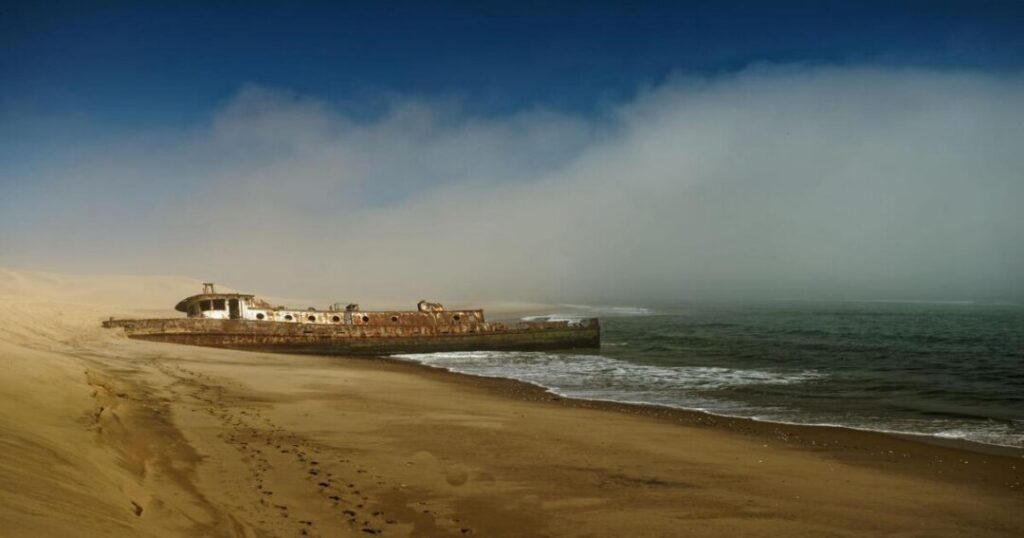
Few places in Africa feel as remote and mysterious as Namibia’s Skeleton Coast.
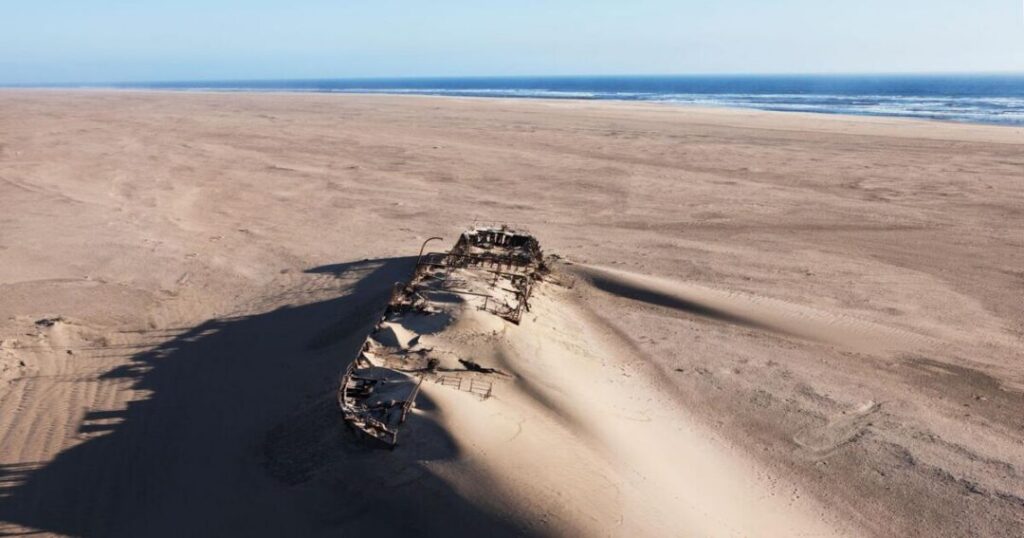
Stretching for roughly 500 kilometers along the northern Atlantic coast, this stark landscape combines endless desert, crashing surf, thick coastal fog, and the remains of numerous shipwrecks.
The coastline earned its name from the whale and seal bones once scattered along its shores, while later shipwrecks added to its haunting reputation. The cold Benguela Current helps create the dense coastal fog known locally as “cassimbo.” Combined with strong surf and offshore rocks, these conditions made the coastline particularly dangerous for ships.
One of its most famous wrecks is the Eduard Bohlen, whose rusting remains now sit far from the modern shoreline after the desert and coastline shifted over time.
The Skeleton Coast is not simply about shipwrecks, however. Its remote beaches, desert landscapes, seal colonies, and unusual wildlife make it one of Namibia’s most fascinating wilderness areas.
Damaraland: Twyfelfontein and Desert-Adapted Elephants
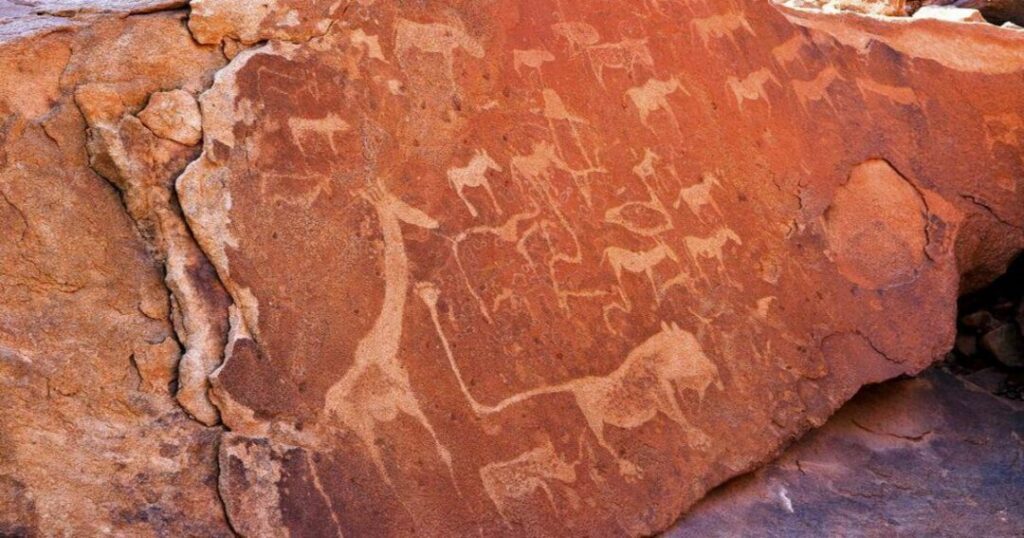
Damaraland brings together two very different sides of Namibia: ancient human history and remarkable desert wildlife.
At the heart of the region lies Twyfelfontein, home to thousands of ancient rock engravings created by San hunter-gatherers. The site became Namibia’s first UNESCO World Heritage Site in 2007, recognized for its extraordinary collection of prehistoric rock art.
Many of the engravings depict animals, human figures, and hunting scenes, offering a glimpse into the lives and beliefs of communities that lived in the region thousands of years ago.
Damaraland is also one of the few places where travellers can encounter desert-adapted elephants. These elephants have developed remarkable ways of surviving in one of Africa’s harshest environments, travelling long distances between seasonal rivers and other sources of water.
A guided safari through the region can offer an unforgettable combination of wildlife, dramatic mountains, and ancient desert landscapes.
Kolmanskop
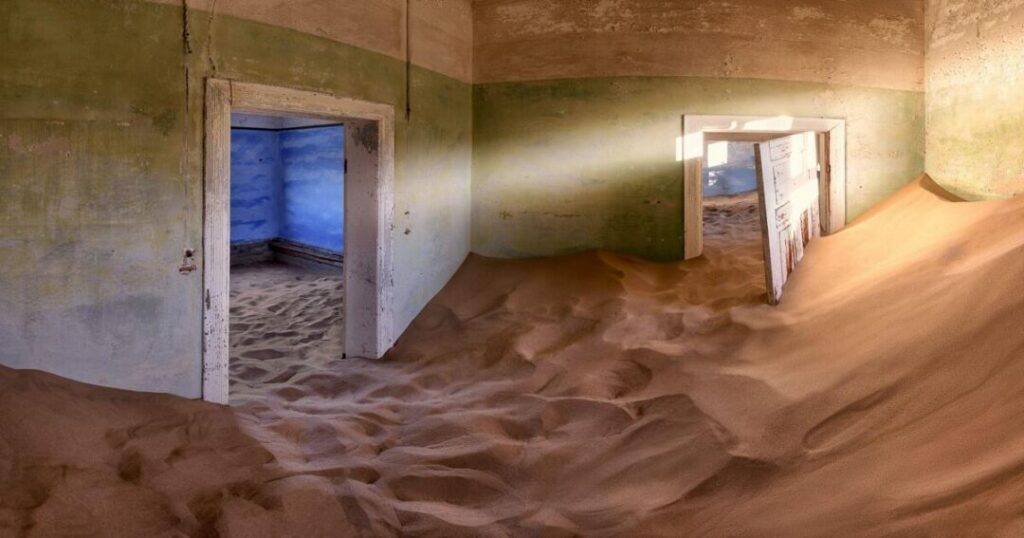
Imagine walking into a beautiful old house and finding it half-filled with desert sand.
That is Kolmanskop.
Once a thriving diamond-mining settlement near Lüderitz, Kolmanskop rose rapidly after railway worker Zacharia Lewala discovered what turned out to be a diamond in 1908. His supervisor, August Stauch, recognized its significance, triggering a diamond rush that transformed the remote settlement into one of the wealthiest towns in the region.
At its peak, Kolmanskop had houses, a hospital, a school, a ballroom, and other facilities associated with a prosperous mining community.
Its fortunes changed after richer diamond deposits were discovered farther south at Oranjemund in 1928. Mining activity gradually declined, and the settlement was eventually abandoned in 1956.
Today, sand has reclaimed much of Kolmanskop. Dunes pour through windows, cover floors, and fill rooms that were once homes and businesses. The abandoned town has become one of Namibia’s most striking photographic locations and is accessible to visitors from nearby Lüderitz.
Best Places to Visit in Namibia: Tourist Attractions Map & Locations
One thing travellers quickly discover about Namibia is that the distances are huge.
The country is roughly twice the size of Germany, yet has a relatively small population. This means that road trips can involve several hours of driving between major attractions.
Windhoek sits near the country’s geographic center and is the natural starting point for many itineraries.
Sossusvlei lies southwest of the capital and generally takes around five hours to reach, depending on the route and road conditions.
Swakopmund is roughly four to four-and-a-half hours west of Windhoek, while Etosha National Park lies to the north and can take around five to six hours by road.
Fish River Canyon is much farther south, close to the South African border, and can require a seven- to eight-hour drive from Windhoek.
Damaraland and Twyfelfontein are located northwest and are often incorporated into a route between Swakopmund and Etosha.
The Zambezi Region, formerly known as the Caprivi Strip, is the most remote destination on this list. Located in Namibia’s far northeast, it is a much greener part of the country and is often better suited to travelers who have additional time or choose to fly between destinations.
Rather than repeatedly returning to Windhoek, many travellers plan Namibia as a road-trip loop, combining destinations such as Sossusvlei, the coast, Damaraland, and Etosha.
Also Read: Places to Visit in Malaysia: The Top 10 Spots Worth Planning a Trip Around
Best Places to Visit in Namibia: Exploring Windhoek
Windhoek may be the starting point for your Namibia adventure, but it deserves more than a quick airport stop.
The capital offers a fascinating introduction to Namibia’s history and culture, with German colonial influences sitting alongside modern Namibian life.
One of the city’s most recognizable landmarks is Christuskirche, a German Lutheran church built between 1907 and 1910. Constructed from local sandstone, the church stands prominently in the city center.
Nearby, the Independence Memorial Museum explores Namibia’s history and its journey towards independence from South African rule in 1990. The museum occupies a prominent position overlooking central Windhoek.
Alte Feste, another important historic landmark, is the oldest surviving building in Windhoek. The former German colonial fort is currently closed to visitors, but its exterior remains part of the city’s historic landscape.
For travellers interested in local crafts, the Namibia Craft Centre on Tal Street is another worthwhile stop. Located in the Old Breweries complex, the center brings together around 40 craft businesses and supports thousands of artisans from across Namibia. Visitors can browse handmade jewelry, textiles, carvings, and other traditional crafts.
Windhoek is also a good place to experience Namibian food, cafés, and restaurants before heading into the country’s more remote regions.
Most of the city’s major sights can be covered comfortably in a day, making it easy to include Windhoek at the beginning or end of a longer Namibia itinerary.
Conclusion: Best Places to Visit in Namibia
Namibia rewards travellers who are willing to take the long way.
From the surreal dunes of Sossusvlei and the wildlife-rich plains of Etosha to the ghost town of Kolmanskop and the remote Skeleton Coast, the Best Places to Visit in Namibia offer a completely different experience in every region.
The key to planning a Namibia trip is understanding the distances and building an itinerary around them. Instead of trying to see everything, choose a route that allows enough time to experience each destination without spending the entire holiday behind the wheel.
And remember, in Namibia, the road itself is part of the adventure.
Planning a Namibia road trip? Let the Explurger app help you discover destinations, build your route, and make the most of the journey between them.
FAQs About Best Places to Visit in Namibia
2. How far is Sossusvlei from Windhoek?
Sossusvlei is roughly a five-hour drive southwest of Windhoek, although the exact journey time depends on the route, road conditions and your final destination within the Sossusvlei area.
3. What is Deadvlei?
Deadvlei is a striking white clay pan near Sossusvlei, famous for its dark, ancient camelthorn tree skeletons. The trees died after the Tsauchab River changed course, while the extremely dry conditions prevented them from decomposing.
4. Is Fish River Canyon the world's second-largest canyon?
The safest description is that Fish River Canyon is Africa's largest canyon. It is sometimes promoted as the world's second-largest canyon, but that claim is not consistently supported by rigorous geographic sources.
5. What can you do in Swakopmund?
Swakopmund offers a combination of history, desert and adventure. Popular activities include sandboarding, quad biking, skydiving, paragliding and boat trips along the Atlantic coast. The town is also worth exploring for its German-influenced architecture, cafés and restaurants.
6. What is there to see in Windhoek?
Major Windhoek attractions include Christuskirche, the Independence Memorial Museum, Alte Feste and the Namibia Craft Centre. The city is also a convenient place to experience Namibian food, culture and crafts before heading into the country's wilderness areas.