
2,403 Total Views
Every culture celebrates. Most do it with music, food, and dancing. Some do it by hurling 145 tonnes of overripe tomatoes at strangers. Others do it by chasing a wheel of cheese down a near-vertical hill at speeds reported up to 70–80 mph. A few do it by making their monkeys the guests of honour at a five-course banquet. Bizarre festivals around the world exist on a spectrum from “mildly unusual” to “genuinely hard to explain to your family.” This list sits firmly at the latter end — 12 of the weirdest festivals of the world that are completely real, surprisingly well-attended, and in most cases, absolutely worth showing up to.
Europe — Where Weird Is a Tradition
1. La Tomatina — Buñol, Spain

When: Last Wednesday of August
Best for: Anyone who owns old clothes
Every year on the last Wednesday of August, the town of Buñol in Valencia, Spain — population 9,000 — welcomes 20,000 people who have specifically come to throw tomatoes at strangers. Approximately 145 tonnes of overripe tomatoes (the figure cited by official festival data; the exact amount varies annually between 120 and 150 tonnes) are trucked in for the occasion. The streets run red. Shopkeepers barricade their storefronts with plastic sheeting. The whole thing lasts exactly one hour.
The origin: In 1945, a group of young men gate-crashed a local parade, fell into a vegetable stall, and started hurling tomatoes at each other. They came back the following year with their own tomatoes. By 1957, the town council tried to ban it — locals responded by staging a mock tomato funeral procession. The ban was lifted in 1959. In 2002, Spain officially recognised it as a Festival of International Tourist Interest.
How to attend:
- Tickets are capped at 20,000 and sell out fast — book months in advance
- Wear clothes you intend to throw away and bring goggles
- The fight starts when someone climbs and retrieves a ham from a greased pole (or just when someone gets impatient, which is usually sooner)
- Buses run from Valencia (~40 km away); accommodation in Buñol is extremely limited
Also Read: 10 Best Places to Visit in Spain for Indian Tourists
2. Cooper’s Hill Cheese-Rolling — Gloucestershire, England
When: Spring Bank Holiday (last Monday of May)
Best for: People with good health insurance
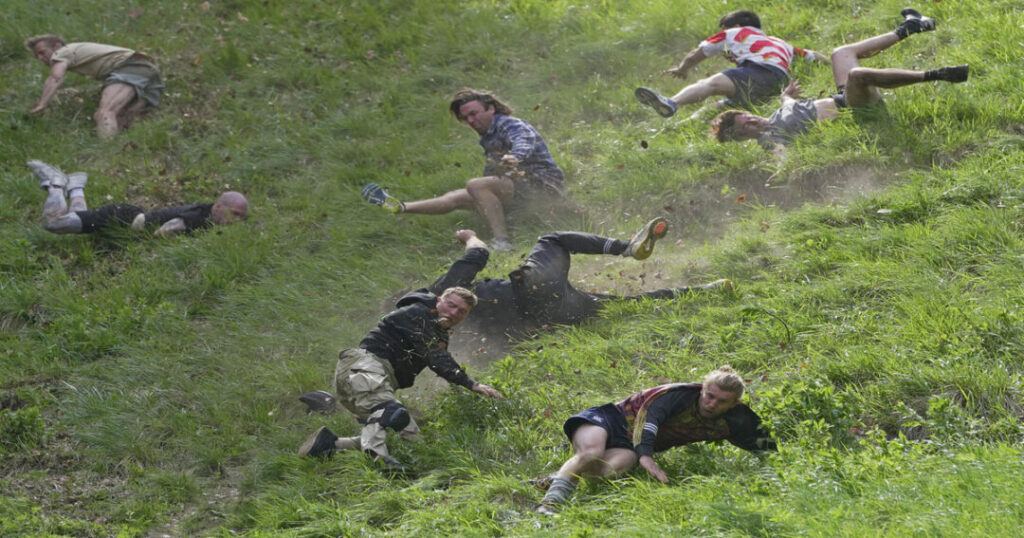
From the top of Cooper’s Hill near Brockworth, Gloucestershire, a 4 kg (9 lb) wheel of Double Gloucester cheese is released. It immediately reaches speeds reported at up to 70–80 mph (110–130 km/h). Competitors then hurl themselves down a 180-metre slope (gradient: approximately 50%) in pursuit. The first person to the bottom wins. The prize is the cheese.
The origin: The first written record dates to 1826, at which point it was already described as an “ancient tradition.” Historians believe it may be 600 years old — possibly linked to pagan rituals for maintaining grazing rights on the common land, or simply to the local cheese-making culture of Gloucestershire. Nobody is entirely sure. The uncertainty only makes it better.
How to attend:
- Free to spectate; no registration required to race — just show up at the top of the hill
- The cheese cannot actually be caught — it reaches speeds no human can match
- Injuries are common; a team of paramedics is permanently on standby
- Best reached from Gloucester city centre; park early, the hill gets crowded fast
3. Battle of the Oranges (Battaglia delle Arance) — Ivrea, Italy
When: Three days before Shrove Tuesday (February/March)
Best for: History lovers who don’t mind fruit injuries
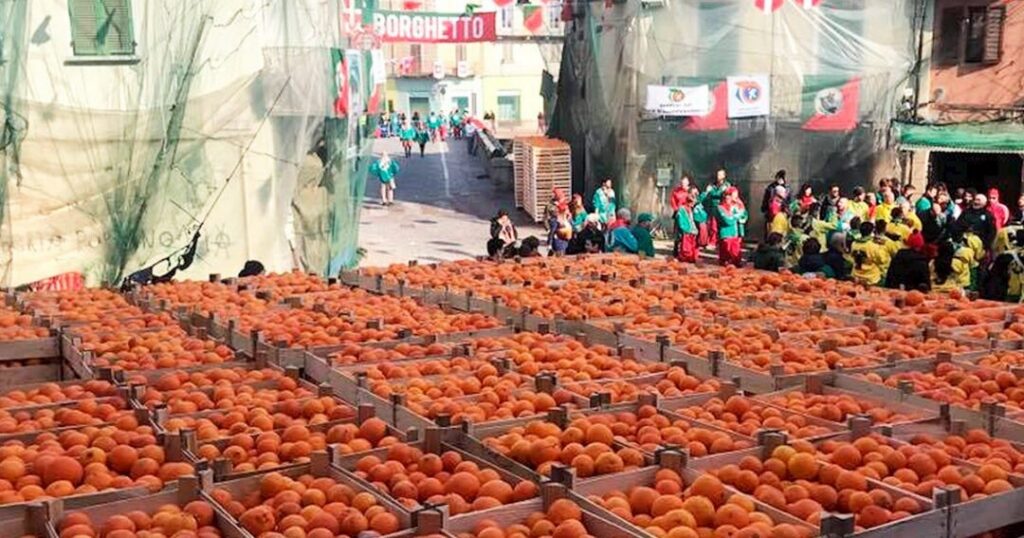
In the small northern Italian town of Ivrea, citizens divide into nine teams on foot (representing the revolting commoners) who fight against orange-throwers on horse-drawn carriages (representing the feudal army). Over 500,000 pounds (~227 tonnes) of oranges fly through the streets across three days. The legend behind the festival dates to the 12th century, though the structured orange battle in its current form — with officially organised teams — was formalised in 1947 with the founding of the first team, Asso di Picche.
The origin: The battle commemorates a medieval legend of a miller’s daughter who killed the feudal tyrant and sparked a popular revolt. According to the legend, a brave young woman named Violetta decapitated the marquis who had abused his power over the townspeople, leading to the destruction of his castle. The carriages represent the tyrant’s army; the teams on foot represent the revolting people.
How to attend:
- Wear a red hat (berretto frigio) if you don’t want to be targeted — those without one are fair game
- February/March; check exact dates as they shift with Easter each year
- Ivrea is ~50 km from Turin; day trips are possible, but overnight stays are recommended for the full three-day experience
Asia — Where Strange Has Ancient Roots
4. Monkey Buffet Festival — Lopburi, Thailand
When: Last Sunday of November
Best for: Everyone, unconditionally
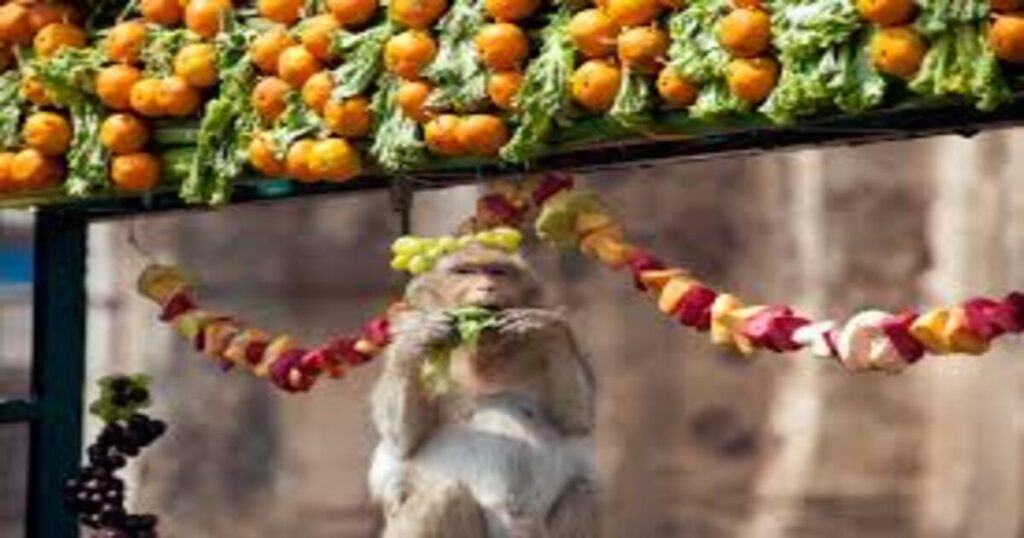
Every last Sunday of November, the ancient Thai city of Lopburi — 150 km north of Bangkok — lays out over two tonnes of fruit, vegetables, sticky rice, and Thai sweets on banquet tables. The guests of honour are not human. They are the approximately 3,000 long-tailed macaques that live in and around the city’s 13th-century Khmer temple complex of Phra Prang Sam Yot. The monkeys descend, climb the tables, wrestle over watermelons, and occasionally steal someone’s sunglasses.
The origin: In 1989, local businessman Yongyuth Kitwatanusont organised the first feast as a gesture of thanks — locals believe the monkeys are descendants of the Hindu deity Hanuman, who, according to Thai mythology, helped build the city. Feeding them brings good luck. The festival was also, practically speaking, excellent for tourism.
How to attend:
- Free entry; last Sunday of November annually
- Train from Bangkok’s Hua Lamphong station to Lopburi (~2 hours); day trip is very doable
- Book accommodation in advance — the city is small and fills up fast for the festival weekend
- Bring a bag with secure closures; the monkeys are friendly, but also opportunistic thieves
Also Read: 10 Unique Things to Buy in Thailand Most Travelers Miss (2026 Guide)
5. Boryeong Mud Festival — South Korea

When: Two weeks in July
Best for: Anyone who wants to call a spa day an adventure
Every July, Daecheon Beach near Boryeong — 200 km south of Seoul — becomes the site of what is genuinely one of the most enjoyable weird festivals around the world. Two weeks of mud wrestling, mud slides, mud obstacle courses, and mud swimming pools, all using mineral-rich mud from the Boryeong tidal flats. By 2007, the festival attracted 2.2 million visitors. Today, it draws approximately 2 million annually, including roughly 200,000 international visitors.
The origin: Started in 1998 as a promotional event for a local cosmetics company that used Boryeong mud — rich in germanium and bentonite — in its skincare products. The marketing campaign got completely out of hand and became one of South Korea’s most famous festivals. The mud is genuinely considered beneficial for the skin. This is arguably the only bizarre festival around the world that is also a facial.
How to attend:
- Held at Daecheon Beach, Boryeong, South Chungcheong Province
- Direct buses and trains from Seoul; the journey takes 2–3 hours depending on route
- Entry tickets are approximately ₩10,000 (around $8 USD); book accommodation well in advance
- Wear old clothes and bring a waterproof phone case; lockers available on-site
6. Naadam Festival — Mongolia
When: 11–13 July
Best for: History buffs and anyone who wants to watch the world’s finest horse riders
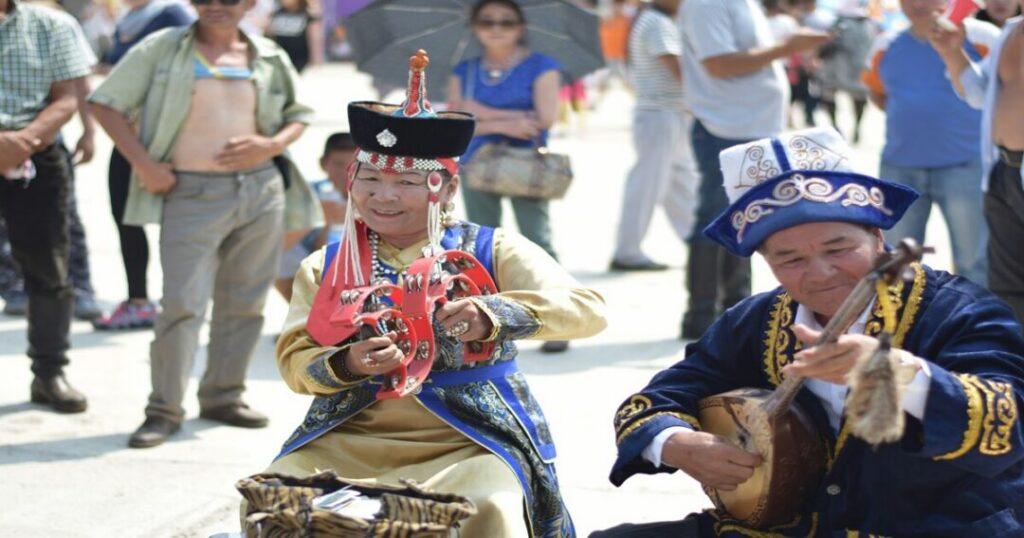
Technically not “bizarre” — it is one of the most culturally significant festivals in Central Asia and a UNESCO Intangible Cultural Heritage since 2010. But for most of the world, watching child jockeys as young as five race horses across the Mongolian steppe in cross-country races ranging from 15 to 30 km (distance varies by the horse’s age category) while men wrestle in elaborate traditional dress and archers shoot with recurve bows falls firmly into the strange celebrations around the world category.
The origin: Naadam (meaning “games” in Mongolian) has origins that predate written records, with strong connections to the era of Chinggis Khaan — military tournaments held to test and train soldiers in wrestling, horse racing, and archery. Today, it is a UNESCO Intangible Cultural Heritage, inscribed in 2010, celebrating the “three games of men” with centuries of tradition.
How to attend:
- July 11–13 annually; the national celebration in Ulaanbaatar is the largest
- Tickets to the main stadium event are required; book through tour operators well in advance
- The countryside Naadam celebrations in rural aimags (provinces) are smaller and more atmospheric
- July is peak season in Mongolia; book flights and accommodation months ahead
The Americas — Wild by Nature
7. El Colacho (Baby Jumping Festival) — Castrillo de Murcia, Spain
When: Corpus Christi Sunday (May/June)
Best for: People with strong nerves and a lot of faith
Men dressed as the devil — El Colacho — run through the streets of the tiny Spanish village of Castrillo de Murcia and leap over rows of babies laid on mattresses in the road. The babies are fine. The tradition is believed to cleanse the infants of original sin and protect them from evil spirits. The Vatican has previously expressed concerns about the practice. The village has been doing it since 1620, regardless.
The origin: The Brotherhood of Santísimo Sacramento de Minerva has organised this ceremony since 1620 as part of Corpus Christi celebrations. The devil character leaping over the babies symbolises evil being overcome. It is listed by the Guardian as one of the strangest festivals in the world, alongside the Boryeong Mud Festival.
How to attend:
- Castrillo de Murcia is ~18 km from Burgos, northern Spain
- Held on Corpus Christi Sunday — dates shift annually with the Catholic calendar
- Free to attend; arrive early for a good viewing spot
- The jumping happens in the afternoon; the full day includes processions and celebrations
8. Burning Man — Nevada Desert, USA
When: Late August/early September
Best for: Artists, free spirits, and anyone who has ever wanted to build a city from scratch, then set it on fire
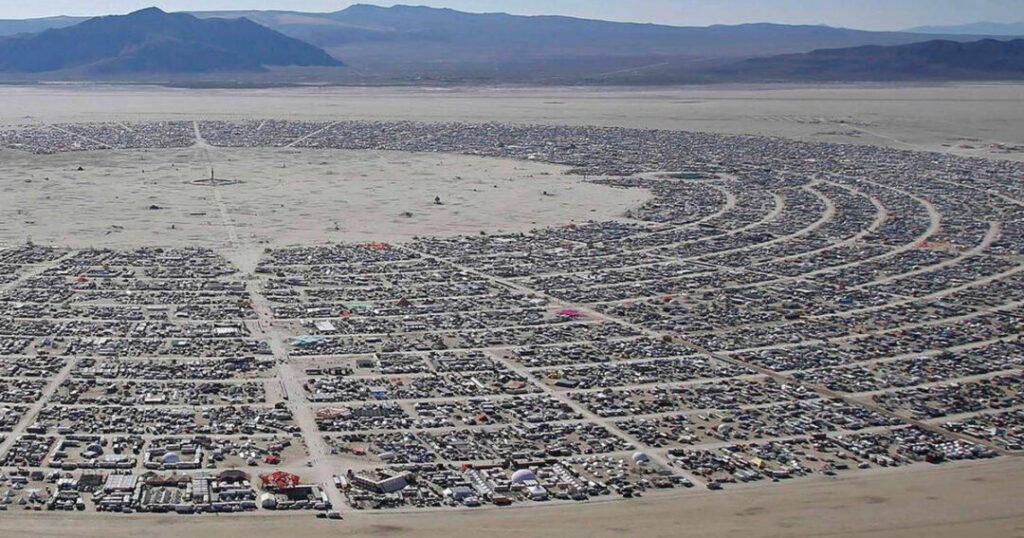
Every year, 70,000+ people build a temporary city called Black Rock City in the Nevada desert, live in it for a week with a strict Leave No Trace ethic, and on the penultimate night, burn a giant effigy called the Man. No money changes hands for goods or services inside (except ice and coffee). Everything runs on radical self-reliance and gifting. Then everyone goes home, and the desert reclaims the site.
The origin: Started in 1986 on San Francisco’s Baker Beach by Larry Harvey and Jerry James, who burned a wooden effigy with a group of friends. It moved to the Black Rock Desert in 1990 as it grew. It has since become the world’s most famous experiment in temporary community and radical self-expression — one of the weirdest celebrations around the world that is simultaneously an art festival, a philosophical experiment, and a genuine city.
How to attend:
- Tickets sell out fast — enter the lottery system months in advance
- Held in Black Rock City, Pershing County, Nevada; ~160 km north-northeast of Reno
- Self-sufficiency is mandatory: bring all water, food, shade, and supplies
- Late August/early September; extreme desert conditions (dust storms, 40°C+, cold nights)
Also Read: Australian Music Festivals: The Complete Guide to Live Music Across the Country
Africa & Oceania — Off the Beaten Festival Trail
9. Gerewol Festival — Niger, West Africa
When: September
Best for: Anyone who wants to see the world’s most elegant beauty pageant
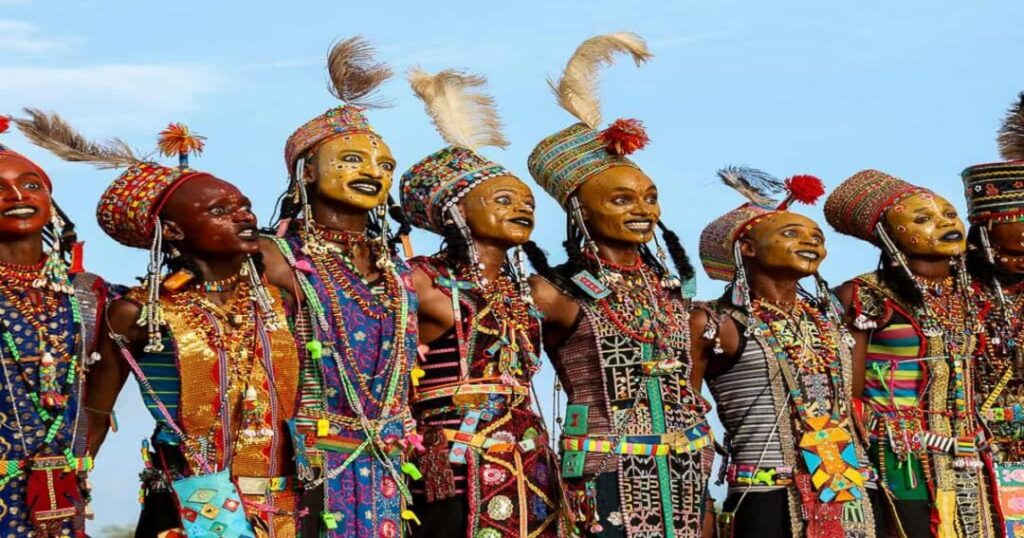
The Wodaabe people of Niger hold their annual Gerewol festival at the end of the rainy season — a week-long celebration where young men spend days applying elaborate makeup, dressing in their finest, and performing a slow, competitive dance called the Yaake. The objective: to be chosen by a young woman as the most beautiful. It is, in essence, a male beauty pageant judged by women, conducted with extraordinary artistry.
The origin: The Gerewol is a centuries-old tradition of the nomadic Wodaabe (Fula) people, tied to cattle herding culture, coming-of-age ceremonies, and courtship. Men whiten their teeth, elongate their faces with white face paint, and roll their eyes to display the whites — all considered marks of beauty. UNESCO has recognised it as a significant intangible cultural heritage of West Africa.
How to attend:
- September annually; location shifts as it is a nomadic gathering — Agadez region is the most consistent
- Accessible via Niamey or Agadez; guided tours through specialist operators are strongly recommended
- Respect for the community is essential — this is a living cultural ceremony, not a tourist performance
- Travel advisories for Niger should be checked before planning
10. Bun Festival (Cheung Chau Bun Festival) — Hong Kong
When: Four days in May (Buddha’s Birthday)
Best for: Night owls and those with a taste for the supernatural
On the island of Cheung Chau, Hong Kong, an annual four-day festival includes a parade of children dressed as deities floating above the crowd on hidden platforms, a strict vegetarian diet for the whole island, and — most memorably — a midnight race called Bun Scrambling in which competitors race to the top of 14-metre bamboo towers covered in 9,000 lucky buns to grab as many as possible. The higher the bun, the more luck it carries.
The origin: The festival dates back to the 18th century, when a plague devastated the island. After performing Taoist rituals and making offerings to the deity Pak Tai, the plague stopped. The buns were originally distributed to appease the spirits of the dead. The Bun Scrambling race was discontinued in 1978 after a tower collapse injured more than 100 people, then revived in 2005 with bamboo-and-steel hybrid towers and strict safety rules.
How to attend:
- 30-minute ferry from Central, Hong Kong — very accessible
- Four days around Buddha’s Birthday in May (check exact dates annually)
- The Bun Scrambling race happens at midnight — worth staying for
- The island goes vegetarian during the festival; plan your meals accordingly
Northern Europe — The Committed to Weird
11. Wife Carrying World Championship — Sonkajärvi, Finland
When: First weekend of July
Best for: Couples with strong communication skills (and strong legs)
Every first weekend of July, competitors at Sonkajärvi race each other through a 253.5-metre obstacle course — two dry obstacles and one water obstacle approximately one metre deep — while carrying a woman. The woman must weigh at least 49 kg; if she doesn’t, she is given a weighted rucksack. The prize for winning is the woman’s weight in beer. The event has been held annually since 1992.
The origin: The legend traces back to a 19th-century brigand named Herkko Rosvo-Ronkainen (Ronkainen the Robber) who allegedly raided villages and took women, or trained his gang by having them run carrying heavy loads. Three competing theories exist; none is confirmed. The championship formally became a “World Championship” in 1997. Carrying styles include the classic piggyback, the fireman’s carry, and the Estonian-style (woman upside-down, legs over the man’s shoulders), which is the dominant competitive technique.
How to attend:
- Entry fee: €50 per pair; the woman “may be your own, the neighbour’s, or found further afield” — she must be over 17
- Sonkajärvi is in the Northern Savonia region of Finland, ~450 km from Helsinki
- Bus service from Iisalmi (the nearest larger town) on race day
- Book accommodation months in advance — Sonkajärvi has 4,200 residents and 50+ competing couples
12. Redneck Games — East Dublin, Georgia, USA
When: Summer (dates vary)
Best for: Those who believe every tradition is worth celebrating
Started in 1996 as a satirical response to Atlanta hosting the Olympic Games, the Redneck Games in East Dublin, Georgia, featured events including the Mud Pit Belly Flop, the Bobbin’ for Pig’s Feet contest, the Armpit Serenade, and the Redneck Horseshoes (played with toilet seats). The games drew 15,000+ attendees at their peak and ran for years, celebrating Southern rural culture with enthusiastic self-awareness.
How to attend:
- Dates and current status vary — check local Georgia event listings for revival editions
- East Dublin, Georgia, is ~180 km from Atlanta
- Summer scheduling; outdoor event with no dress code (except more is apparently optional)
Conclusion About Bizarre Festivals
The bizarre festivals around the world on this list have a combined age of over 2,000 years and a combined attendance of millions. They have survived bans, world wars, pandemics, and the judgement of people who think they know what a festival should look like. The mud always gets washed off. The cheese always gets eaten. The babies are always fine. The monkeys always steal someone’s sunglasses.
Quick recap of what you can’t miss:
- Tomatoes: La Tomatina, Spain — last Wednesday of August
- Cheese: Cooper’s Hill, England — Spring Bank Holiday
- Oranges: Battle of the Oranges, Ivrea, Italy — three days before Shrove Tuesday
- Mud: Boryeong, South Korea — July
- Monkeys: Lopburi, Thailand — last Sunday of November
- Wives: Sonkajärvi, Finland — first weekend of July
- Culture: Naadam, Mongolia (UNESCO 2010); Gerewol, Niger; Cheung Chau, Hong Kong
The world is full of weird festivals in the world that don’t make the standard travel lists. The best ones are the ones nobody believes you when you describe them after coming home.
Download the Explurger app to log every bizarre festival you attend, discover weird celebrations near you, and share your experiences with a community of travellers who understand why you flew to Finland to watch people carry their wives through a water obstacle.
FAQs About Bizarre Festivals
2. What is the weirdest festival in the world?
Difficult to crown definitively — the competition is fierce. El Colacho (Spain, since 1620, men in devil costumes jump over babies) is arguably the most shocking on paper. Cooper's Hill Cheese-Rolling wins on pure physical absurdity. The Monkey Buffet Festival in Thailand wins on sheer conceptual strangeness. The Wife Carrying World Championship wins on the specificity of its rules and its prize. The answer depends entirely on your personal threshold for "weird."
3. What are some unusual celebrations around the world that are actually cultural traditions?
Several unusual celebrations around the world are deeply rooted cultural ceremonies: Mongolia's Naadam festival (dating back centuries, linked to the era of Chinggis Khaan, UNESCO Intangible Cultural Heritage since 2010), West Africa's Gerewol festival (Wodaabe people, centuries-old male beauty pageant judged by women), and Hong Kong's Cheung Chau Bun Festival (dating to the 18th century, commemorating the end of a plague). These may look strange from the outside but carry significant cultural, spiritual, and historical weight for the communities that practise them.
4. Are these weird festivals safe to attend?
Most weird festivals around the world are well organised, with safety measures in place. La Tomatina squeezes tomatoes before use to reduce the risk of injury and limits attendance to 20,000. Cooper's Hill Cheese-Rolling has paramedics on permanent standby (injuries are common but rarely serious). The Boryeong Mud Festival has English-speaking volunteers and medical teams throughout. El Colacho uses mattresses under the babies — no baby has ever been injured in its 400+ year history. Burning Man operates a full emergency response system. Standard travel precautions and checking current advisories before international travel apply for all of these.
5. When is the best time to attend La Tomatina?
La Tomatina is held every year on the last Wednesday of August in Buñol, Spain. In 2026 it falls on August 26. Tickets are required and capped at 20,000 — book months in advance. The fight runs for exactly one hour. Accommodation in Buñol is very limited; most visitors stay in Valencia (~40 km away) and travel by bus on the day.
6. How can I find out about weird festivals happening near me?
For bizarre festivals around the world happening near you, the best approach is to search for regional festival calendars, local tourism board sites, and festival databases. Apps like Explurger let you discover local and global events logged by real travellers, including unusual and offbeat celebrations that don't always make mainstream travel guides. Village and town festivals — which tend to be the most eccentric — are rarely advertised internationally but are often the most memorable.