

1,192 Total Views
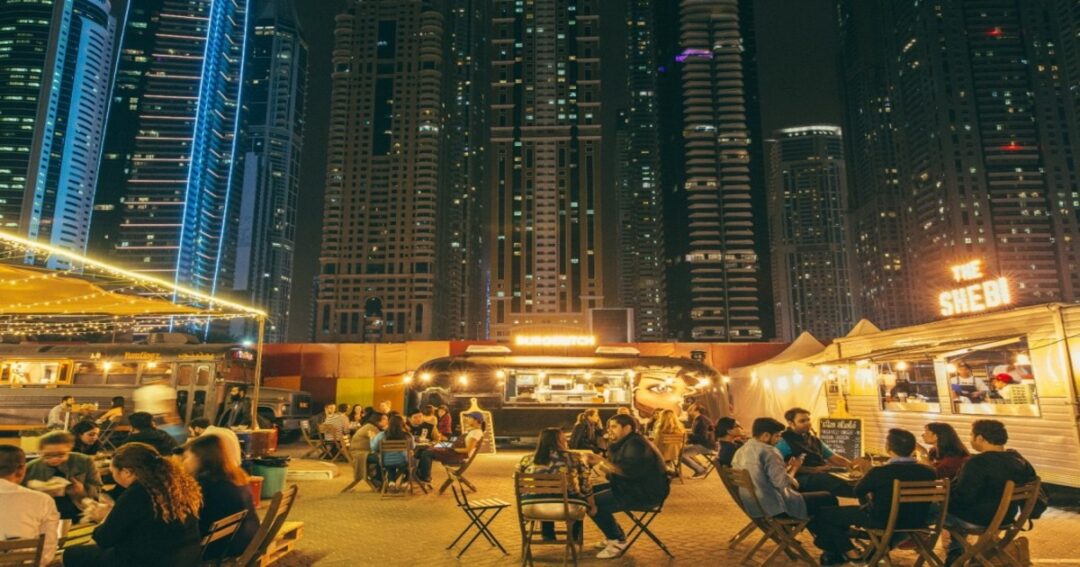
Dubai is home to more than 200 nationalities. The skyscrapers and luxury hotels are the story most people know. The Dubai street food scene tells the more interesting one — the story of the communities who actually built this city and who carry their food cultures with them in a way that no fine dining restaurant can replicate.
Walk through the older neighbourhoods in the evenings and you are walking through an accidental food atlas of the world: a Pakistani dhaba wedged between an Iranian bakery and a Levantine shawarma counter; the sweet, cardamom-heavy scent of karak chai drifting from a tea stall where cab drivers and construction workers eat together; golgappa water poured into crisp shells while a crowd of South Asian families eat standing on a pavement. The best street food in Dubai is not in the tourist zones. It is in the places where the city’s working communities actually live — where food is cooked the way grandmothers made it, priced for people who work hard and eat honestly, and eaten with the complete absence of performance.
This guide covers the full spectrum of street food in Dubai — organised by the cultural traditions that produced each dish, because that is the only way to understand what you are eating.
The Foundation: Dubai’s Food Demographics
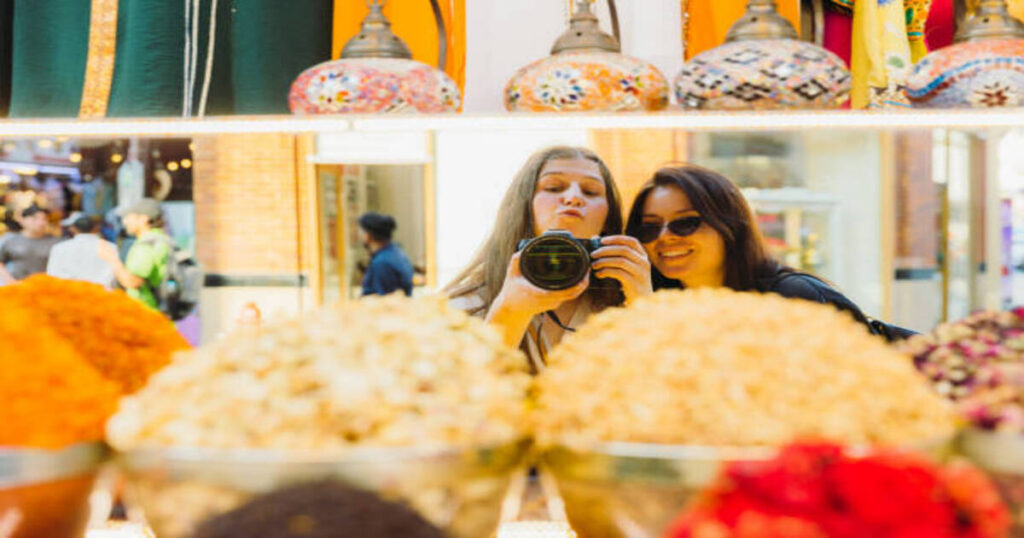
Before the dishes, the context. The UAE’s population is approximately 89% expatriate — one of the highest ratios of foreign-born residents to citizens anywhere in the world. The largest communities in Dubai are South Asian (Indian, Pakistani, Bangladeshi, Sri Lankan — collectively the largest demographic group), followed by Arab expatriates (Egyptian, Yemeni, Levantine), Filipino, Iranian, and East African communities, with Emiratis themselves constituting approximately 11% of the city’s total population.
This demographic reality is written directly into the street food landscape. The famous street food in Dubai is not primarily Emirati — it is the food of a city built by people from across the world who brought their entire culinary traditions with them.
Also Read: Best Things to Do in Abu Dhabi: Explore the Heart of the UAE
Emirati Street Food — The Original Flavours
Luqaimat — The Sweet That Started It All
Luqaimat are small, deep-fried dough balls — made from a batter of flour, yeast, saffron, and cardamom, fried in oil until golden and crispy on the outside, pillowy soft within. They are drizzled immediately with dibs (date syrup) or honey, occasionally dusted with sesame seeds. The result is warm, crispy, sweet, and deeply fragrant — one of the most characteristically Emirati preparations in existence and one of the oldest sweet traditions in Gulf cuisine.
Luqaimat are the street food of Ramadan evenings, of family gatherings, of the moments after prayer when something sweet is needed. The date syrup connects them directly to the date palm — the foundational agricultural crop of the Arabian Peninsula, cultivated here for thousands of years. This is a famous street food in Dubai that predates the city itself.
- Eaten fresh and hot — they lose their texture within minutes
- The date syrup version is more traditional than honey; seek it out specifically
Regag — The Emirati Crepe
Regag is a paper-thin Emirati flatbread, cooked on a round iron griddle (tawa) with extraordinary speed by vendors who have been making it for years. The batter — flour, water, salt — is spread across the hot surface in a single fluid movement; within seconds it is done. Regag is served with eggs, kiri cheese, honey, or date syrup — a bread whose entire character is defined by its thinness, its slight crispness, and the contrast with whatever is placed on top of it.
Khameer — The Saffron Bread
Khameer is a soft, slightly sweet Emirati leavened bread flavoured with saffron and cardamom — a daily staple and a heritage bread that reflects the Arabian Peninsula’s ancient spice trade relationships. The saffron gives it a golden-yellow colour and a faint floral quality; the cardamom adds warmth. Eaten with samboosa (samosas) or with cheese and honey, it is one of the most comforting and best cheap street food options available in Dubai.
Samboosa — The Ramadan Staple
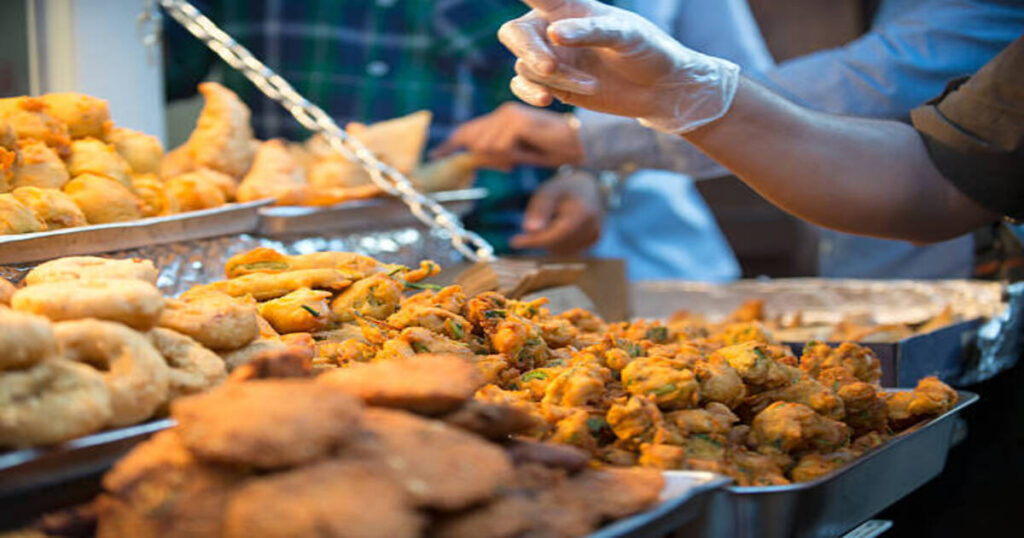
Samboosa (the Gulf version of the samosa) is a deep-fried pastry triangle filled with spiced minced meat, lentils, or cheese. The Gulf version is thinner-shelled and crispier than the Indian samosa, with a more restrained spice profile. It is associated strongly with Ramadan, when it appears on every iftar table, but is available year-round at bakeries and street stalls across the city. The direct linguistic connection to the South Asian samosa reflects the centuries of trade between the Gulf and the Indian subcontinent that predates modern Dubai by at least a thousand years.
Karak Chai — The National Drink on Every Street Corner
Karak chai — from the Hindi/Urdu kadak (strong) — is the single most consumed beverage in Dubai’s street food culture. A strong black tea brewed with evaporated or condensed milk, cardamom, and sometimes saffron, ginger, and cinnamon; simmered until thick and intensely flavoured, poured into small plastic cups. It is simultaneously an Emirati institution, a South Asian import, and a Pan-Gulf community experience. Karak chai originated in the Indian subcontinent and arrived in the Gulf with South Asian workers and traders; it has been thoroughly adopted by all communities.
A cup of karak at a roadside stall costs almost nothing and is an essential part of the best cheap street food in Dubai experience — served to construction workers before dawn, to office workers at 11 AM, to families after evening prayers.
Also Read: AMAZING THINGS TO DO IN DUBAI FOR THE ULTIMATE 2026 HOLIDAY!
Levantine Street Food — The Arab Expat Kitchen
Shawarma — The Undisputed King
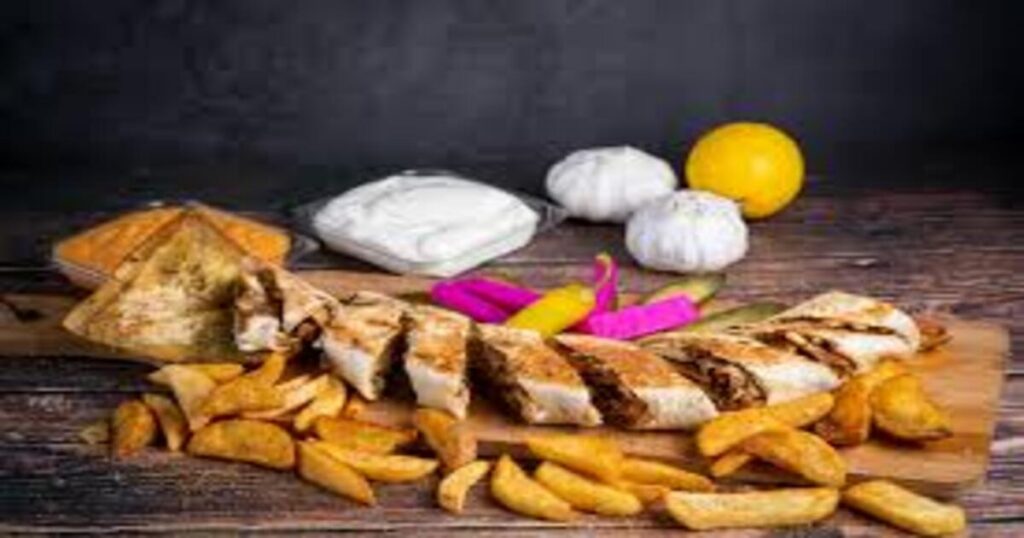
Shawarma is the most consumed Dubai street food by volume — a preparation originating in the Levant (Lebanon, Syria, Jordan, Palestine) that has been so thoroughly adopted by every community in Dubai that it functions as a kind of common currency of hunger. Meat — chicken or lamb, occasionally beef or camel — is stacked on a vertical spit and slow-roasted for hours; the outer layer is carved into thin, caramelised slivers and wrapped in flatbread with garlic sauce (toum), pickled vegetables, tomato, and cucumber.
The quality of a Dubai shawarma depends on three things: the marinade on the meat, the quality of the bread, and the garlic sauce. The best versions have all three at full intensity — the meat is slightly charred and juicy simultaneously, the bread is warm and slightly crisp from the griddle, and the toum is aggressively garlicky and light in the same mouthful.
Shawarma in Dubai is eaten at midnight as readily as at noon. It is arguably the city’s most democratic food — the same stall serves the construction worker and the office executive, the tourist and the 20-year resident.
Manakish — The Levantine Breakfast Flatbread
Manakish (singular mankousha) is a Levantine flatbread baked in a wood-fired or gas oven, topped with za’atar (a blend of wild thyme, sesame, sumac, and salt mixed with olive oil), cheese, or minced meat. It is the breakfast of Lebanese and Syrian communities across Dubai — eaten fresh from the oven, folded in half, eaten standing or wrapped in paper. The za’atar version is the most classic: the herb-and-oil combination creates a flavour that is simultaneously earthy, sour from the sumac, and richly savoury from the sesame.
Falafel — The Chickpea Standard
Falafel — deep-fried balls of ground chickpeas and herbs, eaten in flatbread with tahini, pickled vegetables, and tomato — is arguably the most widely eaten vegetarian street food across all of Dubai’s communities. The Egyptian, Levantine, and Gulf versions differ subtly in herb combination and texture; all are available across the city. At its best, a falafel wrap from a properly stocked Lebanese stall — the falafel still hot enough to steam, the tahini freshly mixed — is one of the finest quick meals anywhere in the city.
South Asian Street Food — The Largest Community’s Kitchen
South Asian communities constitute the largest demographic group in Dubai, and their food traditions represent the most diverse single category of street food in Dubai.
Biryani — The Friday Ritual
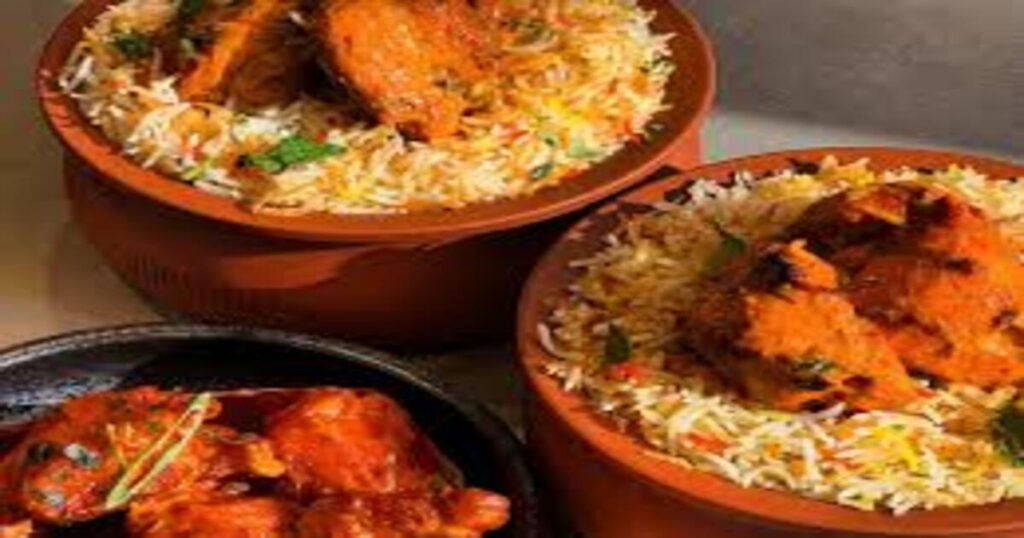
Biryani in Dubai comes in more varieties than in most Indian cities: Hyderabadi dum biryani, Malabar biryani from Kerala, Pakistani-style biryani with its distinct spicing, Bangladeshi biryani with its lighter hand — all available within a few blocks of each other in the South Asian neighbourhoods. The biryani is the Friday meal, the celebration meal, the comfort meal of the South Asian diaspora — and the competition between communities over whose biryani is correct is one of Dubai’s most passionate ongoing arguments.
Golgappa (Pani Puri) — The Best Golgappa in Dubai
Golgappa (called pani puri in western India, puchka in Bengal) — hollow crispy shells filled with a mixture of spiced mashed potato and chickpeas, filled at the moment of serving with tangy, spiced, intensely flavoured water (pani) and eaten in one mouthful — is the most beloved South Asian street snack in Dubai. The experience is entirely tactile: the shell cracks, the flavoured water fills the mouth, the spiced potato provides weight and texture, and the whole experience is over in two seconds before the next shell arrives.
Finding the best golgappa in Dubai is a pursuit that occupies South Asian residents as seriously as any other food mission in the city. The key variables are the quality of the shell (must be crisp, never soft), the flavour of the pani (the spice balance between tamarind, green chilli, cumin, and black salt is everything), and the generosity of the filling. The best versions are found at South Asian snack counters and chaat stalls in the neighbourhoods where the community is most concentrated — not in tourist areas.
Dosa and Idli — The South Indian Daily Bread
The South Indian communities of Dubai — primarily from Tamil Nadu, Kerala, Karnataka, and Andhra Pradesh — have maintained a remarkable presence of dosa (crispy fermented rice and lentil crepe), idli (steamed rice cakes), vada (deep-fried lentil doughnuts), and sambar (lentil and vegetable soup) as daily street food. The masala dosa — filled with spiced potato and served with coconut chutney and sambar — is one of the most nutritionally complete and most affordable meals available in Dubai.
Vada Pav — Mumbai’s Export
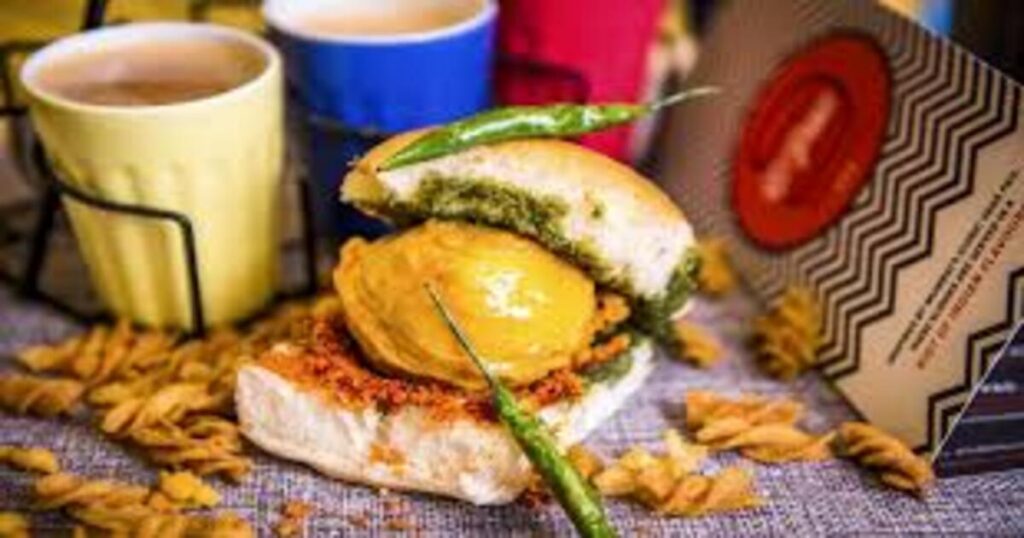
Vada pav — a deep-fried spiced potato ball inside a soft bread roll, served with green chilli chutney and dry garlic powder — is Mumbai’s most famous street food and has followed Mumbai’s Maharashtrian community to Dubai. Simple, filling, fiercely spiced, and extraordinarily cheap — it is the working-class street food of the city’s South Asian neighbourhoods.
Also Read: Bucharest Festivals: The Complete Guide to the Best Events in Romania’s Capital
Iranian Street Food — The Quiet Tradition
Iran is Dubai’s nearest significant neighbour, and the Iranian community has been present in the emirate since long before the modern city existed. Iranian food culture has left a deep imprint on Dubai’s street food landscape:
Sangak bread — a long, flat sourdough bread baked on a bed of small river pebbles (sang = stone), which gives it its characteristic dimpled surface and slightly charred flavour — is available at Iranian bakeries that fire their ovens before dawn. A fresh sangak, pulled hot from the oven and eaten with fresh herbs (sabzi) and white cheese (panir) — the Persian breakfast — is one of the finest morning street food experiences in Dubai.
Iranian kebabs — koobideh (minced lamb and onion, shaped around flat skewers) and jujeh (saffron-marinated chicken) — are available at Iranian restaurants and takeaway counters across the city. The saffron marinade on jujeh creates a golden, fragrant crust that is entirely distinctive from any other kebab tradition.
Filipino Street Food — The Archipelago’s Comfort
The Filipino community in Dubai is large and deeply rooted — domestic workers, healthcare professionals, construction engineers — and their food culture is one of the most distinctive in the city.
Balut — a fertilised duck egg, boiled and eaten with salt and vinegar — is the most famous (and most challenged by non-Filipinos) Filipino street food, available at community gatherings and Filipino grocery stores. It is not a stunt food in Filipino culture; it is a protein-rich, everyday snack with a specific cultural identity.
Isaw — grilled pig or chicken intestines on a skewer, marinated in a sweet-sour vinegar sauce — is the quintessential Filipino street food, available at Filipino community events and stalls.
Halo-halo — crushed ice over sweetened beans, jellies, kaong (palm sugar fruit), macapuno (coconut sport), and topped with ube (purple yam) ice cream and leche flan — is the dessert tradition that has been transported entirely intact to the Dubai summer, where its cold sweetness is genuinely therapeutic.
Conclusion
Dubai street food is the most honest version of the city — the one built by the people who actually made it, fed by the flavours they carried from home. Quick guide to the best street food in Dubai by community:
- Emirati: Luqaimat (date syrup dough balls), regag (paper-thin flatbread), samboosa, khameer, karak chai
- Levantine: Shawarma (the king), manakish (za’atar flatbread), falafel wrap
- South Asian: Biryani, golgappa/pani puri, dosa and idli, vada pav, karak chai
- Iranian: Sangak bread (stone-baked sourdough), koobideh and jujeh kebabs
- Filipino: Halo-halo, isaw, balut
The best cheap street food in Dubai is not in the tourist zones — it is in the neighbourhoods where the city’s working communities actually live. Follow the karak chai smell. Follow the crowds at midnight. Find the stall that’s been in the same spot for twenty years. That is where the real Dubai is eating.
Download the Explurger app to discover what Dubai residents actually recommend for street food, find the authentic community stalls beyond the tourist circuit, and log every shawarma, golgappa, and cup of karak chai on your Dubai food journey.
The vertical rotisserie is already turning. The karak is already simmering. Dubai’s street is already set.
FAQs About Dubai Street Food
2. What is the best cheap street food in Dubai?
The best cheap street food in Dubai is concentrated in the South Asian and Arab expat neighbourhoods rather than tourist zones. Karak chai, falafel wraps, shawarma, vada pav, golgappa, and dosa-idli from South Indian counters are all available for well under AED 15 (~₹350 / ~$4) and in many cases significantly less. Karak chai at a roadside stall costs AED 1–2. A shawarma is typically AED 5–10. The best value meals in Dubai are eaten standing up, in a hurry, in a neighbourhood where nobody is watching.
3. Where can I find golgappa in Dubai?
The best golgappa in Dubai is found in South Asian community neighbourhoods — the areas with the highest concentration of Indian and Pakistani residents, where chaat counters have been operating for decades. Look for South Asian grocery stores and snack counters in areas like Karama, Bur Dubai, and Deira rather than tourist-facing restaurants. The best versions are served fresh, with pani (spiced water) made in-house, shells fried the same day, and filling prepared fresh. The quality varies significantly — the shell must be crisp, the pani aggressively spiced with tamarind and black salt, and the serving immediate.
4. What is karak chai and why is it everywhere in Dubai?
Karak chai is a strong, sweetened spiced tea — black tea simmered with evaporated milk, cardamom, and sometimes saffron, ginger, and cinnamon — poured into small cups and available at roadside stalls, petrol stations, cafés, and bakeries across Dubai. It originated in the Indian subcontinent and arrived in the Gulf with South Asian workers and traders; it has been adopted by all communities and functions as the city's universal social beverage. It is one of the defining elements of Dubai street food culture and one of the most affordable daily pleasures in the city.
5. What is luqaimat?
Luqaimat are traditional Emirati deep-fried dough balls — made from a batter of flour, yeast, saffron, and cardamom, fried until golden and crispy, then drizzled immediately with date syrup or honey. They are the signature Emirati sweet found at street stalls, markets, and Ramadan evenings across Dubai. The combination of the hot crispy exterior, soft interior, and deep sweetness of the date syrup makes them one of the most beloved famous street food in Dubai preparations. They must be eaten fresh and hot — within minutes of frying — for the full experience.