
1,907 Total Views
America’s festival calendar is as contradictory and as layered as the country itself. The same land where Mardi Gras has been disrupted, banned, and revived across three centuries of colonial rule; where Burning Man rises and vanishes on desert land that Indigenous peoples were forcibly removed from; where Coachella draws 250,000 people to a valley named after a Native tribe that once lived there — this land also hosts some of the most vibrant, most culturally meaningful, and most joyful celebrations on earth.
Any honest list of festivals in the USA has to hold two things at once: the extraordinary cultural energy that America’s immigrant communities, Black communities, LGBTQ+ communities, and Indigenous nations have created — and the historical context of dispossession, erasure, and resistance that makes many of those celebrations acts of survival as much as acts of joy. This guide covers the famous festivals in the US from both angles: the commercial and the communal, the headline-making and the historically grounded.
Top 10 Famous Festivals in America
1. Mardi Gras — New Orleans, Louisiana (February/March)
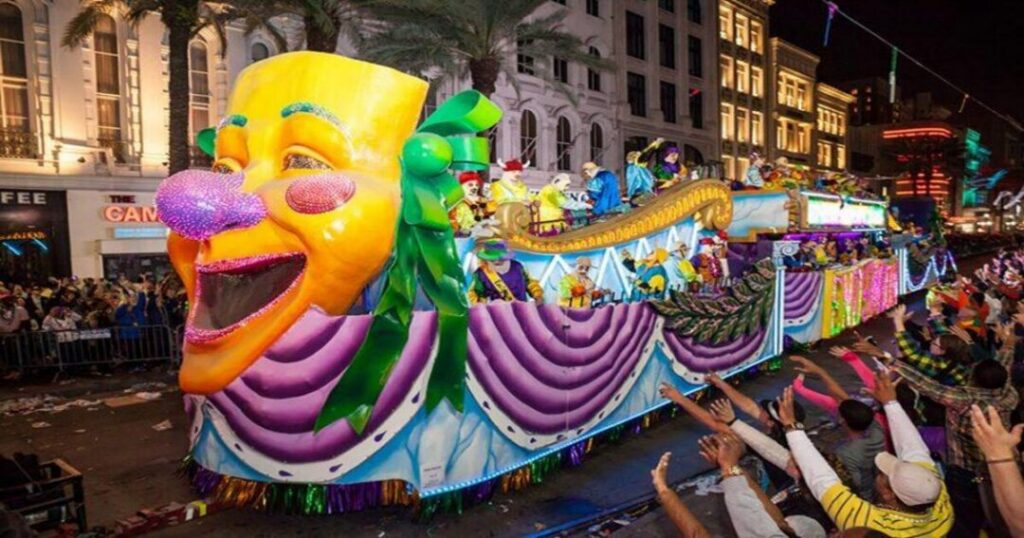
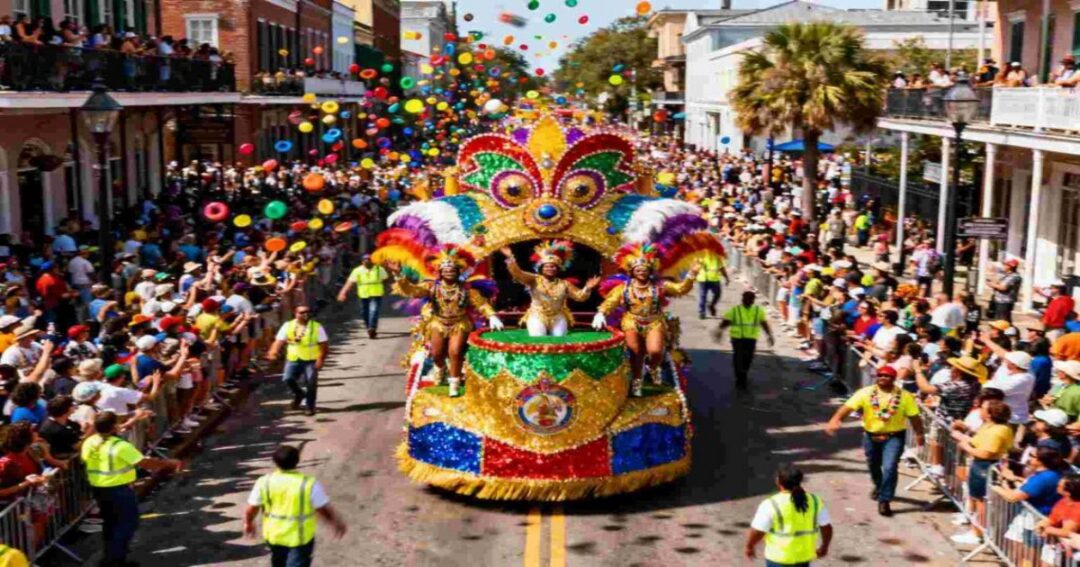
Mardi Gras is the oldest and most culturally embedded of all famous festivals in the US — a celebration whose origins trace to French Catholic settlers in the 18th century, who brought the Carnival tradition to the Louisiana territory they had settled on land belonging to the Chitimacha, Choctaw, and other Indigenous nations. The Spanish who took control of New Orleans in 1762 banned the festivities. The Americans who took over in 1803 banned masked balls and public disguises. Mardi Gras survived all of it — absorbing African, Caribbean, Creole, and Indigenous influences along the way to become something no European Carnival ever produced.
Today Mardi Gras attracts over 1.4 million visitors to New Orleans annually and contributes more than $1 billion to the local economy. The parades are organised by krewes — the social clubs that have been the backbone of Mardi Gras culture since the 19th century. The throws (beads, decorated cups, coins), the costumes in purple, green, and gold (signifying justice, faith, and power), and the specific energy of Bourbon Street during Carnival week are unlike anything else in America.
What most visitors miss: The Mardi Gras Indians — Black Creole communities who began dressing in elaborately beaded and feathered “Indian suits” in the 19th century, in honour of and in solidarity with the Native American nations who sheltered runaway enslaved people. The Big Chiefs and their tribes spend all year hand-stitching suits that can weigh over 100 pounds; on Mardi Gras day they parade through their own neighbourhoods in a tradition that is simultaneously an act of cultural reverence, creative expression, and resistance. The Mardi Gras Indians are the most extraordinary and most overlooked element of the entire festival.
Also Read: Festivals in Alaska: The Complete Guide to Summer, Winter & Arts Celebrations
2. Coachella Valley Music and Arts Festival — Indio, California (April)
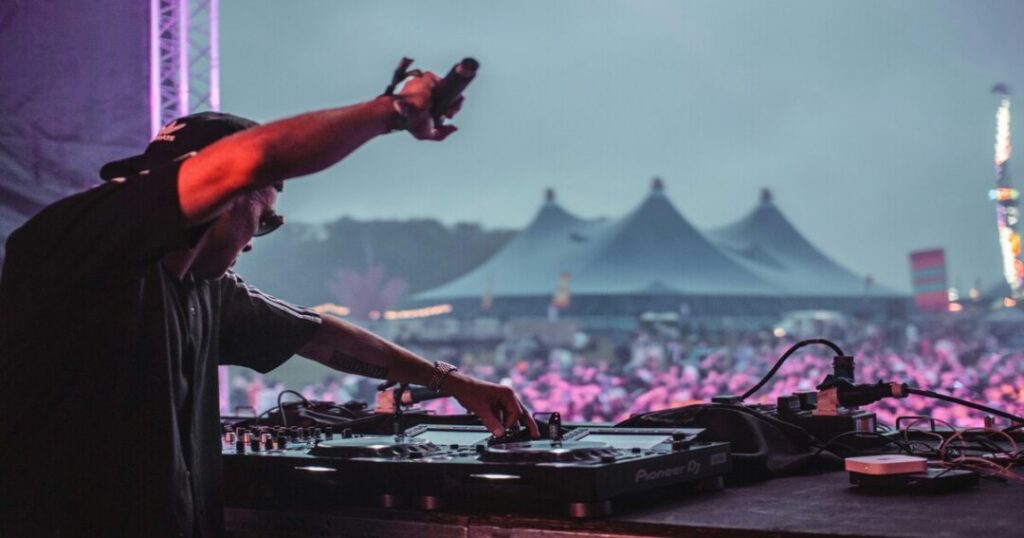
Coachella is the most globally recognised America famous festival — a music and arts festival held over two weekends each April at the Empire Polo Club in Indio, California, in the Colorado Desert. It was co-founded by Paul Tollett and Rick Van Santen, with its origins tracing to a 1993 Pearl Jam concert at the same polo club while the band was boycotting Ticketmaster. The inaugural festival was held in October 1999; today it draws approximately 250,000 people across its two weekends and has become a global cultural phenomenon — equal parts music festival, art installation, fashion moment, and celebrity sighting.
The valley in which Coachella takes place is named after the Coachella tribe — part of the Cahuilla Nation whose ancestral territory covers the entire Coachella Valley. The Cahuilla people were dispossessed of most of this land through a combination of federal policy and commercial development across the 19th and 20th centuries.
What makes it extraordinary: The art installations — commissioned specifically for the festival, some the size of buildings — give Coachella a visual character that separates it from any pure music festival. Headliners have included Beyoncé, Radiohead, Kendrick Lamar, and virtually every significant artist of the past 25 years.
3. Burning Man — Black Rock Desert, Nevada (August–September)
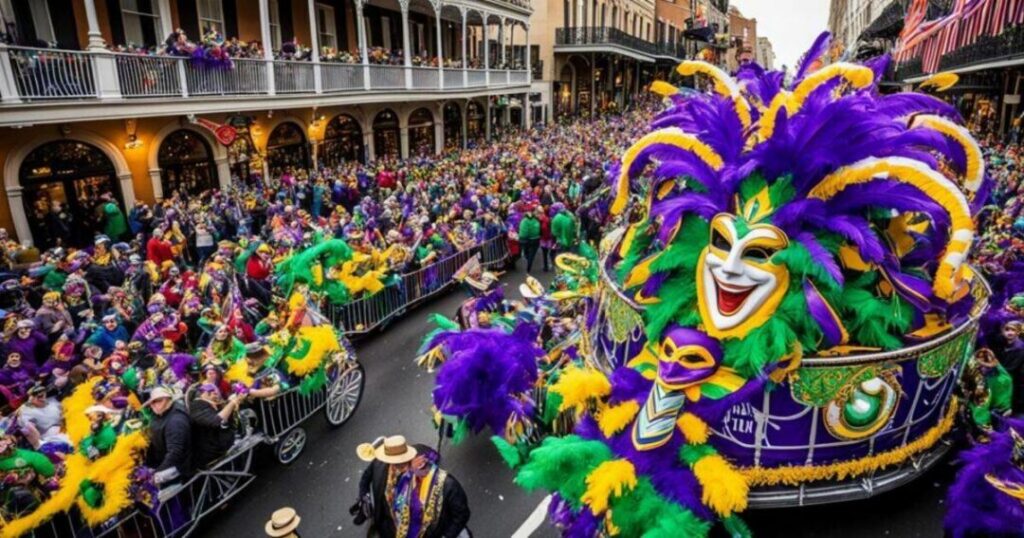
Burning Man began on June 22, 1986, when Larry Harvey and Jerry James burned an 8-foot wooden effigy on Baker Beach in San Francisco with a small group of friends — a spontaneous act with no clear purpose that nevertheless produced one of the most significant cultural events in American history. The event moved to the Black Rock Desert in Nevada in 1990 and has grown to approximately 80,000 participants who construct and then completely dismantle a temporary city over one week.
The Black Rock Desert is part of the ancestral territory of the Northern Paiute people — the Burning Man organisation has been criticised by some Indigenous scholars and advocates for the limited acknowledgement of this relationship, though the festival’s “Decommodification” and “Leave No Trace” principles have led to some engagement with land stewardship frameworks.
Burning Man is structured around 10 Principles including radical self-reliance, radical inclusion, decommodification (no commercial transactions), and gifting. There are no sponsors, no main stages, no corporate presence. The art — at scales that rival museum installations — is created by the participants. The wooden effigy is burned on the penultimate night; the Temple (a second large structure) is burned on the final night in near-silence.
4. SXSW (South by Southwest) — Austin, Texas (March)
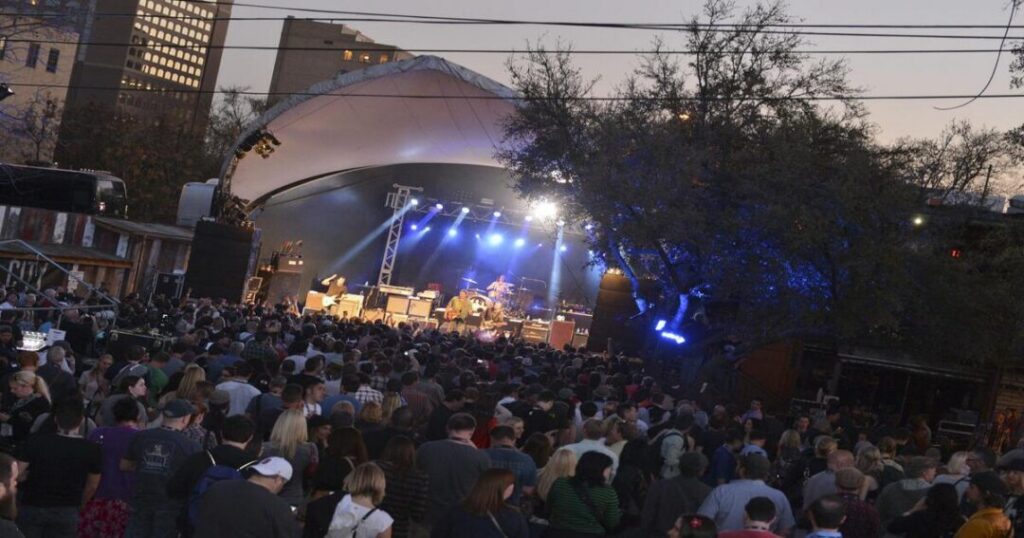
SXSW — South by Southwest — began in 1987 in Austin, Texas, as a music conference for independent artists who could not access the major label circuits. It has since become the most multidisciplinary of all America festival list entries: simultaneously a music festival (nearly 2,000 artists perform across the city’s venues and streets), a film festival (premiering major independent and studio films), an interactive and technology conference (where major tech products and companies have been launched), and a comedy and gaming festival. Austin in March during SXSW is not a festival — it is a city-wide occupation.
5. Sundance Film Festival — Park City, Utah (January)
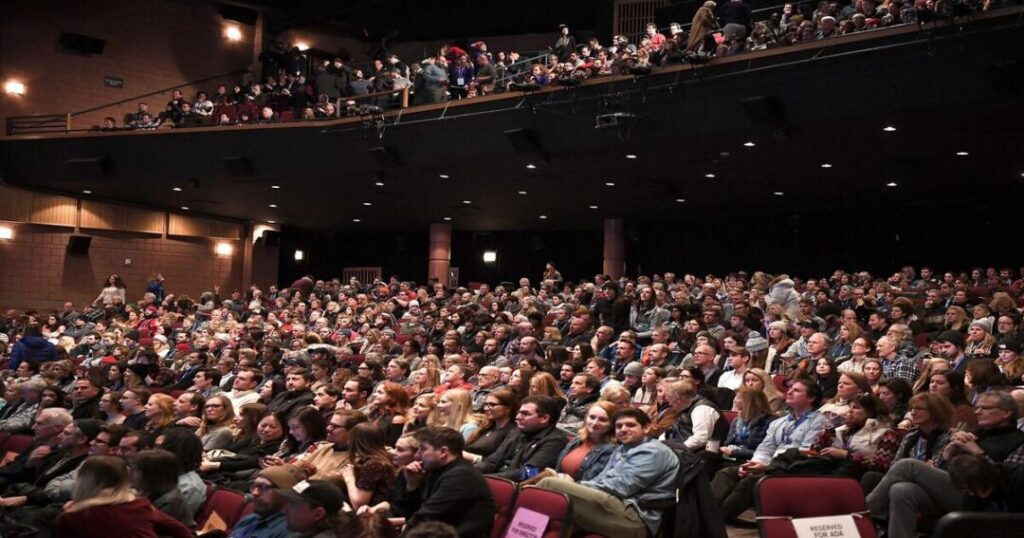
The Sundance Film Festival, founded by Robert Redford in 1978 as the Utah/US Film Festival and renamed Sundance in 1991, is America’s premier showcase for independent film — held each January in Park City, Utah. Directors including Quentin Tarantino (Reservoir Dogs), Ava DuVernay, and countless others launched their careers at Sundance. The festival receives over 14,000 submissions and selects approximately 118 features — making selection itself a significant cultural statement. Sundance has also become one of the most important venues for Indigenous filmmakers telling their own stories — a function worth noting given the festival’s location in Ute ancestral territory.
6. New Orleans Jazz & Heritage Festival (April–May)
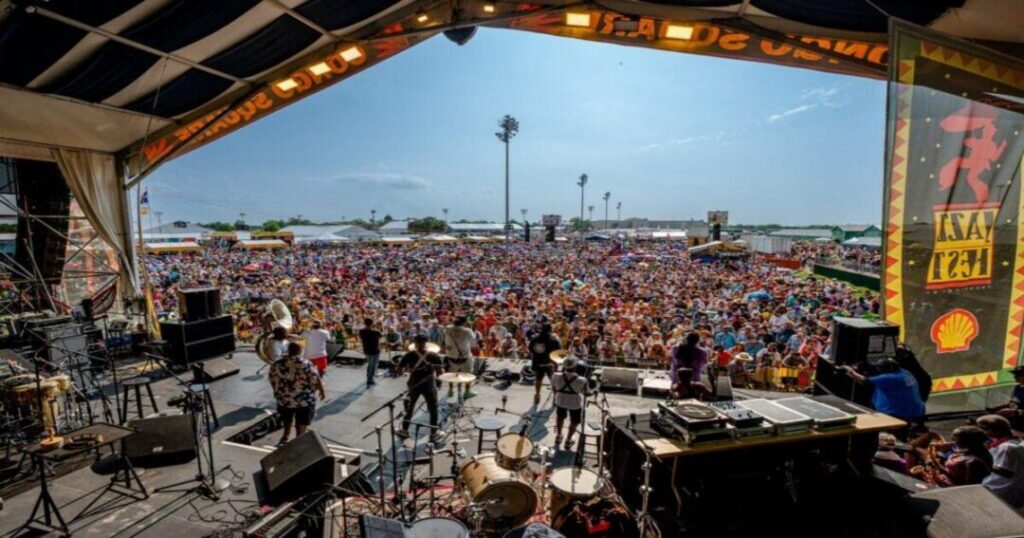
The New Orleans Jazz & Heritage Festival (Jazz Fest) is the finest food and music festival in America — a ten-day celebration of jazz, blues, R&B, Cajun, Zydeco, gospel, and the full spectrum of Louisiana musical tradition, combined with an extraordinary concentration of Creole and Louisiana cuisine. Jazz Fest grew directly from the specific musical heritage of New Orleans — a city whose music was created by the convergence of African, Caribbean, French, Spanish, and Native American cultural traditions under conditions of enslavement and colonialism. Louis Armstrong, Fats Domino, and the entire tradition of American popular music that descended from New Orleans jazz make Jazz Fest not just a music festival but a celebration of the most consequential musical heritage in American history.
7. Lollapalooza — Chicago, Illinois (August)
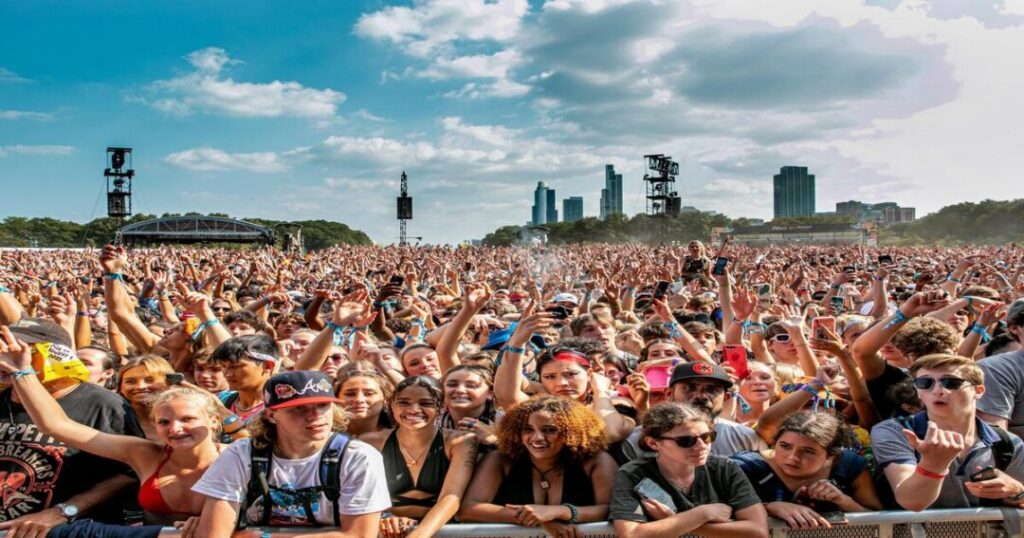
Lollapalooza — originally a touring festival founded in 1991 by Perry Farrell of Jane’s Addiction — became a permanent fixture in Chicago’s Grant Park in 2005, where it now draws approximately 400,000 people over four days each August. The festival has been significant in the careers of artists across alternative rock, hip-hop, EDM, and pop — and its Grant Park location, in a city with the richest blues and jazz heritage in the American Midwest, gives it a specific cultural context.
Also Read: European Music Festivals: 8 Best Events to Experience in 2026
8. Albuquerque International Balloon Fiesta — New Mexico (October)
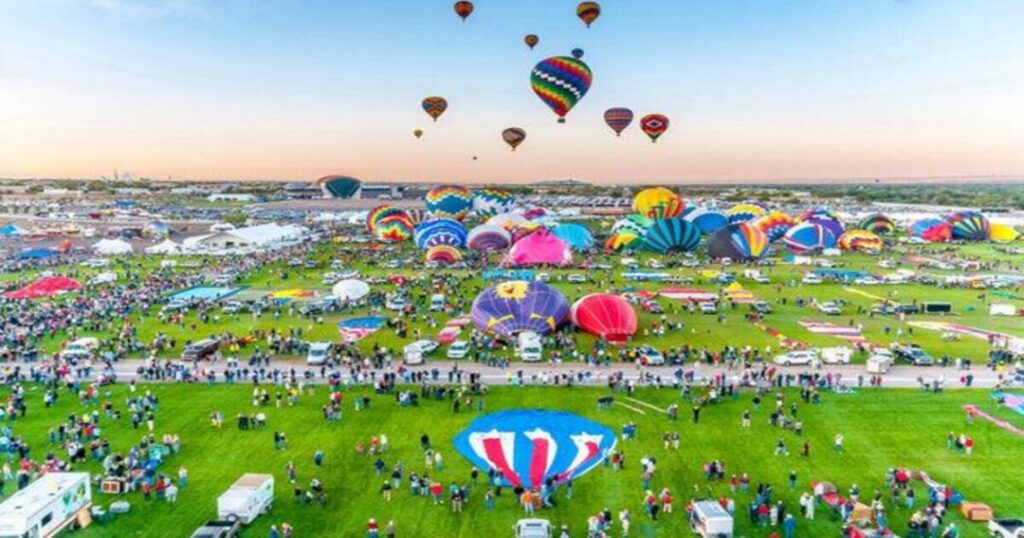
The Albuquerque International Balloon Fiesta is the world’s largest hot air balloon festival — held each October in Albuquerque, New Mexico, with nearly 600 hot air balloons rising from the Rio Grande Valley in the most visually extraordinary event in the American festival list. The Mass Ascension — when hundreds of balloons launch simultaneously at dawn — is one of the most photographed events in the American Southwest.
Albuquerque sits in the Rio Grande valley, on land continuously inhabited by Pueblo peoples for over a thousand years and home to the Sandia, Isleta, Santa Ana, and other Pueblo nations. The Balloon Fiesta’s October timing coincides with the autumn harvest season that the Pueblo nations have celebrated in their own ways since long before any European festival arrived in the valley.
Also Read: Festivals in Belgium: From Tomorrowland to Brussels’ Most Spectacular Celebrations
9. Bonnaroo Music & Arts Festival — Manchester, Tennessee (June)
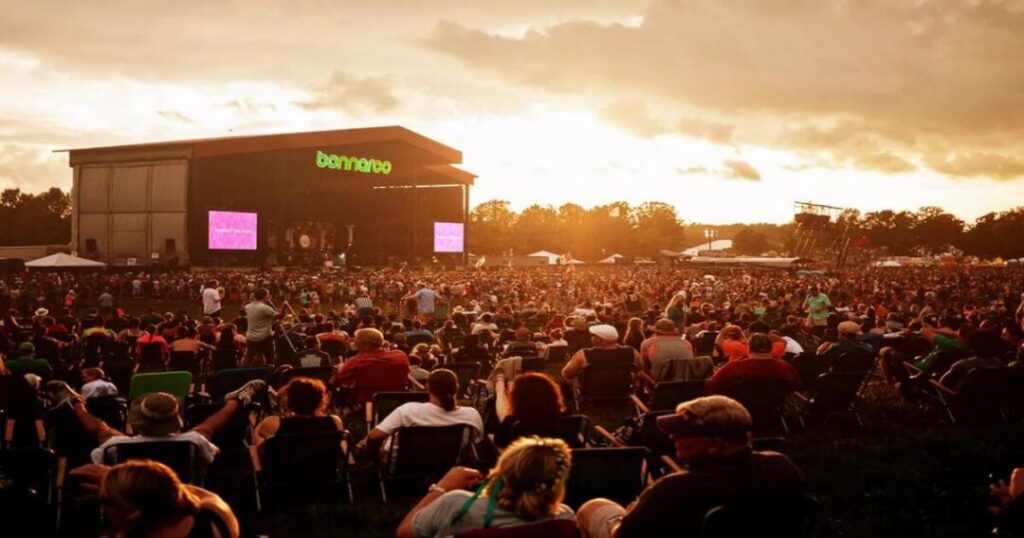
Bonnaroo, founded in 2002 in Manchester, Tennessee (south of Nashville), is held on a 700-acre farm over four days each June — a camping music festival with over 150 performances across 10+ stages that has established itself as the most community-oriented of the major American music festivals. Bonnaroo has been notable for its sustainability commitments (annual sustainability reports, Leave No Trace practices, environmental education programming) and for the specific warmth of its camping culture.
10. Thanksgiving — Nationwide (Fourth Thursday of November)
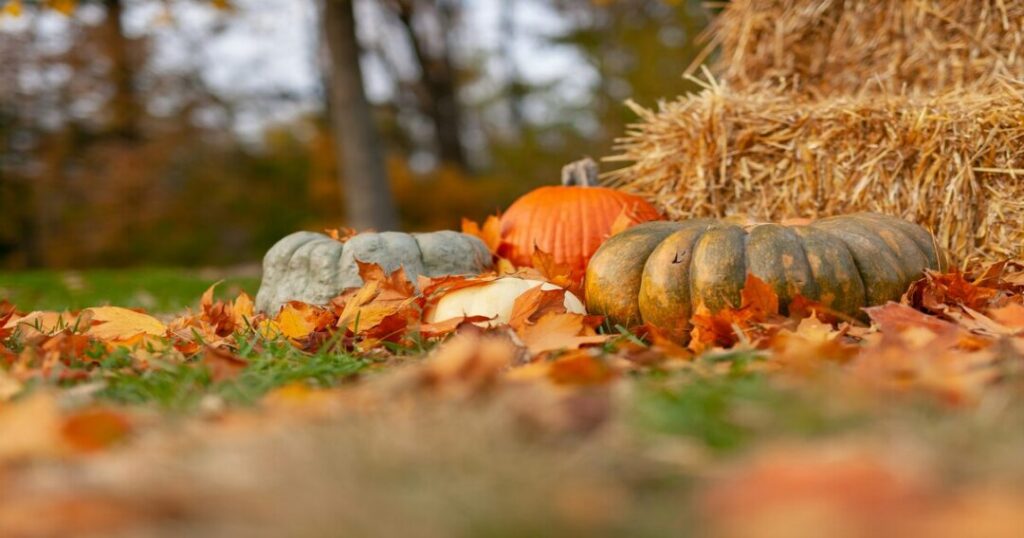
Thanksgiving is the most universally observed of all America’s famous festival occasions — a federal holiday held on the fourth Thursday of November when families gather for a meal of turkey, stuffing, cranberry sauce, and pumpkin pie. The official narrative of Thanksgiving — a 1621 harvest feast shared between Pilgrim settlers and Wampanoag people — has been profoundly challenged by Indigenous scholars and activists, who observe the National Day of Mourning instead.
The Wampanoag people did not surrender their land willingly. Within decades of that 1621 harvest, the Wampanoag Nation was at war with the colonial settlements, and by 1676 (King Philip’s War), the colonial forces had executed Metacom (King Philip), the Wampanoag leader, and sold his wife and children into slavery in the Caribbean. For international visitors: Thanksgiving is the most significant national gathering in America, but understanding its full history — the colonial violence it obscures — is part of understanding America.
Bonus Famous Festivals in America
Bonus 1 — Macy’s Thanksgiving Day Parade (New York City, November): One of the most-watched events in America — giant character balloons, marching bands, and celebrity performances televised nationally on Thanksgiving morning since 1924.
Bonus 2 — Rose Bowl Parade / Tournament of Roses (Pasadena, California, January 1): The famous New Year’s Day parade of elaborate floral floats down Colorado Boulevard — held since 1890 and broadcast nationally.
Bonus 3 — Halloween in Salem (Salem, Massachusetts, October): The city of the 1692 witch trials becomes the most concentrated Halloween destination in America each October — haunted tours, historical presentations, and the specific weight of a genuine historical tragedy.
Also Read: Chinese Festivals: The Complete Guide to Traditional Celebrations, Dates & Culture
Native American & Indigenous Festivals — The Living Traditions That Predate Everything Else
Any list of festivals in the USA that does not include Indigenous festivals is incomplete — not as a courtesy addition, but because the cultural celebrations of Native American nations are the oldest, most continuously practiced, and in many ways most extraordinary festivals on the continent. They survived deliberate federal policy to destroy them. The Indian Civilization Act of 1883 explicitly banned traditional Native American ceremonies, dances, and religious practices — a ban that remained in various forms until the American Indian Religious Freedom Act of 1978. The Pow Wow, the ceremonial dances, the harvest festivals — these continued in resistance during the near-century of prohibition. That they exist today is an act of cultural survival that no Coachella or Bonnaroo can claim.
1. Gathering of Nations — Albuquerque, New Mexico (April)
The Gathering of Nations is the largest Pow Wow in North America — held annually in Albuquerque, New Mexico, with over 3,000 dancers and singers from more than 500 Indigenous nations across the United States and Canada competing in traditional dance categories. The Miss Indian World pageant, the Juried Arts Market, and the Trade Market bring together the most diverse gathering of Native American nations of any single event in the country. For international visitors, the Gathering of Nations is the finest single opportunity to witness the living cultural traditions of Native America — the regalia, the drumming, the dance styles specific to different nations, and the extraordinary inter-tribal community that the Pow Wow represents.
2. Crow Fair — Crow Agency, Montana (August)
Crow Fair — held annually on the Crow Nation reservation in Montana since 1904 — is one of the oldest and most significant Pow Wows in America, known as the “Tepee Capital of the World” during the fair week when thousands of traditional tepees are erected across the reservation grounds. The Crow Nation’s fair combines traditional ceremonies, rodeo, horse racing, dancing, and the gathering of Crow families from across the region. Unlike the Gathering of Nations, Crow Fair is primarily a Crow Nation event — a specific national celebration rather than an inter-tribal gathering.
3. Heard Museum Guild Indian Fair & Market — Phoenix, Arizona (March)
The Heard Museum Indian Fair & Market in Phoenix is the most prestigious Native American fine art market in the country — a two-day juried art market where artists from across the Southwest present pottery, jewellery, textiles, painting, sculpture, and other traditional and contemporary forms. The Heard Museum itself is one of the finest museums of Native American art in the world; the annual fair is the most concentrated gathering of the Southwest’s Indigenous artistic tradition.
4. Feast Days — Pueblo Nations of New Mexico (Year-round)
The Feast Days of the Pueblo nations of New Mexico — held at each Pueblo on the feast day of their patron saint (a Catholic overlay on pre-existing ceremonial cycles) — are among the most visually extraordinary and most spiritually significant of all Native American public ceremonies. At Taos Pueblo, San Ildefonso Pueblo, Santo Domingo Pueblo, and the other Rio Grande Pueblos, Feast Days involve traditional dance, communal feasting, and the continuation of cultural practices that have been maintained since long before the Spanish arrived in the Southwest in 1598.
Note for visitors: Many Pueblo ceremonies and Feast Days are open to non-Native visitors; some are not. Always check with the specific Pueblo before attending; follow all photography and recording restrictions absolutely; understand that you are a guest at a living cultural and religious ceremony, not a tourist attraction.
List of Festivals in USA — By Type
Music Festivals
| Festival | Location | Season |
| Coachella | Indio, California | April |
| SXSW | Austin, Texas | March |
| Lollapalooza | Chicago, Illinois | August |
| Bonnaroo | Manchester, Tennessee | June |
| New Orleans Jazz Fest | New Orleans, Louisiana | April–May |
| Summerfest | Milwaukee, Wisconsin | Summer |
| Outside Lands | San Francisco, California | August |
Cultural & Heritage Festivals
| Festival | Location | Season |
| Mardi Gras | New Orleans, Louisiana | February–March |
| Gathering of Nations | Albuquerque, New Mexico | April |
| Crow Fair | Crow Agency, Montana | August |
| Sundance Film Festival | Park City, Utah | January |
Seasonal & National
| Festival | Location | Season |
| Thanksgiving | Nationwide | November |
| Halloween (Salem) | Salem, Massachusetts | October |
| Rose Bowl Parade | Pasadena, California | January |
| Macy’s Thanksgiving Parade | New York City | November |
Unique American Experiences
| Festival | Location | Season |
| Burning Man | Black Rock Desert, Nevada | August–September |
| Albuquerque Balloon Fiesta | Albuquerque, New Mexico | October |
Conclusion About Festivals in America
The festivals in America are a map of the country’s contradictions and its creativity — the Mardi Gras Indians who beaded their way through a century of racial violence, the Gathering of Nations dancers who kept their traditions alive through near-prohibition, the temporary city that rises and vanishes in the Nevada desert, and the music festival that happens on Cahuilla land in a valley that bears a tribal name.
Quick guide to the America festival list:
- Mardi Gras — New Orleans, February/March; 1.4 million visitors; Mardi Gras Indians the soul of it
- Coachella — Indio, California, April; 250,000 attendees; founded 1999
- Burning Man — Black Rock Desert, Nevada, August–September; 80,000 participants; founded 1986
- SXSW — Austin, Texas, March; founded 1987; music + film + tech
- Sundance — Park City, Utah, January; founded 1978; independent film
- New Orleans Jazz Fest — April–May; Louisiana musical heritage
- Lollapalooza — Chicago, August; 400,000 attendees
- Albuquerque Balloon Fiesta — October; ~600 balloons; world’s largest
- Bonnaroo — Manchester, Tennessee, June; founded 2002
- Thanksgiving — nationwide, fourth Thursday of November; understand its full history
- Native American: Gathering of Nations (Albuquerque, April), Crow Fair (Montana, August), Pueblo Feast Days (New Mexico, year-round)
Download the Explurger app to discover what travellers recommend for America’s best festival experiences, find the most authentic cultural celebrations beyond the tourist circuit, and log every parade, performance, and Pow Wow on your USA journey.
The beads are already being thrown. The drums are already sounding. The effigy is already being built. America’s festivals are always already beginning.
FAQs About Festivals in America
2. What are the most important Native American festivals in America?
The most significant Native American festivals in the list of festivals in the USA: Gathering of Nations (Albuquerque, New Mexico, April — the largest Pow Wow in North America with 3,000+ dancers and singers from 500+ nations), Crow Fair (Crow Agency, Montana, August — held since 1904, the Crow Nation's annual celebration), Heard Museum Indian Fair & Market (Phoenix, March — most prestigious Native American fine art market), and the Pueblo Feast Days of New Mexico (year-round — some open to visitors; always verify protocols with the specific Pueblo before attending). These festivals survived near a century of federal prohibition under laws that banned traditional Native American ceremonies until the American Indian Religious Freedom Act of 1978.
3. What is Mardi Gras?
Mardi Gras is America's oldest and most culturally layered festival — a pre-Lenten Carnival celebration in New Orleans, Louisiana, with origins in French Catholic tradition brought to Louisiana in the 18th century. Today it attracts over 1.4 million visitors and contributes more than $1 billion to the local economy. The parades are organised by krewes (social clubs); throws of beads, cups, and coins are exchanged; the traditional colours are purple (justice), green (faith), and gold (power). The Mardi Gras Indians — Black Creole communities who parade in elaborate hand-beaded "Indian suits" in honour of Indigenous nations that sheltered runaway enslaved people — are the most extraordinary and most overlooked element of the entire festival.
4. What is Burning Man?
Burning Man began on June 22, 1986, when Larry Harvey and Jerry James burned a wooden effigy on Baker Beach in San Francisco. It moved to the Black Rock Desert of Nevada in 1990 and now draws approximately 80,000 participants annually for one week each August–September. A temporary city is constructed and completely dismantled — leaving no trace — around 10 founding Principles including radical self-reliance, decommodification, and gifting. There are no commercial sponsors, no main stages, and no tickets for sale at the gate. The wooden effigy is burned on the penultimate evening; the Temple on the final night. The Black Rock Desert is part of the ancestral territory of the Northern Paiute people.
5. What is the Gathering of Nations?
The Gathering of Nations is the largest Pow Wow in North America — held annually in Albuquerque, New Mexico, each April, with over 3,000 dancers and singers from more than 500 Indigenous nations across the United States and Canada. Competitions are held across traditional dance categories; the Miss Indian World pageant celebrates Indigenous women's leadership; the Juried Arts Market and Trade Market bring together Native American artists and artisans from across the continent. For international visitors, the Gathering of Nations is the most accessible and most comprehensive introduction to the living cultural traditions of Native America available at any single event.