
2,315 Total Views
Vietnamese food is one of the most sophisticated and most misunderstood culinary traditions in the world. Outside Vietnam, it tends to get reduced to pho and spring rolls — and while both are extraordinary, they represent perhaps five percent of what this cuisine actually contains. Vietnamese cooking is built on a philosophy of balance: the five elemental flavours (ngũ vị) — spicy, sour, bitter, salty, and sweet — are calibrated in every dish, every broth, every dipping sauce. The result is food that is simultaneously lighter and more complex than almost any other Asian cuisine: lighter because it relies on fresh herbs, vegetables, and broth rather than heavy sauces; more complex because every bowl, every roll, every plate is a composition of textures, temperatures, and flavours that interact with each other.
The story of Vietnamese cuisine is also inseparable from the country’s history: the French colonial influence that produced the banh mi, the Chinese influence visible in noodle soups and stir-fries, the division of the country that sent Northern pho southward to become something different, and the diaspora that spread these famous Vietnamese dishes across the world after 1975.
This guide covers the top Vietnamese dishes — with dedicated sections on Vietnamese spring rolls and noodle soups — and the regional identities that make Northern, Central, and Southern Vietnamese food genuinely distinct.
Top 10 Famous Vietnamese Dishes in 2026
1. Pho — Vietnam’s National Dish
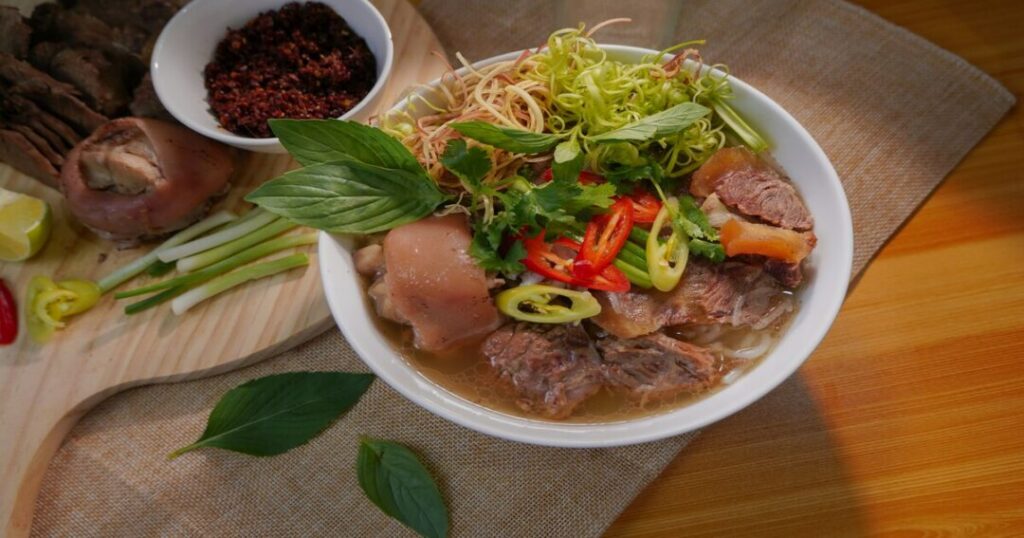
Pho is the most famous Vietnamese food in the world and the one most likely to have introduced international diners to Vietnamese cuisine. A bowl of pho (phở) contains flat rice noodles in a clear beef or chicken broth fragrant with star anise, cinnamon, cloves, black cardamom, coriander seeds, charred ginger, and charred onion — assembled with thin slices of beef or chicken, topped with fresh scallion and cilantro.
The origin: Pho is a relatively recent addition to Vietnamese cuisine, first appearing in written records in the early 20th century in Northern Vietnam. Residents of the city of Nam Định were the first to create Vietnamese traditional pho. The French colonial presence created the demand for beef (previously, Vietnamese cattle were used for agricultural work, not food), and local cooks in Nam Dinh used the leftover bones to create the first pho broths. The dish spread to Hanoi, moved south after the 1954 partition of Vietnam, and was carried worldwide by the Vietnamese diaspora after 1975. Pho is considered Vietnam’s national dish and is celebrated on December 12 as the “Day of Pho.”
North vs South: Northern pho (pho bac) has a clear, delicate, savoury broth — no bean sprouts, no hoisin sauce, minimal garnish. Southern pho (pho nam) has a slightly sweeter, richer broth served with an abundant garnish plate of bean sprouts, Thai basil, lime, and chilli, plus hoisin and sriracha on the side. The “correct” version is a debate that has been ongoing since 1954.
Also Read: Places to Visit in Vietnam: 12 Must-See Destinations for Every Traveler
2. Banh Mi — The French Legacy Reclaimed
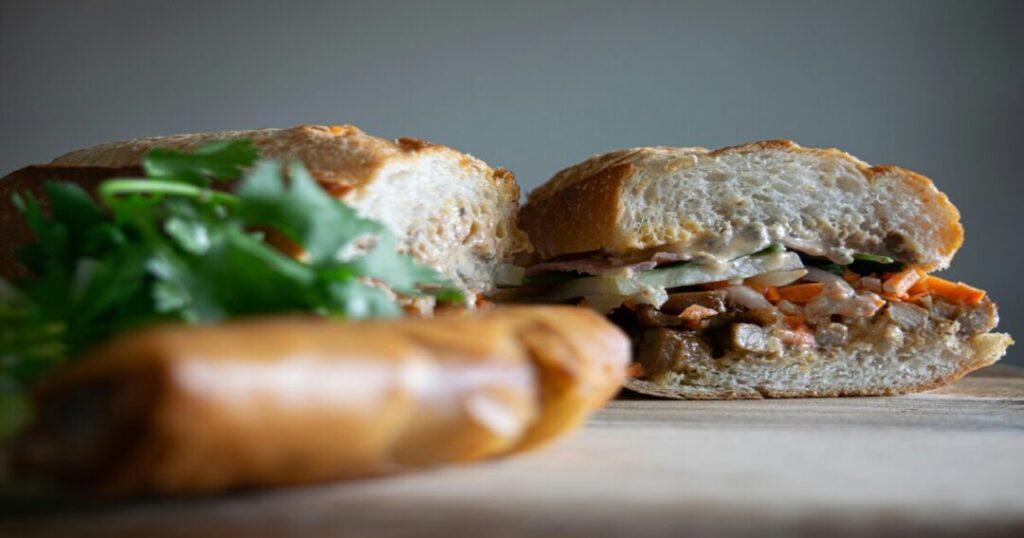
Banh mi (bánh mì) is a Vietnamese sandwich that emerged from French colonial rule — the baguette (bánh mì literally means “wheat bread”) was introduced during French colonization and adapted by Vietnamese bakers who made it lighter and crispier than the French original. The Vietnamese then filled it with a combination of ingredients that had nothing to do with French cuisine: pâté, pickled daikon and carrot (đồ chua), fresh cilantro, cucumber, sliced jalapeño, and a protein — grilled pork (xá xíu or thịt nướng), grilled chicken, a fried egg, or sardines.
The result is one of the finest sandwiches in the world — the crunch of the thin-crusted baguette, the richness of the pâté, the tang of the pickled vegetables, the heat of the chilli, and the freshness of the cilantro in every single bite. Banh mi is a street food, eaten standing, usually for breakfast or lunch, from vendors and dedicated banh mi shops across the country.
3. Goi Cuon — Fresh Spring Rolls
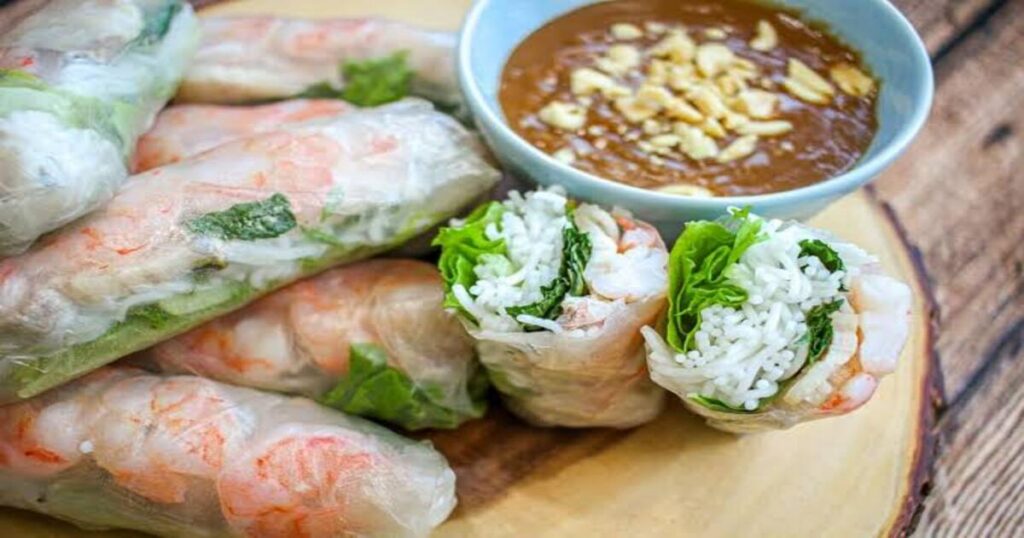
Goi cuon (gỏi cuốn) — fresh spring rolls — are among the finest expressions of Vietnamese food philosophy: translucent rice paper wraps around cooked shrimp, pork slices, rice vermicelli noodles, lettuce, fresh mint, and Vietnamese perilla (tía tô), served with a hoisin-peanut dipping sauce. The rice paper is the key — soaked briefly in warm water until pliable, it becomes nearly transparent, making the colours of the filling visible through the wrapper. This is deliberate: the visual composition is part of the experience.
Goi cuon are not fried. They are served at room temperature, fresh, with all the textural contrast of the soft pork, the snappy shrimp, the slippery noodles, and the fresh crunch of the vegetables. They are one of the most widely exported popular Vietnamese dishes — and one of the few that loses almost nothing in translation when the ingredients are correct.
4. Cha Gio — Crispy Fried Spring Rolls
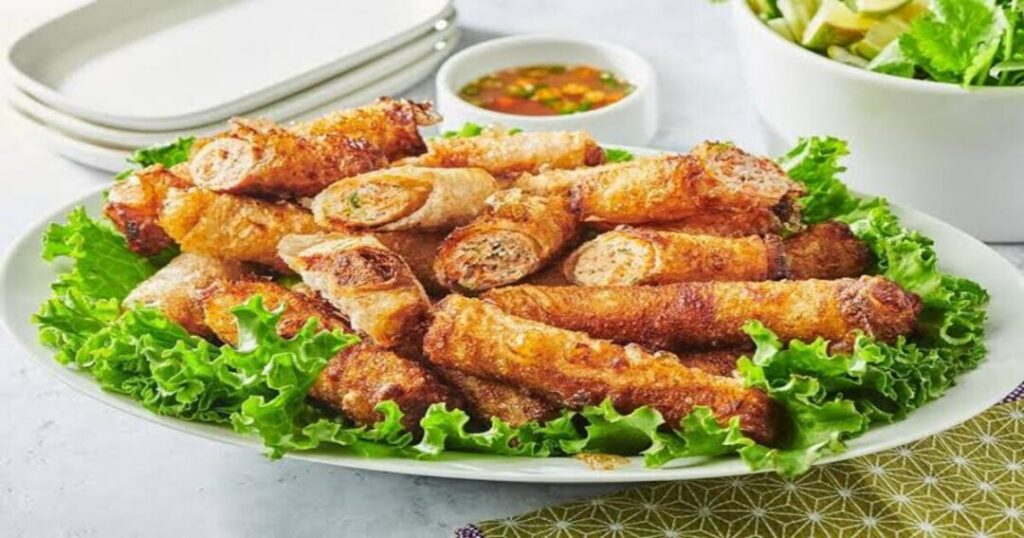
Cha gio (chả giò) — fried spring rolls — are the other Vietnamese spring roll tradition: a filling of seasoned pork mince, glass noodles, wood ear mushrooms, carrot, and taro or potato, rolled in rice paper and deep-fried until shatteringly crispy. Served with nuoc cham (the Vietnamese dipping sauce of fish sauce, lime, sugar, garlic, and chilli), fresh lettuce leaves, and herbs — the correct way to eat cha gio is to wrap the hot crispy roll in a lettuce leaf with fresh herbs, dip in the sauce, and eat the whole bundle in one bite.
In the South, cha gio is often made with rice paper wrappers; in the North, wheat wrappers are more common. Both are correct.
5. Bun Bo Hue — Central Vietnam’s Finest Noodle Soup
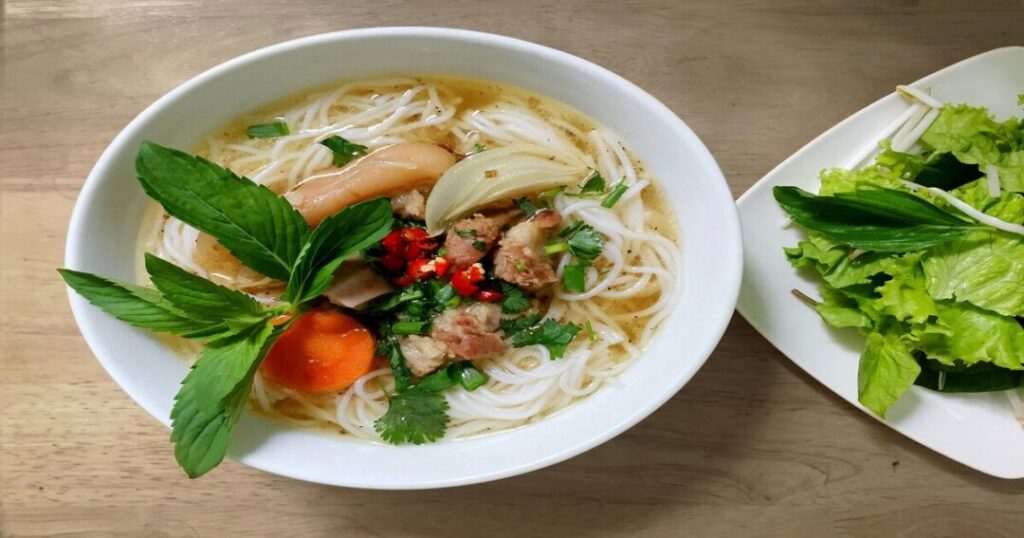
Bun bo Hue (bún bò Huế) is, for many food lovers, the finest of all Vietnamese noodle soup preparations — a fiery, deeply aromatic beef and pork noodle soup from Hue, the former imperial capital of Vietnam in the country’s narrow central region. The broth is built from pork and beef bones slow-cooked with lemongrass, shrimp paste (mắm ruốc), and a generous quantity of dried chilli — giving it a reddish-orange colour and an intensity that pho, for all its complexity, does not attempt.
The noodles are thick round rice noodles (different from pho’s flat noodles), served with thin slices of beef shank, pork hock, cubes of congealed pig’s blood, and Vietnamese ham (chả lụa) — plus a large garnish plate of banana blossom, bean sprouts, Vietnamese perilla, and sawtooth coriander.
Bun Bo Hue is the food of Central Vietnam’s specific culinary identity — the royal court cooking tradition of Hue, which prized complexity, spice, and intensity over the refinement of the North or the abundance of the South.
6. Com Tam — Ho Chi Minh City’s Broken Rice
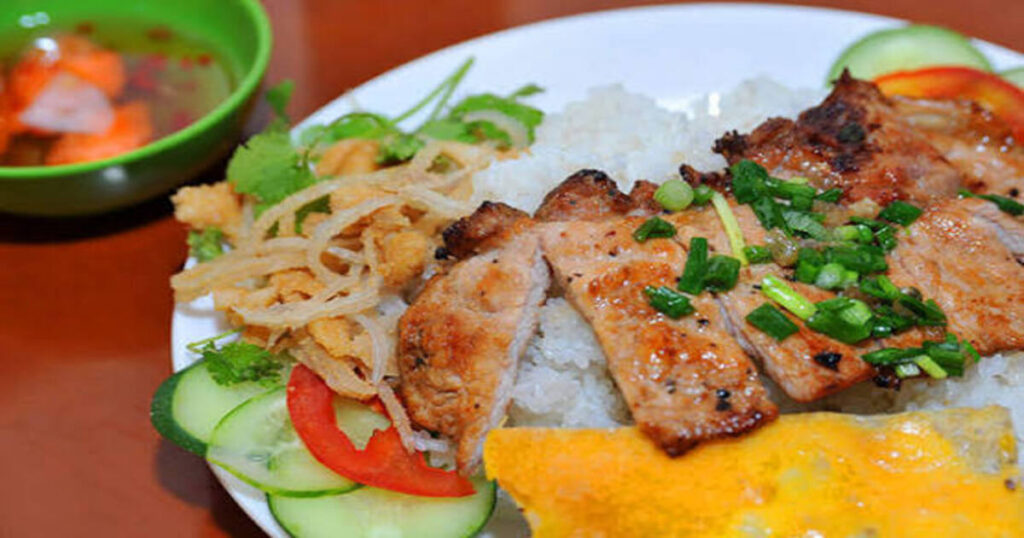
Com tam (cơm tấm) — broken rice — is the defining dish of Ho Chi Minh City (Saigon) and one of the most beloved popular Vietnamese food preparations in the South. Broken rice (tấm) refers to the small fragments of rice that break during milling — historically a cheaper grade of rice, now prized for its slightly stickier, more absorbent texture. Com tam is served with grilled pork chop (sườn nướng), shredded pork skin (bì), steamed egg cake (chả trứng), a fried egg, cucumber, tomato, pickled vegetables, and a small bowl of nuoc cham on the side.
The combination of textures — the charred, caramelised pork chop, the crumbled pork skin, the soft egg cake, the fragrant broken rice — is one of the most satisfying single plates in Vietnamese cuisine. Com tam is a breakfast, lunch, and late-night dish; in Saigon, com tam shops open before dawn and stay open until after midnight.
7. Cao Lau — Hoi An’s Unique Noodle Dish
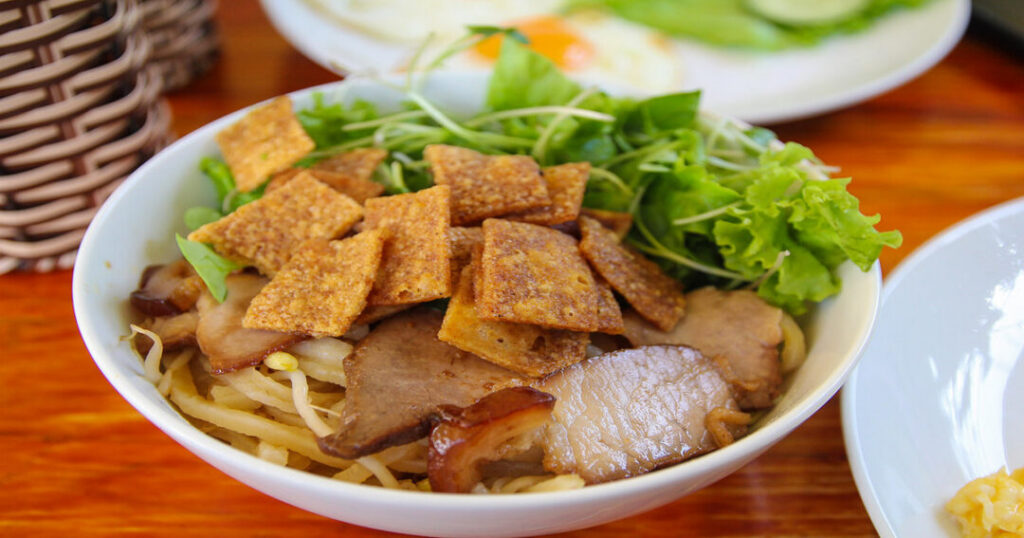
Cao lau (cao lầu) is one of the most geographically specific dishes in all Vietnamese cuisine — a noodle dish that exists authentically only in Hoi An, the ancient trading port town in Central Vietnam. The thick, chewy noodles require two essential and strictly local ingredients: water from the ancient Bá Lễ well (Giếng Bá Lễ) in Hoi An, and lye water (nước tro) made by leaching the ash of specific wood from the nearby Cham Islands — both are required for the noodles’ distinctive chewy texture and yellowish-brown colour. This is why authentic Cao Lau is considered impossible to reproduce outside Hoi An. The dish is served with slices of char siu-style roasted pork, deep-fried rice cracker squares (cut from the same noodle dough and fried until crispy — the dish’s signature textural element), fresh herbs, bean sprouts, and a small amount of broth — not a soup, more of a dressed noodle dish with minimal liquid.
Cao lau shows the Chinese and Japanese trading influences that made Hoi An what it was: the noodles echo Japanese soba in their chewiness; the char siu pork is Chinese-influenced; the herbs are Vietnamese.
8. Banh Xeo — Sizzling Rice Crepes
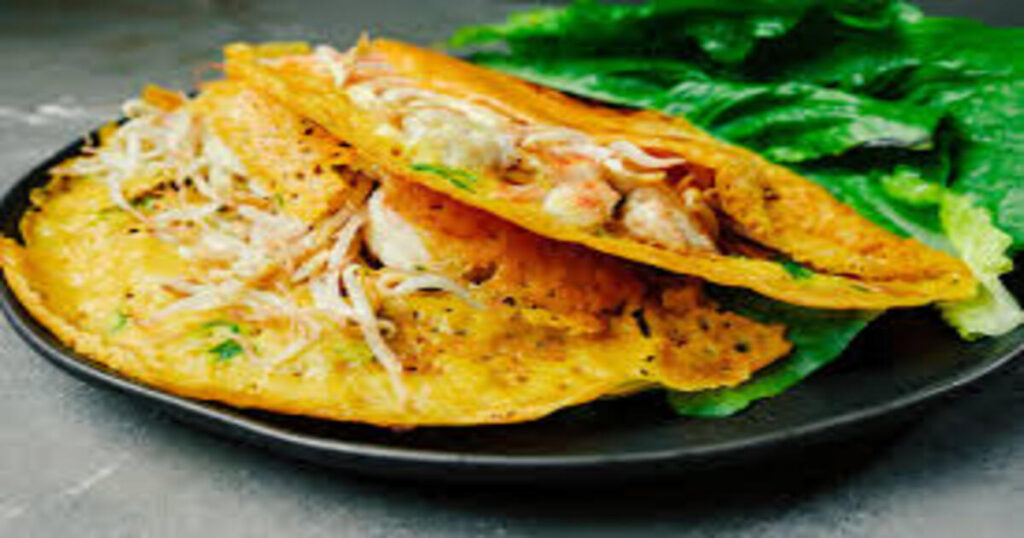
Banh xeo (bánh xèo) — the name literally means “sizzling cake,” from the sound the batter makes when it hits the hot pan — is a crispy, turmeric-yellow rice flour crepe filled with pork belly, shrimp, bean sprouts, and mung beans. Cooked in a generous amount of oil until the edges shatter and the interior steams, it is served with the full Vietnamese herb plate (lettuce, mint, perilla, sawtooth coriander) and nuoc cham. The correct way to eat banh xeo is to tear off a piece, wrap it in lettuce with herbs, dip in the sauce, and eat.
Banh xeo exists across the country but differs by region: the southern versions are large — the size of a dinner plate; the central versions are smaller and spicier; the northern versions use slightly different fillings.
Also Read: Philippines Food Guide: 15 Famous Dishes Every Tourist Must Try
9. Bun Cha — Hanoi’s Grilled Pork Noodle Bowl
Bun cha (bún chả) is the definitive Hanoi lunch dish — and one of the finest expressions of Northern Vietnamese cooking philosophy. Grilled pork meatballs (chả) and grilled pork belly slices are served in a bowl of sweetened, diluted fish sauce broth with garlic and chilli, alongside a plate of cold rice vermicelli noodles (bún), fresh herbs (mint, perilla, sawtooth coriander), and occasionally cha gio (spring rolls). The meal is eaten by dipping the noodles and herbs into the warm pork broth, combining everything in each mouthful.
Bun cha gained international attention in 2016 when Barack Obama and Anthony Bourdain ate it together at a small Hanoi restaurant — one of the most famous restaurant moments in recent food media history.
10. Mi Quang — Central Vietnam’s Turmeric Noodle Dish
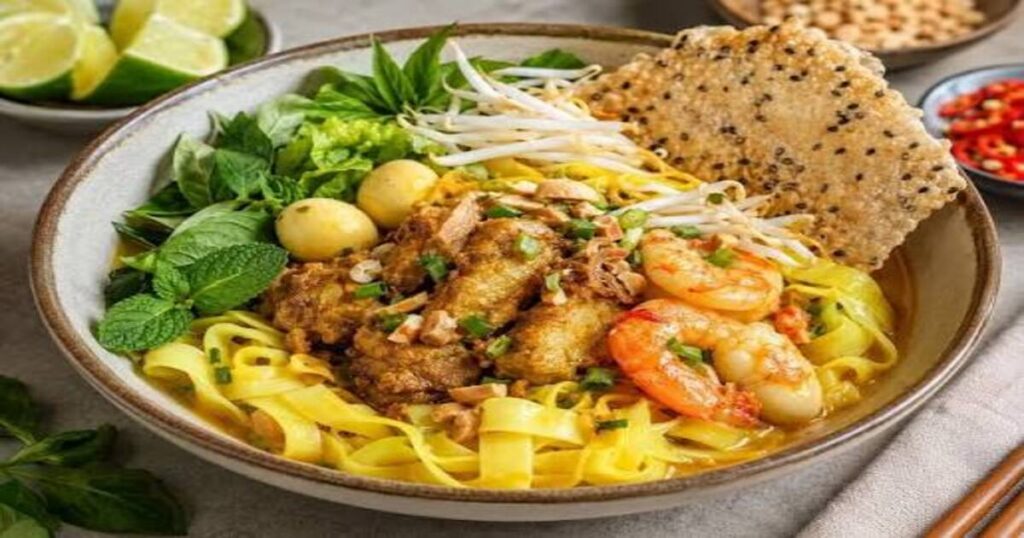
Mi Quang (mì Quảng) is a noodle dish from Quang Nam province in Central Vietnam — wide, flat, turmeric-yellow rice noodles served with very little broth (just enough to coat and season), topped with pork, shrimp, peanuts, toasted sesame rice crackers, and a generous herb plate. The toasted sesame cracker (bánh tráng nướng) is broken into the bowl at the end — it softens partially in the small amount of broth while retaining some crunch. Mi Quang is one of the most texturally interesting of all top Vietnamese dishes and one of the least known internationally.
Also Read: Famous Nepalese Food: Discovering the Flavours That Define Nepal
Bonus Vietnamese Dishes
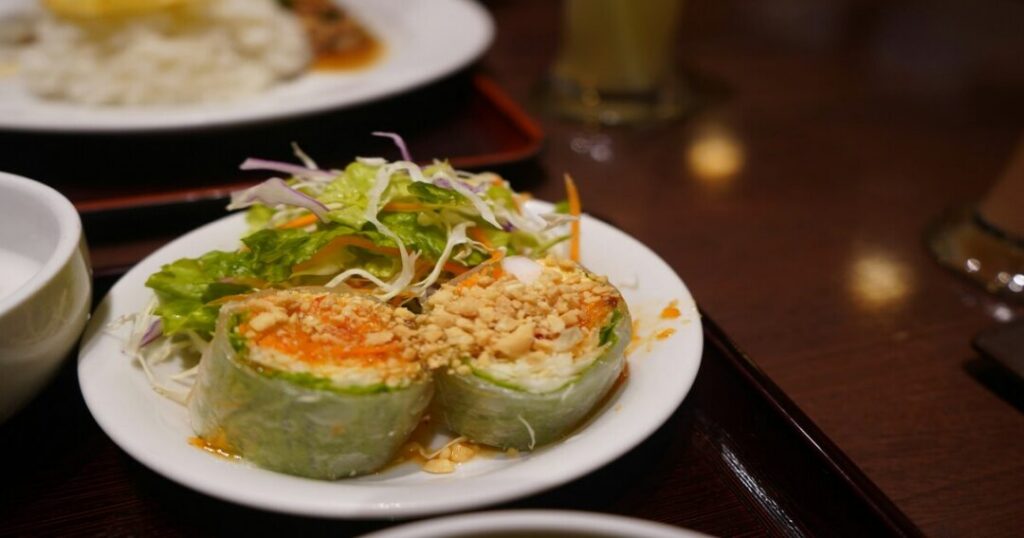
Bonus 1 — Che (Vietnamese Sweet Soups): A broad category of Vietnamese dessert/sweet soups — served hot or cold, made with beans, tapioca, coconut milk, jelly, lotus seeds, and seasonal fruit. Che ba mau (three-colour dessert) is the most photogenic.
Bonus 2 — Banh Cuon (Steamed Rice Rolls): Silky, paper-thin steamed rice sheets filled with seasoned pork mince and wood ear mushrooms, served with fried shallots and nuoc cham — one of Hanoi’s finest breakfast preparations.
Bonus 3 — Hu Tieu (Southern Noodle Soup): A lighter, clearer pork-based noodle soup popular in the South — the base for dozens of regional variations across the Mekong Delta.
Vietnamese Spring Rolls — The Complete Guide
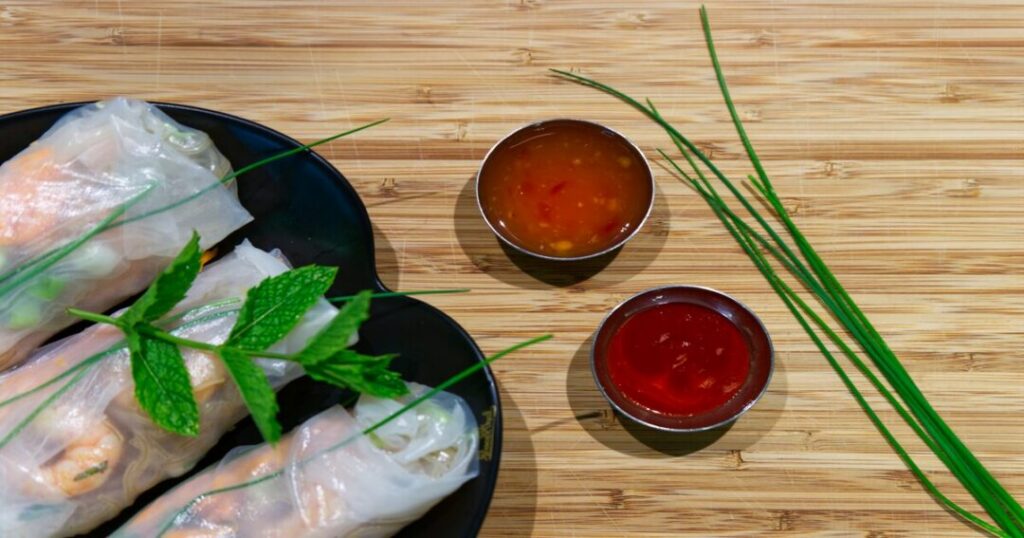
Vietnamese spring rolls come in two fundamentally different forms — and understanding the distinction is the starting point for understanding the broader Vietnamese food philosophy.
Goi Cuon (Fresh Spring Rolls / Summer Rolls): Rice paper (bánh tráng) — translucent, soft, pliable — wrapped around cooked shrimp, sliced pork, rice vermicelli, lettuce, fresh mint, and Vietnamese perilla. Served fresh, never heated. Dipping sauce: hoisin thinned with warm water, topped with crushed peanuts, often with a fresh chilli on the side. Goi cuon are the lightest and most herb-forward of Vietnamese spring rolls — the entire philosophy of the dish is to let the herbs’ freshness speak.
Cha Gio (Fried Spring Rolls): A seasoned filling of pork mince, glass noodles, wood ear mushrooms, carrot, and taro, rolled in rice paper (South) or wheat wrappers (North) and deep-fried until golden and crackling. Served hot with nuoc cham, fresh lettuce, and herbs. The lettuce-and-herb wrapping is not optional — it is how the dish is designed to be eaten.
Regional variations of Vietnamese spring rolls:
- Nem cuon — the Northern Vietnamese name for goi cuon
- Nem ran — the Northern Vietnamese name for cha gio
- Banh trang cuon thit heo — a Da Nang speciality: rice paper rolls assembled at the table with grilled pork, herbs, and a fermented shrimp sauce (mắm nem)
- Goi cuon tom thit — the classic combination of shrimp and pork in the fresh roll
The nuoc cham dipping sauce that accompanies most Vietnamese spring rolls — fish sauce (nước mắm), lime juice, sugar, water, garlic, and Thai chilli — is the most important single sauce in Vietnamese cuisine. It is the flavour that unifies the cuisine across its regional differences.
Vietnamese Noodle Soup — The Complete Guide
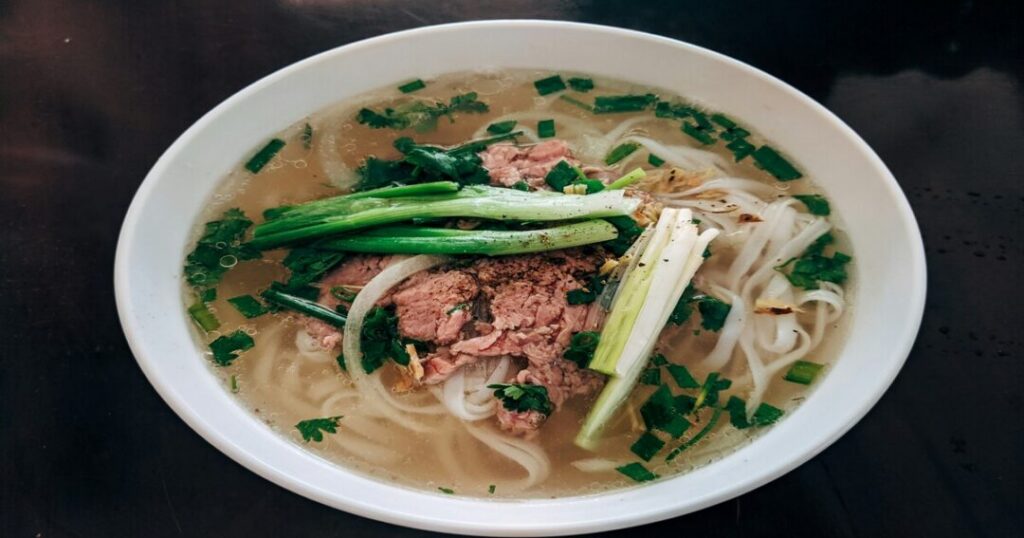
Vietnamese noodle soup (Vietnamese soup dishes) is one of the most varied noodle soup traditions in the world — far broader than pho suggests. The key varieties:
1. Pho (Phở): The national dish; flat rice noodles in spiced beef or chicken broth; originated in Nam Dinh, Northern Vietnam, early 20th century; North (clear, savoury) vs South (sweeter, herb-heavy) styles.
2. Bun Bo Hue (Bún Bò Huế): The Central Vietnamese challenger — spicy lemongrass-shrimp paste broth with round noodles, beef shank, pork hock, and pork blood cubes. Hue, Central Vietnam.
3. Mi Quang (Mì Quảng): Quang Nam province — turmeric noodles with minimal broth; pork, shrimp, peanuts, toasted sesame rice crackers.
4. Cao Lau (Cao Lầu): Hoi An exclusive — thick chewy noodles made with Bá Lễ well water and Cham Islands ash lye water; char siu pork, deep-fried noodle cracker squares, herbs.
5. Bun Rieu (Bún Riêu): A tangy tomato-based noodle soup with crab and shrimp paste (mắm tôm) — popular in Hanoi; the tomatoes give it a bright red colour.
6. Hu Tieu (Hủ Tiếu): Southern Vietnam — lighter pork broth; can be served in soup or dry; extremely popular in the Mekong Delta.
7. Bun Moc (Bún Mọc): A Northern Vietnamese pork ball noodle soup — clear pork broth with mushrooms, Vietnamese ham, and pork meatballs.
The fundamental difference across Vietnamese noodle soups: Northern soups tend toward clarity, restraint, and the purity of the broth; Central soups tend toward intensity and spice; Southern soups tend toward sweetness, abundance, and complexity of garnish.
Regional Identity — North, Central & South
Northern Vietnamese food (Hanoi, Nam Dinh, Hai Phong): Subtlety, restraint, clear broths. Less sweet, less spicy, more focused on the quality of the central ingredient. Pho Bac, bun cha, banh cuon.
Central Vietnamese food (Hue, Da Nang, Hoi An): The most complex and most spiced regional tradition — a legacy of the Nguyen dynasty royal court at Hue, where elaborate, intensely flavoured, chilli-heavy dishes were developed as court cuisine. Bun Bo Hue, Mi Quang, Cao Lau, Banh Xeo (Central style).
Southern Vietnamese food (Ho Chi Minh City, Mekong Delta): Abundance, sweetness, generosity of garnish. The South has greater agricultural output, richer produce, and Chinese-Vietnamese community influence — the result is food that is sweeter, more varied in ingredients, and more generous in portion. Com Tam, Hu Tieu, Southern Pho, Banh Xeo (large Southern style).
Conclusion About Vietnamese food
Vietnamese food is the food of balance — fresh, complex, herbaceous, historically layered, and regionally diverse in ways that no single dish can represent. The pho is extraordinary. So is the banh mi. So is the bun bo hue that most non-Vietnamese diners have never tried, and the cao lau that literally cannot be made outside Hoi An with full authenticity.
Quick guide to top Vietnamese food:
- Pho — national dish; spiced beef broth; flat rice noodles; Nam Dinh origin; Day of Pho Dec 12
- Banh Mi — French baguette reclaimed; pâté, pickled daikon, cilantro, chilli
- Goi Cuon — fresh spring rolls; rice paper, shrimp, pork, herbs; hoisin-peanut dip
- Cha Gio — crispy fried spring rolls; pork mince, glass noodles; nuoc cham
- Bun Bo Hue — Hue’s spicy lemongrass-shrimp paste noodle soup
- Com Tam — Ho Chi Minh City’s broken rice with grilled pork chop
- Cao Lau — Hoi An exclusive; ancient well-water noodles; char siu pork
- Banh Xeo — turmeric rice crepe; pork, shrimp, bean sprouts; lettuce wrapping
- Bun Cha — Hanoi’s grilled pork with cold noodles and sweet-sour broth
- Mi Quang — Quang Nam province; turmeric noodles; peanuts; sesame crackers
Download the Explurger app to discover what food lovers and Vietnam travellers actually recommend, find the most authentic pho stalls and banh mi shops, and log every bowl, roll, and sizzling crepe on your Vietnam food journey.
The broth is already simmering. The rice paper is already soaking. Vietnam’s table is already set.
FAQs About Vietnamese Food
2. What are Vietnamese spring rolls?
Vietnamese spring rolls come in two forms: Goi cuon (fresh/summer rolls) — rice paper wrapped around cooked shrimp, pork, rice vermicelli, lettuce, and fresh herbs, served with hoisin-peanut dipping sauce; never fried, eaten at room temperature. Cha gio (fried spring rolls) — pork mince, glass noodles, wood ear mushrooms, and carrot in rice paper (South) or wheat wrappers (North), deep-fried until crispy, served with nuoc cham, lettuce, and herbs. The correct way to eat cha gio is wrapped in a lettuce leaf with fresh herbs, dipped in the sauce.
3. What are the best Vietnamese noodle soups?
The finest Vietnamese noodle soup varieties: 1. Pho (spiced beef/chicken broth, flat rice noodles — national dish), 2. Bun Bo Hue (spicy lemongrass-shrimp paste broth, round noodles — Hue, Central Vietnam), 3. Cao Lau (thick chewy noodles with char siu pork — Hoi An exclusive), 4. Mi Quang (turmeric noodles, minimal broth, peanuts and sesame crackers — Quang Nam province), 5. Bun Rieu (tangy tomato-crab soup — Northern Vietnam), 6. Hu Tieu (light pork broth — Southern Vietnam/Mekong Delta). The fundamental distinction: Northern soups favour clarity; Central soups favour intensity and spice; Southern soups favour sweetness and abundant garnish.
4. What makes Vietnamese food different from other Asian cuisines?
Vietnamese cuisine is built on a philosophy of balance — the five elemental flavours (ngũ vị): spicy, sour, bitter, salty, and sweet — calibrated in every dish. It uses fresh herbs (mint, perilla, cilantro, sawtooth coriander, Vietnamese basil) as structural ingredients rather than garnishes, resulting in food that is simultaneously lighter and more complex than most other Asian cuisines. The use of fish sauce (nước mắm) as the primary seasoning agent (rather than soy sauce), the reliance on clear broths rather than heavy sauces, and the specific role of nuoc cham dipping sauce as a universal flavour bridge across the cuisine all distinguish Vietnamese food from Chinese, Thai, and other Southeast Asian culinary traditions.
5. What is nuoc cham?
Nuoc cham (nước chấm) is the most important single sauce in Vietnamese cuisine — a dipping sauce made from fish sauce (nước mắm), lime juice, sugar, water, garlic, and Thai chilli. It is served alongside Vietnamese spring rolls (both fresh and fried), com tam, grilled meats, banh xeo, and dozens of other dishes. The balance of fish sauce (salty/umami), lime (sour), sugar (sweet), and chilli (spicy) in a single dipping sauce embodies the Vietnamese food philosophy of elemental flavour balance. The quality of a Vietnamese restaurant's nuoc cham is often the clearest indicator of the kitchen's overall quality.