
2,120 Total Views
India’s most photogenic heritage sites tend to share one thing in common: a level of geometric precision that photographs almost as well from a phone as it does from a tripod. A stepwell cut 20-30 metres into the earth in a perfect inverted pyramid, a palace facade built from 953 individual windows, a mausoleum whose white marble genuinely shifts color with the sun — these aren’t just old buildings, they’re structures designed, centuries before Instagram existed, around symmetry, light, and scale. Here’s where to point a camera first.
Best Photogenic Heritage Sites in India to Visit
These four sites come up first in almost any conversation about India’s most visually striking architecture, and each rewards a different kind of shot.
Taj Mahal, Agra: The Marble That Changes Color
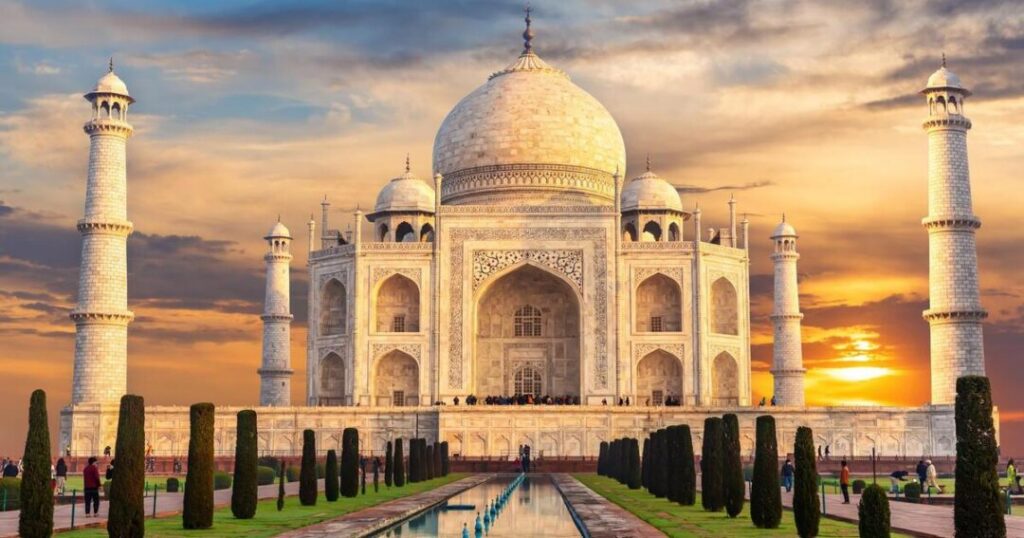
[STAT: the Taj Mahal was commissioned in 1632 by Mughal emperor Shah Jahan as a mausoleum for his wife Mumtaz Mahal, took roughly two decades to complete using more than 20,000 workers, and was inscribed as a UNESCO World Heritage Site in 1983; its white marble facade is known to visibly shift tone depending on the daylight, while the 240-foot central dome, four flanking minarets, and pietra dura inlay work create the symmetrical compositions the monument is famous for — History.com]
- Sunrise is the classic shot for a reason — soft pink-gold light on white marble, combined with thinner crowds than midday, produces the color shift photographers specifically chase.
- The reflecting pool along the central walkway is the standard symmetrical composition, but the view from across the Yamuna River at Mehtab Bagh offers a genuinely different, less-photographed angle.
Also Read: Top 10 Places to Visit in Agra Beyond the Taj Mahal
Chand Baori, Abhaneri: A 3,500-Step Geometric Illusion
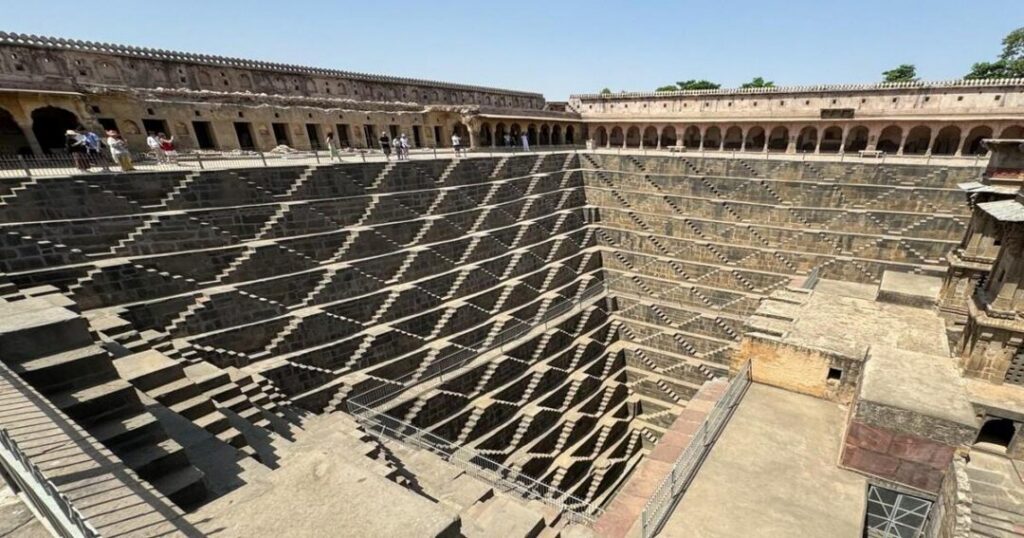
[STAT: Chand Baori was built in the 9th century by King Chanda of the Nikumbha dynasty, descending roughly 20-30 metres underground across 13 levels via 3,500 precisely arranged steps that form an inverted-pyramid shape; the geometry creates dramatic light-and-shadow patterns that make it a favourite subject for photographers and filmmakers — Rajasthan Tour Planner]
- Midday sun, unusually, works in this stepwell’s favour — direct overhead light sharpens the shadow lines between each tier of steps far more than the softer light of early morning or evening.
- Shooting from one of the upper corners rather than straight-on captures the full symmetrical descent in a single frame, which is the composition most recognisable shots of the site use.
Hawa Mahal, Jaipur: The Pink City’s Honeycomb Facade
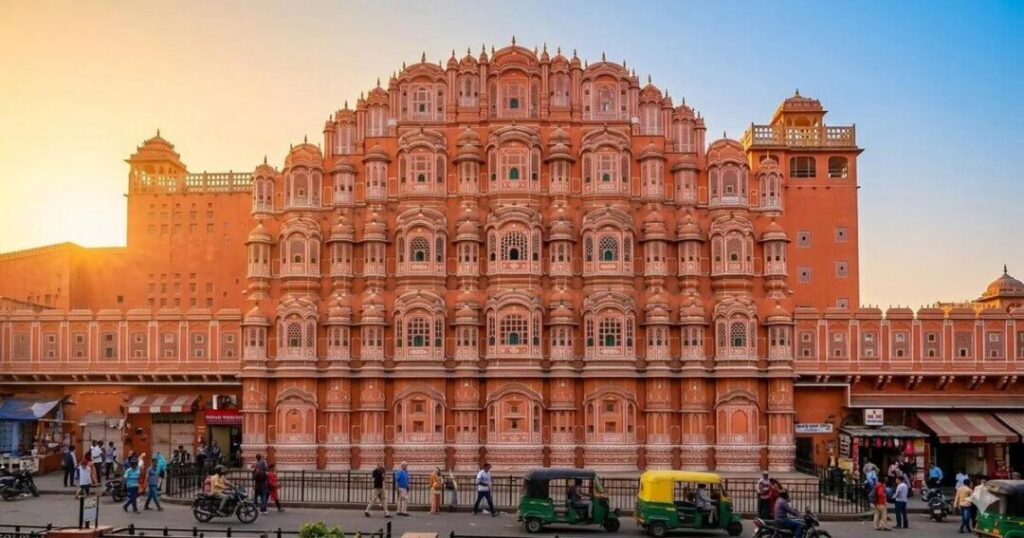
[STAT: Hawa Mahal was built in 1799 by Maharaja Sawai Pratap Singh, designed by architect Lal Chand Ustad, with 953 small lattice windows (jharokhas) arranged across a five-storey, honeycomb-like facade of red and pink sandstone, originally built to let royal women observe street life below without being seen — Wikipedia]
- The building faces east, so early morning light hits the entire pink sandstone facade directly, which is why most iconic shots of Hawa Mahal are taken before mid-morning.
- The best angle is from the street directly opposite rather than from inside — the facade itself, not the interior, is what makes this one of Jaipur’s most photographed structures.
Also Read: Places to Visit in Jaipur in 2026: Popular Places and Hidden Gems
Rani ki Vav, Patan: The Stepwell on the Rs 100 Note
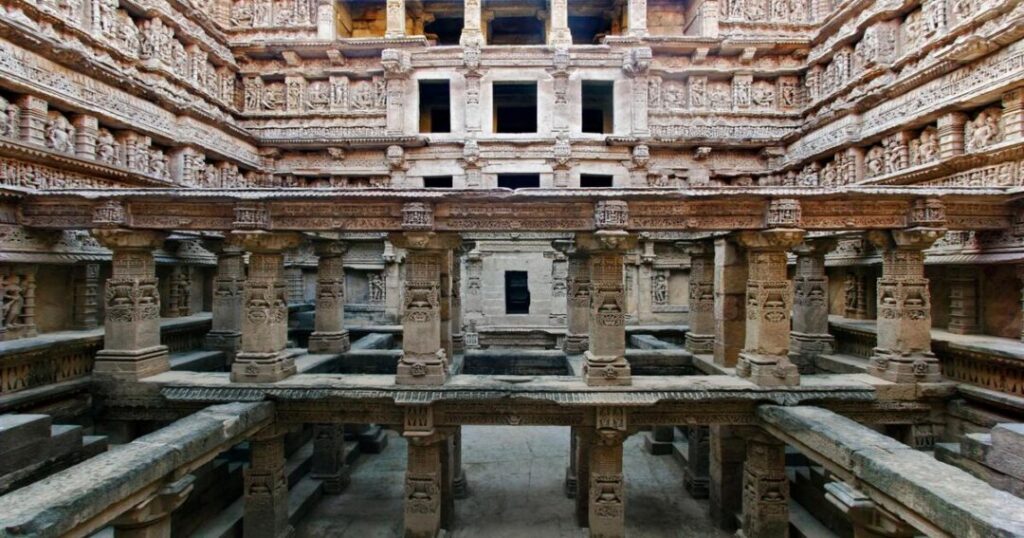
[STAT: Rani ki Vav was commissioned around 1063 by Queen Udayamati and completed roughly two decades later; the stepwell measures about 213 feet long and 92 feet deep across seven descending levels, contains 212 pillars and more than 500 major sculptures, was inscribed as a UNESCO World Heritage Site in 2014, and has appeared on the reverse of India’s Rs 100 note since 2018 — Wikipedia]
- Its sheer sculptural density — over 500 principal figures alone — makes close-up detail shots as rewarding here as the wide symmetrical view most visitors go for first.
More Instagrammable Heritage Sites in India
Beyond the four sites above, these two spots round out a list of the most Instagrammable heritage sites in India, each offering a completely different kind of shot — one a sweeping cityscape, the other a single sculptural object.
Mehrangarh Fort and Jodhpur’s Blue City
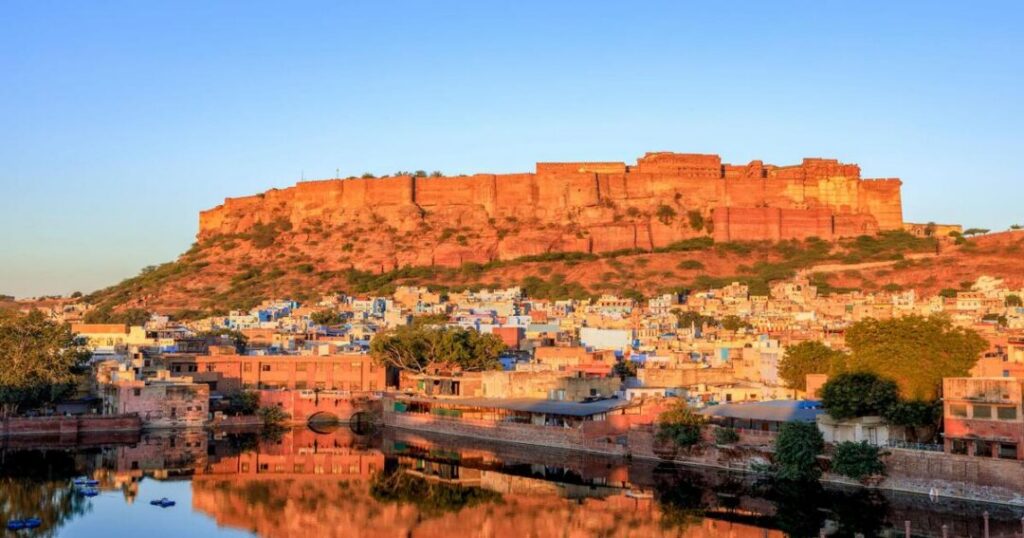
[STAT: Mehrangarh Fort was founded around 1459 by Rao Jodha, sits atop a rocky hill 400 feet above the surrounding plain, with walls running over 500 yards long and rising up to 120 feet high; from the fort’s ramparts, the old town below appears almost entirely blue, a look most commonly attributed to the Brahmin community historically painting their houses blue, with theories ranging from caste distinction to the color’s association with Shiva to its reputed heat- and termite-resistant properties — The Culture Trip / Mehrangarh Museum Trust]
- The fort itself sources no single definitive explanation for the blue houses, so most guides present the caste, religious, and practical theories side by side rather than picking one — worth knowing if a guide gives you just one version as fact.
- Late afternoon light from the ramparts brings out the strongest contrast between the blue rooftops and the sandstone fort walls in the foreground.
Also Read: Places to See in Rajasthan Beyond Jaipur, Jodhpur, Udaipur & Jaisalmer
Hampi: Ruins of an Empire Built for Scale
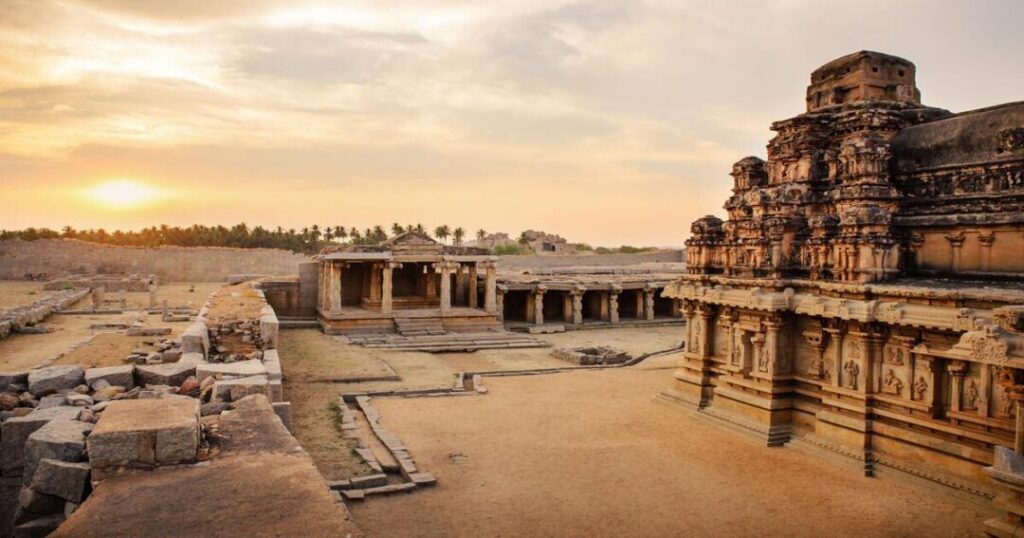
[STAT: Hampi’s Virupaksha Temple dates to the 7th century with major expansion under Vijayanagara emperor Krishnadevaraya around 1510 CE, its nine-tiered eastern gopuram reaching 50 metres; nearby, the granite Stone Chariot at Vittala Temple was built in the 16th century under Krishnadevaraya, deliberately rivalling the stone chariot at Odisha’s Konark Sun Temple, and now appears on India’s Rs 50 note — Wikipedia / Hampi Tourism]
- Hampi’s Group of Monuments was inscribed as a UNESCO World Heritage Site in 1986, and the sheer scale of the ruins — spread across a boulder-strewn landscape rather than a single compound — means wide shots at sunrise or sunset tend to outperform close-ups here.
- The Stone Chariot’s wheels were once able to rotate but have since been cemented in place during restoration, so the classic shot today is a straight-on frame rather than one showing any movement.
Photography Tips for India’s Heritage Sites
A few patterns repeat across nearly every site on this list. Golden-hour light — the hour after sunrise and before sunset — consistently produces the warmest tones on sandstone and marble alike, and arriving at opening time generally means both softer light and thinner crowds in the frame. Symmetry is the other recurring theme: the Taj Mahal’s reflecting pool, Chand Baori’s stepped descent, and Hawa Mahal’s honeycomb facade are all built around a strict central axis, so centring your shot rather than working the rule of thirds tends to match how these buildings were actually designed to be seen.
- Drone photography is restricted or banned outright at many protected monuments, including the Taj Mahal — check current regulations for each specific site before assuming aerial shots are an option.
- Tripods often require a separate permit or aren’t allowed at all inside the busiest monuments; a monopod or simply bracing against a railing is the more reliable fallback.
Conclusion: Photogenic Heritage Sites in India
From a marble mausoleum that shifts color through the day to a stepwell whose geometry has outlasted a thousand years of use, India’s most photogenic heritage sites reward patience as much as good timing — the difference between an ordinary shot and the ones people share is usually just showing up at the right hour and knowing which angle the building was actually built around. Whichever of these six you visit first, none of them need much help looking spectacular on camera.
Planning a heritage photography trip across India? Download the Explurger app and start building your itinerary today.
FAQs About India’s Most Photogenic Heritage Sites
3. Which heritage sites in India are considered UNESCO World Heritage Sites?
Among the sites covered here, the Taj Mahal (1983), Hampi's Group of Monuments (1986), and Rani ki Vav (2014) are all UNESCO World Heritage Sites. Hawa Mahal, Chand Baori, and Mehrangarh Fort are not individually UNESCO-listed but are protected heritage structures under Indian archaeological authorities.
4. Why is Chand Baori considered so photogenic?
Chand Baori's 3,500 steps are arranged in a precise geometric, inverted-pyramid pattern across 13 levels, creating sharp light-and-shadow contrasts that photograph unusually well, especially under direct midday sun when the shadow lines between steps are most defined.
5. What makes Jodhpur's Blue City so visually striking from Mehrangarh Fort?
From Mehrangarh Fort's ramparts, the old town below appears almost uniformly blue, a look most often attributed to the Brahmin community historically painting their homes blue, though theories about the exact reason range from caste distinction to religious association with Shiva to practical heat and pest resistance. Late afternoon light typically brings out the strongest contrast between the blue rooftops and the fort's sandstone walls.
6. Are drones allowed at India's heritage monuments?
No, not universally — drone photography is restricted or banned outright at many protected sites, including the Taj Mahal, so it's worth checking current site-specific regulations before planning any aerial shots rather than assuming they're permitted.