

849 Total Views
Laos food rarely gets the attention its neighbors do — Thai and Vietnamese cuisine tend to dominate the conversation about Southeast Asian food — but Lao cuisine has a genuinely distinct identity, built around sticky rice, fistfuls of fresh herbs, and a fearless approach to heat and funk that even seasoned Thai-food fans find bracing.
This guide walks through the dishes that define Laos food, the herbs behind them, and the traditional drink that shows up at nearly every celebration. Save the dishes that catch your eye to your Explurger Bucket List for your next trip through Luang Prabang or Vientiane.
The Building Blocks of Lao Cuisine
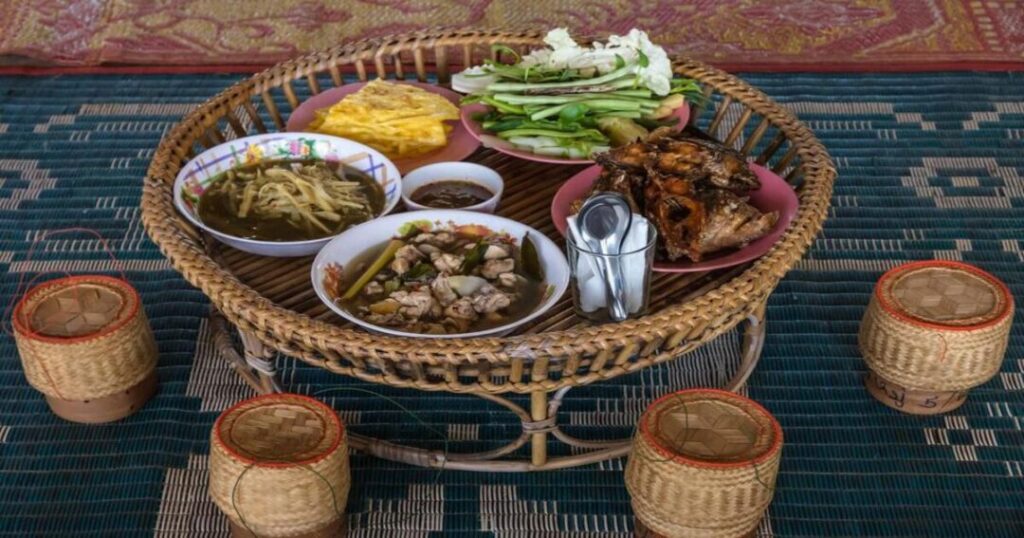
Three things anchor nearly every meal in Lao cuisine: sticky rice, fresh herbs eaten raw alongside the main dish, and a fermented fish sauce called padaek that plays a role similar to what fish sauce does in Vietnamese cooking, but funkier and more concentrated. Meals are typically shared family-style, with everyone eating sticky rice by hand — rolled into a small ball and used to scoop up whatever else is on the table.
What follows are the dishes, herbs, and drinks that make up the core of Laos’s food identity.
Laap: The National Dish of Laos
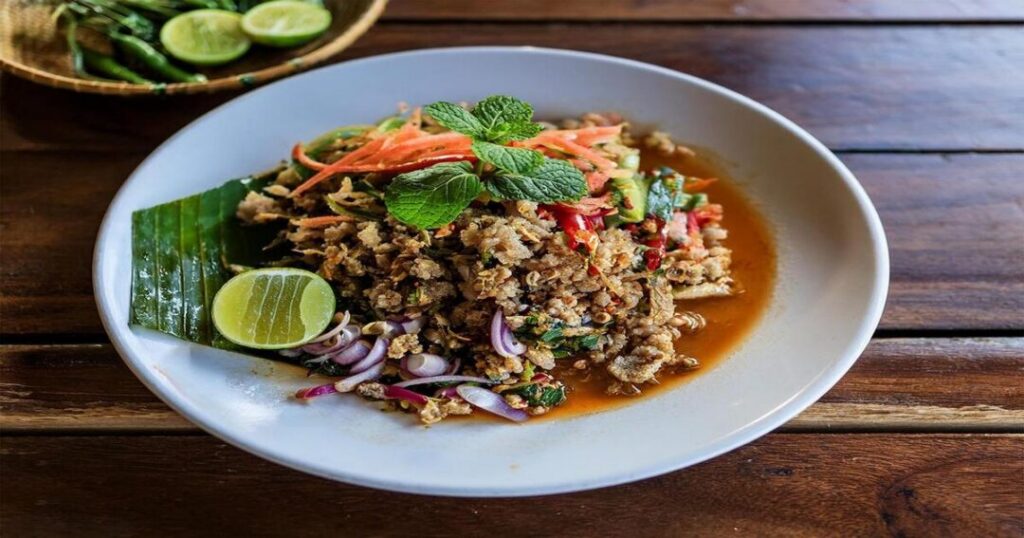
If there’s one dish that represents Laos, it’s laap (also spelled larb or laab) — a minced meat salad made with pork, chicken, beef, or fish, tossed with lime juice, toasted rice powder, fresh herbs, and chili, and traditionally finished with a splash of fish sauce or padaek. Along with sticky rice and papaya salad, it forms what many consider the trifecta of Lao national cuisine.
It’s worth being direct about one thing here: in its most traditional form, laap is sometimes made with raw meat or raw freshwater fish, prepared almost ceviche-style with lime juice rather than heat. [STAT: An estimated two million people in Laos are believed to carry liver fluke (Opisthorchis viverrini) infection, largely linked to eating raw or undercooked freshwater fish.] That parasite is transmitted specifically through raw or undercooked freshwater fish, and chronic infection can lead to serious bile duct disease over time. Cooked versions of laap — made with grilled or pan-cooked meat — are widely available and just as flavorful, and are the safer choice for most travelers; if you’re offered a raw preparation, it’s worth asking specifically what protein is used and how it’s been prepared before eating it.
Tam Mak Hoong: Laos’s Spicy Papaya Salad
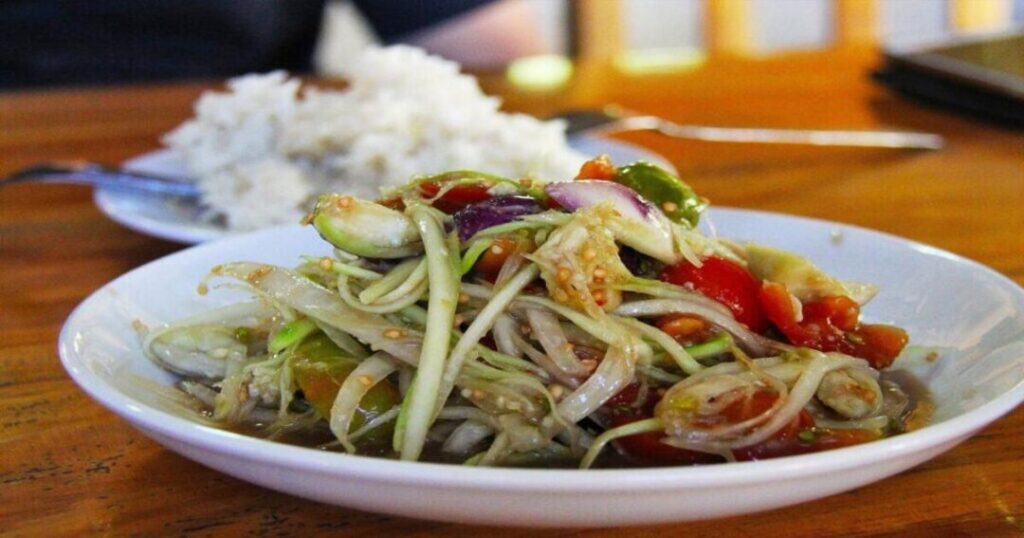
Tam mak hoong is Laos’s version of the green papaya salad better known internationally by its Thai name, som tam — but the Lao version tends to lean funkier and more pungent, built on padaek, fermented crab paste, and a generous hand with chili and lime. Shredded unripe papaya is pounded with garlic, chili, tomatoes, and long beans in a mortar and pestle, and the whole dish is meant to hit sour, salty, spicy, and slightly sweet all at once.
Sticky Rice: The Heart of Every Lao Meal
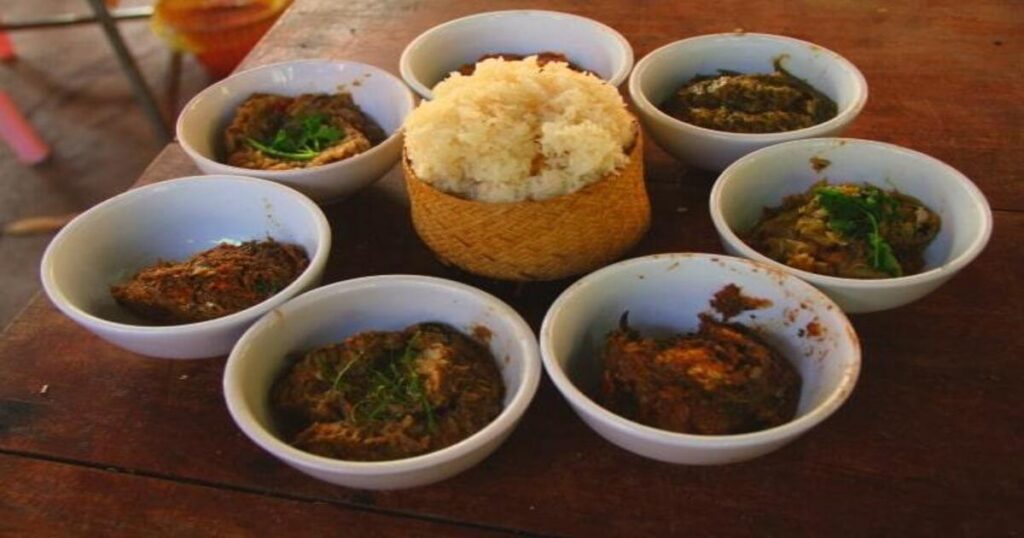
Khao niaw, or sticky rice, is eaten at nearly every meal in Laos and is steamed rather than boiled, traditionally in a woven bamboo basket set over a pot of boiling water. It’s served in a small lidded basket at the table and eaten by hand, rolled into a ball and used to scoop up laap, dips, or grilled meat. Laos has one of the highest per-capita sticky rice consumption rates in the world, and it’s genuinely central to Lao identity — locals sometimes refer to themselves as “luk khao niaw,” or “children of sticky rice.”
Sai Oua and Or Lam: Two Essential Laotian Dishes
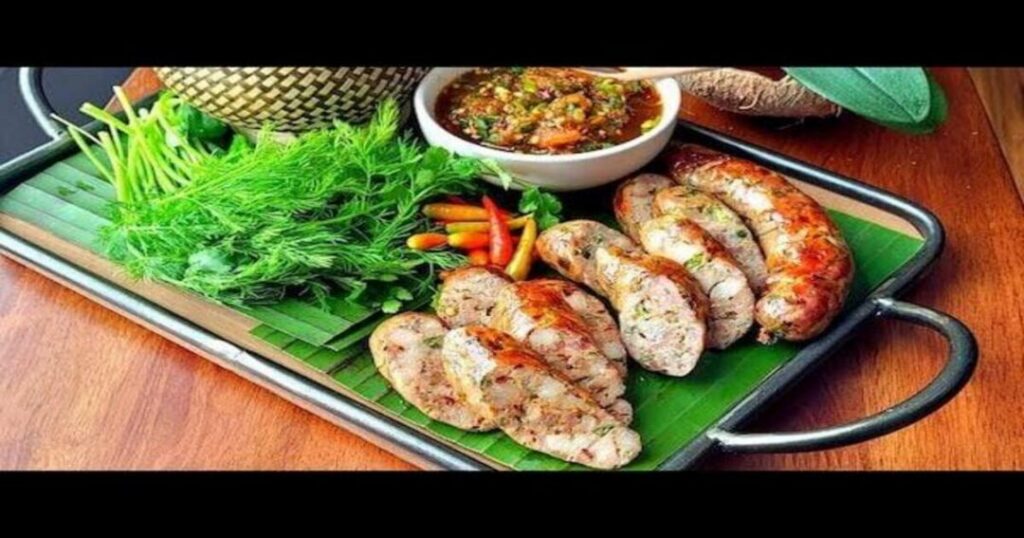
Among the most distinctive Laotian dishes are two very different preparations that both reward a bit of patience. Sai oua is a herb-packed Lao sausage — minced pork mixed with lemongrass, kaffir lime leaves, galangal, and chili, then grilled over charcoal until the casing crisps and the herbs inside turn fragrant and slightly smoky. It’s typically eaten with sticky rice and a plate of fresh vegetables on the side.
Or lam, a specialty of Luang Prabang, is closer to a slow-cooked stew — buffalo or chicken simmered with eggplant, mushrooms, lemongrass, and a distinctive bitter, slightly numbing wood called mai sakaan that gives the dish a flavor with no easy Western comparison. It’s one of the dishes locals point to when explaining that Lao food isn’t just “spicy Thai food” — the flavor profile is genuinely its own.
Mok Pa, Khao Soi, and Other Must-Try Lao Dishes
Beyond the best-known names, several other Lao dishes are worth actively seeking out. Mok pa is a Lao take on steamed fish in banana leaf — catfish marinated with lemongrass, dill, kaffir lime leaves, and chili, wrapped and steamed until it’s essentially a fragrant fish custard. It’s a good introduction to how heavily Lao cooking leans on herbs rather than heavy sauces to build flavor.
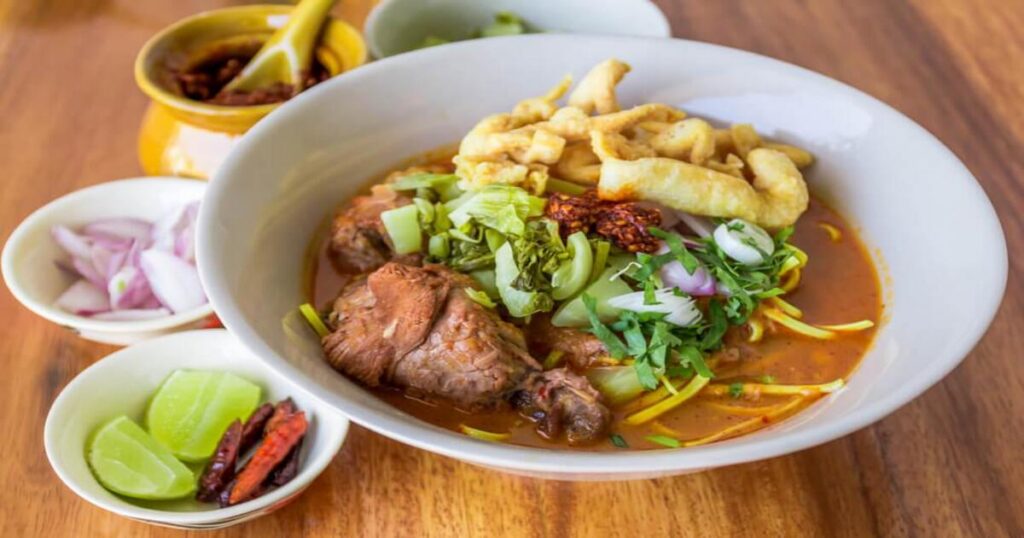
Khao soi in Laos is worth calling out specifically because it shares a name with a completely different, better-known dish: the coconut curry noodle soup famous in northern Thailand and Myanmar. Lao khao soi is unrelated — a clear pork, beef, or chicken broth topped with a minced-pork-and-tomato sauce over hand-sliced rice noodles, with no coconut curry involved at all. If you order “khao soi” in Laos expecting the Thai version, you’ll get something entirely different, which is worth knowing so you’re not thrown off.
Also Read: Hanoi Street Food: The Ultimate Guide to Vietnam’s Best Food Tour
Jeow Bong and the Condiments Behind Laotian Cuisine
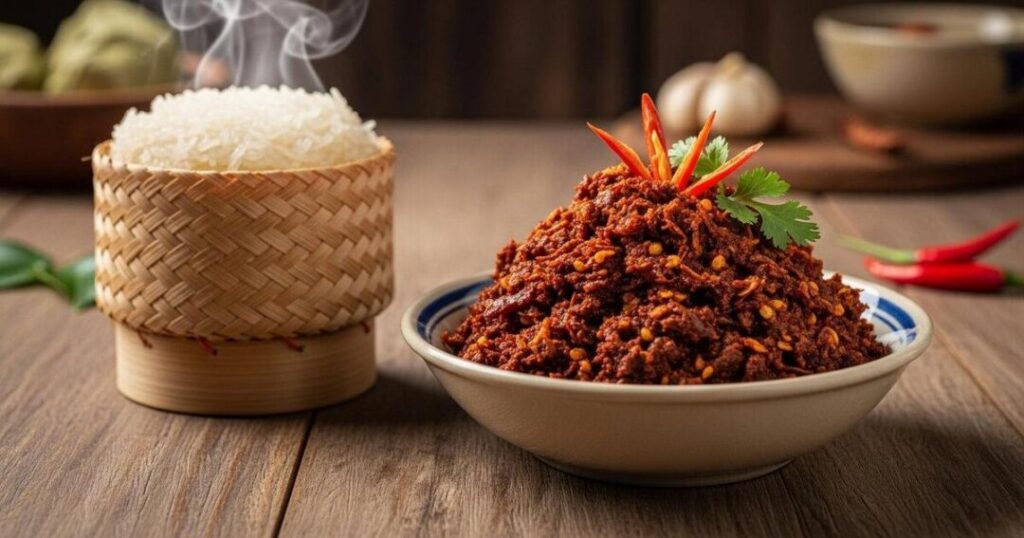
No overview of Laotian cuisine is complete without its condiments, and jeow bong (also called Luang Prabang chili paste) is the one most visitors bring home. It’s a thick, sweet-savory paste made from dried chilies, garlic, galangal, and shredded buffalo or pork skin, slow-cooked down until it’s almost jam-like, and it keeps for weeks thanks to its heavy salt and sugar content. It’s typically eaten as a dip for sticky rice or raw vegetables, and a small jar of it is often the first thing travelers pack to take home.
Lao Vegetables in English: A Herb and Produce Guide
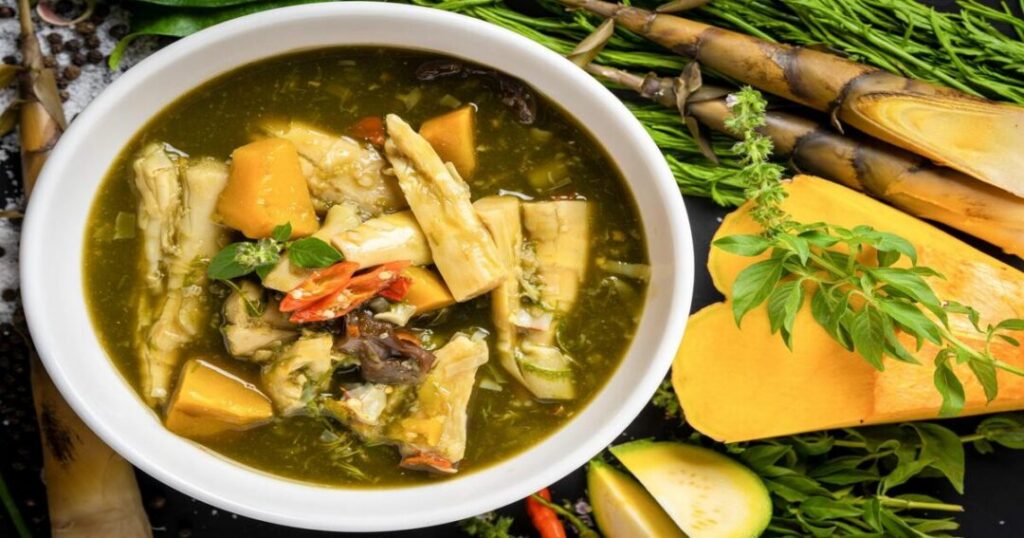
One of the more useful things to know before eating your way through Laos is what’s actually on your plate, since many of the herbs used in Lao cooking don’t have obvious English names. If you’ve searched for lao vegetable in English, here’s a practical rundown of what shows up most often:
Dill, oddly enough, is sometimes called “Lao coriander” in English-language food writing, and it’s used far more heavily in Lao cooking than most Western cooks would expect — it’s a key herb in mok pa and in coconut-milk-based fish curries, not just a garnish. Sawtooth herb (also called culantro, or “saw-leaf herb”) has a coriander-like flavor but a sturdier, more serrated leaf, and shows up raw alongside laap and soups. Beyond these, fresh mint, Thai basil, and morning glory (a leafy green cooked in stir-fries and soups) round out the herb plate that typically accompanies a Lao meal — most restaurants bring a full plate of raw greens and herbs to the table alongside the main dishes, meant to be eaten by hand between bites.
Also Read: Famous Vietnamese Food: The Complete Guide to Top Vietnamese Dishes & Cuisine
Lao Lao: The Traditional Drink Behind Laotian Food Culture
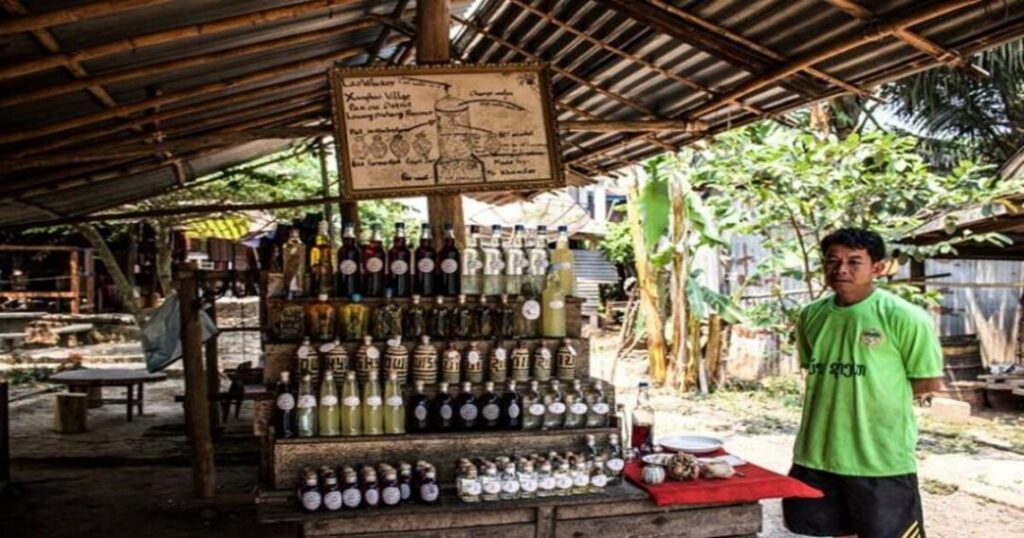
It’s worth clearing up one common mix-up: Lao Lao isn’t a food at all — it’s Laos’s traditional rice whiskey, distilled from steamed glutinous rice fermented with a traditional starter culture called men, then run through a simple pot still, often over a wood fire. The result is a clear, rice-forward spirit typically 30–55% ABV, usually produced in small home-based operations during the dry season between January and May. [STAT: Traditional Lao Lao rice whiskey typically ranges from 30 to 55% ABV, produced in small-batch home distilleries.]
The Lao Lao drink shows up at weddings, during the Lao New Year (Pi Mai), and in baci ceremonies, where it’s poured as part of the ritual rather than treated as a casual drink. Travelers curious about how it’s made can visit Ban Xang Hai, a village near Luang Prabang nicknamed “Whisky Village,” where small-scale production is still done largely by hand.
Also Read: Places to Visit in Vietnam: 12 Must-See Destinations for Every Traveler
Conclusion About Laos food
Laos food stands entirely on its own once you get past the assumption that it’s just a milder cousin of Thai cuisine — sticky rice, herb-packed laap, and a condiment shelf built on fermentation reward travelers willing to eat the way locals do. Add the dishes that catch your eye to your Explurger Bucket List, and let NIVU AI inside the app point you toward where to actually find them once you land in Laos. Explurger’s got your Laos food trail mapped out — you just have to show up hungry.
FAQs About Laos food
2. Is it safe to eat laap in Laos?
Cooked versions of laap, made with grilled or pan-cooked meat, are widely available and considered safe. Traditional raw preparations carry a real risk of liver fluke infection from undercooked freshwater fish, so it's worth asking about preparation if you're offered a raw version.
3. What is Lao Lao?
Lao Lao is Laos's traditional rice whiskey, distilled from fermented glutinous rice, typically 30–55% ABV. It's a drink, not a food, and plays a central role at weddings, New Year celebrations, and baci ceremonies.
4. What vegetables and herbs are used in Lao cooking?
Dill (sometimes called "Lao coriander" in English), sawtooth herb (culantro), mint, Thai basil, and morning glory are staples in Lao cuisine, typically served raw on a shared herb plate alongside the main dishes.
5. Is Lao food the same as Thai food?
No — while the two cuisines share some ingredients and techniques due to geographic proximity, Lao food leans more heavily on fermented fish sauce (padaek), sticky rice as a daily staple, and distinctive dishes like or lam that have no real Thai equivalent. Even dishes with the same name, like khao soi, can be completely different between the two countries.
6. What is tam mak hoong?
Tam mak hoong is Laos's spicy green papaya salad, similar to the internationally known Thai som tam but typically funkier, built on fermented fish paste, chili, lime, and garlic pounded together in a mortar and pestle.