
1,978 Total Views
Rameswaram is a small island at the southern tip of India — connected to the mainland by the Pamban Bridge, separated from Sri Lanka by the Palk Strait, and positioned at the intersection of the Bay of Bengal and the Indian Ocean. It is also one of the holiest sites in Hinduism. As one of the twelve Jyotirlinga temples and one of the four Char Dham pilgrimage sites, the Ramanathaswamy Temple at its heart draws millions of pilgrims each year. But Rameswaram is more than its temple — it is a coral island with beaches, a ghost town at its eastern tip destroyed by a 1964 cyclone, a chain of limestone shoals extending toward Sri Lanka that the Ramayana calls Ram Setu, and a 1914 bridge that was India’s first sea bridge and remains one of its most dramatic engineering achievements.
This guide covers the top places to visit in Rameswaram — from the sacred to the geological, the ancient to the abandoned.
Top 10 Places to Visit in Rameswaram
1. Ramanathaswamy Temple — The Sacred Heart of Rameswaram
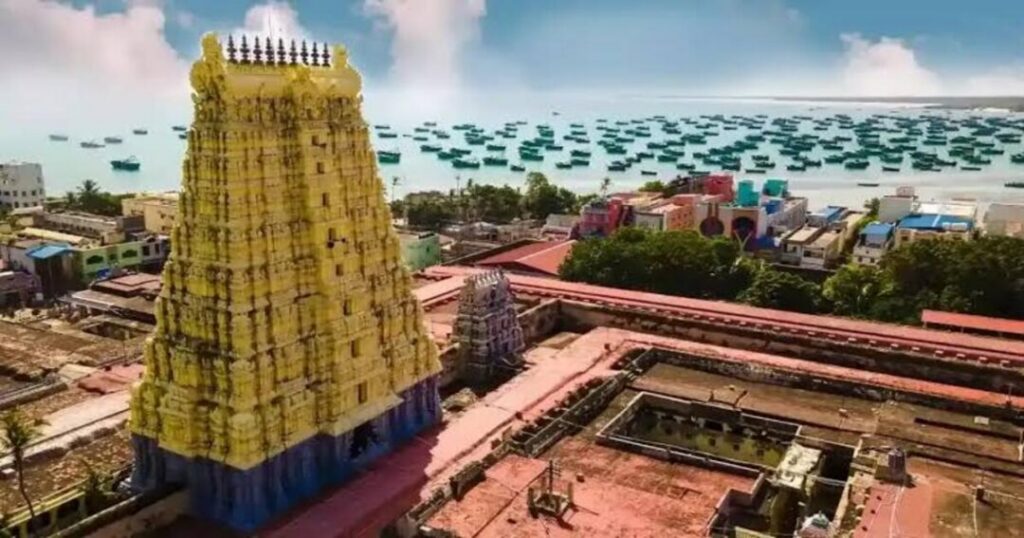
The Ramanathaswamy Temple is the reason Rameswaram exists on the pilgrimage map — a temple dedicated to Lord Shiva, housing one of the twelve Jyotirlingas, and holding its place as one of the four Char Dham pilgrimage sites alongside Badrinath, Puri, and Dwarka. According to the Ramayana, Lord Rama worshipped Shiva here to seek absolution for the sin of killing Ravana — who was a Brahmin — and the Jyotirlinga at Ramanathaswamy is believed to have been established by Rama himself.
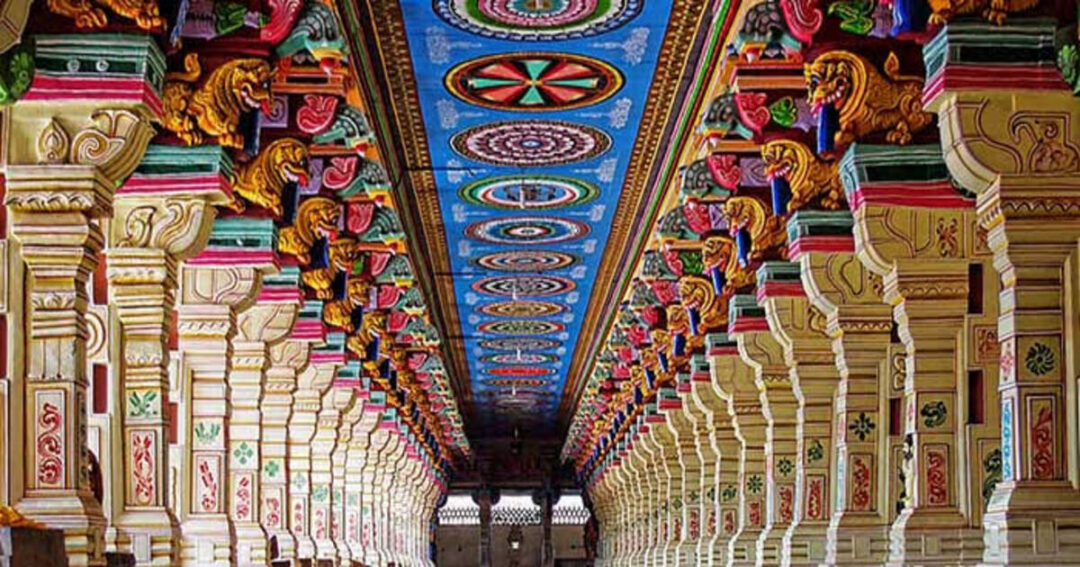
The temple’s most extraordinary architectural feature is its corridor — the longest temple corridor among all Hindu temples in India, stretching approximately 1,200 metres (3,937 feet) in total length, supported by over 1,200 intricately carved pillars. Walking the length of the corridor — the pillars receding into the distance like an architectural infinity — is one of the most spectacular visual experiences in any Indian temple. The eastern gopuram (gateway tower) stands at approximately 53 metres (173 feet).
Inside the temple complex are 22 sacred theerthams (holy wells) — each believed to have a distinct taste and mineral composition, each representing one of the 22 arrows in Rama’s quiver. Pilgrims traditionally bathe in all 22 before entering the sanctum for darshan. The ritual is as central to the Rameswaram pilgrimage as the temple visit itself.
Practical notes:
- Timings: 5:00 AM – 1:00 PM and 3:00 PM – 9:00 PM (verify before visiting as timings may vary on festival days)
- Photography strictly prohibited inside the temple premises
- Traditional dress required: men in dhoti/veshti; women in saree or salwar kameez
- Allow at least half a day for the full 22 theertham ritual + darshan
2. Agnitheertham — The Sacred Sea at the Temple Door
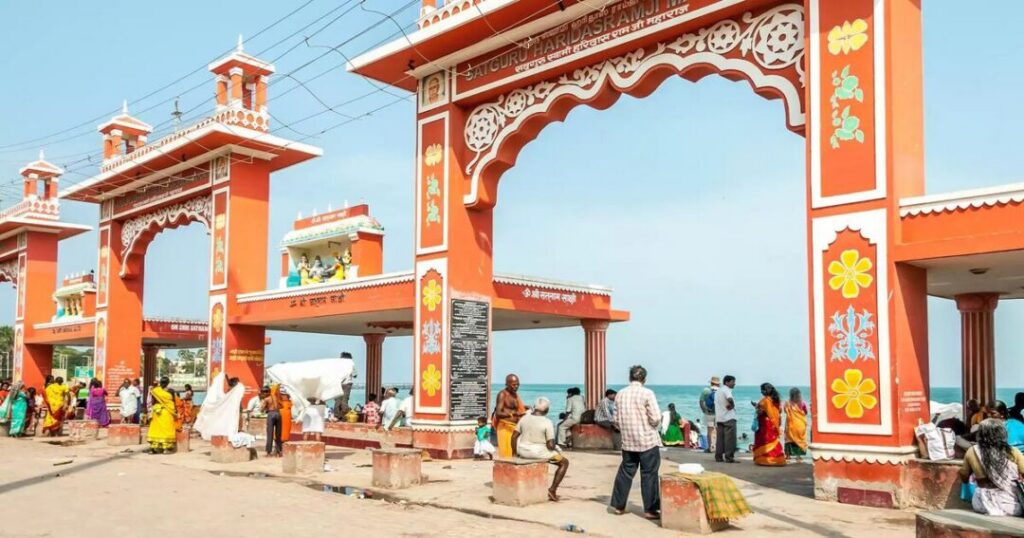
Agnitheertham is the first and most important of the 64 theerthams of Rameswaram — the Bay of Bengal itself, directly in front of the eastern gopuram of the Ramanathaswamy Temple. The name means “fire sacred water” — according to the Ramayana, Lord Rama bathed here to rid himself of the sin of killing Ravana. Pilgrims take a ritual dip in the sea before entering the temple, making Agnitheertham the starting point of the Rameswaram pilgrimage circuit.
The beach at Agnitheertham is active with pilgrims throughout the day and is most atmospheric in the early morning when the first light catches the waves and the gopuram towers above the seafront.
3. Dhanushkodi — The Ghost Town at the Tip of India
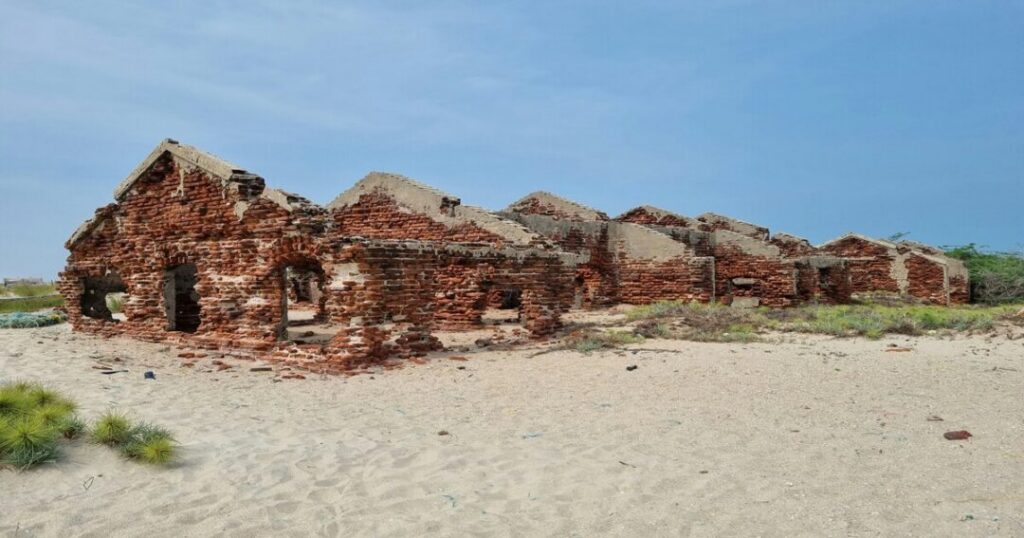
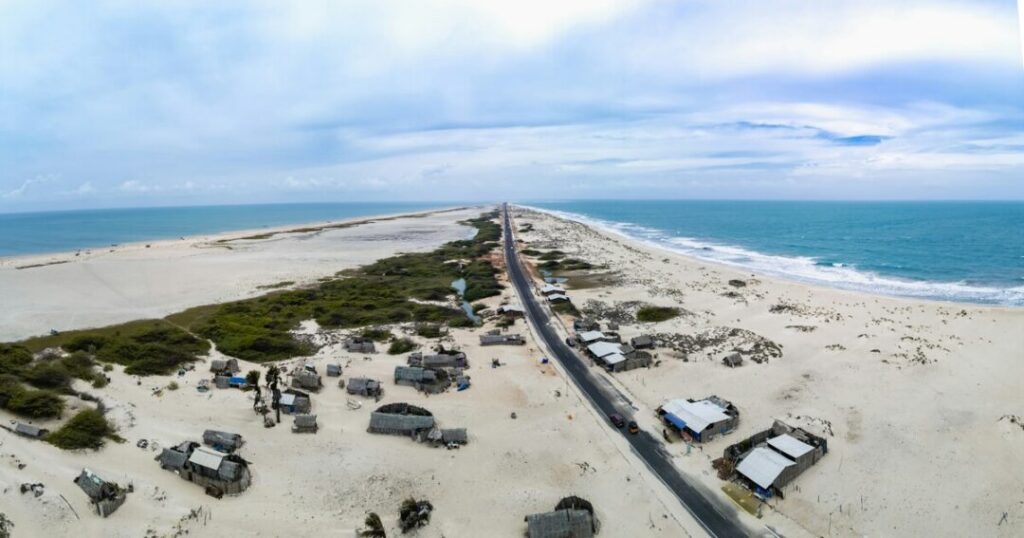
Dhanushkodi is the most haunting place to visit at Rameswaram — a town at the easternmost tip of Pamban Island that was destroyed in a devastating cyclone on December 22–23, 1964. The cyclone killed over 1,800 people; a passenger train carrying approximately 115 people was swept off the tracks and all passengers perished. The town was declared unfit for habitation by the then Madras government and was never rebuilt. The ruins of the church, post office, railway station, and residential buildings have remained exactly as the cyclone left them for over six decades.
Today Dhanushkodi is a sand spit extending into the sea — the point where the Bay of Bengal meets the Indian Ocean, where you can see both bodies of water simultaneously. The ruined structures, the abandoned railway tracks, and the extreme remoteness create an atmosphere unlike anywhere else in India.
- Distance from Rameswaram: approximately 20–24 km; a road was completed in 2016 from Mukundarayar Chathiram to Dhanushkodi — prior to that, jeeps drove on the beach
- 4WD vehicles or jeeps still recommended for the final stretch; verify current road conditions before visiting
- The combined sight of the two seas meeting at the tip of India is extraordinary
4. Pamban Bridge — India’s First Sea Bridge
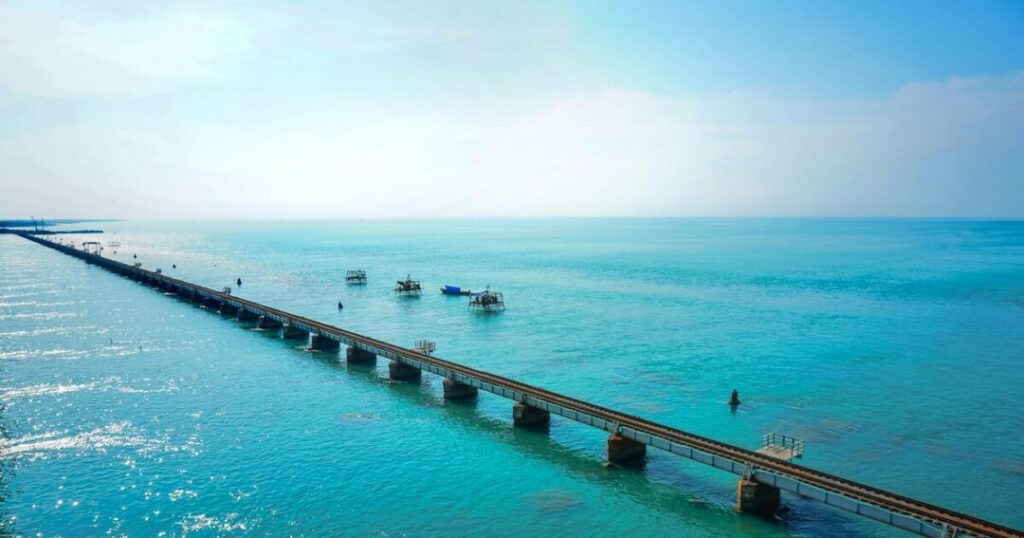
The Pamban Bridge connects Rameswaram island (Pamban Island) to mainland India across the Palk Strait — India’s first sea bridge, opened on February 24, 1914. The bridge is approximately 2.3 km long and for a long time was the longest sea bridge in India. The railway bridge runs parallel to a road bridge and carries the only rail link between the mainland and Rameswaram.
The bridge’s most extraordinary engineering feature is its Scherzer rolling lift span — a moveable section that can be raised to allow ships and boats to pass through the channel. The Scherzer rolling lift is one of the few operational examples of this 19th-century engineering technology still in use in India. The visual of the bridge curving across the turquoise water with the Palk Strait stretching to both horizons is one of the most photographed sights in Tamil Nadu.
A new cable-stayed Pamban Bridge was under construction as of 2025 — verify the status of both bridges before your visit as the transition may affect access.
5. Adam’s Bridge (Ram Setu) — The Geological Mystery
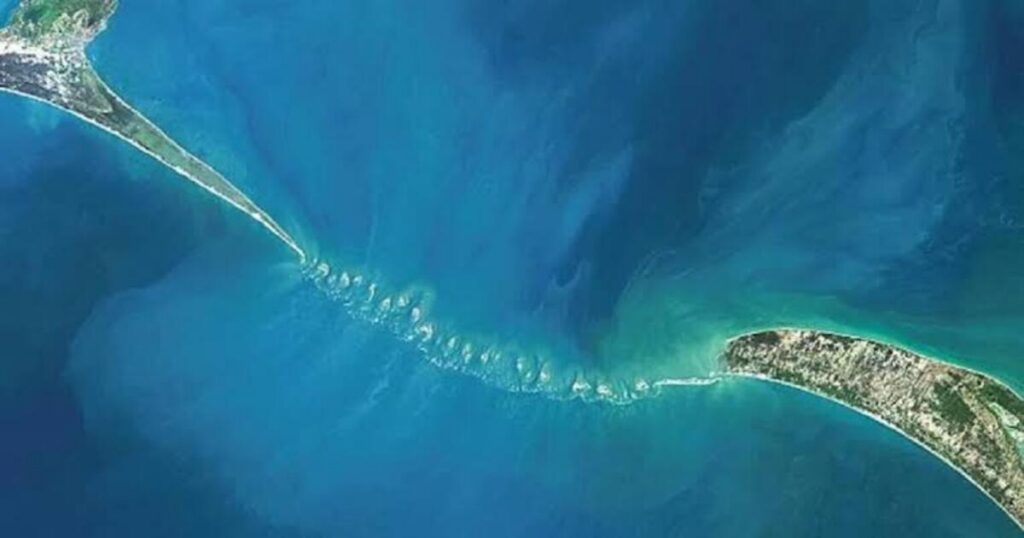
Adam’s Bridge (called Ram Setu in Hindu tradition) is a chain of limestone shoals, sandbanks, and small islands extending approximately 50 km between Dhanushkodi and Talaimannar in Sri Lanka. According to the Ramayana, this was the bridge built by the Vanara army (led by the engineer Nala) to allow Rama and his forces to cross to Lanka to rescue Sita.
Geologically, Adam’s Bridge is a natural feature — a series of shallow submarine banks that follow a remarkably straight path between the two countries. NASA satellite images of the structure gained international attention in 2002 and renewed public interest in the site.
The bridge is not physically accessible — it can only be seen from the beach at Dhanushkodi or by air. The view of the limestone shoals extending into the sea from Dhanushkodi beach, knowing what they represent mythologically, is a powerful moment.
Also Read: Top 5 Places To Visit in Tamil Nadu
6. Kothandaramaswamy Temple — The Shore Temple that Survived the Cyclone
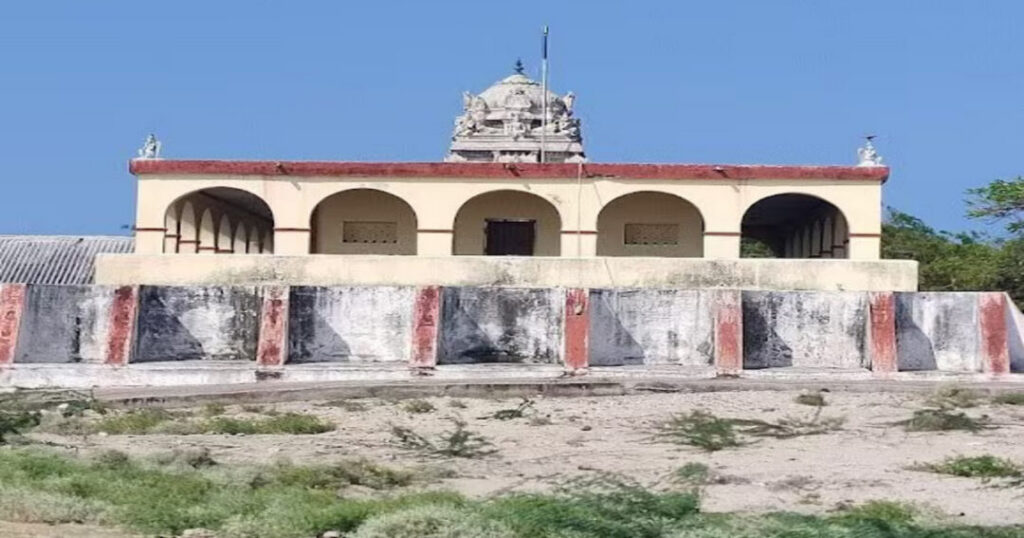
The Kothandaramaswamy Temple at Dhanushkodi — approximately 12 km from Rameswaram town on the road toward Dhanushkodi — is the only structure that survived the catastrophic 1964 cyclone that destroyed the rest of the town. A coastal temple dedicated to Lord Rama, it stands at the water’s edge surrounded by the ruins of Dhanushkodi. The legend associated with this temple is that Vibhishana (Ravana’s brother, who defected to Rama’s side) surrendered and was crowned King of Lanka here. The temple is still in active worship, making it one of the most atmospheric Rameswaram tour places on the island.
7. Lakshmana Theertham — A Sacred Pond of Rameswaram
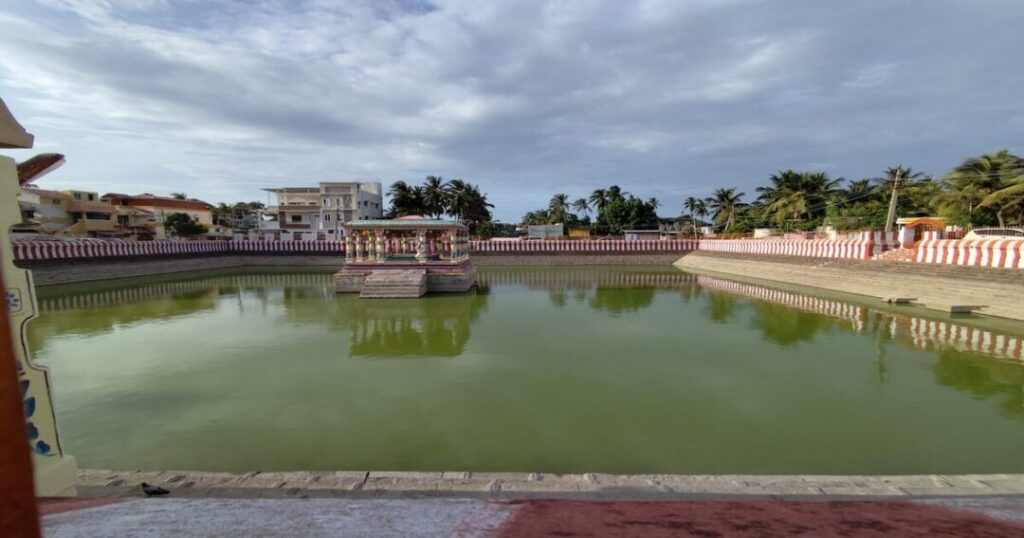
Lakshmana Theertham is a sacred freshwater pond in Rameswaram, associated with Lakshmana (Rama’s brother) who is believed to have received spiritual instructions here. It is one of the significant theerthams outside the Ramanathaswamy Temple complex and is located in a peaceful setting away from the main tourist circuit — one of the quieter places of interest in Rameswaram for visitors who want a moment of stillness.
8. Gandhamadhana Parvatham — The Footprint Hill
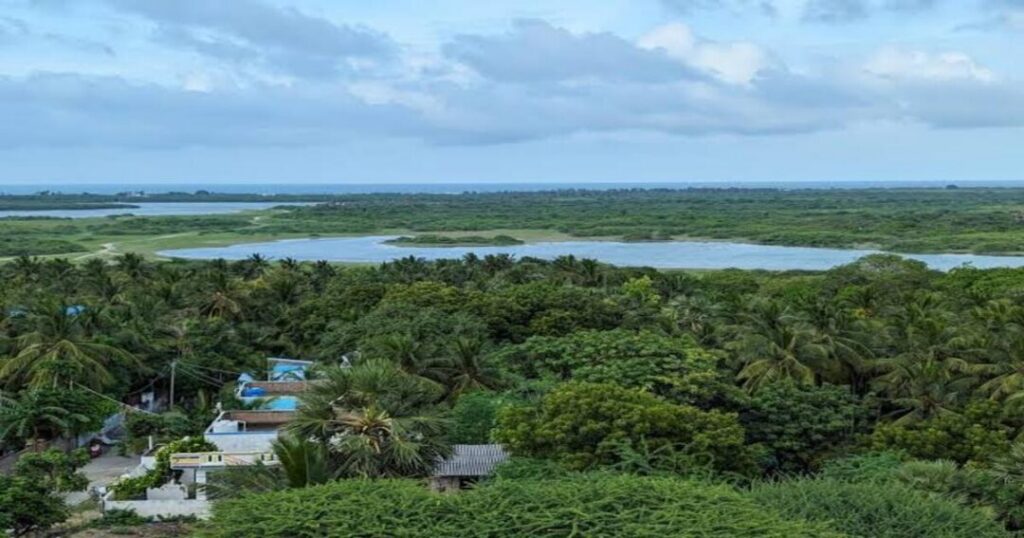
Gandhamadhana Parvatham is a small hillock — the highest point on Rameswaram island at approximately 100 metres — where a small temple houses what are believed to be the footprints of Lord Rama. According to the Ramayana, Rama stood here surveying the sea before beginning the construction of Ram Setu. A two-storey mandapam (pillared hall) with a Rama footprint shrine has been built here. The hillock provides the best panoramic view of the entire island.
9. Panchamukhi Hanuman Temple — Rameswaram’s Hanuman Shrine
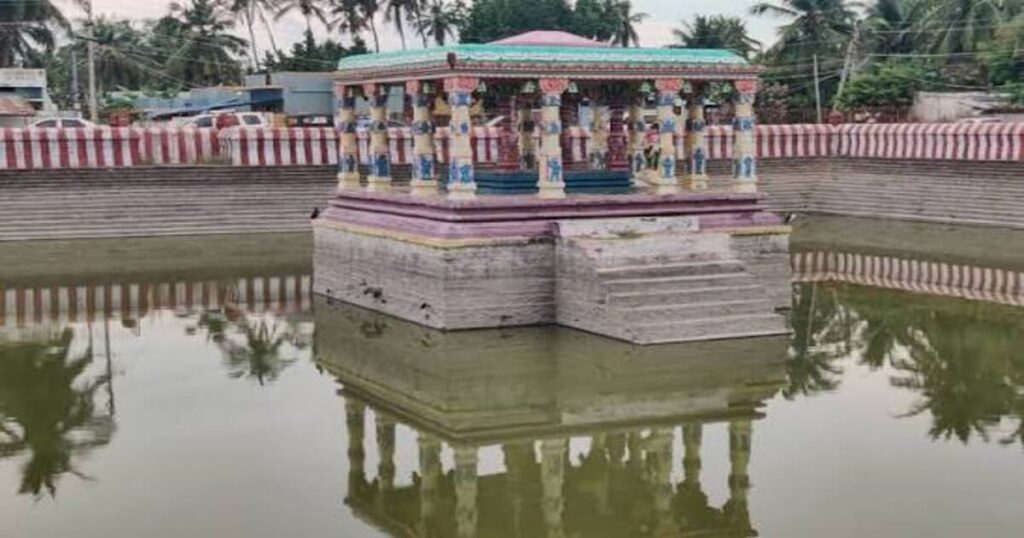
The Panchamukhi Hanuman Temple is dedicated to the five-faced form of Lord Hanuman (Panchamukhi = five-faced) and holds an important place in the Rameswaram pilgrimage circuit. According to the Ramayana, Hanuman assumed this five-faced form here to extinguish five lamps lit simultaneously by the demon Ahiravana. The five faces represent Hanuman, Narasimha, Garuda, Varaha, and Hayagriva. The temple is active, atmospheric, and one of the significant Rameswaram places to see for devotees on the Ramayana pilgrimage circuit.
Also Read: Famous Festivals of India: Top 10 Celebrations You Need to Experience
10. Abdul Kalam Memorial and House — Rameswaram’s Most Famous Son
Dr. APJ Abdul Kalam — the 11th President of India, aerospace scientist, and the Missile Man of India — was born in Rameswaram on October 15, 1931. His ancestral home in the Mosque Street area of Rameswaram has been converted into a memorial museum, displaying personal photographs, letters, memorabilia, and the life story of one of India’s most beloved figures. A separate Dr. APJ Abdul Kalam Memorial has been established near the beach with a statue and exhibit space.
Rameswaram’s connection to Kalam is part of its identity — this small island town produced the man who directed India’s first satellite launch vehicle and ballistic missile programmes. The memorial is one of the most visited Rameswaram tourist attractions for non-pilgrimage visitors.
Bonus Places to Visit in Rameswaram
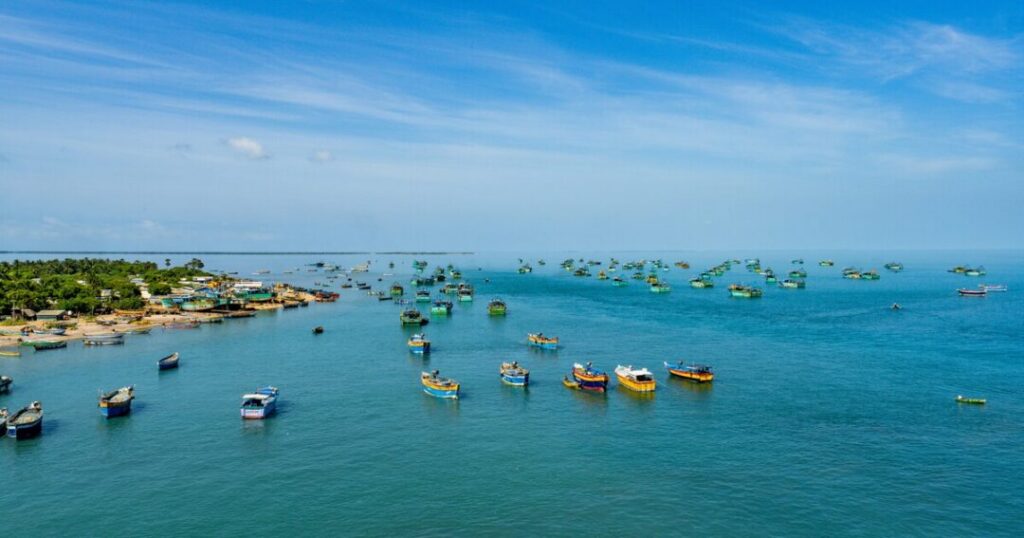
Bonus 1 — Erwadi Dargah: A significant Islamic shrine approximately 15 km from Rameswaram, associated with Ibrahim Shaheed. One of the most important dargahs in South India for the Muslim community.
Bonus 2 — Ariyaman Beach: Approximately 20 km from Rameswaram — one of the finest beaches in the area, calm waters, good for swimming, coral formations visible in the shallows.
Bonus 3 — Five-Faced Shiva Temple (Panchamukhi Mahadev): A smaller temple on the island with a rare five-faced Shiva image, associated with local legend.
Day Trips — Places Around Rameswaram
Devipattinam (~20 km | 30 minutes)
Devipattinam (also called Navapashanam) is a coastal village approximately 20 km from Rameswaram, where nine stones (Navapashanam) have been installed in the sea, representing the nine planets (Navagrahas). Pilgrims who have completed the Rameswaram circuit come here to worship the Navagrahas in the sea — one of the most unusual and visually dramatic pilgrimage rituals in Tamil Nadu. The stones are accessible by wading into the shallow sea at low tide.
Mandapam (~15 km | 20 minutes)
Mandapam is the mainland town directly across the Pamban Bridge from Rameswaram. The Central Marine Fisheries Research Institute (CMFRI) has a regional centre and aquarium here with displays of the marine life of the Palk Bay — a less well-known place to visit around Rameswaram that is particularly interesting for the coral reef ecosystems of the Palk Strait.
Food & Local Culture
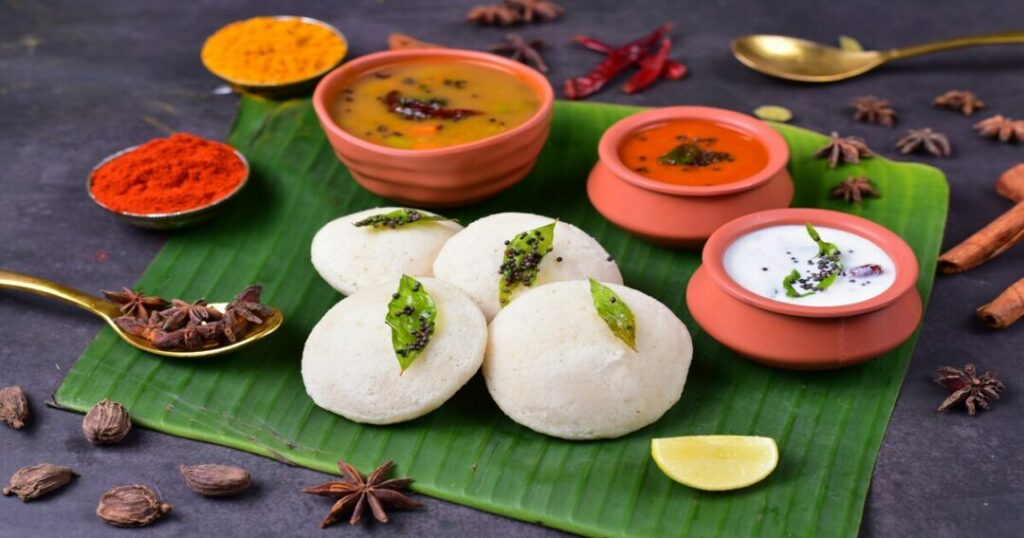
Rameswaram’s food culture reflects its dual identity as a pilgrimage city and a fishing community.
Seafood: The waters around Rameswaram — protected within the Gulf of Mannar Marine National Park — produce some of the finest fish and seafood in Tamil Nadu. Local restaurants near the market serve freshly caught fish prepared in Chettinad and Tamil coastal styles.
Vegetarian pilgrim food: The area around the Ramanathaswamy Temple has dozens of restaurants serving South Indian vegetarian food — idli, dosa, sambar, rice meals — at genuinely affordable prices for pilgrims.
Rameswaram prawn: The specific local kanavai (squid) and prawn preparations — stir-fried with coastal spices and fresh curry leaves — are the most distinctive local non-veg preparations.
What is the Best Time to Visit Rameswaram?
| Season | Conditions | Best For |
| October to February | Cooler temperatures (22–32°C), calm seas, all sites accessible | ✅ Best overall |
| March to May | Hot (32–40°C), bearable with early morning visits | ⚠️ Possible with planning |
| June to September | Monsoon; rough seas; Dhanushkodi road may be affected | ⚠️ Temple visits fine; Dhanushkodi unreliable |
Maha Shivaratri (February/March) and Arudra Darshan (December) are the most significant festival periods — the temple is at its most atmospheric but accommodation is extremely limited; book months in advance.
How to Reach Rameswaram
- By train: Rameswaram has its own railway station (~1 km from the temple) with direct connections from Chennai (~600 km, ~9 hours), Madurai (~174 km, ~3.5 hours), and other Tamil Nadu cities
- By road from Madurai (~174 km | 3–3.5 hours): The most common approach; NH785 connects Madurai to Rameswaram via the Pamban Bridge
- By road from Chennai (~560 km | 9–10 hours): Long but feasible by overnight drive
- By air: Nearest airport is Madurai (~174 km); Tuticorin Airport (~160 km) is also an option
Also Read: Places to Visit in Calicut: 15 Best Tourist Spots You Can’t Miss
Conclusion About places to visit in Rameswaram
Rameswaram is one of those rare destinations that works on every level — as a pilgrimage, as a heritage site, as a geological wonder, and as a place that carries the weight of one of the world’s great epic narratives in its landscape. The places to visit in Rameswaram span the sacred and the abandoned, the ancient and the modern.
Quick guide to Rameswaram places to see:
- Ramanathaswamy Temple — Jyotirlinga, Char Dham, 1,200 m corridor, 22 theerthams
- Agnitheertham — the Bay of Bengal; first theertham; ritual bathing
- Dhanushkodi — ghost town; 1964 cyclone ruins; tip of India; two seas
- Pamban Bridge — 1914; India’s first sea bridge; Scherzer rolling lift
- Adam’s Bridge (Ram Setu) — 50 km shoal chain toward Sri Lanka
- Kothandaramaswamy Temple — survived the 1964 cyclone; Vibhishana’s surrender site
- Gandhamadhana Parvatham — Rama’s footprints; best island panorama
- Abdul Kalam Memorial — birthplace of India’s 11th President (born 1931)
- Panchamukhi Hanuman Temple — five-faced Hanuman; active pilgrimage site
- Lakshmana Theertham — quiet sacred pond; away from the main circuit
Download the Explurger app to discover what pilgrims and travellers actually recommend in Rameswaram, find the best routes through the 22 theerthams, and log every sacred bath, corridor walk, and sunrise at Dhanushkodi on your Tamil Nadu journey.
The temple corridor is already stretching into the distance. The sea at Agnitheertham is already waiting. Rameswaram has been receiving visitors for millennia.
FAQs About places to visit in Rameswaram
2. What is the Ramanathaswamy Temple?
The Ramanathaswamy Temple in Rameswaram is one of India's most sacred Hindu temples — one of the twelve Jyotirlinga shrines of Lord Shiva and one of the four Char Dham pilgrimage sites. According to the Ramayana, Lord Rama installed the Shivalinga here to seek absolution after killing Ravana. The temple holds the record for the longest corridor among all Hindu temples in India — approximately 1,200 metres (3,937 feet) supported by over 1,200 carved pillars. Inside are 22 sacred theerthams (holy wells), each representing one of the 22 arrows in Rama's quiver. The eastern gopuram stands at approximately 53 metres.
3. What happened to Dhanushkodi?
Dhanushkodi was a thriving port and rail terminus at the eastern tip of Pamban Island until December 22–23, 1964, when a catastrophic cyclone struck — one of the most powerful to hit the region — killing over 1,800 people and sweeping a passenger train with approximately 115 passengers off the tracks. The Madras government declared the town unfit for habitation and it was never rebuilt. The ruins of the church, post office, railway station, and residential buildings have remained untouched for over six decades, making Dhanushkodi one of the most atmospheric places to see around Rameswaram.
4. What is the Pamban Bridge?
The Pamban Bridge is India's first sea bridge — opened on February 24, 1914, connecting Rameswaram (Pamban Island) to mainland Tamil Nadu across the Palk Strait. Approximately 2.3 km long, it features a Scherzer rolling lift span that raises to allow ships to pass — one of the few operational examples of this Victorian-era engineering technology still in use in India. For a long time it was the longest sea bridge in India. A new cable-stayed Pamban Bridge was under construction alongside the original as of 2025 — verify current status before visiting.
5. How far is Dhanushkodi from Rameswaram?
Dhanushkodi is approximately 20–24 km from Rameswaram town. A road was completed in 2016 from Mukundarayar Chathiram to Dhanushkodi; jeeps and 4WD vehicles are still commonly used for the final stretch — verify current road conditions before visiting. Dhanushkodi is at the very tip of Pamban Island — the southeasternmost point of mainland India — where the Bay of Bengal meets the Indian Ocean and Adam's Bridge begins its chain of shoals toward Sri Lanka.