

1,085 Total Views
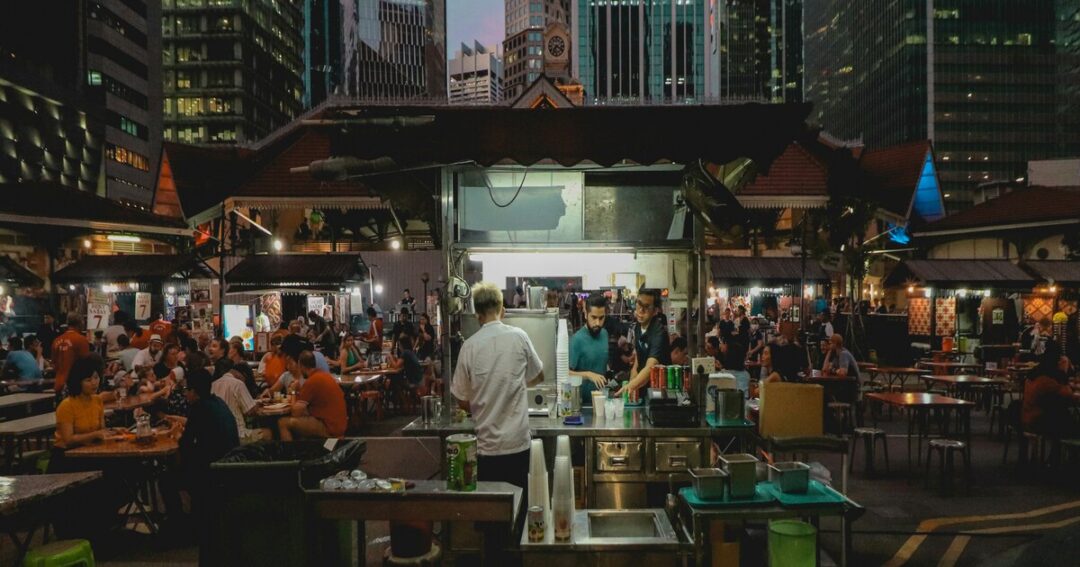
Singapore street food isn’t really a single cuisine — it’s four or five cuisines that grew up side by side and started borrowing from one another. Chinese, Malay, Indian, and Peranakan cooking all show up on the same stretch of hawker stalls, which is exactly why a single meal here can taste more varied than a week of eating almost anywhere else.
The catch is that most visitors taste only three or four dishes before flying home. This guide runs through 15 of the most iconic foods in the country, what’s actually in them, and where each one comes from — so you know what to order even if you’ve never seen the name before.
Singapore Street Food Classics: Rice & Noodle Staples
These five dishes form the backbone of everyday hawker eating, and most locals grew up on at least three of them.
1. Hainanese Chicken Rice
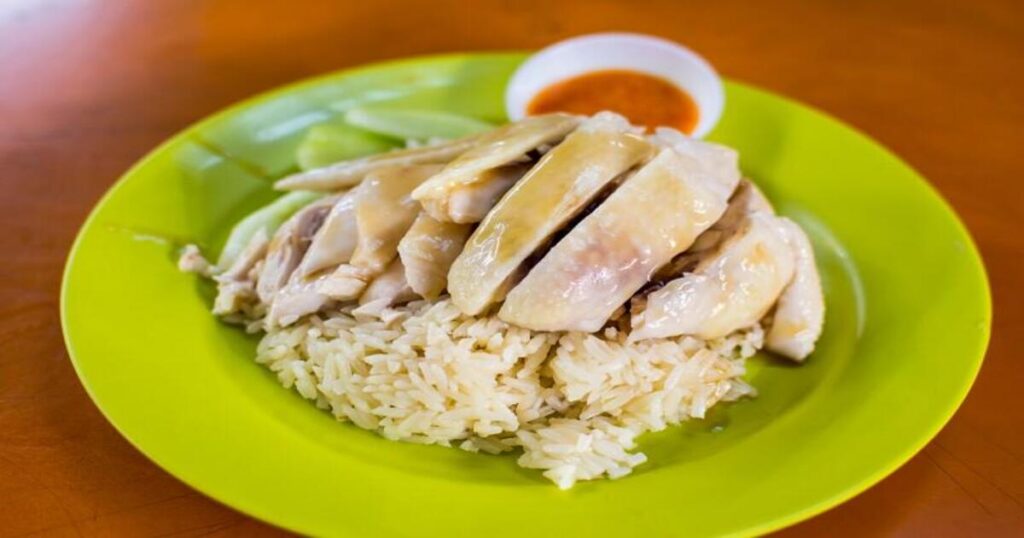
Often called Singapore’s unofficial national dish, this is poached chicken served over rice cooked in chicken fat and stock, alongside chilli sauce, ginger paste, and dark soy. It descends from Wenchang chicken, a specialty from Hainan Province in southern China, adapted by Hainanese immigrants who used older, tougher hens to stretch flavour further. [INTERNAL LINK: A first-timer’s guide to Singaporean cuisine → Singapore Food Guide]
2. Char Kway Teow
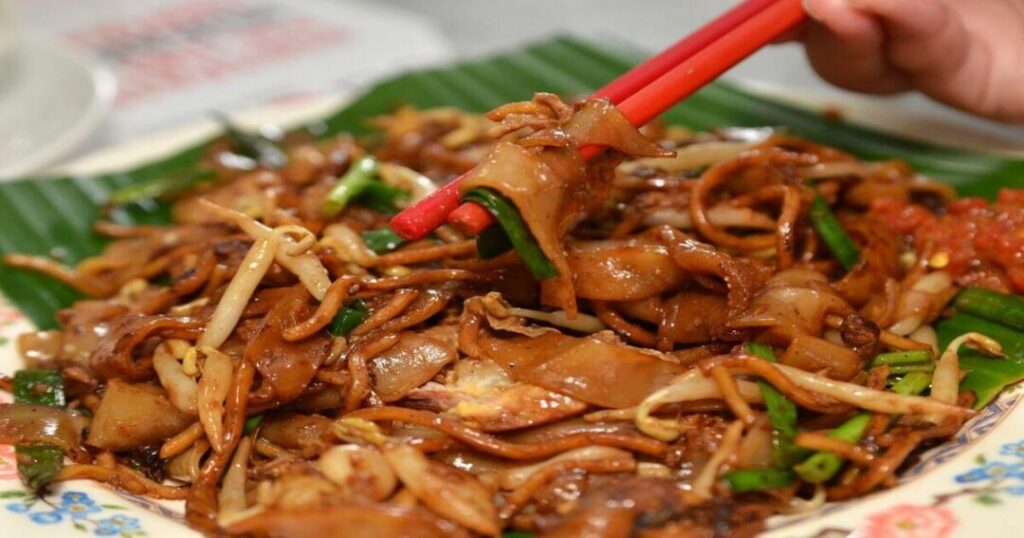
Flat rice noodles wok-fried at high heat with dark soy sauce, egg, bean sprouts, Chinese sausage, and cockles. The dish’s smoky flavour, known locally as “wok hei,” comes specifically from cooking over intense charcoal or gas heat, which is why the same recipe rarely tastes identical from one wok to the next.
3. Hokkien Mee
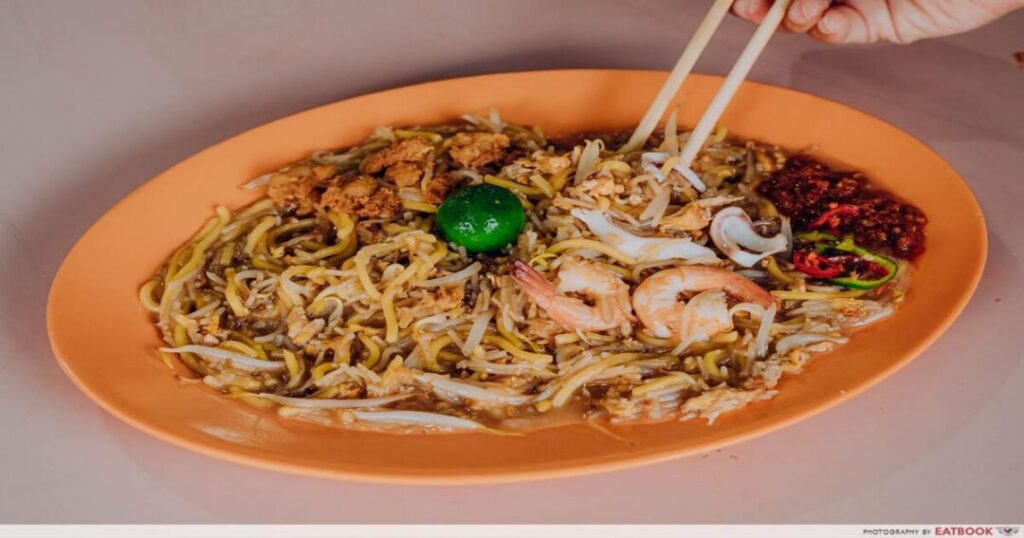
Not to be confused with versions from other cities, Singapore’s take combines yellow egg noodles and rice vermicelli stir-fried with prawns, pork, and egg, finished with a rich stock simmered from prawn shells and pork bones for hours. It traces back to Hokkien (Fujian) immigrant workers who fried leftover noodles from local noodle factories.
4. Laksa
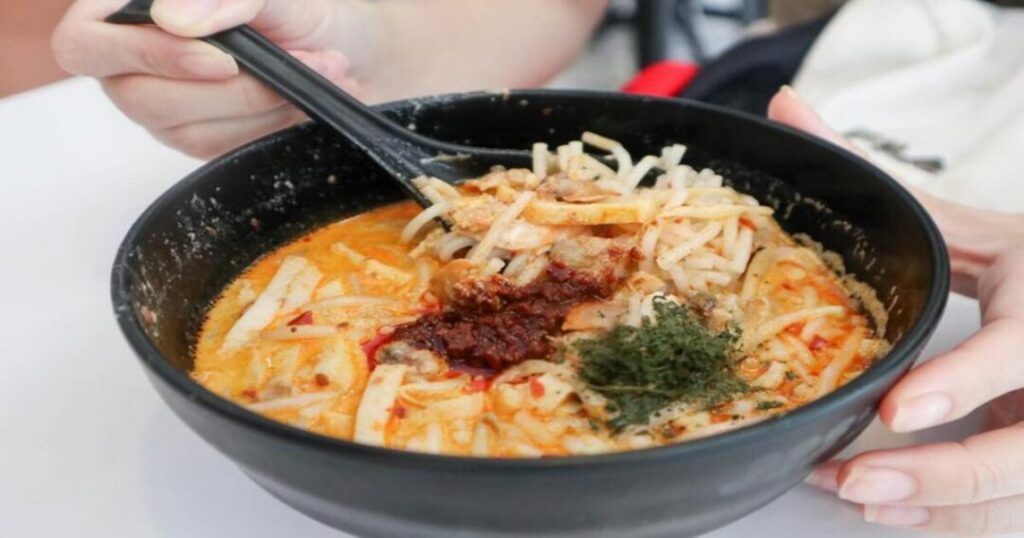
A spicy, coconut-based noodle soup topped with prawns, fish cake, and cockles. Singapore’s most famous regional version, associated with the Peranakan community, is traditionally served with noodles cut short enough to eat entirely with a spoon — no chopsticks required, which was originally a practical touch for hawking it on the street.
5. Nasi Lemak
A Malay dish of rice steamed in coconut milk and pandan leaf, traditionally served with sambal chilli, fried anchovies, roasted peanuts, cucumber, and a hard-boiled or fried egg. Documented as far back as 1875, it’s now eaten across Singapore and Malaysia at almost any hour, though it started life as a hearty breakfast.
Best Street Food in Singapore: Grilled, Fried & Savoury Favourites
This cluster covers the dishes cooked fresh in front of you — grilled, fried, or flipped on a hot plate.
6. Satay
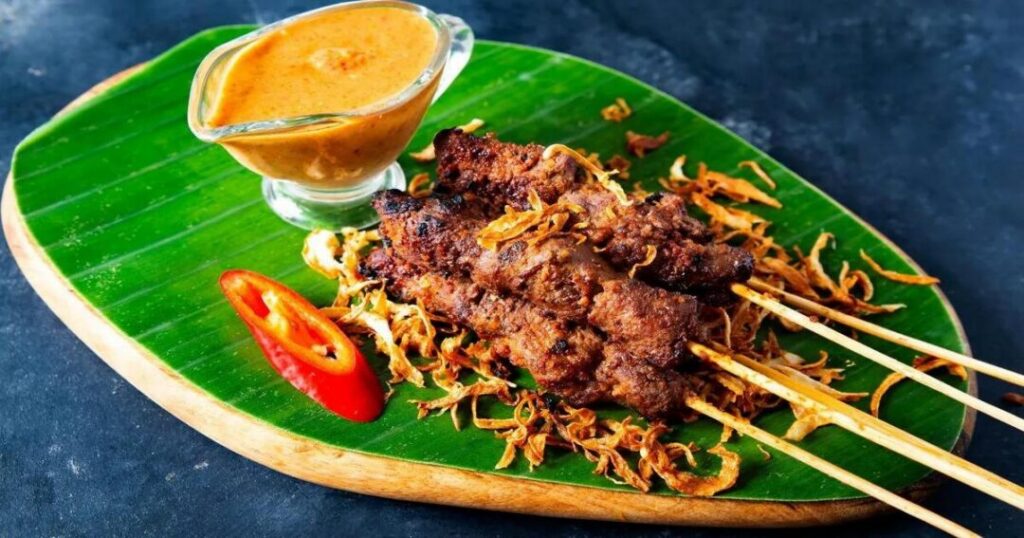
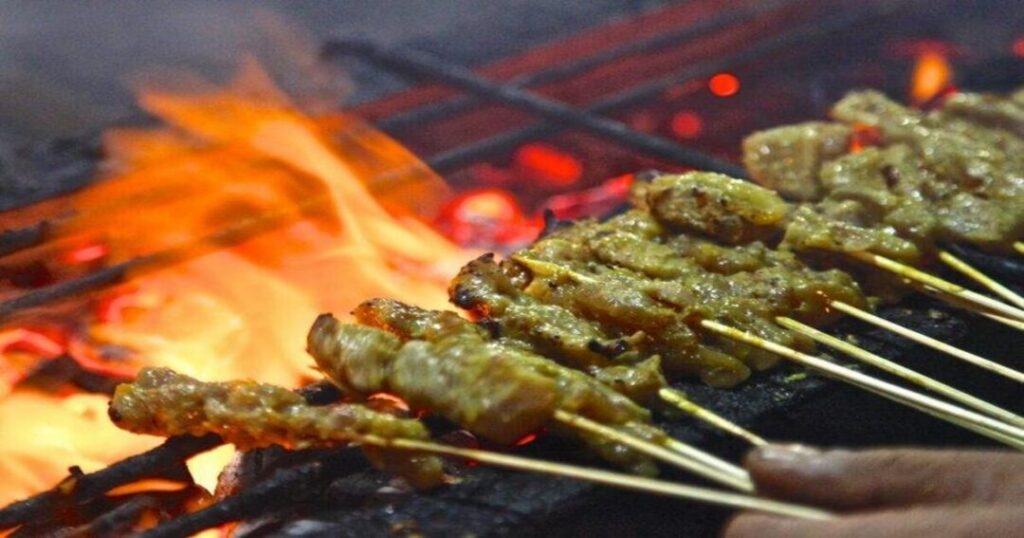
Skewered, marinated meat (chicken, beef, or mutton) grilled over charcoal and served with a thick peanut sauce, plus cucumber, onion, and compressed rice cubes. The charcoal char is non-negotiable — it’s what separates good satay from anything cooked on a regular grill.
7. Murtabak
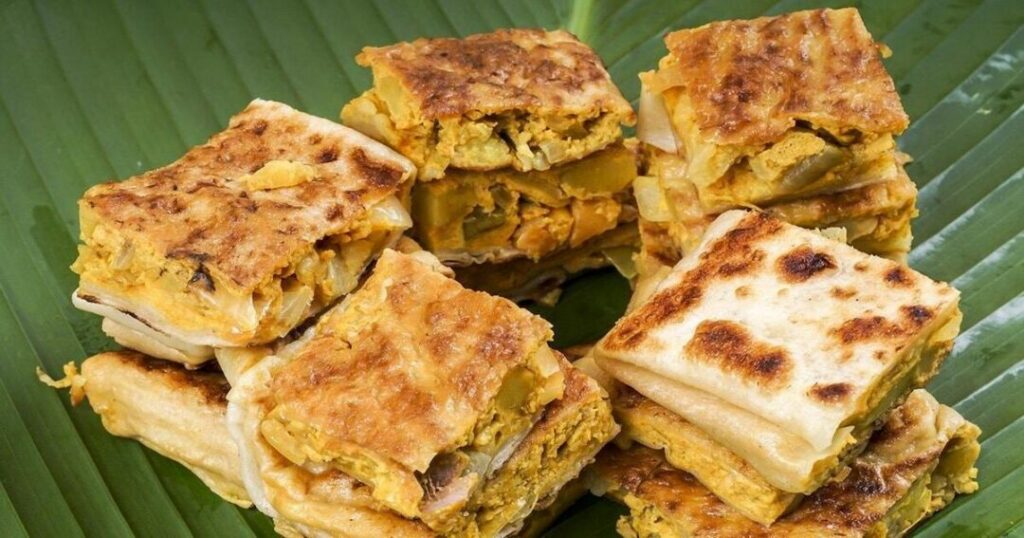
A pan-fried, folded flatbread stuffed with minced meat, egg, and onion, served with a light curry sauce. Its roots trace back to Yemen, via Indian Muslim traders who carried the dish across the Indian Ocean and into Southeast Asia, where it became a fixture of halal street food culture.
8. Roti Prata
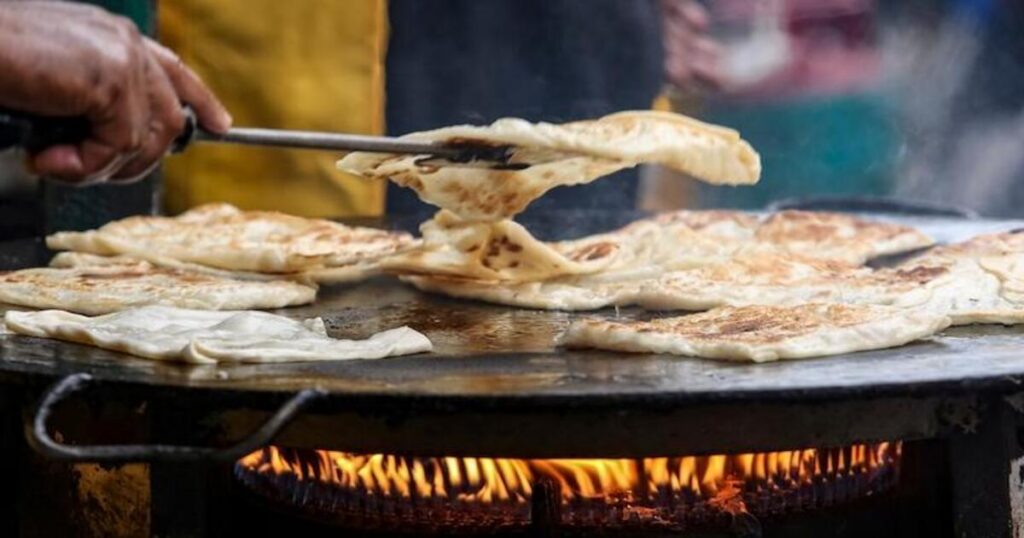
A flaky, pan-fried flatbread descended from South Indian paratha, usually served plain or with egg and onion, alongside a bowl of curry or dhal for dipping. It’s just as commonly eaten for breakfast as it is at 2am after a long night out — one of the few dishes with no fixed mealtime in Singapore.
Also Read: Dragon Boat Festival: 7 Best Dragon Boat Races to Experience Around the World
9. Sambal Stingray
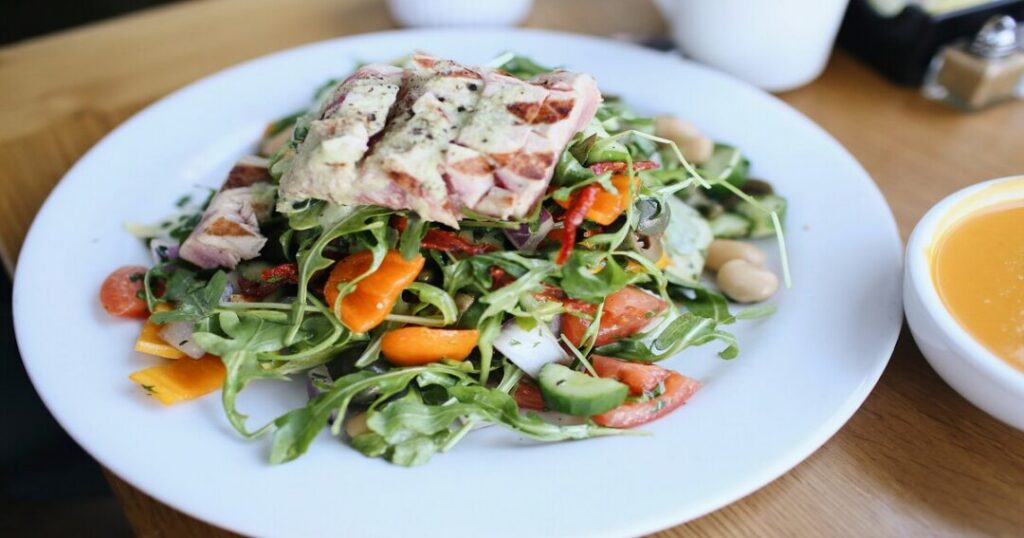
Grilled stingray fin slathered in a spicy sambal paste of chilli, shallots, and belachan (fermented shrimp paste), typically wrapped and cooked in banana leaf, then finished over charcoal. Once considered a cheap, overlooked fish, stingray became a hawker favourite once this preparation caught on.
10. Oyster Omelette
A savoury omelette of small oysters, egg, and a starchy batter (often sweet potato or tapioca flour) fried until part-crispy, part-gooey. The dish has roots in the Hokkien and Teochew regions of southern China and arrived in Singapore with those communities’ hawker traditions.
11. Chai Tow Kway (Fried Carrot Cake)
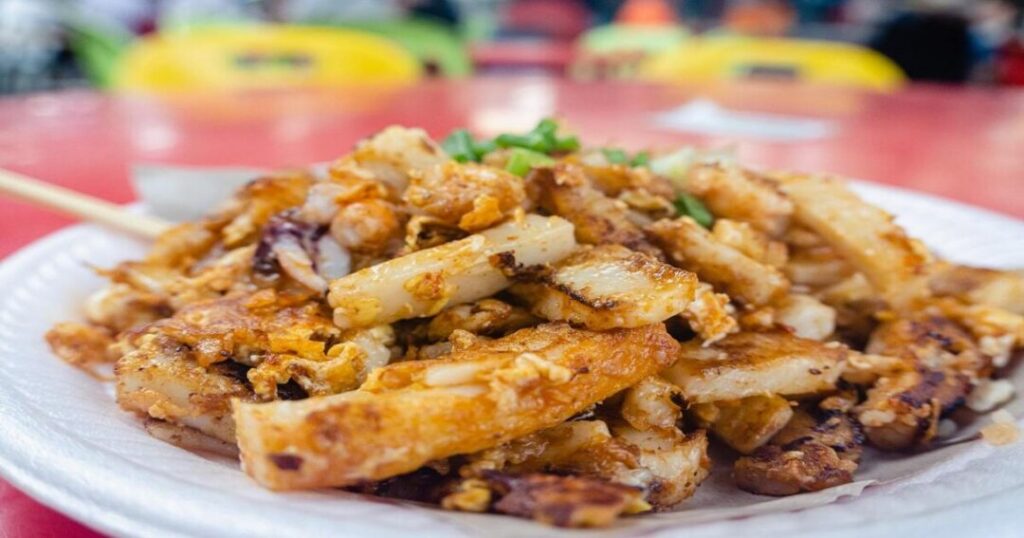
Despite the name, there’s no carrot involved — this is a steamed radish cake, cubed and fried with egg, garlic, and preserved radish. It comes in a “white” version (light soy sauce, crisp base) and a “black” version (sweet dark soy, softer texture), both descended from Teochew rice-cake traditions.
Also Read: Things to Do in Chiang Mai: The Complete Guide to Thailand’s Cultural Capital
Singapore Famous Street Food: Soups & Salads Worth Seeking Out
Not every hawker dish is fried or grilled — these two lean on broth and balance instead.
12. Bak Kut Teh
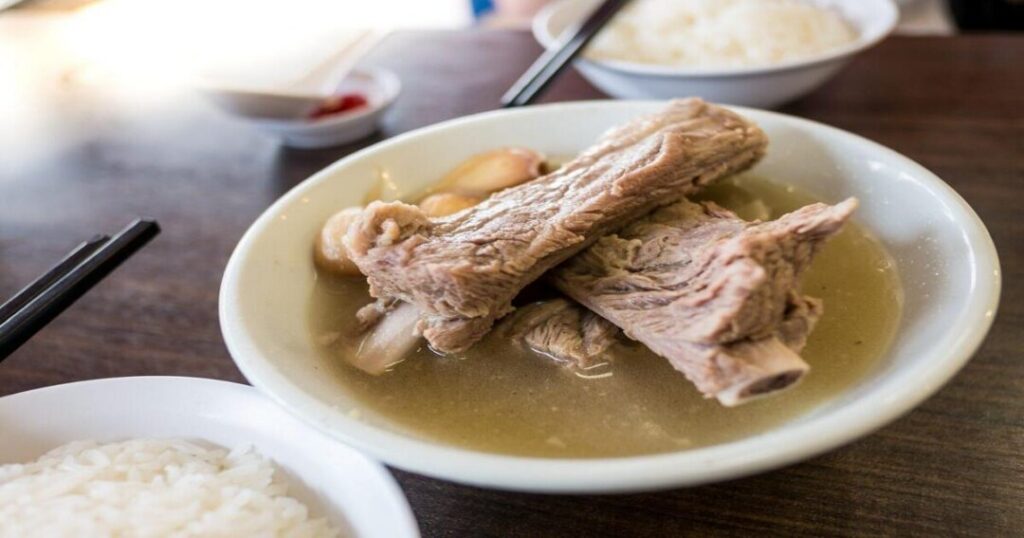
Pork ribs simmered for hours in a peppery, garlicky broth, served with rice and often dipped fried dough sticks. The name literally translates from Hokkien as “meat bone tea,” even though there’s no actual tea in it — the broth’s herbal aroma is where the name comes from. Singapore’s version tends to be lighter and pepper-forward compared to darker, soy-heavy versions found elsewhere in the region.
13. Rojak
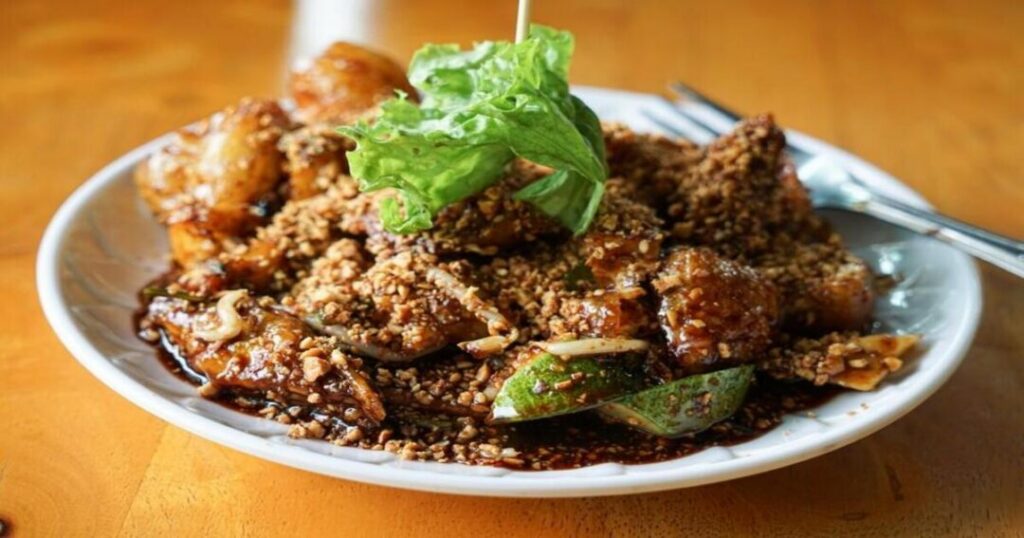
A fruit-and-vegetable salad tossed in a thick, pungent dressing of fermented shrimp paste, chilli, sugar, and lime juice, topped with crushed peanuts. The word itself comes from an old Javanese term meaning “to chop into little pieces,” and the dish has since become shorthand in everyday speech for any eclectic mix of things.
Singapore Street Food to Finish: Breakfast & Sweet Treats
Round out the list with the dishes that bookend a day of eating — breakfast on one end, dessert on the other.
14. Kaya Toast & Kopi
Thin toast spread with butter and kaya (a coconut-and-egg jam), served alongside strong local coffee and a pair of soft-boiled eggs seasoned with soy sauce and white pepper. It emerged when Hainanese cooks who’d worked on British ships began swapping Western jam for coconut jam on toasted bread, eventually building an entire coffee-shop culture around the combination.
15. Chendol & Ice Kacang
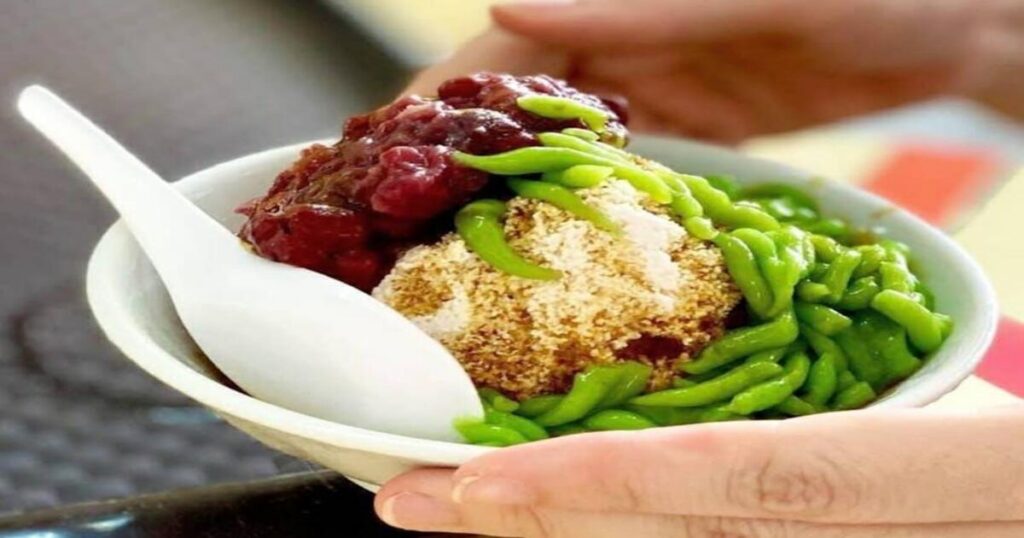
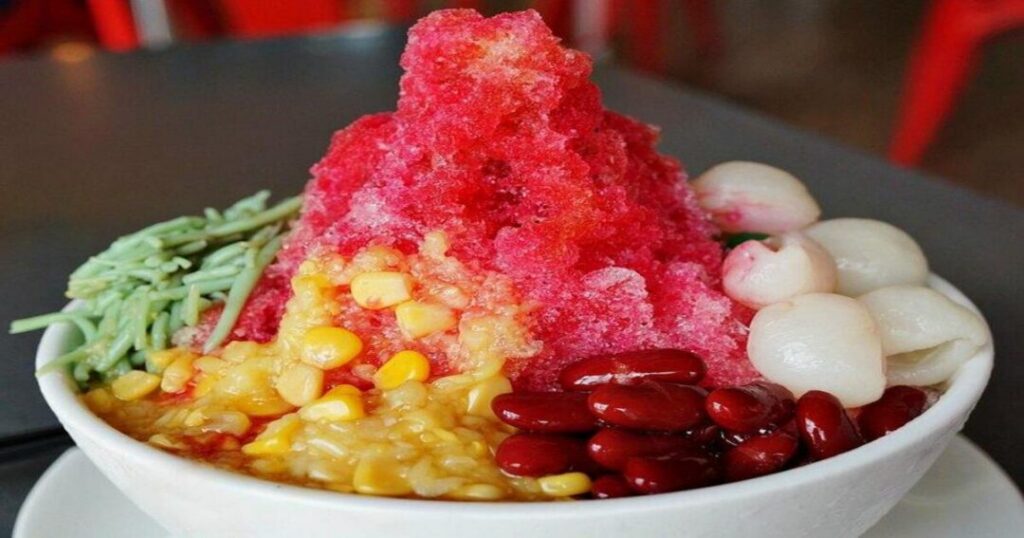
Two shaved-ice desserts often found side by side: chendol layers coconut milk, palm sugar syrup, and green pandan jelly strands over ice, while ice kacang piles the same ice over red beans, jellies, and sweet syrups in far more colours. Chendol likely originated in Java, with records dating back centuries, before spreading across the wider region.
The Culture Behind Singapore Street Food
None of this happened by accident. In December 2020, hawker culture in Singapore was inscribed on UNESCO’s Representative List of the Intangible Cultural Heritage of Humanity — the country’s first entry on that list, and formal recognition that this style of communal, multicultural eating is worth preserving rather than just a convenient way to grab lunch.
Singapore is also one of the only places in the world where street food has earned recognition from the Michelin Guide, including at least one stall that has held a Michelin star and others that carry the more common Bib Gourmand distinction for excellent food at modest prices. [INTERNAL LINK: A short history of Singapore’s hawker centres → Hawker Culture History]
[QUOTE: “You can trace half of Southeast Asia’s migration history through a single hawker centre menu.” — suggested source: a Singapore-based food historian or heritage researcher]
[STAT: Singapore has more than 100 hawker centres island-wide, run under the National Environment Agency’s hawker centre programme — source: NEA Singapore]
If you’re drawn specifically to arab street food in Singapore, the halal-friendly stalls around Kampong Glam and the old Arab Street district are where much of the murtabak, satay, and Malay rice dishes on this list are easiest to find in one concentrated stretch, alongside Middle Eastern and Turkish flavours that reflect the area’s long history as a trading and pilgrimage hub.
How to Enjoy Singapore Street Food Like a Local?
A handful of habits make hawker-centre dining smoother, especially the first time around.
- “Chope” your seat — leaving a small item like a tissue packet on a table is a widely understood way to reserve seating while you queue
- Check the hygiene grading — most stalls display an official grade (A to D) near the counter, reflecting how recently and how well they passed inspection
- Eat off-peak when you can — Singapore’s lunch rush (roughly noon to 1:30pm) is when queues at popular stalls get longest
- Don’t judge a stall by its seating — some of the most respected hawker food is served from stalls with the plainest possible setup
- Ask before you order if you’re unsure what’s inside a dish — many stalls are happy to explain ingredients, especially for halal or vegetarian needs
Also Read: e-Visa for Indians: Your Complete Guide to Visa-Free, Visa on Arrival & e-Visa Travel
Final Thoughts About Singapore Street Food
Fifteen dishes barely scratch the surface of what’s cooked across Singapore’s hawker centres and food streets, but they cover the range that matters most: rice and noodles, grilled and fried favourites, hearty soups, and the breakfast-to-dessert bookends that define a full day of eating here. However you build your food list, Singapore street food rewards curiosity more than any single must-visit stop ever could.
Plan your perfect food trail with Explurger — download the app now.
Use this list as your starting menu, then let your own appetite decide what to chase down next.
FAQs About Singapore Street Food
2. Is Singapore street food spicy?
Some dishes are spicy while others are mild, so it varies significantly by dish rather than being uniformly hot. Laksa, rojak, and sambal stingray tend to carry real heat from chilli and sambal pastes, while dishes like Hainanese chicken rice, kaya toast, and roti prata are naturally mild, with chilli sauces typically served on the side rather than mixed in.
3. What are singapore street food prices generally like?
Without listing exact figures, hawker food in Singapore is widely considered one of the most affordable ways to eat well in the country, generally costing a fraction of what a similar dish would cost at a sit-down restaurant. Prices do vary by dish, ingredient (seafood tends to cost more), and location, but hawker centres remain the budget-friendly benchmark against which other dining options in Singapore are measured.
4. Is Arab Street good for street food in Singapore?
Yes, the Arab Street and Kampong Glam area is one of Singapore's most concentrated halal food districts, reflecting its history as a Muslim trading and pilgrimage hub. It's one of the best places to try murtabak, Malay rice dishes, and satay alongside Middle Eastern and Turkish influences, all within a compact, walkable neighbourhood.
5. Is Singapore street food halal-friendly?
Yes, a significant portion of Singapore's street food is halal, particularly dishes with Malay or Indian Muslim origins like murtabak, roti prata, satay, and nasi lemak. Many hawker centres also clearly separate halal and non-halal stalls or sections, and halal certification is commonly displayed, making it relatively straightforward for halal-conscious travellers to navigate.
6. Do I need to know the local language to order street food?
No, English is one of Singapore's official languages and is widely spoken and understood at hawker centres and food stalls across the island. Dish names are usually displayed in English alongside their local names, and most stall operators are used to explaining ingredients or spice levels to visitors who aren't familiar with a particular dish.