
1,329 Total Views
Udaipur earns its “City of Lakes” reputation honestly. The white palaces reflected in Lake Pichola, the Lake Palace floating in the middle of the water, the City Palace dominating the eastern shore — these are genuinely among the most beautiful places to see in Udaipur, and no guide that skips them entirely is being honest. But Udaipur is also more than its postcard version. The surrounding Aravalli hills hide a 15th-century fort with the world’s second-longest wall after China’s, a marble temple that took 50 years to build, a wildlife sanctuary with leopards, and a handful of temples and neighbourhoods that most visitors drive past without stopping. This guide gives you the quick version of the must-sees, then takes you where the crowds aren’t.
The Essentials — Udaipur Sightseeing Places You Can’t Skip
These are the places everyone comes for. They are famous for good reason — here’s the one-line on each so you can plan efficiently and move on to what most visitors miss.
City Palace — Udaipur’s Greatest Monument
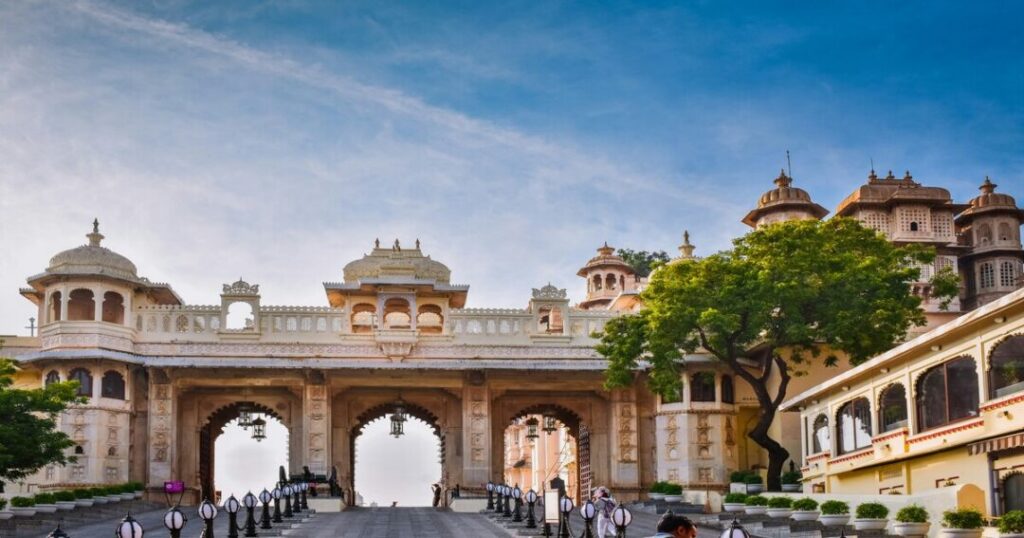
Founded in 1559 by Maharana Udai Singh II after he shifted his capital from Chittorgarh, the City Palace was built over nearly 400 years by successive Maharanas of the Mewar dynasty. It is the largest palace complex in Rajasthan — 11 palaces, granite and marble, Rajasthani and Mughal architecture in equal measure, overlooking Lake Pichola from the eastern shore. The Peacock Courtyard (Mayur Chowk) and the mirrored halls are the interior highlights.
- Entry: ₹300 for Indians; open 9:30 AM–5:30 PM
- Book tickets online to avoid queues at the gate
- The rooftop restaurant inside the palace complex has one of the finest lake views in Udaipur
Lake Pichola & Lake Palace — The View That Defines Udaipur
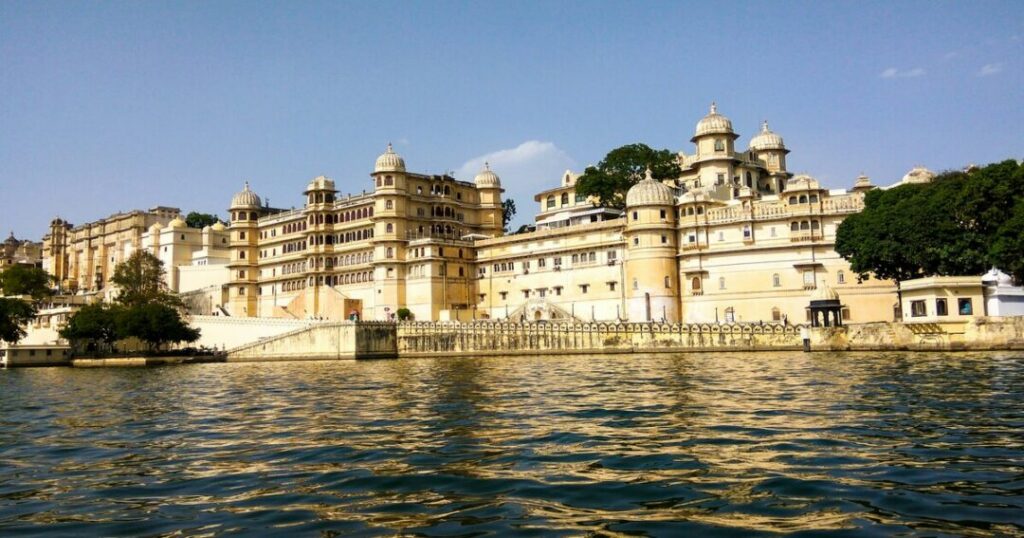
Lake Pichola was created in 1362 AD by Pichhu Banjara, a Banjara tribesman who transported grain in the region during the reign of Maharana Lakha. The lake was later expanded by Maharana Udai Singh II, who founded Udaipur on its banks in 1559. The Lake Palace (Jag Niwas), the white marble island hotel that appears to float on the water, was built by Maharana Jagat Singh II in 1746 as a royal summer palace. Access to the Lake Palace is now restricted to hotel guests (it is operated as a Taj Luxury hotel), but the view from the City Palace ramparts and the lake boat rides offer the most important perspective.
- Boat rides on Lake Pichola depart from the City Palace jetty — sunset rides are the most popular
- Jag Mandir Palace (the other island palace on the lake) is accessible to non-hotel guests — the sunset from its marble terrace is extraordinary
- Ambrai Ghat, on the western shore, gives the best ground-level view of the City Palace and the Lake Palace together — arrive at golden hour
Jagdish Temple — 400 Years of Continuous Worship
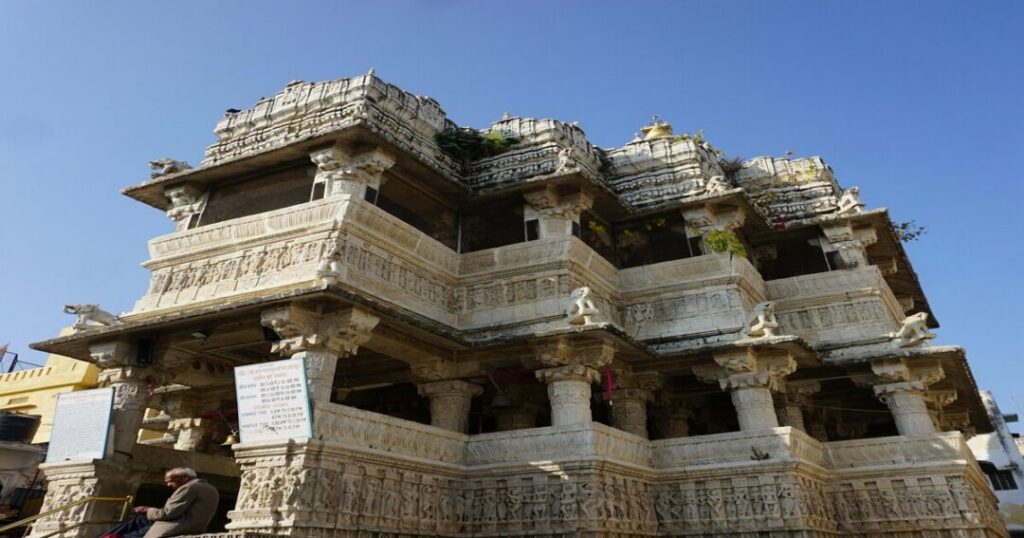
Built by Maharana Jagat Singh I in 1651, the Jagdish Temple is dedicated to Lord Vishnu and is the largest temple in Udaipur. Constructed in Māru-Gurjara (Indo-Aryan) architectural style — with an imposing 79-foot shikhara (spire), 32 marble steps leading to the shrine, and exterior walls covered in intricate carvings of elephants, dancers, horsemen, and celestial beings — it has been in continuous worship since its completion.
- Free entry; remove footwear at the base of the steps
- Aarti at dawn and dusk draws local devotees — more atmospheric than the daytime tourist hours
- A 5-minute walk from the City Palace entrance; combine both in the same morning
Also Read: TOP 10 OFFBEAT PLACES TO VISIT IN RAJASTHAN
Bagore Ki Haveli & Gangaur Ghat — The Real Old City
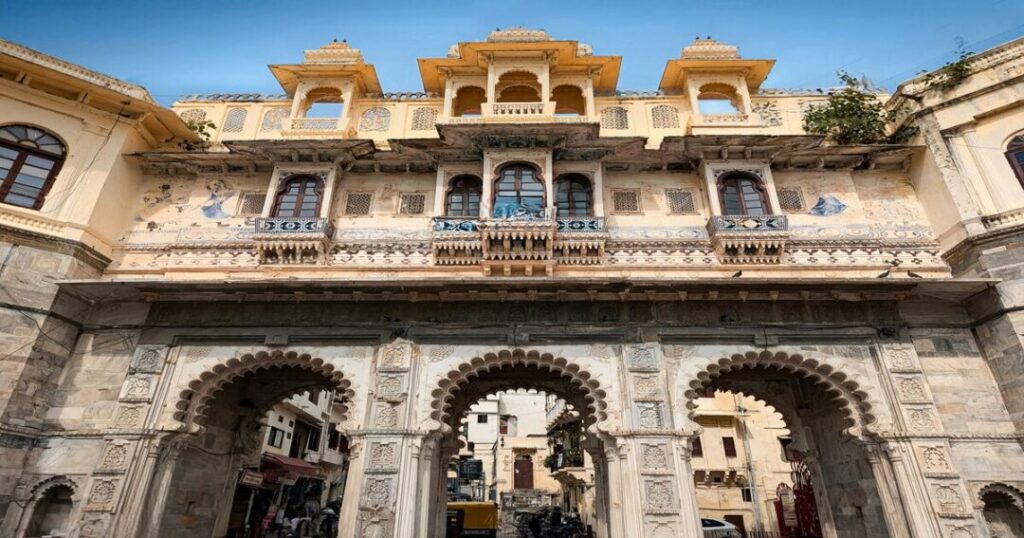
Most visitors see Gangaur Ghat from the lake on a boat and don’t stop. That is a mistake. Bagore Ki Haveli, built in the 18th century by the prime minister of Mewar, Amir Chand Badwa, is a 138-room haveli on the shores of Lake Pichola that has been converted into a museum of traditional Rajasthani life — puppets, costumes, royal furniture, and the world’s largest turban on display. The Gangaur Ghat in front of it is one of the most atmospheric lakeside spots in the city.
- Entry to the haveli: ₹60 for Indians; open 10 AM–5:30 PM; an evening cultural show (puppetry and folk dance) runs at 7 PM for an additional charge
- Gangaur Ghat at sunrise is almost entirely empty — one of the best places to go in Udaipur when you want a quiet moment with the lake
- The surrounding lanes of the old city (Lal Ghat area) hide the best rooftop cafés with unobstructed lake views
Shilpgram — The Living Crafts Village
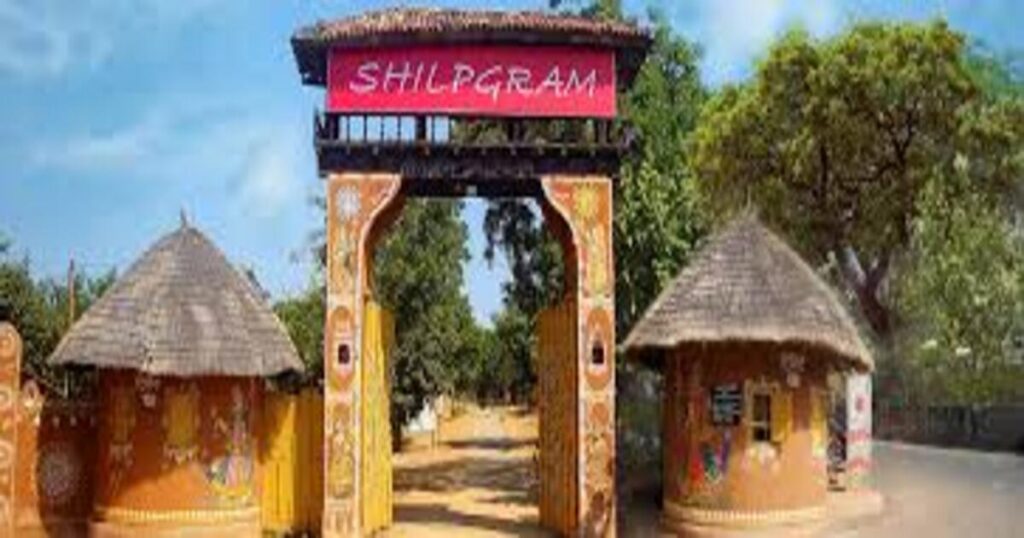
About 3 km west of Udaipur on the road toward Fateh Sagar Lake, Shilpgram is a rural arts and crafts complex established in 1989 by the Western Zone Cultural Centre — a sprawling campus of traditional huts representing the architecture, crafts, and folk traditions of Rajasthan, Gujarat, Goa, and Maharashtra. In late December, it hosts the Shilpgram Crafts Fair — one of the finest craft fairs in India, drawing artisans from across western India for ten days of live demonstrations, music, and commerce.
- Entry: ₹50 for Indians; the campus is large — allow 2 hours minimum
- The Shilpgram Crafts Fair typically runs in late December; check exact dates annually
- Combine with a walk around Fateh Sagar Lake (15 minutes away) for a pleasant half-day
Vintage & Classic Car Collection — The Museum Nobody Talks About
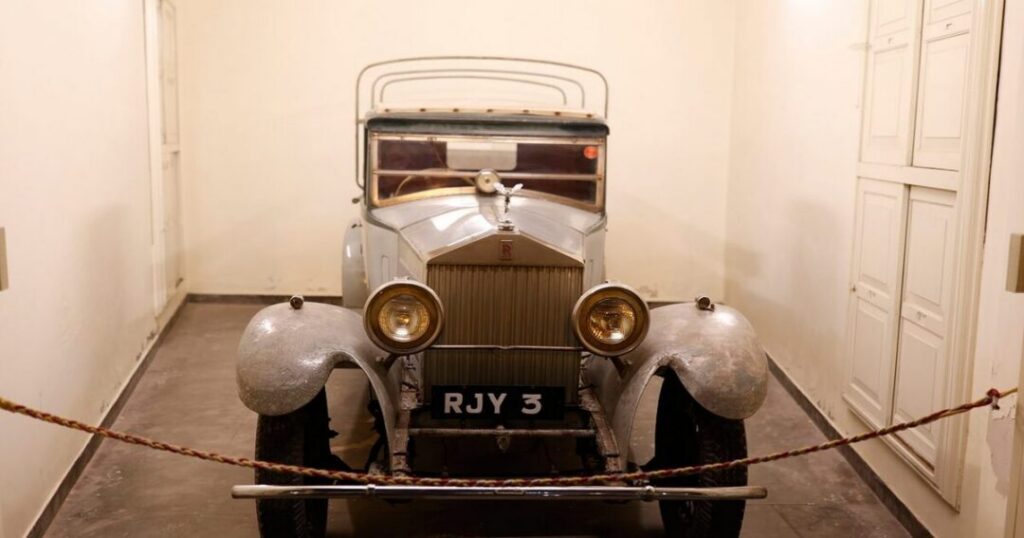
The Vintage & Classic Car Collection at the City Palace complex houses the Maharana of Mewar’s personal collection of vintage vehicles — including a 1934 Rolls-Royce Phantom converted into a throne on wheels, a 1938 Cadillac, and other royal cars once used for ceremonial processions. It is one of the most unusual places of interest in Udaipur and takes about 45 minutes to see properly.
- Entry included with some City Palace tickets; check current combinations at the gate
- The 1934 Rolls-Royce Phantom — with a tiger hunting seat mounted on the bonnet — is the centrepiece
- Located within the City Palace complex, easily combined with the main palace visit
Neemach Mata Temple — The Sunrise No One Tells You About
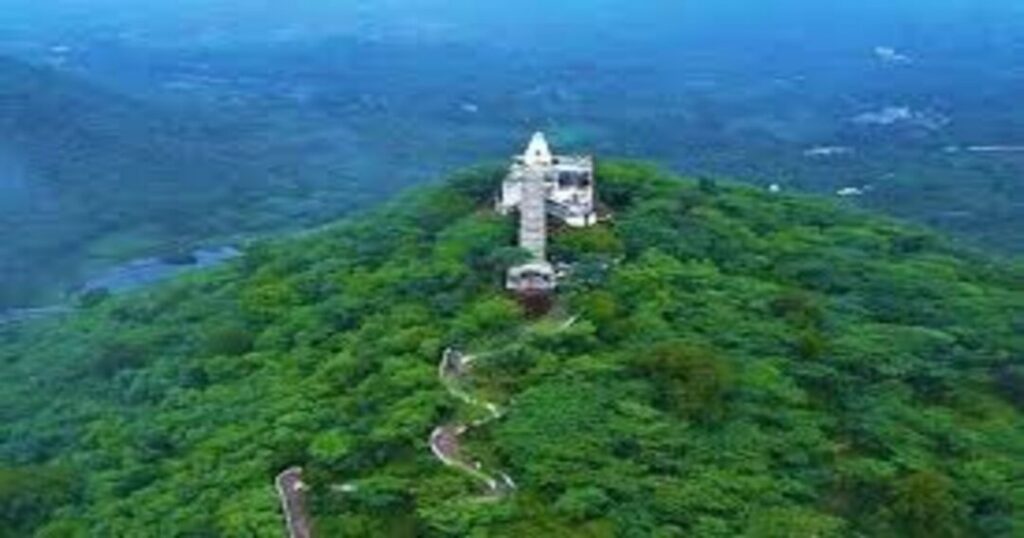
A small hilltop temple dedicated to goddess Neemach Mata, perched above Fateh Sagar Lake, accessible via a 500-step climb from the lake road. It is one of the best places in Udaipur for a sunrise view that almost no tourist knows about — the lake below, the Aravalli hills beyond, and the city slowly lighting up. Local devotees come here daily; foreign tourists seldom.
- The climb takes 20–30 minutes; comfortable footwear is required; arrive before 6 AM for the best light
- Small temple at the top; respectful dress advised
- The view of Fateh Sagar Lake from the top is the finest in the city — better than any rooftop restaurant
Nature & Outdoors — Udaipur Sightseeing Beyond the City
Sajjangarh Wildlife Sanctuary — Leopards Above the City
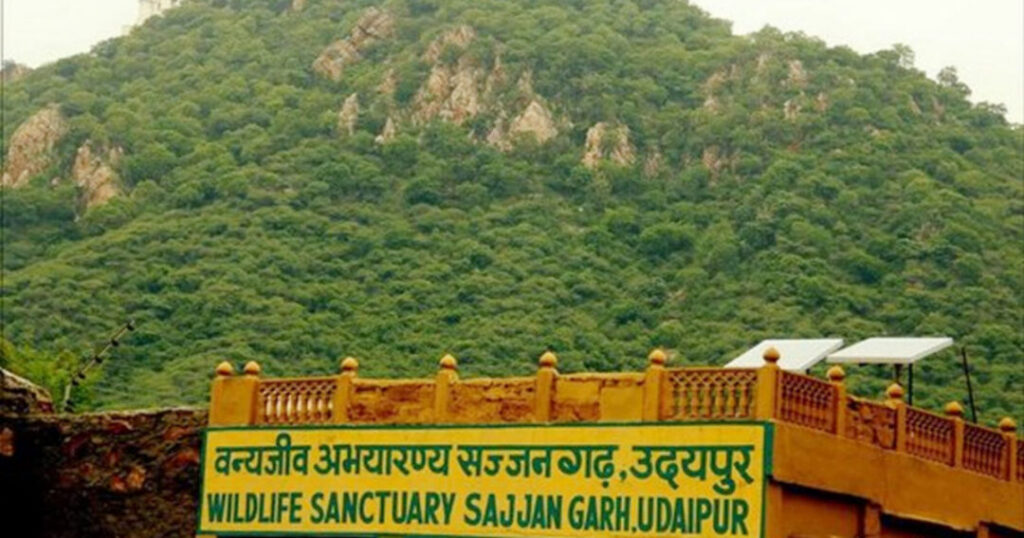
Also known as the Monsoon Palace Sanctuary, Sajjangarh Wildlife Sanctuary covers 5.19 sq km of the Aravalli hills directly above Udaipur. The sanctuary is home to leopards, wild boar, sambhar deer, jackals, and a variety of reptiles and birds — and is less than 5 km from the city. The Monsoon Palace (Sajjangarh Palace), built by Maharana Sajjan Singh in 1884 on the highest peak of the Aravalli range at approximately 944 metres (3,097 feet), presides over the sanctuary and offers a 360-degree view of Udaipur, its lakes, and the surrounding hills.
- Entry to the sanctuary: ₹80 for Indians (vehicles extra); open 8 AM–6 PM
- The Monsoon Palace is accessible by road within the sanctuary; the evening view of Udaipur with the lakes reflecting the sunset light is exceptional
- Wildlife is best spotted in the early morning — leopard sightings are rare but documented; deer and boar are commonly seen
Also Read: Banswara Tourist Places: A Complete Travel Guide to Rajasthan’s Hidden Gem
Best Day Trips from Udaipur — Places to Go in the Udaipur Region
Kumbhalgarh Fort — The Great Wall of India (~80 km | 2 hours)
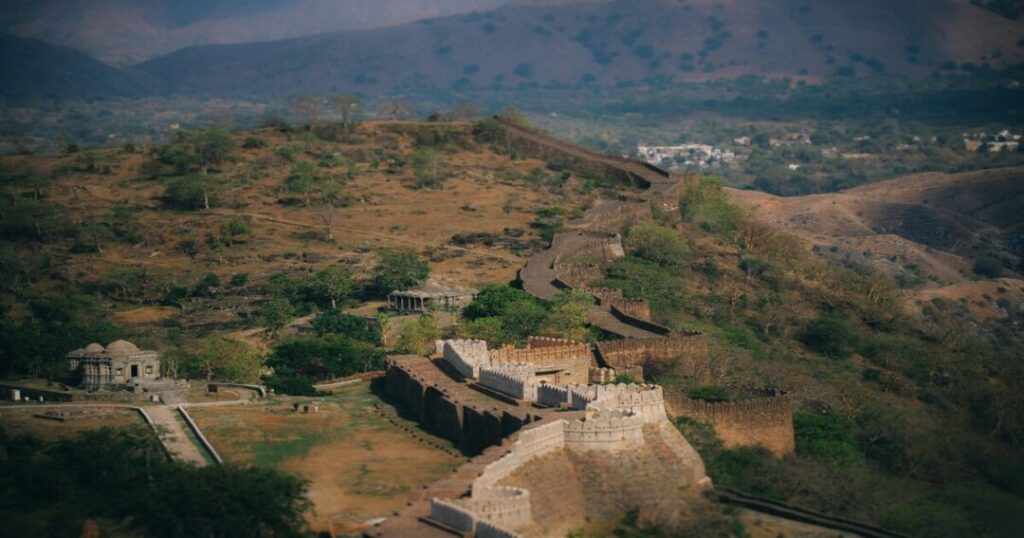
If you make only one day trip from Udaipur, make it to Kumbhalgarh. The fort was built by Rana Kumbha of Mewar in the 15th century (primarily between 1443–1458 CE) on the Aravalli hills at an elevation of 1,100 metres (3,600 feet). It was the birthplace of Maharana Pratap — Mewar’s most celebrated warrior king. The fort’s outer perimeter wall spans 36 km, making it the longest wall in India and the second-longest in the world after the Great Wall of China. The walls are 15 feet thick in places — wide enough for eight horses to ride abreast. The fort contains approximately 360 temples inside its perimeter, of which around 300 are Jain. It is a UNESCO World Heritage Site (as part of Hill Forts of Rajasthan, inscribed in 2013).
- The fort is technically unconquered — in centuries of siege, it fell only once when the Mughal army poisoned the water supply
- The evening light and sound show brings the fort’s history alive dramatically — worth staying for
- Combine with Kumbhalgarh Wildlife Sanctuary (199 sq km, leopards, wolves, sloth bears) on the drive up
Ranakpur Jain Temples — A Marble Marvel (~90 km | 2 hours)
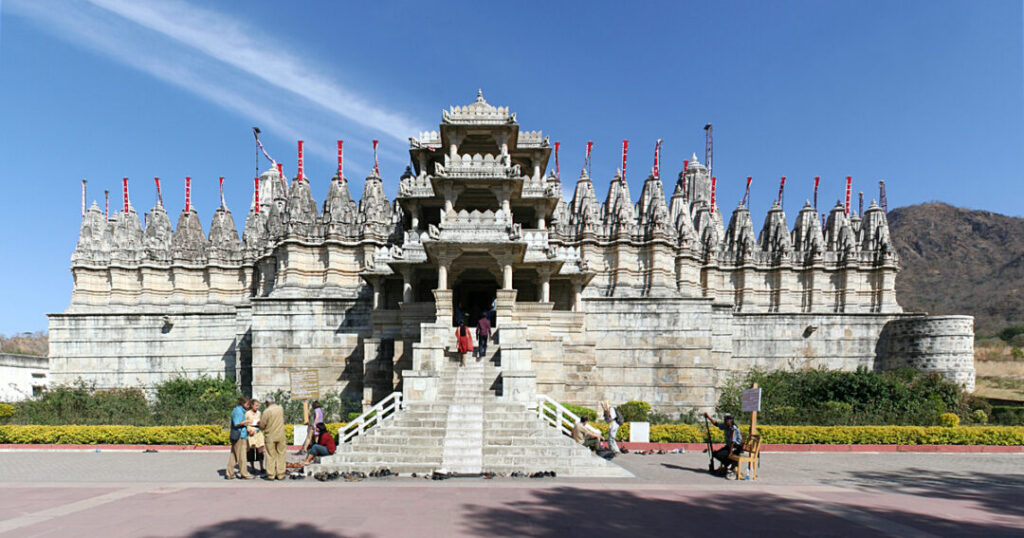
The Ranakpur Jain Temple complex, built in the 15th century (1437–1458 CE) and dedicated to Adinath (the first Jain Tirthankara), is one of the five most significant pilgrimage sites in the Jain religion. The main temple — the Chaturmukha Dharana Vihara — contains 1,444 intricately carved marble pillars, no two of which are identically carved. The construction took approximately 50 years to complete under the patronage of a wealthy merchant named Dharna Shah, and was designed by an architect called Deepaka.
- Entry: ₹200 for non-Jains; open 12 PM–5 PM for general visitors; Jain devotees have access throughout the day
- Photography is permitted inside the main temple; respect the dress code — cover shoulders and legs; remove leather items
- Combine Ranakpur with Kumbhalgarh for a full-day circuit — the two sites are approximately 50 km apart
Chittorgarh Fort — The Fort That Made Udaipur (~110 km | 2.5 hours)
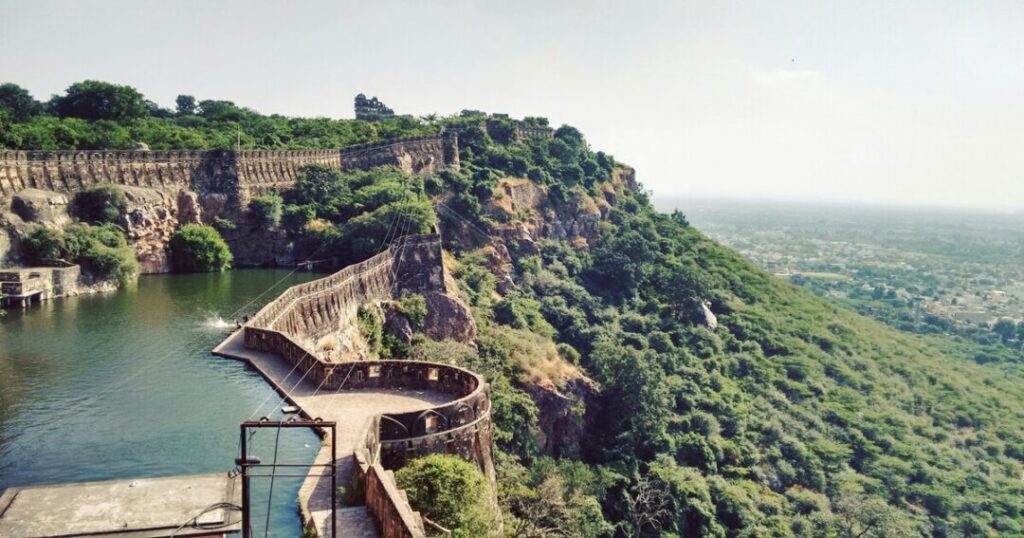
Chittorgarh Fort is the reason Udaipur exists — when Maharana Udai Singh II abandoned the fort after it was besieged by Mughal Emperor Akbar in 1568, he moved the capital to the new city he had founded at Lake Pichola in 1559. The fort, spread across a 700-acre mesa, is one of the largest forts in India and contains the towers of Vijay Stambha (Victory Tower, built by Rana Kumbha in 1448 to commemorate his victory over the Sultan of Malwa) and Kirti Stambha (Fame Tower, a 12th-century Jain pillar).
- The fort covers 700 acres and contains 7 gates, 4 palaces, 19 major temples, and 20 reservoirs
- Vijay Stambha is the most architecturally significant structure — 37 metres tall, nine floors, climb to the top for views across the plains
- A UNESCO World Heritage Site (as part of Hill Forts of Rajasthan, inscribed 2013)
Best Time to Visit Udaipur
October to March is the ideal window — temperatures between 12°C and 28°C, clear skies, and the lakes at their most photogenic. November to February is peak season: the most comfortable days, the most active festival calendar (including the Shilpgram Crafts Fair in December), and the best conditions for day trips to Kumbhalgarh and Ranakpur. Monsoon (July–September) fills the lakes dramatically — Lake Pichola, nearly dry in summer, comes alive after the first rains, and the surrounding hills turn green. April to June gets hot (up to 40°C), but the lakes are quiet and early mornings are still manageable.
How to Reach Udaipur
- By air: Maharana Pratap Airport (UDR), Dabok — ~22 km from the city; connected to Delhi, Mumbai, Bengaluru, Jaipur, and other major cities
- By train: Udaipur City Railway Station — connected to Delhi (Chetak Express, ~12 hours), Jaipur (~6 hours), and Mumbai; the Udaipur-Jaipur route passes through spectacular Aravalli scenery
- By road: ~650 km from Delhi (10–11 hours via NH48 + NH58); ~400 km from Jaipur (5–6 hours); ~250 km from Jodhpur (~4 hours)
Conclusion About things to do in Udaipur
Here’s the quick version of the best things to do in Udaipur:
- Must-sees: City Palace (1559), Lake Pichola sunset boat ride, Jag Mandir island, Jagdish Temple (1651, Māru-Gurjara style)
- Hidden gems: Neemach Mata Temple sunrise, Bagore Ki Haveli + Gangaur Ghat, Vintage Car Collection, Ambrai Ghat at golden hour
- Nature: Sajjangarh Wildlife Sanctuary (leopards, Monsoon Palace at 944 m), Shilpgram crafts village
- Day trips: Kumbhalgarh Fort (36-km wall, world’s second-longest, 80 km), Ranakpur Jain Temples (1,444 carved marble pillars, 90 km), Chittorgarh Fort (700 acres, 110 km)
The best places to explore in Udaipur are the ones that give you the city without the filter — a sunrise walk up to Neemach Mata, a quiet evening on Gangaur Ghat, or the first view of Kumbhalgarh’s wall emerging from the mist. Those moments are what stay with you long after the palace photos fade from the camera roll.
Download the Explurger app to log your Udaipur experiences, discover what travellers recommend beyond the tourist trail, and find the best places to go in Udaipur that most guides overlook.
The lakes are waiting. So is the wall. Udaipur is bigger than its postcards.
FAQs About things to do in Udaipur
2. What are the best places to see in Udaipur beyond the usual tourist circuit?
Three consistently underrated places to see in Udaipur: Neemach Mata Temple (sunrise viewpoint above Fateh Sagar Lake, 500-step climb, almost no tourists), Bagore Ki Haveli (138-room 18th-century haveli with evening folk performance, right on Gangaur Ghat), and the Vintage & Classic Car Collection at the City Palace (includes a 1934 Rolls-Royce Phantom converted into a royal hunting throne). For day trips, Ranakpur's 1,444-pillar marble temple is genuinely unmissable.
3. What is the best time to visit Udaipur?
October to March is the best window — comfortable temperatures (12–28°C), full lakes, clear skies. November to February is peak season with the best conditions for day trips to Kumbhalgarh and Ranakpur. Monsoon (July–September) fills the lakes dramatically — Lake Pichola comes fully alive and the Aravalli hills turn green. The Shilpgram Crafts Fair in late December is one of the finest craft events in Rajasthan — worth timing a trip around.
4. Is Kumbhalgarh worth visiting from Udaipur?
Absolutely — it is the strongest day trip from Udaipur. The fort sits 80 km away (~2 hours by road), at 1,100 metres in the Aravalli hills, and its 36-km outer wall is the second-longest in the world after the Great Wall of China. The fort was built in the 15th century by Rana Kumbha, was the birthplace of Maharana Pratap, and remained unconquered for centuries. Combine it with Ranakpur Jain Temples (50 km from Kumbhalgarh) for a full day circuit covering two UNESCO-level sites in one drive.
5. What are the best places to go in Udaipur for a day trip?
Three outstanding day trips: Kumbhalgarh Fort (80 km, world's second-longest wall, 15th century, UNESCO World Heritage); Ranakpur Jain Temples (90 km, 1,444 individually carved marble pillars, 15th century); and Chittorgarh Fort (110 km, 700-acre mesa, Vijay Stambha Victory Tower, the fort that prompted Udaipur's founding). All three are within 2.5 hours of Udaipur by road.
6. What are the Udaipur sightseeing places most visitors skip?
The most consistently overlooked Udaipur sightseeing places: Sajjangarh Wildlife Sanctuary (leopards and deer above the city, Monsoon Palace views at 944 m), Shilpgram crafts village (3 km west, 10-day craft fair in late December), Neemach Mata Temple (500-step sunrise spot above Fateh Sagar), and Jag Mandir Island Palace on Lake Pichola (accessible to non-hotel guests, marble terrace sunset views). Each takes less than half a day and adds a dimension to Udaipur that the palace-and-boat circuit alone doesn't provide.