
484 Total Views
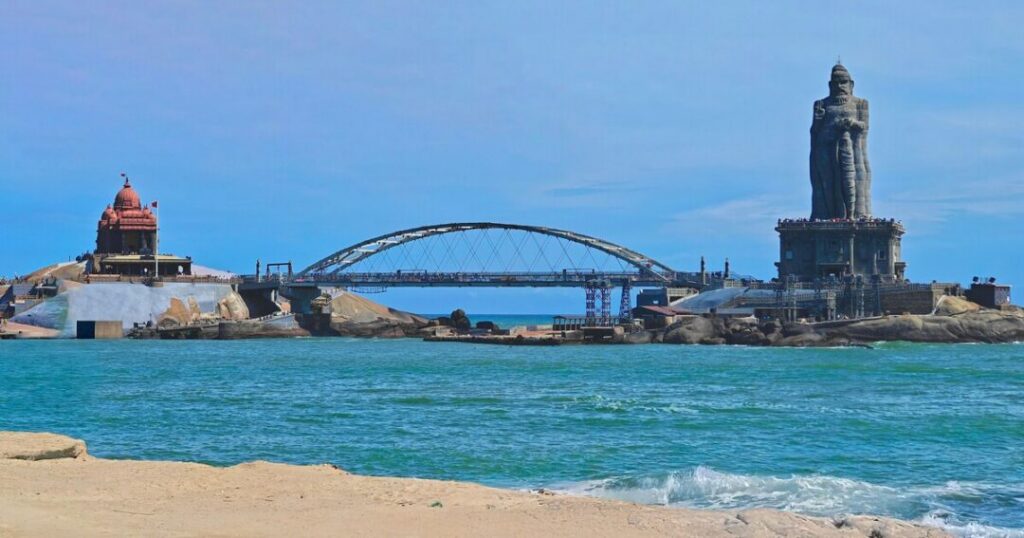
Kanyakumari sits at the very tip of India — the southernmost point of the subcontinent where the Bay of Bengal, the Arabian Sea, and the Indian Ocean converge in a single body of water visible from the shore. It is the only place in India where you can watch the sun rise and set over the sea from the same point. It is where Swami Vivekananda swam to a rock in the middle of the ocean in December 1892 and meditated for three days, an experience that shaped his subsequent life’s mission. It is where the Thiruvalluvar Statue — 133 feet of Tamil poet standing in the sea — faces the horizon with three fingers raised, representing the three books of the Thirukkural.
The tourist places in Kanyakumari are compact, walkable from the town centre for the most part, and collectively offer one of the most emotionally concentrated travel experiences in South India. This guide covers the top places to see — numbered, fact-checked, and honest.
Top 10 Tourist Places in Kanyakumari in 2026
1. Vivekananda Rock Memorial — Where a Nation’s Philosophy Was Born
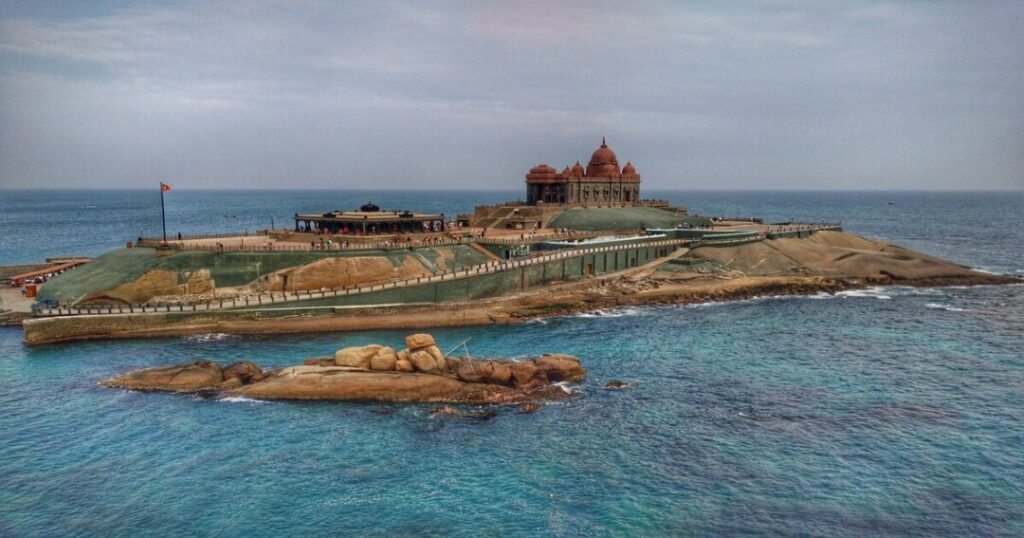
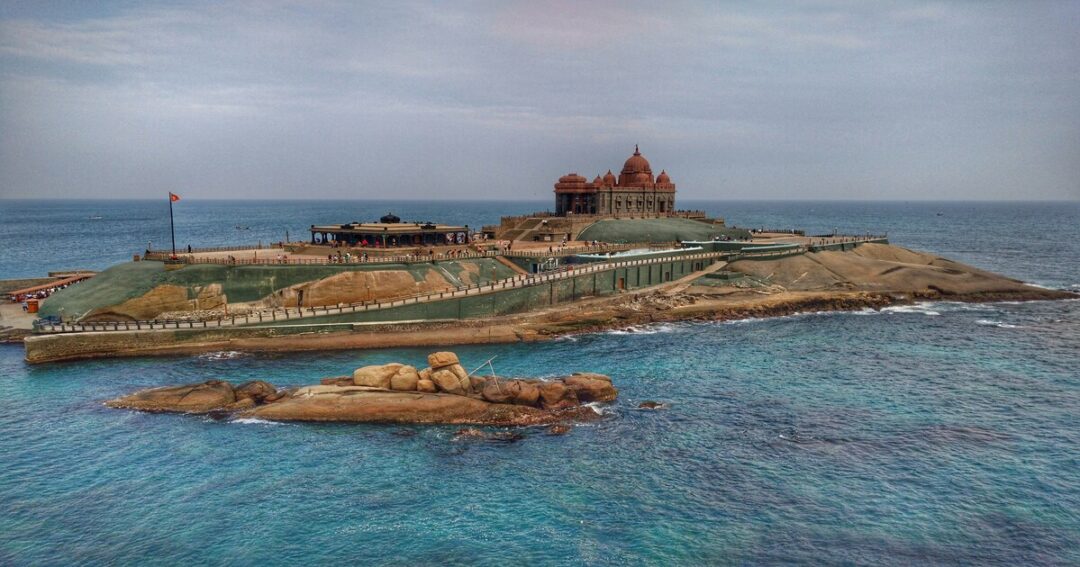
The Vivekananda Rock Memorial is the defining Kanyakumari tourist attraction — a memorial built on one of two rocks approximately 500 metres off the mainland, constructed in 1970 in honour of Swami Vivekananda’s legendary meditation on this rock in December 1892. According to tradition, Vivekananda swam to the rock and meditated for three days and nights — an experience that gave him the clarity to attend the Parliament of the World’s Religions in Chicago in 1893 and deliver the address that made him famous.
The memorial has two main structures: the Vivekananda Mandapam (containing the Dhyana Mandapam meditation hall, Sabha Mandapam assembly hall, and a statue of Vivekananda) and the Shripada Mandapam (a shrine at the spot where the footprint of Goddess Kanyakumari is believed to be visible on the rock). The design incorporates architectural elements from different regional temple traditions across India.
- How to reach: Ferry from Kanyakumari shore (~500 m; ferries run through the day)
- Timings: 8 AM to 4 PM
- Photography: Not permitted inside the Dhyana Mandapam meditation hall
Also Read: Top 5 Places To Visit in Tamil Nadu
2. Thiruvalluvar Statue — 133 Feet of Tamil Philosophy in the Sea
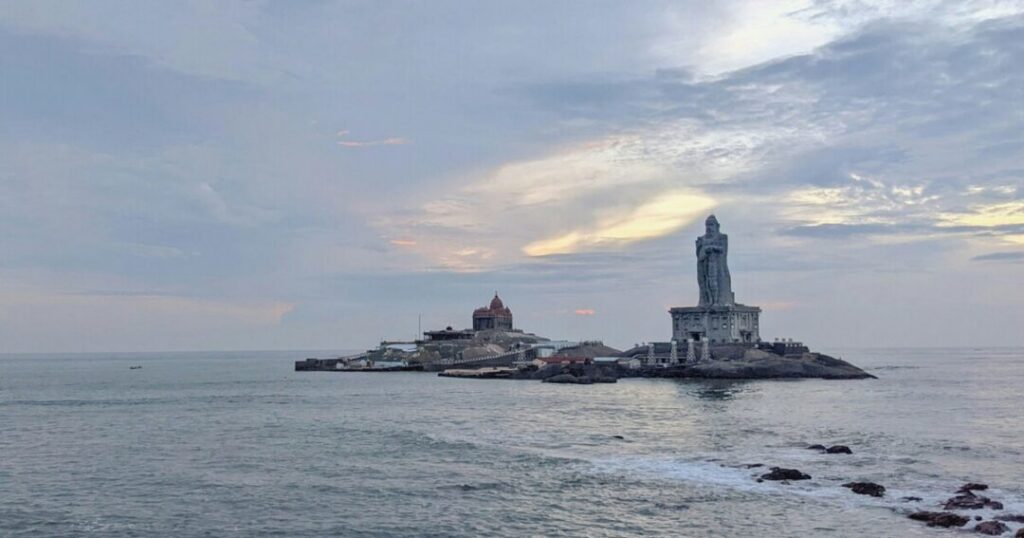
The Thiruvalluvar Statue — on a separate rock adjacent to the Vivekananda Rock Memorial — is a 133-feet (40.6 m) stone sculpture of the Tamil poet and philosopher Thiruvalluvar, author of the Thirukkural. The statue was unveiled on January 1, 2000 by then Chief Minister M. Karunanidhi, sculpted by V. Ganapati Sthapathi. The numbers embedded in the statue’s architecture are deliberate: the total height of 133 feet represents the 133 chapters of the Thirukkural; the 38-foot pedestal represents the 38 chapters of Aram (virtue — the first book); the 95-foot statue represents the chapters of Porul (wealth) and Inbam (love — the second and third books). The statue weighs 7,000 tonnes.
Thiruvalluvar’s right hand is raised with three fingers pointing skyward — representing Aram, Porul, and Inbam. Visitors are permitted to climb to the foot of the statue (12 metres above sea level) via 140 steps inside the Alankara Mandapam. The view of the ocean from this level is one of the finest at Kanyakumari.
- How to reach: Same ferry as Vivekananda Rock; the ferry stops at the Thiruvalluvar Statue island
3. Bhagavathy Amman Temple (Kanyakumari Temple) — One of the 51 Shakti Peethas (some traditions list 52 or 108)
The Bhagavathy Amman Temple — also called the Kanyakumari Temple or Kumari Amman Temple — is a sacred Hindu temple at the very tip of India, dedicated to Goddess Kanyakumari (a form of Parvati/Devi). The temple is one of the 51 Shakti Peethas (some traditions cite 52 or 108) — sites across the subcontinent where parts of the goddess Sati’s body are said to have fallen when Lord Vishnu’s Sudarshana Chakra cut her body to end Lord Shiva’s grief. At Kanyakumari, the back and spine of Sati are said to have fallen.
The presiding deity — Goddess Kanyakumari — is a virgin goddess (kumari = virgin) who is believed to have been performing penance waiting to marry Lord Shiva, who ultimately did not arrive for the wedding. The grain and rice prepared for the wedding feast is said to have turned to stones — and the multicoloured sand (navapashanam) on the beach at Kanyakumari is locally explained by this legend.
The diamond nose ring (mukkuthi) of the deity is so brilliant that it can be seen from the sea — and traditionally, the east-facing gate of the temple was kept closed after sunset to prevent ships being misled by its light. The temple is an active place of worship — devotees take a ritual dip in the sea at the Triveni Sangam before entering.
- Dress code: Traditional — men in dhoti/lungi; women in saree or salwar
- Non-Hindu visitors: Entry may be restricted — check current rules before visiting
4. Triveni Sangam — Where Three Waters Meet
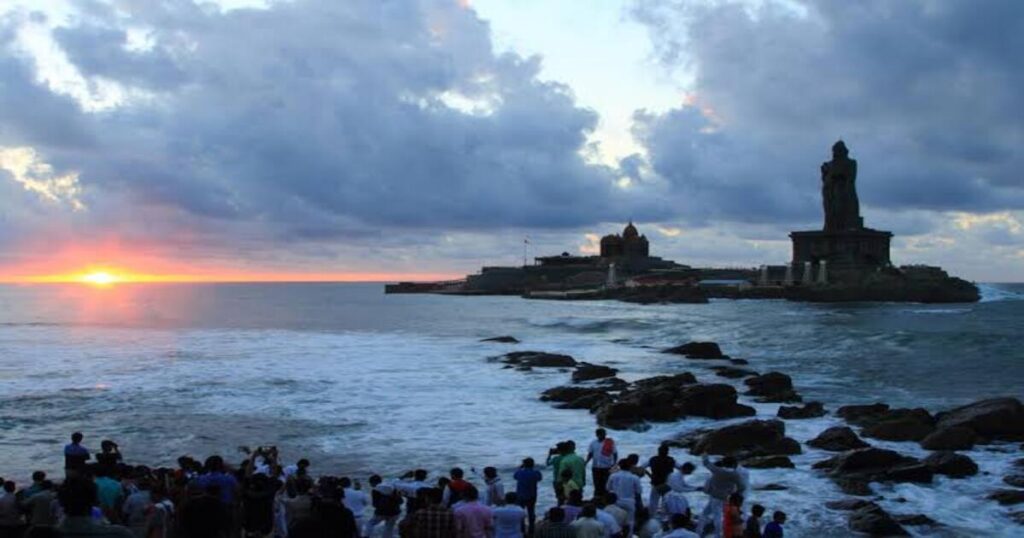
The Triveni Sangam at Kanyakumari is the confluence of three bodies of water — the Bay of Bengal, the Arabian Sea, and the Indian Ocean — at the southernmost tip of India. This is not merely a geographical fact; it is a sacred sangam where pilgrims take a ritual bath before visiting the Kanyakumari Temple, believing the three-water confluence to be especially purifying. The Agni Theertham — the sacred bathing ghat directly in front of the temple — is where this ritual takes place.
The three waters are visually distinguishable at certain times of the year: different shades of blue and green meet at the tip of the peninsula, the specific colours depending on the season, currents, and light conditions. The sight is most dramatic at sunrise and sunset — which brings us to the next essential Kanyakumari place to see.
5. Sunrise & Sunset from the Tip of India — The Main Event
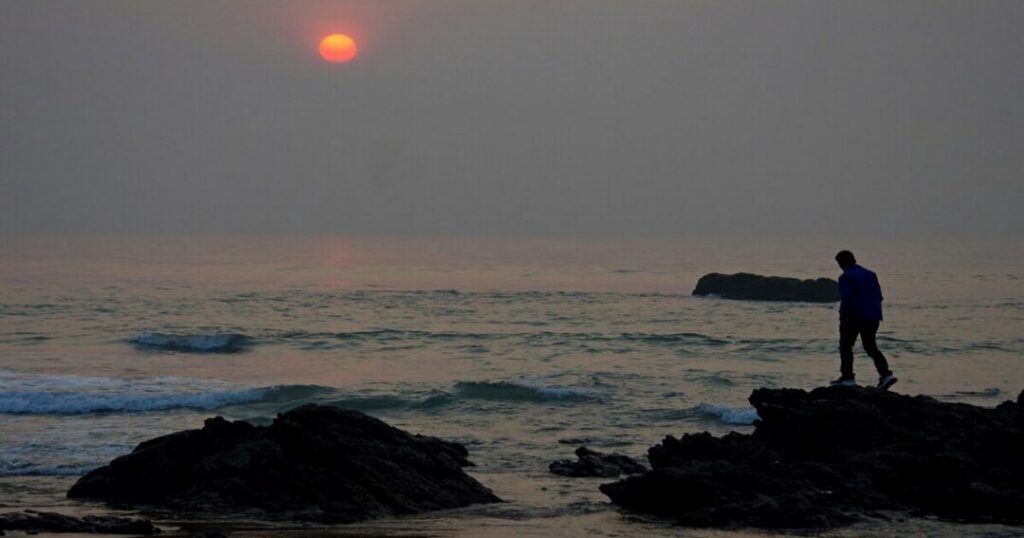
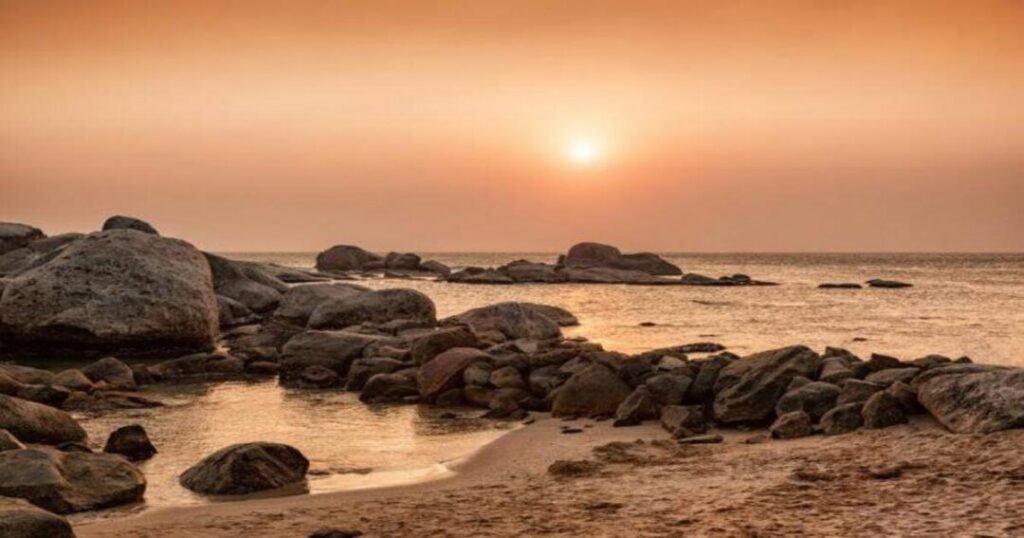
Kanyakumari is one of the very few places in India where both sunrise and sunset can be watched over the sea from the same location. The sunrise — the sun emerging from the Bay of Bengal — and the sunset — the sun descending toward the Arabian Sea — together constitute the most elemental attraction of Kanyakumari, and the reason the town fills with visitors every evening and empties every morning.
For sunrise: The best spot is the beach near the Bhagavathy Amman Temple and the jetty area — direct view of the eastern horizon. On full moon nights near the equinox (typically March and September), the unusual phenomenon of seeing the full moon rise on the eastern horizon simultaneously with the sun setting in the west is visible from Kanyakumari — one of the rarest spectacles in the country.
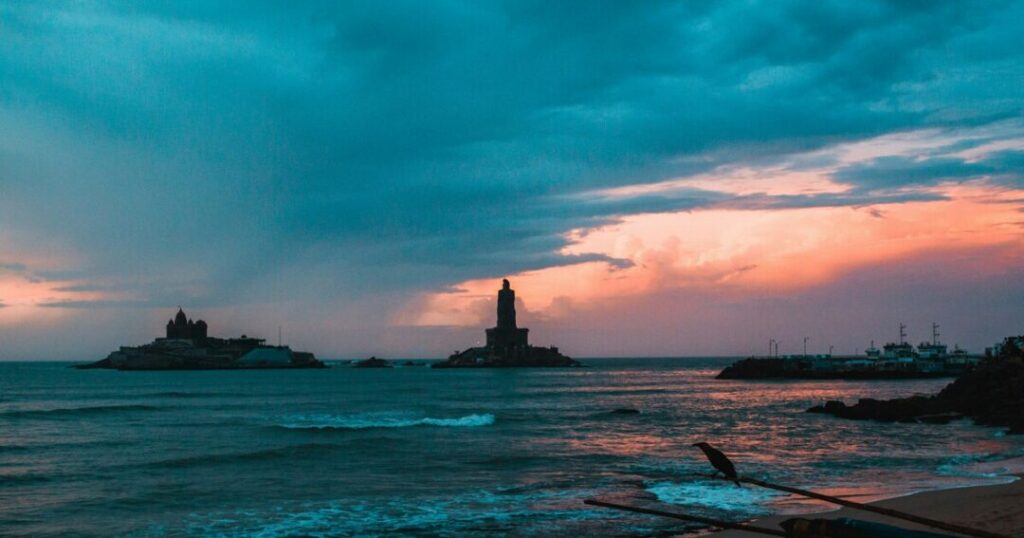
For sunset: The Vivekananda Rock area, the Gandhi Mandapam terrace, and the main beach all provide excellent western sea views. The sunset over the Arabian Sea with the Vivekananda Rock and Thiruvalluvar Statue silhouetted against the colours is one of the most photographed views in Tamil Nadu.
6. Gandhi Memorial Mandapam — A Cone of Light on October 2
The Gandhi Memorial Mandapam was built in 1956 in honour of Mahatma Gandhi, at the spot where Gandhi’s ashes were kept before immersion in the sea at Kanyakumari. The memorial is architecturally distinctive — it is designed such that on October 2 (Gandhi’s birthday), at noon, sunlight passes through a hole in the roof and falls on the exact spot where Gandhi’s ashes were placed. The building’s design was inspired by the Orissan style of temple architecture, with elements from different regional traditions.
The Mandapam houses a photo gallery of Gandhi’s life and is one of the finest places of interest in Kanyakumari for visitors interested in the Independence movement as well as the spiritual geography of the tip of India — Gandhi’s ashes were immersed at the Triveni Sangam, the same sacred confluence that pilgrims bathe in before entering the temple.
7. Wax Museum — India’s Southernmost Wax Museum

The Kanyakumari Wax Museum is one of Tamil Nadu’s finest wax museums, with lifelike wax figures of national leaders, freedom fighters, Tamil poets and scholars, and world figures. It is located in the main Kanyakumari town and is one of the most visited indoor Kanyakumari sightseeing places — particularly useful for families and for visitors seeking shade during the midday heat.
Also Read: Chembra Peak: The Complete Trekking Guide to Wayanad’s Highest Peak
8. Sunset Point Viewpoint — The Golden Hour Terrace
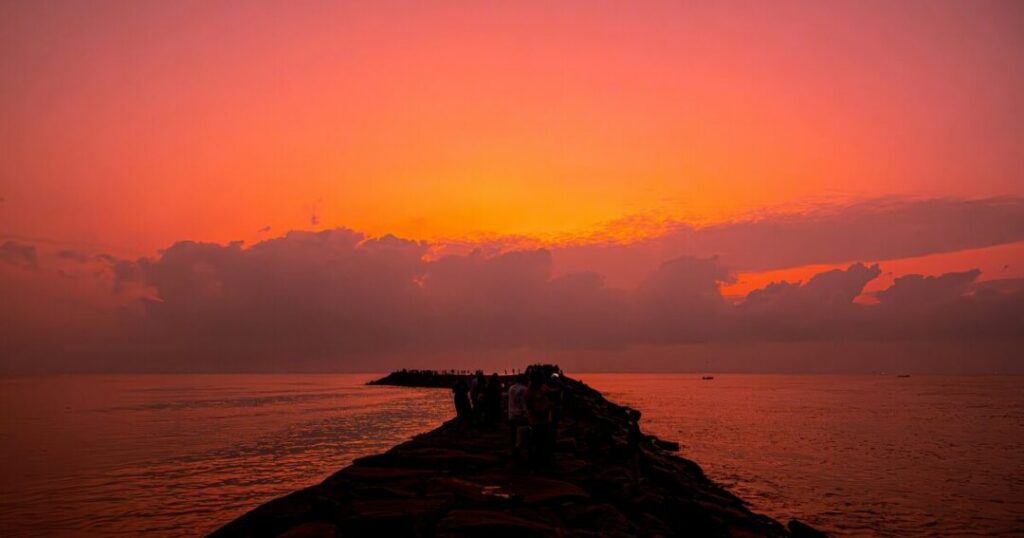
The dedicated Sunset Point at Kanyakumari — a stepped terrace on the western edge of the town — is the most concentrated sunset-watching location, with the entire western sea horizon visible and the silhouettes of the Vivekananda Rock and Thiruvalluvar Statue framing the view. The terrace fills with visitors from approximately 5 PM onward on every evening — arrive by 5:30 PM to secure a position.
9. Padmanabhapuram Palace — India’s Finest Wooden Palace (Day Trip)
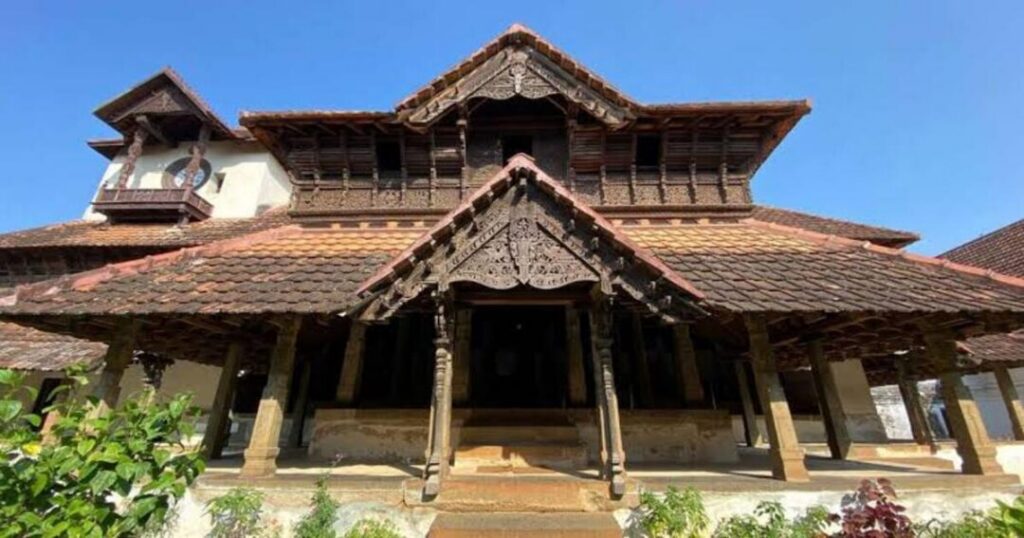
Padmanabhapuram Palace — approximately 39 km from Kanyakumari (Wikipedia: 39 km / 24 mi) in the direction of Thiruvananthapuram, in the Kanyakumari district — is the largest wooden palace complex in Asia and one of the finest examples of Kerala-style traditional architecture in existence. Built in the 16th century and expanded in the 18th century by the Travancore kings, the palace was the seat of the Travancore royal family until the capital moved to Thiruvananthapuram. Despite being in Tamil Nadu geographically, the palace is maintained by the Kerala government.
Key highlights of the palace:
- Thai Kottaram (Mother’s Palace) — the oldest section, built in the 16th century
- The Chinese Netting ceiling in the hall — intricate Chinese-made nets stretched across the ceiling for cooling and decoration
- The Performance Hall (Nataksala) with a rare 17th-century black granite floor polished to a mirror finish
- The Raja’s bedroom with medicinal herbal extracts mixed into the floors
- Distance from Kanyakumari: ~39 km; approximately 45–60 minutes by road
- Timings: 9 AM to 5 PM; closed Mondays
- Language: Guided tours in Tamil, Malayalam, and English available
10. Sucheendram Temple — The Shrine of Brahma, Vishnu & Shiva in One
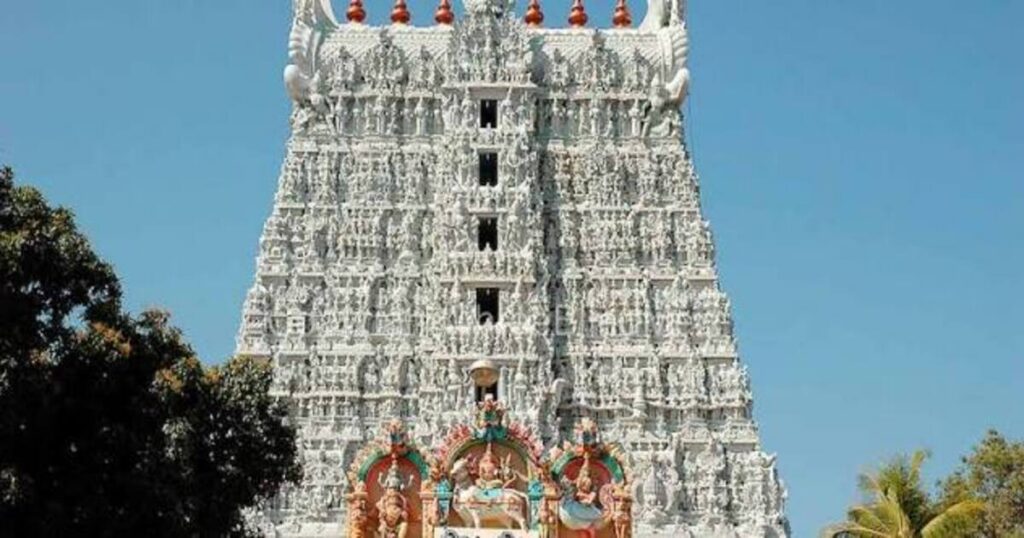
The Sucheendram Temple (also written Suchindram) — approximately 11 km from Kanyakumari — is a significant Dravidian temple dedicated to the combined form of Brahma, Vishnu, and Shiva (Sthanumalayan — representing all three as one deity). The temple’s most famous feature is its musical pillars — carved stone pillars that produce different musical notes when struck, a technical achievement of ancient South Indian temple builders.
The temple’s gopuram (gateway tower) is visible from a considerable distance and is the defining landmark of Sucheendram town. The temple is particularly associated with the legend of Sage Narada, who tested the chastity of Ahalya here — Brahma, Vishnu, and Shiva assumed a united form to escape Narada’s challenge.
- Distance from Kanyakumari: ~11 km
- Best time to visit: Early morning or late evening; the temple is most atmospheric at these times
Also Read: Kolukkumalai Peak: Sunrise Trek, Ticket Price & Best Time to Visit
Bonus Places to Visit in Kanyakumari
Bonus 1 — Mathur Aqueduct (~30 km): The Mathur Hanging Trough Bridge — Asia’s largest aqueduct at 1,220 metres long and 26 metres high — carries water across the Pahrali River valley. The structure is a remarkable feat of engineering and a less-visited tourist destination in Kanyakumari district.
Bonus 2 — Thirparappu Falls (~55 km): A wide, stepped waterfall on the Kodayar River — one of the finest natural waterfalls in Kanyakumari district, most impressive in the post-monsoon months (October–December).
Bonus 3 — Kanyakumari Beach: The beach immediately in front of the town — coloured sand from the navapashanam (nine gem stones) tradition — is where pilgrims bathe at the Agni Theertham ghat and where the sunrise crowds gather each morning.
The Sunset & Sunrise — Practical Guide
| Experience | Best Spot | Best Time |
| Sunrise over Bay of Bengal | Beach near Bhagavathy Amman Temple | First light — approximately 5:45–6:15 AM |
| Sunset over Arabian Sea | Sunset Point / Gandhi Mandapam terrace | 5:30–6:30 PM |
| Moonrise + Sunset simultaneously | Main beach (full moon in March/September) | Equinox full moon evening |
| Vivekananda Rock at sunset silhouette | Main beach or Sunset Point | 5:30–6:30 PM |
What is the Best Time to Visit Kanyakumari?
| Season | Conditions | Best For |
| October to February | Pleasant (24–32°C); post-monsoon clarity; best sea conditions; all ferry services operating | ✅ Best overall |
| March to May | Hot (28–36°C); manageable; clear skies for sunset/sunrise | ✅ Good — visit early morning and evening |
| June to September | Southwest monsoon; rough seas; ferry services to the rock memorial may be suspended | ⚠️ Monsoon — verify ferry availability before visiting |
How to Reach Kanyakumari
- By train: Kanyakumari Junction has direct connections from Chennai (~12 hours), Madurai (~4 hours), Coimbatore, and Bangalore; the station is approximately 1 km from the main beach
- By road from Madurai (~240 km | 4–5 hours): Most common approach on the Tamil Nadu circuit
- By road from Thiruvananthapuram (~87 km | 2 hours): The quickest approach for visitors coming from Kerala
- By air: Nearest airport is Thiruvananthapuram International Airport (~87 km); taxis and buses connect to Kanyakumari
Conclusion About Tourist Places in Kanyakumari
Kanyakumari is the kind of place that stays with you — not because of any single spectacular sight, but because of the accumulated weight of standing at the very tip of a subcontinent, watching the sun leave the sea on one side and rise from it on the other, and knowing that this is where India ends and the ocean begins in every direction.
Download the Explurger app to discover what Tamil Nadu circuit travellers actually recommend in Kanyakumari, find the best sunrise spots and ferry timings, and log every ocean view, temple bell, and silhouette on your southernmost India journey.
The sun is already rising over the Bay of Bengal. The three waters are already meeting. Kanyakumari has been here since before India had a name.
FAQs About Tourist Places in Kanyakumari
2. What is the Vivekananda Rock Memorial?
The Vivekananda Rock Memorial is a monument built in 1970 on a rock approximately 500 metres off the Kanyakumari shore, honouring Swami Vivekananda's meditation on this rock in December 1892. The memorial has two main structures: the Vivekananda Mandapam (with a meditation hall and statue of Vivekananda) and the Shripada Mandapam (at the spot where Goddess Kanyakumari's footprint is believed to be visible). Vivekananda's three-day meditation on this rock is considered the defining spiritual experience that led to his famous address at the Parliament of the World's Religions in Chicago in 1893.
3. What is the Thiruvalluvar Statue?
The Thiruvalluvar Statue is a 133-feet (40.6 m) stone sculpture of Tamil poet Thiruvalluvar on a rock adjacent to the Vivekananda Rock Memorial, unveiled on January 1, 2000 by then Chief Minister M. Karunanidhi. Sculpted by V. Ganapati Sthapathi, the statue weighs 7,000 tonnes. The height of 133 feet represents the 133 chapters of the Thirukkural — the 38-foot pedestal represents Aram (virtue), and the 95-foot statue represents Porul (wealth) and Inbam (love). The three raised fingers on the right hand represent the three books of the Kural.
4. What is special about Kanyakumari?
Kanyakumari is unique for three reasons: it is the southernmost tip of mainland India; it is the only place in India where sunrise and sunset can both be watched over the sea from the same point; and it is the confluence of three water bodies — the Bay of Bengal, the Arabian Sea, and the Indian Ocean (Triveni Sangam). The town also has unique multicoloured sand on its beaches (navapashanam), the sacred Bhagavathy Amman Temple (one of 51 Shakti Peethas (some traditions list 52 or 108)), and the historical connection to Swami Vivekananda's 1892 meditation that shaped modern Indian thought.
5. How far is Padmanabhapuram Palace from Kanyakumari?
Padmanabhapuram Palace is approximately 39 km from Kanyakumari (Wikipedia confirmed) (~1 hour by road). It is the largest wooden palace complex in Asia, built in the 16th century and expanded by the Travancore kings. Despite being geographically in Tamil Nadu's Kanyakumari district, it is maintained by the Kerala government. Key highlights include the Thai Kottaram (Mother's Palace, 16th century), the Chinese Netting ceiling, and the 17th-century polished black granite floor of the Performance Hall. Closed on Mondays.