
441 Total Views
Madhya Pradesh heritage sites span an unusual range for one state — Chandela-era erotic temple carvings, an Ashokan Buddhist stupa, 30,000-year-old cave paintings, and Bundela-dynasty cenotaphs, all within a few hundred kilometers of each other in the state’s north-central belt. Here are the 11 stops that make up the core heritage circuit, followed by notes on timing, getting around, and a couple of heritage-style stays worth knowing about beyond the circuit itself.
The Madhya Pradesh Heritage Circuit: 9 Must-See Stops
1. Gwalior Fort
First recorded in the 10th century under the Kachchhapaghata dynasty, Gwalior Fort reached its architectural peak under the Tomars, particularly Raja Man Singh Tomar (1486-1516), who built the Man Mandir Palace and the Gujari Mahal for his queen Mrignayani. The 19th-century Jai Vilas Palace, built in 1874 by Maharaja Jayajirao in a European style spanning Tuscan, Italian-Doric, and Corinthian influences, now houses the Scindia Museum within the same complex.
2. Orchha
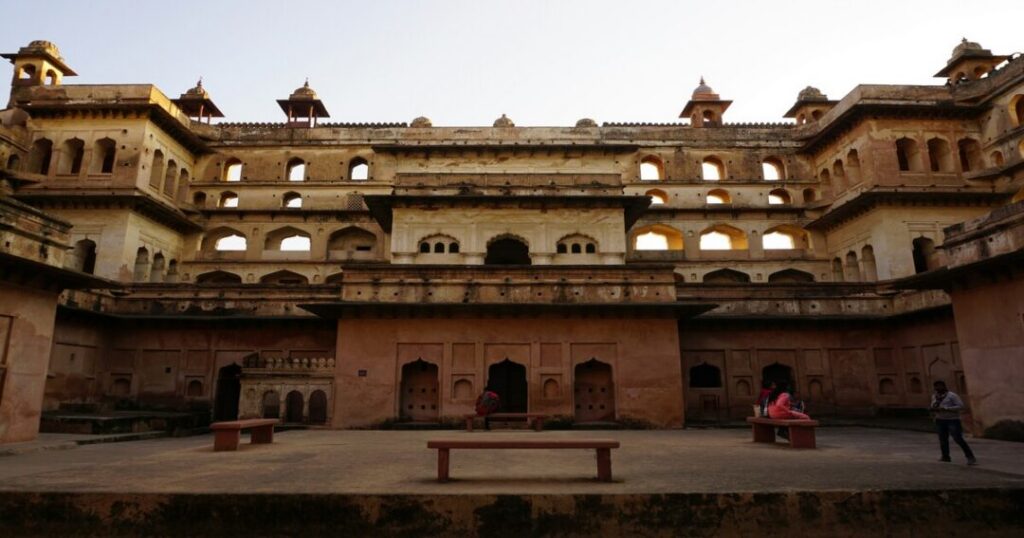
Founded in 1501 by the Bundela chief Rudra Pratap Singh, Orchha packs palaces, temples, and cenotaphs into a small riverside town on the Betwa. Jahangir Mahal, built by Veer Singh Deo to commemorate Emperor Jahangir’s visit, and the 17th-century Chaturbhuj Temple are the two standout structures, alongside 15 Bundela royal cenotaphs (chhatris) built in temple-palace form along the riverbank.
3. Khajuraho
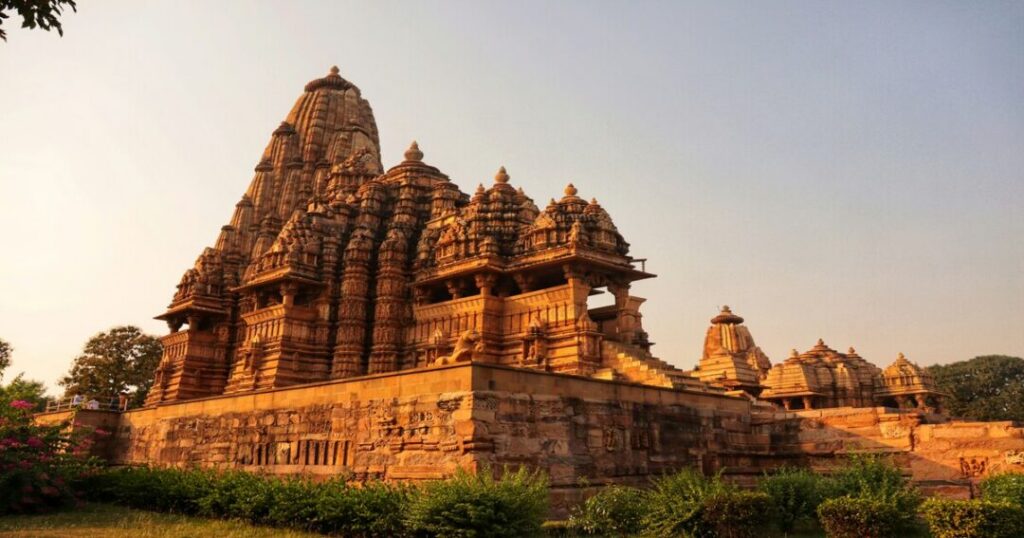
A UNESCO World Heritage Site, Khajuraho’s temples were built by the Chandela dynasty between 900 and 1130 CE — the Chandelas built around 85 temples originally, of which roughly 22-25 survive today (sources vary slightly on the exact count). The erotic sculptures that made Khajuraho famous internationally are only a small portion of the overall carving, most of which depicts everyday and divine life.
4. Sanchi
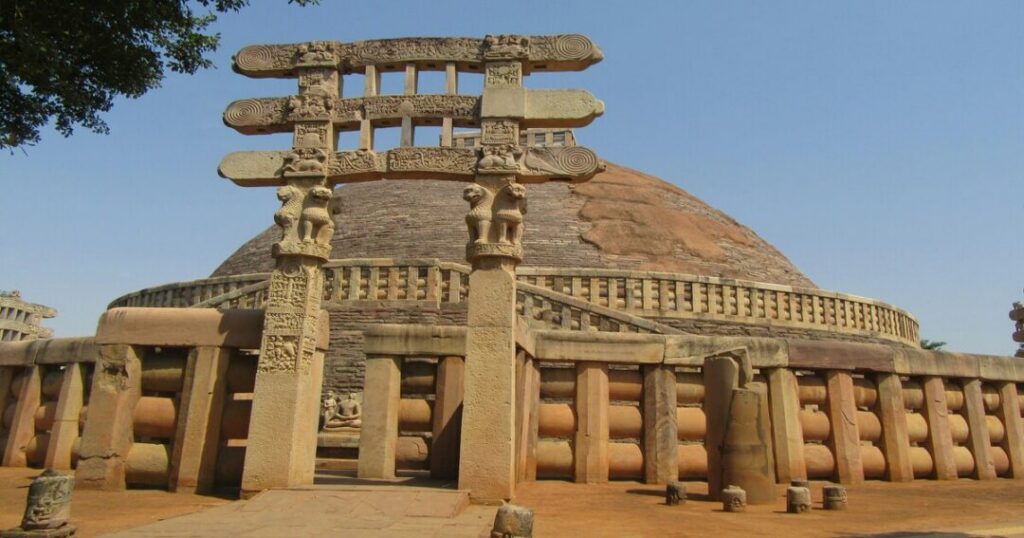
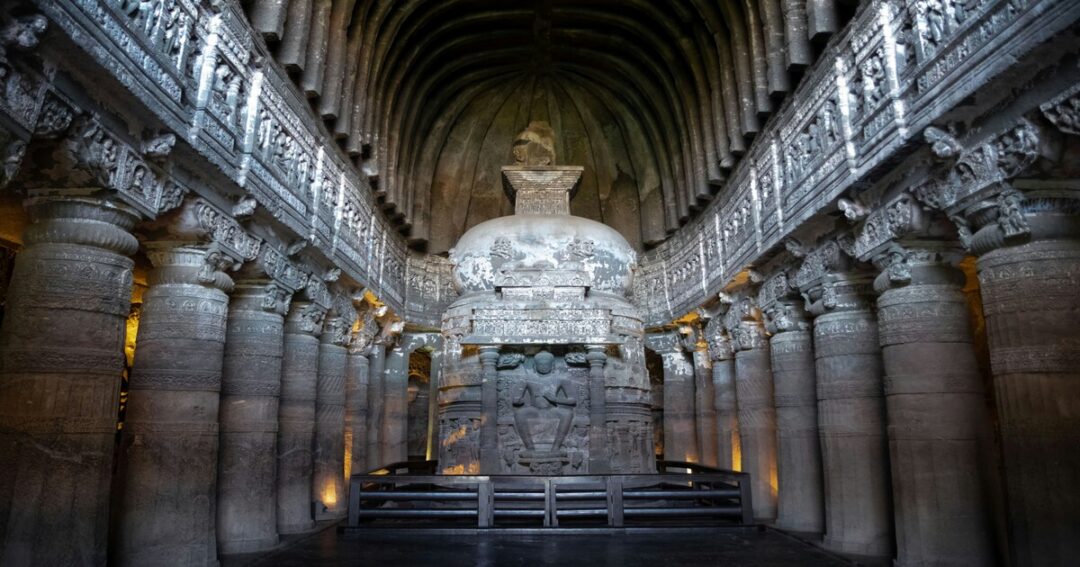
The Great Stupa at Sanchi began as a 3rd-century BCE commission by Emperor Ashoka following his conversion to Buddhism after the Kalinga War, later enlarged to its current size with carved gateways added under Satavahana patronage around the 1st century BCE. Recognized by UNESCO in 1989, Sanchi was rediscovered in 1818 and restored between 1881 and 1919.
Also Read: More Than Just Tigers: Places to Visit in Madhya Pradesh
5. Bhimbetka Rock Shelters
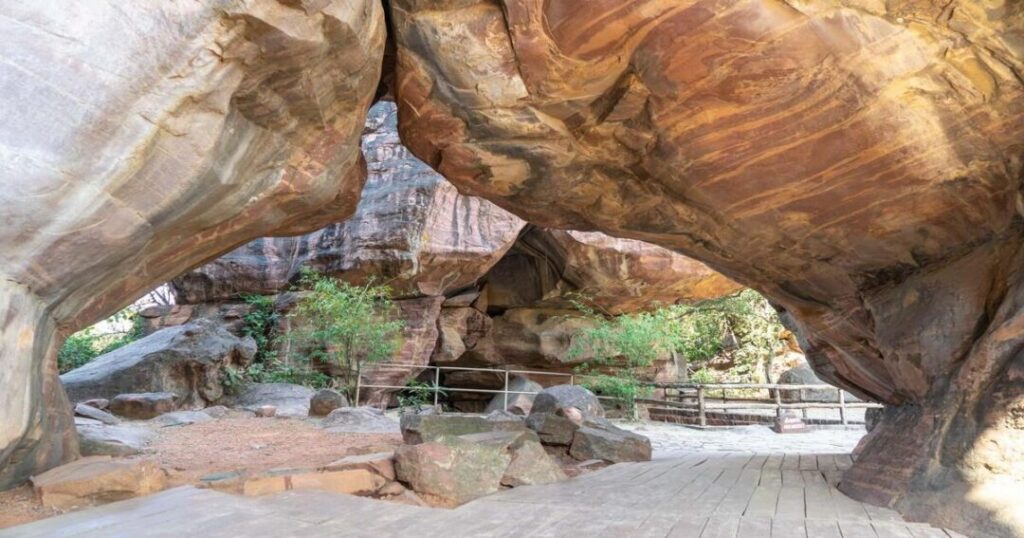
About 45 km southeast of Bhopal, Bhimbetka holds over 700 rock shelters, more than 400 of which contain paintings dating back roughly 30,000 years into the Paleolithic and Mesolithic periods — among the oldest evidence of human habitation in India. It was designated a UNESCO World Heritage Site in 2003.
6. Mandu
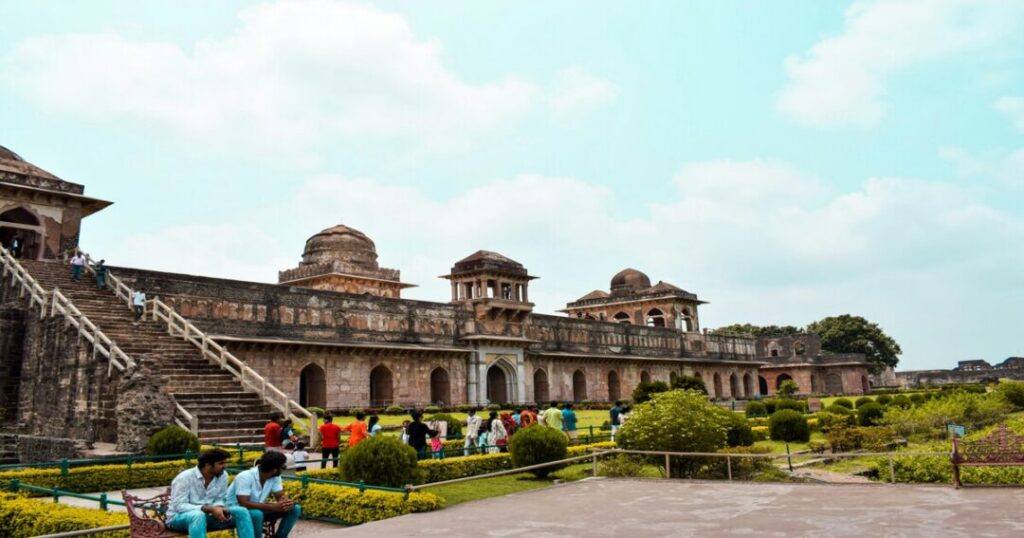
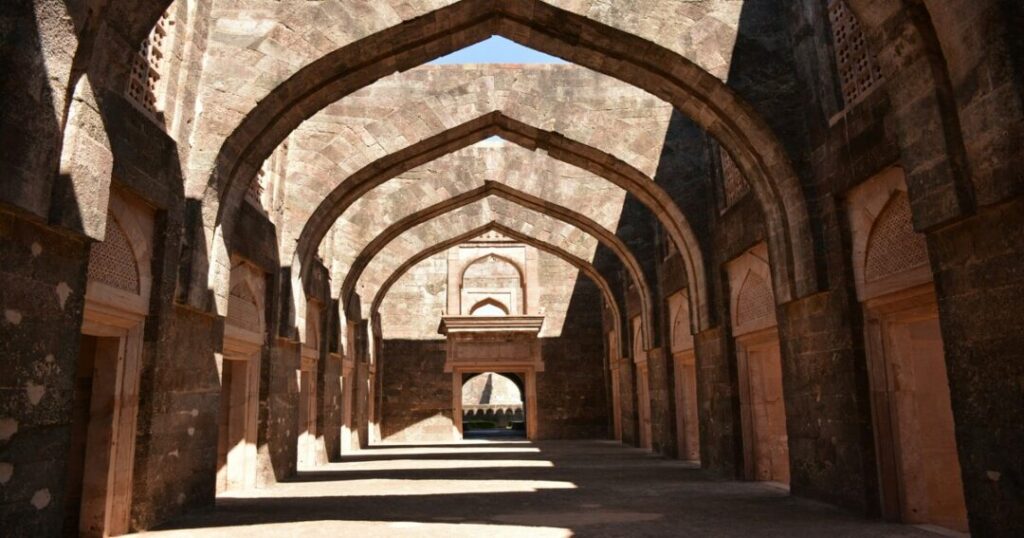
Originally fortified by Raja Bhoj in the 10th century, Mandu became an independent Afghan-ruled capital after 1401. Jahaz Mahal (Ship Palace), the site’s best-known structure, blends Afghan, Mughal, Hindu, and Mesopotamian architectural styles, while Rani Roopmati’s Pavilion and Baz Bahadur’s Palace add the region’s most-told romantic legend to the historical mix.
7. Bhopal
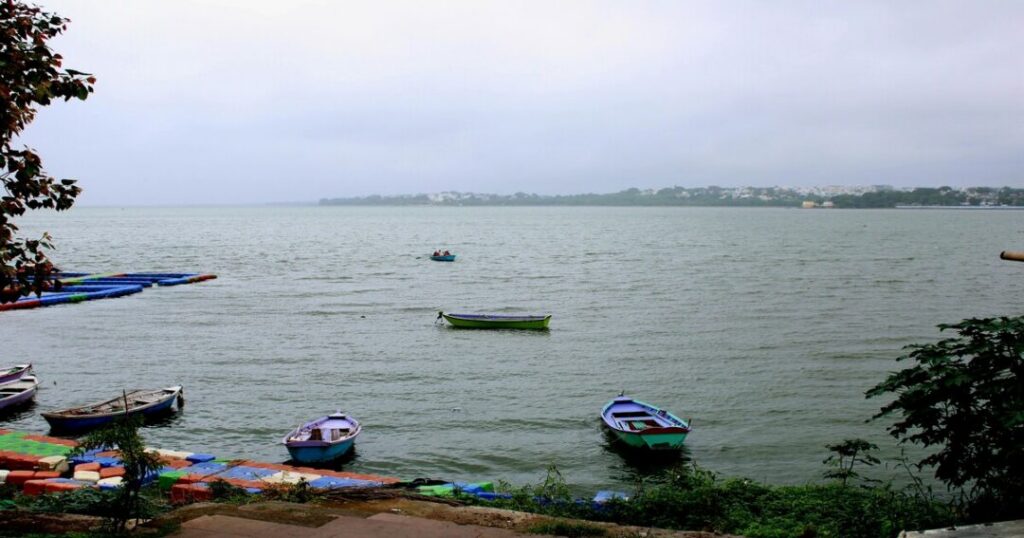
Home to Taj-ul-Masajid, one of Asia’s largest mosques (construction spanning from the Mughal era to completion in 1985), Bhopal’s old city also carries the legacy of four female Muslim rulers, the Begums, who governed from 1819 to 1926. Functionally, it’s also the most practical base for reaching both Sanchi (49 km) and Bhimbetka (45 km) in a single day trip.
Also Read: Indore Street Food: The Complete Guide to India’s Street Food Capital
8. Chanderi
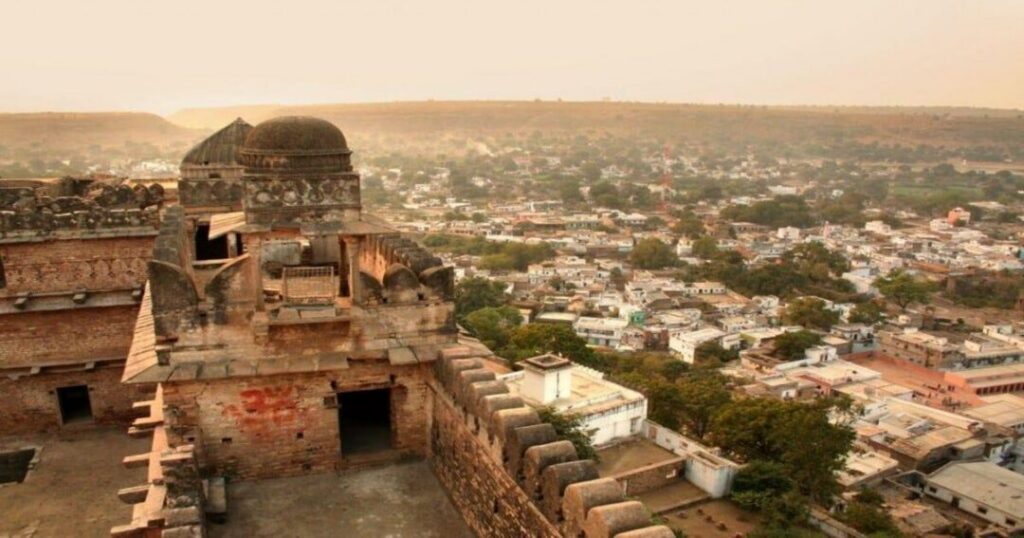
Chanderi’s monuments — the fort, Badal Mahal, and the large Battisi Baoli stepwell — date to around the 11th century, but the town’s real claim to fame is its handloom tradition, with weaving roots tracing back to the 2nd century BCE and flourishing under Mughal patronage. Chanderi sarees have carried GI status since 2005 and are still woven on around 5,000 looms in town.
9. Maheshwar
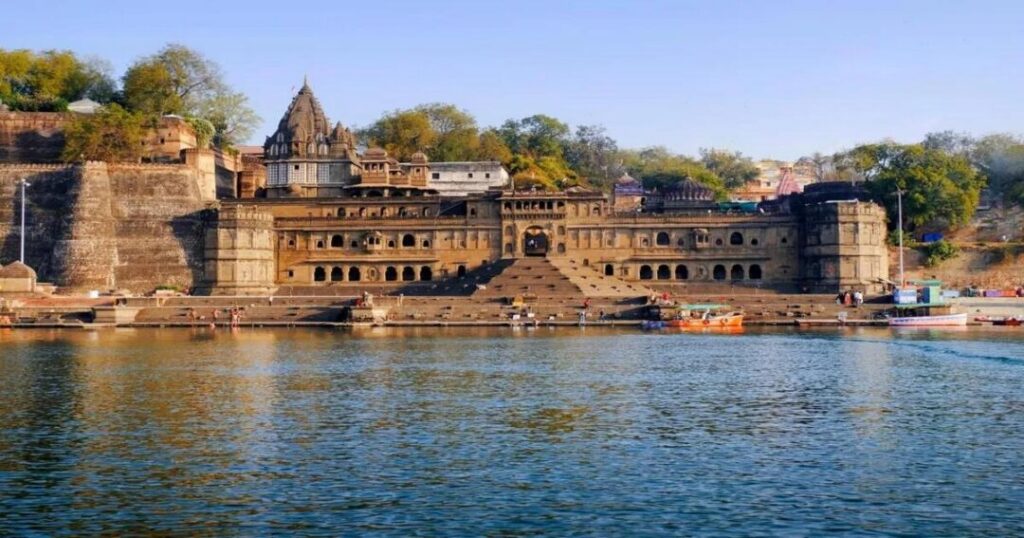
On the banks of the Narmada, Maheshwar became the 18th-century capital of Maharani Ahilyabai Holkar, who built the ghats, temples, and fortifications that define the town today. The Narmada Ghat she commissioned remains one of the circuit’s most photographed spots, and her legacy extended well beyond Maheshwar, with temples and rest-houses built across India from the Himalayas to South Indian pilgrimage sites.
10. Bateshwar Temple Complex
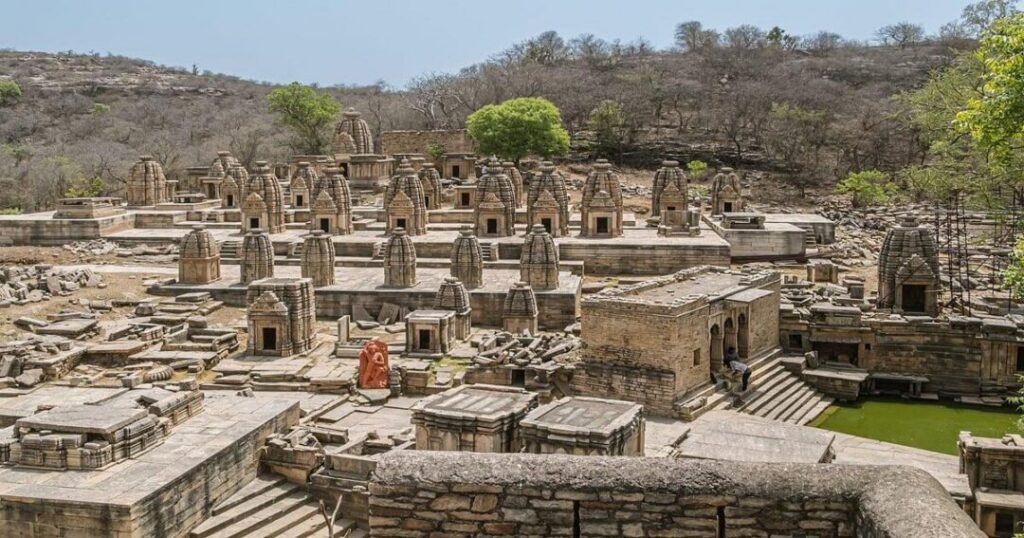
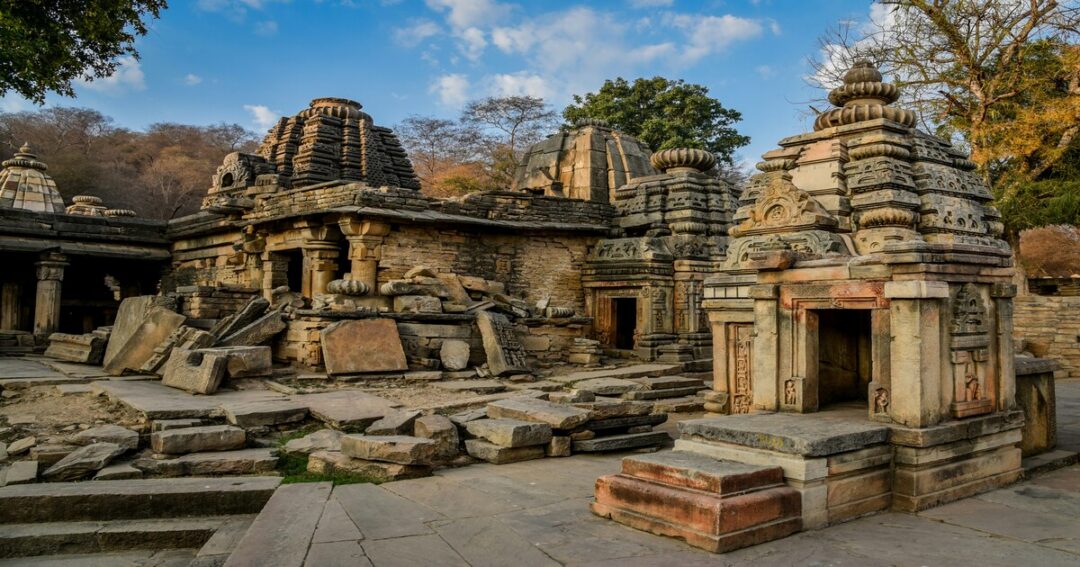
Nestled near Morena in Madhya Pradesh, the Bateshwar Temple Complex is a remarkable group of over 200 sandstone Hindu temples, dating from the 8th–10th centuries. Dedicated primarily to Shiva, Vishnu, and Shakti, these temples showcase exquisite Gurjara-Pratihara architecture. Once lying in ruins, the complex has been painstakingly restored, making it one of India’s most fascinating archaeological treasures.
Also Read: Famous Festivals of India: Top 10 Celebrations You Need to Experience
11. Mitawali (Chausath Yogini Temple)
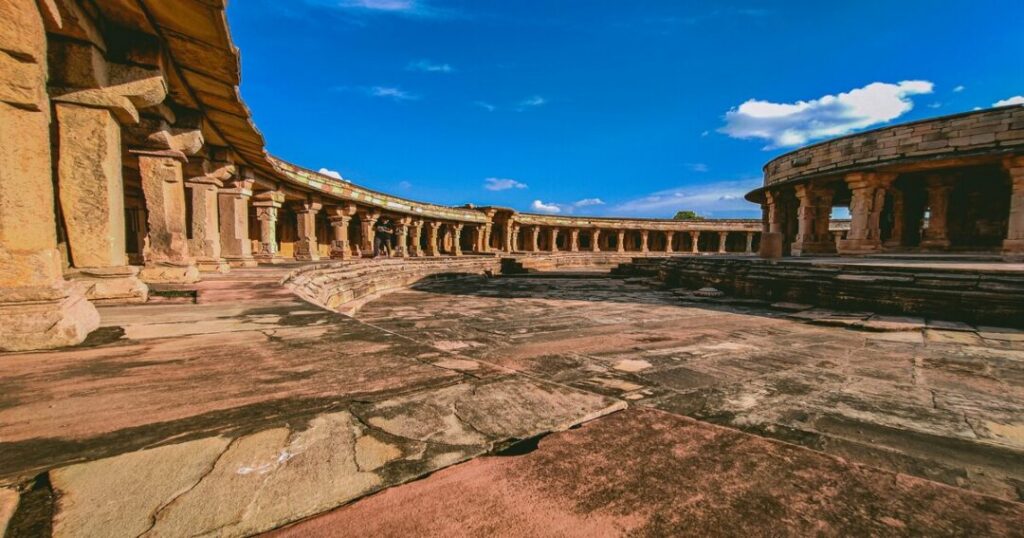
Perched atop a hill near Morena, Mitawali is best known for the Chausath Yogini Temple, an 11th-century circular shrine featuring 64 small sanctums surrounding a central Shiva temple. Its unique circular design is often noted for its architectural significance and is popularly believed to have inspired the layout of India’s Parliament House, though this claim remains unverified. The hilltop location also offers panoramic views of the surrounding countryside.
What is the Best Time to Visit the Madhya Pradesh Heritage Circuit?
October through March is the clear window, with winter temperatures between roughly 10-25°C making long days of fort-and-temple walking manageable. Summer (March-June) climbs to 38-42°C and makes midday sightseeing genuinely uncomfortable, while the monsoon (July-September) brings humidity and rain that can affect outdoor sites like Bhimbetka and Sanchi more than indoor palace complexes.
How to Reach and Get Around?
Bhopal, Indore, and Gwalior all have airports with regular connections to Delhi, Mumbai, and Bangalore, with Indore’s Devi Ahilyabai Holkar Airport the largest of the three. Rail is the more common way to move between circuit stops themselves, with Bhopal, Indore, Gwalior, and Jabalpur serving as major junctions; road trips connecting Gwalior-Orchha-Khajuraho-Sanchi-Bhopal-Mandu in sequence are common, though the full circuit spans a large enough area that most visitors split it into two separate trips (north around Gwalior-Orchha-Khajuraho, and west around Bhopal-Sanchi-Mandu-Maheshwar) rather than one continuous loop.
Where to Stay: Heritage Hotels Beyond the Circuit?
If you’re looking for a heritage hotel in Madhya Pradesh rather than just heritage sites, Ahilya Fort in Maheshwar is the standout: Prince Richard Holkar, a descendant of Ahilyabai Holkar, converted part of the family’s 18th-century Ahilya Wada residence into a 19-room guest property in 2000, set across six original buildings overlooking the Narmada. It ties directly back to Maheshwar’s place on this circuit rather than being a separate detour.
Nature Heritage Resort, near Bandhavgarh National Park, is a different kind of stay entirely — a wildlife-safari resort rather than a heritage monument, and it sits well outside the core circuit described above (Bandhavgarh is in the state’s east, focused on tiger safaris rather than historic architecture). Worth knowing about if you’re combining a heritage circuit trip with a separate Bandhavgarh safari leg, but it isn’t a heritage-circuit stop in its own right.
Also Read: Festivals in August in India: The Complete Guide to August Celebrations
Conclusion About Madhya Pradesh heritage
Between Khajuraho’s temple carvings, Sanchi’s Ashokan stupa, and cave paintings at Bhimbetka older than most of recorded history, Madhya Pradesh heritage sites cover a genuinely rare range for one Indian state. Split the circuit into a northern and western loop rather than forcing one continuous route, time it for October through March, and treat Ahilya Fort as a worthwhile add-on if Maheshwar is already part of your plan.
FAQs About Madhya Pradesh heritage
2. Is Ahilya Fort in Maheshwar open to non-guests, or only hotel visitors?
Ahilya Fort operates primarily as a boutique heritage hotel, so the most complete access is as a guest, though Maheshwar's ghats and other Holkar-era temples nearby remain open to general visitors regardless of where you're staying.
3. How many days does the full Madhya Pradesh heritage circuit take?
Budget 10-14 days to cover all 9 stops comfortably without rushing, or 5-7 days if you pick one regional loop (either the Gwalior-Orchha-Khajuraho cluster or the Bhopal-Sanchi-Bhimbetka-Mandu-Maheshwar cluster) rather than attempting both.
4. Why are the Khajuraho temples famous, and is it just about the erotic carvings?
The erotic sculptures get most of the attention. Still, they're a small fraction of the total carving across the surviving temples, which mostly depict everyday life, deities, and mythological scenes. The Chandela dynasty built these between 900 and 1130 CE, and only about a quarter of the original ~85 temples survive today.
5. Is Bhimbetka worth visiting if I'm not especially interested in prehistoric art?
It's a genuinely different kind of site compared to the rest of the circuit — no palaces or temples, just rock shelters with paintings up to 30,000 years old — so it appeals more to visitors curious about deep history than typical monument-and-architecture sightseers.