
2,423 Total Views
Ask food writers which Indian city has the finest street food, and the conversation—if it is an honest one—keeps coming back to Indore. Not Mumbai with its vada pav. Not Delhi with its chaat. Not Kolkata with its puchka, but Indore. The city in Madhya Pradesh that most people have not visited and that those who have eaten in will not stop talking about.
The reasons are specific. Indore’s street food culture is extraordinary not because of one dish or one street but because of a combination of factors that cannot be replicated elsewhere: the Holkar dynasty that brought Maharashtrian culinary traditions to central India in the 18th century, a trading community that developed the most sophisticated snack culture in the region, a city of students and migrants that created extraordinary diversity and competition among street food vendors, and two food streets — Sarafa Bazaar and 56 Dukan — that are, in their different ways, among the finest in India.
This guide covers the full spectrum of Indore’s famous street food—from the breakfast table to the 2 AM Sarafa crowd.
The Foundation: Indore’s Street Food
Indore’s food culture has a specific origin story. The city was the seat of the Holkar dynasty—a Maratha ruling house that controlled much of central India from the 18th century onwards. When the Holkars took control of Indore, they brought with them the Maharashtrian food traditions of the Deccan—most significantly, poha (flattened rice). Over generations, Indore’s cooks adapted, modified, and perfected that inheritance into something entirely their own.
Indori poha—the dish that defines the city’s breakfast culture—arrived with the Holkars in the 18th century from Maharashtra. But the Indori version is categorically different from its Maharashtrian original: it uses jeeravan masala (a tangy local spice blend of dried mango powder and roasted cumin), crunchy gram flour sev noodles, and fresh coriander to create a preparation with a unique tangy, subtly sweet, and aromatic flavor that no other city’s poha replicates.
The second force is competition. Indore is the commercial and educational capital of Madhya Pradesh — a city of students, traders, and migrants who eat out constantly. The street food vendor community here has been competing for the same customers for generations; the result is an extraordinary quality standard where any stall that does not perform consistently loses its crowd within days.
The Iconic Dishes — Famous Street Food in Indore
Indori Poha with Jalebi — The Breakfast That Defined a City
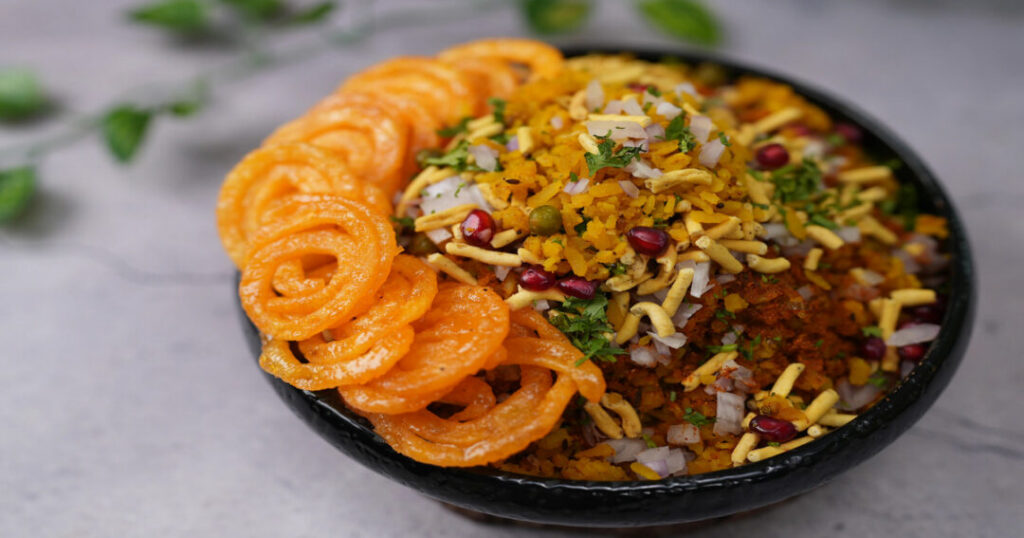
Indori poha is the single most iconic preparation in all of Indore’s street food culture—and understanding what makes it different from every other poha in India requires tasting it once.
The dish: softly steamed flattened rice (poha), garnished with jeeravan masala (the tangy, cumin-forward local spice mix), crispy sev, fresh coriander, finely chopped green chilies, a squeeze of lemon, and a small garnish of pomegranate seeds in some versions. The texture is softer than Maharashtra’s poha; the flavor is more complex—the jeeravan‘s dried mango powder gives it a gentle sourness that the original does not have.
The correct accompaniment is hot jalebi—crispy spirals of deep-fried batter soaked in sugar syrup, served immediately from the kadhai. The combination of the tangy, savory poha with the sweet, hot jalebi is one of the most distinctive breakfast pairings in India. Indore’s poha-jalebi is not a food item; it is a morning ritual.
When and where: A poha-jalebi breakfast is best experienced between 7 and 9 AM at any of the dozens of breakfast nashta stalls across the city. The best versions are at small, unassuming corner stalls that have been serving the same preparation for decades — not at tourist-facing restaurants.
Garadu — The Winter Street Food That Belongs Only to Indore
Garadu is one of the most specific and most irreplaceable preparations in Indore’s famous street food culture—deep-fried ratalu (purple yam, Dioscorea alata), diced and fried to a crackling crisp, then aggressively seasoned with chaat masala, red chili powder, black salt, roasted cumin, and a generous squeeze of lime. The yam is a seasonal ingredient—available only from approximately November to February—and garadu vendors appear on Indore’s streets with the first cold weather and disappear with its last.
The genius of garadu is textural: the yam’s starchiness creates a crispy exterior and a soft, slightly sweet interior that contrasts with the aggressive spicing. It is fiery, tangy, slightly sweet from the yam, and deeply satisfying—exactly what the body wants in Indore’s cold winters.
Garadu is not available in summer—visiting specifically in November to February for garadu is entirely reasonable for serious food lovers.
Also Read: Top 20 Street Foods in India you must try
Bhutte ka Kees — Grated Corn, Milk, and Coconut
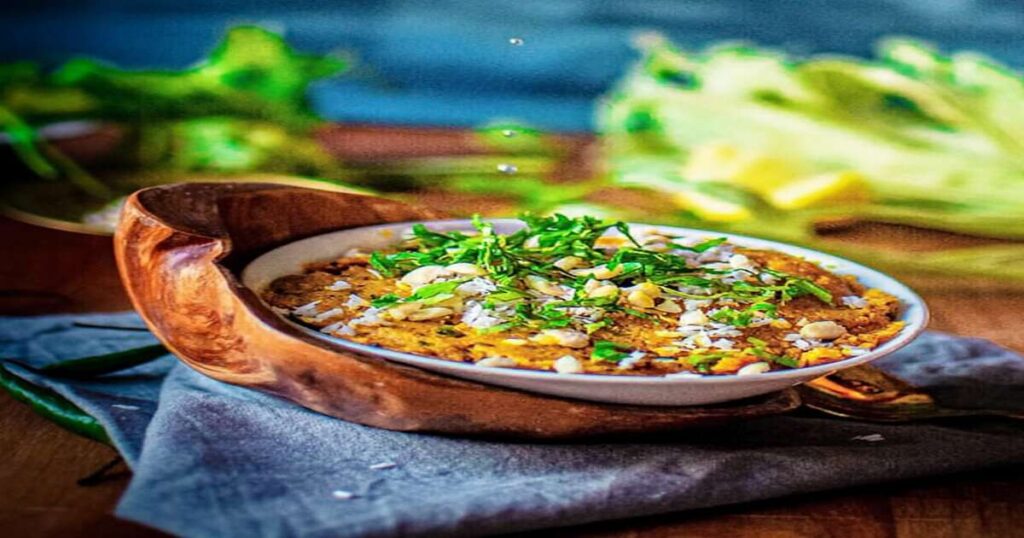
Bhutte ka kees is one of Indore’s most distinctive preparations—a seasonal specialty made from corn (bhutte) shredded on a fine grater and cooked with milk, fresh coconut, green chilies, mustard seeds, and a finish of lime. The cooking process transforms the raw corn into a dense, porridge-like preparation that is simultaneously sweet, savory, and fragrant. It is heavy — a single serving is genuinely filling — and it is best in winter when the corn is at its sweetest.
Bhutte ka kees is almost exclusively a Malwa (central Madhya Pradesh) preparation — you will not find it authentically made elsewhere in India. It is one of the dishes that marks Indore’s cuisine as genuinely distinct from any other Indian street food culture.
Khopra Patties—The Coconut Heart
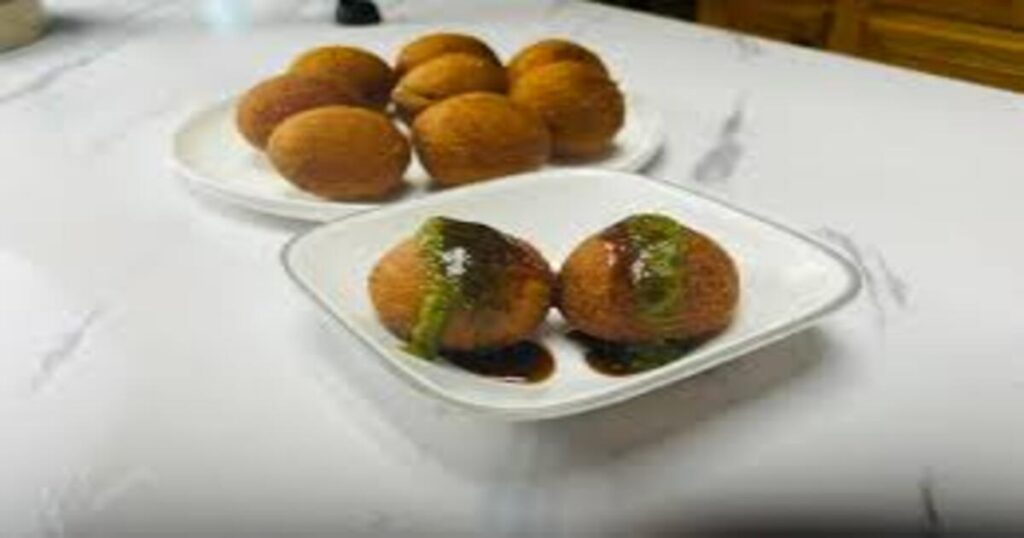
Khopra patties are unique to Indore—golden-fried mashed potato patties with a core of sweet, dry-roasted coconut (khopra), served with tangy tamarind chutney. The contrast between the savory, crispy potato exterior and the sweetly fragrant coconut center is one of the most clever constructions in Indore’s street food vocabulary. The dish has been served in the city since at least the 1960s.
Sabudana Khichdi — The Fasting Food That Became Street Food
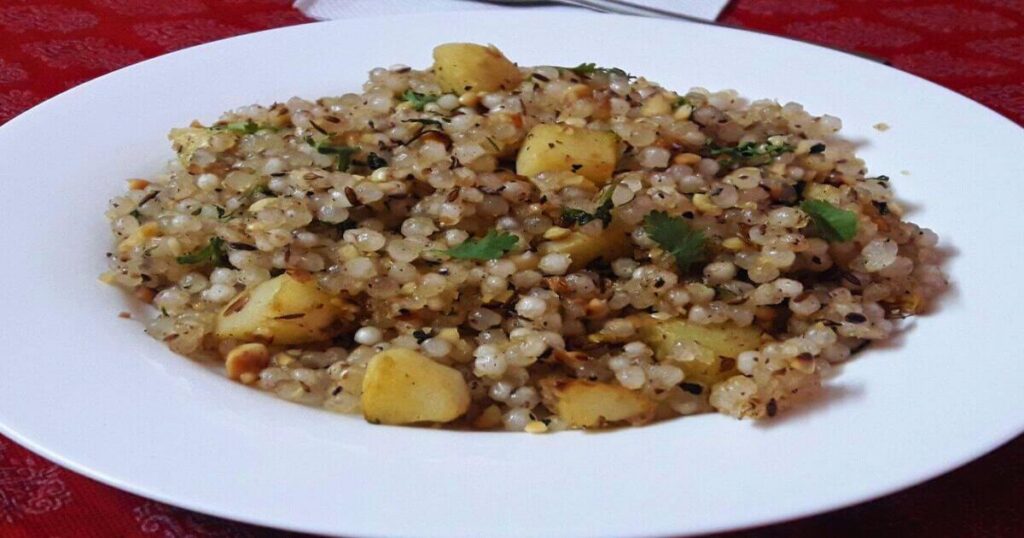
Sabudana khichdi—made from soaked tapioca pearls (sabudana) cooked with peanuts, green chillies, cumin, and lime—is consumed across India as a fasting food. In Indore, it has been elevated to a year-round street food staple eaten at any time, by anyone, regardless of religious observance. The Indore version is lighter and more perfectly textured than most—each pearl separate, not clumped.
Daal Bafla — The Malwa Answer to Dal Baati
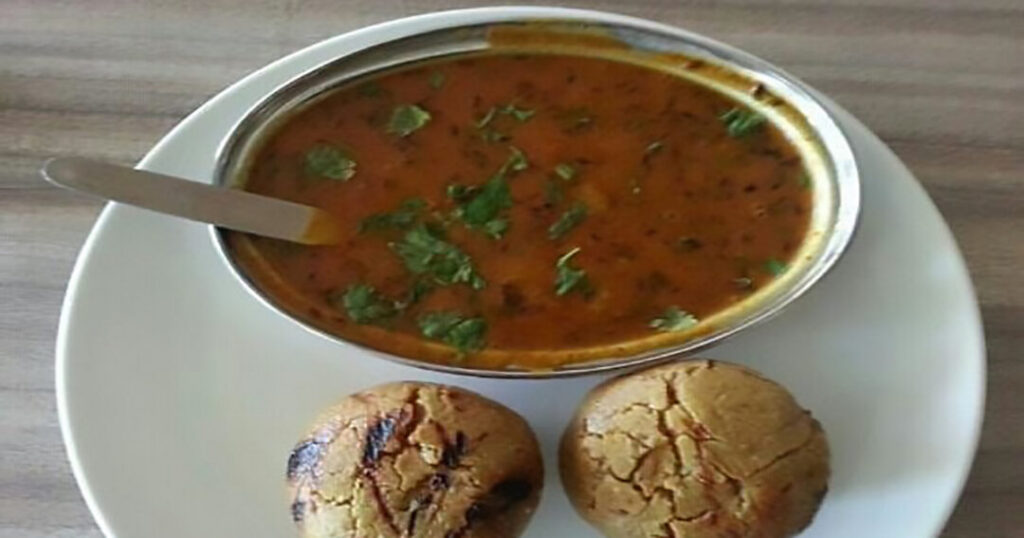
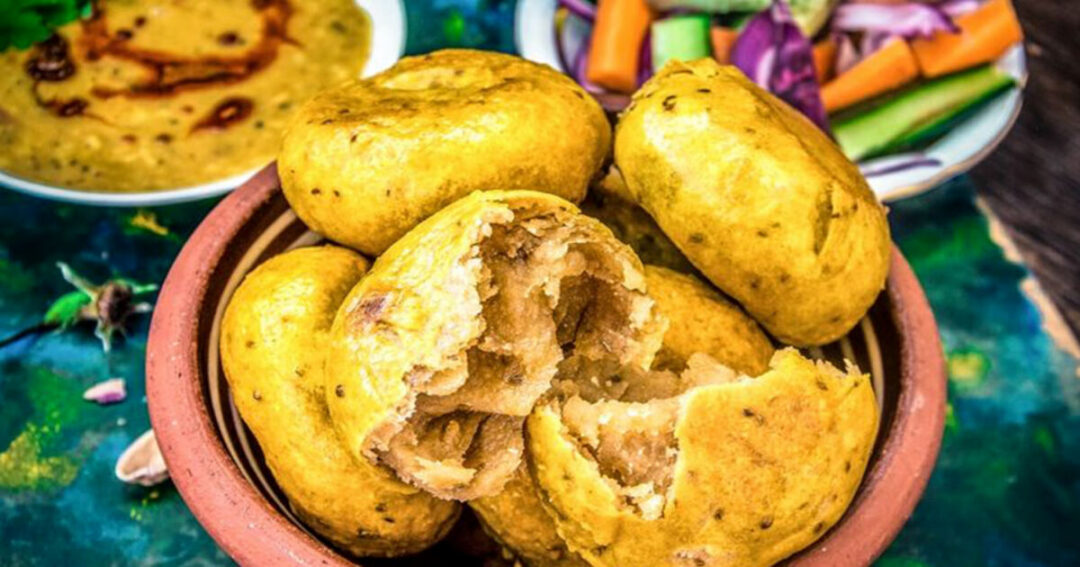
Daal bafla is Indore’s own variation on the Rajasthani dal baati — a ball of wheat and semolina dough that is first boiled and then baked, served with thin dal, churma, coriander-mint chutney, and mango pickle. Unlike the Rajasthani baati, which is baked directly, the bafla’s double preparation (boil then bake) gives it a softer, moister interior while retaining the baked exterior. It is one of the most satisfying Indore street food meals available.
Also: Hyderabad Street Food: 15 Must-Try Dishes for Every Food Lover
56 Dukan — Indore’s Most Famous Food Street
56 Dukan (Chappan Dukan, meaning “56 shops”) is one of the most famous food streets in India—a stretch of exactly 56 food shops within approximately 200 meters in the Palasia area of Indore. It was established in 1974 when the area (previously known as the Udasin Ashram Market) was redeveloped specifically as a food destination.
The 56 Dukan is the daytime and early-evening complement to the late-night Sarafa Bazaar—it opens in the early morning, serves breakfast until the afternoon crowd takes over, and remains active through the evening. It was awarded by the Food Safety and Standards Authority of India (FSSAI) in 2022 as one of the safest and cleanest food destinations in the country.
What to eat at 56 Dukan?
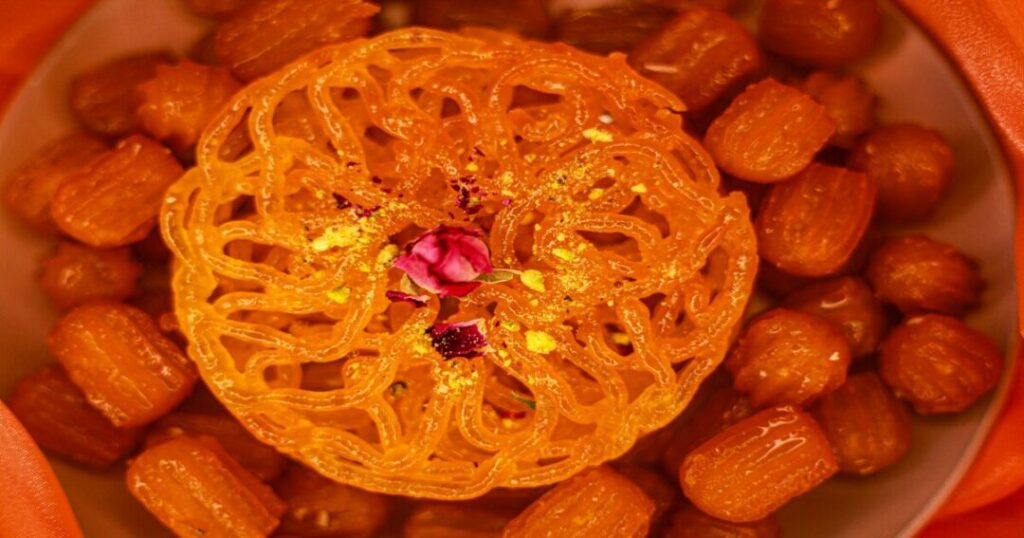
Indori poha and jalebi—the morning anchor of 56 Dukan; the stalls here have been perfecting this combination since 1974, and many are second- or third-generation operations.
The Indore-style hot dog — not an American hot dog but an Indori adaptation: a toasted butter bun with a spiced egg or potato filling, served with mint chutney and chopped onion. The egg version—locally called egg banjo—is a preparation with an origin story linked to British troops who were stationed in Indore, whose preference for eggs in bread buns was adopted and radically spiced by local vendors.
Shikanji is Indore’s version of the lime and spice drink, served thick and cold; the 56 Dukan version is richer and more complex than the standard roadside shikanji.
Malpua—thick, sweet, deep-fried pancakes in sugar syrup; one of the oldest sweets in the Indian subcontinent’s history, and the 56 Dukan versions are among the finest in the city.
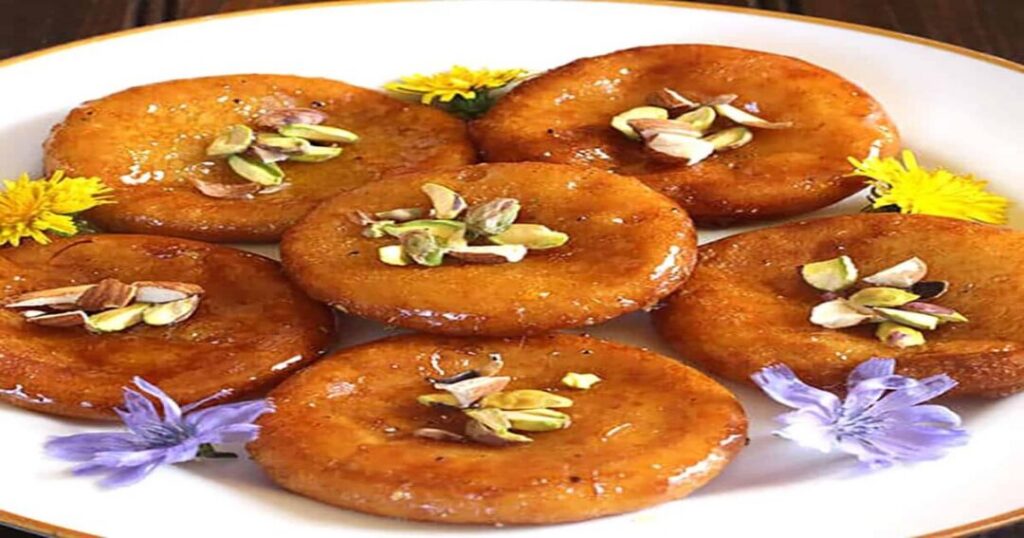
Surati khaman — golden-fried cubes of khaman (steamed fermented chickpea cake); the frying gives them a crispness that the standard steamed version does not have.
Practical tips for 56 Dukan:
- Arrive by 7 PM for the freshest stalls; it gets progressively more crowded through the evening
- Come hungry and plan to eat across multiple stalls rather than one large meal at a single place—the 56 Dukan is designed for grazing
- FSSAI-certified in 2022 — one of the cleanest major street food destinations in India
Also Read: Indonesian Food: Exploring the Rich Flavours of the World’s Largest Archipelago
Sarafa Bazaar — India’s Only 2 AM Food Street
Sarafa Bazaar is the other half of Indore’s food street legend—and its most extraordinary characteristic is this: it is India’s only major food street that operates until 2 AM, and it opens only after the jewelry shops that occupy the same street during the day pull their shutters down at approximately 9 PM.
By day, Sarafa is a jewelry bazaar—gold and silver shops line the narrow lane of a 200-year-old commercial district. At approximately 9 PM, the shutters come down, the vendors arrive, and the street transforms into one of the most vibrant food streets in Indore in the country. The narrow lane fills with smoke, chili, and the sweet smell of caramelized sugar; vendors set up in precisely the spaces the jewelry shops occupied hours before.
What to eat at Sarafa:
- Garadu (in winter) — the prime location for Indore’s best deep-fried spiced yam
- Dahi bade—soft lentil dumplings in chilled yogurt with sweet tamarind and spicy green chutneys
- Malpua—available here alongside 56 Dukan; the late-night malpua at Sarafa has its own specific devotees
- Jaleba—the Indori variation on jalebi: significantly larger in diameter, thicker, and with a more pronounced crunch; not interchangeable with the standard jalebi
- Khopra patties—available at Sarafa from specific stalls that have been operating here for decades
Practical tips for Sarafa:
- Arrive after 9:30–10 PM when the street is at full flow
- Order half portions everywhere—the correct way to experience Sarafa is to graze across as many stalls as possible, not eat full portions at one or two
- The street is narrow and gets very crowded on weekends; weekday late evenings are more manageable
Best Non-Veg Street Food in Indore
Indore’s street food reputation is primarily built on its extraordinary vegetarian culture—but the best non-veg street food in Indore has its own dedicated and loyal following.
Egg banjo—the Indori egg preparation at 56 Dukan and other stalls: a fluffy masala omelette with red chilies, nestled in a warm toasted bun; one of the most satisfying non-veg street snacks in the city.
Chicken seekh kebab — available at specific non-veg stalls in the Sarafa and surrounding areas; the Malwa-style seekh uses a specific spice blend that is more aromatic and less fiery than the North Indian equivalent.
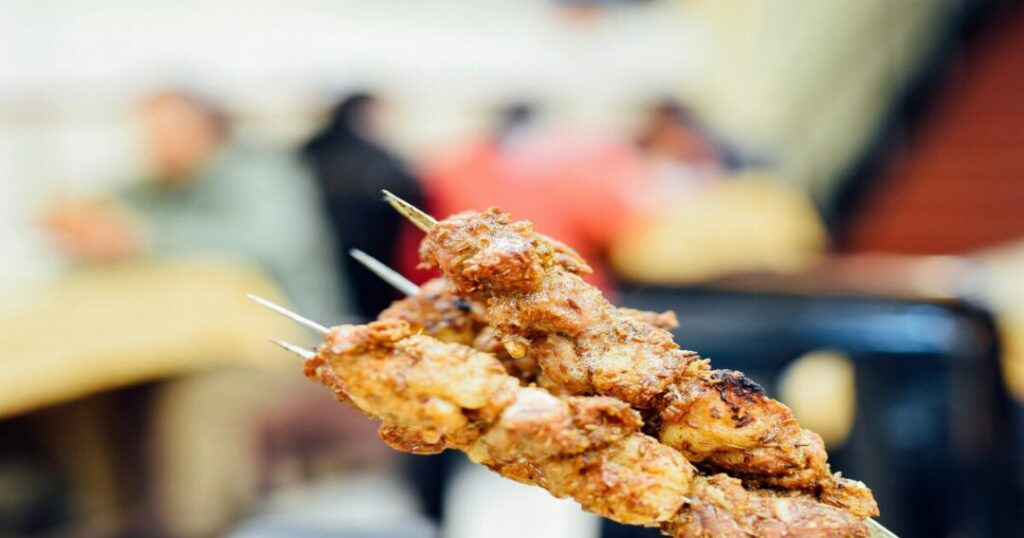
Mutton Bafla—the non-vegetarian version of the daal bafla, served with a rich mutton gravy; available at specific establishments in the old city area.
Also Read: Greek Food: The Complete Guide to Greek Cuisine, Dishes & the Mediterranean Table
Best Dabeli in Indore
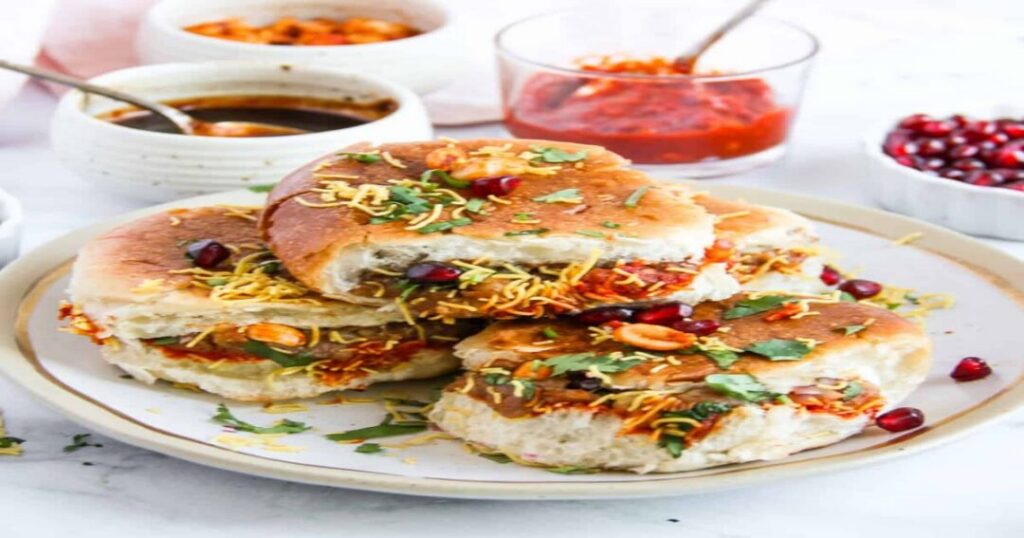
Dabeli—the Kutchi street snack of a spiced potato filling in a pav (bread roll), garnished with pomegranate seeds, roasted peanuts, and sev—arrived in Indore from Gujarat and has found a permanent and beloved home in the city’s street food culture. The best dabeli in Indore shares the same characteristics as the best versions anywhere: a filling that balances sweet (from the date-tamarind chutney), spicy, and savory; a pav that is fresh and slightly toasted; and the crunch of peanuts and sev across every bite.
Dabeli stalls are found across Indore—at 56 Dukan in the early evening and at various market stalls throughout the city. The Indori version tends to be slightly spicier than the Gujarati original and more generously garnished with sev.
Conclusion about Indore Street Food
Indore street food is the product of three centuries of Holkar heritage, trading community sophistication, and the intense competition of a city that has always taken its food seriously. Quick guide to the best street food places in Indore:
- The morning: Indori poha with jalebi—jeeravan masala, sev, coriander; at any nashta corner stall between 7 and 9 AM
- 56 Dukan: 56 shops in 200 metres, Palasia area, since 1974, FSSAI-awarded 2022; arrive by 7 PM; egg banjo, poha, shikanji, malpua, khopra patties
- Sarafa Bazaar: India’s only 2 AM food street; opens at 9 PM when jewellers close; garadu (winter), dahi bade, jaleba, khopra patties
- Winter specials: Garadu (November–February only), bhutte ka kees (October–February)
- Year-round: Sabudana khichdi, daal bafla, dabeli, khopra patties
- Non-veg: Egg banjo (56 Dukan), chicken seekh kebab (old city), mutton bafla
Download the Explurger app to discover what Indoris actually recommend for street food, find the best stalls beyond the tourist circuit, and log every plate of garadu, bowl of bhutte ka kees, and midnight malpua on your Indore food journey.
The jalebi is already in the kadhai. The gradua vendor is already setting up. Sarafa is still two hours from opening. In Indore, there is always something to eat.
FAQs about Indore Street Food
2. What is 56 Dukan in Indore?
56 Dukan (Chappan Dukan) is one of India's most famous food streets — a stretch of exactly 56 food shops within approximately 200 metres in the Palasia area of Indore, established in 1974 (previously known as Udasin Ashram Market). It was awarded by FSSAI in 2022 as one of the safest and cleanest food destinations in India. The 56 dukan Indore famous food includes Indori poha and jalebi, the Indori-style hot dog (egg banjo), malpua, shikanji, khopra patties, and surati khaman. Best visited by 7 PM while stalls are at their freshest.
3. What is Sarafa Bazaar and why is it famous?
Sarafa Bazaar is India's only major food street in Indore that operates until 2 AM. By day it is a jewellery bazaar; at approximately 9 PM, the jewellery shutters come down and food vendors set up in the same narrow lane, creating one of the most atmospheric street food experiences in the country. Famous preparations at Sarafa include garadu (winter), dahi bade, malpua, jaleba (the oversized Indori jalebi variation), and khopra patties.
4. What is garadu and when can you eat it in Indore?
Garadu is deep-fried purple yam (Dioscorea alata, called ratalu locally) — diced, fried to a crackling crisp, and aggressively seasoned with chaat masala, red chilli, black salt, and lime. It is one of the most distinctive Indore street food preparations and a genuine seasonal speciality available only from approximately November to February when the yam is in season. Garadu stalls appear at 56 Dukan, Sarafa, and across the city's market areas only during winter months.
5. What is the best dabeli in Indore?
The best dabeli in Indore is found at evening street stalls at 56 Dukan and various market areas throughout the city. The Indori dabeli — this Kutchi snack of spiced potato in pav with pomegranate seeds, roasted peanuts, and sev — is typically spicier than the Gujarati original and more generously topped. The key markers of a good Indori dabeli: fresh pav slightly toasted, filling that balances sweet tamarind with spice, and a generous crunch of sev and peanuts across every bite.