
403 Total Views
The Madhugiri trek is one of the more physically demanding short treks within easy reach of Bangalore, built entirely around a single, enormous monolithic rock rising out of the Tumkur plains. It’s popular enough that organized trekking groups run regular weekend batches here, but it’s also straightforward enough to do independently if you’d rather sort transport and registration yourself.
This guide covers the real distance and difficulty numbers, what’s actually known about sunrise and night trekking here, and an honest cost breakdown — whether you book through a group or go it alone.
Madhugiri: Asia’s (Second) Largest Monolith Near Bangalore
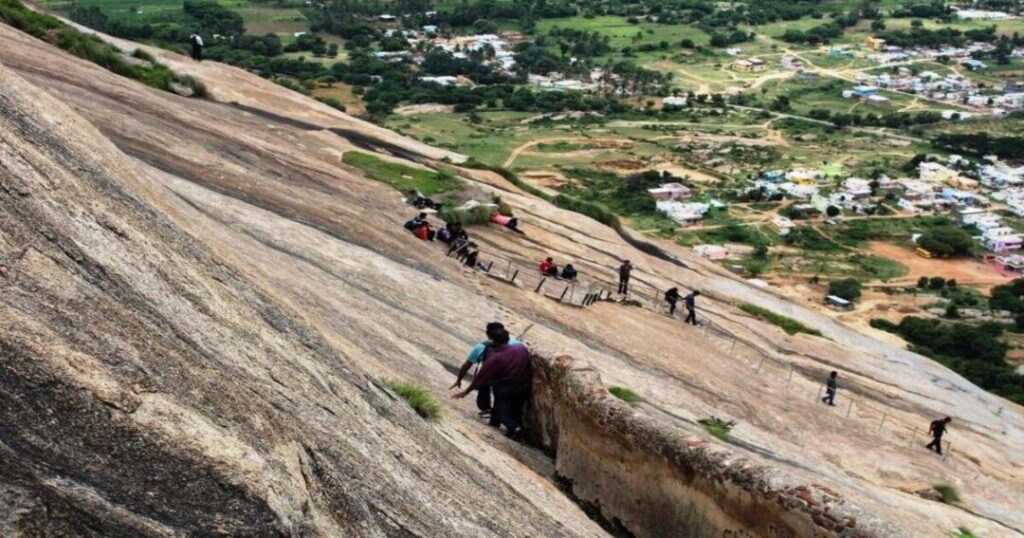
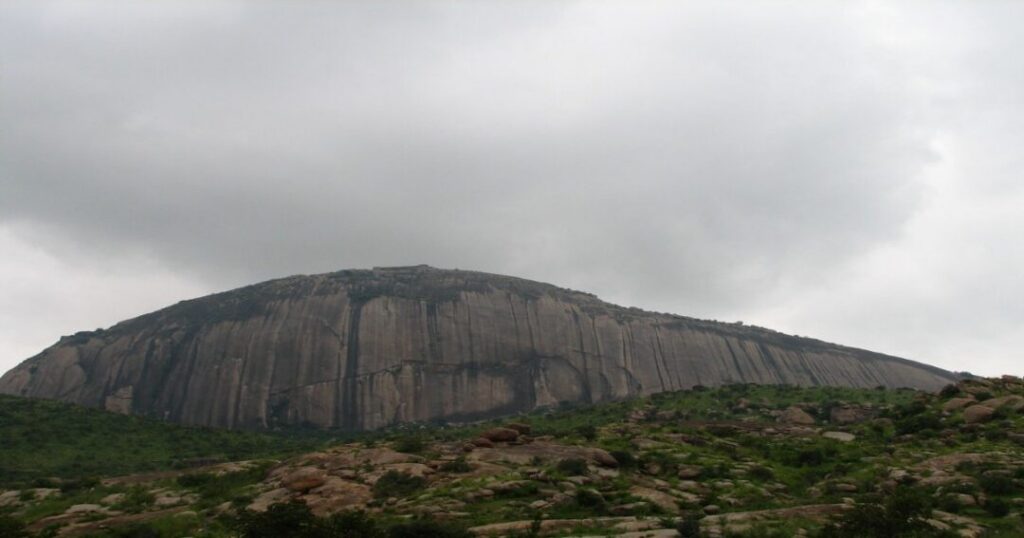
Madhugiri hill rises to about 3,930 feet and is widely described as one of Asia’s largest monolithic rock formations — though the exact ranking is genuinely disputed. Most trekking sources cite it as the second-largest monolith in Asia, behind Savandurga (also in Karnataka), while the welcome signboard at the site itself reportedly claims Madhugiri as the largest. [STAT: Madhugiri stands at approximately 3,930 feet and is most commonly cited as Asia’s second-largest monolith, behind Savandurga, though local signage at the site claims the top spot.] Either way, the sheer, unbroken scale of the rock is the main draw here — there’s no dense forest cover to soften the climb, just exposed rock face for long stretches.
Also Read: METROPOLITAN DELIGHT: EXPERIENCE THE BEST PLACES TO VISIT IN BANGALORE
Madhugiri Fort History: From Vijayanagara Builders to Tipu Sultan
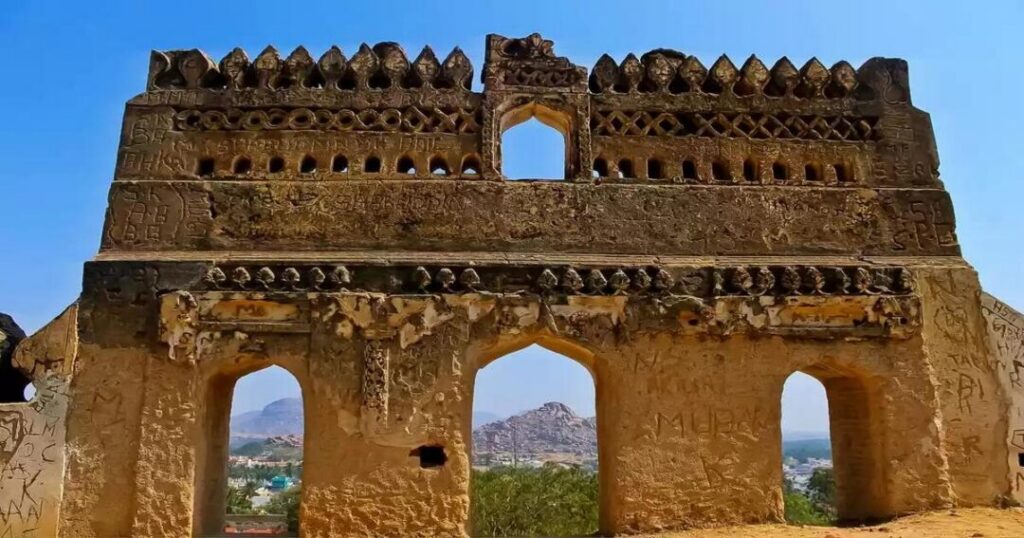
The fort crowning the hill was originally built in the 17th century under the Vijayanagara dynasty, supervised by Raja Hire Gowda. It changed hands repeatedly after that — captured in 1678 by forces under Chikkadevaraja Wodeyar of the Mysore Kingdom, later seized by Hyder Ali, and further fortified during Tipu Sultan’s rule in the 18th century, before falling to the British in 1791 during the Anglo-Mysore Wars. That layered military history is still visible in the fort’s multiple gateways and defensive walls as you climb.
Madhugiri Trek Distance
The Madhugiri trek distance runs roughly 3–4 km one way from the base to the summit, making the full round trip approximately 6–8 km depending on the exact route taken. Some simpler trek listings round this down to a flat 6 km round trip, so treat the 6–8 km range as the more precise figure if you’re planning timing closely.
Madhugiri Trek Difficulty Level
This is where Madhugiri earns its reputation: the Madhugiri trek difficulty level is generally rated moderate to difficult, and it’s a genuinely different kind of challenge than a typical Western Ghats forest trek. Long stretches involve exposed rock-face climbing rather than dirt trail, and the toughest section — a slope inclined at close to 60 degrees — requires real care and decent footwear rather than casual sneakers. Most trekkers take 2–3 hours to reach the top depending on fitness and pace, and while it’s suitable for beginner-to-intermediate trekkers, some prior trekking experience is genuinely useful preparation rather than just a suggestion.
Madhugiri Sunrise Trek: Timings and Whether Night Trekking Is Allowed
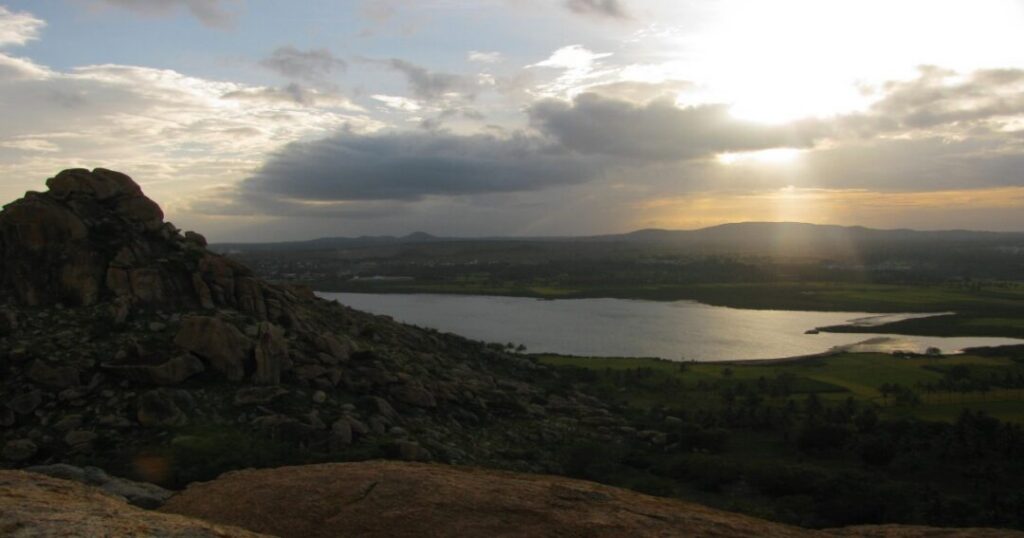
Given how often people search specifically for the Madhugiri sunrise trek, it’s worth addressing directly: unlike nearby Skandagiri, which has had an official ban on night trekking since 2016 due to litter and safety concerns, no equivalent official ban on night or pre-dawn trekking at Madhugiri turned up in current sources — several trekking operators continue to actively run organized night-trek and sunrise-trek batches here.
That said, don’t take “no confirmed ban” as “no rules at all.” Visitors are required to register at the base with the guards on duty before starting the climb, regardless of what time you begin, largely for safety and tracking purposes given how exposed and steep parts of the trail are in low light. If a pre-dawn sunrise summit is your goal, it’s worth checking current status with a local operator or the site directly before you go, since rules around Karnataka’s monolith and forest treks have tightened noticeably in recent years.
Also Read: Channarayana Durga Trek: The Complete Guide to Karnataka’s Hidden Fort Trek
Madhugiri Trek Booking: Organized Groups vs Going Independent
Madhugiri trek booking works two ways, and neither is clearly better than the other — it depends on how much planning you want to do yourself.
Organized group treks, run by numerous Bangalore-based trekking and adventure companies, bundle transport from the city, a guide, and sometimes breakfast or snacks into one fixed-departure batch, which takes the logistics off your plate entirely and is especially useful if you’re aiming for a sunrise start without your own vehicle. Independent trekkers can just as easily book their own transport (covered below) and register on arrival with the base guards — Madhugiri doesn’t require the same advance online forest-permit booking that some of Karnataka’s wildlife-sanctuary treks now mandate through the Aranya Vihaara portal, since this is a fort and monolith site rather than a protected forest reserve.
Also Read: Attractions in Coonoor: The Complete Guide to Things to Do in This Nilgiris Hill Station
Madhugiri Trek Price and Cost Breakdown
For the Madhugiri trek cost, independent travelers should budget lightly. A KSRTC bus from Bangalore’s Majestic bus stand to Madhugiri costs around ₹150 round trip and takes roughly 2.5–3 hours each way. Reports on entry/registration fees vary — some visitors cite a nominal ₹30 per person, while others report no formal fee at all beyond the mandatory safety registration with guards at the base. Either way, budget for it being minimal regardless.
Madhugiri trek price for organized group packages typically bundles transport, a guide, and sometimes breakfast into one fixed cost per person, generally landing in a modest range compared to multi-day Himalayan treks — check current listings directly with operators, since pricing shifts with fuel costs and batch size more than most other variables here.
Madhugiri Trek Itinerary: A Typical Day
Most day trips follow a similar rhythm: an early departure from Bangalore (either self-driven or via organized pickup) to reach Madhugiri by mid-morning or, for sunrise-focused batches, well before dawn. The climb itself takes 2–3 hours up, with time at the summit for the fort ruins and panoramic views before a faster descent, typically 1.5–2 hours. Most people are back at the base by early-to-mid afternoon, making this a genuinely comfortable single-day round trip from Bangalore without needing an overnight stay.
What is the Best Time to Visit and How to Reach Madhugiri?
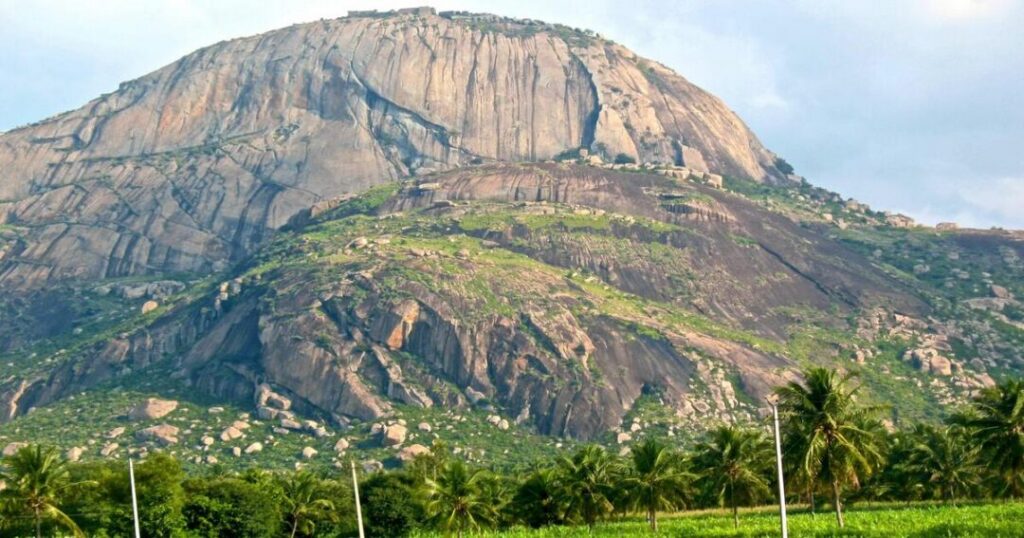
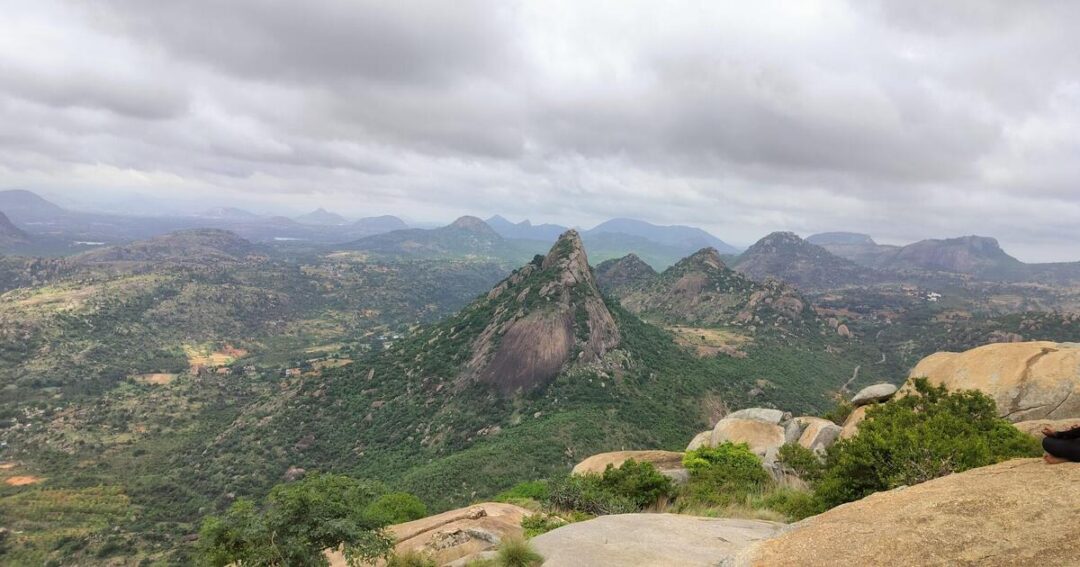
September through February is the best window, once the monsoon eases and temperatures cool — post-monsoon visits in particular reward you with the lush greenery of the surrounding Thimmalapura forest at its peak. Madhugiri sits about 106 km from Bangalore, roughly a 2.5-hour drive via Nelamangala and the Dabaspet junction, or a similar-length journey by KSRTC bus direct from Majestic.
Trying to decide between a fixed-departure group trek or planning your own transport and timing? NIVU AI inside the Explurger app can help weigh both options against your schedule and experience level rather than defaulting to whichever comes up first in a search.
Also Read: Kumara Parvatha: Trek Distance, Height, Booking & Best Time Guide
Conclusion About Madhugiri trek
The Madhugiri trek packs a genuinely tough, exposed rock climb and a real slice of Mysore Kingdom history into a single-day trip from Bangalore, whether you book a fixed group departure or handle the logistics yourself. Save it to your Explurger Bucket List while you decide which route suits you, and once you’ve made the climb, log it as an Explurge-in — your Automatic Travelogue will keep it mapped alongside every other trek you’ve completed. Plan your Madhugiri trek smarter with Explurger.
FAQs About Madhugiri Trek
2. What is the Madhugiri trek distance?
Most sources cite roughly 3-4km one way, making the round trip approximately 6-8km, though some simpler listings round this to a flat 6km round trip.
3. Is night trekking allowed at Madhugiri?
As of current sources, no official ban on night or sunrise trekking at Madhugiri was found, unlike nearby Skandagiri's well-documented 2016 night-trekking ban. Several operators continue to run organized night and sunrise batches, though mandatory safety registration at the base with on-duty guards applies regardless of timing. It's worth confirming current status with a local operator before planning a pre-dawn summit.
4. How do I book the Madhugiri trek?
You can either join an organized group trek through a Bangalore-based trekking company, which bundles transport, a guide, and sometimes breakfast into one fixed cost, or go independently by booking your own transport (bus or car) and registering with base guards on arrival. Unlike some Karnataka wildlife-sanctuary treks, Madhugiri doesn't require advance booking through the Aranya Vihaara forest permit portal.
5. What is the entry fee for Madhugiri trek?
Reports vary — some visitors cite a nominal ₹30 per person, while others report no formal entry fee beyond the mandatory safety registration with base guards. Either way, expect the cost to be minimal compared to the transport cost of getting there.
6. Is Madhugiri really Asia's largest monolith?
The ranking is disputed. Most trekking sources describe it as Asia's second-largest monolith, behind Savandurga, also in Karnataka, while a signboard at the site itself reportedly claims Madhugiri as the largest. Regardless of the exact rank, it's genuinely one of the largest monolithic rock formations in the region.