
795 Total Views
Festivals in Cambodia run on two calendars at once — a fixed solar one for Khmer New Year, and a shifting lunar one for almost everything else, from ancestor offerings to dragon boat races on the Tonle Sap. That difference matters if you’re planning a trip around one of them, since it means some dates can be locked in years ahead while others aren’t confirmed until closer to the event.
This guide walks through Cambodia’s major celebrations in real depth — what each one means, what actually happens, and how to think about timing your visit for 2026. Save the ones that fit your trip to your Explurger Bucket List as you go.
The Most Famous Festivals in Cambodia
Among the many celebrations on Cambodia’s calendar, four stand out as the famous festival in Cambodia entries every guidebook mentions: Khmer New Year in April, Visak Bochea around the sixth lunar month, Pchum Ben in September or October, and the Water Festival in November. Each draws on a different strand of Cambodian life — the agricultural calendar, Theravada Buddhism, ancestor veneration, and the country’s naval history — which is part of why they feel so different from each other despite all being called “festivals.”
Beyond these four, coastal Cambodia has its own celebration entirely separate from the inland festivals: the Sea Festival, covered in its own section below.
Khmer New Year: Cambodia’s Most Important Holiday
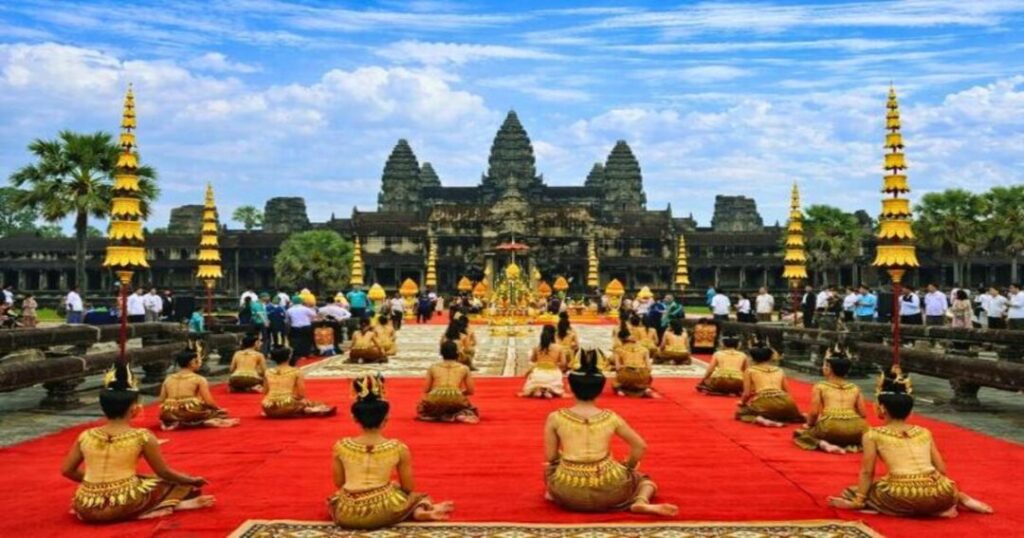
Choul Chnam Thmey, or Khmer New Year, is Cambodia’s biggest and most widely celebrated holiday, and unlike most of the festivals on this list, its dates are fixed rather than shifting with the lunar calendar — in 2026, it falls April 14–16.
The three days each carry distinct meaning. The first day, Maha Songkran, welcomes the year’s new angel (Tevoda) into the home. The second, Wanabot, is dedicated to charity — giving to the less fortunate and honoring ancestors and elders. The third, Leung Sak, is set aside for cleansing rituals, prayers, and bathing statues of the Buddha as a final act of purification before the new year properly begins.
The traditions that make Khmer New Year recognizable to visitors are unmistakable: streets full of water splashing (a blessing and cleansing gesture, not just play), traditional games played in pagoda courtyards, and — distinctively — the building of sand mounds at temples. Each grain of sand placed on the mound is said to represent a sin being symbolically washed away, an act of merit-making meant to clear the spiritual slate for the year ahead.
Visak Bochea: Buddha’s Birth, Enlightenment, and Passing in One Day
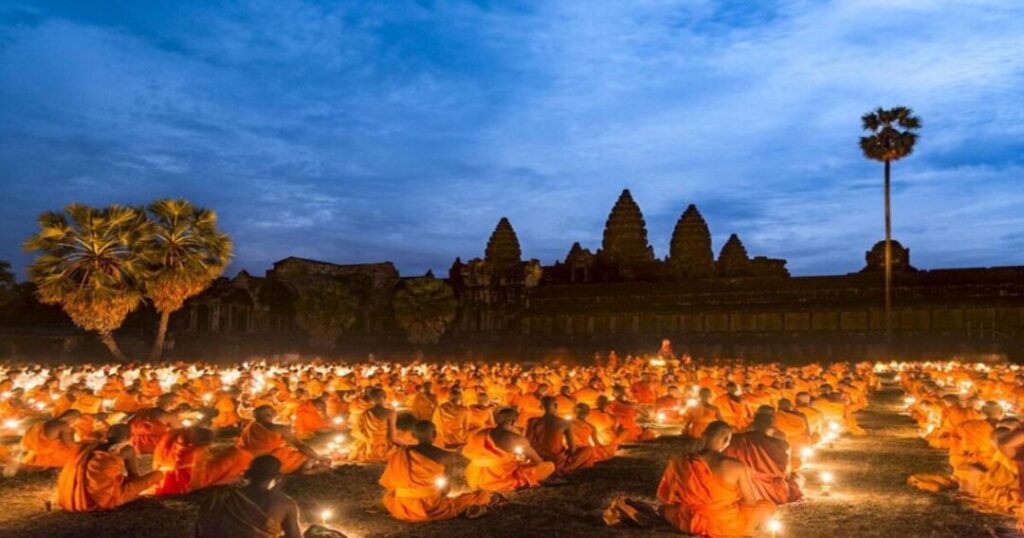
Falling on the full moon of the sixth lunar month (typically May or June), Visak Bochea marks three of the most significant events in Buddhist tradition on a single day: the Buddha’s birth, his enlightenment, and his death — all believed by tradition to have occurred on the same date in different years of his life.
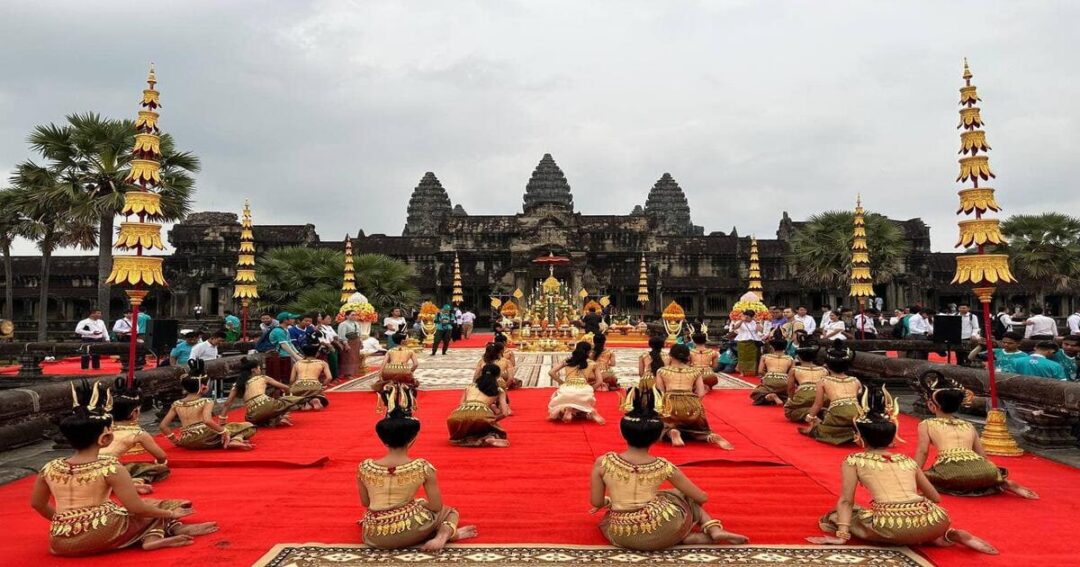
Temples across Cambodia hold ceremonies through the day, culminating in candle-lit processions where monks and devotees circle the temple grounds three times, chanting and carrying candles, incense, and flowers. It’s a national holiday, and one of the more visually striking festivals to witness if you happen to be near a major temple like Wat Phnom or the temples of Angkor when it falls.
Pchum Ben: Cambodia’s Festival of Ancestors
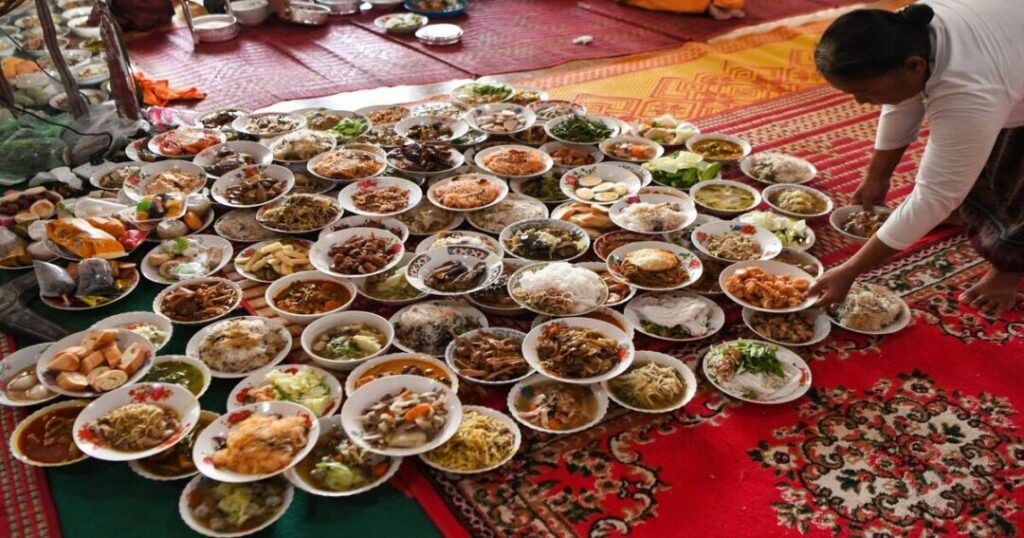
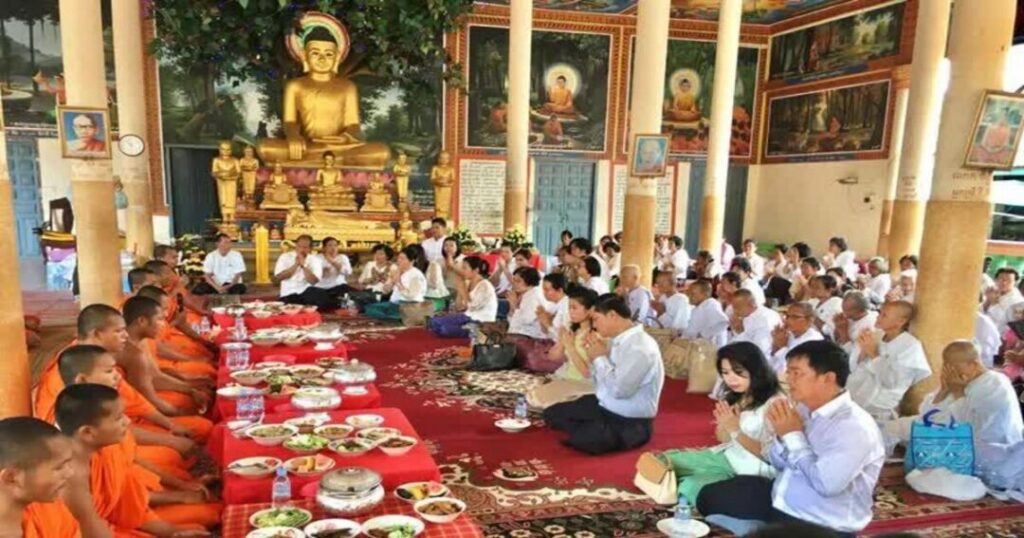
Pchum Ben is arguably Cambodia’s most spiritually significant festival, and it deserves real depth rather than a passing mention. It’s a 15-day observance falling in September or October, built around the belief that during this period, the spirits of ancestors — including those still working off bad karma — are released and can be reached through offerings made by the living.
The name itself carries meaning: pchum translates to “to gather” or “to unite,” while ben comes from the Sanskrit pinda, meaning “to make whole.” The first fourteen days, called Kan Ben, are the “observing days,” during which families visit pagodas before dawn to make food offerings to monks on behalf of up to seven generations of ancestors. [STAT: Pchum Ben rituals are traditionally understood to honor up to seven generations of a family’s ancestors.] One of the most recognizable rituals is the throwing of bay ben — small balls of rice, sometimes mixed with beans — onto temple grounds, an offering meant to reach wandering spirits who have no living family to feed them.
The fifteenth and final day, Pchum Ben proper, is the most important of all. Families gather at their home pagoda, monks chant suttas continuously through the night, and the day functions as something close to a national homecoming — many Cambodians travel back to their home provinces specifically for it, in a migration pattern not unlike a major holiday travel period elsewhere in the world.
Also Read: Festivals in Bhutan: 6 Celebrations to Plan Your Trip Around
Cambodia Water Festival: Bon Om Touk on the Tonle Sap
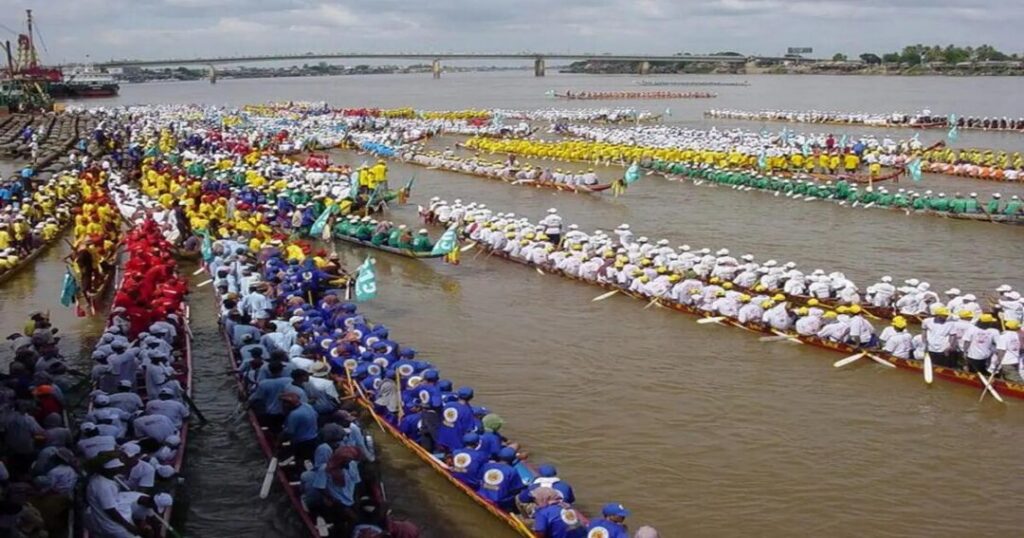
The Cambodia Water Festival — Bon Om Touk, literally “boat-racing festival” — is the country’s largest secular celebration, and its origins go back further than most visitors expect: to the 12th-century reign of Jayavarman VII, one of the most powerful Khmer kings. A decisive 1181 naval victory over the Cham fleet on the Tonle Sap was considered significant enough to be carved into the bas-reliefs of the Bayon temple at Angkor Thom, and the Khmer kings are said to have organized boat races afterward to select champions from the royal navy and keep it battle-ready. [STAT: The naval battle commemorated by Bon Om Touk’s boat races dates to 1181 and is depicted in bas-reliefs at Angkor Thom’s Bayon temple.]
Over the centuries, the festival’s purpose shifted from military preparation to celebration and thanks-giving, tied to a genuinely remarkable natural event: the reversal of the Tonle Sap River’s flow. During the rainy season, the swollen Mekong forces the Tonle Sap to flow backward into the lake, nearly quadrupling its size; as the dry season begins, the flow reverses again, draining back into the Mekong and leaving behind the fertile silt and fish stocks that much of Cambodia’s agriculture and fishing depend on.
Today’s three-day festival centers on Phnom Penh’s riverfront, with dragon boats — crewed by dozens of oarsmen representing villages, families, and provinces — racing along the Tonle Sap, alongside illuminated float processions and moon-worship ceremonies.
It’s worth being honest about one part of this festival’s more recent history: in November 2010, a stampede on the bridge connecting Phnom Penh to Diamond Island (Koh Pich), triggered by a panic that the crowded bridge was unstable, killed 347 people and injured hundreds more — a tragedy Prime Minister Hun Sen called Cambodia’s worst disaster since the Khmer Rouge era. [STAT: The 2010 Phnom Penh stampede during the Water Festival killed 347 people, according to the confirmed final toll.] The festival was suspended for several years afterward, the original bridge was demolished and replaced with twin bridges, and crowd-control measures have since been significantly tightened. It’s a sobering piece of the festival’s recent history worth knowing, not a reason to avoid it — but a good reason to follow local crowd-safety guidance if you attend.
Water Festival Cambodia 2026: When to Expect It?
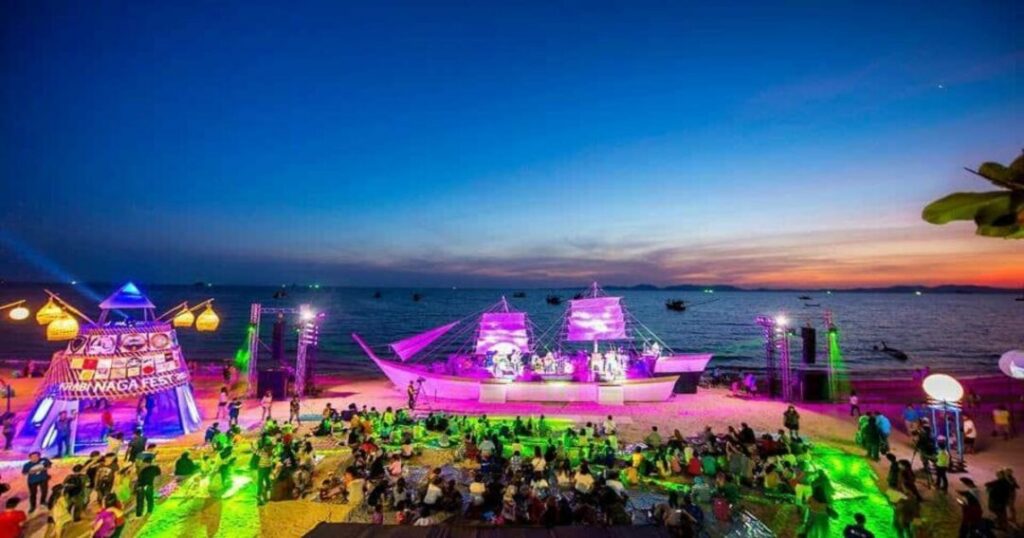
Because Bon Om Touk is set by the lunar calendar — traditionally the full moon of the month of Kadeuk — its exact dates shift every year and aren’t fixed as far in advance as Khmer New Year’s. Historically, it falls in November, and the government typically confirms the exact three-day window via official decree closer to the event itself. If you’re planning a trip specifically around the water festival Cambodia 2026 dates, treat “sometime in November” as the reliable planning window for now, and check official Cambodian tourism or government announcements a few months out for the confirmed dates rather than relying on a number quoted far in advance.
Also Read: Places to Visit in Sri Lanka: 7 Day Itinerary, Hidden Gems, Things to Do, Cuisine and Much More!
Cambodia Sea Festival: Sihanoukville’s Coastal Celebration
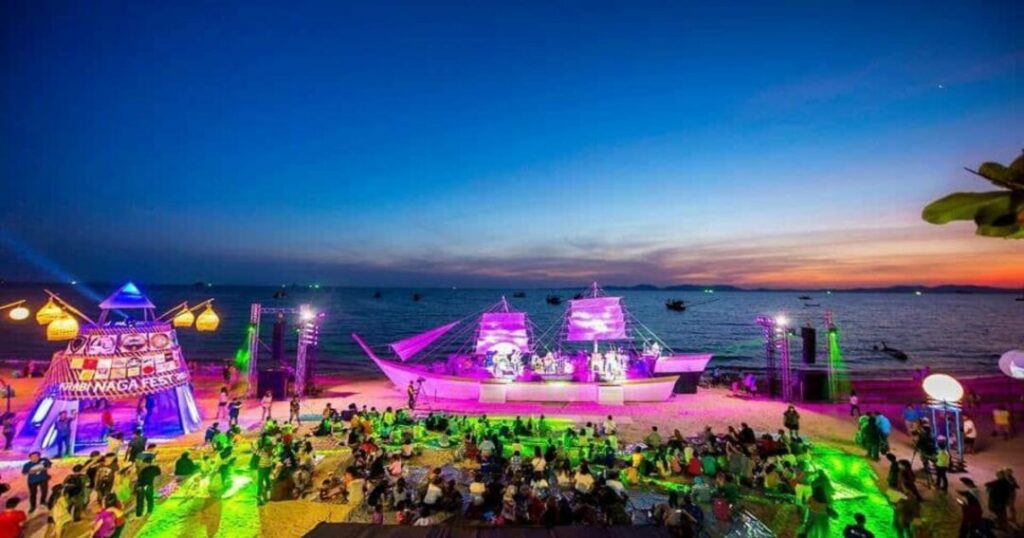
The Cambodia Sea Festival is a genuinely separate event from Bon Om Touk, and it’s easy to see why the two get confused — both involve water, both draw huge crowds, and both are called “festivals” in English. But where the Water Festival is a Phnom Penh river event tied to Buddhist and royal history, the Sea Festival is a coastal celebration that’s been organized annually since 2011, rotating among Cambodia’s four coastal provinces: Preah Sihanouk (Sihanoukville), Kep, Koh Kong, and Kampot. [STAT: The Sea Festival has rotated among Cambodia’s four coastal provinces — Preah Sihanouk, Kep, Koh Kong, and Kampot — annually since 2011.]
When it’s hosted in Sihanoukville, the festival centers on beaches like Otres, Serendipity, and Sokha, with beach parades, water sports competitions including kayak races and beach volleyball, seafood cooking demonstrations, traditional Khmer dance performances, and outdoor concerts running alongside international DJ sets. It’s typically held in late November or December and is explicitly framed around promoting sustainable coastal tourism rather than purely spectacle. Because the host province and exact dates shift year to year, it’s worth confirming the current year’s host location before booking travel specifically around it.
Also Read: Things to Do in Colombo: A Complete Guide to Sri Lanka’s Capital
Cambodia Festival 2026 Calendar and Holidays
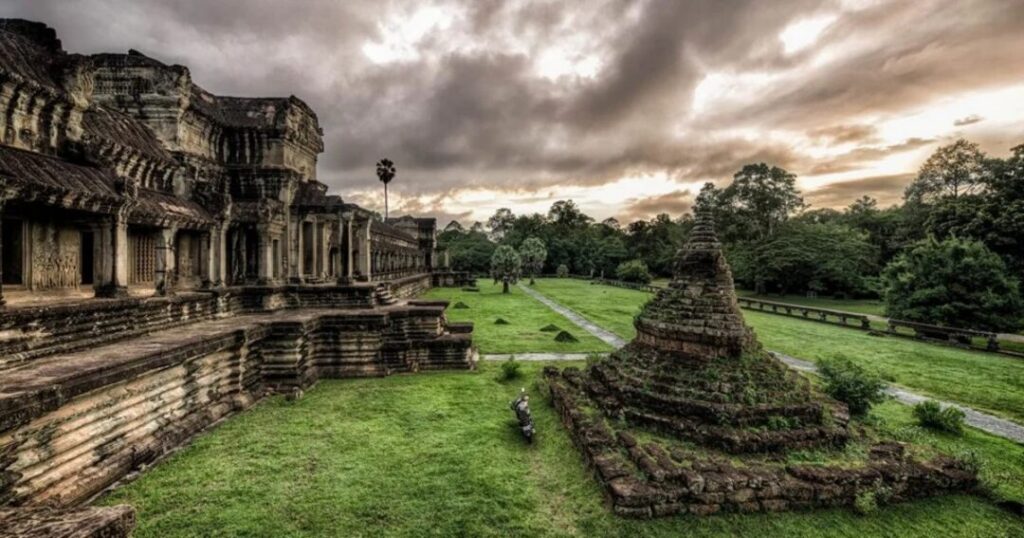
Pulling this together into a practical Cambodia festival 2026 planning view: Khmer New Year (April 14–16) is the one date you can lock in with confidence, since it runs on the fixed solar calendar. Visak Bochea (typically May/June), Pchum Ben (typically September/October), the Water Festival (typically November), and the Sea Festival (typically late November/December) all follow lunar timing or annual scheduling decisions, meaning their exact 2026 dates are set closer to each event rather than years ahead.
For anyone building a broader view of Cambodia’s festivals and holidays, the practical takeaway is simple: build your trip around the season rather than a specific date if you’re planning far ahead, and reconfirm exact dates 2–3 months out once Cambodia’s government or tourism boards publish the official calendar. If you’re weighing which festival in Cambodia 2026 to actually plan a trip around, NIVU AI inside the Explurger app can help you compare the practical logistics — crowd size, typical weather, and how far each falls from Siem Reap or Phnom Penh — against the dates you have available.
Also Read: Festivals in Boston: Music, Film, Wine, and Holiday Events to Plan Around
Conclusion About Festivals in Cambodia
Festivals in Cambodia reward travelers willing to look past the postcard version of any single event — Pchum Ben’s quiet nights of chanting are as much a part of the country’s story as the Water Festival’s roar of dragon boats. Add the dates that fit your trip to your Explurger Bucket List, and once you’ve experienced one firsthand, your Automatic Travelogue will keep the memory mapped alongside everywhere else you’ve traveled. Let Explurger help you time your Cambodia trip around the celebration that matters most to you.
FAQs About Festivals in Cambodia
2. When is the Cambodia Water Festival in 2026?
Bon Om Touk follows the lunar calendar and has historically fallen in November, but the exact three-day dates for 2026 aren't officially fixed this far in advance. Check official Cambodian government or tourism announcements a few months ahead of your trip for the confirmed dates.
3. What is Bon Om Touk?
Bon Om Touk, meaning "boat-racing festival," is Cambodia's largest secular celebration, commemorating a 12th-century naval victory and celebrating the seasonal reversal of the Tonle Sap River's flow. It features dragon boat races, illuminated floats, and moon-worship ceremonies along Phnom Penh's riverfront.
4. What is Pchum Ben and why is it important?
Pchum Ben is a 15-day Buddhist festival of ancestor veneration, during which families make offerings at pagodas on behalf of up to seven generations of ancestors. Its final day involves overnight monk chanting and is considered one of Cambodia's most spiritually significant observances.
5. What is Cambodia's Sea Festival?
The Sea Festival is a coastal celebration held annually since 2011, rotating among the provinces of Preah Sihanouk, Kep, Koh Kong, and Kampot. It centers on beach events, water sports, seafood, and concerts, and is distinct from the inland Water Festival on the Tonle Sap.
6. Is Khmer New Year the same as other Southeast Asian New Year festivals?
It shares the water-splashing tradition seen in Thailand's Songkran and Laos's Pi Mai, since all three fall around the same mid-April period and share cultural roots. Cambodia's version has its own distinct three-day structure and rituals, including sand-mound building at pagodas.