

65 Total Views
Kerala’s beaches get most of the attention, but its highland district quietly delivers a completely different trip—misty hills, ancient rock art, and rainforest waterfalls without the coastal crowds. This guide covers the best Wayanad tourist places, from a Neolithic cave system to India’s largest earthen dam, so you can plan a few days that go well beyond a generic hill-station itinerary. Whether you’re after wildlife, history, or just cooler air, here’s where to start.
Best Wayanad Tourist Places to Explore in 2026
Marvel at Banasura Sagar Dam, India’s Largest Earthen Dam

Start with scale. Banasura Sagar Dam in Padinjarathara is India’s largest earthen dam and the second-largest of its kind in Asia.
- Completed in 2004, the dam stands 38.5 meters tall and stretches 776 meters across, built from massive stacks of stone and boulders rather than concrete.
- At full capacity, it holds over 209 million cubic meters of water across a reservoir spanning nearly 13 sq km, set against the backdrop of Banasura Hill.
- It’s about 20 km from Kalpetta, and boating on the reservoir is one of the more popular ways to take in the surrounding Western Ghats scenery.
Step Back in Time at Edakkal Caves
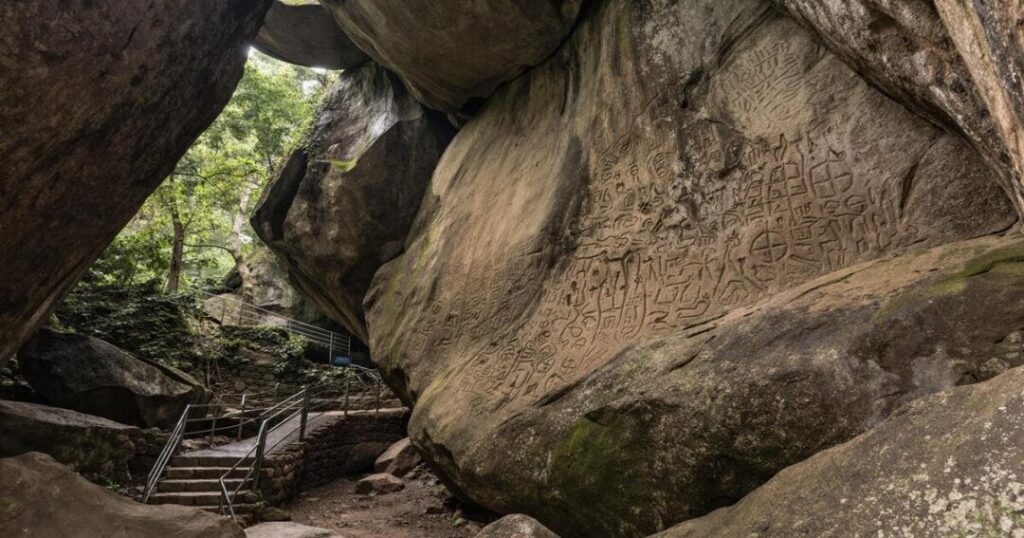
For something genuinely ancient, head to Edakkal Caves, a rock shelter carrying some of India’s earliest evidence of human habitation.
- The site holds petroglyphs dating back as far as 7,000 years, spanning the Neolithic and Mesolithic periods—stone-age script, weapon figures, and depictions of animals and people carved into the rock.
- It sits roughly 4,000 feet up the Ambukuthi Hills, about 16 km from Sulthan Bathery, and reaching it takes a 45-minute uphill trek.
- The caves were rediscovered in 1895 by Fred Fawcett, a British police officer who stumbled on a stone axe in a nearby coffee estate.
Also read: Places to Visit in Kollam: Kerala’s Quieter Answer to Alleppey
Chase Waterfalls at Soochipara (Sentinel Rock)
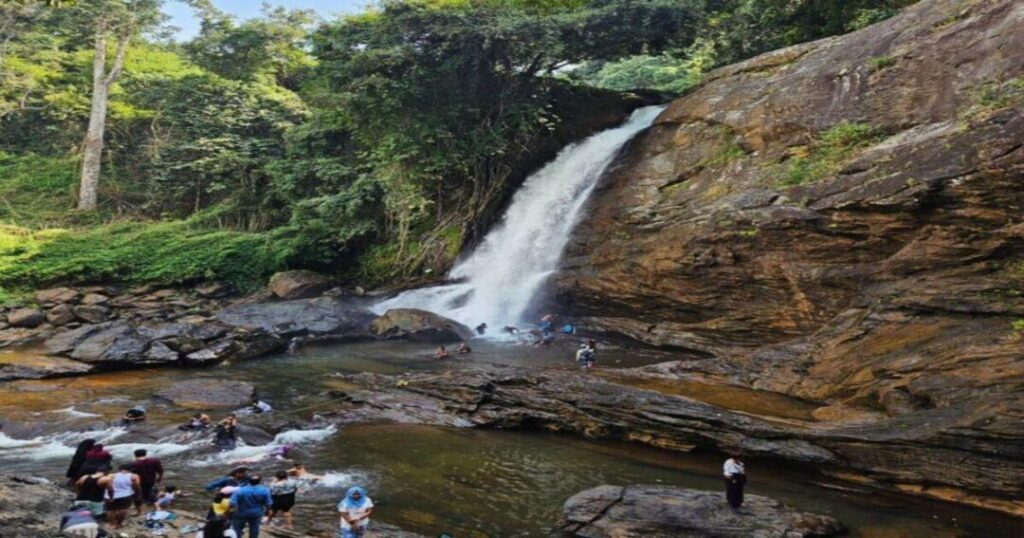
If you only see one waterfall in Wayanad, make it Soochipara Falls, also known as Sentinel Rock Waterfalls.
- The falls drop around 200 meters in the Vellarimala area, roughly 15–20 minutes from Meppadi through tea estate country.
- A short 10–15 minute walk from the parking area gets you to the base, where swimming is possible in season and rock climbing draws more adventurous visitors.
- Water flow is heaviest just after monsoon and eases up by summer, when the rocks become easier to access.
Spot Wildlife at Wayanad Wildlife Sanctuary
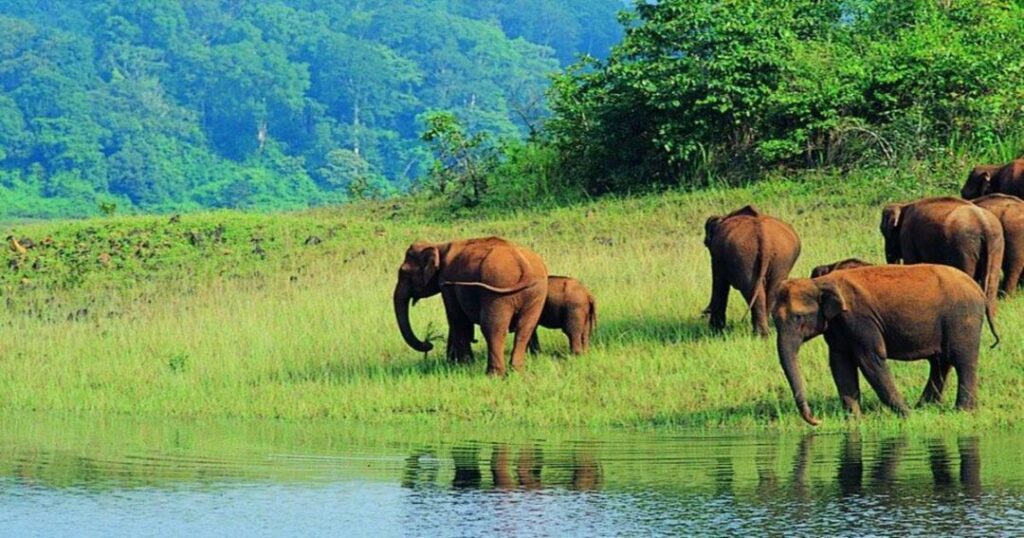
Wayanad’s forests are part of one of India’s most important conservation landscapes. Wayanad Wildlife Sanctuary covers about 344 sq km and forms an integral part of the Nilgiri Biosphere Reserve.
- Established in 1973, the sanctuary is home to elephants, gaur, leopards, sloth bears, and—less commonly sighted—tigers, alongside a rich range of birdlife.
- It’s split into two separate sections, with Sulthan Bathery serving as one of the main access points for safaris.
- Jeep and bus safaris run through zones like Muthanga and Tholpetty, generally in the early morning and late afternoon for the best chance of sightings.
Relax at Pookode Lake
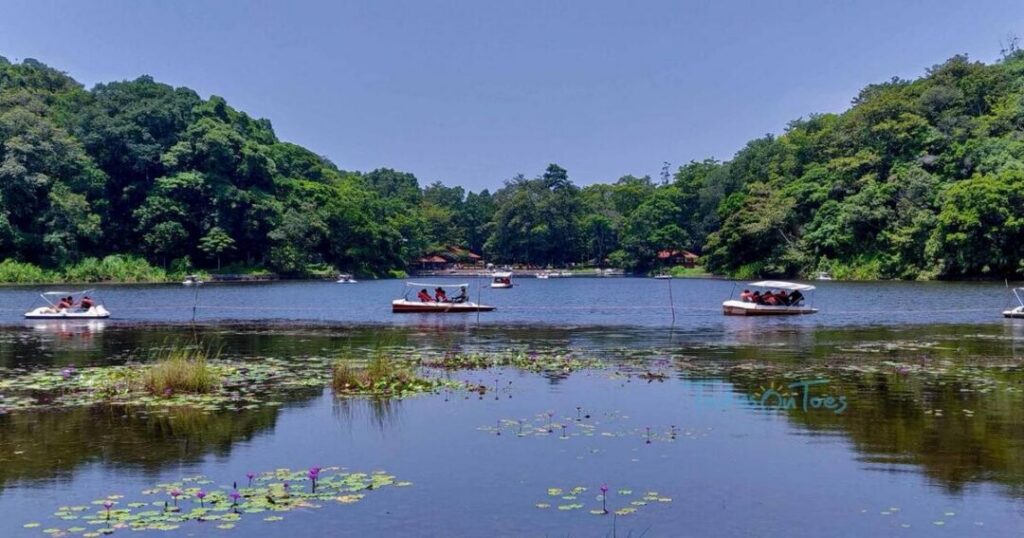
For a slower half-day, Pookode Lake is a natural freshwater lake sitting at 770 meters elevation near Kalpetta.
- Visitors can walk the perimeter, go boating in 2-seat, 4-seat, or 7-seat rowboats, check out the small aquarium, or try the fish spa.
- It’s open daily from 9 AM to 6 PM, with boating available until 5 PM—an easy, low-effort stop to pair with a bigger day of sightseeing.
Chembra Peak: What’s Actually Open Right Now
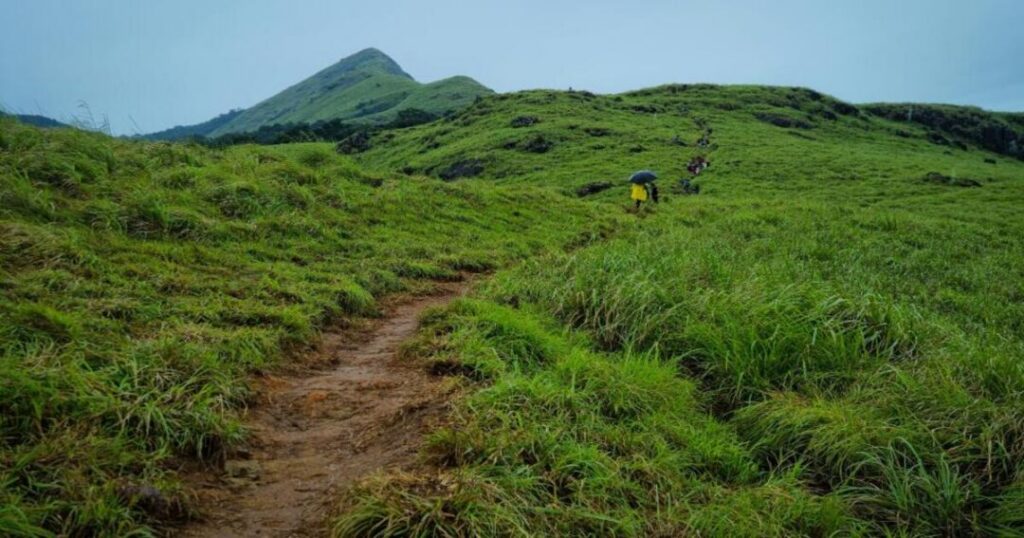
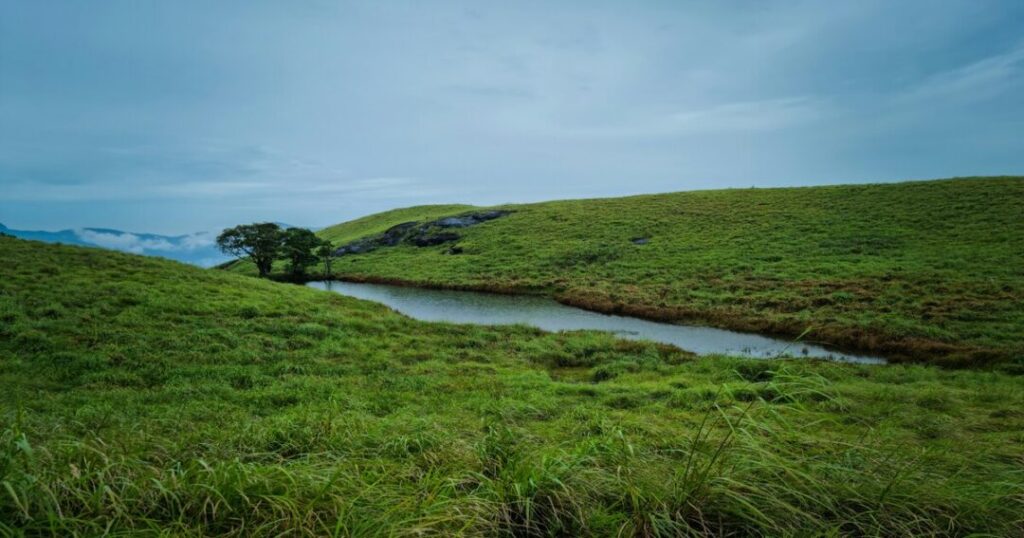
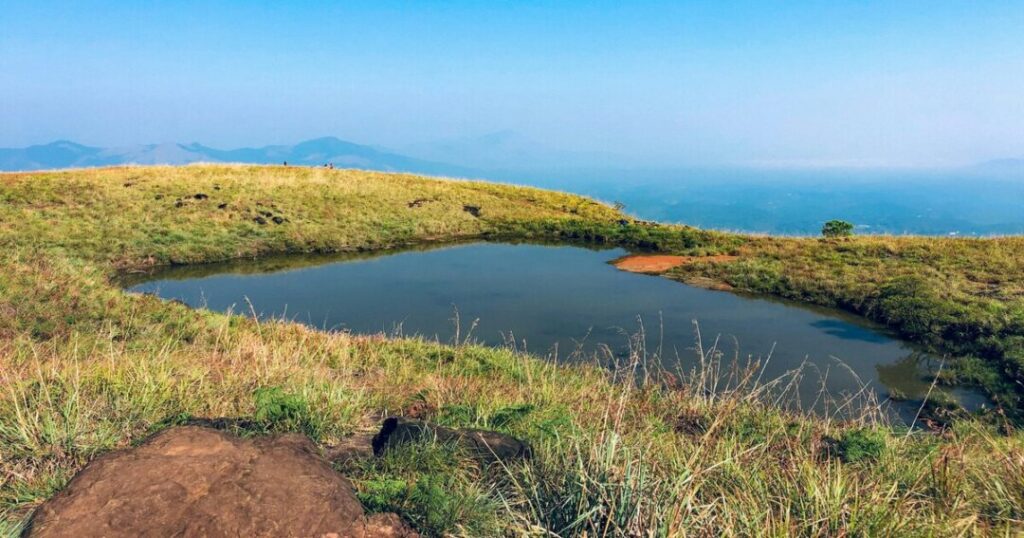
Chembra Peak and its famous heart-shaped lake (Hridaya Thadakam) are usually top of every Wayanad list—but access here needs a clear caveat.
- The summit itself has long been off-limits to protect wildlife on the trail.
- Trekking to the heart-shaped lake has also faced repeated closures—most recently tied to the 2024 Wayanad landslides—with some periods of reopening under a strict permit system (limited daily tokens, registration in the early morning, and mandatory group entry).
- Given how often this status has changed, check directly with the Wayanad Forest Department or DTPC Wayanad before building your itinerary around it, rather than relying on an old blog post or tour operator listing.
Also read: Chembra Peak: The Complete Trekking Guide to Wayanad’s Highest Peak
Practical Tips for Wayanad Tourist Places
- Base yourself in Kalpetta or Sulthan Bathery—both are central enough to reach most attractions within an hour’s drive.
- Book wildlife safaris in advance, especially during peak winter season, since slots at Muthanga and Tholpetty fill up quickly.
- Carry a light jacket even in summer—evenings in the hills cool down noticeably.
- Malayalam is the main local language, but Hindi and English are widely understood at hotels and tourist sites.
Best Time to Visit Wayanad Tourist Places
- October to May is the ideal window—dry, pleasant weather that suits sightseeing, wildlife safaris, and outdoor activity.
- Winter (October–February) is the coolest and most popular stretch, with temperatures between 10 and 24°C and misty mornings.
- Summer (March–May) warms up to around 35°C, so plan outdoor visits for early morning or evening.
- Monsoon (June–September) brings over 3,000 mm of rainfall—the landscape turns dramatically green, but road access and outdoor activities get harder to plan around.
Also read: Places to Visit in Ernakulam: 15 Heritage Sites, Beaches & Day Trips in Kerala’s Port City
How to Reach Wayanad Tourist Places?
- By air: Calicut International Airport (Kozhikode) is the nearest airport, roughly 61–93 km away depending on which part of Wayanad you’re headed to, with taxis and buses available for the onward drive.
- By rail: Nilambur Railway Station is the closest at about 90 km, while Kozhikode Railway Station (around 110 km) has significantly more train connections if you don’t mind the longer drive.
- By road: Wayanad connects well to Kozhikode (85 km, ~2.5 hours), Bangalore (275 km, ~6 hours), and Coimbatore, making it a popular add-on to a broader South India road trip.
Conclusion: Wayanad Tourist Places
Between a 7,000-year-old cave system, India’s largest earthen dam, and a wildlife sanctuary tied into one of South India’s most important forest corridors, the best Wayanad tourist places offer a genuinely different kind of Kerala trip.
Quick takeaways:
- Visit between October and May for the most reliable weather and access.
- Base yourself centrally in Kalpetta or Sulthan Bathery and radiate outward.
- Always verify Chembra Peak’s current access status before planning around it—it changes more often than most attractions on this list.
Plan your perfect trip with the Explurger app—download the app now.
Save this guide before you book, and start mapping out a Wayanad itinerary that mixes history, nature, and a genuine change of pace from Kerala’s coast.
FAQs About Wayanad Tourist Places
2. How many days are enough for Wayanad?
Most travellers can comfortably cover Wayanad's major attractions in 3–4 days, basing themselves in Kalpetta or Sulthan Bathery and taking day trips to the dam, caves, waterfalls, and wildlife sanctuary. Adding an extra day gives more flexibility for a wildlife safari, since morning and evening slots are limited and worth planning around rather than rushing.
3. Is Wayanad good for a family trip?
Yes, Wayanad works well for families thanks to easy, low-effort attractions like Pookode Lake boating, along with wildlife safaris that appeal to most age groups. Some spots — like the trek to Edakkal Caves or Soochipara Falls — involve a reasonable amount of walking, so it's worth pacing the itinerary around younger children or older relatives.
4. What is Wayanad famous for?
Wayanad is famous for its Western Ghats scenery, the ancient petroglyphs at Edakkal Caves, Banasura Sagar Dam (India's largest earthen dam), and its role in the Nilgiri Biosphere Reserve as a wildlife corridor. It's also known for spice and tea plantations, waterfalls like Soochipara, and cooler weather that makes it a popular hill escape from Kerala's coastal heat.
5. When is the best time to visit Wayanad?
October to May is the best time to visit Wayanad, with winter (October–February) offering the coolest, most comfortable weather for sightseeing and wildlife safaris. Summer (March–May) gets warmer but is still manageable with early starts, while the monsoon season (June–September) brings heavy rain that can limit outdoor activity and access to some attractions.
6. How do I reach Wayanad from Kochi or Bangalore?
The nearest airport is Calicut International Airport (Kozhikode), roughly 61–93 km from Wayanad, making it the fastest route from most Indian cities including Kochi. From Bangalore, Wayanad is about 275 km by road, roughly a 6-hour drive, making it a popular weekend road trip destination for travellers from Karnataka.