

56 Total Views
Standing in front of a street cart with ten unfamiliar dishes and no idea where to start? It happens to almost everyone the first time. Middle Eastern street food can look overwhelming from the outside, but once you know what you’re looking at, it’s some of the most satisfying, affordable eating anywhere in the world. This guide walks through eight dishes worth seeking out, where each one actually comes from, and how it’s traditionally served—so you can order with confidence instead of just pointing at unfamiliar Middle Eastern street food names on a menu.
Middle Eastern Street Food Icons: Wraps and Sandwiches
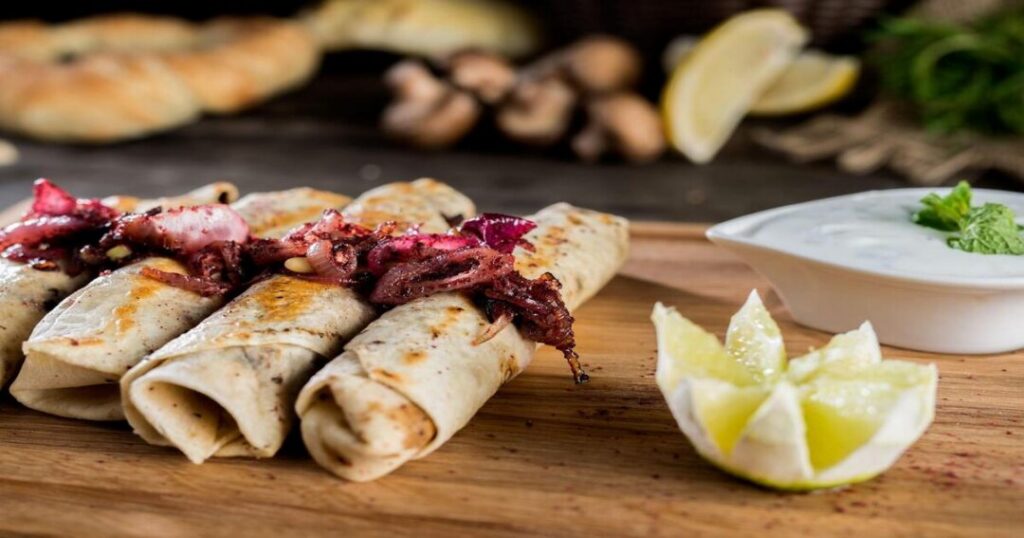
These two are the dishes most people picture first, and they’re the easiest entry point if you’re new to the cuisine.
Shawarma
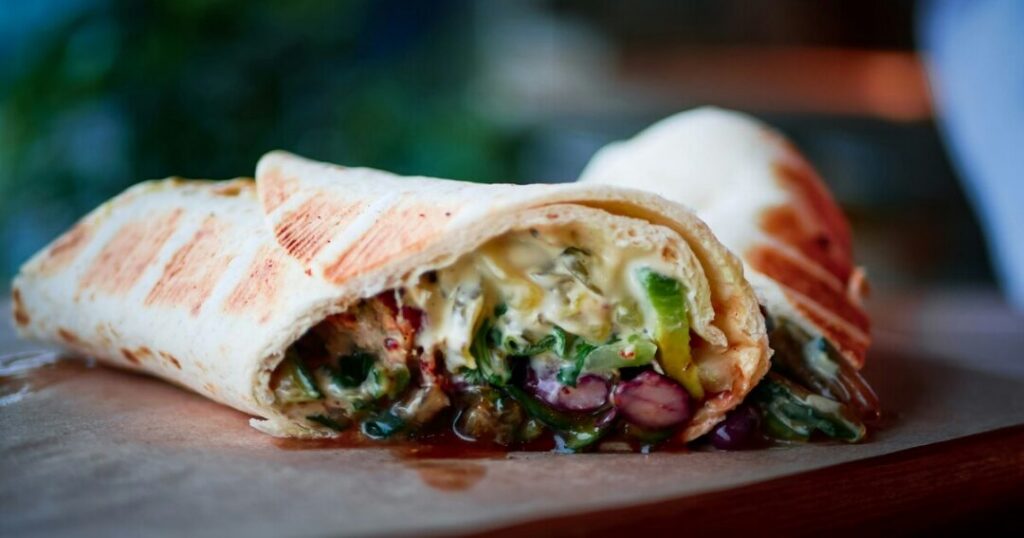
- Shawarma traces back to the Ottoman Empire, where a Turkish butcher named Iskender in Bursa is credited with layering seasoned meat on a vertical spit and slow-roasting it—the technique that became döner kebab and, in the Levant, shawarma.
- Lamb and chicken are the most common proteins, seasoned with cumin, cardamom, cinnamon, and baharat, then shaved off the spit and stuffed into pita, saj, or laffa bread.
- Toppings vary by country: expect garlic sauce and pickles in the Levant and tahini and fresh vegetables in Israeli versions.
Falafel
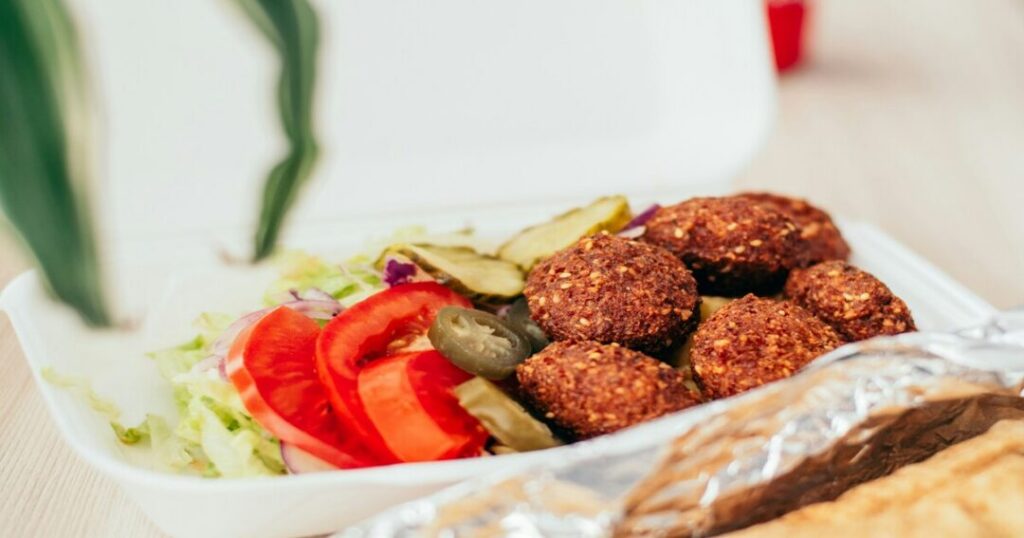
- Falafel most likely originated in Egypt, made traditionally with ground fava beans, before migrating north into the Levant, where chickpeas became the dominant base.
- It’s deep-fried, herb-flecked, and almost always stuffed into pita with pickled vegetables, salad, and a drizzle of tahini sauce.
- It’s naturally vegetarian, which makes it one of the easiest street food dishes to recommend to any traveler.
Also read: TOP FOOD DESTINATIONS IN INDIA: THE UNDERRATED EDITION
Dips, Spreads, and Breads You’ll Find on Every Corner
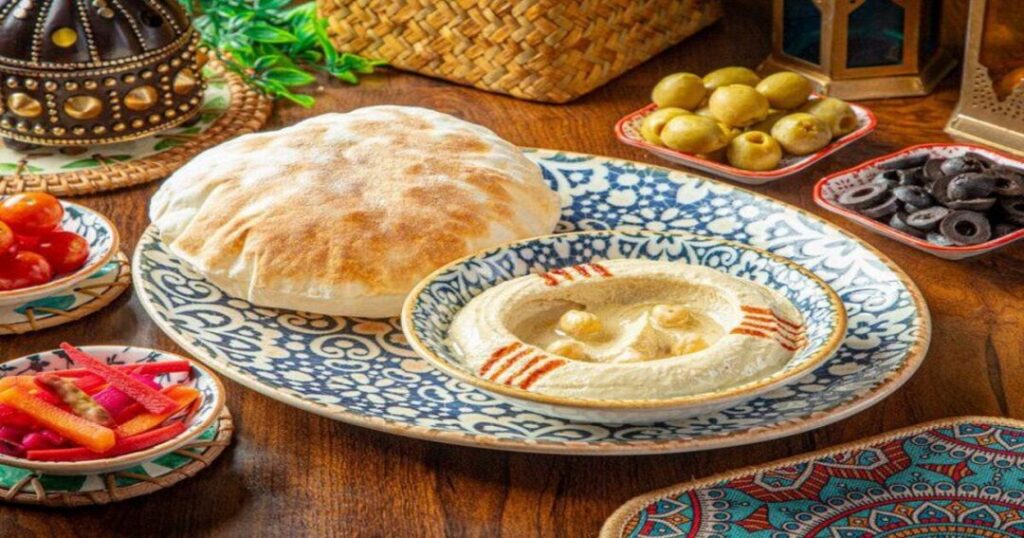
Hummus
- Hummus’s exact origin is genuinely disputed—the earliest documented recipe for a chickpea purée comes from 13th-century Cairo, though Lebanon, Syria, and Palestine all claim strong ties to the dish today.
- The Arabic name, hummus bil tahina, literally means “chickpeas with tahini,” and it’s made by blending cooked chickpeas with tahini, olive oil, lemon juice, and garlic.
Manakish
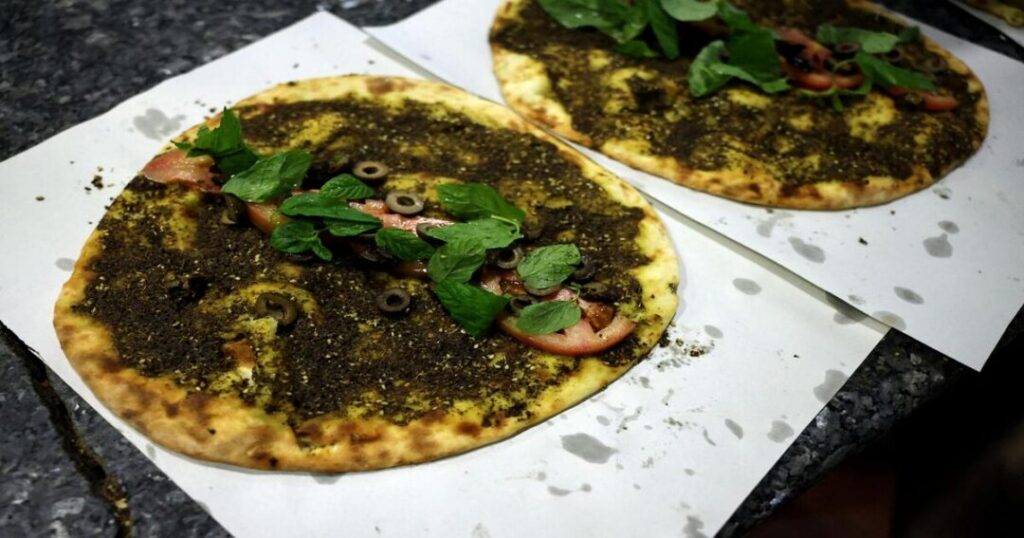
- Manakish is a Lebanese flatbread brushed with olive oil and za’atar—a blend of dried thyme, sumac, and sesame seeds—then baked until crisp at the edges.
- Street vendors and bakeries sell it fresh in the morning, often folded in half like a savory pizza slice.
Ka’ak Al-Quds
- Ka’ak al-Quds, or Jerusalem sesame bread, is a ring-shaped bread crusted in simsim (the Arabic word for sesame seeds) and piled high on street carts across Jerusalem, typically served with a small packet of za’atar for dipping.
- That same simsim shows up throughout Middle Eastern street food—it’s pressed into tahini, sprinkled over manakish, and toasted on top of bread—so it’s worth learning the word early.
Hearty Street Food Bites: Kibbeh and Ful Medames
Kibbeh
- Kibbeh is considered a national dish of both Lebanon and Syria, built from spiced ground meat and bulgur wheat—the city of Aleppo alone is said to have at least 17 regional variations.
- Street versions are usually deep-fried into a torpedo shape, though baked and even raw preparations (kibbeh nayyeh) are common at sit-down meals.
Full Medames
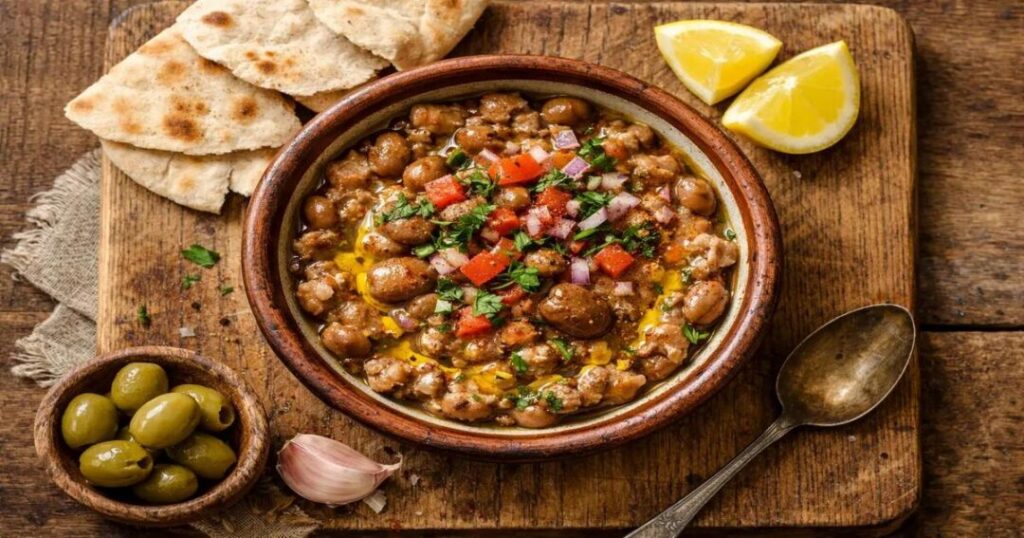
- Ful medames is widely considered Egypt’s national dish, and some historians trace fava bean consumption in the region back to Neolithic sites near Nazareth and to 4th-century Jerusalem Talmud references.
- It’s simmered slow, mashed with cumin, oil, garlic, and lemon, and eaten mainly at breakfast, scooped up with fresh bread.
Sweet Endings: Kunafa and Beyond
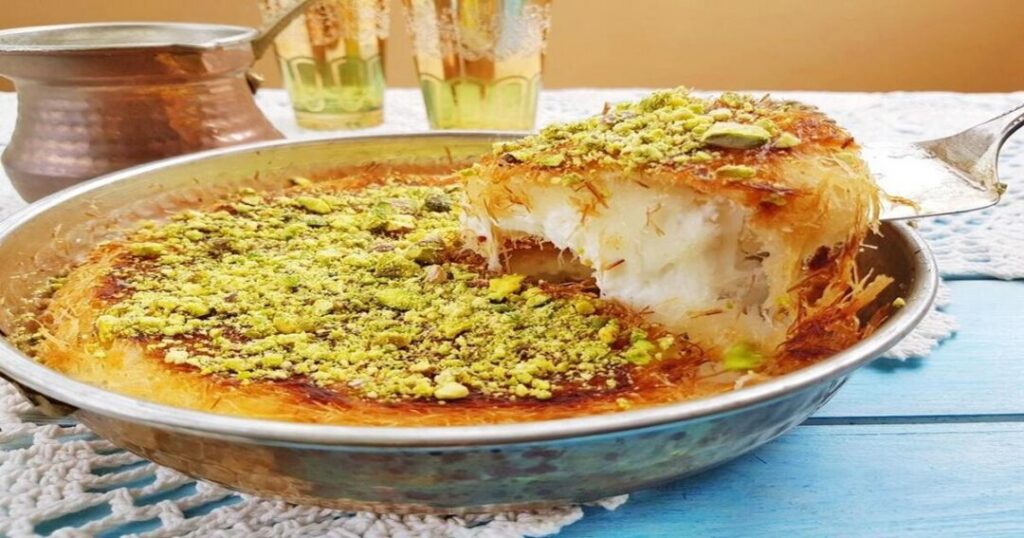
- Kunafa (Knafeh) is widely traced to Nablus, in the Palestinian West Bank, which has been called the region’s “knafeh capital” since at least the 1950s. The classic Nabulsi version layers shredded kadayif pastry over salty Nabulsi cheese, soaked in rose-scented syrup and topped with crushed pistachios.
- Regional cousins include Gaza’s version, made with nuts and warm spices instead of cheese, and Turkey’s künefe, which earned EU Protected Geographical Indication status in 2012.
Also read: Street Food in London: The Best Markets, Food Streets, and a Few Landmarks Worth a Detour
Warm Drinks From the Street Cart

- Sahlab has Ottoman-era roots, traditionally thickened with powdered wild orchid root before cornstarch became the modern substitute as wild orchid populations declined.
- Vendors sell it steaming hot through winter months across the Levant, North Africa, and Turkey, usually topped with cinnamon, coconut, or crushed nuts.
Middle Eastern Street Food in India
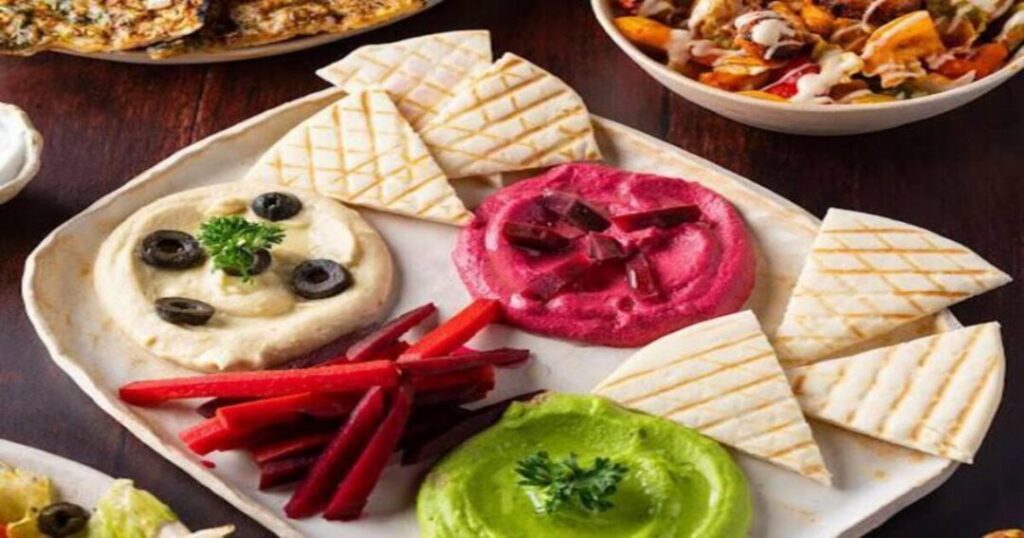
- You don’t have to travel to the Levant or the Gulf to find this cuisine anymore. Shawarma stalls in particular have become a fixture of India’s street food scene, from Kerala and Mumbai to Delhi and Bangalore, often run alongside kathi rolls and other local street snacks.
- Falafel wraps, hummus bowls, and manakish have also found their way onto café and food-truck menus in India’s bigger cities as Middle Eastern and Mediterranean cuisine has grown more mainstream.
Also read: Singapore Street Food: 15 Iconic Dishes You Need to Try
Tips for Trying Middle Eastern Street Food Like a Local
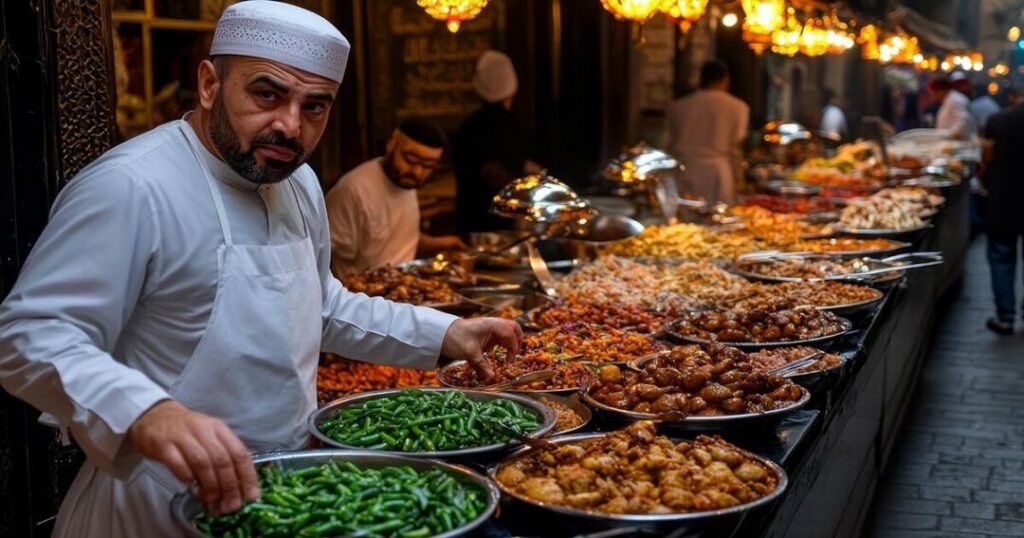
- Follow the queue—the busiest cart is almost always the most reliable indicator of freshness and quality.
- Ask for it “mashed” or “spicy” if you want variations; most vendors are happy to adjust on the spot.
- Carry small cash—most street vendors don’t take cards, and exact change speeds things up during busy hours.
- If you’re vegetarian, falafel, hummus, manakish, ful medames, and most sweets are naturally meat-free.
- Street food is often eaten standing or walking—don’t expect seating at the busiest carts.
- Loved a dish? Most of these travel well as Middle Eastern street food recipes to try at home—hummus, ful medames, and manakish are the easiest to recreate without specialty equipment.
Conclusion: Middle Eastern Street Food
From a crackling falafel sandwich to a plate of hot kunafa, Middle Eastern street food rewards travellers who are willing to follow the smell, join the queue, and order something they can’t quite pronounce yet.
Quick takeaways:
- Start with shawarma or falafel if you’re new to the cuisine, then branch into hummus, manakish, and kibbeh.
- Save kunafa and sahlab for dessert and a warm drink to finish the meal.
- Most dishes have vegetarian versions, so dietary restrictions rarely mean missing out.
Ready to explore? Download the Explurger app and find the best street food spots on your next trip.
Save this guide before your next trip—you’ll want it the moment you spot your first street cart.
FAQs About Middle Eastern Street Food
2. What is a good Middle Eastern street food to try first?
Falafel is one of the easiest dishes to start with because it's familiar in format (a stuffed pita), naturally vegetarian, and widely available with mild, herby flavors. Shawarma is a close second if you want to try meat, since most vendors let you choose your protein and adjust the spice level or sauce to your taste.
3. Is Middle Eastern street food safe to eat?
Middle Eastern street food is generally safe when you choose vendors with high customer turnover, since that means ingredients are fresh and not sitting out for long periods. Look for carts with visible queues, hot food that's cooked to order, and clean prep surfaces, and avoid anything that's been sitting at room temperature for an extended time.
4. What is the difference between shawarma and doner kebab?
Shawarma and doner kebab share the same Ottoman-era vertical spit-roasting technique, but they differ in seasoning, bread, and toppings. Doner kebab, the Turkish original, typically uses simpler seasoning and is served with Turkish bread and yogurt-based sauces, while shawarma uses Levantine spice blends like baharat and is often paired with garlic sauce, pickles, and pita or laffa bread.
5. Is Middle Eastern street food vegetarian-friendly?
Yes, several staples are naturally vegetarian, including falafel, hummus, manakish, ful medames, and most desserts like kunafa. Many street vendors also serve mixed platters that combine several vegetarian dishes, making it easy to eat well without touching meat, even in cities where shawarma and kebabs dominate the menu.
6. What drinks pair with Middle Eastern street food?
Mint lemonade, ayran (a salted yogurt drink), and fresh-squeezed juices are common daytime pairings with savory street food like shawarma and falafel. In winter, sahlab, a warm milk drink thickened with starch and topped with cinnamon, is the classic choice, especially alongside sweets like kunafa.