

218 Total Views
A well-planned Ayodhya itinerary for 2 days is enough time to cover the city’s biggest draws without rushing — the Ram Mandir, Hanuman Garhi, Kanak Bhawan, and an evening Saryu Aarti at Ram ki Paidi all fit comfortably into two days, with a little room left over for the quieter temples most visitors miss. Since Ayodhya reopened to large-scale tourism after the Ram Mandir’s January 2024 consecration, footfall has grown fast enough that timing your visit around temple hours and crowd patterns matters more than it used to. This guide lays out a full 2-day plan, along with quicker 1-day and longer 3-day versions, and a few extra notes for anyone travelling with family.
Best Ayodhya Itinerary for 2 Days
This two-day plan groups sights by location so you’re not crossing town more than necessary and builds in the evening Saryu Aarti — one of the most atmospheric things to do in Ayodhya after dark.
Day 1: Ram Janmabhoomi, Hanuman Garhi & the Saryu Aarti

[STAT: the Ram Mandir was consecrated on 22 January 2024, stands 49 metres (161 ft) tall across three storeys built in Nagara-style (Maru-Gurjara) architecture on a 1.1-hectare (2.7-acre) site, and enshrines Ram Lalla, the infant form of Lord Rama — Wikipedia]
- Start early at Ram Janmabhoomi and the Ram Mandir — security lines build up quickly through the morning, and darshan involves walking through several checkpoints, so arriving soon after opening keeps the visit unhurried.
[STAT: Hanuman Garhi, an important Ayodhya shrine shaped like a four-sided fort with corner ramparts, requires climbing 76 steps to reach the main sanctum, which houses a 6-inch idol of a youthful Hanuman seated on his mother Anjani’s lap; the current structure dates to an 1855 rebuilding — Wikipedia / Trawell]
- From Hanuman Garhi, it’s a short ride to Kanak Bhawan — tradition holds that Kaikeyi gifted this palace-temple to Sita right after her wedding to Rama, and the current structure reflects a later reconstruction credited to Vrish Bhanu Kunwari.
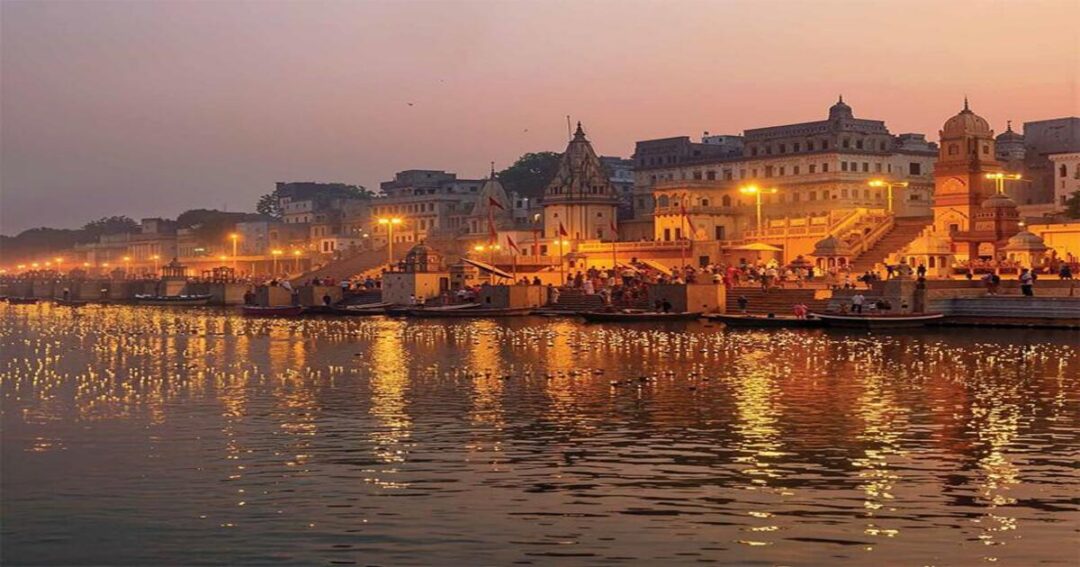
- End Day 1 at Ram ki Paidi on the Saryu riverbank for the evening Saryu Aarti — a ghat-side ritual with lamps and chanting that draws large crowds, so arrive at least 30-45 minutes before the scheduled start for a good spot.
Also Read: Top 10 Holy Places in India Beyond Varanasi: Temple Towns Worth the Journey
Day 2: Nageshwarnath Temple, Guptar Ghat & Local Ayodhya
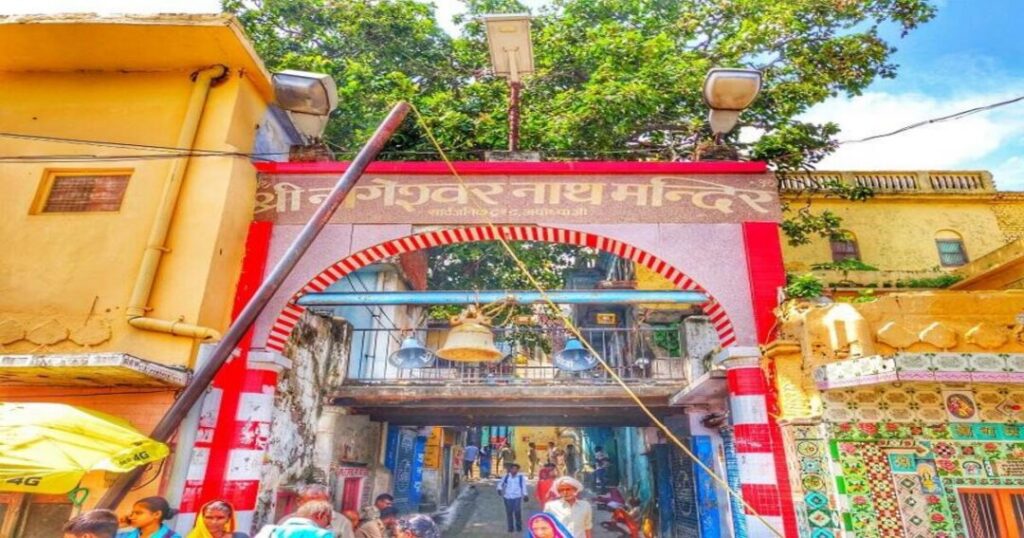
[STAT: Nageshwarnath Temple, standing at Ram ki Paidi, is traditionally said to have been established by Kush, son of Rama; the present building dates to 1750, commissioned by Naval Rai, a minister under Nawab Safdar Jung, and the temple holds major celebrations during Mahashivratri — Ayodhya district government / Utsav App]
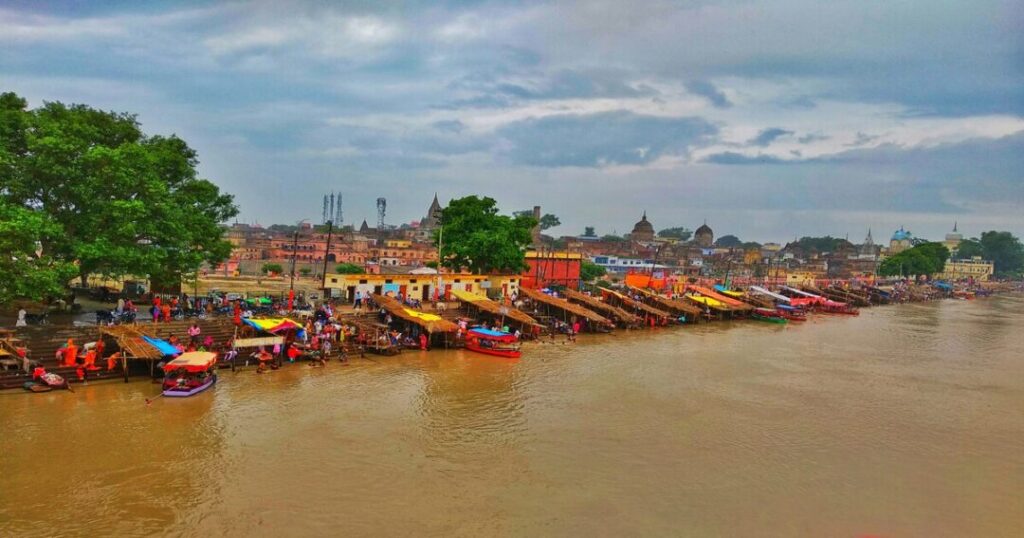
- Visit Nageshwarnath Temple in the morning, when it’s quieter than the afternoon Mahashivratri-season crowds, and pair it with a walk along Ram ki Paidi’s ghats in daylight to see the riverfront redevelopment up close.
- Guptar Ghat, on the Saryu’s banks, is traditionally associated with Lord Rama’s final departure from the mortal world and makes a peaceful late-morning stop, especially compared to the more crowded central ghats.
- Spend the afternoon browsing Ayodhya’s local markets near Ram Path for prasad, religious souvenirs, and regional sweets, before an early dinner — most temple-town restaurants wind down service earlier than in larger cities.
Ayodhya Itinerary for 1 Day: A Quick One-Day Plan

If a full two days isn’t possible, an Ayodhya itinerary for 1 day can still cover the essentials by cutting the trip down to three stops: the Ram Mandir and Ram Janmabhoomi complex in the morning, Hanuman Garhi’s 76 steps immediately after (it’s close enough to combine with Ram Mandir in one loop), and the evening Saryu Aarti at Ram ki Paidi to close the day. Kanak Bhawan can be added as a fourth stop for travellers comfortable with a tighter schedule, but Nageshwarnath Temple and Guptar Ghat are the first things to drop if time is genuinely limited to a single day.
Ayodhya Itinerary for 3 Days: A 2-Night, 3-Day Plan

An Ayodhya itinerary for 3 days — typically booked as a 2-night, 3-day Ayodhya itinerary — adds real breathing room to the two-day plan above rather than just padding it out. Days 1 and 2 stay the same as the core itinerary, and Day 3 opens up options that don’t fit into a rushed two-day visit: a sunrise stop at Guptar Ghat before the day’s heat sets in, a deeper visit to the Ayodhya Research Institute for context on the city’s archaeology and history, and time for a short excursion to nearby sites such as the Bahu Begum Maqbara or a day trip toward Chitrakoot for travellers with a car and a full day to spare. The extra night also means less need to compress darshan visits around single time slots, which matters most during peak pilgrimage periods when queues at Ram Mandir and Hanuman Garhi run longest.
Also Read: 10 Oldest Temples in India: A Chronological Guide (With the Dates Sorted Out)
Places to Visit in Ayodhya in 2 Days with Family
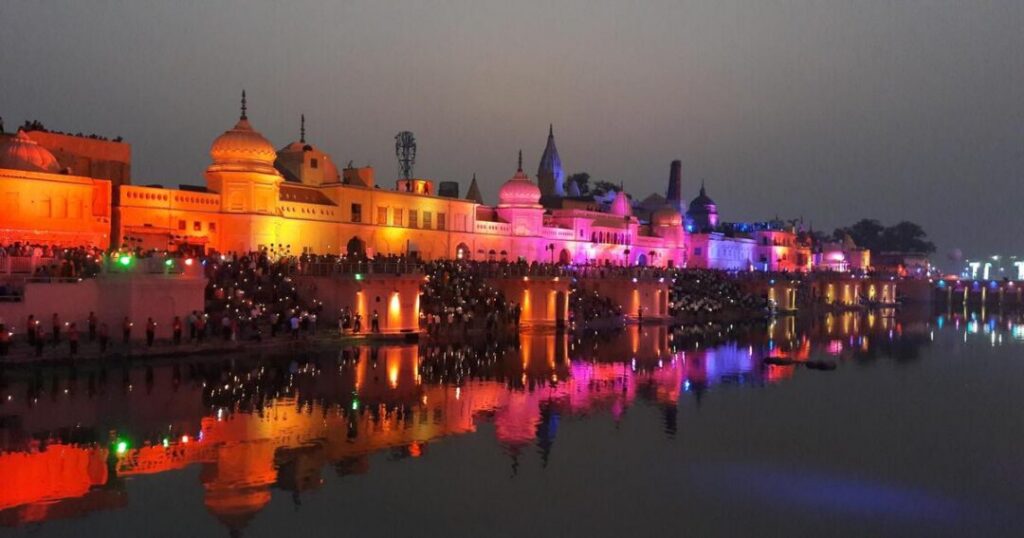
The same two-day route works well as places to visit in Ayodhya in 2 days with family, with a few adjustments. Ram Mandir’s security checkpoints mean strollers and large bags typically aren’t allowed inside, so plan to carry young children or have an adult wait outside with belongings while others take turns with darshan. Hanuman Garhi’s 76 steps are manageable for most families but worth pacing for elderly relatives or very young kids — there’s no lift, and the climb is steepest near the top. The evening Saryu Aarti is genuinely a family-friendly highlight, but the crowd density right at the ghat’s edge can be intense with small children, so arriving early to claim a spot slightly back from the front row is usually the more comfortable choice.
1 Night, 2 Days Ayodhya Itinerary

A 1-night, 2-day Ayodhya itinerary is the most common way this trip actually gets booked, since a single overnight stay is enough to catch one evening Saryu Aarti while still covering both days of sightseeing. The practical difference from a longer stay is mostly about timing: with only one night, book accommodation close to Ram Path or Ram ki Paidi so the evening aarti and next morning’s early Ram Mandir visit don’t involve long transfers, and confirm your outbound train or flight departs later in the day on Day 2 so the morning temple visits aren’t rushed against a tight checkout.
Also Read: Religious Places in India: The Complete Guide to India’s Most Sacred Sites
Ayodhya Trip Plan: Ayodhya Itinerary for 2 Days with Family
Beyond the sightseeing order, a solid Ayodhya trip plan for family comes down to a handful of practical calls: travelling in the cooler months (roughly October through March) rather than peak summer heat, booking accommodation within walking distance of Ram Path given how congested vehicle traffic gets near the temple zone during peak hours, and building slack into the schedule around major festival dates (Ram Navami and Diwali both bring exceptionally large crowds) if avoiding the densest crowds matters more to your group than experiencing the festival atmosphere itself. Most temples in Ayodhya also enforce modest dress codes and simple security screening, so leaving valuables at the hotel and dressing accordingly saves time at each stop.
Best Time to Visit Ayodhya
Ayodhya sits on the North Indian plains, which means summers (April through June) run hot enough — often well above 40°C — that outdoor ghat visits and long temple queues become genuinely uncomfortable. The monsoon (July to September) brings humidity and occasional flooding risk near the Saryu’s banks. October through March is the most comfortable stretch for sightseeing, with cool mornings and evenings that make the Saryu Aarti and Hanuman Garhi’s steps far more pleasant to manage, though this is also when pilgrim numbers peak around festivals like Diwali and Ram Navami.
How to Reach Ayodhya?
[STAT: Maharshi Valmiki International Airport, Ayodhyadham, was inaugurated on 30 December 2023 with commercial flights beginning on 10 January 2024; its Terminal 1 covers 6,500 sq m and handles around 1 million passengers annually, with direct flights from Delhi, Bengaluru, Hyderabad, Ahmedabad, Navi Mumbai, Dehradun, and Hisar on carriers including IndiGo, Air India Express, and Akasa Air — Wikipedia]
- By air: the airport sits about 15 km from Ayodhya Junction railway station, with taxis and app cabs available for the short transfer into the city.
- By rail: Ayodhya Dham Junction was redeveloped alongside the airport (foundation laid August 2020, Phase 1 inaugurated December 2023) into a station able to handle over 100,000 passengers daily and sits just 1.2 km from Ram Mandir; it connects directly to Delhi (the Ayodhya Cantt-Delhi Express), Lucknow, Varanasi, and Gorakhpur, among other cities.
- By road: Ayodhya is about 135 km (roughly 2.5-3 hours) from Lucknow via NH-27, around 219 km (4-5 hours) from Varanasi via NH-731/NH-330, and roughly 630-670 km (10-12 hours) from Delhi — most Delhi-based travellers prefer flying or taking an overnight train over the full road trip.
Conclusion: Planning Your Ayodhya Itinerary for 2 Days
Two days is genuinely enough to see Ayodhya properly — the Ram Mandir and Hanuman Garhi on one day, the quieter Nageshwarnath Temple and Guptar Ghat on the next, bookended by at least one evening at the Saryu Aarti. Compress it to a single day if that’s all the time you have; stretch it to three if you want room for the Ayodhya Research Institute or a side trip, but whichever version you build, an Ayodhya itinerary for 2 days remains the version that balances covering the essentials against not spending your whole trip standing in temple queues.
Ready to build your Ayodhya trip plan? Download the Explurger app and start mapping your itinerary today.
FAQs About Ayodhya Itinerary for 2 Days
2. What is the best 1-day itinerary for Ayodhya?
A one-day Ayodhya itinerary should prioritize the Ram Mandir and Ram Janmabhoomi complex in the morning, Hanuman Garhi immediately after since it's nearby, and the evening Saryu Aarti at Ram ki Paidi to close the day; Kanak Bhawan can be squeezed in if time allows.
3. How many days are ideal for an Ayodhya trip?
Two days covers the core sights well, while three days (2 nights) adds room for the Ayodhya Research Institute, a sunrise visit to Guptar Ghat, and a short excursion to nearby sites — most travellers choose between these two options depending on how much time they have.
4. What are the must-visit places in Ayodhya with family?
Ram Mandir, Hanuman Garhi, Kanak Bhawan, and the evening Saryu Aarti at Ram ki Paidi are the most family-friendly stops, though families should note that Ram Mandir's security checkpoints don't allow strollers or large bags inside, and Hanuman Garhi's 76 steps have no lift access.
5. What is the best time of year to visit Ayodhya?
October through March offers the most comfortable weather for sightseeing, with cool mornings and evenings; summers (April-June) run above 40°C, and the July-September monsoon brings humidity and occasional flooding risk near the riverbanks.
6. How do I reach Ayodhya by air, train, or road?
Maharshi Valmiki International Airport (opened December 2023) connects Ayodhya directly to Delhi, Bengaluru, Hyderabad, Ahmedabad, Navi Mumbai, Dehradun, and Hisar; Ayodhya Dham Junction, just 1.2 km from Ram Mandir, has direct trains from Delhi, Lucknow, Varanasi, and Gorakhpur; by road, it's about 135 km from Lucknow, 219 km from Varanasi, and roughly 630-670 km from Delhi.