
192 Total Views
The festivals in Himachal Pradesh calendar run on two very different clocks at once—the Hindu lunisolar calendar behind Dussehra, Shivratri, and Holi, and the Tibetan Buddhist calendar behind Losar in the state’s high-altitude valleys. That mix is what makes Himachal’s festival scene distinct from the rest of North India: a single state calendar that stretches from a week-long royal deity procession in Kullu to a 15-day Tibetan New Year in Spiti. This guide covers the state’s major festivals, digs into Holi’s regional variations, and answers a few specific questions—including whether Himachal actually has an official “national festival” at all.
Best Festivals in Himachal Pradesh
These five festivals anchor Himachal Pradesh’s cultural calendar, each tied to a different district, deity, or historical event.
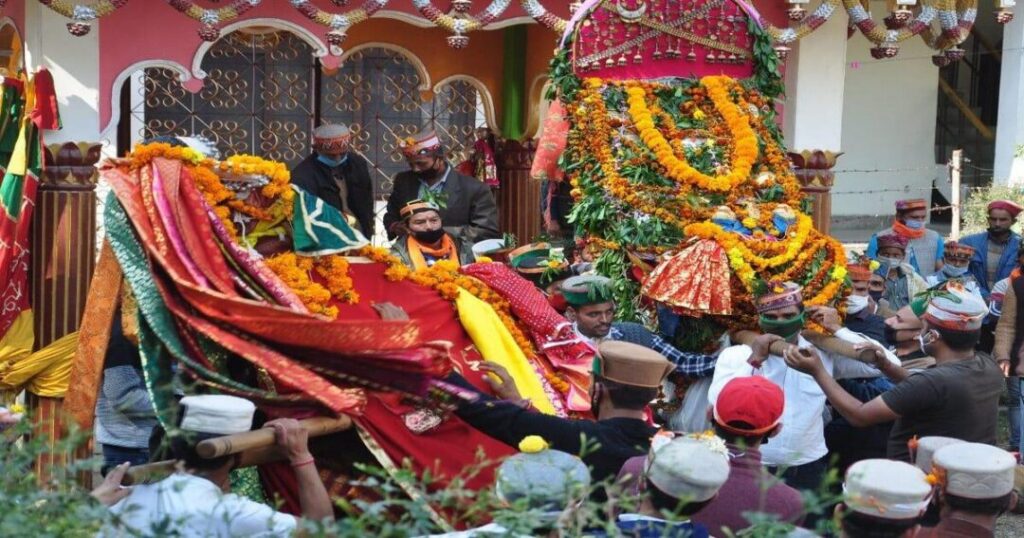
Kullu Dussehra
Time: October
Location: Kullu Valley, Himachal Pradesh
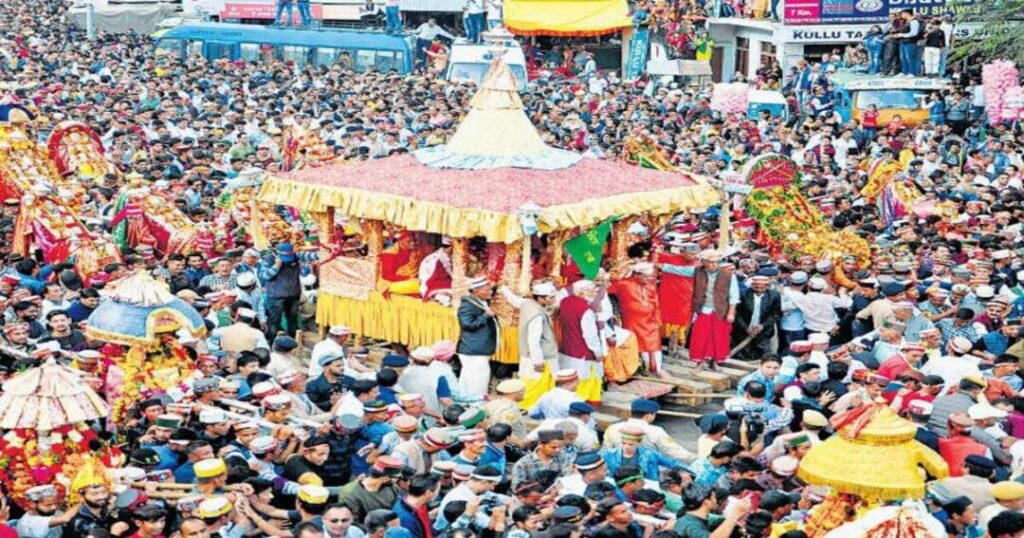
[STAT: Kullu Dussehra traces back to the 17th century, when Raja Jagat Singh installed an idol of Raghunath brought from Ayodhya; unlike Dussehra elsewhere, it begins on Vijay Dashami itself and continues for seven days, with the Raghunath deity carried in a chariot procession that has run since 1606; the state government has granted it International Festival status, drawing 400,000-500,000 visitors annually.
As the first autumn chill settles over the Kullu Valley, its quiet mountain landscapes give way to a spectacular celebration of faith, color, and tradition. More than 200 local deities journey from villages across the valley in richly decorated palanquins, converging at Dhalpur to pay homage to Lord Raghunath. This remarkable gathering of gods, devotees, and centuries-old traditions is what makes Kullu Dussehra truly unique.
Also Read: Famous Festivals of India: Top 10 Celebrations You Need to Experience
Mandi Shivratri Fair
Time: February–March
Location: Mandi, Himachal Pradesh
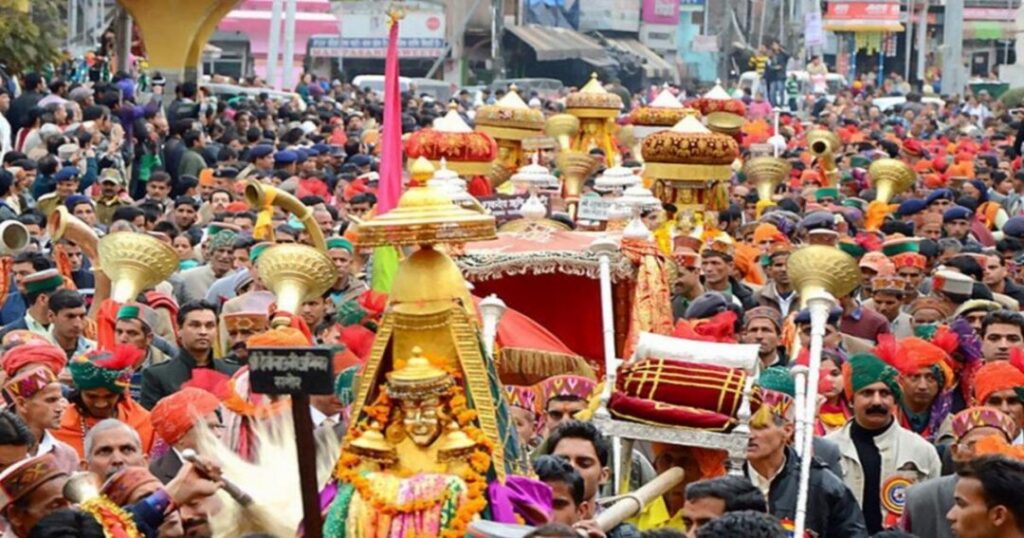
[STAT: The International Mandi Shivratri Fair dates back over 500 years to Raja Ajber Sen and runs for a full seven days (14-22 February in 2026, with the main Shivratri falling on 15 February); more than 200 local deities travel by palanquin from surrounding villages to pay respects at Mandi’s temples, giving the town its nickname.]
For a week around Shivratri, Mandi takes on a festive character unlike any other time of the year. Hundreds of local deities are brought into the town in beautifully decorated palanquins, creating a living procession of faith, music, and centuries-old traditions.
Minjar Mela, Chamba
Time: July–August
Location: Chamba, Himachal Pradesh
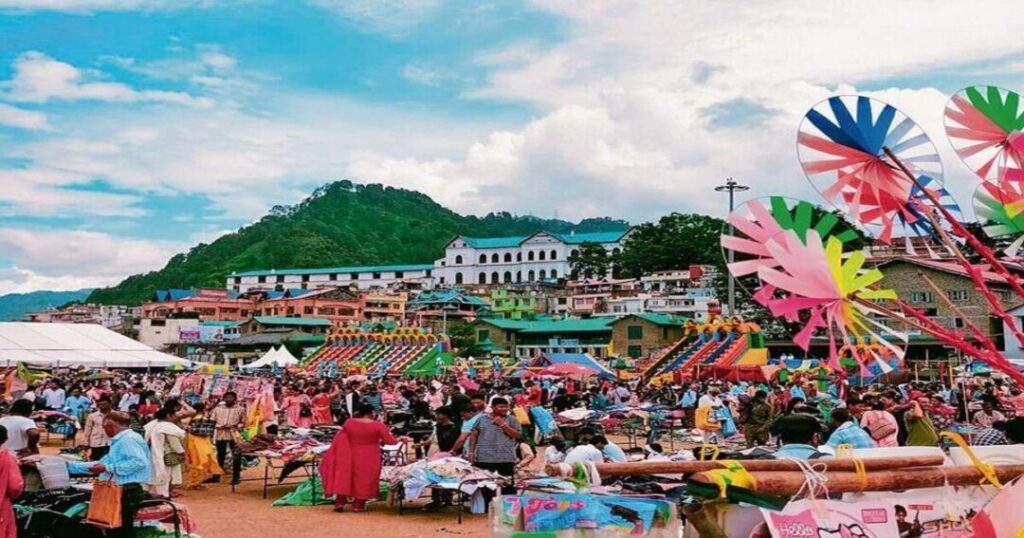
[STAT: Minjar Mela commemorates the Raja of Chamba’s 935 AD victory over the ruler of Trigarta (Kangra); it’s held on the second Sunday of the Shravana month (roughly July-August), runs about a week, and takes its name from the “minjar”—a silk tassel representing paddy and maize shoots—which every attendee eventually casts into the Ravi River during the closing procession.]
As summer gives way to the monsoon, Chamba comes alive with the colorful Minjar Mela. The historic town fills with processions, cultural performances, and local celebrations, while the symbolic Minjar tassel becomes the centerpiece of a tradition deeply connected with the region’s agricultural heritage.
Also Read: 20 Offbeat Places to Visit in Himachal Pradesh
Losar
Time: February–March, depending on the Tibetan calendar
Location: Lahaul-Spiti, Kinnaur, and Tibetan Buddhist communities
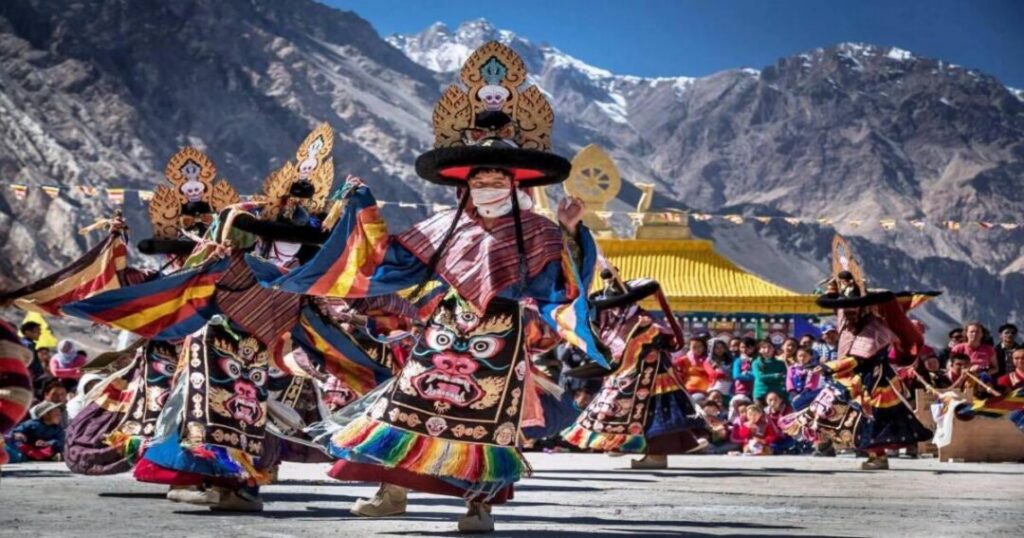
[STAT: Losar marks the Tibetan New Year according to the Tibetan lunisolar calendar, observed over 15 days (the first three being most significant) in Dharamshala, McLeod Ganj, Spiti, and the Lahaul valley; the 2026 celebration runs 18-20 February, marking the start of the Fire Horse year—tusktravel.com]
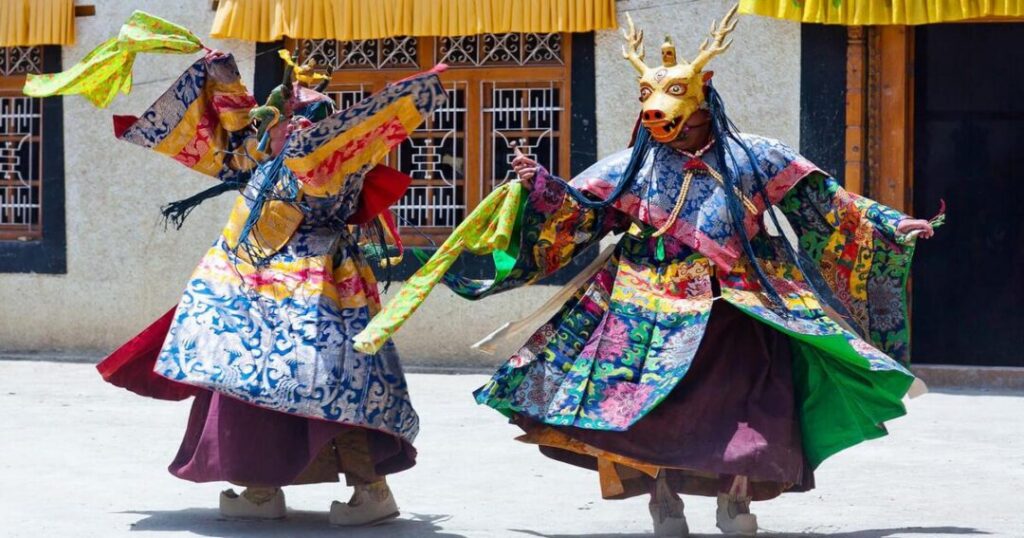
In the high valleys of Himachal, the arrival of the Tibetan New Year brings a very different kind of celebration. Monasteries glow with butter lamps, families prepare traditional food, and communities come together for prayers, rituals, music, and colorful masked dances.
Shri Renuka Ji Fair
Time: November
Location: Renuka Lake, Sirmaur
[STAT: the Shri Renuka Ji Fair, held over five days from around 11 November at Renuka Lake in Sirmaur, draws on the Renuka-Parshurama legend associated with the lake; the same week, Rampur Bushahr’s Lavi Fair—running 11-14 November and rooted in a 17th-century Bushahr-Tibet trade treaty (1679-1684)—remains Himachal Pradesh’s most significant commercial trade fair, historically exchanging Tibetan wool and pashmina for local salt and jaggery.]
November brings pilgrims and visitors to the peaceful shores of Renuka Lake for the Shri Renuka Ji Fair. The festival blends devotion, local traditions, and a lively fair atmosphere, with the sacred lake providing a striking backdrop to the celebrations.
Holi in Himachal Pradesh
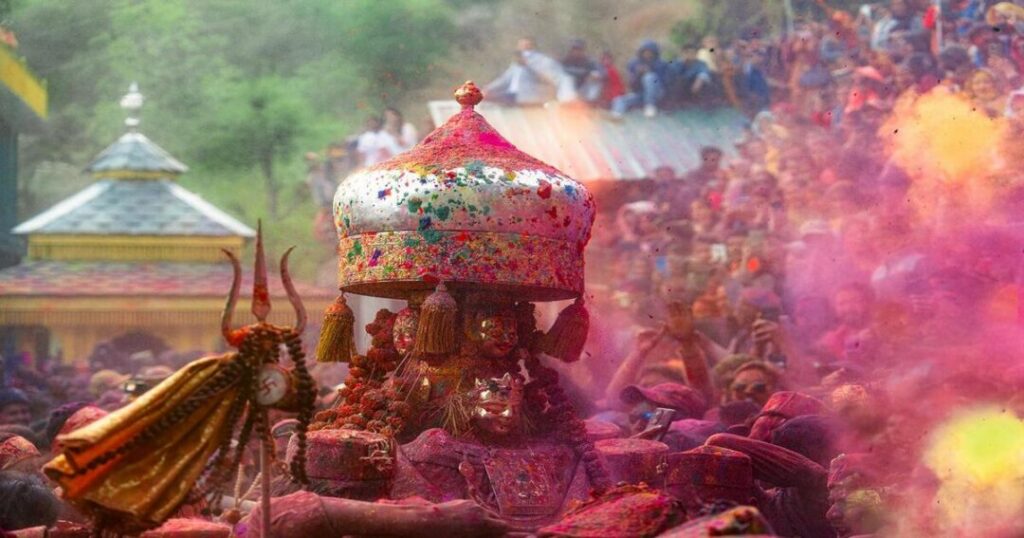
[STAT: Sujanpur Tira’s Holi Fair, tied to the town’s 1761 founding by Raja Ghamand Chand and its later flourishing under Raja Sansar Chand (1775-1823), runs as a four-day celebration (23-26 March) centered on the Murli Manohar Temple, where gulal is applied to idols of Krishna and Radha Rani alongside folk drama and music performances.]
- Sujanpur’s celebration is frequently described in local coverage as a “national spectacle” given its scale and the state-level officials who traditionally open it, even though this is a descriptive characterization rather than a formal government designation.
- Elsewhere in the state, Himachal’s hill towns are known for “Baithki Holi”—a more restrained, seated version of the festival built around classical and semi-classical singing sessions rather than the boisterous color-throwing associated with Holi in the plains.
Holi in Himachal Pradesh is worth experiencing specifically because of this contrast—Sujanpur’s crowded, performance-driven fair on one end, and Baithki Holi’s intimate, music-focused gatherings on the other, both under the same festival name.
Dussehra Celebrations in Shimla vs. Kullu
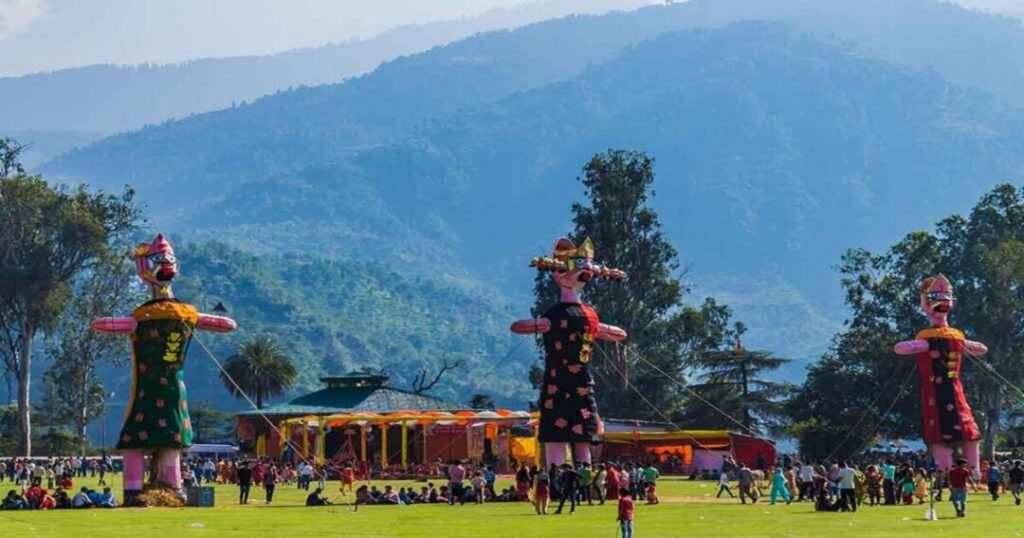
The Dussehra celebration in Shimla is a genuinely different event from Kullu Dussehra, and conflating the two is a common mix-up. Shimla’s celebration follows the pattern familiar across most of North India—large Ravana, Meghnad, and Kumbhakarna effigies are burned on Vijay Dashami itself, typically at grounds like the Ridge and Summerhill, drawing local crowds for a single-day event centered on the Ravana Dahan. Kullu Dussehra, by contrast, is a week-long, deity-centered procession that only begins on the day Shimla’s (and the rest of India’s) Dussehra ends—the two aren’t a bigger-and-smaller version of the same festival so much as two different traditions that happen to share a name and a calendar date.
Also Read: Places to Visit in Shimla: 15 Best Tourist Spots for a Perfect Himachal Trip
Is There an Official National Festival of Himachal Pradesh?
Searches for the national festival of Himachal Pradesh don’t have a single clean answer—there’s no state or central government order formally naming one specific festival as Himachal’s “national” festival. What does exist is Kullu Dussehra’s International Festival status, granted by the state government, which is the closest thing to an official state-level designation and is why Kullu Dussehra is the festival most commonly pointed to when people ask this question. Mandi’s Shivratri Fair carries the same “International” tag and could reasonably make the same claim. Treat “national festival” here as a popular shorthand for Himachal’s biggest, most internationally promoted celebration rather than a literal government title.
Looking for a Full List? Festivals of Himachal Pradesh at a Glance
If what you’re really after is the kind of comprehensive rundown you’d find searching “festivals of Himachal Pradesh Wikipedia” or a downloadable “festivals of Himachal Pradesh PDF” study sheet, here’s a quick-reference list covering the festivals detailed above plus a few more worth knowing:
- Kullu Dussehra (Kullu, September/October)—week-long deity procession, International Festival status
- Mandi Shivratri Fair (Mandi, February)—seven days, 200+ local deities gather
- Minjar Mela (Chamba, July/August)—silk-tassel harvest festival, Ravi River procession
- Losar (Lahaul-Spiti, Kinnaur, Dharamshala, February/March per the Tibetan calendar)—Tibetan New Year
- Holi—Sujanpur Tira’s four-day fair and the state’s distinctive seated “Baithki Holi” tradition
- Shri Renuka Ji Fair (Sirmaur, November)—five days at Renuka Lake, tied to the Parshurama-Renuka legend
- Lavi Fair (Rampur Bushahr, November)—Himachal’s largest trade fair, rooted in a 17th-century Bushahr-Tibet treaty
- Dussehra in Shimla and other towns (September/October)—the more familiar single-day Ravana Dahan format, distinct from Kullu’s
This list leans on state tourism department pages and established festival-specific sources rather than a single Wikipedia article, so treat it as a working summary rather than a substitute for the full academic or government PDF resources some readers may specifically be searching for.
Conclusion: Festivals in Himachal Pradesh
Between Kullu’s week-long deity procession, Mandi’s seven-day gathering of 200-plus local gods, Chamba’s silk-tassel harvest ritual, and Losar’s Tibetan New Year in the high valleys, the festivals in Himachal Pradesh’s calendar reward planning a trip around a specific date rather than hoping to stumble into something. Pick the celebration that matches the part of the state you’re visiting—Kullu or Mandi for the big Hindu festivals, Lahaul-Spiti or Dharamshala for Losar, or Sujanpur for a different side of Holi entirely—and you’ll see a side of Himachal that a standard hill-station itinerary usually misses.
Ready to plan your Himachal Pradesh trip around a festival? Download the Explurger app and start building your itinerary today.
FAQs About Festivals in Himachal Pradesh
2. Is there an official national festival of Himachal Pradesh?
Not formally — there's no government order naming one specific festival as Himachal's "national" festival. Kullu Dussehra's International Festival status makes it the closest thing to an official state-level designation, which is why it's most commonly cited in answer to this question.
3. How is Holi celebrated in Himachal Pradesh?
Holi in Himachal Pradesh takes two distinct forms: Sujanpur Tira's four-day Holi Fair, centered on the Murli Manohar Temple with folk drama and music performances, and "Baithki Holi," a quieter, seated tradition built around classical and semi-classical singing rather than color-throwing.
4. What is the Losar festival and where is it celebrated in Himachal Pradesh?
Losar is the Tibetan New Year, observed over 15 days according to the Tibetan lunisolar calendar. In Himachal Pradesh, it's celebrated mainly in Dharamshala, McLeodGanj, the Lahaul valley, and parts of Kinnaur and Spiti, home to the state's Tibetan Buddhist communities.
5. How is Dussehra in Shimla different from Kullu Dussehra?
Shimla's Dussehra follows the familiar North Indian pattern — Ravana, Meghnad, and Kumbhakarna effigies burned on Vijay Dashami itself at grounds like the Ridge. Kullu Dussehra is a completely different, week-long tradition centered on a deity procession that only begins on the day Shimla's celebration ends.
6. What is the Mandi Shivratri Fair known for?
The International Mandi Shivratri Fair is known for bringing together more than 200 local deities from surrounding villages, carried by palanquin to pay respects at Mandi's temples over a seven-day celebration, a tradition dating back over 500 years to Raja Ajber Sen.