
1,351 Total Views
The food of Rajasthan was not invented in a royal kitchen, though some of it was perfected there. It was invented by necessity — by soldiers who buried dough balls in desert sand before battle and found them baked when they returned, by desert communities who learned to cook with almost no water, by women who preserved vegetables and lentils through the long summer months when fresh produce was impossible. Every technique, every ingredient, every preparation in Rajasthani cuisine carries the memory of a land that gave almost nothing easily — no rivers, no abundant rain, no cool mountain air — and from which its people extracted, through ingenuity and patience, one of India’s most extraordinary food cultures.
The result is a cuisine of contradictions: intensely rich yet built for survival, fiercely spiced yet deeply nourishing, royal in its ambition yet rooted in the humblest ingredients. This guide covers the iconic anchors of Rajasthani khana, the regional traditions that divide it, the famous sweets that complete it, and the cooking techniques that make it unlike anything else in India.
The Foundation: Why Rajasthani Food Is What It Is?
Three forces shaped Rajasthan traditional food more than any other:
The desert: The Thar Desert covers roughly 60% of Rajasthan — and the cuisine reflects this geography at every level. With water scarce and fresh vegetables unreliable, Rajasthani cooks developed deep expertise in: preserving vegetables through drying and fermentation (ker sangri, gunda, kair), cooking with buttermilk and yogurt rather than water, using gram flour (besan) as a substitute for fresh vegetables in curries, and building flavour through fat (ghee), spice, and slow cooking rather than liquid.
The warrior heritage: The Rajput clans that dominated Rajasthan for centuries were a martial aristocracy — and their food culture reflects constant military movement. Baati (baked wheat balls) were the original field ration: made from wheat, ghee, and occasionally camel milk, shaped into balls and buried in sand to bake under the desert sun while soldiers fought. Laal maas was the royal hunting dish. The dungar smoking technique — cooking meat in sealed pots with live coals — concealed fire from enemy troops.
The trading communities: The Marwari merchant communities of western Rajasthan — among the most commercially successful trading communities in Indian history — developed their own strictly vegetarian cuisine. Marwari food uses no onion or garlic in some households (following Jain dietary principles), relies on asafoetida (hing) for depth, and has produced some of the most sophisticated vegetarian cooking in all of India.
The Iconic Anchors — Famous Food of Rajasthan
Dal Baati Churma — The Complete Rajasthani Meal
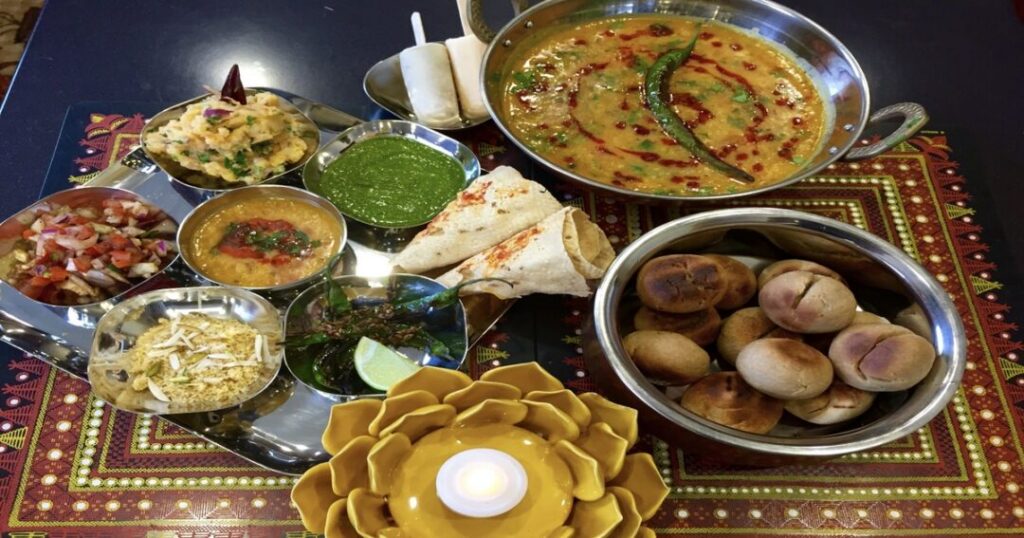
Dal baati churma is the most famous food of Rajasthan — and one of the few dishes anywhere in India where the origin story is so thoroughly documented. It begins with the baati: a baked wheat ball first mentioned during the reign of Bappa Rawal, the founder of the Mewar Kingdom. According to historical accounts, the Guhilots (Bappa Rawal’s clan) were a nomadic warrior tribe whose soldiers would shape dough from wheat flour, ghee, and camel milk into balls and bury them under thin layers of sand before battle. The desert sun baked them; when the soldiers returned, they dusted them off, cracked them open, and dunked them in ghee. This was the baati — a wartime meal, portable, nourishing, and requiring almost no preparation.
The dal came later — a blend of five lentils (panchmel dal: toor, chana, moong, urad, and masoor) spiced with cumin, cloves, and whole red chillies, slow-cooked until thick and aromatic. And the churma was reportedly an accident: a cook from the Guhilot clan mistakenly poured sugarcane juice over a batch of baatis, softening and sweetening them. The women of the household liked the result — it kept the baatis softer until the men returned — and began deliberately soaking baati in jaggery water. Over time, this evolved into churma: baatis crushed and mixed with ghee, jaggery, cardamom, and dry fruits.
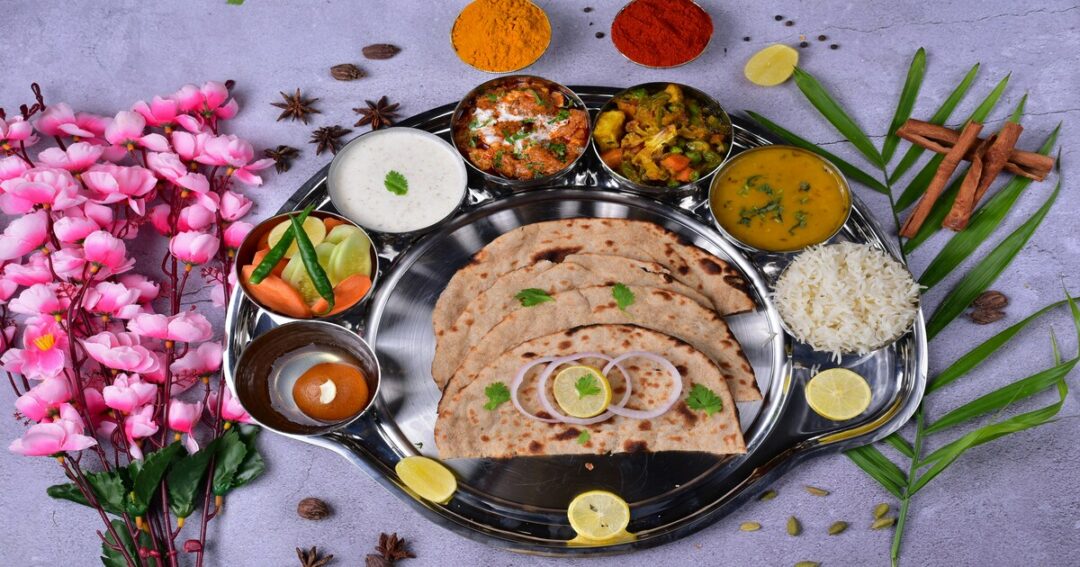
The three components together — cracked baati drenched in ghee with panchmel dal poured over, and churma on the side — form the complete Rajasthani traditional food meal. Each component has its own character; together they achieve a balance of savoury, spiced, and sweet that is entirely unlike any other Indian regional dish.
- The baati must be baked, not fried — charcoal or wood-fired ovens produce the best version
- The ghee is not optional and not optional to reduce — the baati needs to be soaked in it to be correct
- Dal baati churma is associated with the festivals of Makar Sankranti and Diwali, as well as weddings and housewarmings across Rajasthan
Also Read: Banswara Tourist Places: A Complete Travel Guide to Rajasthan’s Hidden Gem
Laal Maas — The Red Meat of the Royal Hunt
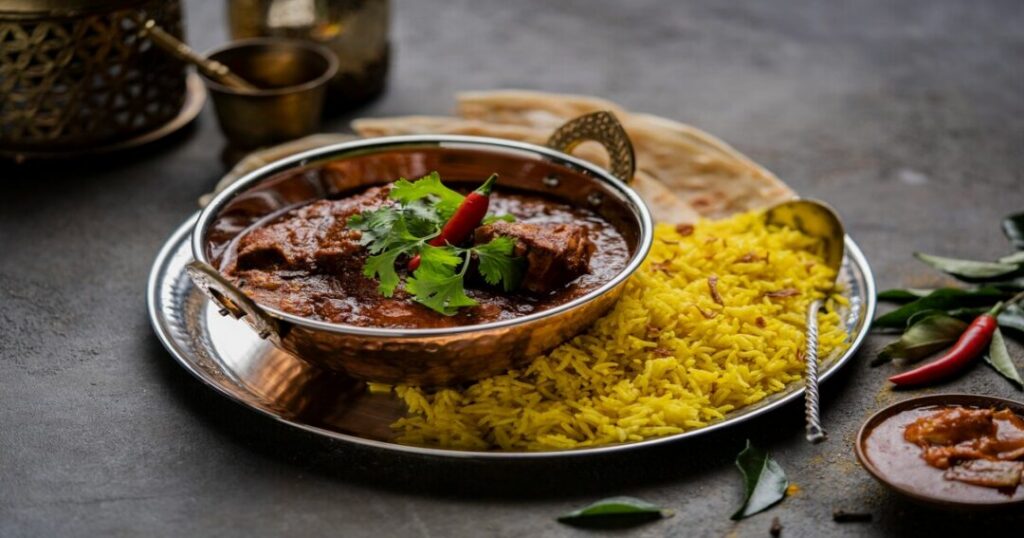
Laal maas (literally “red meat”) is the most celebrated non-vegetarian dish in Rajasthani cuisine — a mutton curry of extraordinary intensity, slow-cooked in a base of yogurt and the dried red Mathania chillies of Rajasthan that give the dish its defining colour and heat. Wikipedia confirms: it was traditionally prepared by Rajput royalty during hunts. The Mathania chilli — grown near Jodhpur — is not the hottest chilli in India, but it has a specific flavour profile (fruity, deeply red, moderately hot) that makes it irreplaceable in this dish; substituting other chillies produces a different curry.
The preparation is rich in garlic — sometimes an entire head per serving — and the cooking technique has roots in the desert’s specific demands. One method involves cooking the meat in pits dug in the sand, the fire invisible to enemy troops. The more common dungar technique — transferring the nearly-cooked meat to a sealed pot with a live coal in the centre, pouring ghee over the coal, and allowing the trapped smoke to infuse the meat for 30 minutes — produces a smoky depth that cannot be achieved any other way.
- Laal maas is served with bajra roti (pearl millet flatbread) or safed maas (as a contrast)
- The heat level is genuine and not typically moderated in traditional versions — approach with intention
- Safed maas (white meat) — the counterpart dish, made with a cashew and white pepper cream sauce — was the royal hospitality dish: pure white, mild, and served to honoured guests
Gatte Ki Sabzi — Gram Flour in Yogurt Curry
Gatte ki sabzi is the genius of desert vegetarian cooking — a curry made entirely without fresh vegetables. Gatte are cylinders of steamed and then fried gram flour (besan) dough, seasoned with spices, cut into pieces, and cooked in a tangy yogurt-based curry. The gram flour provides the protein and substance that fresh vegetables would; the yogurt provides the liquid base in a land where water is precious; the spice blend (cumin, coriander, red chilli, turmeric) provides depth.
This is the Rajasthan special food of desert communities who had no access to fresh produce for long periods — and it is one of the most nutritionally complete vegetarian preparations in Indian regional cuisine. The dish is simultaneously humble and sophisticated; its simplicity is the point.
Also Read: TOP 10 OFFBEAT PLACES TO VISIT IN RAJASTHAN
Ker Sangri — The Desert Pickle Curry
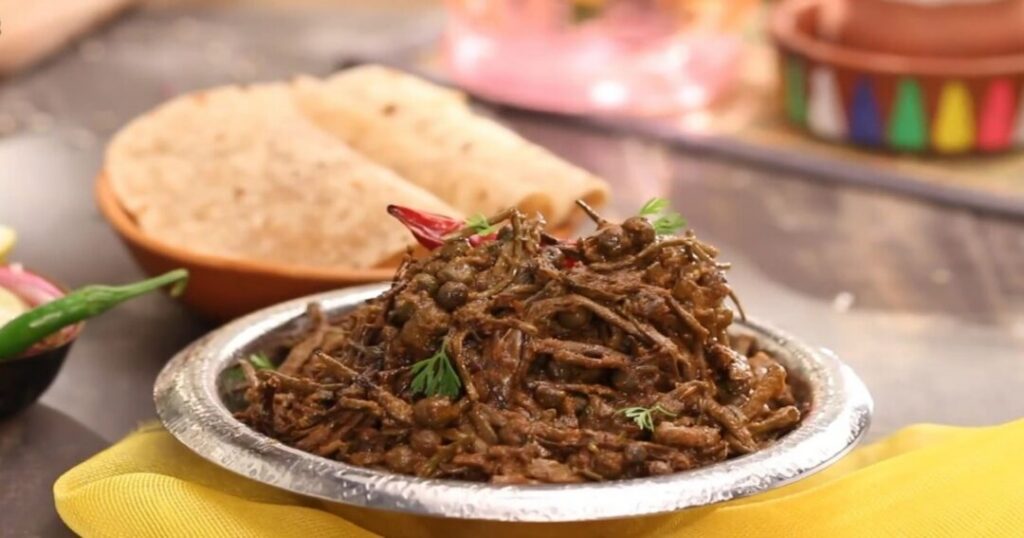
Ker sangri is the most distinctly Rajasthani of all Rajasthan dishes — a preparation of two desert plants: ker (the berry of the Capparis decidua plant, a drought-tolerant desert shrub) and sangri (the bean pod of the Prosopis cineraria or khejri tree, the state tree of Rajasthan). Both are sun-dried and preserved — they keep indefinitely in the desert heat — and cooked together in a preparation spiced with dried mango powder, red chilli, and coriander.
The khejri tree is so central to Rajasthani identity and survival that the Bishnoi community — an environmental sect founded in the 15th century — regards it as sacred and has historically sacrificed lives to protect it. The sangri from the khejri’s pods is one of the most culturally embedded ingredients in Rajasthan traditional food.
Regional Variations — Three Distinct Traditions
Marwari Cuisine — The Vegetarian Masterclass
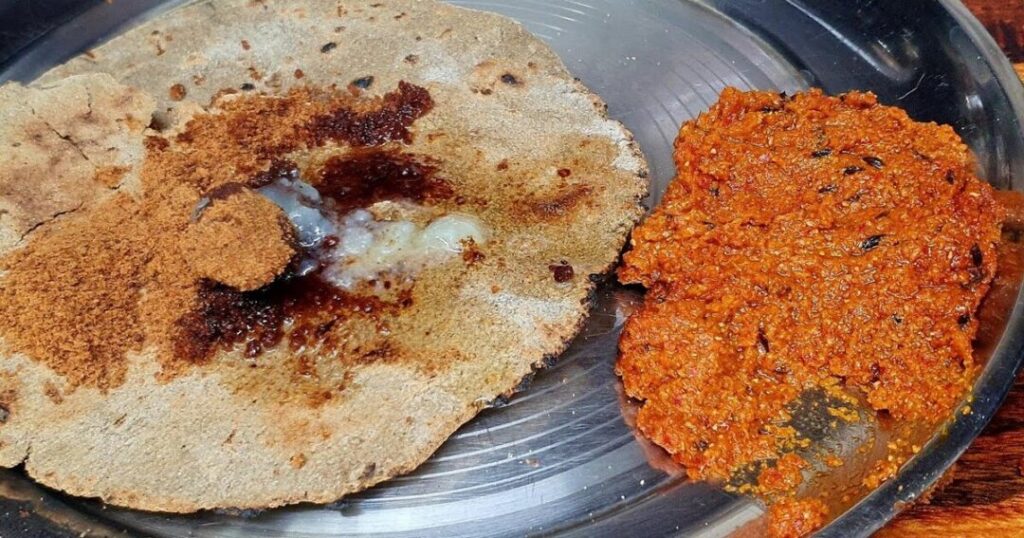
The Marwari community of western Rajasthan (centred on Jodhpur, Bikaner, and Barmer) has produced one of India’s finest strictly vegetarian cuisines. Many Marwari households follow Jain dietary principles — no onion, no garlic — relying on asafoetida, fenugreek, and a specific spice blend for depth. Key preparations:
- Panchkuta (also called panchmel sabzi) — the five-ingredient desert vegetable curry using ker, sangri, gunda (dried sticky berries), kair, and dried mango; the complete desert pantry in a single dish
- Bajre ki roti with lasun chutney — thick pearl millet flatbread (the staple grain of Marwari communities) with a raw garlic chutney of devastating intensity; this is the real Marwari everyday meal
- Rabri — a fermented pearl millet drink, soured overnight; the traditional summer drink of western Rajasthan
Royal Rajput Cuisine — The Kitchen of Kings
The royal kitchens of Jaipur, Udaipur, Jodhpur, and Bikaner developed an aristocratic cuisine that balanced the warrior’s need for sustenance with the king’s demand for refinement. Key elements:
- Jungli maas — “jungle meat,” the most primal of royal dishes: fresh game meat cooked with nothing but ghee, salt, and red chillies in a sealed vessel over fire; the cooking method of the hunt
- Safed maas — the courtly white curry of cream, cashew, and white pepper; the hospitality dish reserved for honoured guests
- The Dungar technique — the smoking method described above; a specifically Rajput court technique that gives royal Rajasthani meat dishes their characteristic depth
Shekhawati and Dhundhar Cuisine — The Eastern Variation
Eastern Rajasthan (Jaipur, Alwar, Sikar) shows stronger influence from neighbouring Haryana and Uttar Pradesh — the food is less intensely spiced, uses more fresh vegetables, and has produced distinctive preparations:
- Alwar ka mawa — a reduced milk product from Alwar, famous across Rajasthan; the raw material for many of the region’s sweets
- Pyaaz ki kachori — Jodhpur’s most famous street food; a deep-fried flaky pastry stuffed with a spiced onion filling; Jodhpur’s answer to Jaipur’s dal kachori
Famous Sweets of Rajasthan — The Dessert Tradition
Ghewar — The Festival Sweet
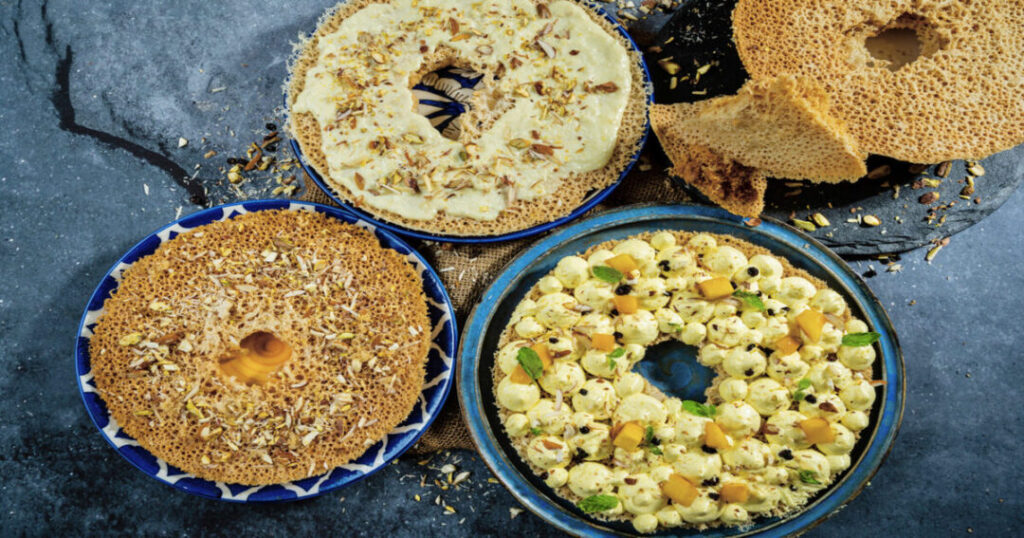
Ghewar is the most famous sweet of Rajasthan — a disc of deep-fried wheat flour batter soaked in sugar syrup and topped with malai (cream), dry fruits, and occasionally saffron. It is the Rajasthan special food of the Teej and Raksha Bandhan festivals — a seasonal sweet associated specifically with the monsoon months. The batter is poured through a ring mould into hot ghee in a specific circular pattern, building up a latticed disc structure that is simultaneously crispy and soaked. The technique requires skill; the best ghewar is made by halwais (sweet makers) who have been practicing the specific pour for years.
Malpua — The Rajasthani Pancake
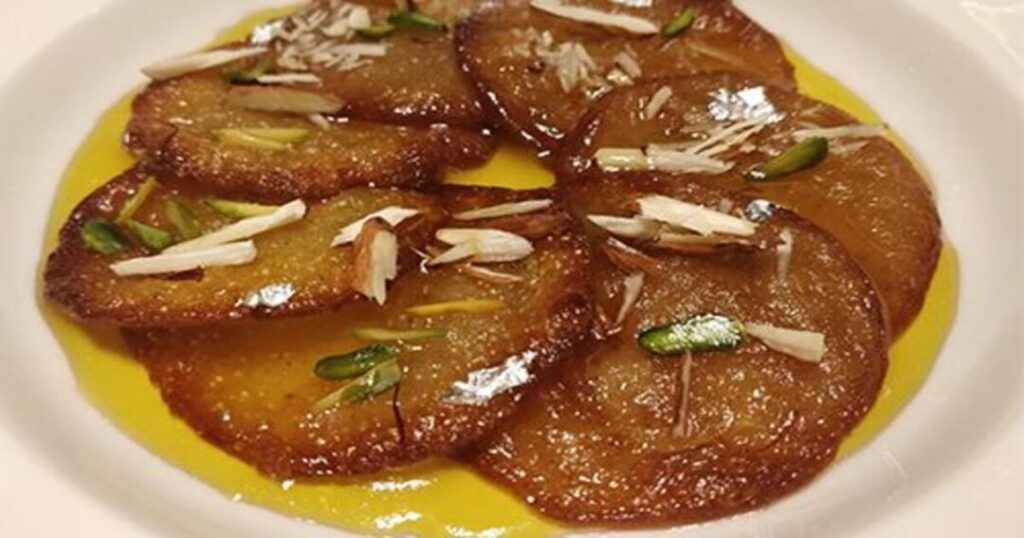
Malpua — a deep-fried sweet pancake soaked in sugar syrup — is one of the most beloved Rajasthani traditional food desserts, strongly associated with Pushkar (Ajmer district), where the Pushkar malpua has its own regional reputation. Made from a batter of flour, mashed banana or fennel seeds, cardamom, and milk, fried in ghee until golden, and dunked in syrup — the Rajasthani version is richer and more substantial than the Bengali version most Indians know.
Churma — The Sweet That Began as a Mistake
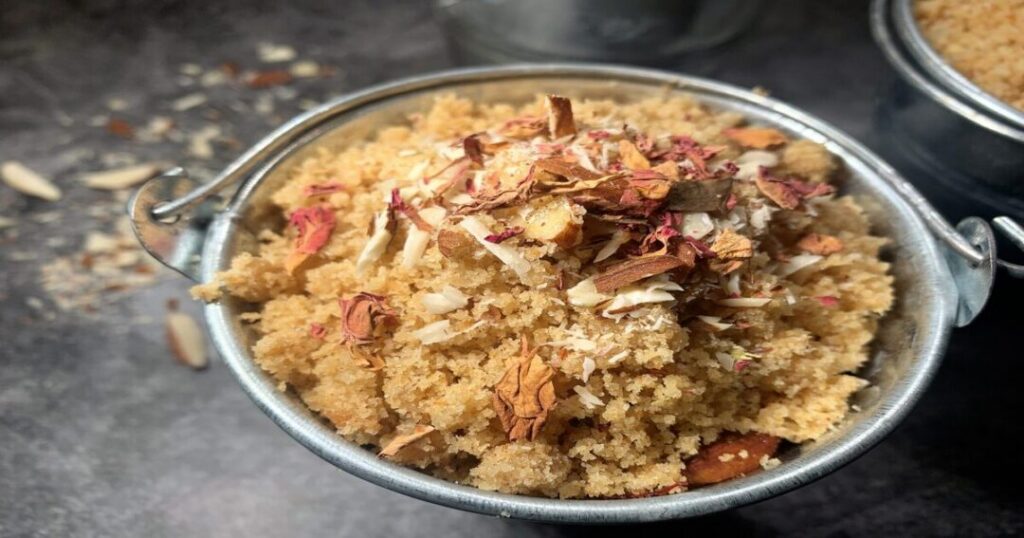
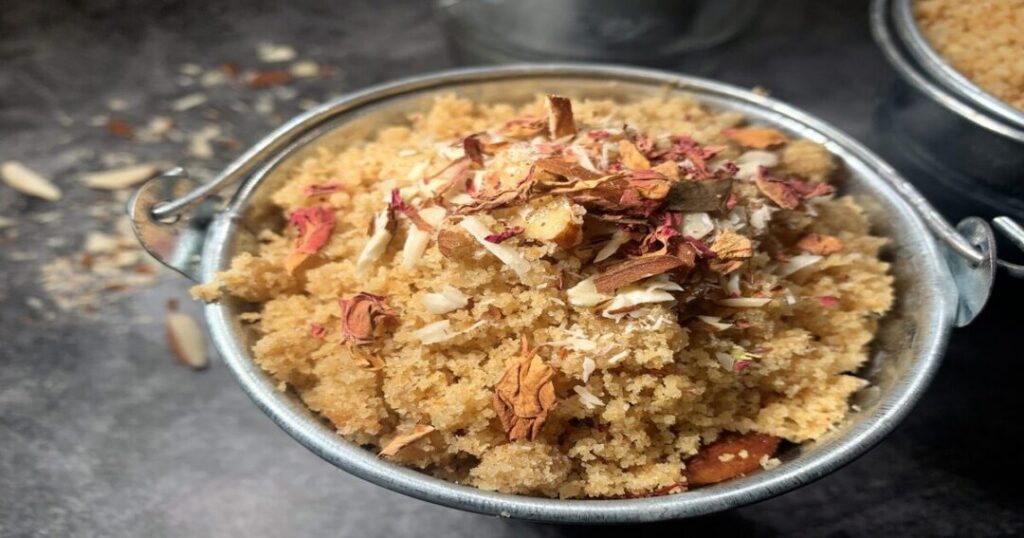
Churma — the sweet component of dal baati churma — is also eaten independently as a dessert preparation: coarsely crushed wheat or bajra flour roasted in ghee, sweetened with jaggery or powdered sugar, fragrant with cardamom, and enriched with ghee and dry fruits. It is one of the famous sweets of Rajasthan most deeply embedded in household and ceremonial cooking — served at weddings, festivals, and as prasad at temples.
Balushahi and Ladoo — The Sweet Staples
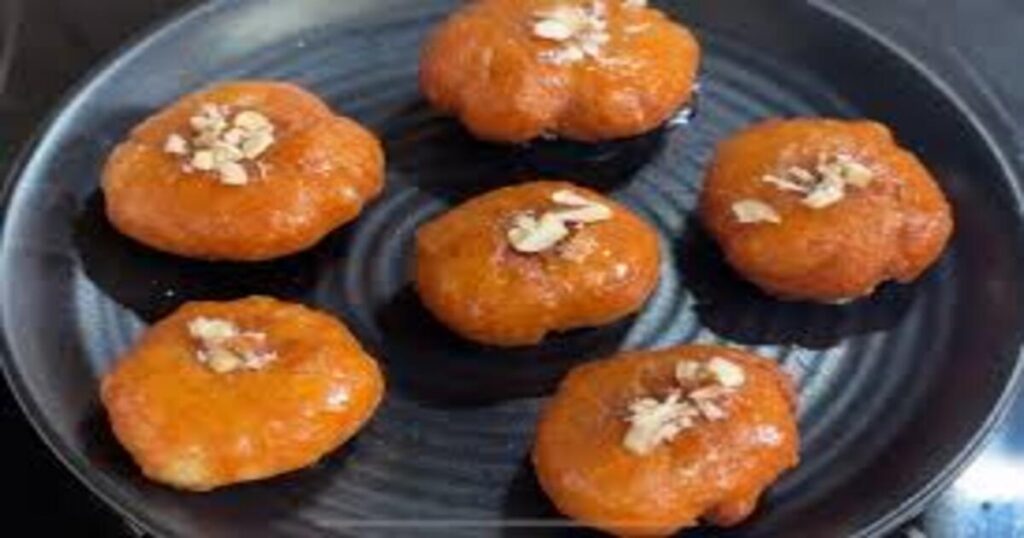
Balushahi — a flaky, deep-fried sweet similar to a glazed donut but denser, soaked in sugar syrup — is widely considered one of Rajasthan’s finest everyday sweets. Motichur ladoo (tiny gram flour droplets fried and compressed into spheres) and churma ladoo (churma compressed into balls) are the festival and ceremony sweets found at every Rajasthani celebration.
Also Read: Things to Do in Ajmer: The Complete Guide to Rajasthan’s City of Faith
Conclusion about the Food of Rajasthan
The food of Rajasthan is the food of a land that refused to be defeated by its own geography. The dal baati churma that soldiers baked in desert sand became a celebratory feast. The dried berries and bean pods that desert communities preserved for survival became one of the most culturally specific dishes in Indian cuisine. The yogurt and gram flour that replaced scarce water and fresh vegetables became the building blocks of a vegetarian cooking tradition of extraordinary sophistication.
Quick guide to Rajasthani khana:
- The iconic meal: Dal baati churma — baked wheat balls, panchmel dal, sweetened crushed wheat; origin in Mewar Kingdom warfare
- The non-vegetarian crown: Laal maas — Mathania red chilli mutton curry, dungar-smoked, royal hunting origins
- The desert vegetarian: Gatte ki sabzi (gram flour curry), ker sangri (desert berry and bean), panchkuta
- Regional traditions: Marwari (no onion/garlic, hing-based, panchkuta), Rajput royal (jungli maas, safed maas, dungar technique), Eastern Rajasthan (Alwar mawa, Jodhpur pyaaz kachori)
- Famous sweets of Rajasthan: Ghewar (festival lattice sweet), malpua (Pushkar pancake), churma (the accidental sweet), balushahi
- The technique that defines it: Dungar smoking — the flavour of Rajasthani meat cooking
Download the Explurger app to discover the best Rajasthani food experiences wherever you are, find authentic dal baati churma and laal maas restaurants, and log every bite of ghewar and ker sangri on your Rajasthan journey.
The baati is already baking. The ghee is already heating. Rajasthan’s table has been set for centuries.
FAQs About the Food of Rajasthan
2. What makes Rajasthani cuisine different from other Indian cuisines?
The cuisine of Rajasthan is shaped by three unique forces: the desert landscape (scarce water, no fresh vegetables for long periods — cooking evolved to use dried ingredients, yogurt-based curries, and gram flour as a vegetable substitute), the warrior Rajput heritage (field cooking techniques like sand-baking baati, pit-cooking meat, and the dungar smoking method), and the Marwari vegetarian tradition (strictly vegetarian, often without onion or garlic, using asafoetida for depth). Together these produce a cuisine of extraordinary richness built from the simplest ingredients — the defining characteristic of Rajasthan traditional food.
3. What are the famous sweets of Rajasthan?
The most famous sweets of Rajasthan are: ghewar (a latticed deep-fried disc soaked in sugar syrup, associated with Teej and Raksha Bandhan festivals), malpua (deep-fried sweet pancake in syrup, especially famous from Pushkar), churma (coarsely crushed wheat roasted in ghee and sweetened with jaggery — eaten independently or as part of dal baati churma), balushahi (flaky deep-fried sweet soaked in syrup), and churma ladoo (churma compressed into balls, served at weddings and festivals). Alwar's mawa-based sweets are also regionally famous — Alwar ka mawa is used across Rajasthan for mithai preparation.
4. What is laal maas?
Laal maas (literally "red meat") is a mutton curry from Rajasthan — the most celebrated non-vegetarian dish in Rajasthani cuisine. Confirmed by Wikipedia as a preparation traditionally made by Rajput royalty during hunts, it is slow-cooked in a base of yogurt and Mathania dried red chillies (grown near Jodhpur), rich in garlic, and finished using the dungar smoking technique (live coals in a sealed pot with ghee, smoke infused for 30 minutes). The Mathania chilli gives the dish its distinctive deep red colour and fruity, moderate heat that no other chilli replicates. Served with bajra roti.
5. What is Marwari food?
Marwari food is the vegetarian cuisine of the Marwari communities of western Rajasthan — one of India's finest strictly vegetarian traditions. Many households follow Jain dietary principles and cook without onion or garlic, using asafoetida (hing) for depth. Key dishes include panchkuta (five desert ingredients — ker, sangri, gunda, kair, dried mango — in a single preparation), bajre ki roti with raw garlic chutney, rabri (fermented pearl millet drink), and an extraordinary range of lentil and gram flour preparations. Rajasthan ka famous food from the Marwari tradition demonstrates that the most sophisticated vegetarian cooking in India came from the harshest landscape.
6. What is the Dungar cooking technique?
The Dungar technique is a Rajasthani smoking method: when a dish is nearly cooked, it is transferred to a sealed pot. A small steel bowl with a live coal is placed in the centre of the dish, ghee is poured over the coal, and the lid is tightly closed. The trapped smoke infuses the food for approximately 30 minutes, giving it a deep, intoxicating smoky flavour. The technique originated in royal Rajput kitchens — some accounts attribute its development to the need to conceal cooking fires from enemy troops. It is used for laal maas, jungli maas, and dal preparations and is one of the most distinctive techniques in all of Rajasthan special food cooking.