
359 Total Views
You’ve seen the photos—misty mountains, saffron-robed monks, and a waterfall tucked behind pine trees. But every list of places to visit in Dharamshala either overwhelms you with 30+ destinations or gives you a one-liner description with zero practical detail. Neither is useful when you’re actually planning a trip.
This guide is different. It clusters the best Dharamshala tourist places by experience type—spiritual, nature, adventure, and heritage—so you can pick your vibe and build your itinerary in minutes.
Places to Visit in Dharamshala for Spiritual Seekers
If you’re drawn to monasteries, temple bells, and mountain stillness, start here.
Namgyal Monastery
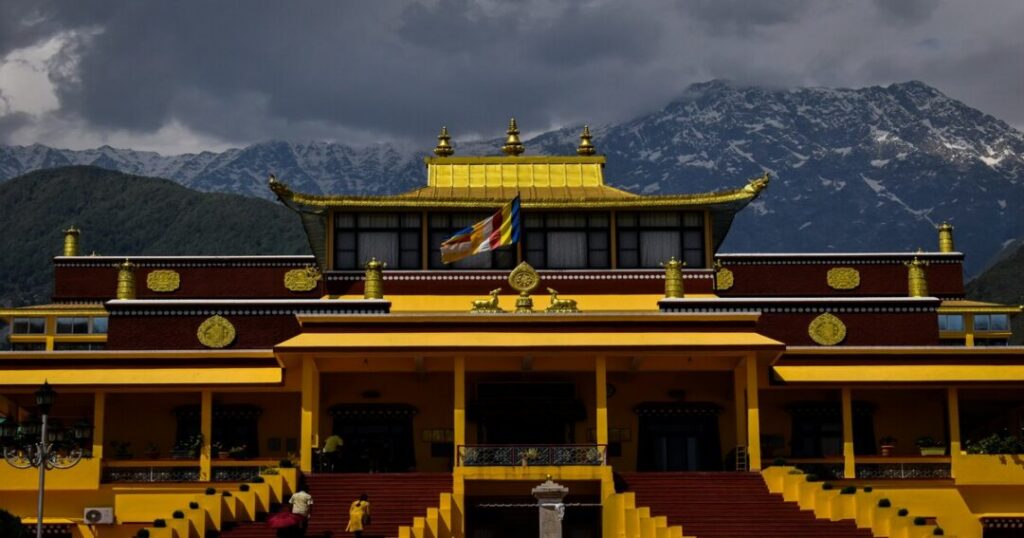
Namgyal Monastery is the personal monastery of the 14th Dalai Lama, Tenzin Gyatso, and is widely considered the largest Tibetan temple outside Tibet. [STAT: The monastery was originally founded in 1575 by the 3rd Dalai Lama—Namgyal Monastery official records]
It moved to Dharamshala following the Dalai Lama’s exile from Tibet in 1959. The prayer hall, the smell of butter lamps, and the steady hum of chanting monks create an atmosphere few places in India can match.
Also read: Places to Visit in Shimla: 15 Best Tourist Spots for a Perfect Himachal Trip
Entry is free and open to all faiths
Prayer sessions happen in the early morning—arrive by 6 AM if you want to observe
Located in McLeod Ganj, easy to combine with other nearby dharamshala sightseeing places
Bhagsunath Temple
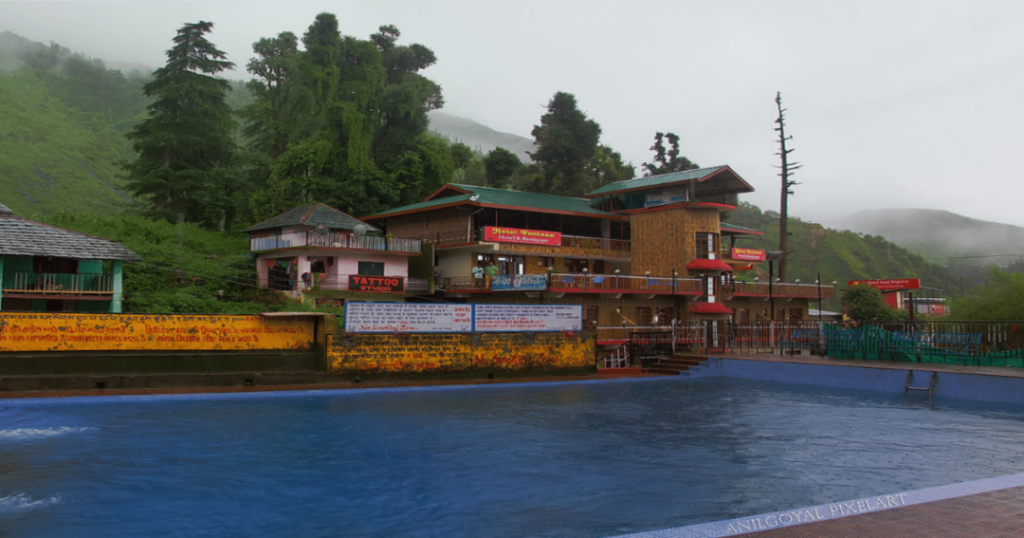
One of the oldest Shiva temples in the Kangra region, Bhagsunath Temple dates back several centuries and sits beside a natural freshwater pool. The walk from McLeod Ganj takes about 20 minutes through a pine-lined path. It’s one of the most visited Dharamshala tourist spots for both pilgrims and curious travelers.
Also read: Places To Visit In Punjab: A Complete Travel Guide To Punjab’s Best Tourist Destinations
Places to See in Dharamsala for Nature Lovers
The Dhauladhar range doesn’t just form a backdrop here — it’s the main event.
Bhagsu Waterfall
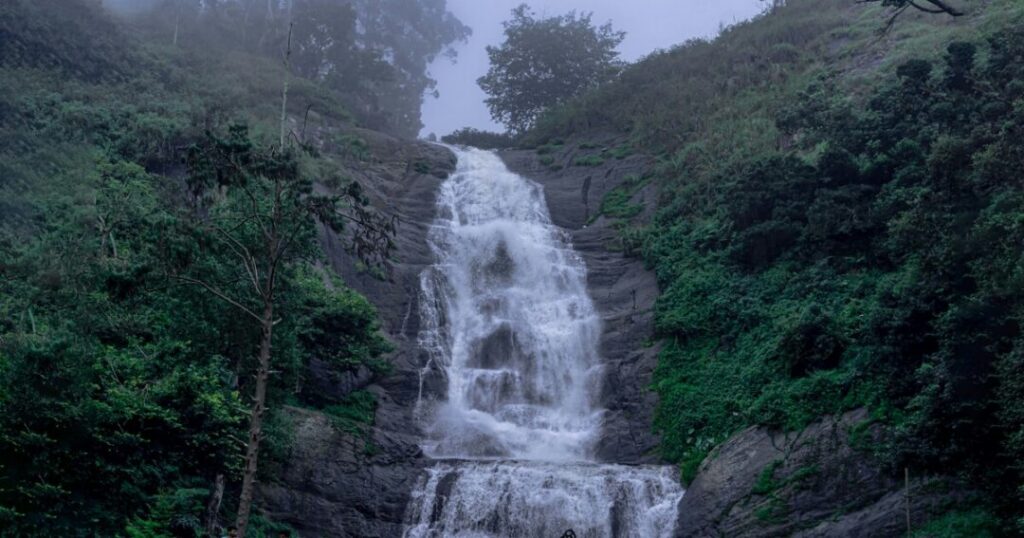
A short 20-minute uphill walk from Bhagsunath Temple brings you to Bhagsu Waterfall, one of the most photographed dharamshala sightseeing places. The waterfall cascades from a height of about 20–30 feet into a rocky pool surrounded by greenery.
- Best visited in the morning before crowds arrive
- The path to the waterfall is lined with small cafés popular with long-term travellers and backpackers
- Not recommended during heavy monsoon rains
Also read: Places to Visit in June in India: 22 Best Destinations for Every Traveller
Dal Lake, Dharamshala
Unlike its famous namesake in Srinagar, Dal Lake here is a small, serene pine-fringed lake sitting at an altitude of 1,775 meters. [QUOTE: “It’s one of those places that rewards slow travel — bring a book and stay a while.” — travel writer, suggested source: Conde Nast Traveller India]
Deodar trees crowd the banks, a small Shiva temple sits at the edge, and on clear days the Dhauladhar peaks reflect off the water. A weekly fair takes place here on Sundays — a local tradition worth catching.
Dharamkot
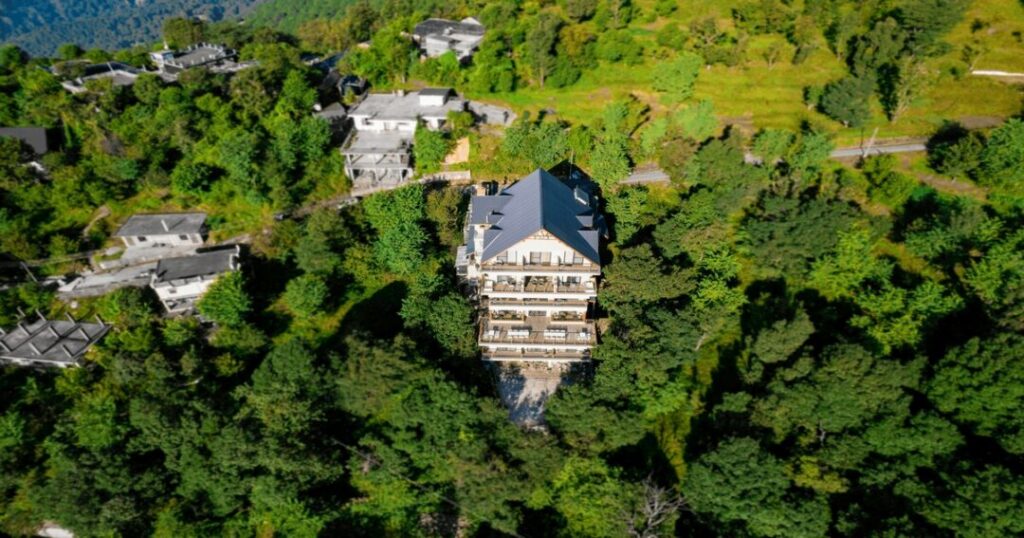
Perched slightly higher than McLeod Ganj, Dharamkot is a quiet village known for its Kangra Valley views and relaxed pace. It’s a favorite among yoga practitioners, meditation retreat attendees, and travelers who want to slow down for a few days.
Dharamshala Tourist Spots for Adventure Seekers
Triund Trek
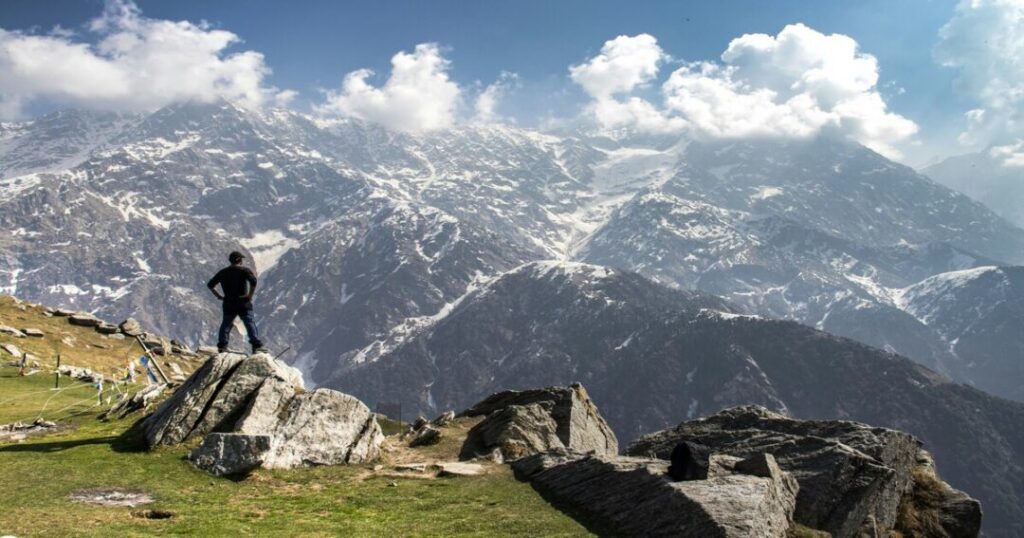
Triund is the most iconic of all dharamshala tourist attractions for those who love to trek. The trail starts near Gallu Devi Temple in McLeod Ganj and covers 9 km one way, climbing through oak and rhododendron forests to the Triund ridge at 2,850 meters.
- Duration: 5–6 hours one way
- Difficulty: Moderate — suitable for beginners with basic fitness
- Camping at the top is allowed and extremely popular; the sunrise over the Dhauladhar range from here is unforgettable
- – Best trekking months: April–June and September–November
Also read: Triund Trek: The Complete Guide to McLeod Ganj’s Most Beloved Mountain Escape
Naddi Viewpoint
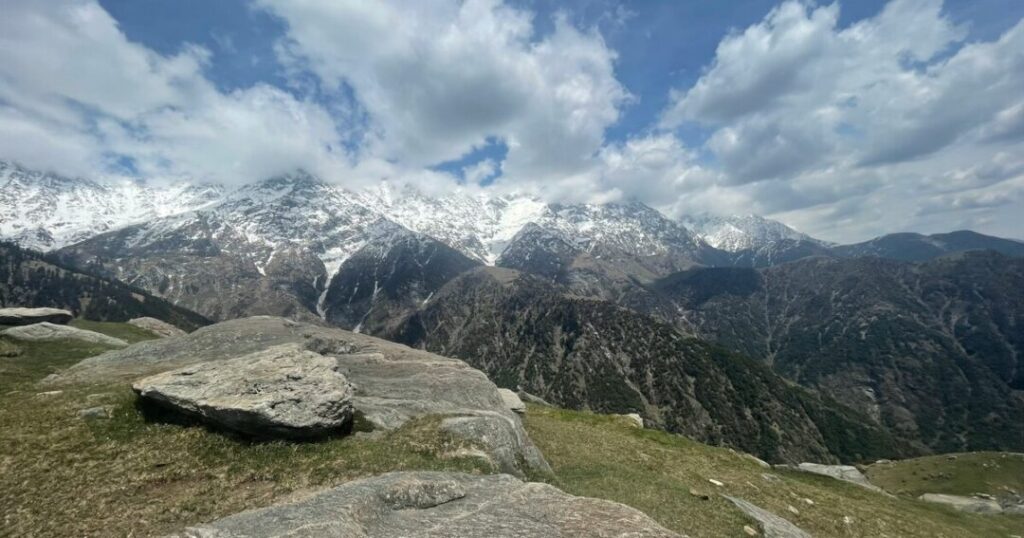
A 6 km drive from McLeod Ganj, Naddi offers arguably the best unobstructed view of the Dhauladhar range in the Dharamshala area. Early mornings are ideal — the peaks catch the first light before cloud cover builds. It’s a low-effort, high-reward dharamshala tourist destination.
Heritage Dharamshala Sightseeing Places You Can’t Miss
Kangra Fort
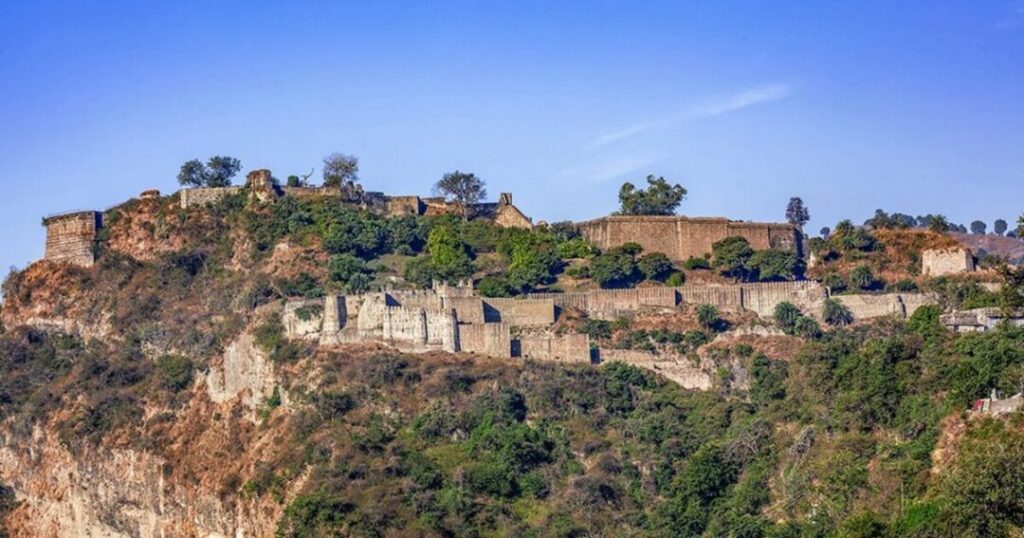
Located about 20 km from Dharamshala, Kangra Fort is one of the most significant historical sites in all of Himachal Pradesh. Built by the Katoch dynasty and dating back to the 4th century, it covers 463 acres, making it the largest fort in the Himalayas.
Over the centuries it was seized by Mahmud of Ghazni, ruled by the Mughals, reclaimed by Raja Sansar Chand II in 1789, and eventually passed to the British. The fort walls tell centuries of North Indian history.
Entry fee: ₹25 for Indian nationals, ₹300 for foreign nationals (verify locally)
Timings: 9 AM – 5 PM (closed Tuesdays)
Best paired with a visit to Kangra town and the Masrur Temples nearby
McLeod Ganj — Heart of All Dharamshala Tourist Attractions
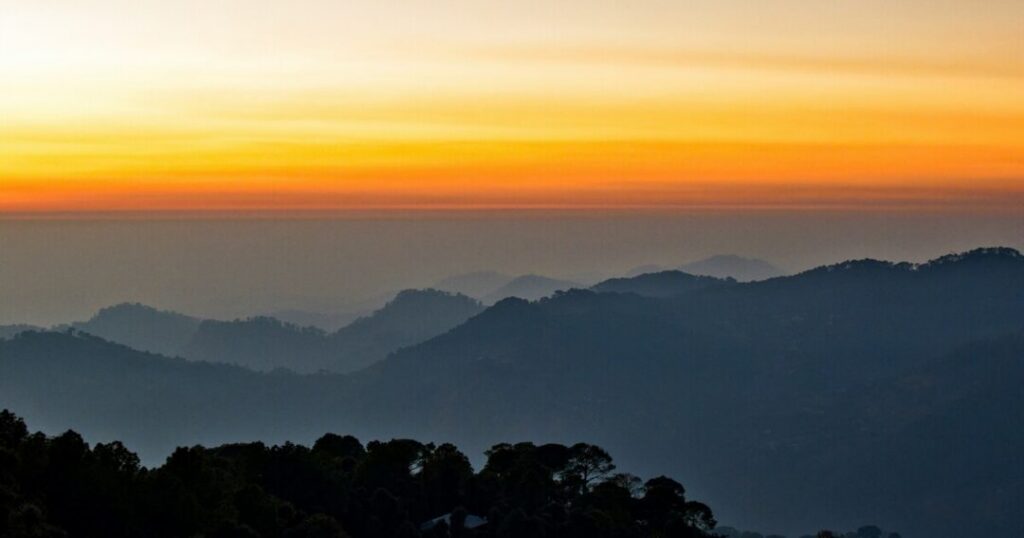
No guide to dharamshala tourist places is complete without McLeod Ganj. Called “Little Lhasa” by travelers worldwide, this hilltop town is the cultural heart of the Tibetan exile community in India.
Also read: Places to Visit in Manali: 15 Must-See Spots for Every Traveller
Here’s what you find here:
Tibetan Restaurant Row — momos, thukpa, butter tea, and sweet Tibetan bread
Tibetan Market — handmade carpets, singing bowls, thangkas, and jewellery
Kotwali Bazaar — the local shopping street for everyday goods and street food
The Library of Tibetan Works and Archives—a remarkable resource for Buddhist texts and Himalayan history; one of the finest dharamshala tourist destinations for culture enthusiasts
The energy of McLeod Ganj is like nowhere else in India. Even if you’re not spiritual, the combination of Himalayan scenery, Tibetan food, and a genuinely international traveler crowd makes it worth at least two full days.
What is the Best Time to Visit Dharamshala?
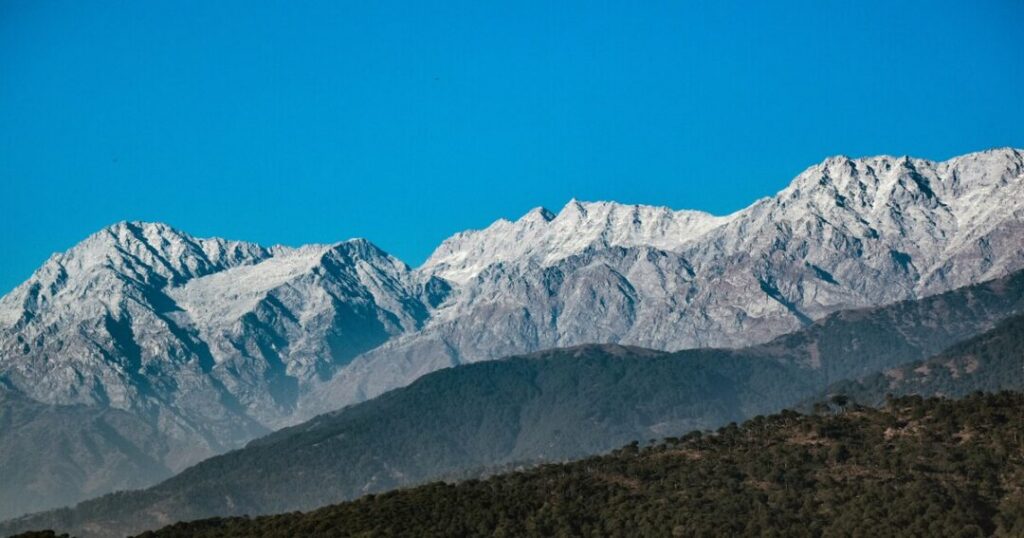
The two sweet spots are March to June and October to November.
March to June—Pleasant temperatures (20°C–35°C), clear skies, perfect for trekking and sightseeing
October to November — Crisp air, stunning mountain views, fewer crowds
July to September—Monsoon season; heavy rainfall can disrupt travel and trek routes
December to February — Cold and often snowy; suitable for travellers who don’t mind the chill and want to see snow
April and October are the best individual months for most travelers.
Also read: 20 Offbeat Places to Visit in Himachal Pradesh’s Underrated & Unseen Destinations
How to Reach Dharamshala?
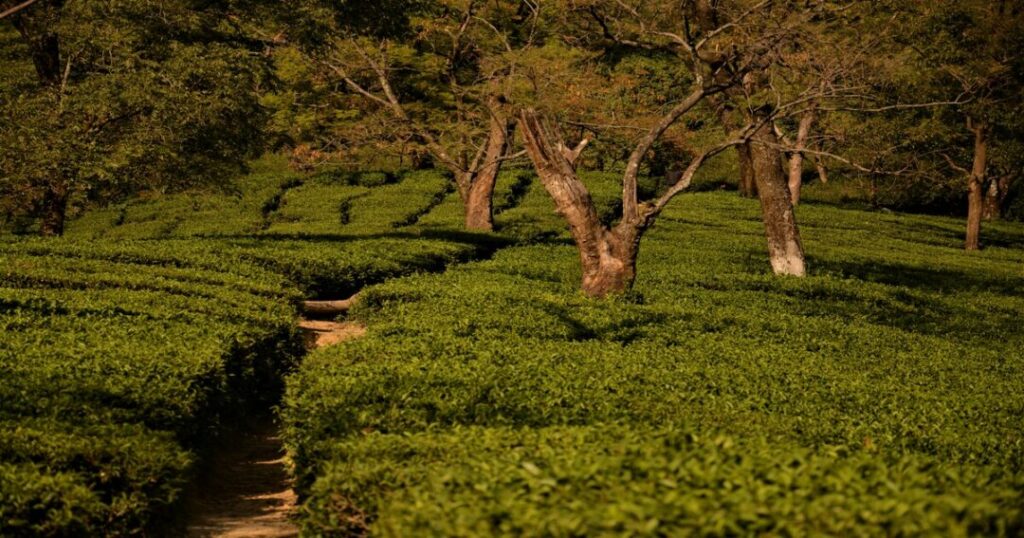
Dharamshala sits at an altitude of 1,457 meters (4,780 feet) in the Kangra district of Himachal Pradesh.
By Air—Gaggal Airport (Kangra Airport), the nearest airport, is just 13 km from Dharamshala. It has flights from Delhi. From the airport, taxis reach the town in 20–30 minutes.
By Train — The nearest major railway station is Pathankot Junction, ~85 km away. From Pathankot, buses and taxis connect to Dharamshala regularly. Kangra Mandir station (~22 km) serves the narrow-gauge Kangra Valley Railway, a scenic but slower option.
By Road—Dharamshala is well-connected via road: Delhi is ~491 km (9–10 hours), and Chandigarh is ~250 km (5–6 hours). HRTC buses and private Volvo services run from both cities.
Conclusion about Places to Visit in Dharamshala
Whether you’re a pilgrim, a trekker, a history buff, or simply someone looking to escape the plains, the places to visit in Dharamshala offer something real and distinct at every turn. Here’s a quick recap before you start packing:
- McLeod Ganj and Namgyal Monastery for Tibetan culture and spirituality
- Bhagsu Waterfall, Dal Lake, and Dharamkot for natural beauty
- Triund Trek and Naddi Viewpoint for adventure and panoramic views
- Kangra Fort for a deep dive into Himalayan history
- March–June and October–November are your best travel windows
Explore every corner of Dharamshala with Explurger — download the Explurger Travel app and start your journey today.
Start planning, start exploring—Dharamshala rewards those who arrive curious and leave slowly.
FAQ about Places to Visit in Dharamshala
2. How many days are enough for Dharamshala?
Three to four days are ideal for most travelers. Day 1–2 covers McLeod Ganj, Namgyal Monastery, Bhagsu Waterfall, and Bhagsunath Temple. Day 3 is best spent trekking to Triund or visiting Dharamkot. Day 4 allows a half-day trip to Kangra Fort and Dal Lake. If you want to do a Triund overnight camp, plan for 4–5 days total.
3. Is Dharamshala suitable for solo travellers?
Yes—Dharamshala is one of the most solo-traveller-friendly destinations in North India. McLeod Ganj in particular has a well-established backpacker culture, affordable guesthouses, vegetarian-friendly restaurants, and a large international community. Solo women travelers generally report feeling safe, though standard travel precautions apply as with any destination.
4. What is the best time to do the Triund Trek?
April to June and September to November are the best months. During this period, the weather is clear, trails are accessible, and views of the Dhauladhar range are at their sharpest. July–August brings monsoon rains that make the trail slippery and potentially dangerous. Winter trekking (December–February) is possible for experienced trekkers with proper gear, but the ridge can be snow-covered and very cold.
5. Are there entry fees for Dharamshala tourist attractions?
Most spiritual sites like Namgyal Monastery and Bhagsunath Temple are free to enter. Kangra Fort charges entry fees (approximately ₹25 for Indian nationals). Always verify current fees locally, as they can change seasonally. Some meditation and yoga centers in Dharamkot charge for programs, not general visits.
6. What is Dharamshala known for?
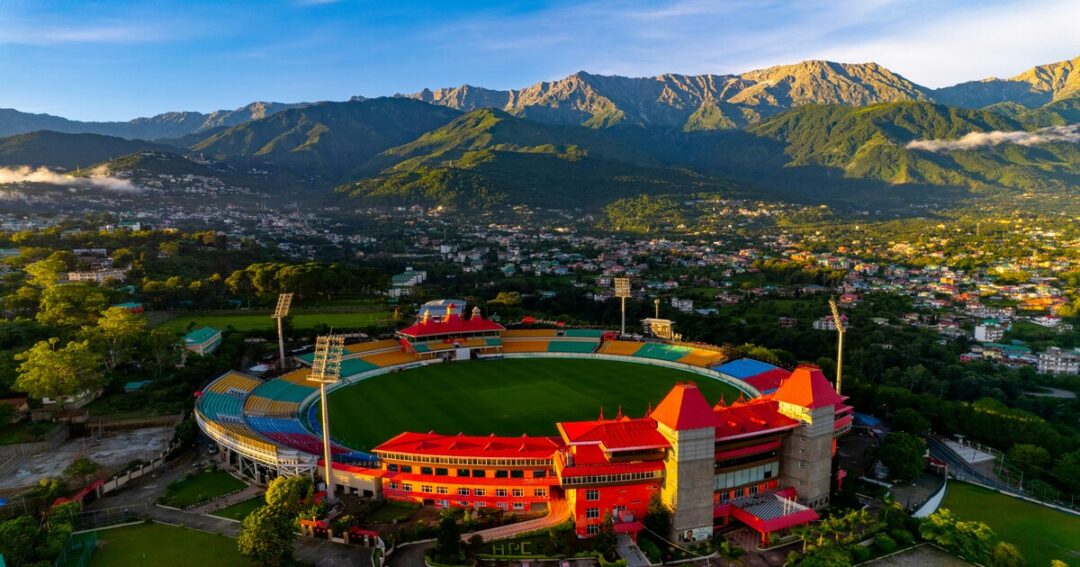
Dharamshala is best known as the home of the Tibetan Government-in-Exile and the residence of the 14th Dalai Lama. Its upper town, McLeod Ganj, is called "Little Lhasa" due to its large Tibetan community. Beyond its cultural significance, it is also known for the Triund Trek, the Dharamshala International Cricket Stadium (one of the most scenic cricket grounds in the world), and its position as a base for Dhauladhar range treks.