

1,511 Total Views
Gangtok sits at around 1,650 metres in the eastern Himalayas — high enough that the air is cool year-round, high enough that the food has to be warming, filling, and built for altitude. The best food in Gangtok is the result of centuries of Lepcha, Bhutia, and Nepali communities living side by side in a geography that demanded fermentation, slow cooking, and deep flavour from simple ingredients. Then Tibet added its dumplings and noodle soups. Nepal brought its lentils, pickles, and rice dishes. Bhutan contributed its pork and chilli traditions. The result is a cuisine unlike anything else in India — mountain food at its most honest, most nutritious, and most satisfying. This guide takes you through every dish worth knowing, from the famous food in Gangtok that everyone comes for, to the fermented specialities that most visitors walk past without realising what they’re missing.
The Foundation: Understanding Gangtok’s Food Culture
Sikkim became part of India in 1975, but its culinary identity is far older and far more layered than its political history suggests. The state is the only one in India with an ethnic Nepali majority, which means the food reflects Nepali lentil and rice traditions at the base, Tibetan dumpling and noodle culture layered above, and an indigenous Lepcha and Bhutia tradition running through all of it.
What defines Sikkimese cooking above all else is fermentation — a natural preservation method developed out of practical necessity in a cold, isolated mountain environment where fresh ingredients weren’t always available. Fermented leafy greens, fermented soybeans, fermented radishes, fermented millet beer — fermentation isn’t a trend in Gangtok; it is the foundation. Rice is the staple. Millet, buckwheat, and bamboo shoots are the supporting cast. Pork, yak meat, and freshwater fish appear in non-vegetarian dishes. Spice levels are lower than most Indian regional cuisines — the Himalayan preference is for warmth through fat, fermentation, and slow cooking rather than chilli heat.
The MG Marg (Mahatma Gandhi Marg) is Gangtok’s pedestrian promenade and food hub — a traffic-free zone lined with cafés, food stalls, and restaurants where most visitors get their first taste of the city. The older Lal Bazaar area is where Gangtok’s local food culture lives, with street stalls and small eateries serving food that has changed very little in generations.
Also Read: Sikkim Food: 12 Must-Try Dishes That Define This Himalayan Kitchen
The Most Famous Food in Gangtok — Dish by Dish
Momos — The Soul of Gangtok
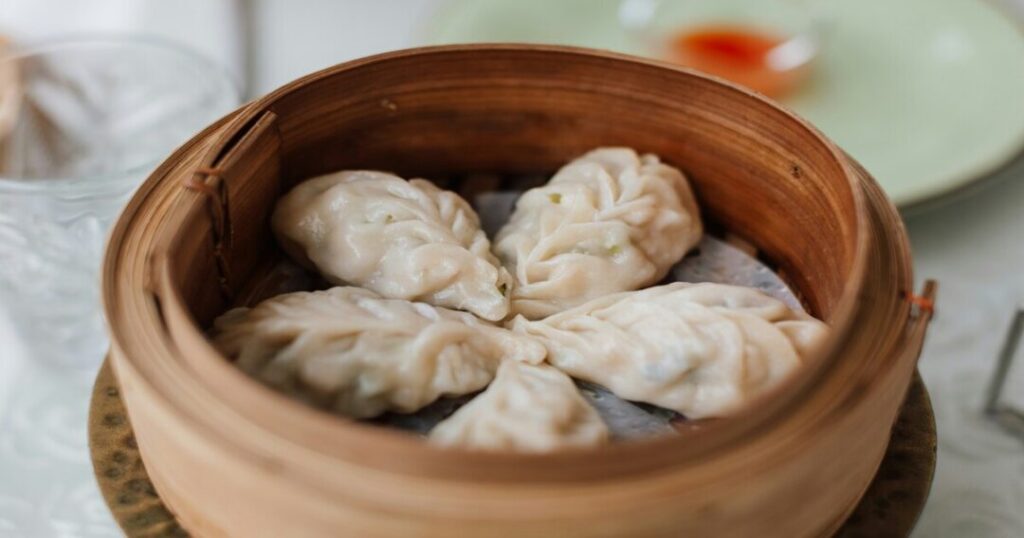
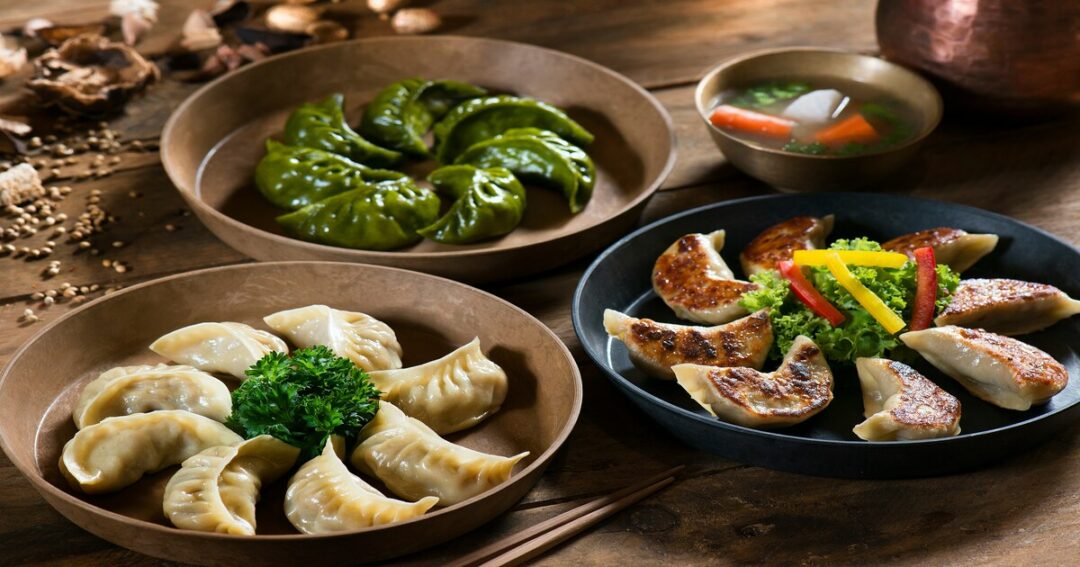
No conversation about famous food in Gangtok begins anywhere other than momos. These are steamed or fried dumplings — thin dough wrapped around a filling of minced meat (pork, chicken, or beef), vegetables, or cheese — cooked in a bamboo steamer and served with a fiery tomato-chilli dipping sauce. The word momo comes from the Tibetan mog mog, and the dumpling arrived in Sikkim with Tibetan and Bhutia migration centuries ago.
Gangtok has its own variation: momos here tend to be slightly larger and juicier than their Tibetan cousins, with the dipping sauce a specific Sikkimese combination of tomatoes, garlic, ginger, and dried red chillies that is deeply red and deeply hot. There are also jhol momos — momos served in a broth — and C-momos (chilli momos), where steamed momos are tossed in a spicy chilli sauce after cooking.
Vegetarian versions — stuffed with cabbage, paneer, tofu, or mixed vegetables — are available everywhere and are some of the finest momos in any version. The veg momo is not a compromise here; it is a full tradition in its own right, developed by Buddhist communities who have been cooking vegetarian versions for generations.
- Best eaten fresh from the steamer — the skin toughens within minutes of coming off the heat
- The tomato-chilli sauce is non-negotiable; ask for it even if it’s not automatically served
- Try both steamed and fried versions; the fried momo (kothey momo) has a crispy base and softer top — a pan-frying technique borrowed from Tibetan cooking
Thukpa — The Noodle Soup That Defines Himalayan Comfort
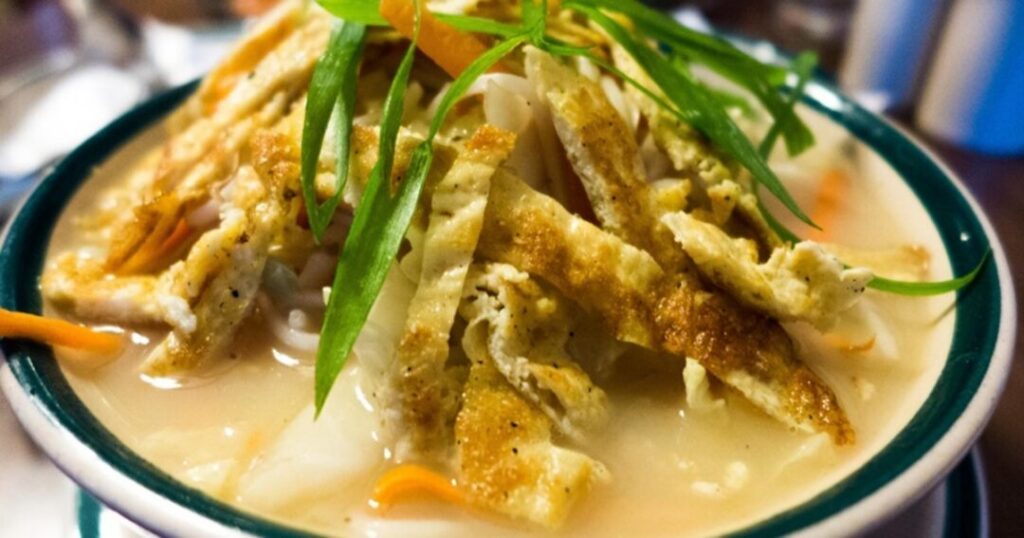
Thukpa is a Tibetan noodle soup that has become one of the defining best places to eat in Gangtok experiences — a warming, deeply satisfying bowl of hand-pulled noodles in a meat or vegetable broth, loaded with vegetables, chilli paste on the side, and sometimes with yak or chicken pieces. The name comes from the Tibetan words tuk (noodle) and pa (food) — literally “noodle food.”
There are several regional variations: thenthuk is a flat, hand-torn noodle version (the dough is pinched and stretched directly into the boiling broth), giving a thicker, chewier noodle. Gyathuk uses wheat noodles in a lighter broth. All variations are defined by the broth — slow-cooked, clean, fragrant with ginger and garlic — and by the chilli paste served alongside.
- A full bowl of thukpa is a complete meal — don’t underestimate the portion size
- Vegetarian thukpa is made with a vegetable broth and loaded with local greens, mushrooms, and tofu — genuinely excellent, not a lesser version
- Best eaten in the cooler months (October to March) when the warmth of the soup is most appreciated
Gundruk — Fermented Greens, The Taste of the Mountains
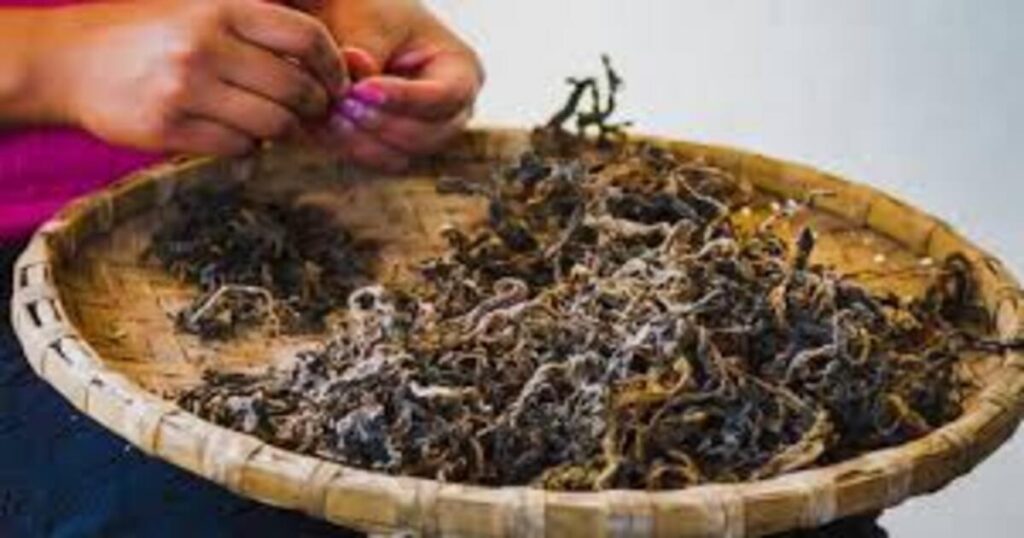
Gundruk is one of the most culturally significant foods in Sikkim and one that most visitors encounter only as a side dish without fully understanding what they’re eating. It is made by fermenting leafy green vegetables — mustard leaves, radish leaves, or cauliflower leaves — for 7 to 15 days. The fermented mass is then sun-dried and stored, where it keeps for months. It can be eaten as a dry snack, rehydrated into a soup, or used as a flavouring agent.
Gundruk is of Nepali origin and is classified as a National Food of Nepal — it crossed into Sikkim with Nepali migration and is now deeply embedded in Sikkimese everyday cooking. The taste is sour, earthy, and umami-rich — nothing like fresh greens, and entirely unlike any other fermented product in Indian cuisine. Gundruk soup, made by simmering the dried fermented greens with potatoes, tomatoes, and spices, is one of the most warming and nutritious dishes in the Himalayan food tradition.
- Gundruk is almost always vegetarian — an essential dish for vegetarians visiting Gangtok
- The smell of gundruk can be strong; approach it like you’d approach a mature cheese — give it a chance before forming a judgment
- Available at local dhabas and home-style eateries; less common at tourist-facing restaurants
Phagshapa — Pork Fat with Dry Chillies and Radish
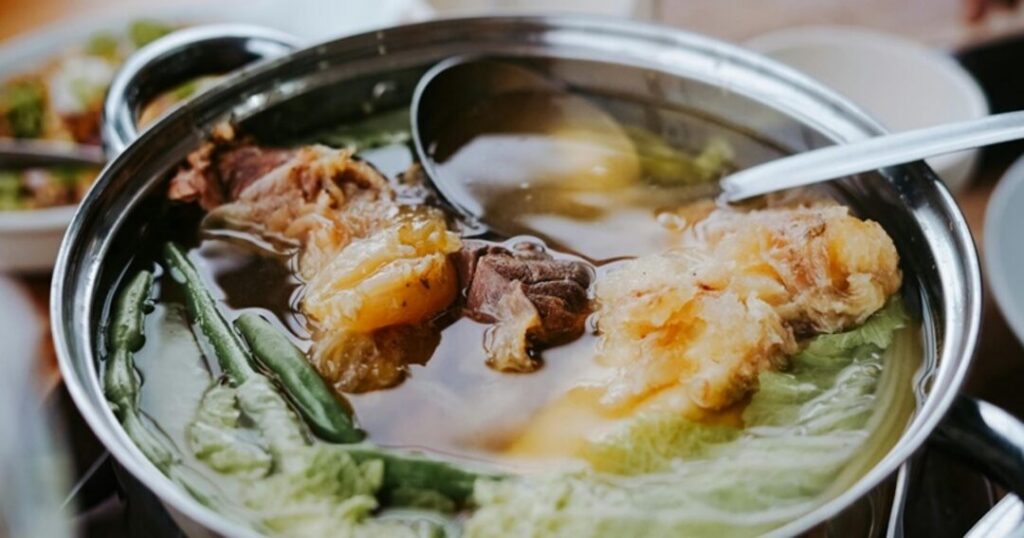
Phagshapa is one of the genuinely indigenous Sikkimese dishes — strips of pork fat slow-cooked with dry red chillies and dried radish, with no oil added. The pork fat itself provides all the necessary fat for cooking. The result is intensely flavoured, slightly smoky from the dry chillies, and deeply satisfying on a cold day. The name comes from the Bhutia word phag (pork) and sha (meat/flesh).
This is a dish of the Bhutia community — the Tibetan-related ethnic group of Sikkim — and reflects the high-altitude preference for pork fat as both a flavour vehicle and a calorie source in cold climates. It is traditionally served with steamed rice and a side of pickled vegetables.
- Non-vegetarian only; genuinely difficult to find a substitute within the same dish
- Best eaten in winter when the fat-forward preparation makes complete sense climatically
- Available at local Sikkimese eateries; less likely to be on tourist menus in the MG Marg area
Sha Phaley — The Fried Bread Dumpling
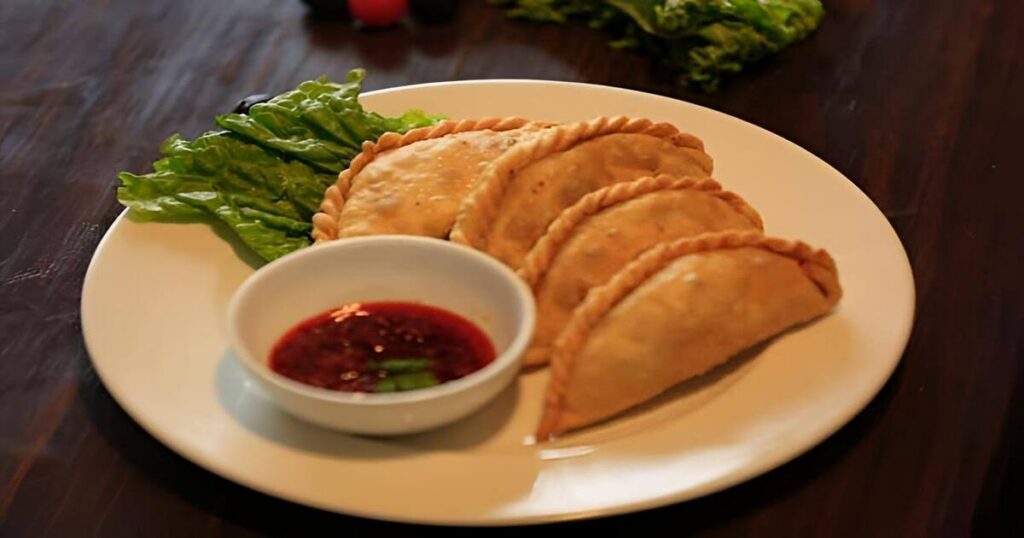
Sha Phaley (also written as Shabalay or Sha Phale) is a deep-fried bread stuffed with minced meat — usually beef or pork — mixed with cabbage, garlic, ginger, and spice. The dough is rolled out, filled, folded into a semi-circular or round shape, and deep-fried until golden and crispy. It is essentially a fried Tibetan bread pocket — crunchier and more indulgent than a momo, with a thicker dough.
Sha Phaley originated in Tibet and crossed into Sikkim with Tibetan and Bhutia migration. It is one of the most popular street food snacks in Gangtok — served hot from roadside stalls, eaten with chilli sauce. Vegetarian versions stuffed with cheese (chhurpi) or tofu and vegetables are available and are an excellent option for non-meat eaters.
- Best eaten straight off the frying pan — the crunch is the point
- The vegetarian chhurpi (dried yak cheese) version has a distinctly Himalayan flavour — salty, slightly sharp, excellent
- Common at street food stalls near MG Marg and Lal Bazaar
Also Read: PLACES TO VISIT IN SIKKIM THAT WE GUARANTEE YOU HAVEN’T HEARD OF
Dal Bhat Tarkari — The Daily Bread
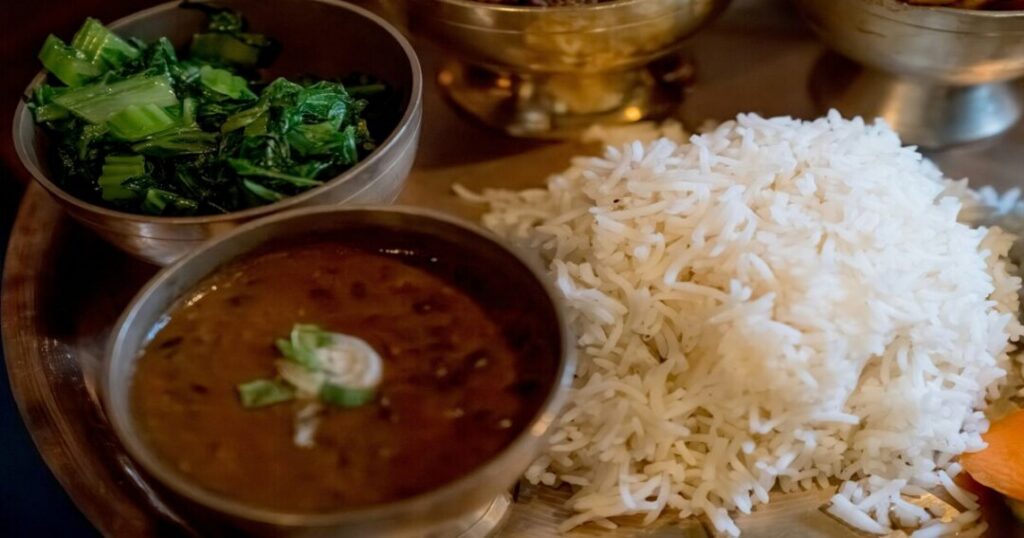
Dal Bhat Tarkari is the everyday meal of most Sikkimese households — steamed rice (bhat), lentil soup (dal), and a vegetable curry (tarkari), served with pickles (achar) and sometimes a side of curd. It is Nepali in origin and has become the foundation of daily eating across Sikkim. At local dhabas, a full dal bhat plate is typically bottomless — servers will refill each element as you eat.
- Entirely vegetarian in its base form — one of the most reliable pure veg meals in Gangtok
- Ask for the achar (pickle) — the tomato-sesame and radish versions are particular to Sikkim and excellent
- The price at local dhabas is extremely affordable — typically ₹80–150 for a full unlimited plate
Sel Roti — The Festive Ring Bread
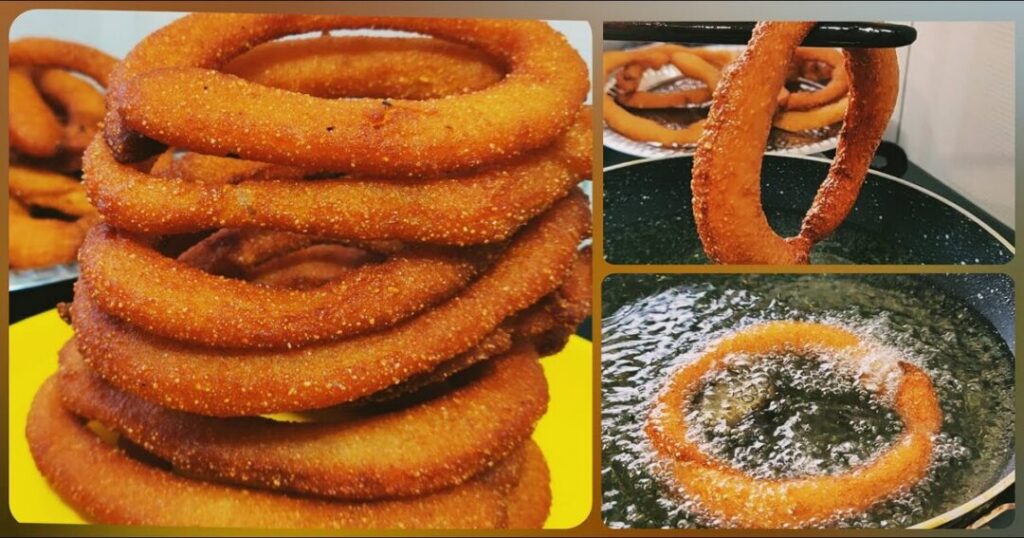
Sel Roti is a traditional Nepali ring-shaped bread made from a fermented rice batter — the batter is left to ferment overnight, then poured in a circular stream into hot oil and fried until crispy on the outside and soft inside. It is a festival bread — associated with the Nepali festivals of Tihar and Dashain — but also eaten as an everyday snack with tea in Sikkim.
The texture is unique: crispy and golden on the outside, slightly chewy and soft inside, with a faint sweetness from the fermented rice. It is always vegetarian.
- Available at bakeries and street stalls throughout the day; best eaten fresh and hot
- Pairs perfectly with a cup of chiya (spiced milk tea) or Darjeeling tea
- The large ring shape makes it a visually distinctive snack — recognisable immediately
Sinki — Fermented Radish Taproot
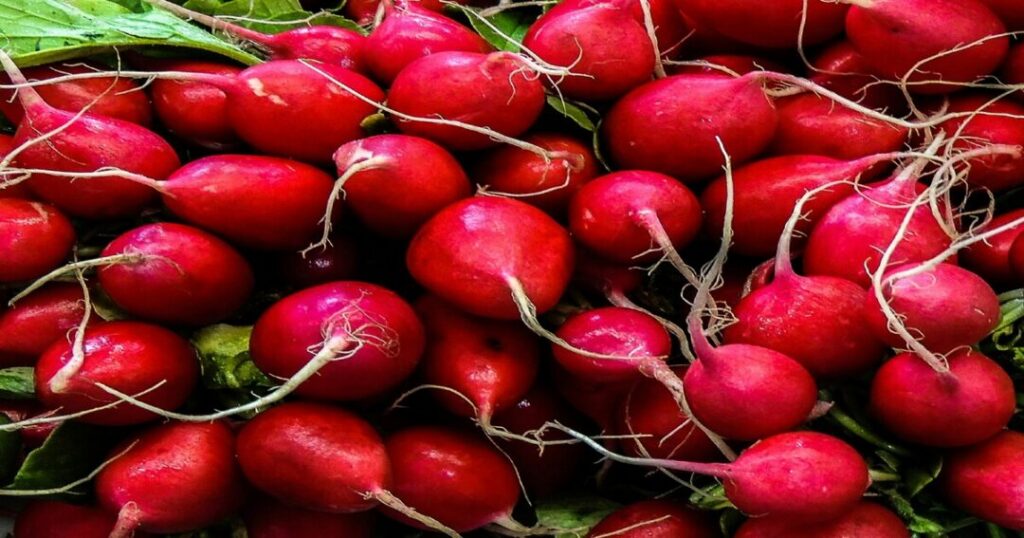
Sinki is the radish equivalent of gundruk — fermented radish taproots, dried and stored. It is used as a souring agent in soups and curries, adding a pungent, tangy depth that is entirely distinctive. Like gundruk, it is a Nepali fermentation tradition that has been deeply absorbed into Sikkimese cooking.
Sinki soup is one of the most nutritious preparations in the Sikkimese repertoire — the fermentation process creates a product rich in probiotics and vitamins B and C. It is vegetarian and found primarily at local eateries rather than tourist restaurants.
Kinema — Fermented Soybean Curry
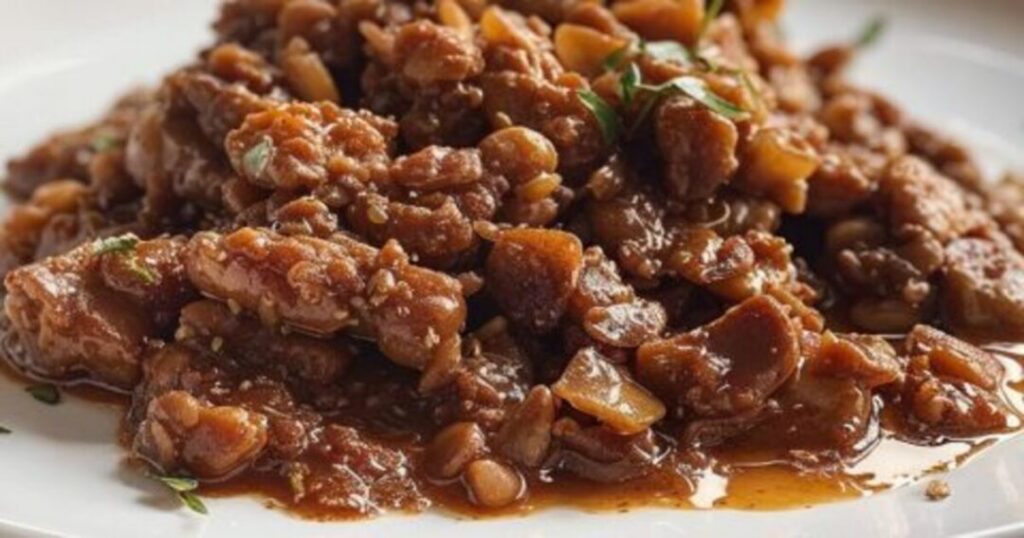
Kinema is a traditional fermented soybean preparation — soybeans are boiled, allowed to ferment for several days in a warm environment until sticky and slightly pungent, then used as the base for a curry with onions, tomatoes, and spices. It is rich in protein, vitamins, and minerals, and functions as a meat substitute for many vegetarian Sikkimese households.
Kinema has a strong, distinctive smell during fermentation — similar to Japanese natto but with a more robust character. The finished curry is deeply flavoured and satisfying.
- Entirely vegetarian and protein-rich — excellent for vegetarians looking for substance
- Common at home-style Sikkimese eateries and local dhabas
- A good litmus test for how deeply you want to explore the local fermentation tradition
Bakeries, Café Culture & Drinks
Darjeeling and Sikkim Tea
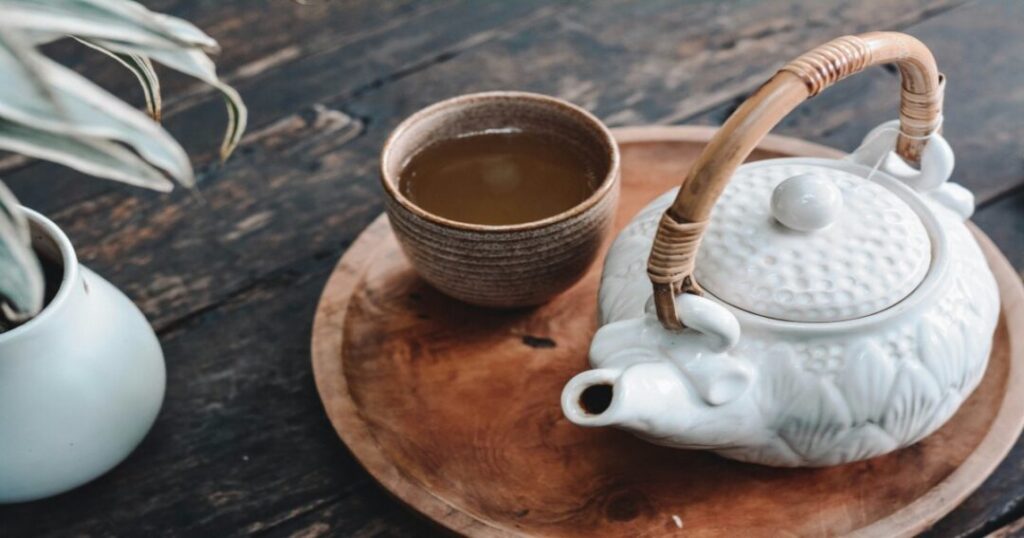
Gangtok sits in the heart of the Himalayan tea country. Sikkim’s own tea garden — the Temi Tea Estate, established in 1969 and the state’s only tea garden — produces a delicate, muscatel-noted tea that rivals the finest Darjeeling. The estate was certified organic in 2008 and is considered one of the finest tea-producing operations in India. In Gangtok, tea is served as chiya (spiced milk tea, similar to masala chai) at local stalls, as Darjeeling black tea at cafés, and as butter tea (po cha, made with fermented tea, yak butter, and salt) at Tibetan-style establishments.
- Temi Tea has been certified organic since 2008 — look for it specifically when buying tea to take home
- Butter tea is an acquired taste for most visitors — salty, rich, and fatty; approach it with an open mind
- A cup of chiya at a roadside stall on MG Marg costs ₹10–20 and is one of the city’s great pleasures
Chhurpi — The Himalayan Cheese
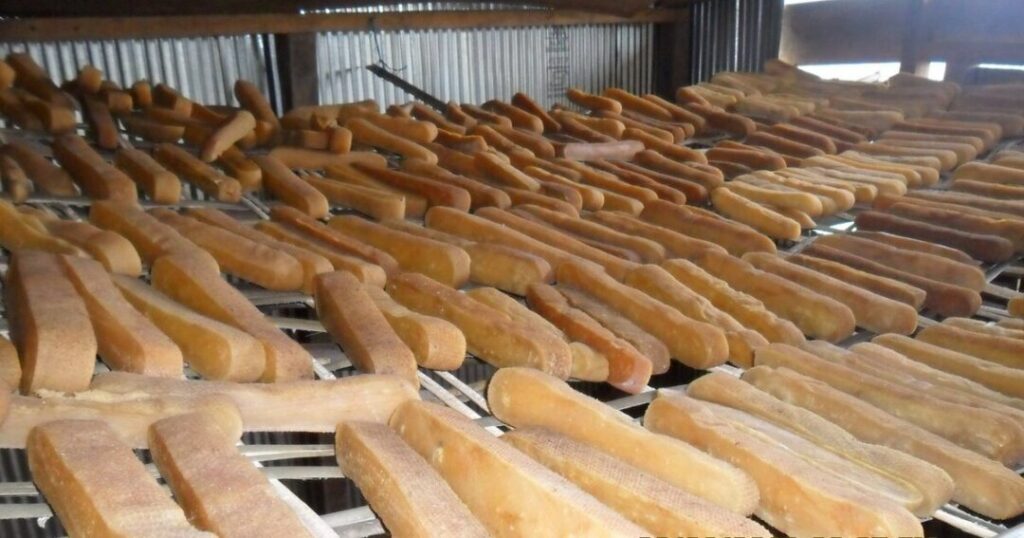
Chhurpi is a traditional yak or cow milk cheese, produced across the Himalayan belt. There are two forms: soft chhurpi (fresh, mild, used in cooking — similar to paneer but with a slightly funkier flavour) and hard chhurpi (dried into tough, brick-like pieces that are chewed slowly as a long-lasting snack). The hard version is sometimes called the “hardest cheese in the world” — a single piece can be chewed for hours.
In Gangtok, soft chhurpi appears as a filling in vegetarian momos and sha phaley, and as an ingredient in local vegetable dishes. Hard chhurpi is sold at markets as a snack — worth trying once for the experience even if you don’t finish the piece.
- Entirely vegetarian; excellent protein source
- Soft chhurpi is the more approachable form — try it in a momo filling first
- Hard chhurpi is sold at souvenir and market stalls — buy a small piece to try
Raksi and Tongba — The Local Drinks
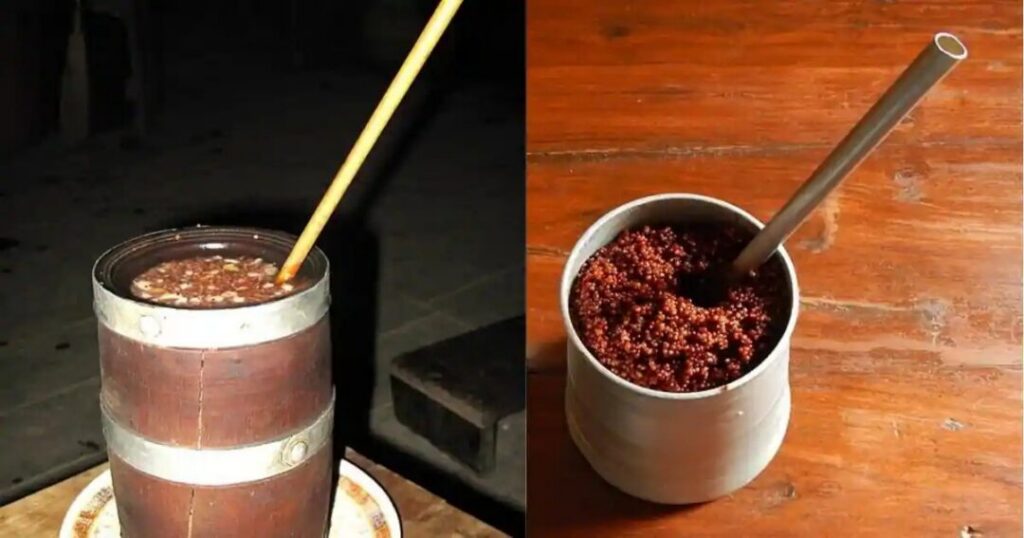
Raksi is a traditional Himalayan distilled spirit made from millet or rice — clear, strong, and warming. Tongba is a fermented millet beer served in a bamboo or wooden vessel, drunk through a bamboo straw that filters the grain — the vessel is topped up with hot water multiple times as you drink. Both are deeply culturally embedded in Sikkimese and Nepali traditions.
Pure Vegetarian Dining in Gangtok — What to Know
Gangtok is more accommodating to pure vegetarians than most Himalayan cities, but it helps to know what to look for.
Genuinely vegetarian dishes that are Gangtok staples:
- Vegetable momos (steamed and fried)
- Vegetable thukpa and thenthuk
- Gundruk soup and preparations
- Sel roti
- Dal bhat tarkari (the everyday meal)
- Kinema curry
- Sinki soup
- Chhurpi-stuffed sha phaley
- Vegetable sha phaley
What to watch for: Many local eateries use the same pots and steamer baskets for veg and non-veg preparations. If cross-contamination is a concern, specify this explicitly when ordering or look for establishments that display a green dot (pure vegetarian certified) on their signage.
Where to focus: The MG Marg area has the highest density of restaurants in Gangtok, several of which specifically serve vegetarian North Indian and South Indian cuisine alongside local Sikkimese options. The local dhabas around Lal Bazaar serve the most authentic and affordable pure veg dal bhat plates in the city.
Buddhist-run eateries and monastery guesthouses in and around Gangtok typically serve entirely vegetarian food — these are some of the most reliable options for strict vegetarians.
Conclusion: About the best food in Gangtok
The best food in Gangtok is mountain food — honest, warming, deeply flavoured, and shaped by centuries of migration, fermentation, and Himalayan necessity. Quick guide to the essentials:
- Must eat: Momos (steamed, with tomato-chilli sauce), thukpa, sel roti with chiya
- For the adventurous: Gundruk soup, sinki, kinema curry, phagshapa
- Vegetarian staples: Veg momos, dal bhat at a local dhaba, gundruk, sel roti, kinema
- To drink: Temi Tea, tongba (millet beer), butter tea (once, for the experience)
- To take home: Temi Tea (certified organic since 2008), hard chhurpi, dried gundruk
Famous food in Gangtok is not found at expensive restaurants — it’s found at the steamer stall where the momo wallah has been working since 5 AM, at the local dhaba where a full dal bhat costs ₹100 and is refilled until you stop nodding, and at the tea stall where a glass of chiya costs less than a bus ticket. Eat local. Eat often. Bring layers — the altitude means it’s always cold enough for another bowl of thukpa.
Download the Explurger app to discover where locals actually eat in Gangtok, find the best places to eat in Gangtok that aren’t on the tourist trail, and log every momo and bowl of thukpa on your trip.
The steamers are already going. The chiya is already brewing. Gangtok is ready to feed you.
FAQs About the Best Food in Gangtok
2. What is the best food in Gangtok for vegetarians?
Gangtok has excellent vegetarian options. The most reliable pure veg dishes are: vegetable momos (a full tradition in their own right), vegetable thukpa and thenthuk (noodle soups), gundruk soup (fermented leafy greens — nutritious and deeply flavourful), sel roti (ring bread, always vegetarian), dal bhat tarkari (the everyday Nepali rice-lentil-vegetable meal, bottomless at local dhabas), and kinema curry (fermented soybean, protein-rich). For pure vegetarian restaurants in Gangtok, look for green dot signage on MG Marg or seek out Buddhist-run establishments that serve strictly vegetarian food.
3. Is Gangtok good for vegetarians?
Yes — more so than most Himalayan cities. Sikkim's Buddhist communities have maintained strong vegetarian traditions for centuries, and the Nepali dal bhat culture provides an excellent base of vegetarian everyday food. However, many local eateries serve both veg and non-veg from the same kitchen. Pure vegetarians should specify their requirements and look for the green dot certification or explicitly vegetarian establishments. The MG Marg area has the most options; local dhabas around Lal Bazaar offer the most authentic and affordable vegetarian meals.
4. What is gundruk and should I try it?
Gundruk is a traditional fermented leafy vegetable preparation — mustard or radish leaves fermented for 7–15 days then sun-dried. It is classified as a National Food of Nepal and is deeply embedded in Sikkimese cuisine. Gundruk soup, made by simmering the dried fermented greens with potatoes and tomatoes, is one of the most nutritious and authentic dishes you can eat in Gangtok. It is entirely vegetarian. The taste is sour, earthy, and umami-rich — yes, try it.
5. What is the best food area in Gangtok?
MG Marg (Mahatma Gandhi Marg) is Gangtok's pedestrian promenade and the primary food hub — the highest concentration of restaurants, cafés, and food stalls in the city, covering everything from local Sikkimese to North Indian to Chinese. Lal Bazaar is where the most authentic and affordable local food lives — small dhabas, street stalls, and tea shops serving food that has changed very little over generations. MG Marg is where you go for variety and comfort; Lal Bazaar is where you go for the real thing.
6. What is Temi Tea and where can I get it?
Temi Tea is produced at the Temi Tea Estate — Sikkim's only tea garden, established in 1969 and certified organic since 2008. It is considered one of the finest teas in India, known for its delicate, muscatel-noted flavour. It is available at tea shops and souvenir stores throughout Gangtok, particularly on MG Marg. It is one of the best things to bring home from Gangtok.