
1,820 Total Views
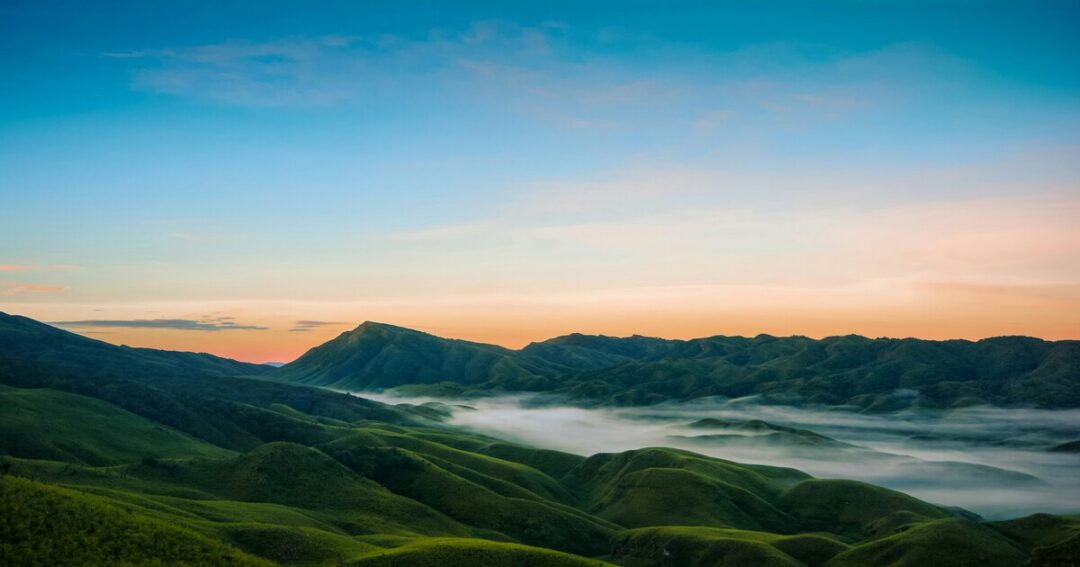
Picture this: you crest a ridge after two hours of steady climbing, the mist parts for exactly thirty seconds, and below you — impossibly green, impossibly quiet — lies a valley that looks like it was assembled from a dream. That is Dzukou Valley trek in a single moment. Straddling the border of Nagaland and Manipur at an altitude of 2,452 metres, Dzukou is one of Northeast India’s most spectacular trekking destinations — and one of its least crowded. Here’s everything you need to plan it properly.
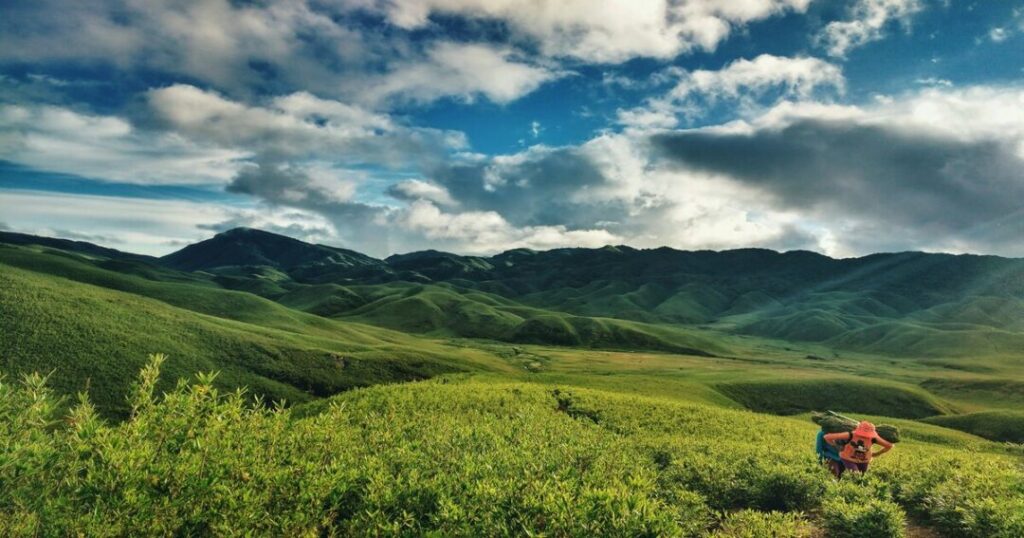
Dzukou Valley Trek — Distance, Cost & Key Facts
Trek Distance
- Viswema Route (most popular): ~8 km one way; ~16 km round trip
- Zakhama Route (alternate entry from Manipur side): ~11 km one way; longer and more gradual
- Total elevation gain: ~900 metres from Viswema trailhead to valley floor
- Time to summit (Viswema): 3–4 hours for average fitness; 2–2.5 hours for experienced trekkers
Trek Cost
Dzukou Valley trek cost varies based on duration and approach:
- Entry permit to valley: ₹100–₹150 per person (charged at the trailhead gate)
- Guide fee: ₹800–₹1,200 per day (optional but highly recommended for first-timers)
- Porter: ₹700–₹1,000 per day if camping with heavy gear
- Campsite fee: ₹100–₹200 per night at the valley rest huts
- Total estimated budget for a 2-day, 1-night trek: ₹2,000–₹4,000 per person (excluding travel to Kohima and accommodation there)
Difficulty Level
- Grade: Moderate
- Fitness requirement: Basic to moderate fitness; the ascent is steep for the first hour, then levels out gradually. Suitable for active beginners with some prior walking experience.
Dzukou Valley Trek Itinerary — Day by Day
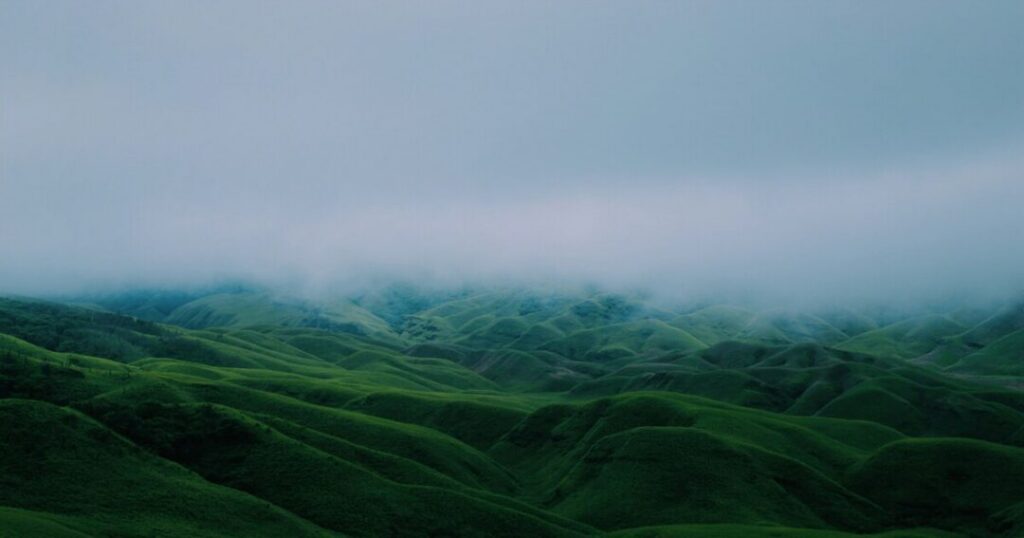
A classic Dzukou Valley trek itinerary covers 2 days and 1 night — enough time to reach the valley, explore, camp under the stars, and return.
Day 1 — Kohima to Dzukou Valley
- 6:00 AM: Depart Kohima; reach Viswema village trailhead by 7:00 AM
- 7:00 AM: Begin ascent from Viswema (trailhead altitude: ~1,550 m)
- 10:30 AM: Reach valley rim — first views of Dzukou Valley
- 11:00 AM: Descend into the valley; set up camp at the designated camping area or rest huts
- Afternoon: Explore the valley floor, lily fields (June–Sept), and surrounding ridgeline trails
- Evening: Cook dinner at camp; clear skies make for exceptional stargazing
Day 2 — Valley Exploration and Return
- Early morning: Watch sunrise from the valley rim — one of the finest views in Northeast India
- 8:00 AM: Breakfast at camp, pack up
- 9:00 AM: Begin descent via Viswema route
- 12:00 PM: Back at Viswema; catch transport back to Kohima
- Afternoon: Rest, explore Kohima town, or depart for Dimapur
Also read: Seven Sisters Falls In Meghalaya: Complete Guide To Nohsngithiang Falls
Dzukou Valley Camping — What to Know?
Dzukou Valley camping is what separates this trek from a simple day hike. Spending a night in the valley gives you sunrise on the ridgeline — and that alone is worth the extra weight.
- Sleeping gear: Carry a sleeping bag rated to at least -5°C; temperatures drop sharply after 8 PM even in summer
- Shelter options: Basic rest huts are available at the valley campsite (book through Nagaland Tourism or via local guides in Kohima); bring your own tent for more flexibility
- Water: A natural stream runs through the valley — carry a filter or purification tablets; do not drink directly
- Firewood: Collecting firewood inside the valley is prohibited; carry a portable gas stove
- Waste: Pack everything out; the valley has no waste disposal facilities; leave no trace
What is the Best Time for the Dzukou Valley Trek?
- June – September: Peak season for the legendary Dzukou lily — a flower found nowhere else on Earth. The valley turns white and violet; the views are extraordinary. Trail can be wet and slippery — carry good grip shoes.
- November – March: Clear, cold, and dramatic. Snow caps the ridgeline, the skies are sharp blue, and the valley is largely yours. Temperatures drop below 0°C at night — prepare accordingly.
- April – May: Green and warming; rhododendrons bloom; good trail conditions. Fewer trekkers than peak season.
Best overall window for the Dzukou Valley trek: June to September for flowers; November to February for snow and solitude.
How to Reach Dzukou Valley?
- Nearest Airport: Dimapur Airport (~74 km from Kohima) — flights from Kolkata (~1 hr) and Delhi via Guwahati. From Dimapur, shared taxis and buses run to Kohima (~3 hrs, ₹150–₹300 by shared cab).
- Nearest Railway Station: Dimapur Railway Station — trains from Guwahati (~5 hrs) and Kolkata. Same onward connections to Kohima apply.
- By Road: Kohima is the base. From Kohima, take a shared sumo or private cab (~45 min, ₹600–₹800) to Viswema village — the most popular trailhead for Dzukou.
- Inner Line Permit: All non-Nagaland Indian nationals require an Inner Line Permit (ILP) to enter Nagaland. Obtain it online at nagaland.gov.in or at the border checkpoints in Dimapur. Foreign nationals need a Protected Area Permit (PAP).
Also read: Top Winter Treks in India–Best Trails From North to South
Trekking Tips Before You Go
- Register at the trailhead — sign the entry log at Viswema gate; it’s mandatory and keeps search-and-rescue informed
- Start early — begin the ascent by 7 AM to reach the valley before afternoon mist rolls in
- Travel light for a day hike — if you’re not camping, a day pack with water, snacks, and a rain jacket is sufficient
- Carry warm layers regardless of season — the valley temperature drops 10–12°C below Kohima; even June nights are cold
- Mobile signal — Airtel and BSNL have patchy coverage on the trail; inform someone of your itinerary before you leave
Conclusion about Dzukou Valley Trek
Dzukou Valley doesn’t ask much of you — a moderate level of fitness, an early alarm, and the willingness to carry your own world on your back for a day. What it gives back is entirely disproportionate: a valley that feels genuinely untouched, a sunrise that earns every step of the climb, and the quiet satisfaction of standing somewhere most people have only seen in photographs. If you’re ready to plan your dzukou valley trek, start with Kohima, sort your ILP, and book your guide early in peak season.
📲 Map your Dzukou Valley trek, save your itinerary, and discover hidden Northeast India trails with the Explurger app — download it before you go.
The valley is waiting. Pack light. Start early. ⛰️
FAQs About Dzukou Valley Trek
2. How difficult is the Dzukou Valley trek?
The Dzukou Valley trek is rated moderate. The first 1–1.5 hours of the Viswema route involve a steep, sustained climb that can challenge beginners. After the ridge, the trail levels out and the descent into the valley is gradual. Anyone with basic fitness and some prior hiking experience can complete it comfortably. The total round trip (Viswema route) covers approximately 16 km and is typically done in 6–8 hours for a day hike, or split over 2 days with camping.
3. What is the Dzukou Valley trek cost?
The Dzukou Valley trek cost is relatively affordable. Budget approximately ₹100–₹150 for the valley entry permit, ₹800–₹1,200 per day for an optional guide, ₹100–₹200 per night for the campsite or rest hut, and ₹700–₹1,000 per day for a porter if needed. A complete 2-day, 1-night trek — including guide and camping — typically costs ₹2,000–₹4,000 per person, excluding travel to Kohima and accommodation in the city.
4. How far is Dzukou Valley from Kohima?
Kohima is the base for the Dzukou Valley trek. The Viswema trailhead — the most popular starting point — is approximately 20 km from Kohima town, reachable in 45 minutes by shared sumo or private taxi (₹600–₹800). The trek itself from Viswema to the valley floor is approximately 8 km one way, with an elevation gain of around 900 metres. Most trekkers depart Kohima by 6 AM to start the ascent by 7 AM.
5. Do I need a permit for the Dzukou Valley trek?
Yes. Non-Nagaland Indian nationals require an Inner Line Permit (ILP) to enter Nagaland — this is mandatory and checked at multiple points including Dimapur. You can obtain the ILP online at nagaland.gov.in or at designated offices at the Nagaland border. Foreign nationals need a Protected Area Permit (PAP), which requires prior clearance. In addition to the state ILP, there is a separate valley entry fee of ₹100–₹150 charged at the Viswema trailhead gate.
6. Can beginners do the Dzukou Valley trek?
Yes — active beginners with basic fitness can complete the Dzukou Valley trek comfortably, especially on the Viswema route. The first hour of the ascent is steep and will be the hardest part; after that, the trail becomes more manageable. Take breaks as needed, start early, carry enough water (at least 2 litres for the ascent), and consider hiring a local guide for the first visit. A 2-day itinerary with overnight camping is much more forgiving than attempting the full 16 km round trip in a single day.
7. What should I pack for the Dzukou Valley trek?
Essential items for the Dzukou Valley trek: a sleeping bag rated to -5°C (for camping), warm thermal layers (even in June), a waterproof rain jacket, sturdy trekking shoes with ankle support, a headlamp with spare batteries, a water filter or purification tablets, high-energy trail snacks, a first aid kit, sunscreen and sunglasses, and a portable gas stove if cooking at camp. Leave valuables in Kohima — you need only what you can carry comfortably for 8 km uphill.