
746 Total Views
You have already done the Grand Palace. You have already done Wat Pho and Wat Arun. You spent a morning at the floating market that required a 4 AM departure and came back with a photograph of someone else’s pad thai. You have done Bangkok as a first-time visitor, and it was magnificent. This guide is for the second visit — the one where you actually get to know the city.
Bangkok — Krung Thep Maha Nakhon, to use its short Thai name, or the full ceremonial name that runs to 163 characters and is the longest city name in the world — is a city of extraordinary depth. The historic Rattanakosin district was established in 1782 when King Rama I moved the Siamese capital across the river from Thonburi, and the layers of history that have accumulated since—Siamese, Rattanakosin, colonial-era, mid-century modernist, and 21st-century hyper-urban—sit on top of each other in ways that reward patient and curious visitors who look past the obvious. This guide covers the best places to visit in Bangkok, Thailand, that go beyond the standard circuit—the art museums, the canal networks, the neighborhood characters, and the day trips that unlock the city’s deeper context.
What Are the Best Temples to Visit in Bangkok?
Wat Pho — The Temple You Think You Know
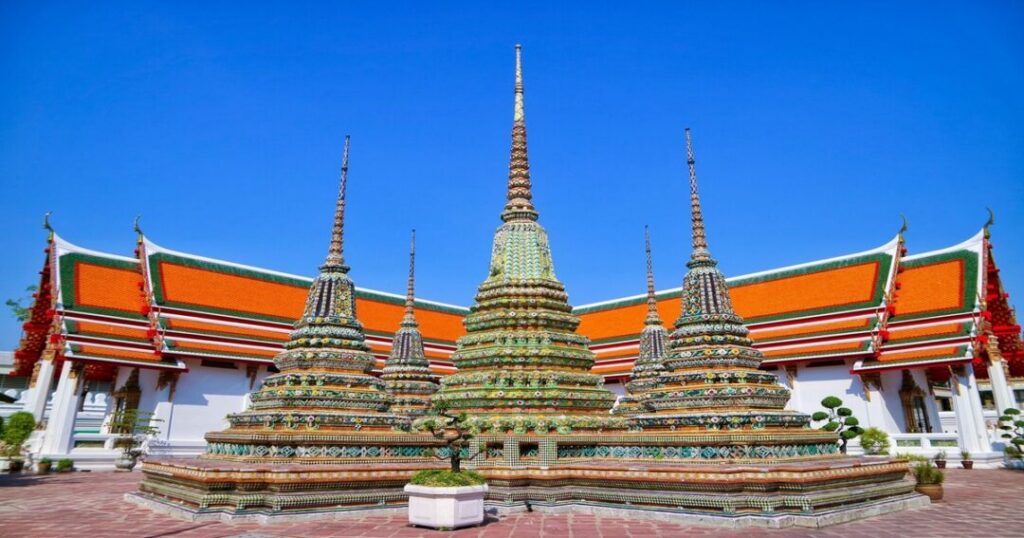
You have been to Wat Pho (Temple of the Reclining Buddha). But have you stayed for more than an hour? The reclining Buddha—46 meters long, 15 meters high, covered in gold leaf, with mother-of-pearl inlaid feet—is genuinely extraordinary. What most visitors miss entirely is that Wat Pho is also the birthplace of traditional Thai massage as a formal discipline: it contains the original school where Thai massage technique was codified and taught during the reign of Rama III, and the stone inscriptions embedded in the temple walls represent one of the largest collections of traditional medical, literary, and artistic knowledge in Thai history—effectively an open-air encyclopedia inscribed in stone when the king feared that books might be destroyed.
- The massage school at Wat Pho trains practitioners in traditional Nuad Bo-Rarn—the original classical Thai massage
- Open daily; arrive in the early morning before tour groups; the inner courtyards away from the main reclining Buddha hall are largely empty
Wat Arun — The Temple of Dawn at Dawn
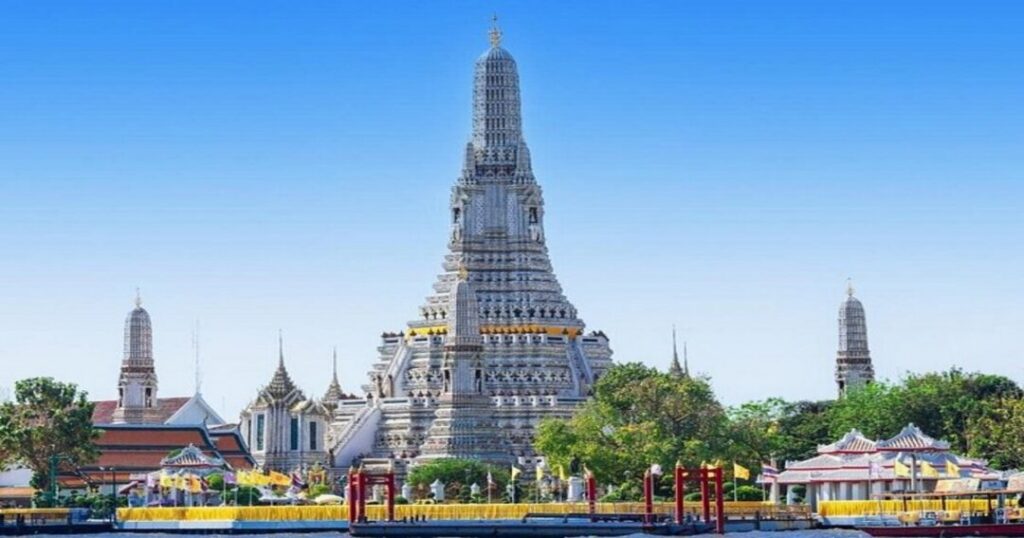
Wat Arun (Wat Arun Ratchawararam) on the west bank of the Chao Phraya is photographed most at sunset from across the river—but the correct time to visit is at dawn, when you can cross by ferry before the crowds arrive and climb the central prang (tower). Originally constructed in the 1600s and extensively remodelled over the following centuries, it was built largely from pieces of Chinese pottery that were rescued from a shipwreck—the embedded porcelain fragments catch the morning light in a way the sunset photographs cannot capture.
- The cross-river ferry from Tha Tien pier costs almost nothing and takes 5 minutes
- The prang climb is steep—the steps are intentionally near-vertical to represent the difficulty of reaching the heavens
- Wat Arun briefly housed the Emerald Buddha before it was moved to Wat Phra Kaew
Also read: 10 Unique Things to Buy in Thailand Most Travelers Miss (2026 Guide)
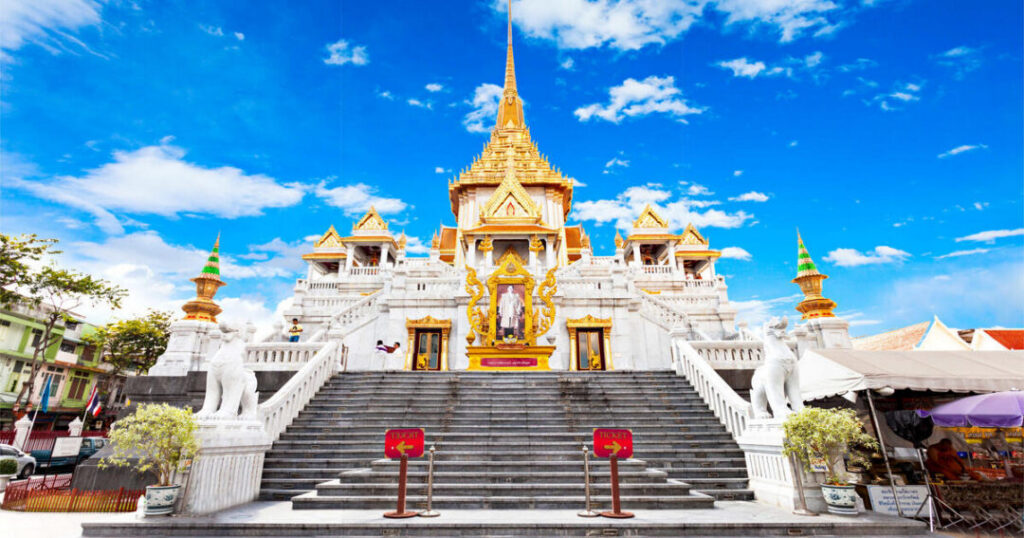
Wat Traimit in the Samphanthawong district—Bangkok’s Chinatown—houses the most famous golden Buddha statue in Thailand: a 3-meter-high, 5.5-tonne solid gold image that was discovered by accident in 1955 when a stucco-covered statue being moved by crane was dropped and the outer plaster cracked to reveal solid gold beneath. The gold Buddha is believed to date from the Sukhothai period (13th–14th century CE); the stucco covering was applied to conceal it during a period of Burmese invasion.
The story of the Golden Buddha — the truth hidden under centuries of concealment — is one of the finest in all of Thai religious heritage.
Also read: 10 Places to Visit in December: India & International
Neighbourhoods & Street Culture — Bangkok Places to See
Yaowarat — Bangkok’s Chinatown at Night
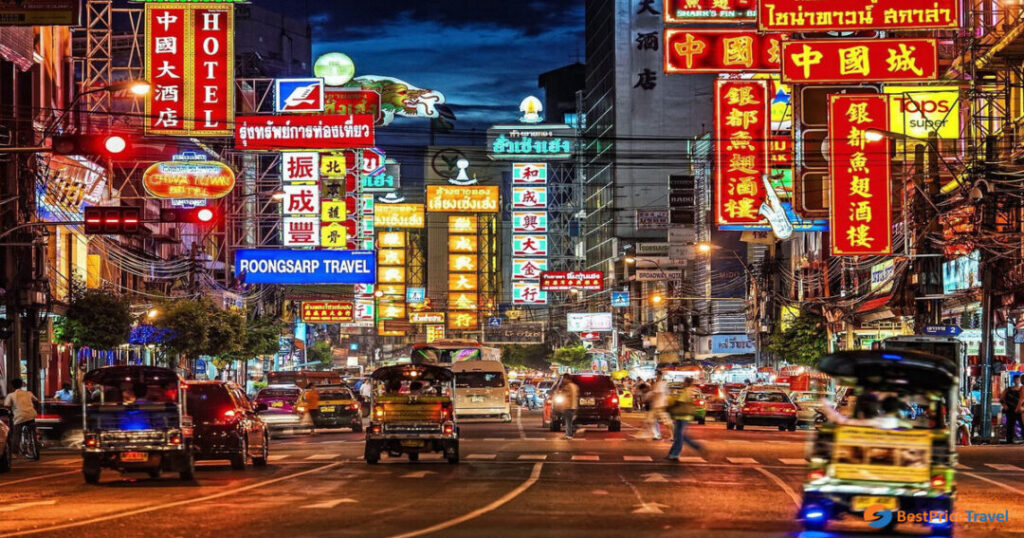
Yaowarat Road — Bangkok’s Chinatown, one of the oldest and most intact in Southeast Asia — becomes an entirely different place after dark. The gold shops and dried goods of the daytime give way to an extraordinary concentration of street food: seafood grills sending smoke across the pavement, dim sum carts that have been rolling through the same lanes since the early 20th century, roast duck vendors, and dessert stalls serving tong yip and foi tong (gold-colored Thai-Portuguese sweets that were introduced to the royal court by a 17th-century Portuguese noblewoman). The energy on Yaowarat Road at 9 PM on a Friday is unlike anything else in the city.
The Chinese community in Bangkok traces its roots to the 18th-century migrants who came to trade and settled in the area around the Chao Phraya; by the early 19th century, Yaowarat was already established as a distinct commercial and residential quarter. Many of the shophouses on the main road date from the early 20th century and represent one of the finest surviving collections of Sino-Portuguese commercial architecture in Asia.
Bang Rak — The Old European Quarter
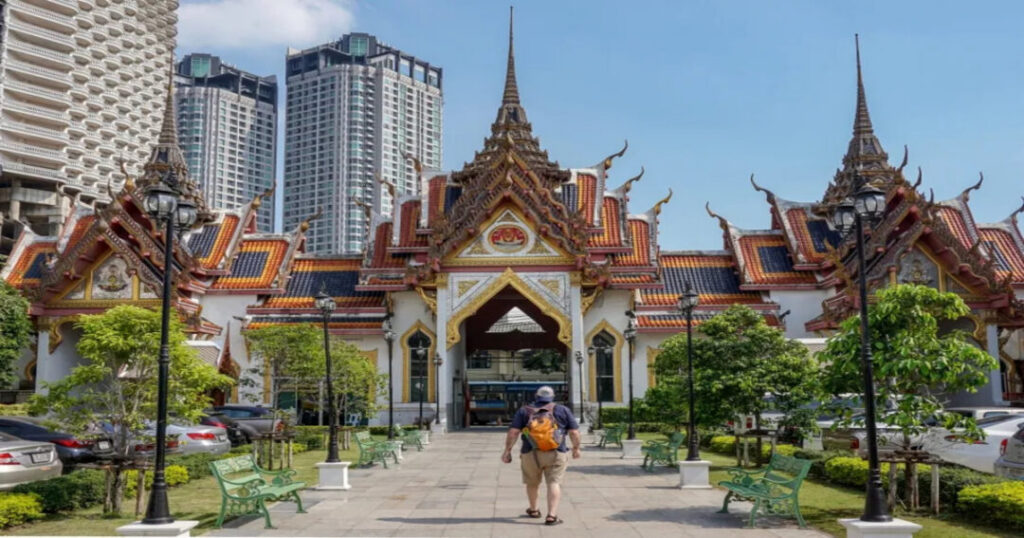
Bang Rak (literally “district of love”—a coincidence that has made it a popular marriage registration destination) is the neighborhood along Charoen Krung Road south of the river bend—Bangkok’s original commercial district, where the Portuguese, French, British, and American trading communities established themselves in the 19th century. The neighborhood contains the Portuguese embassy compound (one of the oldest European diplomatic presences in Thailand), the French Embassy’s 19th-century building, the East Asiatic Company building, several old Catholic churches, and a dense concentration of shophouses, antique dealers, and family restaurants that have been operating for generations.
Walking Charoen Krung from its origin near Pahurat to its terminus at the Chao Phraya is one of the finest heritage walks in Bangkok—a route through four centuries of commercial and diplomatic history at street level.
Khao San Road — Understanding What It Is
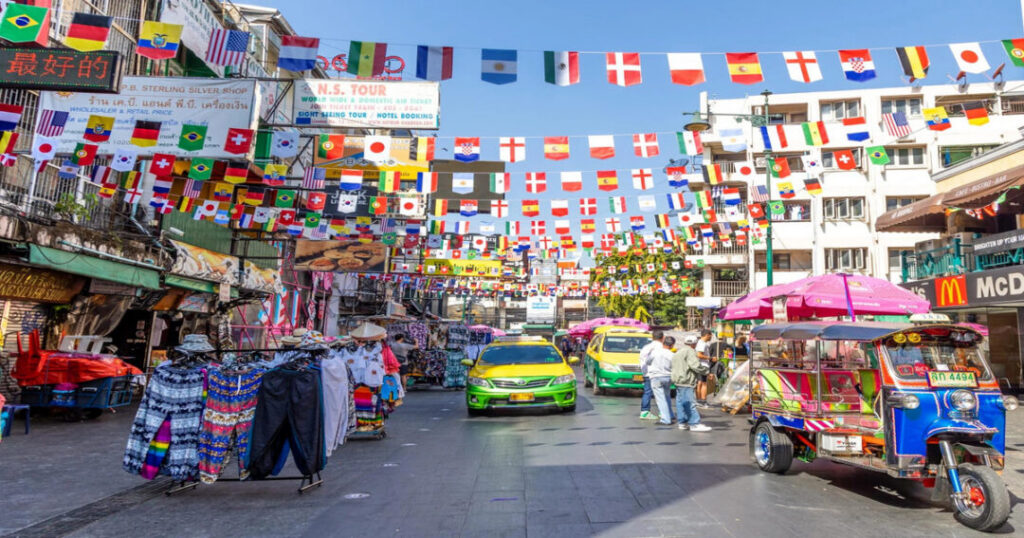
Most return visitors dismiss Khao San Road as a tourist trap. It is — and it is also something more interesting than that. It is one of the few places in the world where the infrastructure of global backpacking culture has been running continuously since the 1980s and has accumulated its own history: the guesthouses that began as family homes, the pancake stalls that predate the internet, the CD vendors who became USB vendors who became streaming recommenders. It is not authentic Bangkok—but it is authentic in its own category, and the side sois leading off the main road contain the genuine neighborhood that the backpacker strip grew up around.
Also read: Top 10 International Destinations to Explore from India in May
Which Cultural Attractions Should You Visit in Bangkok?
Jim Thompson House — The Silk King’s Legacy
The Jim Thompson House is a museum in central Bangkok housing the art collection of American businessman Jim Thompson. Built in 1959, the museum spans approximately half an acre. Thompson came to Bangkok after World War II and established the Thai Silk Company Ltd. in 1948, reviving Thailand’s silk industry by connecting traditional weavers in the Baan Krua community (directly adjacent to his compound) with international fashion houses in Paris, Milan, and New York. To create the house, Thompson procured centuries-old teak beams, fretted boards, and fired ceramic tiles from as far away as Ayutthaya.
Thompson disappeared in the Cameron Highlands of Malaysia in 1967 — no explanation has ever been definitively established. The mystery is as much a part of the house as the silk and the art collection.
- The house is a compound of six traditional Thai teak houses reassembled and connected
- The art collection—Southeast Asian ceramics, sculpture, paintings, and textiles—is extraordinary
- The adjacent Baan Krua community, where Thompson’s original silk weavers lived and worked, is worth a short walk
Bangkok Art and Culture Centre (BACC)
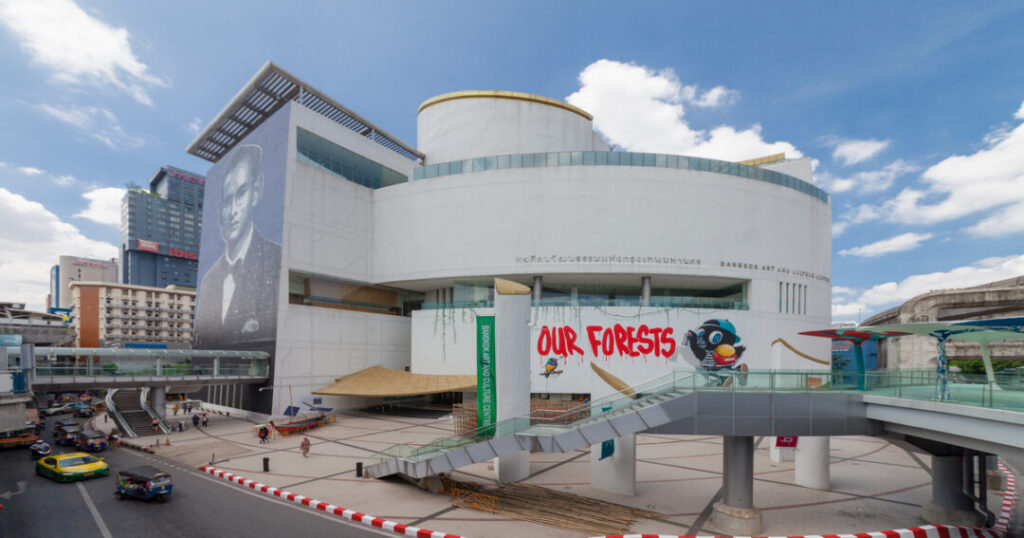
The Bangkok Art and Culture Centre at Siam is Bangkok’s primary contemporary art institution—a multi-floor spiral gallery structure that houses rotating exhibitions of Thai and international contemporary art, performance, film, and design. It functions as both a museum and a cultural center, with exhibition spaces, a cinema, and studios distributed across the building. For anyone interested in contemporary Thai art — which is in a period of remarkable vitality — the BACC is the essential place of interest in Bangkok.
Bangkokian Museum
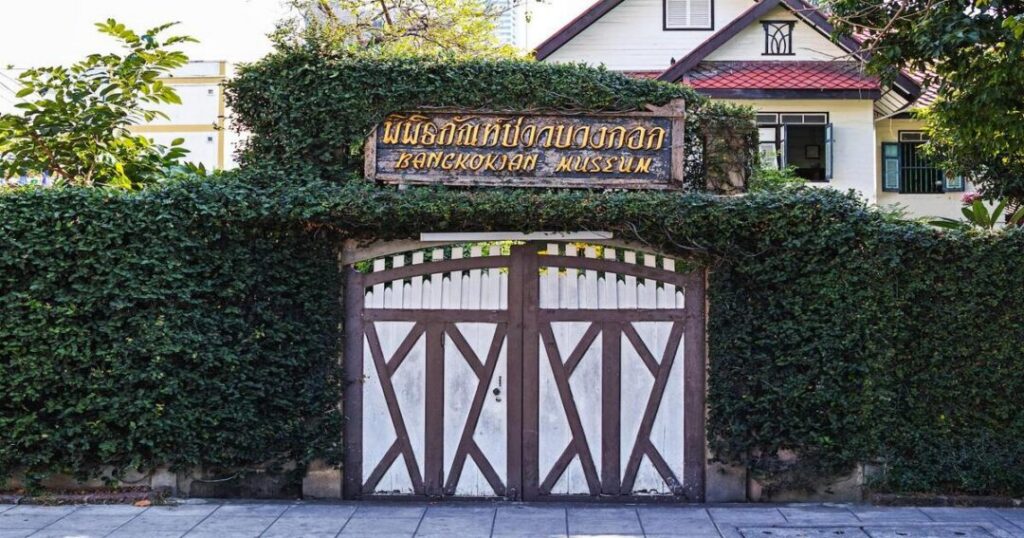
The Bangkokian Museum in Bang Rak is three interconnected wooden houses that preserve the domestic life of a middle-class Bangkok family in the 1930s–1960s. Unlike the grand palace museums, this is very human scale—the kitchen with its original equipment, the bedroom with its colonial-era furniture, and the garden with its old fruit trees. It is the most intimate portrait of pre-modern Bangkok life available to the public and one of the most consistently overlooked Bangkok tourist spots.
Also read: Visa-Free Countries for Indians in 2026 | Budget International Travel Guide for Young Explorers
What Are the Best Nature Spots Near Bangkok?
The Canals of Thonburi — Bangkok as It Was
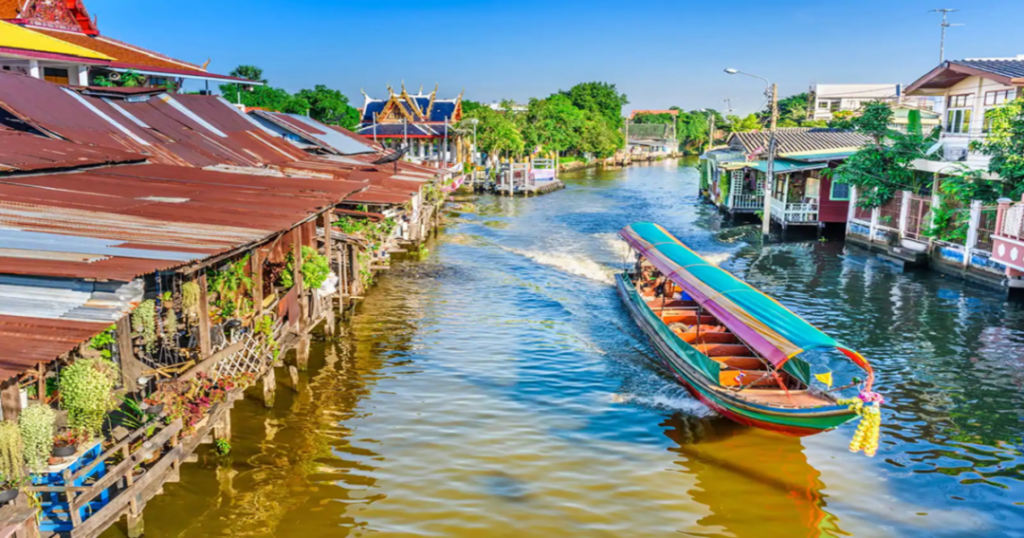
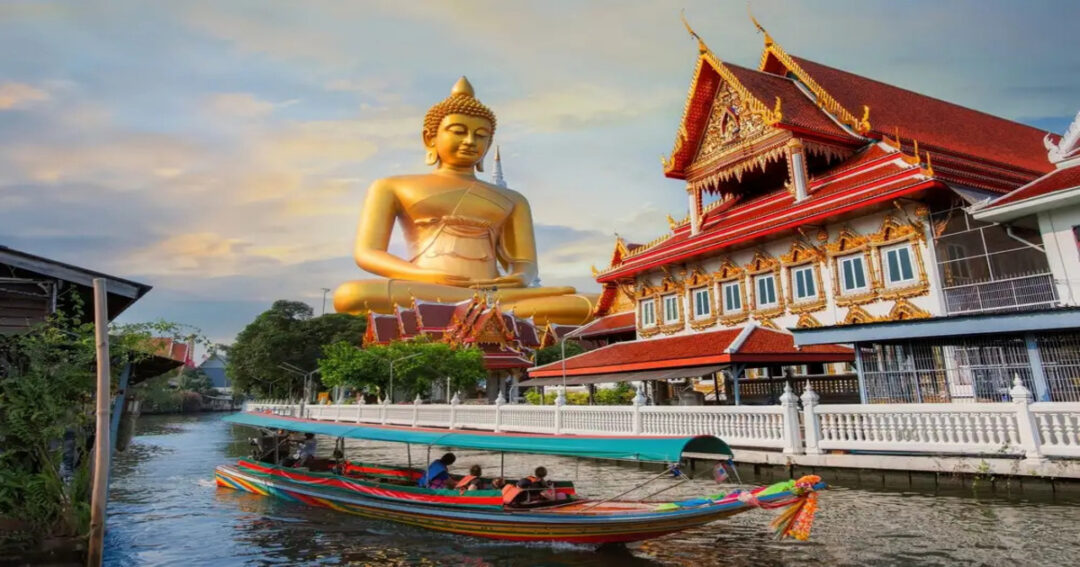
The west bank of the Chao Phraya, Thonburi, is where Bangkok’s extraordinary canal (khlong) network is most intact. Before roads, Bangkok moved by water; the canals that connected the river to the rice fields and communities of the hinterland were the arteries of the city. Most have been filled in on the east bank. On the Thonburi side, they still flow—and a long-tail boat through the Thonburi canal network is one of the finest and most disorienting experiences in the city: turning from a wide canal into a narrow khlong so overhung with vegetation that daylight nearly disappears, passing wooden houses on stilts, monks collecting alms from boats, and children swimming in the water.
- Long-tail boat hire from Tha Chang or Tha Tien pier on the east bank; negotiate for 1–2 hours
- The most rewarding routing goes deep into the Thonburi khlongs away from the tourist ferry routes
- Wat Kalayanamit and the floating community market on Khlong Bangkok Noi are worth including in the route
Lumphini Park — The Green Heart
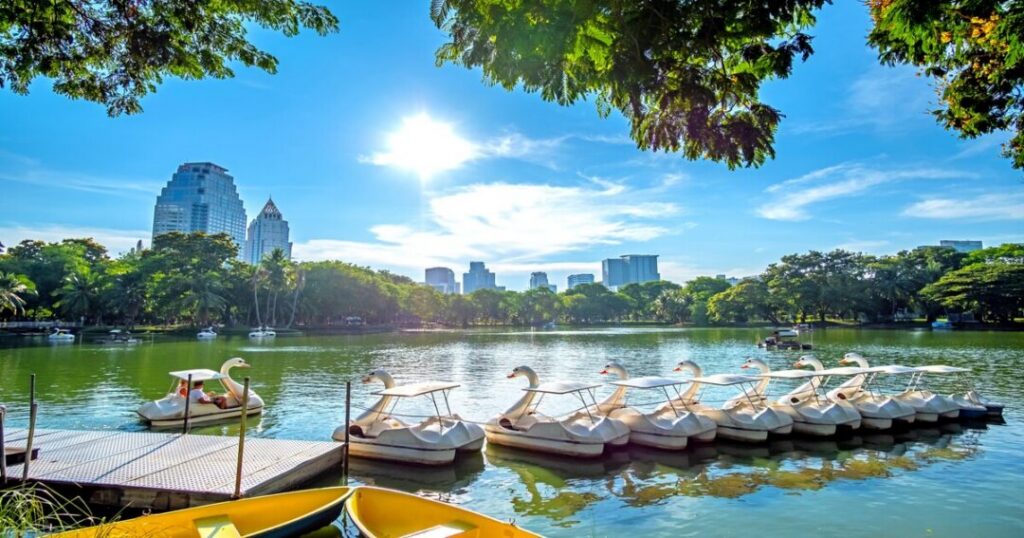
Lumphini Park—57.6 hectares of parkland in the center of Bangkok, donated by King Vajiravudh (Rama VI) and opened in 1925—is Bangkok’s Central Park equivalent: the city’s primary outdoor space, filled from 5 AM with joggers, tai chi practitioners, aerobics classes, and couples on paddleboats. The park is also home to monitor lizards (hia)—large Varanus salvator lizards up to 2 meters long that live in the park’s ponds and canals and have become one of Bangkok’s most bizarre natural attractions.
The morning culture at Lumphini — the Chinese seniors doing slow martial arts, the aerobics groups following a leader, the vendors selling coconut water at the gates — is one of the most characteristically Bangkok experiences available and one that most tourists completely miss because they are asleep at 6 AM.
What Are the Must-Try Foods and Street Foods in Bangkok?
Or Tor Kor Market — The Finest Produce in Bangkok
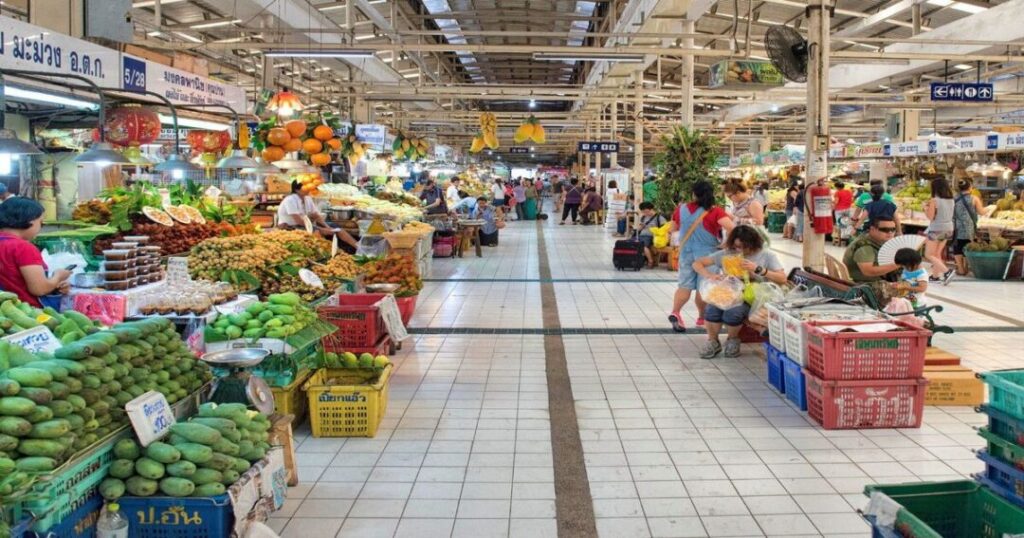
Or Tor Kor Market (Aw Taw Kaw, the Agricultural Market) near Chatuchak is Bangkok’s most extraordinary food market—not a street food destination but a covered fresh produce market where the quality of the produce, the prepared foods, and the snacks represent the pinnacle of Thai ingredients. Mangoes, durian, rambutans, longkong, fresh pandan leaves, prepared nam prik pastes, braised meats, and freshly made kanom (Thai sweets)—all at restaurant quality, at market prices.
- Best visited Saturday or Sunday morning when the full range of produce is available
- Combine with nearby Chatuchak Weekend Market—the largest market in Southeast Asia—for a full northern Bangkok half-day
- The prepared food section is ideal for a Thai breakfast of real depth and variety
Yaowarat’s Night Food Street
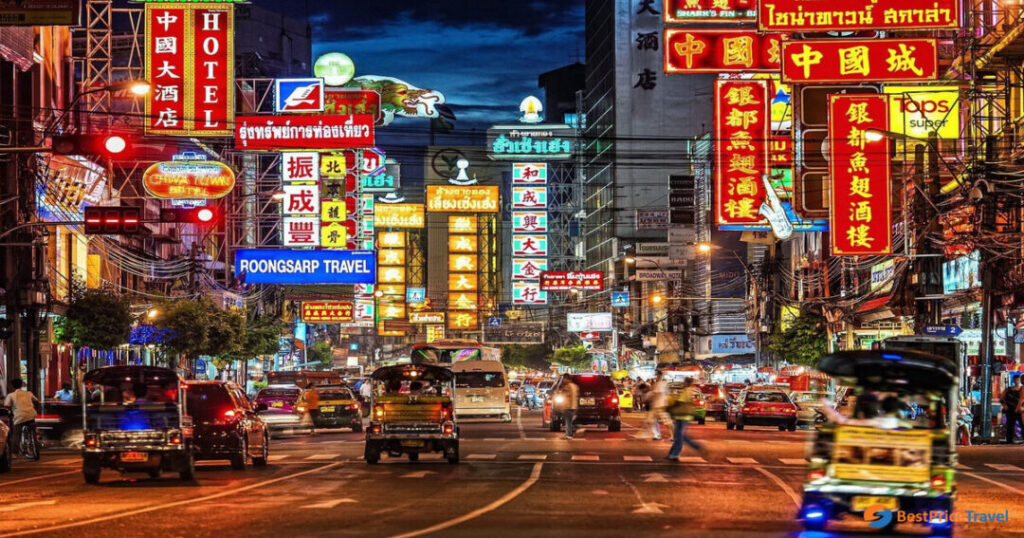
As already mentioned above, the evening transformation of Yaowarat Road from gold shops to seafood street is one of the essential Bangkok tourist place experiences. The specific street food to seek: hoi thod (crispy oyster omelette), khao man gai (Hainanese-style poached chicken over fragrant rice), ba mee (egg noodles with roasted duck), and sang kaya fak thong (custard inside a pumpkin—one of the most underrated Thai desserts).
Day Trips — Places to Explore Beyond Bangkok
Ayutthaya (~80 km | 1.5 hours by train)
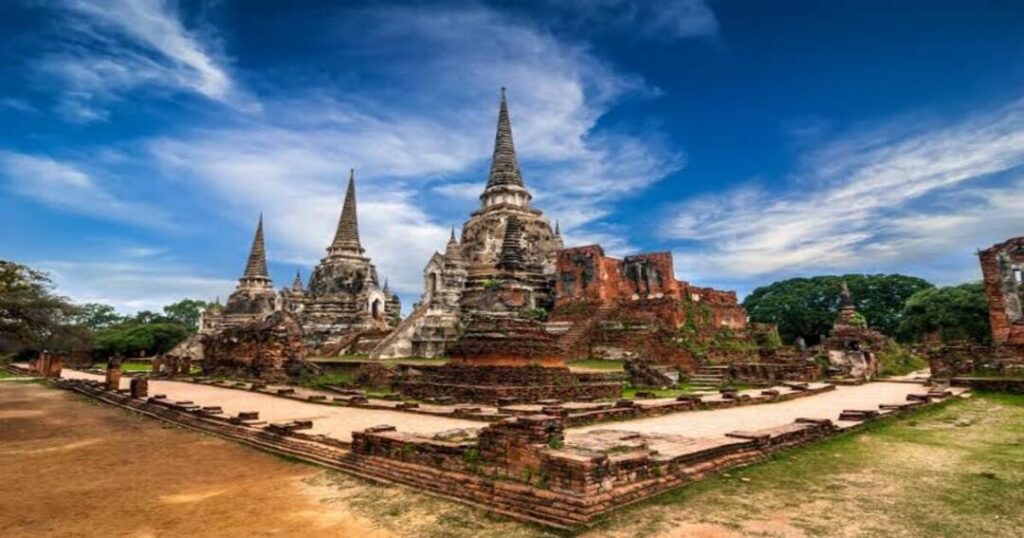
Ayutthaya — the capital of the Kingdom of Ayutthaya from 1351 to 1767 CE — was, at its peak, one of the largest and wealthiest cities in the world. Its fall to the Burmese army in 1767 was one of Southeast Asia’s great historical catastrophes; the ruins that remain are a UNESCO World Heritage Site, scattered across a river island of extraordinary atmospheric power. The headless Buddha statues, the prang towers reflected in the surrounding waterways, and the tree roots that have swallowed stone stupas over centuries—Ayutthaya provides the historical context for Bangkok that makes the newer city comprehensible.
- Direct trains run from Bangkok’s Hua Lamphong station; approximately 1.5 hours
- The ruins are spread across the island; bicycle rental is the best way to cover them at a comfortable pace
- The Wat Mahathat—where the famous Buddha head grown into the tree roots—is the most photographed spot; the less-visited temples at the island’s edges are more atmospheric
Kanchanaburi (~130 km | 2–2.5 hours)
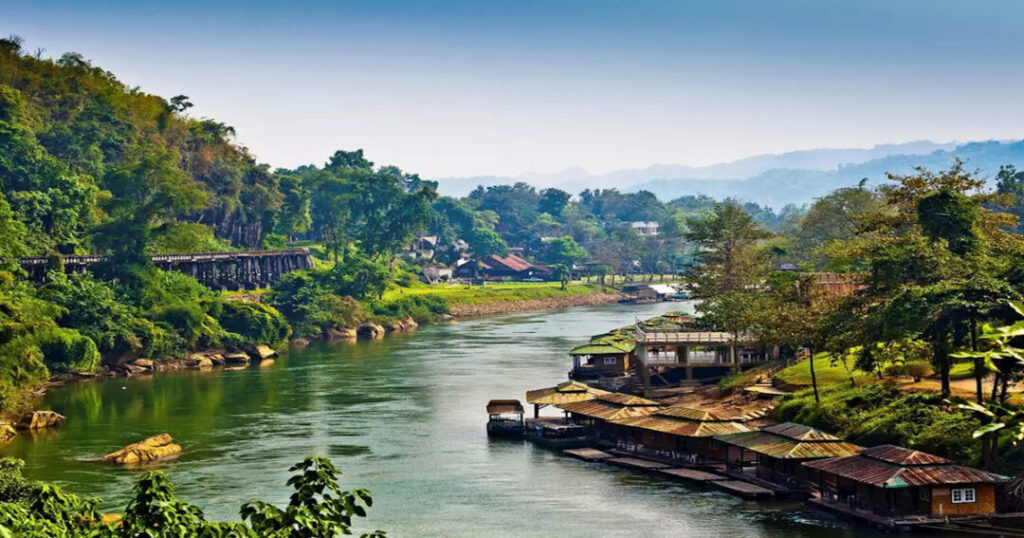
Kanchanaburi is the site of the Death Railway—the railway line built by Allied prisoners of war and Asian forced laborers under Japanese occupation during World War II, at the cost of approximately 16,000 POW and 90,000 Asian forced laborer lives. The Bridge over the River Kwai (accurately, the bridge over the Mae Klong River at the Kwai Yai River confluence), the JEATH War Museum, and the vast Kanchanaburi War Cemetery—where over 6,900 POWs are buried—make this one of the most historically significant day trips from Bangkok and one of the most sobering.
Beyond the war history, Kanchanaburi also offers the Erawan National Park’s famous seven-tiered waterfall—one of the most beautiful in Thailand—and the dense river valley landscape of the Tenasserim Hills.
When Is the Best Time to Visit Bangkok?
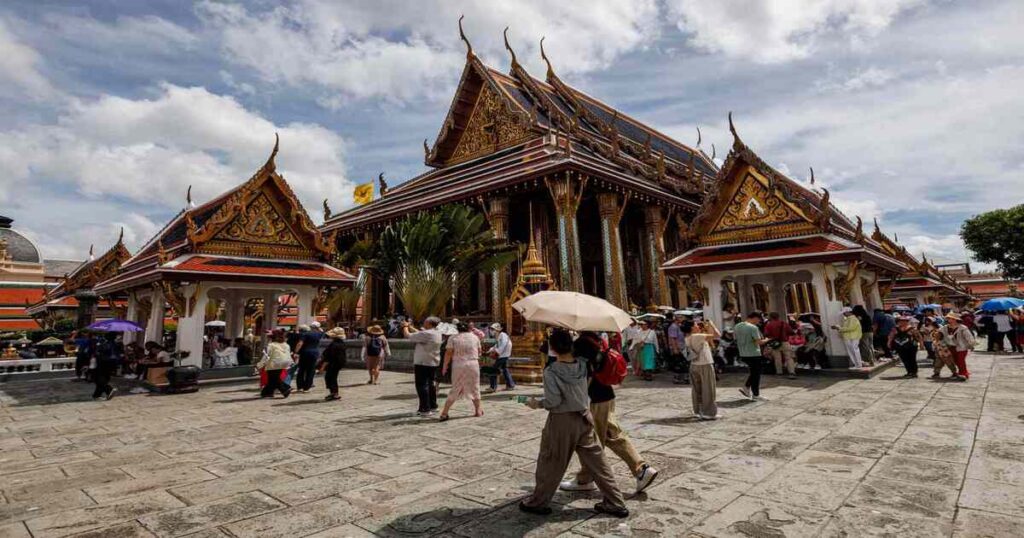
November to February is the finest window—cool (by Bangkok standards), dry, and the city is at its most comfortable for walking. Temperatures around 25–32°C. March to May are hot and humid—outdoor sightseeing is best done before 10 AM. Monsoon (June–October) brings heavy afternoon rain, but the mornings are clear, and the city is significantly less crowded with tourists. The Songkran water festival (mid-April) is the most extraordinary time to experience Bangkok at full festive intensity—the city’s most famous celebration.
Also read: 10 Highest Ropeways Across the World — From Glaciers to Himalayan Peaks
How to Reach Bangkok
- By air: Suvarnabhumi Airport (BKK)—Bangkok’s main international airport, approximately 30 km east of the city center; Airport Rail Link to Phaya Thai in 30 minutes. Don Mueang Airport (DMK) — low-cost carrier hub, approximately 25 km north
- By train: Hua Lamphong station (central Bangkok)—main rail terminus connecting to Chiang Mai, Ayutthaya, and southern Thailand; Bang Sue Grand Station now the main terminus for long-distance trains
- Within Bangkok: BTS Skytrain, MRT subway, and the Chao Phraya Express Boat cover most tourist areas; tuk-tuk and taxis for the gaps; long-tail boats for the canals
Conclusion
Bangkok is a city that keeps giving — the Grand Palace and the major temples are genuinely extraordinary, but they are the beginning of a much longer conversation. The best places to visit in Bangkok, Thailand, for return visitors are the ones that reveal the city’s actual grain: the canal water of Thonburi at dawn, the smoke of the Yaowarat seafood grill at midnight, the silence of the Bangkokian Museum’s wooden rooms, and the 5.5-tonne golden secret hidden under plaster for centuries.
Quick guide to Bangkok places to see by category:
- Temples: Wat Pho (massage encyclopaedia in stone), Wat Arun at dawn (Chinese pottery mosaic), Wat Traimit (5.5-tonne golden Buddha, discovered 1955)
- Neighbourhoods: Yaowarat (Chinatown at night), Bang Rak/Charoen Krung (European quarter walk), Thonburi (canal network by long-tail boat)
- Museums: Jim Thompson House (1959, silk revival, disappearance), BACC (contemporary Thai art), Bangkokian Museum (1930s domestic life)
- Nature: Lumphini Park at dawn (monitor lizards, tai chi), Chao Phraya river, Thonburi khlongs
- Food: Or Tor Kor Market (finest produce), Yaowarat night street food, floating market (Damnoen Saduak or Amphawa)
- Day trips: Ayutthaya (UNESCO, 80 km), Kanchanaburi (Death Railway, 130 km)
Download the Explurger app for travelers to discover what Bangkok residents and long-term visitors actually recommend, find the hidden temples and canal routes beyond the tourist circuit, and log every golden Buddha, oyster omelette, and long-tail boat ride on your Bangkok journey.
The long tail is already at the pier. The Yaowarat grill is already smoking. Bangkok’s second layer is waiting.
FAQs About Places to visit in Bangkok
2. What are the Bangkok tourist spots most visitors miss?
Consistently overlooked Bangkok tourist spots: Bangkokian Museum (Bang Rak—three wooden houses preserving 1930s–1960s middle-class Bangkok life; almost always empty), the Thonburi canal network (long-tail boat into the narrow khlongs on the west bank where old Bangkok still flows), Lumphini Park at 6 AM (monitor lizards, tai chi, aerobics—the city's real morning culture), Or Tor Kor Market (the finest fresh produce market in Bangkok, near Chatuchak), Wat Traimit's Golden Buddha in Chinatown (5.5-tonne solid gold discovered under plaster in 1955)
3. What is the Jim Thompson House in Bangkok?
The Jim Thompson House is a museum in central Bangkok built in 1959, housing the art collection of American businessman Jim Thompson, who established the Thai Silk Company in 1948 and revived Thailand's silk industry. The compound consists of six traditional Thai teak houses reassembled and connected, containing Thompson's extraordinary collection of Southeast Asian ceramics, sculpture, paintings, and textiles. Thompson disappeared without explanation in the Cameron Highlands of Malaysia in 1967. The house is one of the finest places of interest in Bangkok and one of the most atmospheric cultural destinations in the city.
4. What is the best day trip from Bangkok?
The two best day trips from Bangkok: Ayutthaya (80 km, 1.5 hours by train)—the ruins of the Ayutthayan kingdom (1351–1767 CE), a UNESCO World Heritage Site, headless Buddha statues, and temples half-consumed by tree roots; best by bicycle from the train station. Kanchanaburi (130 km, 2–2.5 hours) — the Death Railway and Bridge over the River Kwai from WWII, war cemetery with 6,900+ buried POWs, and Erawan National Park's seven-tiered waterfall. Both provide essential historical context for understanding Thailand beyond Bangkok's surface.
5. What is the best time to visit Bangkok?
November to February is the finest window for places to see in Bangkok—cool temperatures (25–32°C), dry skies, and the city at its most comfortable for extended walking. March to May is hot; best for early morning visits. Monsoon (June–October) brings afternoon rain, but mornings are clear. The Songkran water festival in mid-April is the most extraordinary time to experience Bangkok's full festive culture — the city transforms into a city-wide water fight and celebration for several days.