
1,891 Total Views
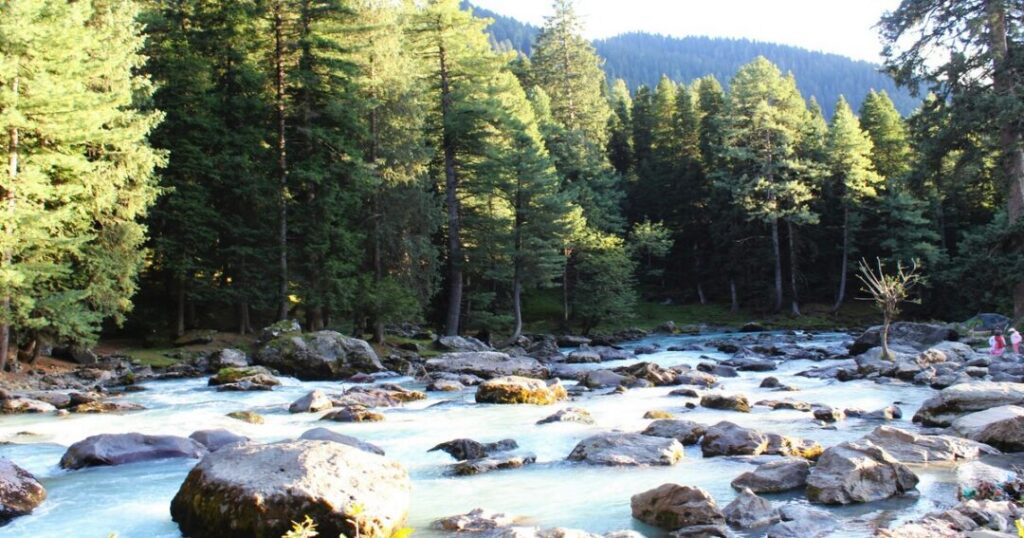
Pahalgam—the name means “village of shepherds” in Kashmiri—sits at 2,200 meters (7,200 feet) in the Lidder Valley of the Anantnag district, approximately 90 km from Srinagar. It is one of Kashmir’s most beloved destinations, and for very good reason: four distinct valleys radiate out from the town, each with its own character and distance; the Lidder River runs cold and clear through the center of everything; and the Himalayan backdrop changes color and character from dawn to dusk in ways that make the camera feel inadequate.
But Pahalgam is more than a scenic destination. It is the base camp for the annual Amarnath Yatra—one of the most significant Hindu pilgrimages in India. It is the location where some of Bollywood’s most iconic films were shot. It is the starting point for treks to glaciers and alpine lakes that rank among the finest in the Western Himalayas. And it is a place where the shepherd tradition—the Gujjar and Bakarwal communities, who move their flocks between Pahalgam and higher pastures each summer—is still visible in the meadows above the town.
This guide covers the complete places to visit in Pahalgam, Kashmir—the four valleys, the pilgrimage route, the adventure activities, the food, and the practical details.
Top 10 Places to Visit in Pahalgam
1. Betaab Valley — Where Bollywood Found Kashmir
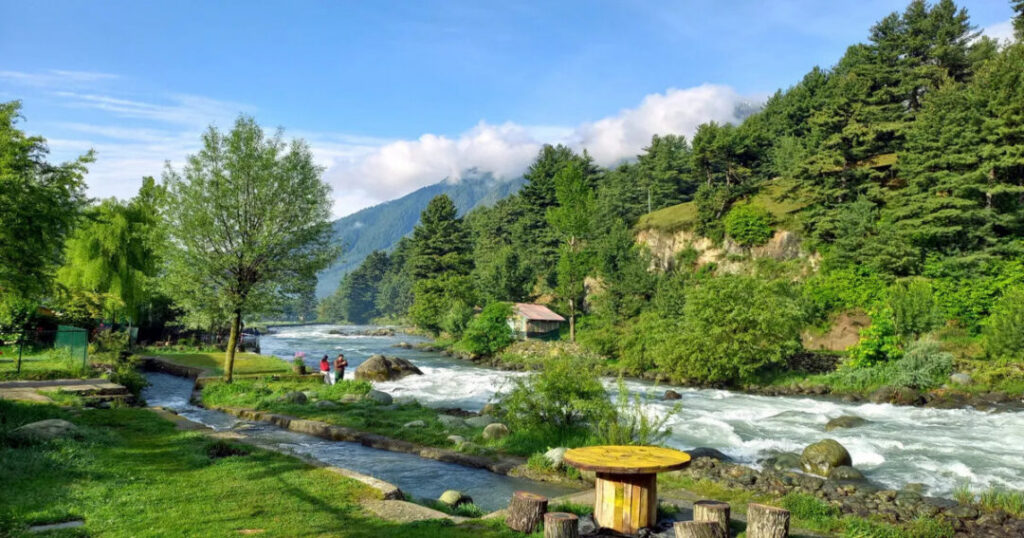
Betaab Valley, approximately 15 km from Pahalgam, was originally known as Hajan Valley—until the 1983 Bollywood blockbuster Betaab, starring Sunny Deol and Amrita Singh in their debut roles, was filmed here and the valley was renamed in its honor. The film was the second highest-grossing Indian film of 1983, and the Kashmir it showed—lush green meadows, the Lidder River cutting through pine and fir forest, and snowcapped peaks rising above—brought millions of viewers their first visual encounter with Pahalgam. The valley has been one of the most visited Pahalgam tourist spots ever since.
The setting is genuinely remarkable — a flat, open meadow on the banks of the Lidder River, flanked by Himalayan slopes covered in deodar and pine, with higher snowfields visible through the tree line. The valley is on the road between Pahalgam and Chandanwari, making it a natural stop on the standard sightseeing circuit.
What to do here: Walk the full length of the valley along the riverbank (~2 km end to end), horseback ride along the meadow, and take photographs at multiple classic framing spots where mountain, meadow, and river compose naturally.
2. Aru Valley — The Trek Base Most Visitors Underestimate
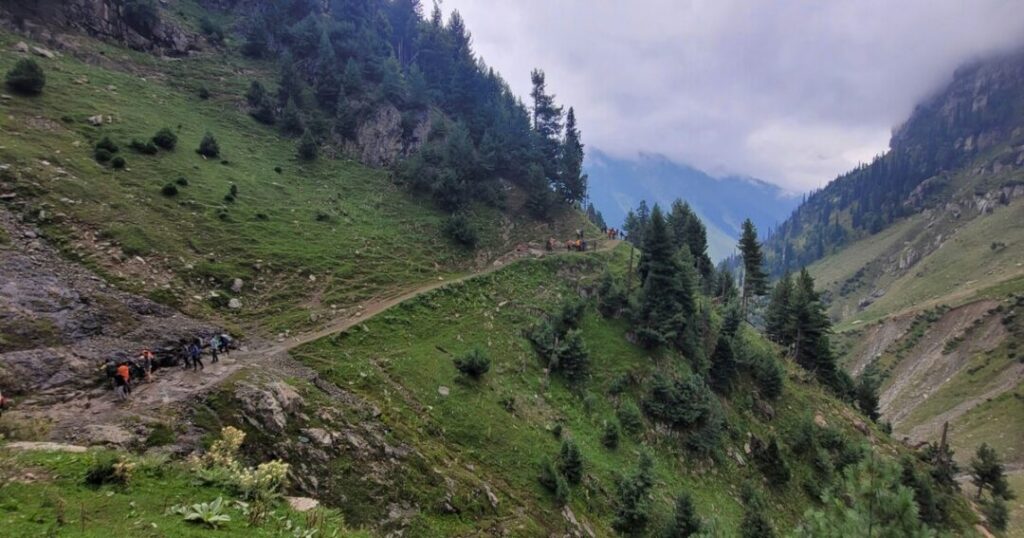
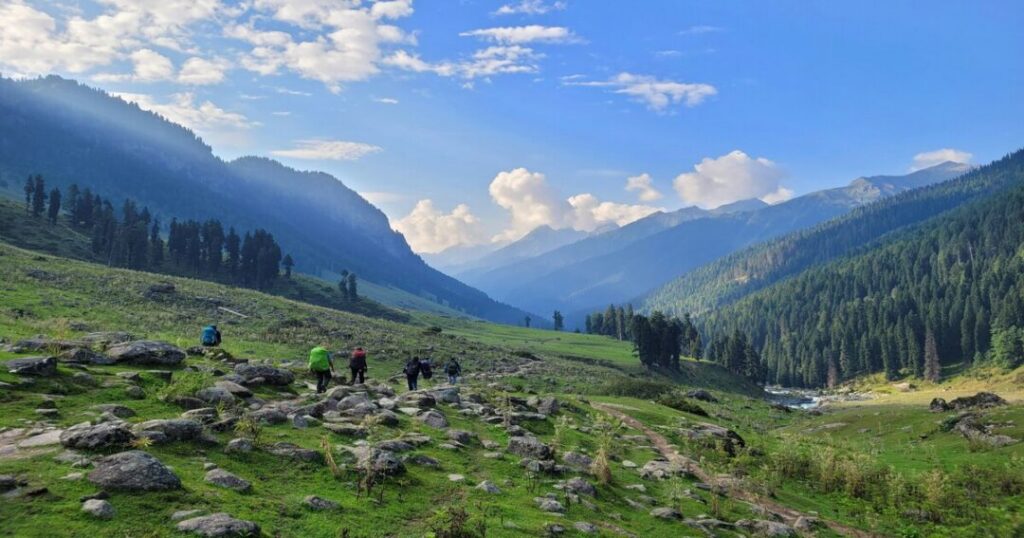
Aru Valley, 12 km from Pahalgam in the opposite direction from Betaab and Chandanwari, is the least commercialized of the four valleys and the most rewarding for visitors who want to escape the standard tourist circuit. The road from Pahalgam to Aru follows the West Lidder River upstream through a narrowing gorge that opens into a wide, flat bowl of meadow surrounded by high ridges.
Aru Village itself—a small cluster of traditional Kashmiri wooden houses with carved facades—is one of the most authentic Pahalgam places to see for a genuine mountain village experience. The village is the base camp for two of the finest treks in the Kashmir Valley:
- Kolahoi Glacier trek — approximately 35 km from Pahalgam via Aru; a hanging glacier below Kolahoi Peak
- Tarsar-Marsar Lake trek — a multi-day high-altitude circuit to twin alpine lakes at ~3,500–3,800 m
What to do here: Walk through the village and river; horse or pony rides through the meadow; overnight camping for trekkers; birdwatching in the Aru Wildlife Sanctuary (~511 sq km).
Also read: Kashmir Great Lakes Trek: The Most Beautiful Trek in India
3. Baisaran — Mini Switzerland, Ponies Only
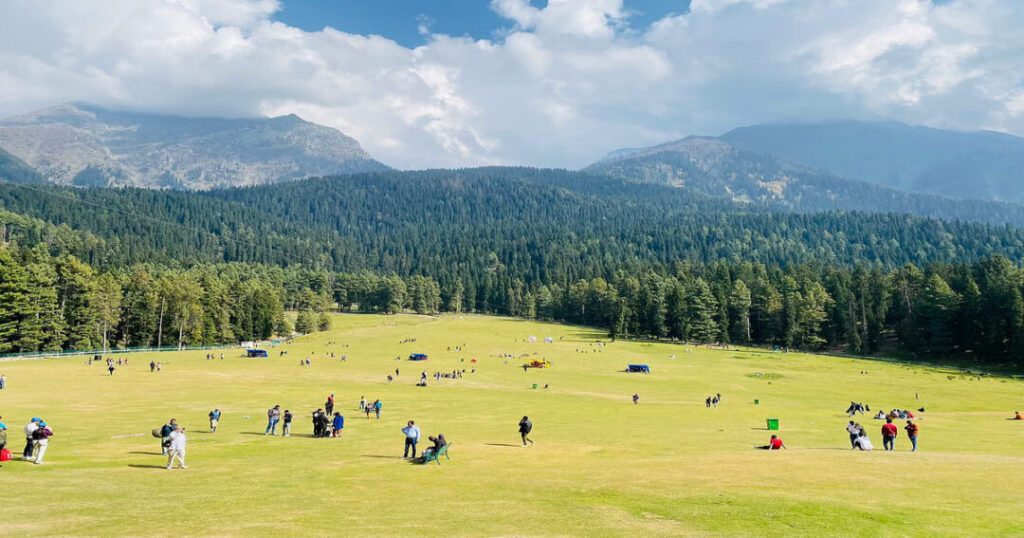
Baisaran Valley, 5 km from Pahalgam at approximately 8,000 feet (2,438 m), is called the “Mini Switzerland of India.” The meadow at Baisaran is a wide, rolling expanse of grassland surrounded by dense pine and fir forests, with snowcapped Himalayan peaks above the treeline.
Unlike Betaab and Aru, Baisaran cannot be reached by motor vehicle — the only options are trekking (approximately 45–60 minutes from Pahalgam) or hiring a pony from the Pahalgam pony stand (~20–30 minutes). This absence of vehicle access is Baisaran’s defining characteristic—it preserves a quietness and remoteness that the more accessible valleys lack. The meadow is also the base camp for the Tulian Lake trek (~4,200 m).
What to do here: take a pony ride from Pahalgam, trek on foot, go zorbing on the meadow slopes, and take photographs of the pine-framed meadow panorama.
4. Chandanwari — Gateway to the Amarnath Yatra
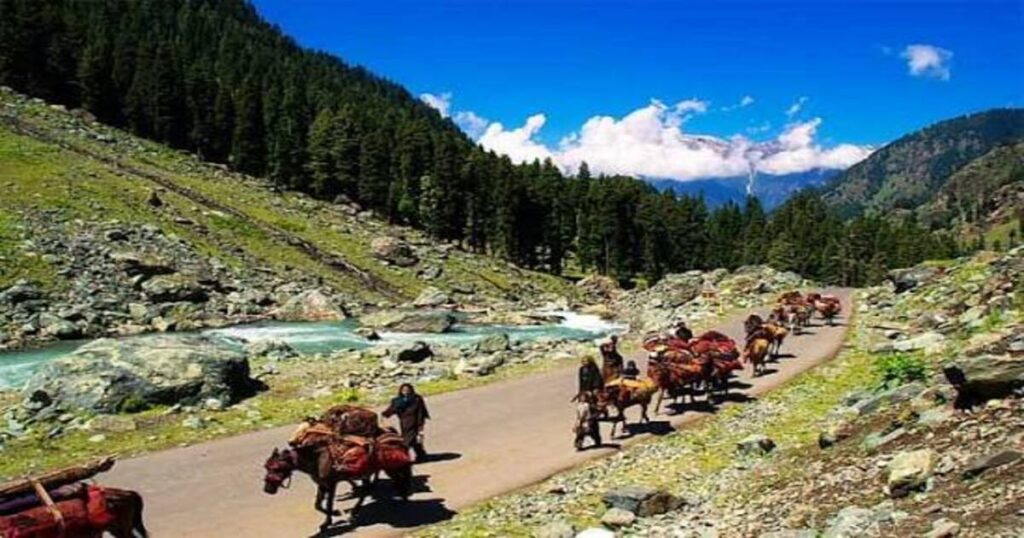
Chandanwari, 16 km from Pahalgam at approximately 2,895 meters, is the starting point of the Amarnath Yatra. Even outside the pilgrimage season, it is one of the most dramatically sited Pahalgam sightseeing places—the road climbs through dense pine forest. It emerges at a high, snow-covered bowl at the base of the Amarnath route. Snow is present even in summer on the higher slopes.
According to Hindu mythology, Lord Shiva released the moon from his matted hair (jata) here at Chandanwari on his way to the Amarnath cave—the name means “sandalwood forest” in Sanskrit.
What to do here: snow activities (sledding, snowball fights), start of the Amarnath Yatra route (July–August), photography of the high mountain snowscape, and pony rides to upper slopes.
5. Pahalgam Golf Course — Asia’s Most Scenic 18 Holes
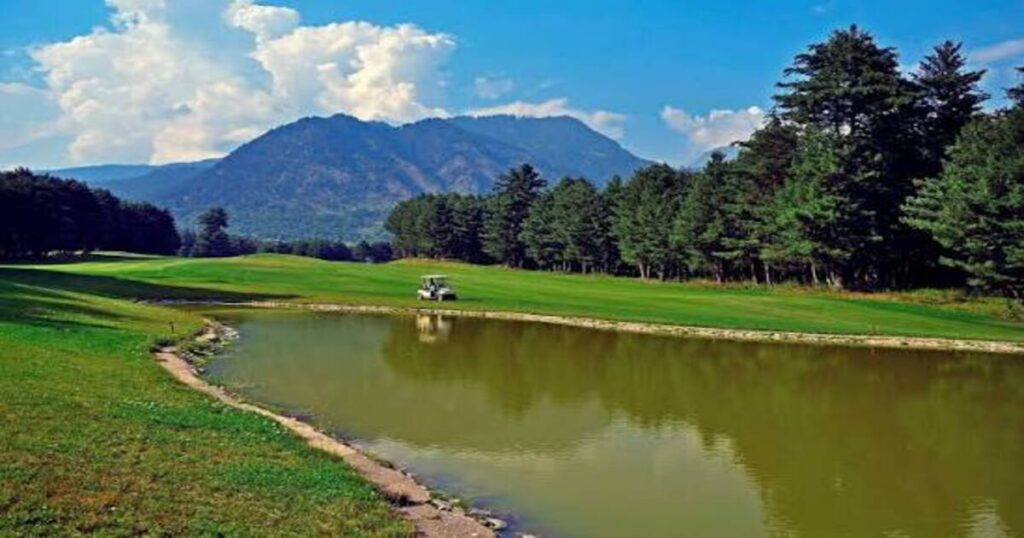
The Pahalgam Golf Course (also known as Lidder Valley Golf Course) is an 18-hole golf course inaugurated in 2011, set against the backdrop of the Lidder Valley with the Himalayan snowline visible from the fairways. Even for non-golfers, the course is one of the finest things to see in Pahalgam for the sheer beauty of the setting. The course sits along the banks of the Lidder River at the edge of the town.
6. Lidder River — Rafting, Fishing & River Walks
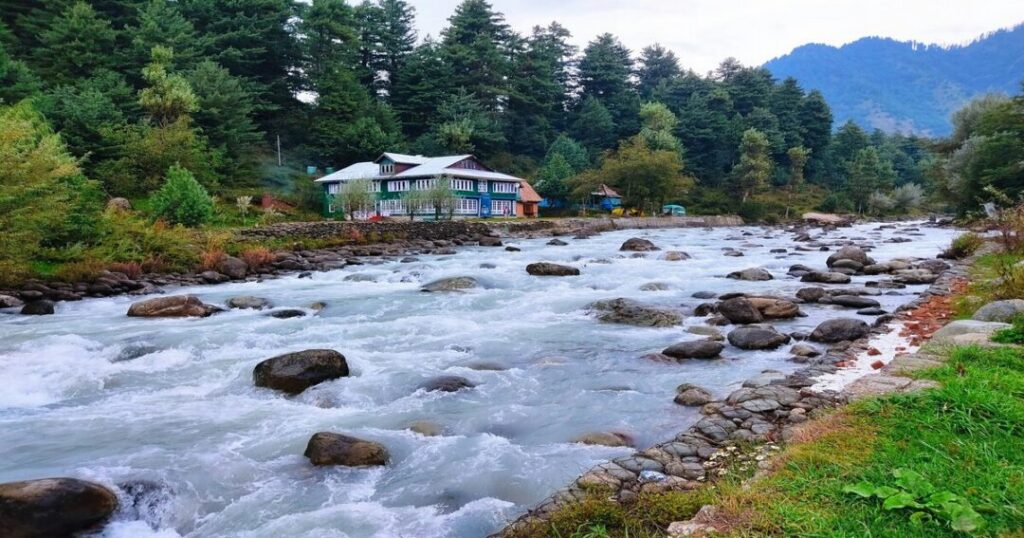
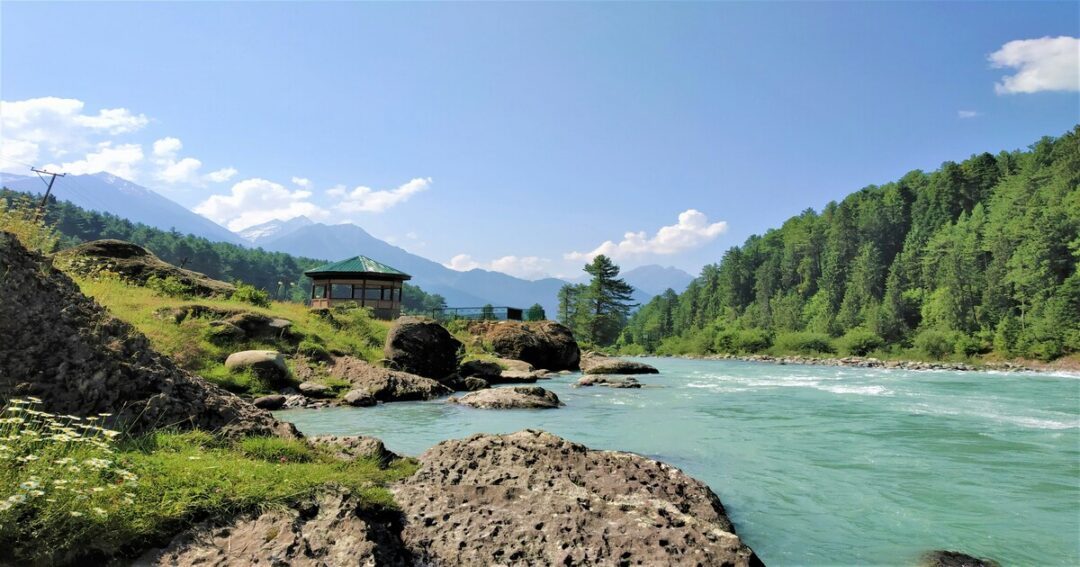
The Lidder River — which originates from the Kolahoi Glacier and runs through Pahalgam — is both a natural attraction and an adventure hub. Whitewater rafting on the Lidder (Grade 2–3, April–October) is one of the most popular things to do in Pahalgam. The combination of cold glacial water, mountain scenery, and moderate rapids makes it excellent for beginners and families alike.
Brown trout fishing on the Lidder is among the finest in India — the cold, fast, clear glacial water supports a healthy population. Permits are required from the Jammu & Kashmir Fisheries Department; seasonal restrictions apply (typically April to September).
Also read: Places to Visit in Srinagar: The Complete Guide Beyond Dal Lake
7. Kolahoi Glacier — For the Serious Trekker
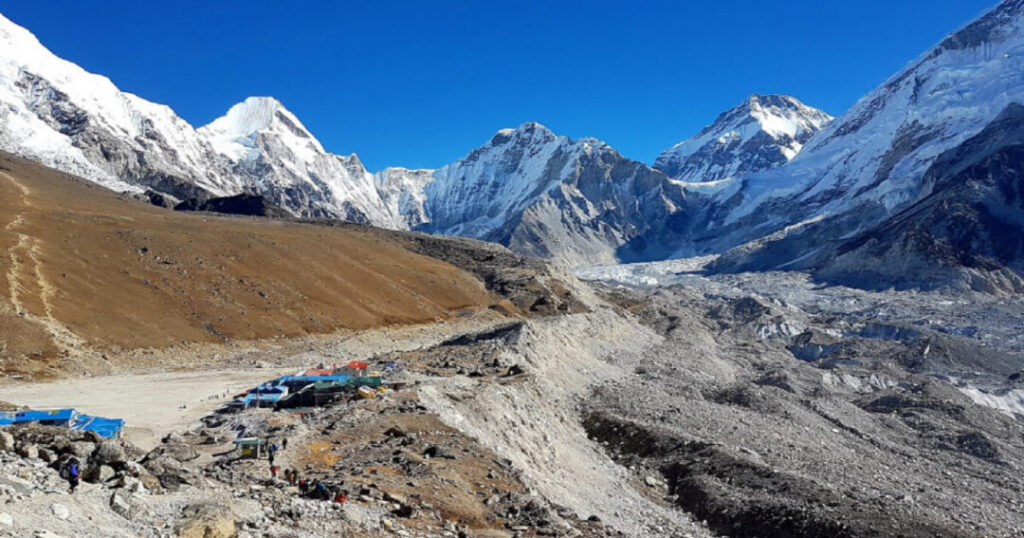
The Kolahoi Glacier — a hanging glacier situated below Kolahoi Peak — is accessible via a ~35 km trail from Pahalgam via Aru. This is the most serious trekking destination in the Pahalgam area and not a day excursion—it requires 2–3 days, proper camping equipment, and a guide. The Kolahoi Glacier is one of the most spectacular trekking destinations in the Western Himalayas and the source of the West Lidder River.
Suitable for: Experienced trekkers; multi-day; guide and camping equipment are required.
8. Tulian Lake — High-Altitude Day Trek from Baisaran
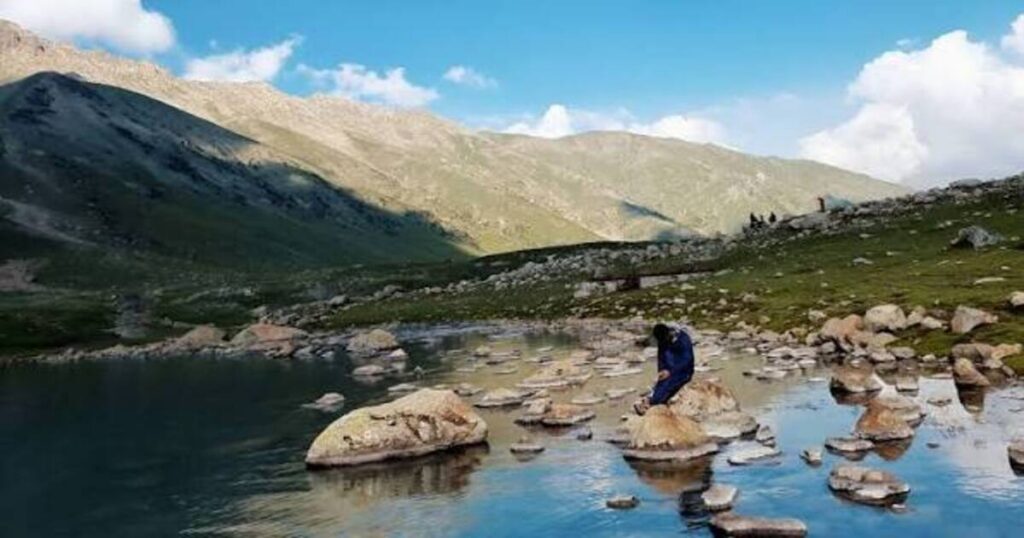
Tulian Lake, at approximately 4,200 meters, is the most accessible high-altitude lake from Pahalgam, reached by a challenging single-day or overnight trek from Baisaran. The trail climbs steeply from the Baisaran meadow through increasingly alpine terrain to the lake, which sits in a rocky bowl surrounded by permanent snowfields. The view of the surrounding Himalayan peaks from the lake is extraordinary.
Suitable for: Fit trekkers with basic altitude experience; guide recommended.
9. Sheshnag Lake — En Route Amarnath, Worth the Detour
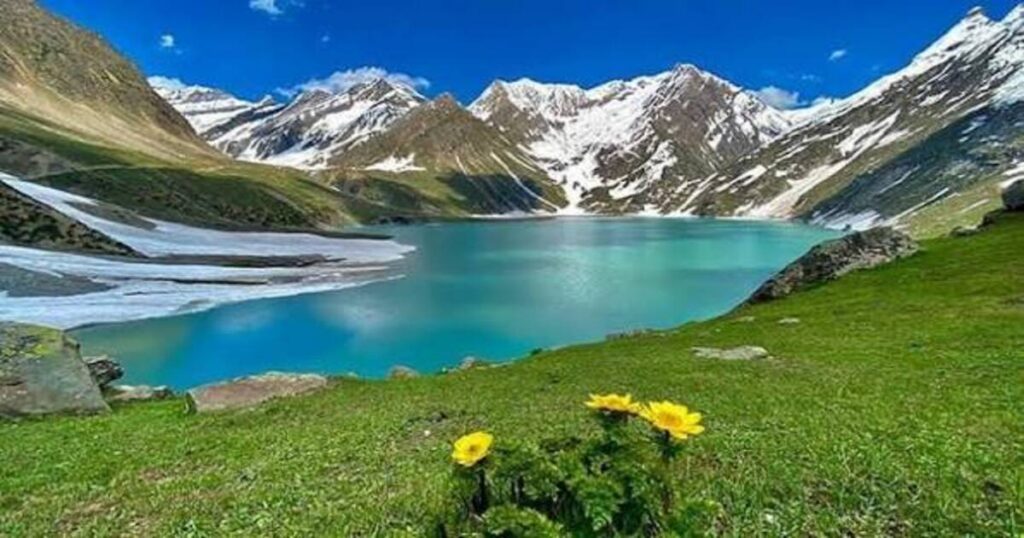
Sheshnag Lake, nestled at approximately 3,957 meters (12,989 feet), is 12 km from Chandanwari on the Amarnath Yatra route. Surrounded by seven peaks said to resemble the seven heads of the serpent Sheshnag, the lake is one of the most sacred and visually extraordinary bodies of water in the Kashmir Himalayas. Non-Yatra visitors can trek to Sheshnag independently as a 2-day trek from Pahalgam.
Bonus: The Sheshnag area is one of the finest areas in Kashmir for brown trout in natural high-altitude streams.
10. Pahalgam Market & Village — The Town Itself
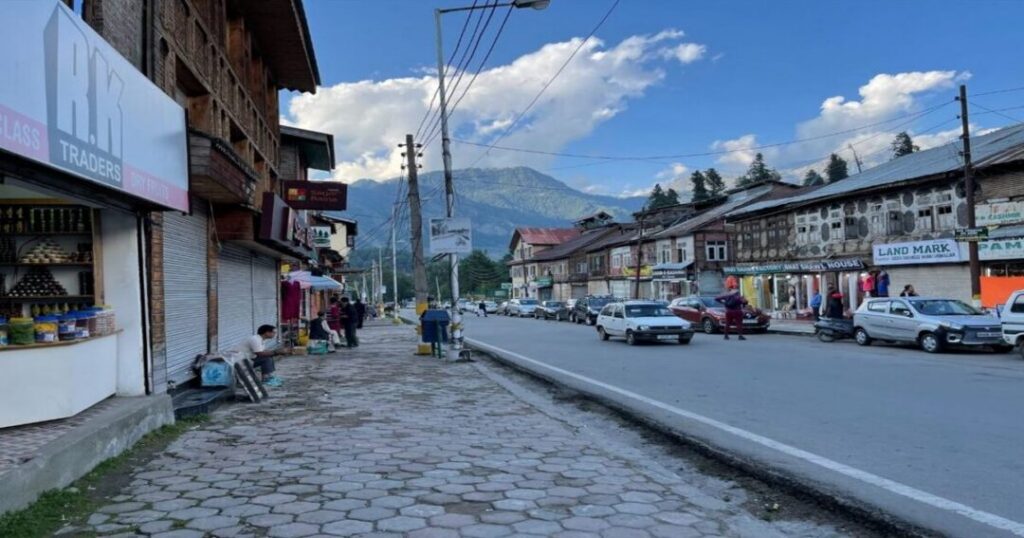
The Pahalgam market and old village area — the lanes along the Lidder River, the wooden shopfronts, the pony stands, the confluence of East and West Lidder just above the town — deserve an unhurried morning walk before the valley excursions begin. The town has a specific character: part pilgrim staging post, part hill resort, part shepherd community. The early morning (6–8 AM) before tour groups arrive is the best time to experience it authentically.
Bonus Places to Visit in Pahalgam
Bonus 1 — Mamal Temple: An ancient Shiva temple in Pahalgam town dating to approximately the 9th century CE—one of the oldest surviving religious structures in the Lidder Valley, often overlooked by visitors focused on the natural attractions.
Bonus 2—Pahalgam to Srinagar Drive: The 90 km road journey from Pahalgam to Srinagar along the Lidder and Jhelum rivers is one of the most scenic drives in Kashmir—passing through Anantnag, the saffron fields of Pampore (in season), and the Awantipora ruins. Do it slowly and stop often.
Places to Visit in Pahalgam: The Amarnath Yatra Route
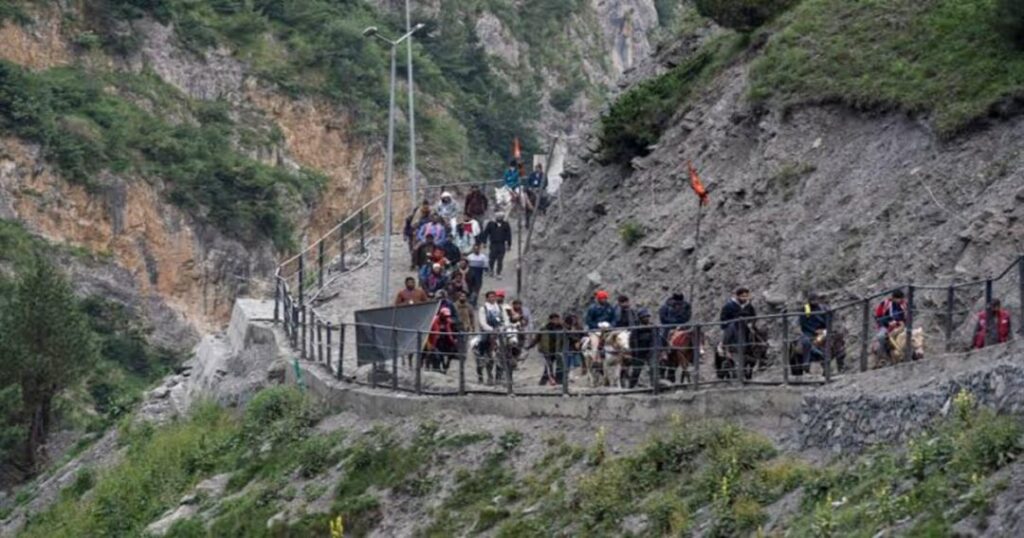
The Amarnath Yatra—the annual pilgrimage to the Amarnath Cave Temple at 3,888 meters—draws hundreds of thousands of pilgrims each year in July and August. Pahalgam is the traditional base camp and starting point via the Chandanwari route.
Must Read: Amarnath Yatra 2026: New Traffic Restrictions, QR Verification & Complete Travel Guidelines
The pilgrimage route from Pahalgam:
- Pahalgam (2,200 m) → Chandanwari (2,895 m) — 16 km by road
- Chandanwari → Sheshnag Lake (~3,957 m) — ~12 km trek, Day 1
- Sheshnag → Panchtarni (~3,657 m) — ~13 km trek, Day 2
- Panchtarni → Amarnath Cave (3,888 m)—~6 km trek, Day 3
The Amarnath Cave contains a naturally formed ice Shivalingam—a stalagmite of ice believed to represent Lord Shiva, growing and shrinking with the lunar cycle.
Note for tourists: If your Kashmir visit coincides with the Yatra (July–August), Pahalgam will be significantly more crowded. Accommodation prices spike considerably—book well in advance.
Also read: Amarnath Yatra 2026 Registration Routes Dates Complete Travel Guide
Places to Visit in Pahalgam: Top 10 Things to Do
- Valley circuit by local taxi—cover Betaab Valley (15 km), Aru Valley (12 km), and Chandanwari (16 km) in a single day by hiring a union taxi from Pahalgam market
- Pony ride to Baisaran — the most characteristic Pahalgam activity; 20–30 minutes each way through pine forest
- White water rafting on the Lidder — Grade 2–3, April to October; suitable for beginners and families
- Kolahoi Glacier trek — 2–3 day multi-day trek via Aru; for serious trekkers
- Tarsar-Marsar Lakes trek — multi-day high-altitude circuit from Aru; two stunning alpine lakes
- Tulian Lake trek — challenging day or overnight trek from Baisaran (~4,200 m)
- Brown trout fishing on the Lidder — permit required; one of India’s finest trout rivers
- Amarnath Yatra (July–August) — the pilgrimage itself; Chandanwari route from Pahalgam
- Snow activities at Chandanwari—sledding, snowball fights, photography; snow present even in summer
- A sunrise walk along the Lidder—the river at dawn, before the town wakes—is one of Pahalgam’s finest quiet experiences
Bonus: Horse riding to upper meadows — multi-hour or multi-day horse rides into the higher pastures above Pahalgam with Gujjar shepherd communities visible at their summer camps.
Pahalgam as a Bollywood Location
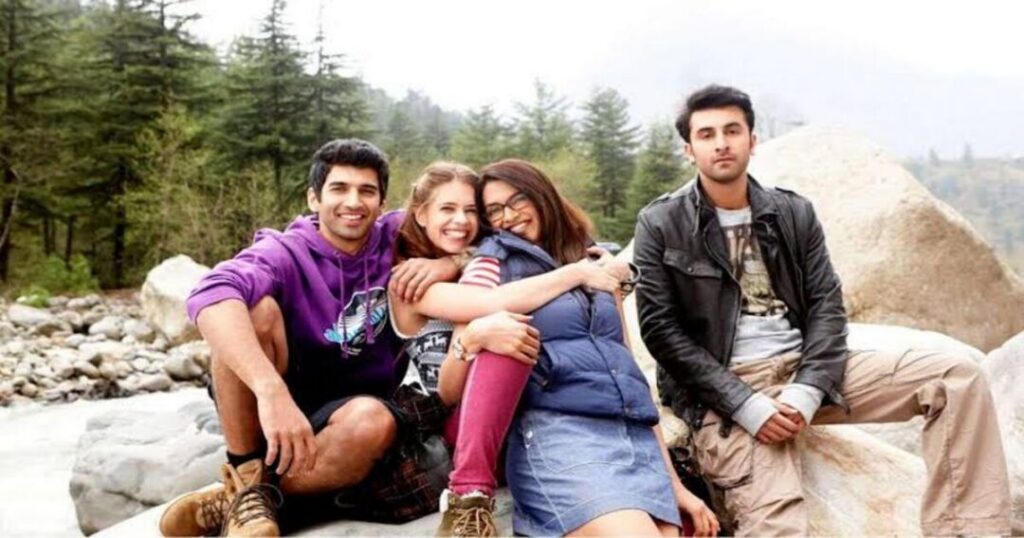
Pahalgam is Kashmir’s most filmed valley. The list of films shot here:
- Betaab (1983) — renamed the Betaab Valley; Sunny Deol and Amrita Singh’s debut; second highest-grossing Indian film of 1983
- Bobby (1973) — Raj Kapoor’s iconic coming-of-age film
- Junglee (1961)—Shammi Kapoor’s defining film; “Yahoo!” song filmed in Pahalgam meadows
- Silsila (1981), Lamhe (1991) — used Pahalgam’s valleys as the quintessential Himalayan romantic backdrop
Food & Local Culture
Essential Kashmiri dishes in Pahalgam restaurants:
- Rogan Josh — slow-cooked lamb in Kashmiri red chilli sauce (no tomato in the authentic version)
- Yakhni — lamb in yogurt-fennel sauce; milder, equally essential
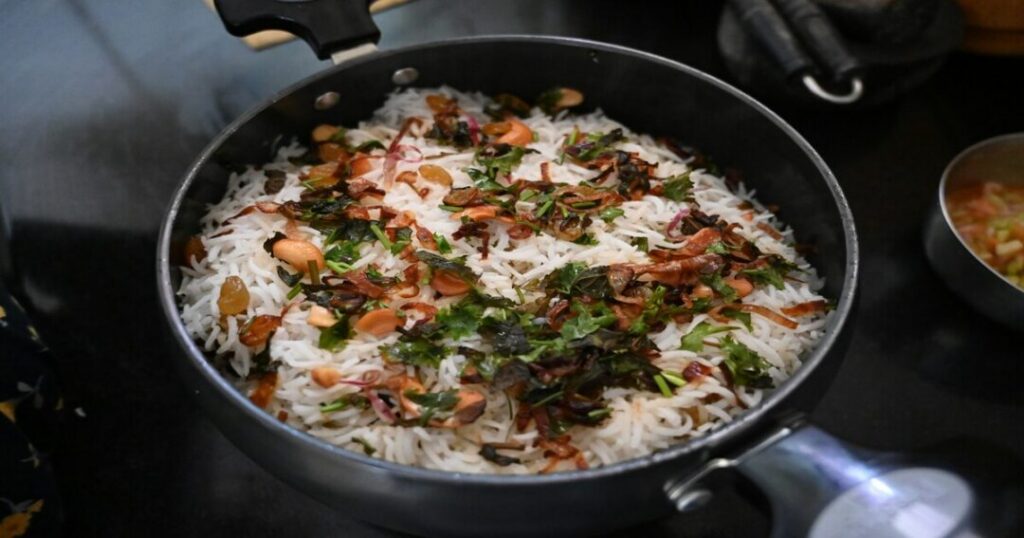
- Kashmiri Pulao — fragrant rice with saffron, dried fruits, and nuts
- Gushtaba — minced lamb meatballs in yogurt gravy; the concluding Wazwan dish
- Kahwa — green tea with saffron, cardamom, almonds, and cinnamon; the essential Kashmiri drink
- Fresh brown trout — grilled or fried, available at riverside restaurants in season
Also read: Kashmir Food: 12 Must-Try Dishes Every Traveller Needs to Eat
Best Season for Places to Visit in Pahalgam
| Season | Conditions | Best For |
| April to June | Melting snow, green valleys, flowers: 10–22°C | Best overall for first-timers |
| July to August | Peak season, Amarnath Yatra, lush green, crowded | Pilgrimage: maximum greenery |
| September to October | Post-monsoon clarity; golden light | Best photography; clearest views |
| November to March | Heavy snow; most valley roads closed | Snow experiences in town only |
How to Reach Pahalgam?
- From Srinagar (~90 km | 2–2.5 hours): By road via Anantnag along the Jhelum and Lidder rivers — one of Kashmir’s most scenic drives; private taxis and shared taxis from Anantnag available
- From Anantnag (~45 km | 1 hour): Nearest major town; shared taxis run frequently
- By air: Srinagar International Airport (~95 km) — primary air access point for the region
- Within Pahalgam: Local union taxis for Betaab, Chandanwari, and Aru; pony or trek for Baisaran
Conclusion About Places to Visit in Pahalgam
Pahalgam rewards visitors who go beyond the valley circuit—but the valley circuit itself is extraordinary enough to justify the journey. The Places to Visit in Pahalgam include the scenic Lidder River, the lush meadow at Betaab (15 km), the peaceful village of Aru (12 km), the popular pony ride to Baisaran (5 km), and the snow-covered landscapes of Chandanwari (16 km). Together, these attractions create one of the finest single-day sightseeing experiences in the entire Kashmir Valley.
Quick guide to Places to Visit in Pahalgam:
- 1. Betaab Valley (15 km)—Bollywood’s Kashmir; Lidder meadow
- 2. Aru Valley (12 km) — traditional village; Kolahoi & Tarsar-Marsar trek base
- 3. Baisaran (5 km) — “Mini Switzerland”; pony or trek only; Tulian Lake base
- 4. Chandanwari (16 km, 2,895 m) — Amarnath Yatra start; snow year-round
- 5. Kolahoi Glacier — 35 km via Aru; multi-day trek
- 6. Tulian Lake (~4,200 m) — challenging day/overnight from Baisaran
- 7. Lidder River — rafting, trout fishing, river walks
- 8. Pahalgam Golf Course — 18-hole, 2011, stunning Himalayan setting
- 9. Sheshnag Lake (3,957 m) — sacred lake on Amarnath route
- 10. Pahalgam market — early morning; old village lanes; pony stands
Download the Explurger app to discover what Kashmir travelers actually recommend in Pahalgam, find the best valley routes and trekking spots, and log every meadow, river, and cup of Kahwa on your Kashmir journey.
The Lidder is already running cold from the glacier. Betaab Valley is already green. Pahalgam has been waiting.
FAQs About Places to Visit in Pahalgam
2. What are the best things to do in Pahalgam?
The best things to do in Pahalgam: 1. Valley circuit (Betaab 15 km + Aru 12 km + Chandanwari 16 km by taxi), 2. Pony ride to Baisaran (5 km), 3. Lidder River rafting (Grade 2–3), 4. Kolahoi Glacier trek (2–3 days via Aru), 5. Tarsar-Marsar Lakes trek (multi-day), 6. Tulian Lake trek (from Baisaran), 7. Brown trout fishing (permit required), 8. Amarnath Yatra (July–August), 9. Snow activities at Chandanwari, 10. Sunrise river walk along the Lidder.
3. What is the Amarnath Yatra and why does it start from Pahalgam?
The Amarnath Yatra is one of India's most significant Hindu pilgrimages—an annual trek to the Amarnath Cave Temple at 3,888 meters, where a naturally formed ice Shivalingam represents Lord Shiva. The Yatra takes place in July–August each year. Pahalgam is the traditional base camp via the Chandanwari route (Chandanwari → Sheshnag → Panchtarni → Amarnath cave). According to mythology, Lord Shiva left the moon from his matted hair at Chandanwari on his way to the cave—making Pahalgam part of the sacred geography of the pilgrimage.
4. Why is Betaab Valley famous?
Betaab Valley is famous because it was the filming location of the 1983 Bollywood film Betaab—the second highest-grossing Indian film of that year, starring Sunny Deol and Amrita Singh in their debut roles—and was renamed in the film's honor. Located 15 km from Pahalgam on the road toward Chandanwari, originally called Hajan Valley, it is now the most visited of the Pahalgam sightseeing places and one of the most photographed valleys in Kashmir.
5. What is the best time to visit Pahalgam?
April to June is the finest window — green meadows, wildflowers, temperatures of 10–22°C, and all valleys accessible. September to October is best for mountain photography and post-monsoon clarity. July to August is peak season with the Amarnath Yatra—the valleys are lush, but accommodation is scarce and expensive; book well in advance. Winter (November to March) closes most valley roads.