
1,130 Total Views
Bhuj is the kind of city that takes you completely by surprise. You arrive expecting a dusty junction town in the middle of the Kutch desert. You find instead one of India’s most culturally layered destinations — a city with 18th-century palaces built by a craftsman who had spent years learning in Europe, the oldest museum in Gujarat, craft villages where artists practice textile traditions that predate the Mughal empire, and the surreal White Rann of Kutch just 85 km away. And underneath all of it runs the story of the 2001 Gujarat earthquake. This 7.7 magnitude disaster killed over 20,000 people and destroyed large parts of the city, which then rebuilt itself around its own cultural heritage as the primary act of recovery.
The things to do in Bhuj span royal palaces, UNESCO heritage sites, living craft communities, and some of the finest wilderness in western India. This guide covers all of them.
Top 10 Things to Do in Bhuj
1. Aina Mahal — The Palace of Mirrors
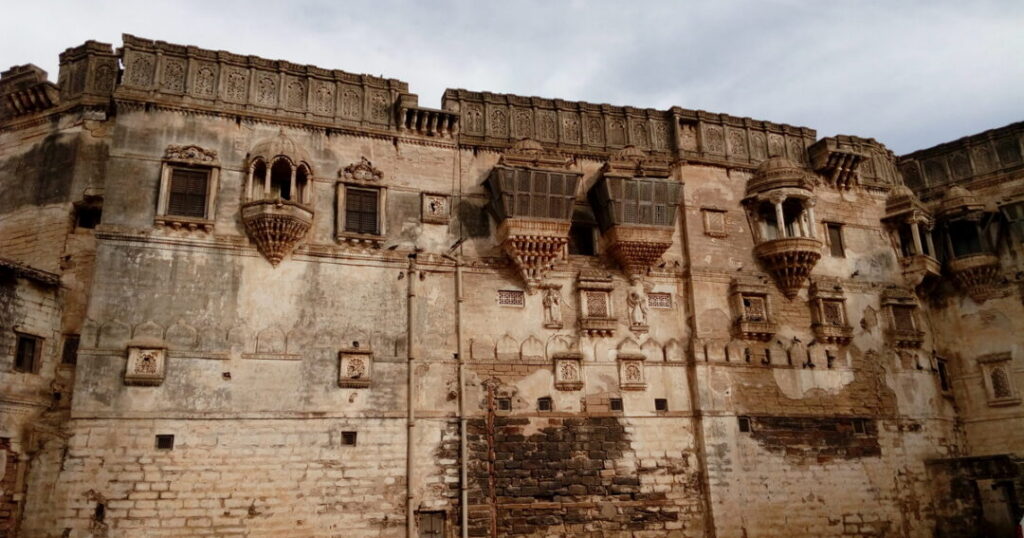
Aina Mahal (Palace of Mirrors) is the most extraordinary Bhuj tourist attraction — an 18th-century palace built around 1750 by Rao Lakhpatji, whose architect Ram Singh Malam had spent 18 years in Europe learning glasswork, tile-making, enamelling, and clock-making. The result is an interior unlike anything else in India: blue Delftware floor tiles, walls covered in mirrors separated by gilded frames, Venetian glass chandeliers, an operational pendulum clock synchronised with the Hindu calendar (made in Bhuj in 1839), mechanical toys, celestial globes, and the extraordinary 15-metre scroll depicting the royal procession of Maharao Pragmalji Bahadur — the longest single scroll painting of its kind.
The palace was converted into a museum in 1977 and severely damaged in the 2001 earthquake. It has been partially restored and the lower floor and museum are open to visitors. The collection includes paintings, photographs, royal possessions, the finest Kutchi embroidery samples, weapons, and the ivory-and-gold inlaid door made by a carpenter named Madho in 1708.
- The Fuvara Mahal (Pleasure Hall) — a pleasure pool with a central raised platform surrounded by water and fountains — is one of the most unusual royal chambers in Gujarat
- Allow at least 45–60 minutes; a guide adds significantly to the experience
- Closed on some afternoons — check current timings before visiting
2. Prag Mahal — Bollywood’s Favourite Palace
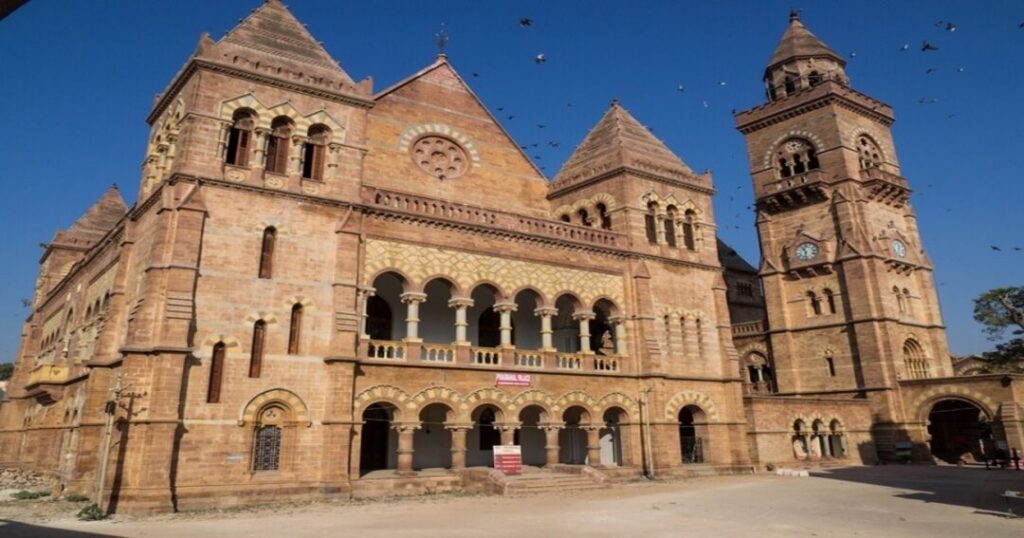
Directly adjacent to Aina Mahal, Prag Mahal is its complete architectural opposite — a 19th-century palace commissioned by Rao Pragmalji II in 1865 and designed by Colonel Henry St Clair Wilkins in an Italian Gothic style with Romanesque influences. The construction cost 3.1 million rupees — a staggering sum for the era — and employed both Indian artisans (paid in gold coins) and Italian craftsmen. The result is a Grand Durbar Hall with soaring Corinthian columns, Gothic arches, European-style statues, and chandeliers that feel entirely incongruous in the Kutch desert — and entirely magnificent.
The palace’s 45-foot clock tower is one of the finest viewpoints in Bhuj — climb it for a panoramic view of the entire city and the surrounding landscape. The tower and clock were restored after sustained damage from the 2001 earthquake, with personal interest from Amitabh Bachchan reportedly driving the restoration effort. The Darbar Hall was renovated by Maharao Pragmalji III at a personal cost of ₹5 crore.
Bollywood connection: Both Hum Dil De Chuke Sanam (1999) and Lagaan (2001) were shot inside Prag Mahal — the palace’s grand halls are instantly recognisable to anyone who has seen either film.
3. Kutch Museum — Gujarat’s Oldest, India’s Most Underrated
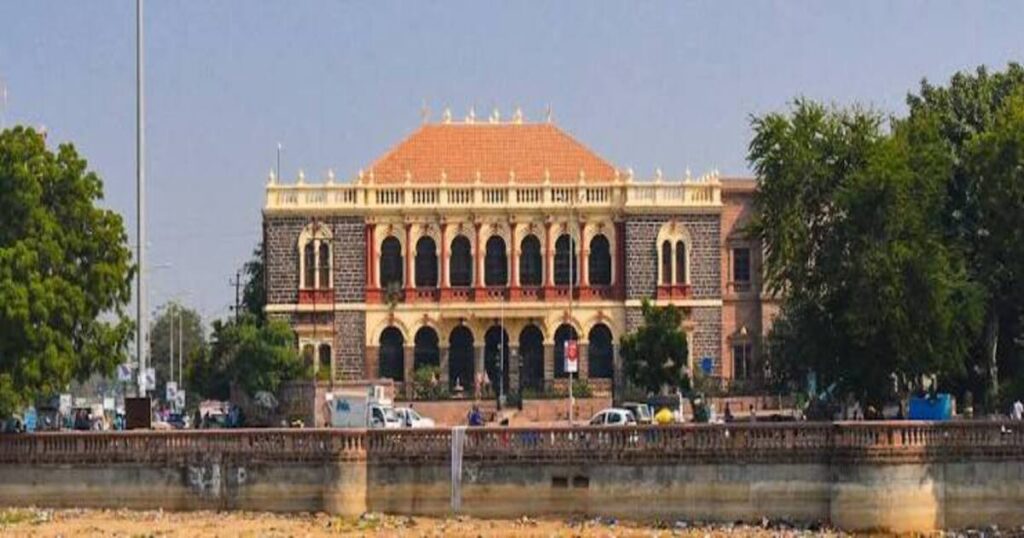
The Kutch Museum in Bhuj, established in 1877, is the oldest museum in Gujarat. Housed in a Gothic-style building, it contains one of the most significant regional collections in western India: the largest existing collection of Kshatrapa inscriptions dating from the 1st century CE, examples of the extinct Kutchi script, a comprehensive collection of natural history specimens, Kutchi textiles, silver jewellery, arms, musical instruments, and the full documentation of the region’s extraordinary craft traditions.
The Kshatrapa inscriptions alone — records of the Western Kshatrapa rulers who governed Kutch and Saurashtra from the 1st to the 4th century CE — make this museum worth visiting for anyone interested in early Indian history.
4. Craft Village Circuit — Ajrakhpur, Nirona & Hodka
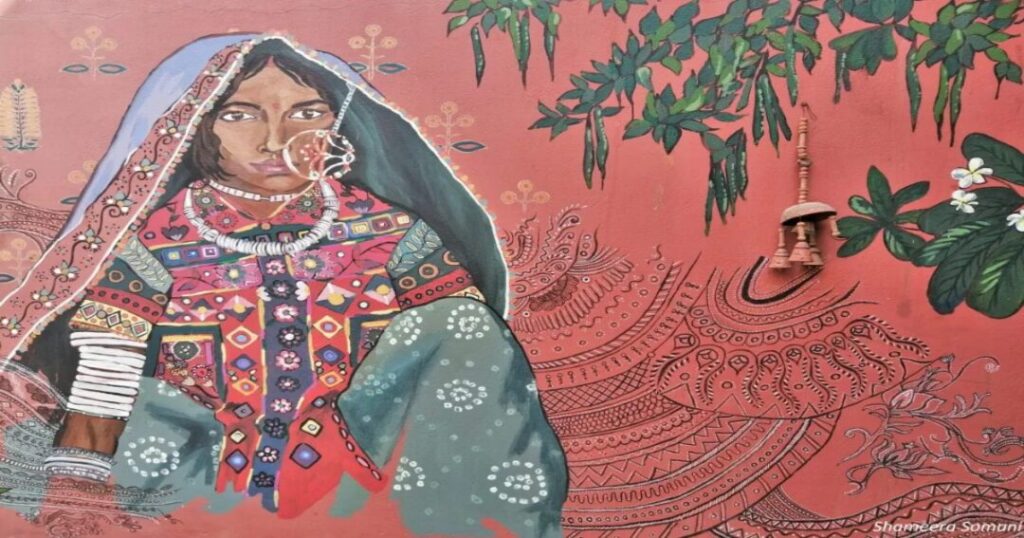
The craft villages around Bhuj are the finest reason to visit Kutch — living communities of artisans who have been practising specific textile and craft traditions for generations, most of which cannot be experienced anywhere else in India.
Ajrakhpur (~40 km from Bhuj): A village of the Khatri community, specialists in Ajrakh block printing — a resist-dyeing and block-printing technique using natural dyes (indigo, madder root) on cotton and silk. The process involves up to 16 stages of washing, dyeing, and printing; the finest Ajrakh pieces take weeks to complete. The distinctive geometric patterns of Ajrakh — deep blue and red on white — are among the most recognised textile patterns in Indian craft history.
Nirona (~60 km from Bhuj): Home to the Rogan art tradition — a craft of painting with castor oil-based paint on fabric, using a metal rod to draw designs freehand without touching the cloth. The Khatri family of Nirona is the last surviving practitioners of Rogan in the world; the craft was on the verge of extinction when it received international attention. President Obama received a Rogan artwork as a state gift from Prime Minister Modi — an act that dramatically raised the craft’s profile.
Hodka (~80 km from Bhuj): A village of the Mutwa community, famous for Lippan art — a mud and mirror work applied to walls in intricate patterns — and for Kutchi embroidery traditions. Hodka is also near the Banni grasslands and the Great Rann of Kutch, making it an excellent base for combining craft with wildlife.
Also Read: Places to Visit in Gujarat: From Ancient Cities to Salt Deserts
5. Hamirsar Lake — Bhuj’s Green Centre
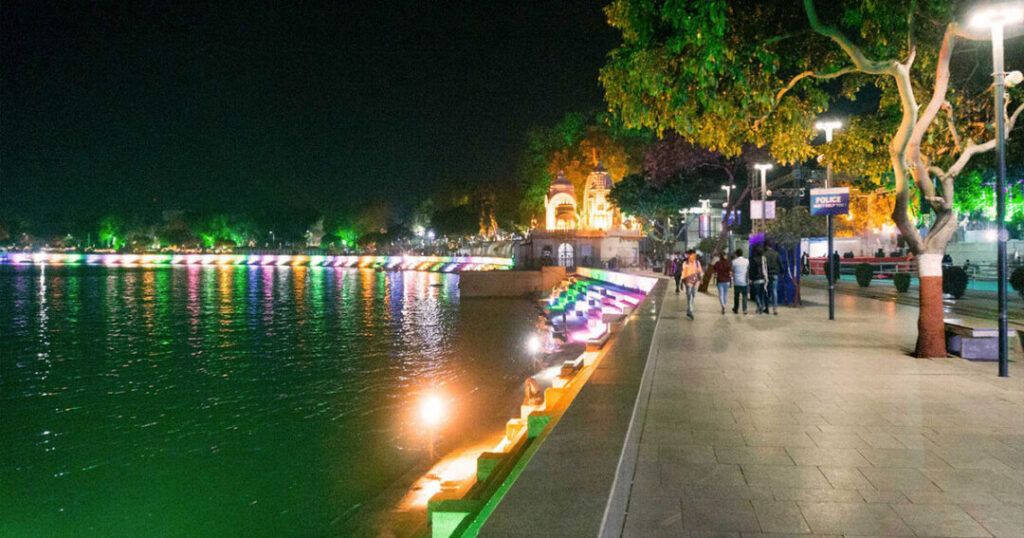
Hamirsar Lake — built during the reign of Rao Khengarji I (1548–1585) and named after his father Rao Hamir (1472–1524), the founder of Bhuj — is the largest manmade lake in the Kutch region and the green heart of Bhuj. The lakeside promenade is the city’s primary evening walking space; the lake is home to migratory birds in winter and flamingos during their seasonal visits. The views of the Bhujia Hill fort from the lake’s eastern shore are particularly fine at dusk.
6. Bhujia Fort — The Hilltop Sentinel
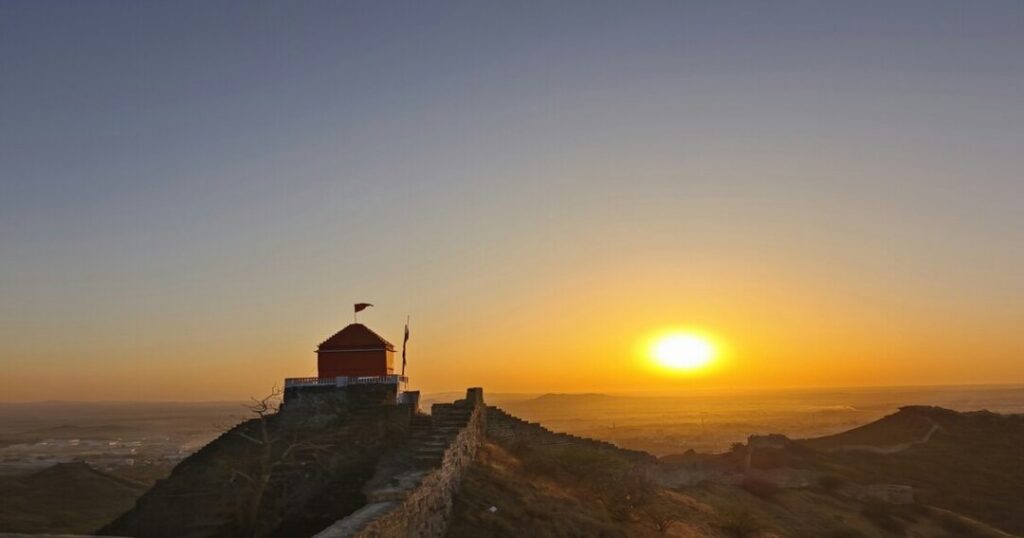
Bhujia Fort (also called Bhujiyo Dungar) sits on a prominent hill east of Bhuj town, overlooking the city and the surrounding plains. The fort’s most celebrated battle occurred in 1728 when Sher Buland Khan, the Mughal Viceroy of Gujarat, invaded Kutch — the attack was repulsed by Rao Deshalji I, with a group of Naga Bawas playing a decisive role in routing the Mughal army. The victory is commemorated annually at the Nag Panchami fair held at the fort. The hill also has a small temple dedicated to Bhujang Nag (the serpent deity after whom Bhuj is named) at the summit.
The climb takes approximately 20–30 minutes and the views of Bhuj, the Hamirsar Lake, and the desert stretching toward the Rann are excellent.
7. Chhatedi — The Royal Cenotaphs
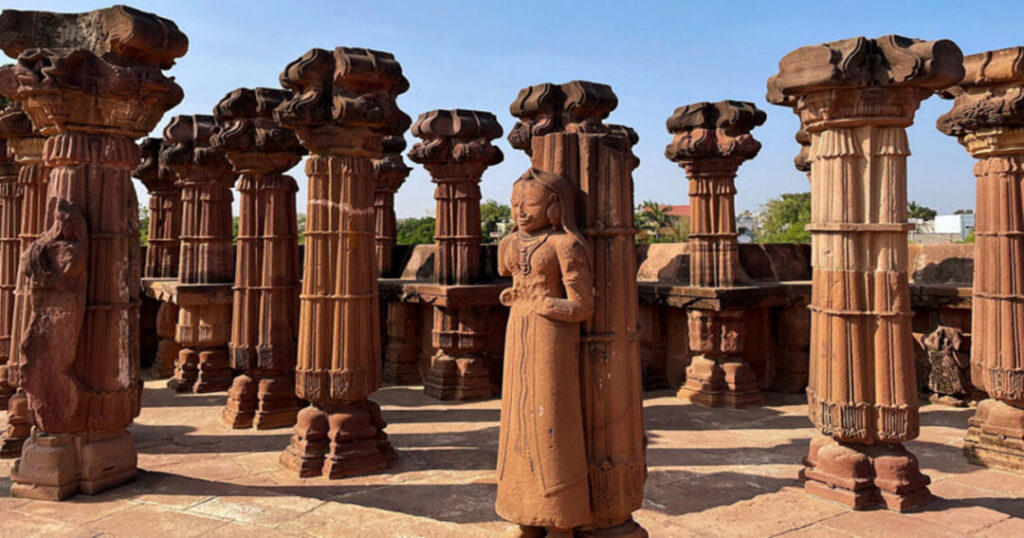
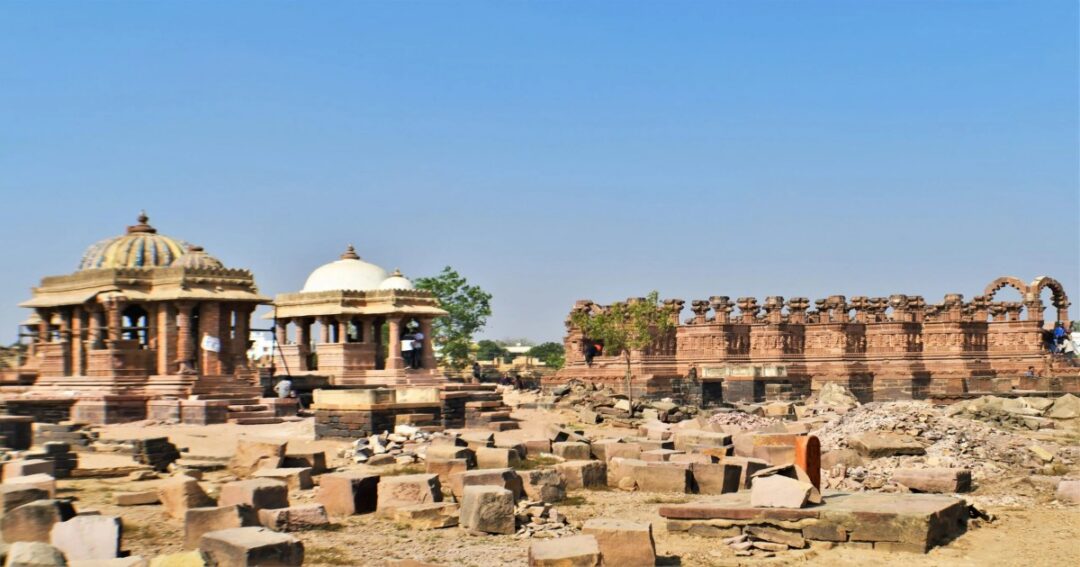
The Chhatedi (also written Chhatardis) — a series of 18th-century royal cenotaphs built by Jadeja ruler Rao Lakhpatji — are among the finest funerary monuments in Gujarat. The umbrella-domed stone structures combine Rajput and Islamic architectural elements in the specific regional synthesis that characterises Kutchi architecture. Most are carved with intricate floral and geometric motifs. They are largely unvisited by tourists despite being one of the finest places of interest in Bhuj architecturally.
8. Swaminarayan Temple Bhuj — White Marble in the Desert
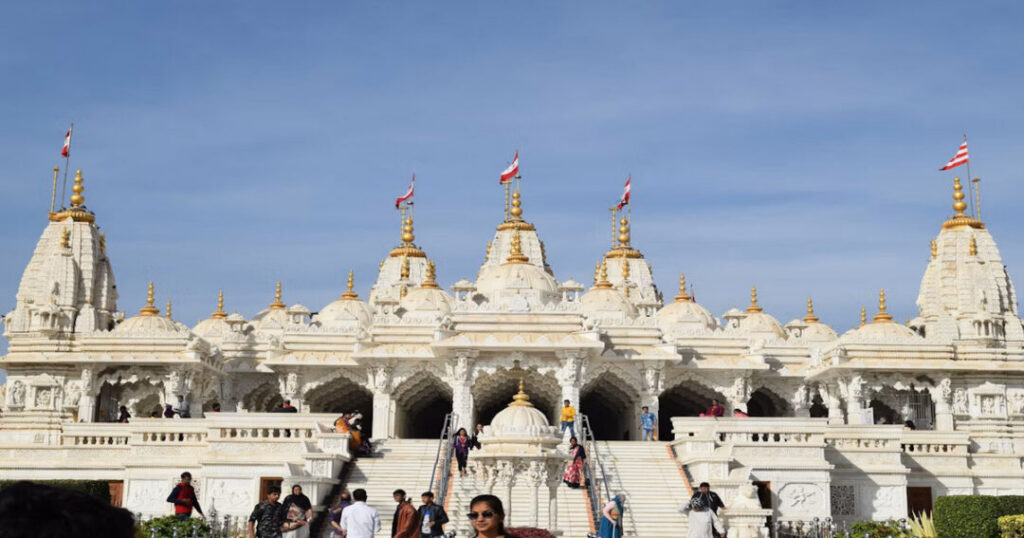
The Shree Swaminarayan Temple in Bhuj is one of the six original temples built during the earthly presence of Lord Swaminarayan, established in 1822 — making it one of the oldest Swaminarayan temples in India. Dedicated to Lord Swaminarayan, the temple features intricately carved domes, pillars, and interior sanctums. The original structure was damaged in the 2001 earthquake and subsequently restored.
9. Sharad Baug Palace — The Last King’s Residence
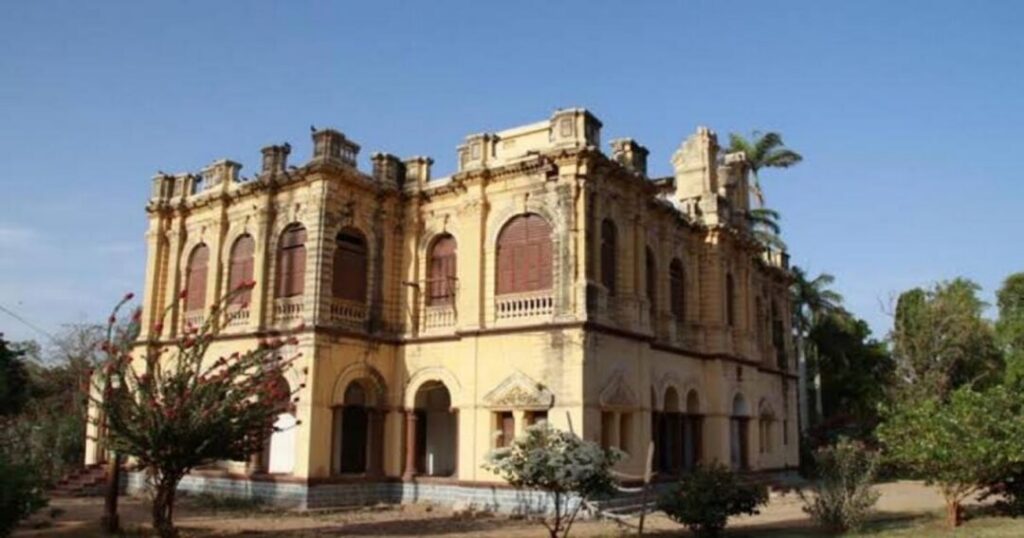
Sharad Baug Palace was the private residence of Bhuj’s last ruling Maharao, Madansingh, who lived here until his death. The palace is now a museum housing personal artefacts, photographs, hunting trophies, and memorabilia from the Kutch royal family’s final decades of rule. The surrounding gardens are pleasant and the museum gives the most personal and intimate portrait of Kutch royalty available anywhere in the city.
Also Read: Street Food in Udaipur: The Complete Guide to the City of Lakes’ Best Eats
10. Hiralaxmi Memorial Craft Park — Craft in Contemporary Form
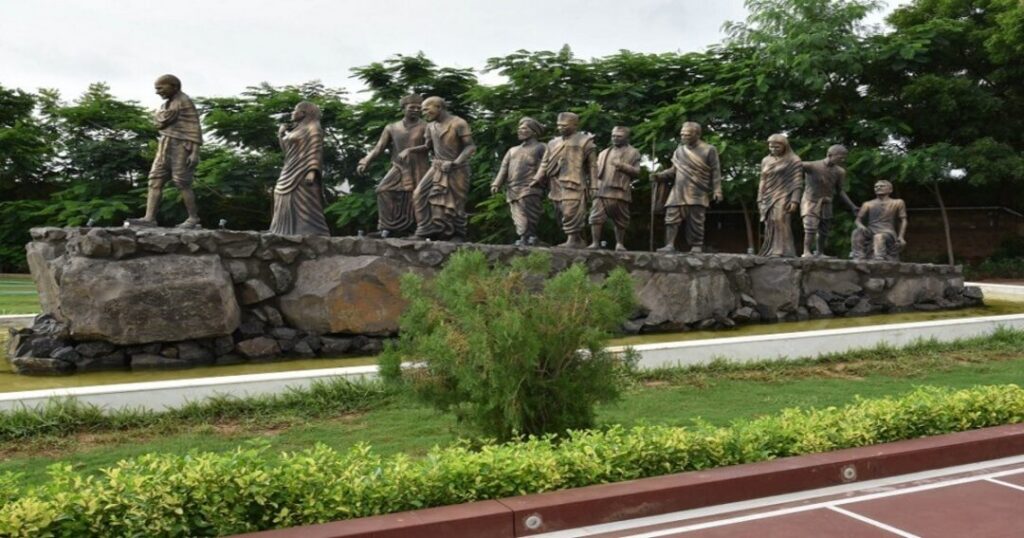
The Hiralaxmi Memorial Craft Park — part of the larger memorial complex at Smritivan — is a dedicated space where Kutchi artisans work in permanent studios and demonstrate their craft to visitors. The park covers the full range of Kutchi craft: Ajrakh printing, Bandhani tie-dye, Rogan art, Kutchi embroidery, copper bell making, and traditional weaving. It is the most accessible single location for experiencing the breadth of the region’s craft traditions without travelling between villages.
Smritivan — the earthquake memorial park of which the craft park is a part — is itself worth significant time: a massive landscape memorial to the 13,805 people who died in the 2001 Gujarat earthquake in Kutch, with a museum, gardens, and the individual documentation of each life lost.
Bonus Places to Visit in Bhuj
Bonus 1 — Ramkund Stepwell: A historic stepwell in the old city area — an ancient water management structure with carved stonework, generally uncrowded and genuinely atmospheric.
Bonus 2 — Kutch Fossil Park (~150 km near Bhuj): One of the most unusual geological sites in India — fossilised marine creatures and, most remarkably, a dinosaur fossil with an associated egg. Located near the Gulf of Kutch.
Day Trips from Bhuj — Places to Go in Bhuj’s Surroundings
Dholavira (~250 km | 4–5 hours)
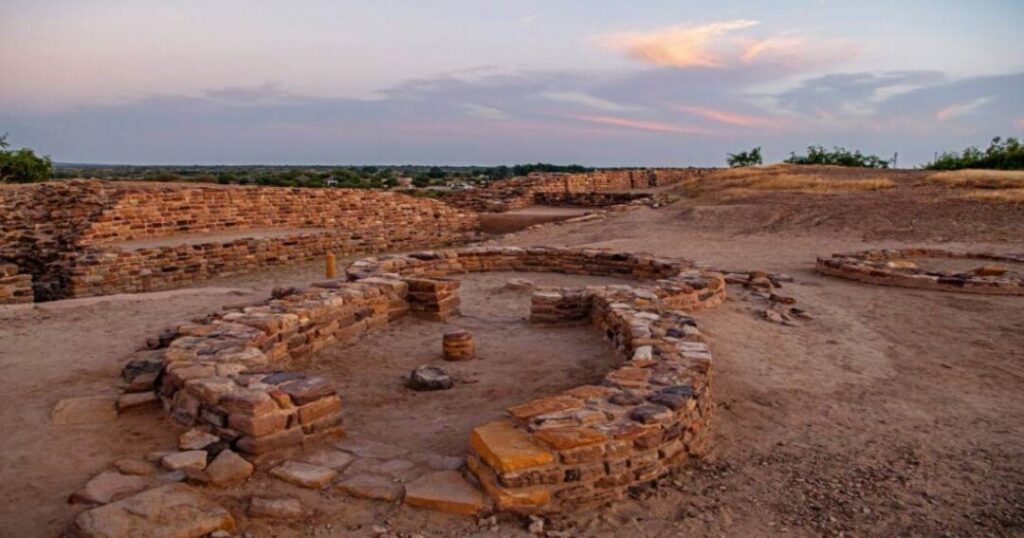
Dholavira — inscribed as a UNESCO World Heritage Site in 2021 — is one of the most significant excavated sites of the Harappan (Indus Valley) Civilisation, dating to approximately 2650–2100 BCE. The site reveals a sophisticated urban planning system: a walled city with a citadel, a middle town, a lower town, a large stadium-like area, and a complex water harvesting system built for survival in the Kutch desert. The site also contains what has been described as the world’s first signboard — ten large Harappan script symbols on a board that may have marked the city’s name at its main gate.
- A UNESCO World Heritage Site since 2021 — one of the most important in western India
- Located on Khadir island in the Great Rann; best combined with an overnight stay nearby
- The site museum provides essential context before walking the excavations
Rann of Kutch — The White Desert (~85 km)
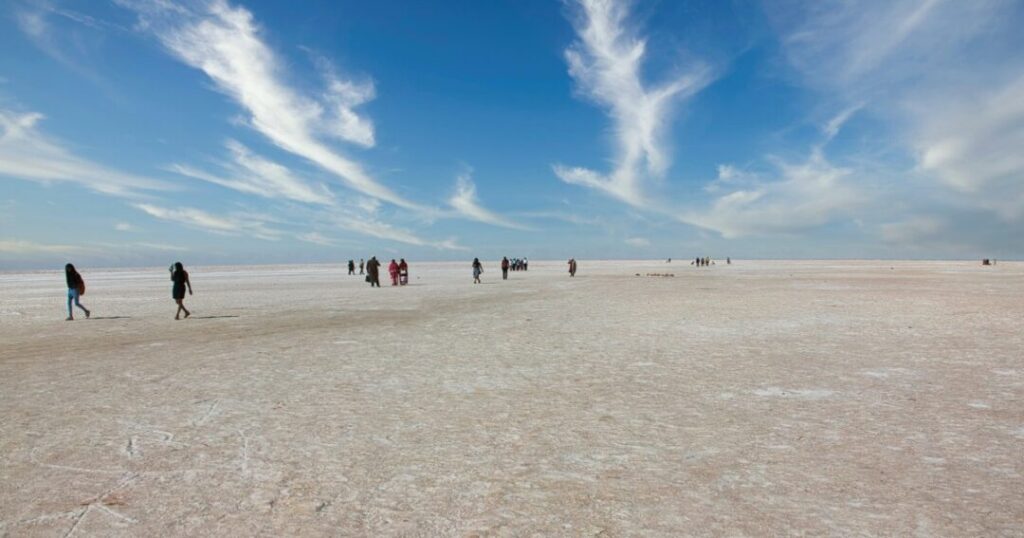
The Great Rann of Kutch is the largest salt desert in India — a vast expanse of seasonally flooded mudflats that dry to a brilliant white crust of salt crystals. The White Rann is at its most extraordinary on full moon nights when the salt surface reflects the moonlight and the horizon disappears between sky and earth.
The Rann Utsav — the annual festival held from November to February — is the most organised time to visit, with cultural performances, folk music, camel rides, and the full sensory experience of the White Rann at its most accessible. The Flamingo City near Khijadiya is one of the largest flamingo breeding colonies in Asia.
Mandvi (~60 km | 1.5 hours)
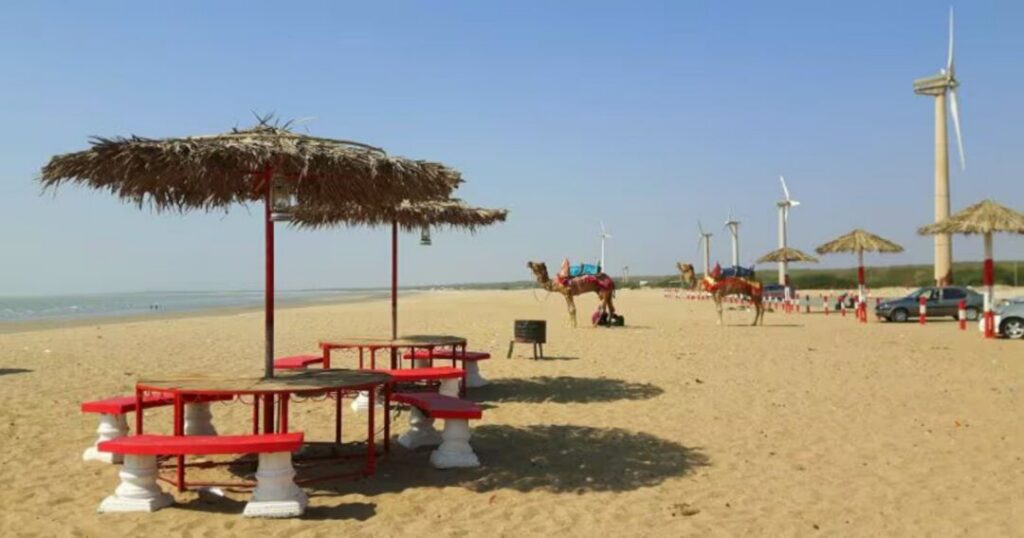
Mandvi is Kutch’s port town — historically significant as the maritime gateway of the entire Kutch region. Key attractions:
- Mandvi Beach — one of Gujarat’s finest beaches, with strong winds that make it excellent for wind sports
- Vijay Vilas Palace — a 1929 royal summer palace with Rajput-style domes and Indo-Saracenic details, overlooking the sea; used in the filming of Hum Dil De Chuke Sanam
- Traditional dhow building yards — the last surviving dhow (traditional wooden sailing vessel) building tradition on the Indian coast; craftspeople still build ocean-going vessels using traditional methods
Kutchi Food — What to Eat in Bhuj?
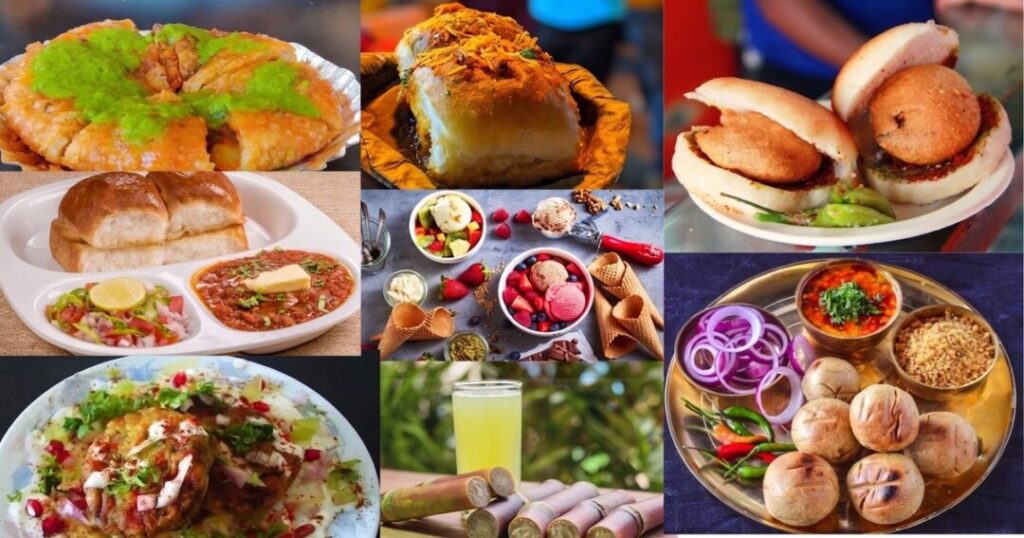
Dabeli — the iconic Kutchi street snack (a soft bun stuffed with spiced potato, garnished with pomegranate, peanuts, sev, and chutney) originated here in Kutch before spreading across India. The Bhuj version — at street stalls and dhabas throughout the old city — is the most authentic.
Kutchi Thali — a full Kutchi meal: odho (a local preparation of brinjal and bajra), kadhi (yogurt-based curry), bajra rotla (pearl millet flatbread), garlic chutney, jaggery, and seasonal preparations. The specific combination of bajra, garlic, and kadhi is the daily food of the Kutch desert — simple, nourishing, and entirely specific to the region.
Adadiya Pak — a dense, sweet winter preparation made from black gram (urad dal) cooked in ghee with jaggery and warming spices; a Kutchi cold-weather food associated with January and the post-harvest season.
Mesuk — a melt-in-the-mouth sweet made from cashews and sugar; the finest versions are at the sweet shops in Bhuj’s old city market area.
Chhaas (Buttermilk) — the default cold drink of Gujarat, consumed throughout the day in Bhuj; the Kutchi version is heavily spiced with cumin, ginger, and green chilli.
Kutchi Crafts — What to Buy in Bhuj?
Bhuj is one of the finest places in India to buy handmade textiles and crafts. Key craft traditions:
- Ajrakh: Block-printed cotton/silk with natural dyes; available in Ajrakhpur and at craft markets in Bhuj
- Bandhani (Tie-Dye): The most recognisable Gujarati textile; tiny resist-dyed dots in geometric patterns; available across Bhuj’s markets
- Kutchi Embroidery: Multiple distinct regional styles (suf, khaarek, paako) from different communities; the finest pieces represent hundreds of hours of work
- Rogan Art: Castor oil-based painting on fabric; available directly from the Khatri family workshop in Nirona (~60 km from Bhuj)
- Silver Jewellery: The silverwork of the Kutchi communities — heavy, geometric, and extraordinarily detailed — is available at the Soniwad market in Bhuj
Also Read: Celebrate Rann Utsav with Explurger!
What is the Best Time to Visit Bhuj?
| Season | Conditions | Best For |
| October to March | Cool and dry; 12–28°C; all attractions accessible | ✅ Best overall — November to February is peak |
| November to February | Rann Utsav in operation; White Rann most accessible; craft village activity highest | ✅ Best for Rann + crafts |
| April to June | Hot (up to 42°C); desert heat intense | ⚠️ Avoid outdoor sites midday |
| July to September | Monsoon; Rann floods (inaccessible); Bhuj city itself is manageable | ⚠️ Rann inaccessible; Bhuj city fine |
How to Reach Bhuj?
- By air: Bhuj Airport (BHJ/Rudra Mata Airport) — connected to Mumbai, Ahmedabad; most convenient for time-limited visitors
- By train: Bhuj is on the Western Railway network — connected to Ahmedabad (~340 km, ~7 hours by train) and Mumbai (~1,100 km, overnight trains); Bhuj station is approximately 3 km from the city centre
- By road from Ahmedabad (~340 km | 5–6 hours): NH947 via Surendranagar; most comfortable by private vehicle
- Within Bhuj: Auto-rickshaws for the city; private vehicle hire for the craft village circuit and day trips to Rann/Mandvi/Dholavira
Conclusion About Things to Do in Bhuj
Bhuj is one of India’s most underrated destinations — a city that combines royal architectural heritage, the world’s most remarkable living craft traditions, a UNESCO archaeological site, and the surreal White Rann of Kutch within a single compact travel circuit. And it is a city that carries its own story of catastrophe and recovery with a grace that makes everything here feel earned.
Quick guide to the best places to visit in Bhuj:
- 1. Aina Mahal (~1750) — mirrors, Venetian glass, the 15m scroll
- 2. Prag Mahal (1865) — Italian Gothic, 45-foot tower, Bollywood location
- 3. Kutch Museum (1877) — Gujarat’s oldest, Kshatrapa inscriptions
- 4. Craft village circuit — Ajrakhpur (Ajrakh), Nirona (Rogan), Hodka (Lippan)
- 5. Hamirsar Lake — 16th century, city centre, flamingos
- 6. Bhujia Fort — 1728 battle (Sher Buland Khan repulsed); hilltop views
- 7. Chhatedi cenotaphs — 18th century, finest funerary architecture in Kutch
- 8. Smritivan — 2001 earthquake memorial; craft park inside
- 9. Sharad Baug Palace — last king’s personal residence
- 10. Hiralaxmi Craft Park — all Kutchi crafts in one space
- Day trips: Dholavira (250 km, UNESCO), Rann of Kutch (85 km, White Rann), Mandvi (60 km, beach + dhow yards + Vijay Vilas Palace)
Download the Explurger app to discover what Bhuj and Kutch travellers actually recommend, find the best craft villages and hidden heritage sites, and log every mirror, Ajrakh print, and plate of dabeli on your Kutch journey.
The palace is already lit. The weavers are already at their looms. The White Rann is already glowing. Bhuj is ready.
FAQs About Things to Do in Bhuj
2. What are the best Bhuj tourist attractions most visitors miss?
The most overlooked Bhuj tourist attractions: Chhatedi royal cenotaphs (18th-century funerary architecture, intricate carving, almost no visitors), Ramkund Stepwell (historic water structure in the old city), traditional dhow building yards at Mandvi (last surviving such tradition on the Indian coast), the Rogan art workshop at Nirona (~60 km — the last surviving Rogan artists in the world), and the Kutch Fossil Park (~150 km — dinosaur fossils with eggs).
3. What is Dholavira and how far is it from Bhuj?
Dholavira is approximately 250 km from Bhuj (~4–5 hours by road). It is a UNESCO World Heritage Site (inscribed 2021) — one of the most significant excavated sites of the Harappan (Indus Valley) Civilisation, dating to approximately 2650–2100 BCE. The city reveals sophisticated urban planning, a complex water harvesting system, and what may be the world's first signboard — ten large Harappan script symbols that may have marked the city gate. Best combined with an overnight stay near the site.
4. What is the best time to visit Bhuj?
October to March is the finest window, with November to February being peak season. This is when the Rann Utsav festival operates at the White Rann (~85 km from Bhuj), the craft village artisans are at their most active, and temperatures are comfortable (12–28°C). The White Rann is inaccessible during monsoon (July–September) when it floods. Summer (April–June) is extremely hot (up to 42°C) and best avoided for outdoor sightseeing.
5. What crafts can I buy in Bhuj?
Bhuj is one of India's finest craft shopping destinations. The key crafts available: Ajrakh block printing (indigo and madder natural dyes, geometric patterns; Ajrakhpur ~40 km), Bandhani tie-dye (the defining Gujarat textile, available throughout Bhuj markets), Kutchi embroidery (multiple regional styles — suf, khaarek, paako), Rogan art (castor oil-based painting; Nirona ~60 km, last surviving practitioners in the world), and silver jewellery (heavy geometric Kutchi silverwork; Soniwad market in Bhuj). The Hiralaxmi Memorial Craft Park within Smritivan is the most accessible single location to see and buy multiple craft traditions.