
54 Total Views
The Pushkar camel fair is a livestock market, a pilgrimage and a folk-culture gathering in one, held on the banks of Pushkar Lake in Ajmer district, Rajasthan. It begins in the Hindu month of Kartik and ends on Kartik Purnima, the full moon, which falls on November 24 in 2026. Traders bring camels, horses, cattle, sheep and goats to the fair, pilgrims bathe in the lake, and the days between fill up with races, contests, music and dance. Because the fair is set by the lunar calendar, its dates move every year, and at the time of writing it is roughly five weeks away. This guide covers the 2026 dates and what is known about the schedule, the best things to experience, the history behind the fair, how camel rides in Pushkar work, what is happening to Rajasthan’s camels, and the practical details of getting there.
Top Pushkar Camel Fair Experiences
These five experiences capture what the fair is best known for, from the livestock trade at its core to the pilgrimage that closes it.
1. Camel Trading and the Beauty Contests
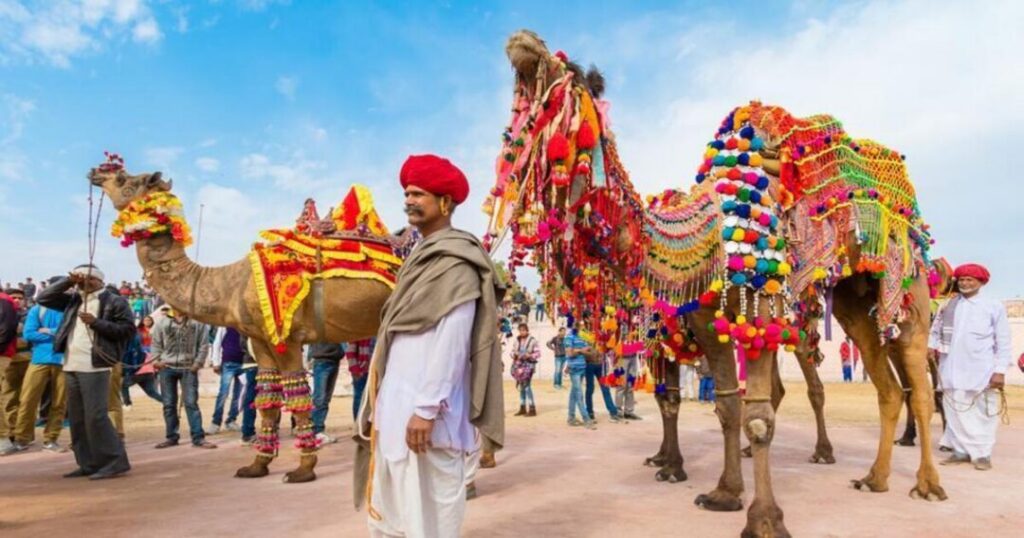
The fair began as a trading event, and the trade is still its heart. Herders bring camels, horses, cows, sheep and goats, and camel races open the festival, followed by music, songs and exhibitions. Animals are washed and dressed for the occasion, with coloured cloth, bells and painted designs, and the programme includes camel parades, beauty pageants and a camel dance show. One listing says trading takes place in the first days and the herds thin out afterward, so if watching deals being struck is your priority, arrive early in the week rather than at the end. The fair also features a load demonstration, in which men show how much a camel can carry by climbing onto groups of camels one after another.
2. Moustache, Matka and Tug-of-War: The Rural Contests
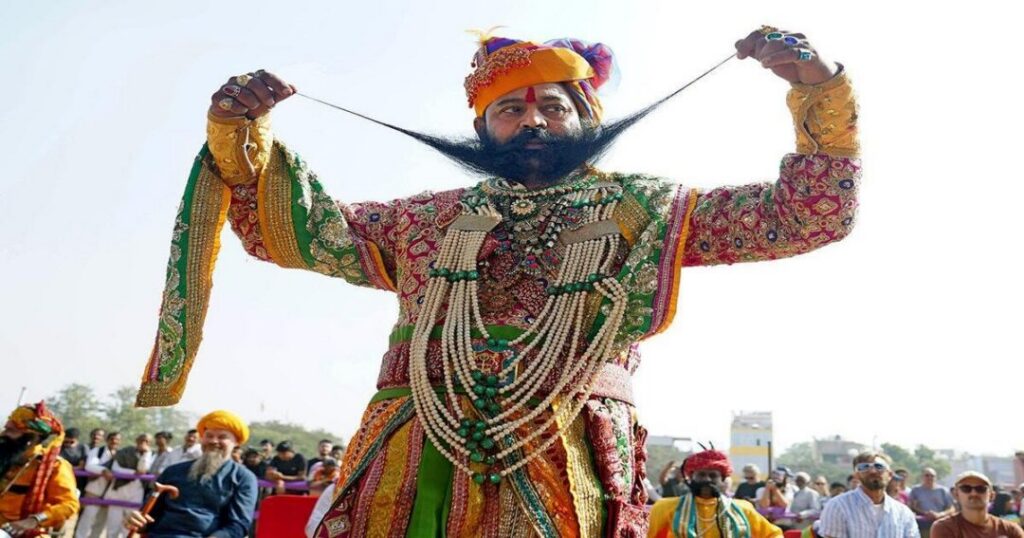
The competitions are the most photographed part of the fair. The longest moustache contest, matka phod (breaking a clay pot), a bridal competition and tug-of-war between women’s and men’s teams are all part of the fair, and programme listings add a turban-tying contest. A 2025 listing also mentions kabaddi, horse dance contests and a cricket match, though it is not clear that the 2026 programme will repeat them. These events are free to watch, and they are a good way to see the fair as a community occasion rather than only a market.
3. Folk Music and Dance
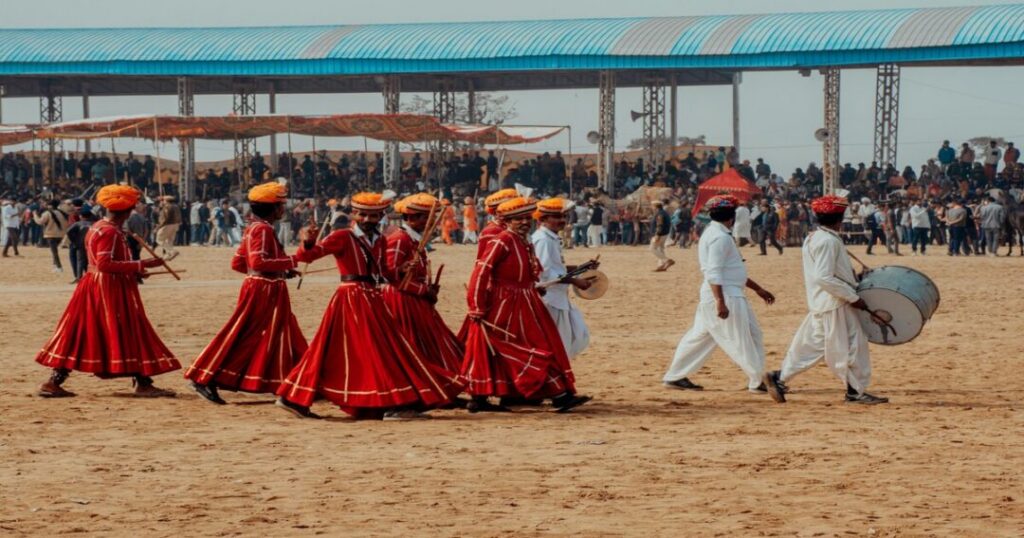
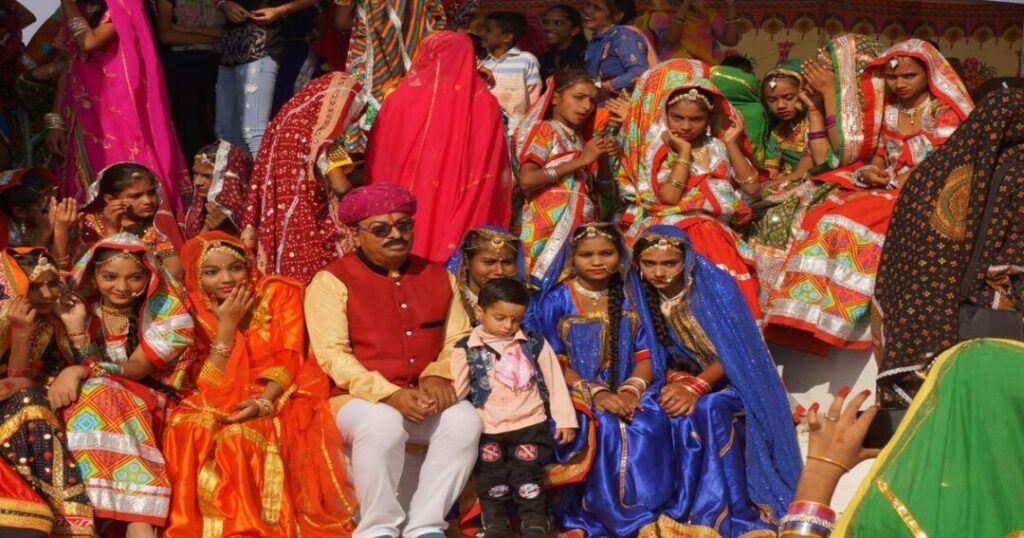
Folk performers are a fixture of the fair. Reports of recent editions describe Kalbelia dance, fire-breathing acts and traditional music in colourful costume, and a 2026 programme listing Ghoomar dance along with Ravanahatha and Morchang performances. One report calls the fair an unofficial stage for Rajasthani folk artists and says the career of the Padma Shri dancer Gulabo Sapera began when a tourism department employee saw her dancing at the fair about four decades ago. Evenings are described as the liveliest time, with music, dance and lights, so plan to stay past sunset.
4. Kartik Purnima: The Holy Dip and Lamps on the Lake
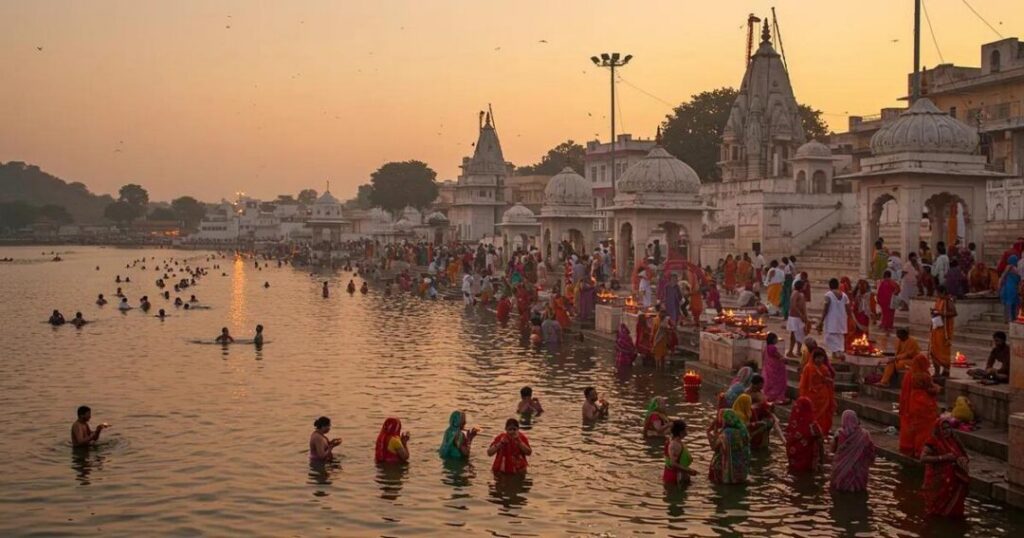
The religious climax is Kartik Purnima. Pilgrims bathe in Pushkar Lake, which is ringed by about 52 ghats, and one listing says lamps are floated on the lake at dusk. A sunset aarti, in which people light oil lamps and chant, is described on the lakeside, and a 2025 listing mentions a daily Maha Aarti at Sarovar Ghat and a closing fireworks display. This is also the day to visit the Brahma Temple, which is reported to require modest dress, with shoulders and knees covered, and no photography in the sanctum. Expect heavy crowds on the night itself.
5. Hot-Air Balloons and the View From Above
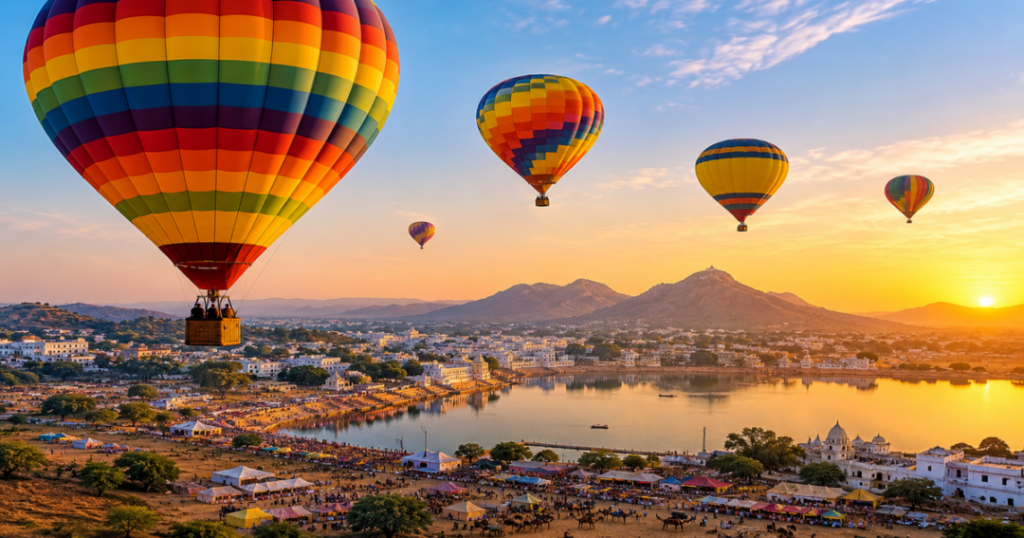
Hot-air balloon rides give an aerial view of the fairground, Pushkar town and the surrounding desert. A 2025 listing gives flight times of 6:30 AM and 4:30 PM each day, and an operator’s 2026 page lists a balloon festival from November 21 to 24. Balloon rides are an extra cost on top of the free entry, and times depend on weather, so book through an operator and ask what happens if a flight is cancelled.
Pushkar Fair Rajasthan: 2026 Dates and Schedule
The dates of the Pushkar Fair Rajasthan follow the Hindu lunar calendar, which is why they shift each year. A 2025 listing gave October 30 to November 5, and a 2024 report gave November 9 to 15, so 2026 is noticeably later. Sources mostly agree on the span but differ on the last day, and none of them cites an official programme. The main figures are these:
- Listed span: Most 2026 listings give November 17 to 24. One gives November 17 to 25.
- Kartik Purnima: Tuesday, November 24, 2026, per a Hindu panchang site. One operator page gives it as November 23 to 24, so treat the night of the 23rd to the 24th as the peak window.
- Ekadashi start: Reference sources say the fair starts on Kartik Shukla Ekadashi (Prabodhini Ekadashi) and runs to Kartik Purnima, which suggests the core religious days are the last five or so. Listings that start on November 17 appear to include the earlier trading days. The exact Ekadashi date was not confirmed here.
- Balloon festival: One operator lists November 21 to 24.
A 2026 listing says Rajasthan Tourism had not yet published the year’s programme, and I found no official one, so the day-by-day shape below follows how the fair has typically run. The trading days come first, roughly November 17 to 20, when herders bring and sell animals. The cultural programme follows, roughly November 20 to 23, with camel races, decoration contests, moustache and turban competitions, folk music and balloon flights at dawn. Kartik Purnima on November 24 is the holy dip and the lamp-lit evening, and some listings give November 25 as a final day with no specific events. A separate programme listing lays out six days, from a flag-hoisting inauguration and procession, through livestock trading and the camel beauty contest, to folk performances, camel races, a marketplace and food day, and a closing parade with fireworks. Sources variously describe the fair as five days, a week, seven days or eight days long, which is a reminder to treat every schedule as provisional.
Pushkar Mela: History, Pilgrimage and the Lake
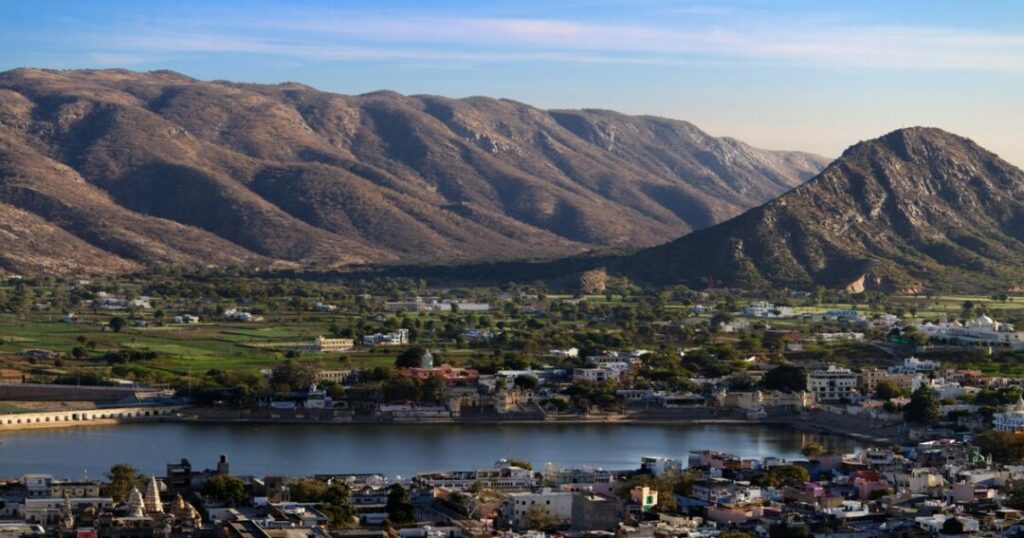
Pilgrims and locals call the fair the Pushkar Mela, and its roots are religious as much as commercial. According to legend, the creator god Brahma dropped a lotus flower, and the lake formed where it fell, giving the place its name. Hindu scripture treats the lake as Tirtha Raj, the king of pilgrimage sites, and a dip here is considered highly meritorious. A second legend, told in connection with the fair, says that the gods gathered at Pushkar on the full-moon night of Kartik to consecrate the lake. Tellings differ on the number: Incredible India’s page says 33 million gods and goddesses, while a 2025 listing says 330 million, so it is safest to say simply that the gods are said to have gathered.
Pushkar is among India’s oldest living towns, in Ajmer district at an elevation of about 510 metres, with hills on three sides and Nag Pahar separating it from Ajmer. Around the lake sit roughly 400 temples, many painted blue, though a large share of the temples and ghats date from the 18th century or later because earlier ones were destroyed in the Muslim conquests, including under Aurangzeb, and later rebuilt by Marwar rulers, the Marathas and others. The best known is the Brahma Temple, with a red spire and a life-size idol of Brahma. It is described as one of the few temples dedicated to Brahma, and some sources call it the only one. Nearby are the Savitri Mata Temple, the Rangji Temple and Sikh gurdwaras dedicated to Guru Nanak and Guru Gobind Singh. Listings describe the fair itself as roughly a century old.
For anyone searching for the Pushkar Mela Rajasthan timetable, the key point is that the religious calendar, not the tourist calendar, sets the dates. The livestock trade came first and the ceremonies follow, which is why the fair feels different at the start of the week than at the end.
Also Read: Places to See in Rajasthan Beyond Jaipur, Jodhpur, Udaipur & Jaisalmer
Camel Ride in Pushkar: Safaris, Etiquette and Ethics
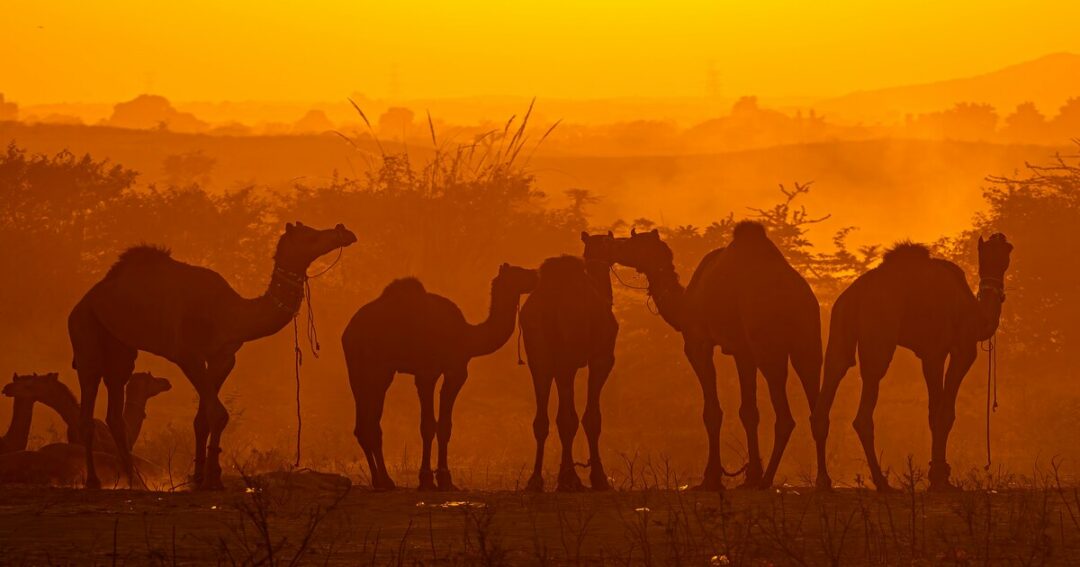
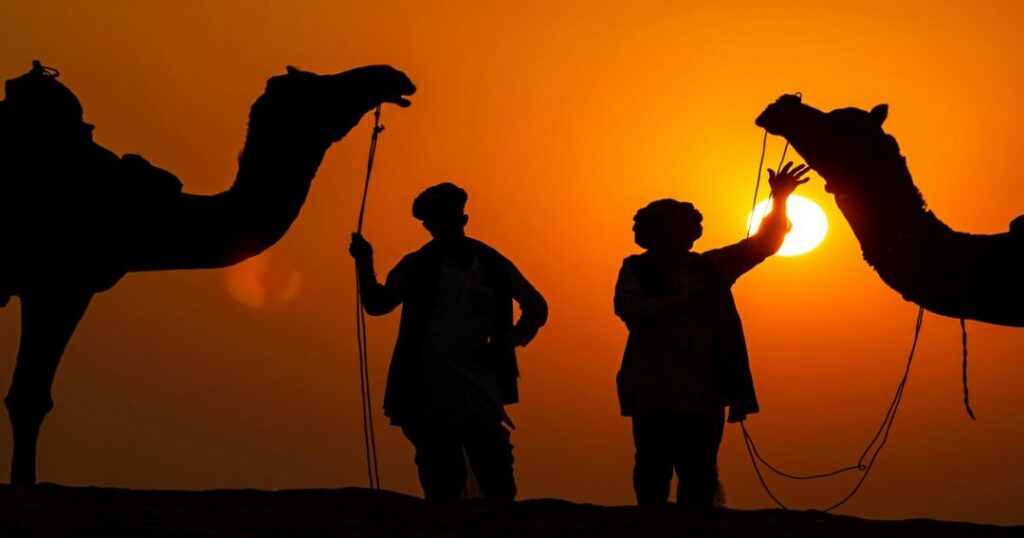
A Camel ride in Pushkar is one of the most common things to do, during the fair and outside it. Camel safaris cross the desert near the town, and operators offer sunset rides as well as overnight trips. One traveller’s account describes a sunset safari of about two hours that began with a 4 PM pickup and a visit to the camel area to choose an animal, followed by a slow walk across the dunes with several breaks. The same writer notes that Pushkar’s dunes are not as tall or soft as the ones at Jaisalmer, so go for the atmosphere and the light rather than for dramatic sand.
A few practical points follow from that account. Confirm the sunset timing and pace with your guide before setting off, because in that case the group reached the viewpoint after the sun had set when the guide made the camels run to catch up. Wear sandals or sneakers rather than flip-flops, which can fall off, and bring sunglasses, a scarf or cap, water and a layer for the evening. The cooler months from October to March are the best time, while April to July can reach 40°C. None of the sources I reviewed discussed animal welfare, so as our own suggestion, ask how long the animals work each day and avoid operators who push them to run for the sake of a photograph. Rides are a paid extra at the fair, and prices are not given here because they vary and none was verified.
Also Read: 10 Places to Visit in Bundi—Rajasthan’s Underrated Gem
The Camel Festival in Pushkar Today: Numbers, Law and Decline
Visitors who search for the camel festival pushkar are usually looking for the same event, but the camel trade behind it has changed. Rajasthan’s camel population was about 420,000 in the 2007 livestock census, about 325,000 in 2012 and just over 210,000 in 2019, a drop of roughly 35% between 2012 and 2019, according to a January 2025 Al Jazeera report. Nationally, India had nearly a million camels in 1961 and about 200,000 now.
The report links part of the fall to the Rajasthan Camel (Prohibition of Slaughter and Regulation of Temporary Migration or Export) Act of 2015, which bars camel slaughter and restricts moving camels out of the state. Breeders and conservationists quoted in the report say the law shut off the traditional buyer market at fairs such as Pushkar and cut camel prices sharply, while one of the people who pushed for the law, former Union minister Maneka Gandhi, is quoted as saying it has had no effect and has not been fully implemented. The effect of the law is therefore contested. For visitors, the practical point is that the fair is no longer only a market. The report describes Pushkar as India’s largest camel fair and says breeders earned good money there before 2015, but I found no source that gives current trading volumes. Figures for visitors and animals vary widely: estimates range from about 200,000 to more than 400,000 visitors, and from about 11,000 cattle, horses and camels in a 2025 listing to 25,000 camels in a reference source, so treat all counts as approximate.
Also Read: Things to Do in Ajmer: The Complete Guide to Rajasthan’s City of Faith
Pushkar Fair India: Planning Your Visit
Plan any trip to the Pushkar Fair around the dates above and book early, since stays near the lake fill quickly. The notes below cover the main logistics. This is a Pushkar Fair India trip that works best as part of a wider Rajasthan route, with Jaipur and Ajmer as the natural gateways.
Getting there: Pushkar is about 150 km southwest of Jaipur, which is roughly 2.5 to 3 hours by road, and about 10 to 14 km northwest of Ajmer, roughly 30 minutes over the Nag Pahar pass. Ajmer is the nearest major railway station. Reference sources name Kishangarh Airport, about 40 to 45 km away, as the nearest airport, while tour operators point to Jaipur International Airport, so check which airport has the flights you need. Police keep cars on the fairground perimeter and in parking areas on the Ajmer road, so lakeside and old-town hotels are a walk from the nearest parking.
Where to stay: Options range from budget hotels and homestays to desert camps and luxury tents. One operator says premium tents sell out by mid-September, so with the fair about five weeks away, expect limited choice and confirm availability before planning around a specific camp. A day trip from Jaipur is possible but misses the dawn and dusk events that define the fair.
Weather and clothing: November days are mild and the nights can be cold. One operator puts daytime highs at about 22 to 28°C and nights at about 8 to 14°C, so pack warm layers for early balloon flights and evening aartis.
Rules in town: Pushkar is a vegetarian town. The sale of meat, fish, eggs and alcohol is banned, and consuming meat, eggs, alcohol and drugs is forbidden. Dress modestly at temples and the lake.
Money and costs: Entry to the fairground is free, but camel safaris, balloon rides and guided tours cost extra. Vendors rarely take cards and ATM access nearby is limited, so carry cash.
Fair etiquette: Ask before photographing people, do not disturb animals or enter restricted livestock areas, and do not litter.
Shopping and food: Stalls sell handicrafts, jewellery, leather goods and textiles such as embroidered shawls, and the food on offer includes Rajasthani dishes like kachori, dal bati churma, malpua and gulab jamun. Add Ajmer to the trip if you can: the Dargah of Khwaja Moinuddin Chishti and the Ana Sagar lake are about half an hour from the fairground.
Also Read: Travel Festivals in November: 7 Reasons You Should Be Traveling, Not Hibernating
Conclusion: Go for the Week, Not Just the Night
The Pushkar Camel Fair rewards visitors who treat it as a week rather than a single full-moon night: the trading days, the contests and folk evenings, and then the lake on Kartik Purnima. Confirm the dates with Rajasthan Tourism, book your stay now, and ask local operators about camel rides before you commit.
Heading to Rajasthan for Kartik Purnima? Use the Explurger app to plan your route and find fellow travelers sharing the ride to Pushkar from Jaipur or Ajmer.
FAQs About Pushkar Camel Fair
2. Where is the Pushkar Camel Fair held?
In Pushkar, in Ajmer district, Rajasthan, on the banks of Pushkar Lake. Pushkar is about 150 km southwest of Jaipur and about 10 to 14 km from Ajmer.
3. Why is the Pushkar Fair held?
It combines livestock trading with a pilgrimage. It begins in the Hindu month of Kartik and ends on Kartik Purnima, when pilgrims bathe in the sacred lake and visit the Brahma Temple.
4. Is there an entry fee for the Pushkar Fair?
Entry to the fair is free, according to listings, but camel safaris, hot-air balloon rides and guided tours cost extra.
5. Can I ride a camel in Pushkar?
Yes. Operators offer camel safaris near the town, including sunset rides of about two hours and overnight trips. Confirm timing and pace with your guide in advance.
6. How do I get to Pushkar?
Ajmer is the nearest major railway station, about 30 minutes away by road. Jaipur is about 2.5 to 3 hours away by road. Kishangarh Airport is the nearest airport per reference sources, so check flight availability.