
1,454 Total Views
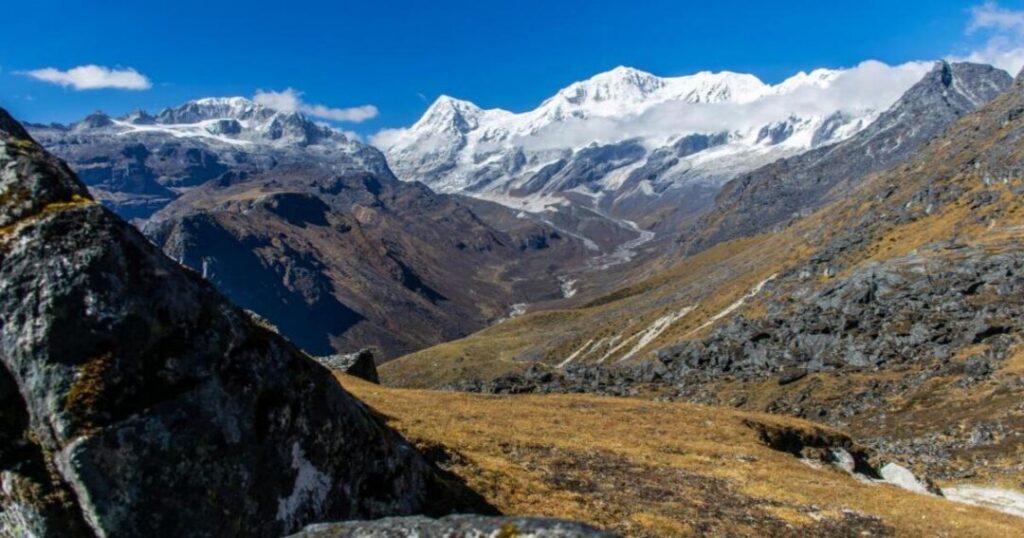
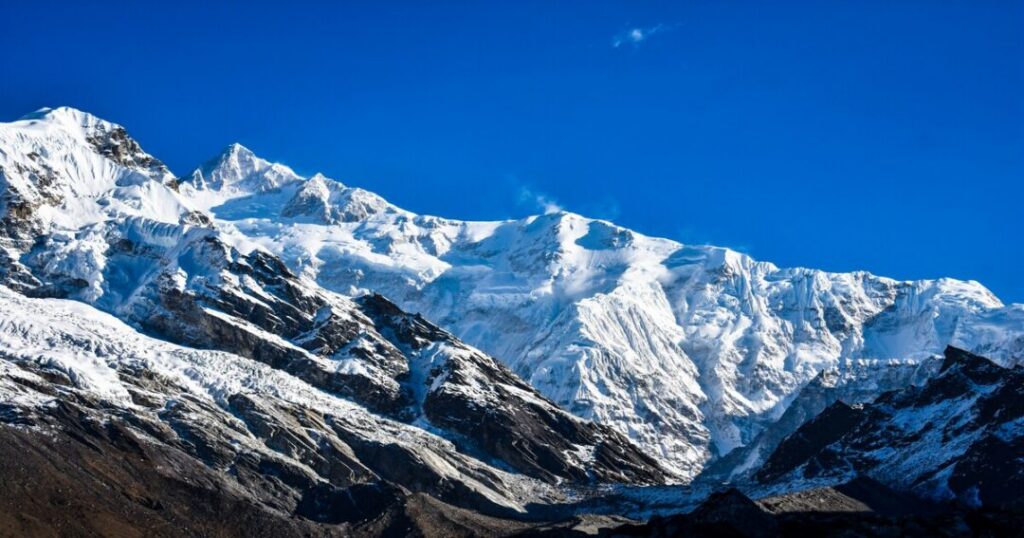
There is a moment on the Dzongri trek — it happens at the top of the final ridge before the meadow opens — when the Kanchenjunga massif appears without warning. The third-highest mountain in the world at 8,586 metres, with Pandim and Kabru flanking it on either side, all of them so close and so large that the first instinct is to take a step backward. Dzongri Top at 4,200 metres is where you stand for sunrise over this horizon — the entire Kanchenjunga range glowing gold and crimson in the first light, a view that most trekkers in Sikkim describe as the finest mountain sunrise they have ever seen.
The Dzongri trek is the first half of the longer Goecha La trek — it starts at Yuksom, the first capital of Sikkim (established 1642), climbs through five distinct ecosystems over five to seven days, and reaches Dzongri Top for the Kanchenjunga panorama before returning. The entire route runs inside the Kanchenjunga National Park — a UNESCO World Heritage Site — through rhododendron forests that turn blazing red in April, past glacial streams and yak herder camps, to the high alpine meadow that gives the trek its name.
This guide covers the complete Dzongri trek itinerary, cost, difficulty, best time, permits, and everything you need to plan.
Dzongri Trek — Key Facts
| Detail | Info |
| Dzongri meadow altitude | ~4,020 m (13,189 ft) |
| Dzongri Top altitude | ~4,200 m (13,779 ft) |
| Trek starting point | Yuksom, West Sikkim (~1,780 m (5,840 ft)) |
| Trek duration | 7 days (standard); shorter 5–6 day versions available |
| Total distance | ~46–58 km round trip (depending on itinerary) |
| Dzongri trek difficulty | Moderate to Challenging |
| Kanchenjunga | 8,586 m — world’s 3rd highest mountain |
| Protected area | Kanchenjunga National Park — UNESCO World Heritage Site |
| Key peaks visible | Kanchenjunga, Pandim (6,691 m), Kabru, Rathong, Koktang, Narsing |
| Extension option | Goecha La — 4,940 m; add 3–4 days |
| Best time | March to May; September to November |
| From NJP/Bagdogra | ~6 hours by road to Yuksom |
| Permits required | Kanchenjunga National Park permit + Trekking Route permit + Yuksom Police registration |
| Solo trekking | Not permitted — registered local guide mandatory |
What Makes the Dzongri Trek Special?
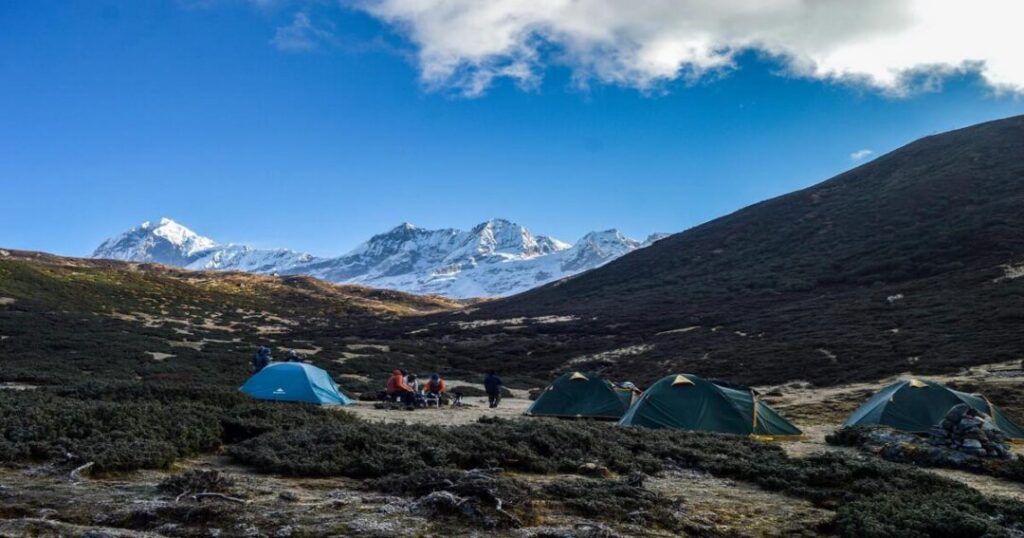
The closest Kanchenjunga sunrise accessible in a week: Dzongri Top at 4,200 m puts you within approximately 30 km of the Kanchenjunga summit with no intervening ridges blocking the view. The sunrise on the massif from this viewpoint — the same face that Goecha La trekkers see — is the defining experience of the trek.
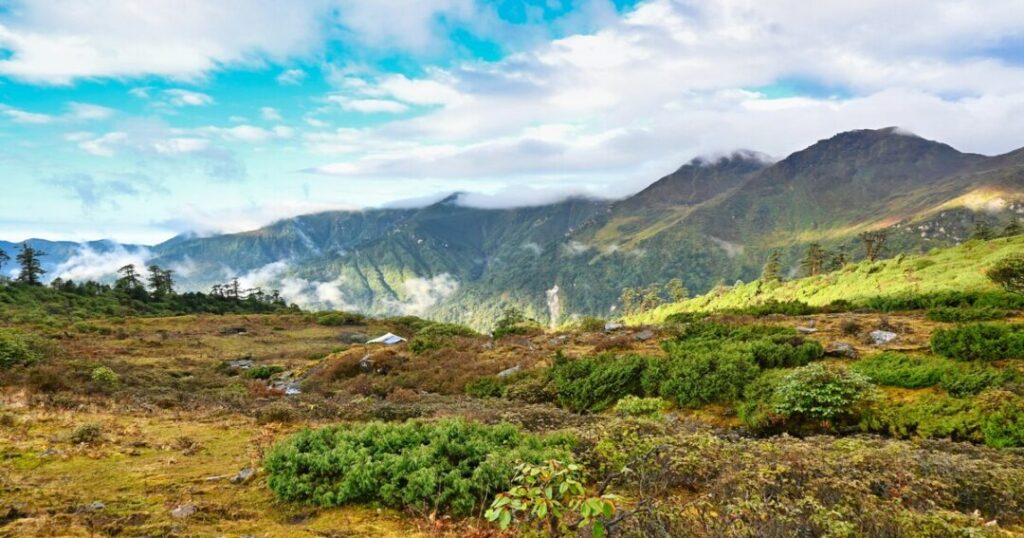
Five ecosystems in five days: The Dzongri trail passes through sub-tropical forest (Yuksom), temperate mixed forest (Bakhim), dense rhododendron and oak forest (Tshoka), sub-alpine meadow (Phedang), and high alpine grassland (Dzongri). Few treks in India compress this much ecological variety into a single route.
Inside a UNESCO World Heritage Site: The Kanchenjunga National Park — through which the entire trail runs — is a UNESCO World Heritage Site with exceptional biodiversity including red pandas, Himalayan tahr, snow leopards, musk deer, and over 550 species of birds. The park’s preservation makes the Dzongri trail one of the cleanest and most biodiverse trekking routes in the eastern Himalayas.
The perfect Goecha La preparation: For trekkers planning the full Goecha La trek eventually, Dzongri is the ideal first step — it covers the approach route, acclimatises you to the altitude profile, and delivers a genuinely spectacular outcome without requiring ten or more days.
Also Read: Places to Visit in Gangtok: A Complete Travel Guide to the Capital of Sikkim
How to Reach Yuksom (Trek Base)?
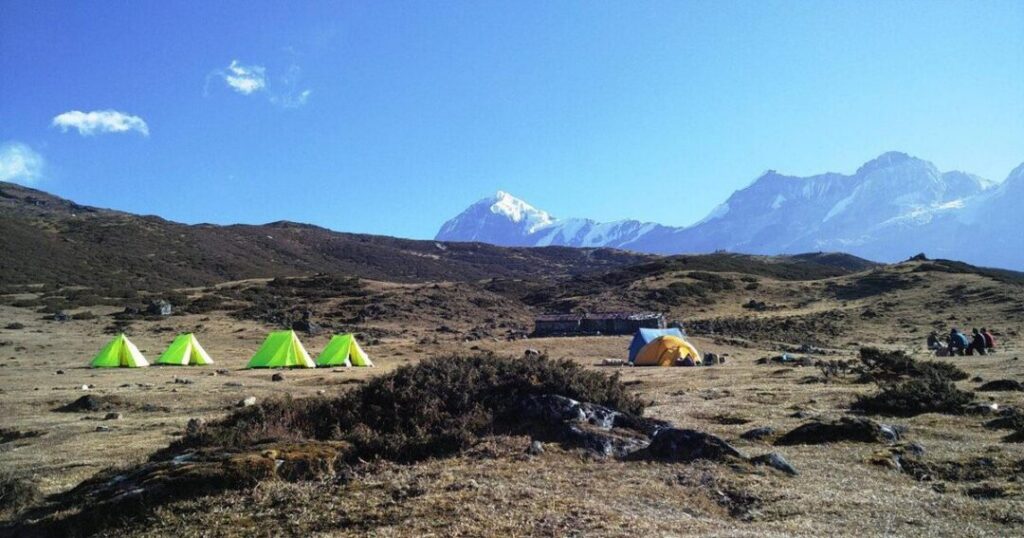
Yuksom — the first capital of Sikkim (1642) and the gateway to the Kanchenjunga National Park — is the starting point for the Dzongri trek. It is the last motorable town on this route at approximately 1,780 m.
From New Jalpaiguri (NJP) Railway Station (~6 hours by road):
- NJP is the nearest major railway station; well connected to Kolkata (~10 hours), Delhi (~20 hours), and other major cities
- From NJP: shared jeep or private vehicle to Yuksom via Jorethang and Legship (approximately 6 hours, 130 km)
From Bagdogra Airport (~6 hours by road):
- Bagdogra (IXB) is the nearest airport; connected to Kolkata, Delhi, and major cities
- From Bagdogra to Yuksom: same route as NJP; approximately 6 hours
From Gangtok (~4–5 hours):
- Road via Ravangla or via Jorethang; shared jeeps available from Gangtok’s SNT Bus Stand
Sikkim Inner Line Permit:
- All visitors to Sikkim require an Inner Line Permit — obtained at the border checkpost or through the Sikkim Tourism office; Indian nationals obtain this free of cost; easily arranged on the same day
Dzongri Trek Itinerary — Full Day-by-Day (7-Day Standard)
Day 1: Arrive Yuksom — Orientation & Permits
- Altitude: Yuksom ~1,780 m
- Arrive Yuksom by afternoon from NJP/Bagdogra (6-hour drive)
- Permits are processed at Yuksom: Kanchenjunga National Park entry permit + Trekking Route permit from Sikkim Tourism + Yuksom Police registration (carry 3 photocopies of government photo ID)
- Evening: gear check, trek briefing with guide and cook
- Night: Guesthouse or homestay in Yuksom
Day 2: Yuksom → Sachen → Bakhim
- Distance: ~12 km | Altitude gain: ~1,780 m → ~2,750 m | Trek time: ~5–6 hours
- Enter Kanchenjunga National Park at the forest check post (park entry fee paid here)
- Trail follows the Rathong River valley through sub-tropical forest — oak, fern, moss-covered trees, crossing multiple suspension bridges above the gorge
- Pass through Sachen (~1,900 m) — the first rest point with a small tea stall
- Steep ascent through coniferous and mixed forest to Bakhim (~2,750 m) — a small settlement with basic guesthouses/trekkers’ huts; a single Lepcha family traditionally resident here
- First views of surrounding ridges emerge above the treeline
- Night: Bakhim (~2,750 m) — trekkers’ hut or tent
Day 3: Bakhim → Tshoka
- Distance: ~6 km | Altitude gain: ~2,750 m → ~3,000 m | Trek time: ~3–4 hours
- Short day — deliberately so, to allow gradual acclimatisation
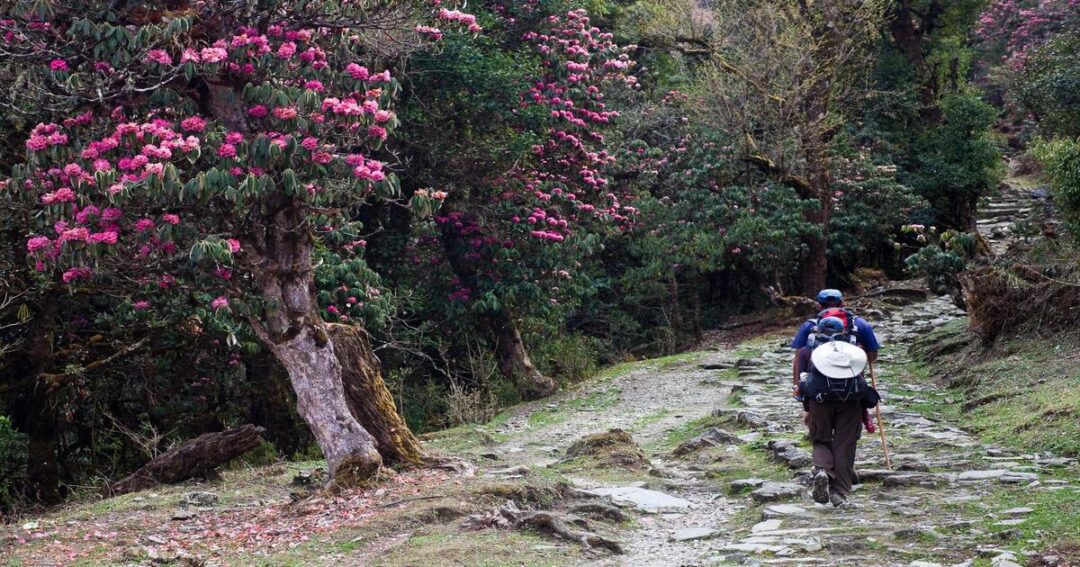
- Trail climbs from Bakhim through magnificent rhododendron forest — blooming red and pink in April, creating one of the finest trail environments in Sikkim
- Pass through the meadows above Bakhim before reaching Tshoka (~3,000 m) — a small village with trekkers’ huts and camping facilities
- Tshoka is a former Tibetan settlement, now a trekking checkpoint; excellent views of Mt. Pandim from here on clear days
- Afternoon: short acclimatisation walk above Tshoka; birdwatching in the surrounding forest
- Night: Tshoka (~3,000 m) — trekkers’ hut or tent
Day 4: Tshoka → Phedang (Acclimatisation Day)
- Distance: ~5 km | Altitude gain: ~3,000 m → ~3,700 m | Trek time: ~4–5 hours
- Steep ascent from Tshoka through dense rhododendron and mixed forest — the gradient is demanding; this is the most challenging uphill section for most trekkers
- Forest thins to sub-alpine scrub and meadow as altitude increases
- Reach Phedang (~3,700 m) — a high meadow campsite with sweeping views; the first point where the high Himalayan peaks begin to reveal themselves on clear days
- Critical: Day 4 at Phedang is an essential acclimatisation day before the push to Dzongri — the altitude gain from Tshoka to Dzongri in a single day is too aggressive for most trekkers; Phedang breaks it correctly
- Night: Phedang (~3,700 m) — tents (no permanent structures at Phedang)
Day 5: Phedang → Dzongri
- Distance: ~5 km | Altitude gain: ~3,700 m → ~4,020 m | Trek time: ~3–4 hours
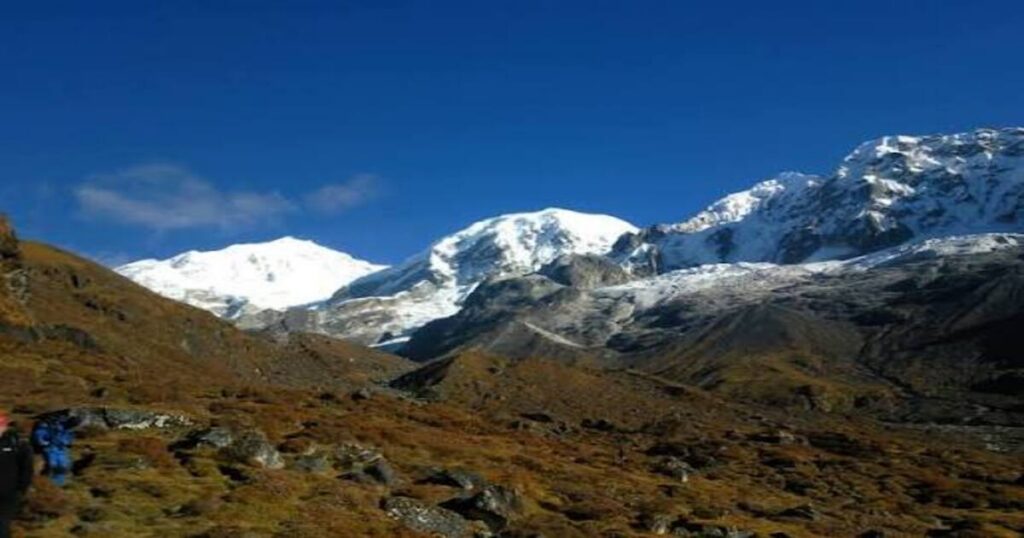
- Early start from Phedang; the first hour of the trail provides the first unobstructed views of the Kanchenjunga (8,586 m) and Pandim (6,691 m) peaks above the treeline
- Trail crosses open alpine meadow to Deorali Top — an intermediate ridge with panoramic views — before the final approach to the Dzongri plateau
- Dzongri (~4,020 m) — the high alpine meadow campsite arrives as the trail levels; the surrounding peaks (Kanchenjunga, Pandim, Kabru, Rathong, Koktang, Narsing) are visible from the campsite itself
- Afternoon: rest and acclimatisation at Dzongri; short walk around the plateau to observe the changing light on the peaks
- Night: Dzongri (~4,020 m) — tents
Day 6: Dzongri Top (Sunrise) → Dzongri → Tshoka
- Wake up: 4:00 AM | Dzongri Top ascent: ~1–1.5 hours | Descent: ~7–8 hours to Tshoka
Dzongri Top Sunrise (pre-dawn summit push):
- The climb from the Dzongri campsite to Dzongri Top (~4,200 m) is approximately 1–1.5 hours on steep meadow trail
- Arrive at the top before dawn; the full 360° panorama opens as the first light reaches the peaks:
- Kanchenjunga (8,586 m) — the dominant presence; the entire massif illuminated from first grey-blue to gold to brilliant white
- Pandim (6,691 m), Kabru group, Rathong (6,678 m), Koktang (6,147 m), Narsing (5,825 m) — a complete ring of Himalayan giants
- Singalila Ridge to the west — the divide between Sikkim and Nepal
- The sunrise at Dzongri Top is the defining experience of the trek — most trekkers describe it as the finest mountain view they have ever witnessed
Descent day:
- Return from Dzongri Top to the campsite; breakfast; begin descent
- Long descent retracing the route through Phedang and back to Tshoka (~3,000 m)
- Night: Tshoka (~3,000 m) — trekkers’ hut or tent
Day 7: Tshoka → Bakhim → Yuksom → Departure
- Distance: ~18 km | Descent: ~3,000 m → ~1,780 m | Trek time: ~6–7 hours
- Full descent retracing the route through Bakhim and the Rathong Valley to Yuksom
- Final night (optional) in Yuksom before drive back to NJP/Bagdogra
- Most trekkers begin the drive to NJP/Bagdogra the same evening for next-day flights/trains
Dzongri Top — The Viewpoint
Dzongri Top is the crown of the entire trek and the reason most people do it. At 4,200 metres, it offers a 360° panorama of the Sikkim and Darjeeling Himalayas — one of the most comprehensive and close-range Himalayan viewpoints accessible from a standard trekking trail in India.
Peaks visible from Dzongri Top:
- Kanchenjunga (8,586 m) — world’s third highest; the dominant peak
- Pandim (6,691 m) — the nearest major peak; extraordinarily dramatic in form
- Kabru South (7,317 m) and Kabru North (7,338 m)
- Rathong (6,678 m)
- Koktang (6,147 m)
- Narsing (5,825 m)
- Frey Peak, Simvo, Tinchenkhang and others in the broader arc
- Singalila Ridge — the Sikkim-Nepal border ridge to the west
The best photography window is at first light — the 20–30 minutes as the sun rises over the eastern ridge and the peaks go from pre-dawn grey to gold to brilliant white. Arrive at least 30 minutes before sunrise.
Also Read: Best Food in Gangtok: A Complete Guide to Sikkimese, Tibetan & Nepali Cuisine
Dzongri Trek Cost & Package Guide
Dzongri Trek Cost — What to Expect?
Organised Dzongri trek packages (all-inclusive from Yuksom):
- Standard packages: approximately ₹12,000–18,000 per person for 7 days (Indian trekkers)
- Premium packages with better accommodation and smaller groups: ₹18,000–25,000+
- International trekkers: typically USD 200–350 for comparable packages (additional permit costs apply)
Independent trekking cost breakdown:
- Kanchenjunga National Park entry fee: ~₹700 per Indian trekker (significantly higher for foreign nationals)
- Trekking route permit: ~₹200
- Local registered guide (mandatory): ~₹1,200–1,500/day
- Porter/mule: ~₹800–1,000/day per animal
- Trekkers’ hut accommodation (where available): ~₹300–500/night
- Total independent estimate (excluding transport from NJP): approximately ₹8,000–12,000 per person for 7 days
What a Standard Dzongri Trek Package Includes?
- All meals from Day 1 dinner to Day 7 breakfast (or final day)
- Twin-share accommodation in trekkers’ huts and tents throughout
- Guesthouse accommodation in Yuksom (first and last night)
- IMF-certified or licensed trek leader
- Local Sikkimese registered guide (mandatory)
- Cook and kitchen helpers
- Mules for kitchen and camping equipment
- All Kanchenjunga National Park entry fees (Indian rate)
- Trekking route permit
- Yuksom Police registration
- Basic medical kit with portable oxygen
- Contingency acclimatisation day at Dzongri
What Packages Typically Exclude?
- Transport between NJP/Bagdogra and Yuksom (typically ₹1,200–1,800 per person one way shared)
- Personal trekking gear (boots, sleeping bag, jacket, poles)
- Personal medical insurance (strongly recommended)
- GST (5% applicable)
- Tips for guides and support staff
- Personal expenses and emergency evacuation costs
All costs are approximate and subject to change — verify with operators before booking.
Also Read: Dodital Trek: The Complete Guide to Lord Ganesha’s Sacred Lake & Darwa Pass Circuit
Dzongri Trek Difficulty
The Dzongri trek difficulty is rated Moderate to Challenging — a designation that reflects the following:
What makes it challenging:
- Rapid altitude gain: from Yuksom (~1,780 m) to Dzongri Top (4,200 m) in just 4–5 days — an ascent of approximately 2,460 metres; among the steepest altitude gain profiles of any non-technical Himalayan trek
- The Day 3 ascent from Bakhim to Tshoka and Day 4 from Tshoka to Phedang both involve sustained steep climbing
- High altitude: above 4,000 m, altitude sickness (AMS) is a genuine risk for inadequately acclimatised trekkers; symptoms must be taken seriously
What makes it accessible:
- No technical sections requiring ropes or climbing equipment
- Trail is well-marked and well-used
- Trekkers’ huts exist at all major campsites (Bakhim, Tshoka)
- Experienced guide teams are familiar with AMS protocols
Fitness requirement: Comfortable with 5–7 hours of walking per day on steep, uneven mountain terrain; prior trekking experience at altitude strongly recommended; those attempting Dzongri as a first Himalayan trek should ensure several months of cardiovascular preparation (walking, stair climbing, running).
Age range: Most operators accommodate ages 12–65 for healthy, prepared trekkers.
What is the Best Time for the Dzongri Trek?
| Season | Conditions | Best For |
| March to May (Spring) | Rhododendron forest in full bloom (April); mild temperatures; clear morning views | ✅ Best for forest colour and flowers |
| June to August (Monsoon) | Heavy rainfall; leeches; trails slippery; views obscured by cloud | ❌ Not recommended |
| September to November (Autumn) | Post-monsoon clarity; best 360° views from Dzongri Top; stable weather | ✅ Best overall for mountain views |
| December to February (Winter) | Snow above Tshoka; extreme cold at Dzongri; trail may be blocked | ⚠️ For experienced winter trekkers only; verify conditions |
The two best windows:
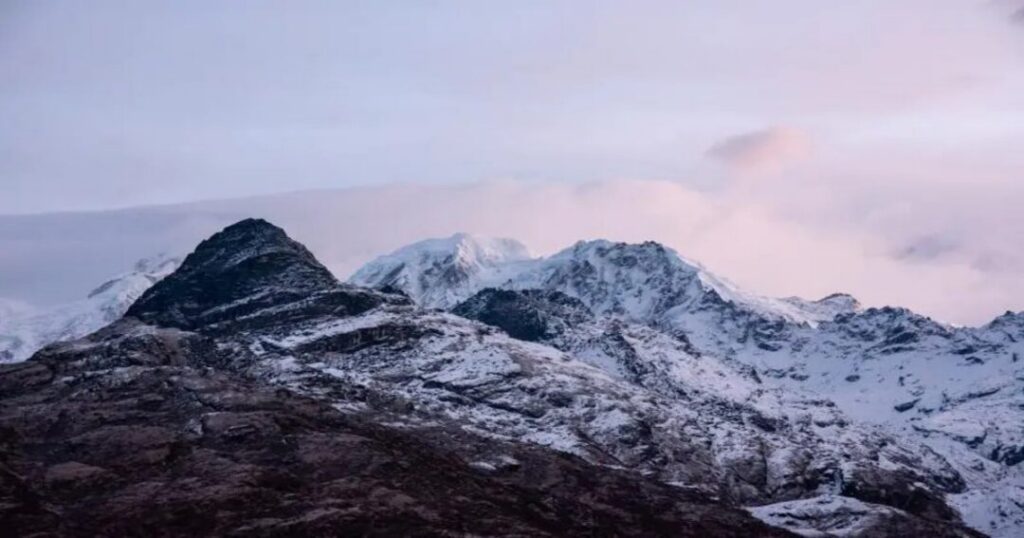
- April: Rhododendron bloom turns the trail from Bakhim to Tshoka into a red and pink canopy; snow may still be present at Dzongri Top; the visual combination is extraordinary
- October-November: Post-monsoon clarity delivers the sharpest Kanchenjunga views from Dzongri Top; crisp air; good visibility throughout the route
Permits for the Dzongri Trek
Three permits are required:
- Kanchenjunga National Park Entry Permit — paid at the forest check post in Yuksom on Day 2 morning; approximately ₹700 per Indian trekker; significantly higher for foreign nationals (check current rates as fees change)
- Trekking Route Permit — issued by Sikkim Tourism; requires passport-size photograph and valid government photo ID; arranged through your trekking operator
- Yuksom Police Registration — mandatory entry at the Yuksom police station before the trek; requires 3 photocopies of government photo ID
Solo trekking is prohibited inside Kanchenjunga National Park — every trekking party must be accompanied by a registered local Sikkimese guide. This is a legal requirement enforced at checkposts throughout the route.
Foreign nationals require additional restricted area permits for Sikkim and may face different (higher) permit fee structures — verify with your operator well in advance.
Also Read: Chandrashila Trek: The Complete Guide to Chopta, Tungnath & the Moon Stone Summit
Conclusion About Dzongri trek
The Dzongri trek delivers one of the finest Himalayan experiences available in a single week — Kanchenjunga at 4,200 metres, the rhododendron forests of West Sikkim, five ecosystems in five days, and a sunrise that most trekkers describe as the finest they have ever seen. Inside a UNESCO World Heritage Site. With a trail that has been walked for generations.
Quick recap:
- Dzongri altitude: ~4,020 m (meadow); Dzongri Top: ~4,200 m
- Yuksom start: ~1,780 m; West Sikkim; first capital of Sikkim (1642)
- Duration: 7 days standard | Distance: ~46–58 km round trip
- Dzongri trek difficulty: Moderate to Challenging; no technical sections
- Dzongri trek cost: ₹12,000–18,000 per person (Indian); USD 200–350 (international)
- Best time: April (rhododendrons + snow); October–November (clearest views)
- Peaks from Dzongri Top: Kanchenjunga (8,586 m), Pandim (6,691 m), Kabru, Rathong, Koktang, Narsing
- Permits: National Park + Trekking Route + Police registration; solo trekking prohibited
Download the Explurger app to discover what Dzongri trekkers recommend for current trail and snow conditions, find the best Yuksom operators and local guides, and log every rhododendron forest, altitude milestone, and Kanchenjunga sunrise on your Sikkim Himalayan journey.
The rhododendrons are already flowering above Bakhim. The Kanchenjunga is already waiting at the top. Dzongri is already turning gold in the first light.
FAQs About the Dzongri trek
2. What is the Dzongri trek difficulty?
The Dzongri trek difficulty is rated Moderate to Challenging. The primary challenges are rapid altitude gain (from ~1,780 m to 4,200 m in 4–5 days), sustained steep climbing on Days 3–4, and altitude sickness risk above 4,000 m. There are no technical climbing sections. Trekkers should have prior high-altitude experience or excellent cardiovascular fitness, and must acclimatise properly — a rushed itinerary is the most common cause of problems on this trek.
3. What is the Dzongri trek cost?
The Dzongri trek cost for a standard 7-day all-inclusive package from Yuksom is approximately ₹12,000–18,000 per person for Indian trekkers, and USD 200–350 for international trekkers (permit costs for foreign nationals are significantly higher). The package typically includes all meals, accommodation (trekkers' huts and tents), guide, cook, mules, and all permits. Excluded costs include transport from NJP/Bagdogra to Yuksom, personal gear, insurance, and GST (5%).
4. What is the best time for the Dzongri trek?
The Dzongri trek best time is September to November (post-monsoon) for the clearest mountain views and most stable weather, and March to May (spring) for the rhododendron bloom and milder temperatures. April combines flowering forests with possible snow at Dzongri Top for a spectacular visual combination. Avoid June to August (monsoon — heavy rain, leeches, poor visibility) and December to February except for experienced winter trekkers.
5. What is the Dzongri trek itinerary?
The standard Dzongri trek itinerary is 7 days: Day 1 (arrive Yuksom, permits, briefing), Day 2 (Yuksom → Bakhim, ~12 km, ~2,750 m), Day 3 (Bakhim → Tshoka, ~6 km, ~3,000 m), Day 4 (Tshoka → Phedang, ~5 km, ~3,700 m — acclimatisation), Day 5 (Phedang → Dzongri, ~5 km, ~4,020 m), Day 6 (pre-dawn summit to Dzongri Top ~4,200 m for sunrise → full descent to Tshoka), Day 7 (Tshoka → Bakhim → Yuksom → departure). Total round trip distance approximately 46–58 km.