

2,008 Total Views
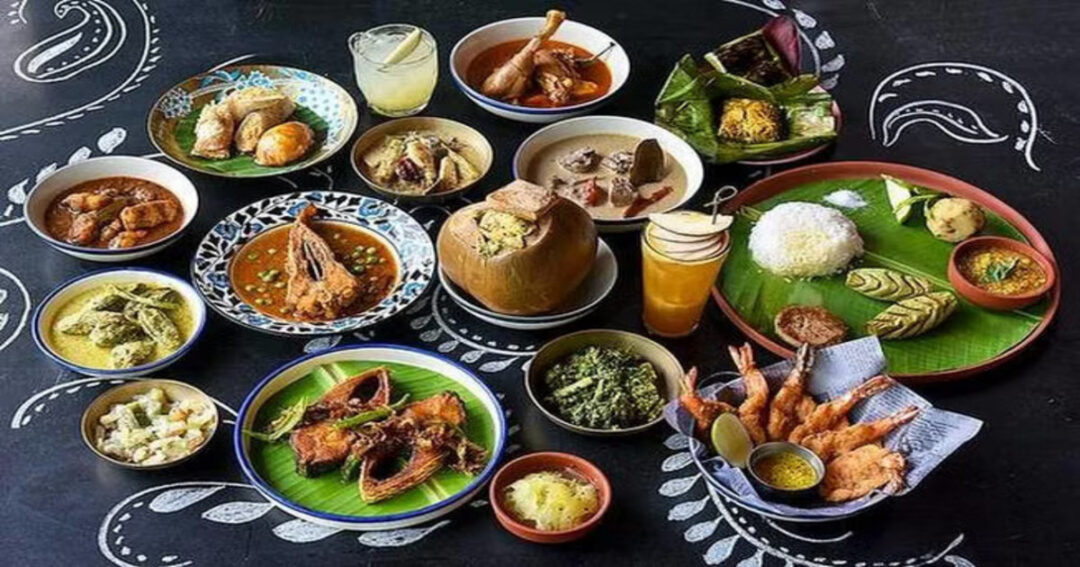
Kolkata doesn’t do food quietly. The city has been eating on the street for centuries — and it shows. The repertoire is deep, the technique is specific, and the opinions are fierce. Ask a Kolkatan about the best puchka in the city and you’ll get an argument, not an answer. If you’re trying to navigate street food in Kolkata without ending up at a tourist-facing approximation of the real thing, this guide breaks it down by dish, by neighbourhood, and by time of day — so you eat like someone who lives here, not someone who just landed.
Street Food in Kolkata — The Classics You Have to Start With
These are the dishes that define the city’s street food identity. Every Kolkatan has a version of this list. Here’s a grounded one.
Puchka (Kolkata’s Pani Puri)
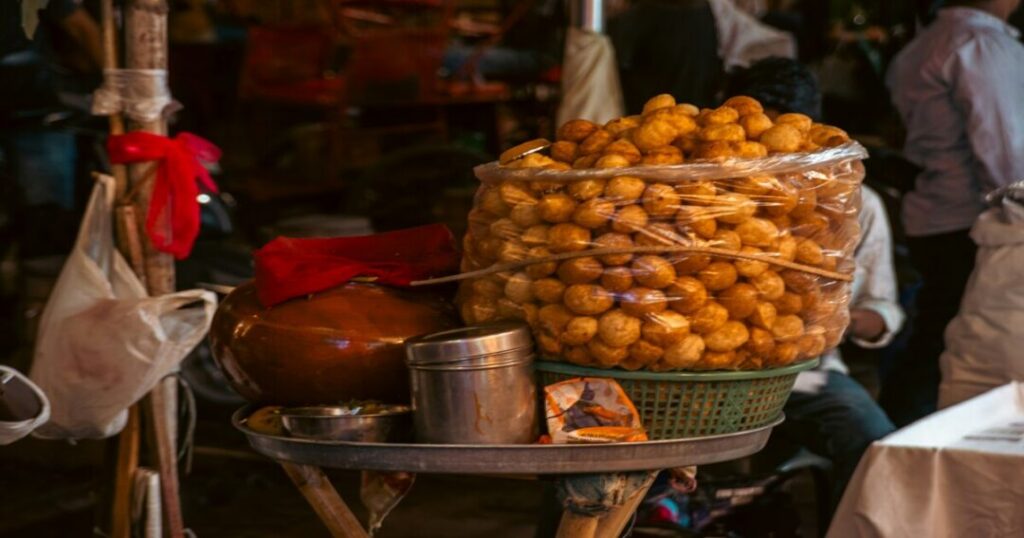
Puchka is the non-negotiable entry point. Unlike the pani puri you’ll find in Mumbai or Delhi, Kolkata’s version uses hollow, crispier shells (made with atta rather than sooji), a tangy tamarind water that’s darker and more sour than in other versions, and a filling of spiced mashed potato with black chickpeas and green chillies. The key difference is in the water — Kolkata’s phuchka jal is sharper, more acidic, and comes with a heat level you negotiate with the vendor. Served in rapid succession, five or six at a time, standing at the cart.
- Best areas: College Street, Vivekananda Park, Triangular Park (Ballygunge)
- Vegetarian: Yes
- Best time: Evening, 5 PM onwards
Kathi Roll
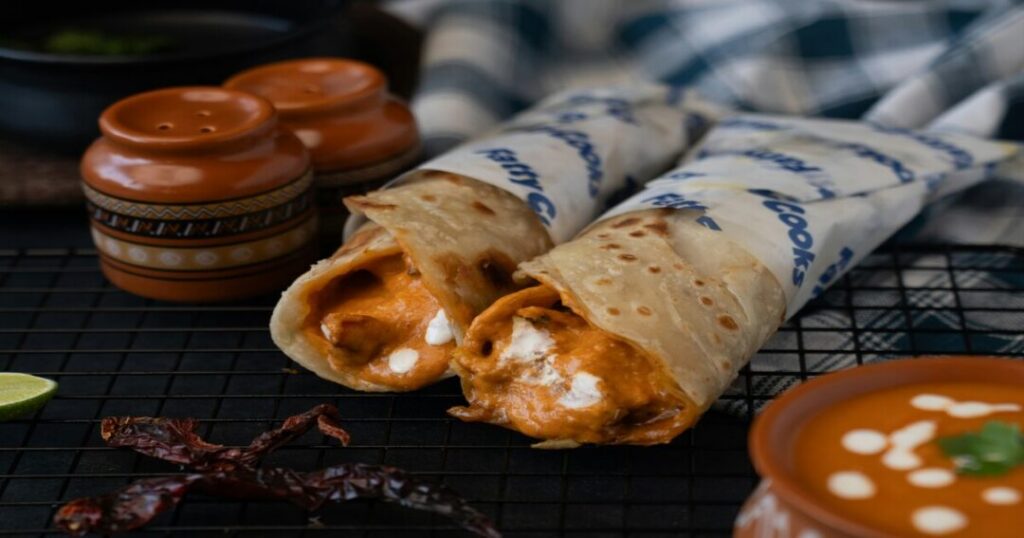
The kathi roll was reportedly invented at a Kolkata establishment on Park Street in the 1930s — a paratha wrapped around a skewer-grilled filling, originally egg and mutton, designed so office workers could eat without getting their hands greasy. The street version is its own thing: flaky paratha, egg, onions, green chutney, chilli sauce, and your choice of filling (egg, paneer, or chicken). The egg version — anda roll — is the baseline and the benchmark.
- Vegetarian options: Egg roll, paneer roll, aloo roll
- Best areas: Park Street, Esplanade, Gariahat
- Best time: Lunch and late evening
Jhal Muri
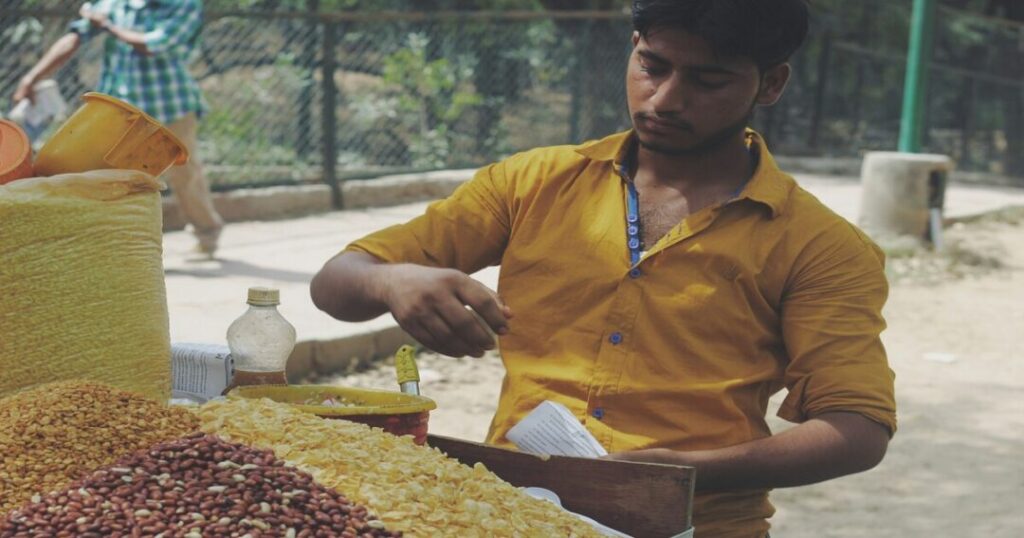
Jhal muri is puffed rice tossed with mustard oil, chopped onion, green chilli, tomato, cucumber, boiled potato, roasted peanuts, chanachur (spiced snack mix), and a squeeze of lime — mixed in a metal container or a newspaper cone by the vendor in a rapid, practised motion. Each vendor has a slightly different ratio; the mustard oil quantity is what separates a good jhal muri from a great one. It’s the street snack Kolkata eats at any hour, in any season.
- Vegetarian: Yes
- Found everywhere: Victoria Memorial, park benches, Maidan, ferry ghats
- Best time: Anytime, but especially in the afternoon
Ghugni
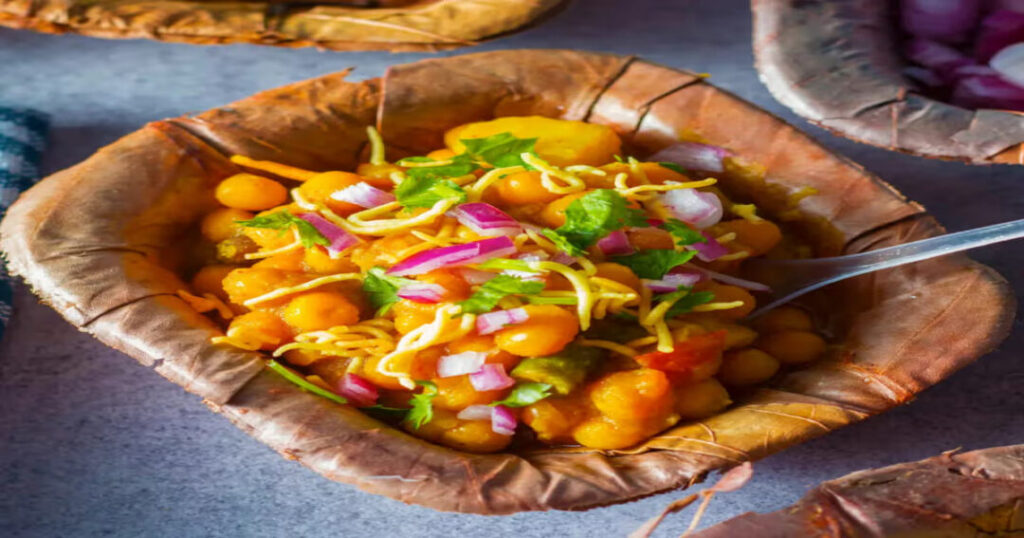
Ghugni is a thick, spiced curry of dried yellow peas (or white peas), cooked with onion, ginger, tomato, and a Kolkata-specific spice blend, served in a small earthen or leaf cup and topped with raw onion, green chilli, and a drizzle of mustard oil. It appears as a standalone snack, as an accompaniment to muri (puffed rice), and as a filling in other preparations. It’s warm, protein-rich, and deeply savoury — one of the more underappreciated items in the Kolkata street food canon.
- Vegetarian: Yes
- Best areas: North Kolkata, Shyambazar, Sovabazar
- Best time: Morning and evening
Also Read: Street Food in Delhi: 12 Must-Try Dishes Every Foodie Needs to Eat
Best Street Food in Kolkata — Breakfast Dishes Worth Waking Up Early For
Kolkata’s street breakfast culture is serious. The morning options are distinct from the evening snack circuit and worth planning around.
Luchi and Chholar Dal
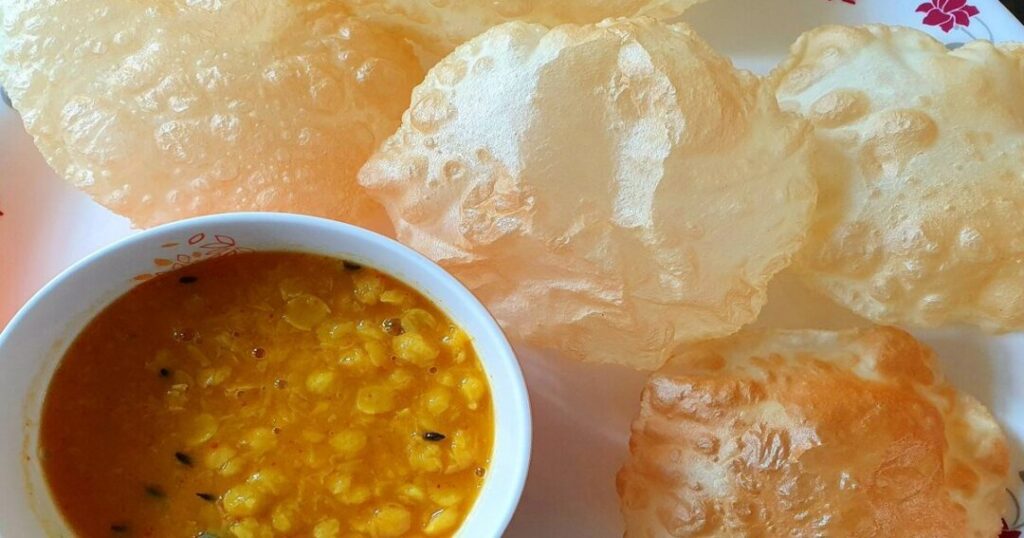
The quintessential Bengali morning meal: luchi (small, deep-fried puffed bread made from maida) served with chholar dal — Bengal gram cooked with coconut pieces, raisins, and whole spices in a lightly sweet, aromatic preparation. This combination appears at street-side stalls from around 7 AM and is gone by 10. It’s filling, ceremonial in its simplicity, and eaten sitting on a wooden bench at a roadside stall with tea on the side.
- Vegetarian: Yes
- Best areas: North Kolkata (Shyambazar, Kumartuli), Sovabazar
- Best time: 7 AM – 10 AM
Telebhaja — Kolkata’s Deep-Fried Morning Circuit
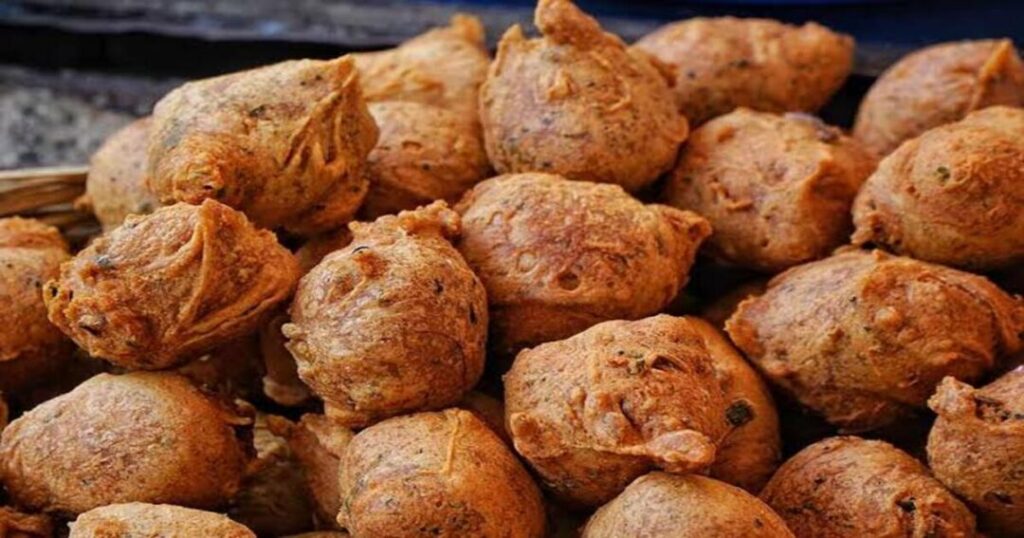
Telebhaja means “fried in oil” and encompasses the category of morning fritters sold at small stalls across the city. The main items:
- Beguni: Sliced brinjal dipped in besan batter and deep-fried — eaten plain or with puffed rice
- Alur Chop: Spiced mashed potato coated in besan and fried, sometimes stuffed with peanuts or dried fruit
- Mochar Chop: Banana flower filling in a fried casing — a more old-fashioned preparation, increasingly rare but still found in North Kolkata
- Piaji: Onion fritters with green chilli and spices
All telebhaja is eaten with kasundi (Bengali mustard sauce) — sharper and more pungent than regular mustard. The combination is non-negotiable.
- Vegetarian: Yes (all items above)
- Best areas: Shyambazar five-point crossing, College Street, Hatibagan
- Best time: 7 AM – 11 AM
Dimer Devil (Kolkata Scotch Egg)

A hard-boiled egg encased in spiced minced meat or potato, coated in breadcrumbs, and deep-fried. The Kolkata version tends toward the potato-cased variant (making it vegetarian-adjacent), seasoned with local spices and served with kasundi or ketchup. Found at street stalls and small counters across the city; a staple of the Kolkata street breakfast places circuit.
- Vegetarian variant: Potato-cased version (no meat)
- Best areas: New Market area, Esplanade, Gariahat
- Best time: Morning and afternoon
Famous Street Food in Kolkata — Rice, Rolls & Heavier Plates
These are the more substantial street food options — the ones that function as full meals rather than snacks.
Biryani — Kolkata Style
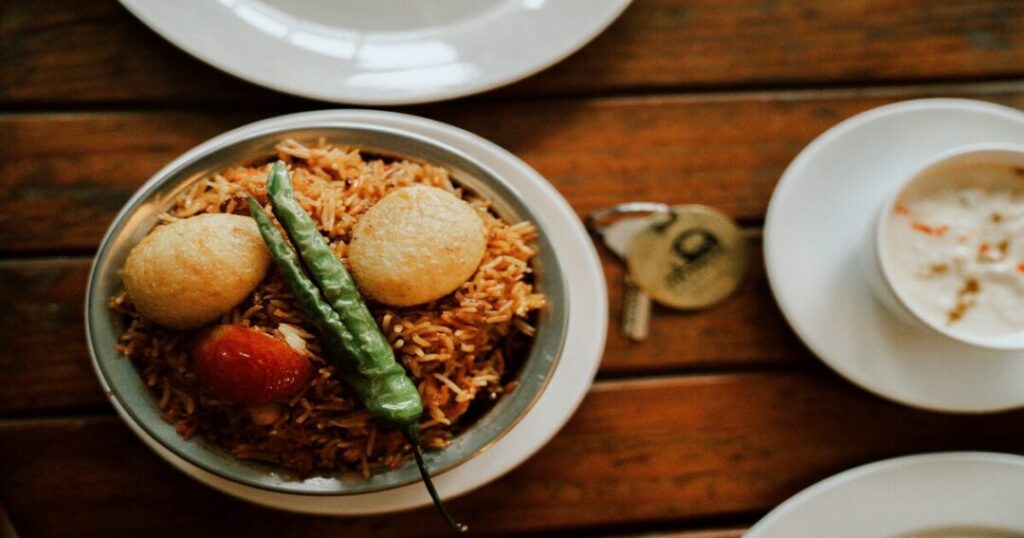
Kolkata biryani is its own distinct tradition, descended from the Awadhi style brought by Nawab Wajid Ali Shah when he was exiled to Metiabruz in 1856. The defining characteristic is the potato — a whole aloo cooked with the rice and meat, absorbing the saffron and kewra-scented cooking liquid. Kolkata biryani uses less spice than Hyderabadi or Lucknawi versions; it’s fragrant and subtle, with a long-grain rice that stays separate. The street and takeaway versions at North Kolkata stalls are significantly more affordable than restaurant servings and often just as good.
- Non-vegetarian (chicken or mutton standard; egg biryani available)
- Best areas: Metiabruz, Park Circus, Rajabazar, Zakaria Street
- Best time: Lunch (12 PM – 3 PM) when freshest
Mughlai Paratha
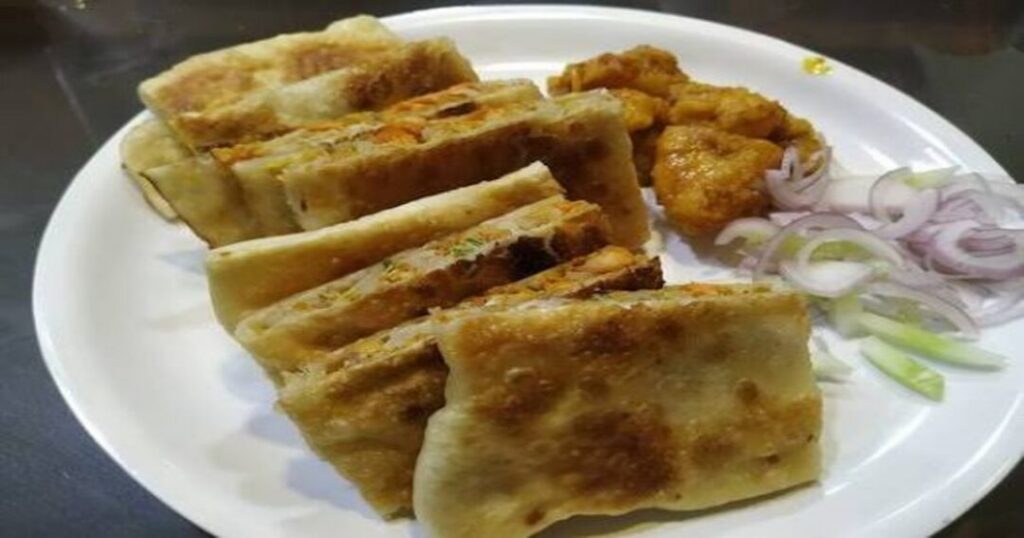
A large, griddle-cooked paratha stuffed with a mixture of egg and minced meat (or egg only), folded envelope-style and cooked on a tawa with generous oil. The result is crispy on the outside, soft and eggy within. Served with a thin curry or simply with onion and lime. A genuinely heavy street meal — one is usually enough.
- Vegetarian option: Egg-only version
- Best areas: Esplanade, Park Street, Zakaria Street
- Best time: Lunch and dinner
Kosha Mangsho with Luchi (Sunday Special)
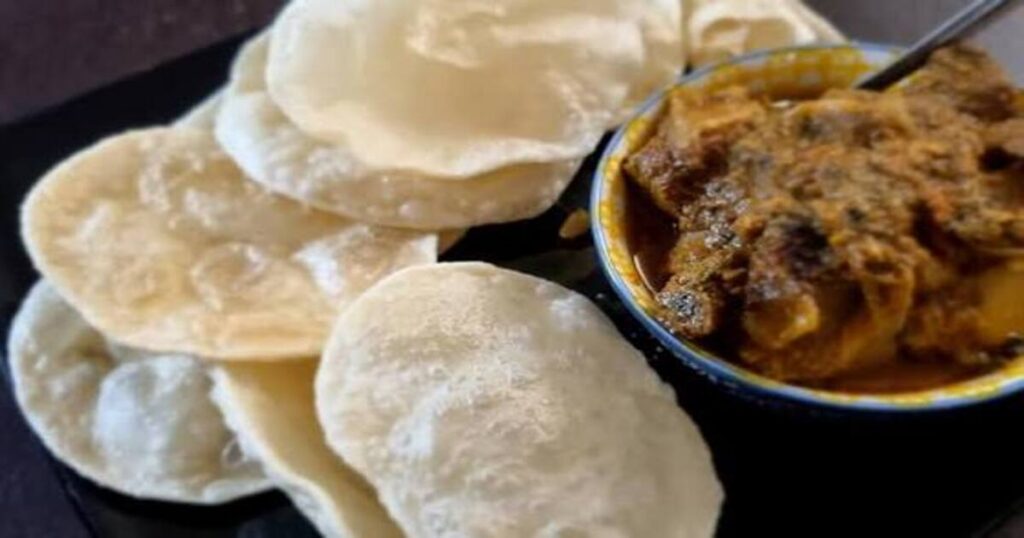
While kosha mangsho (slow-cooked, dry-style mutton curry) is not exclusively a street food, it appears at small roadside dhabas and weekend-only stalls across North Kolkata on Sunday mornings — served with luchi and eaten standing or on a bench. The meat is cooked down until the masala coats each piece completely with minimal gravy. One of the more specifically Kolkatan eating experiences and increasingly hard to find in this format outside the old neighbourhoods.
- Non-vegetarian
- Best areas: Shyambazar, Sovabazar, Hatibagan (Sunday mornings)
- Best time: Sunday, 8 AM – 12 PM
Also Read: Street Food in Ahmedabad: The Ultimate Guide to the City’s Most Iconic Bites
Kolkata Famous Street Food — Sweets & Desserts from the City’s Mithai Circuit
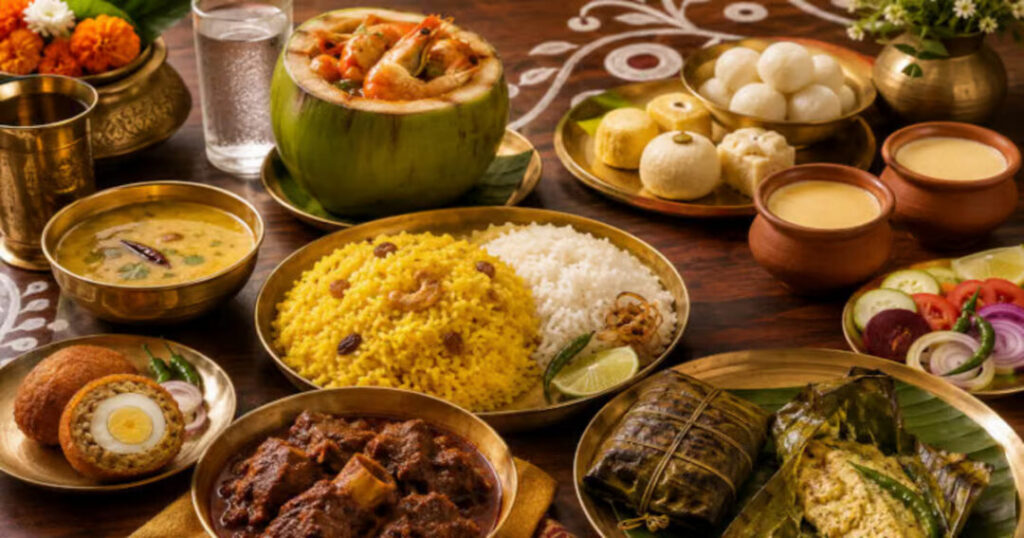
Bengali sweets are a category unto themselves. The street versions — sold from glass cases at small mishtir dokan — are different from the refined restaurant preparations and worth seeking out specifically.
Mishti Doi and Sondesh
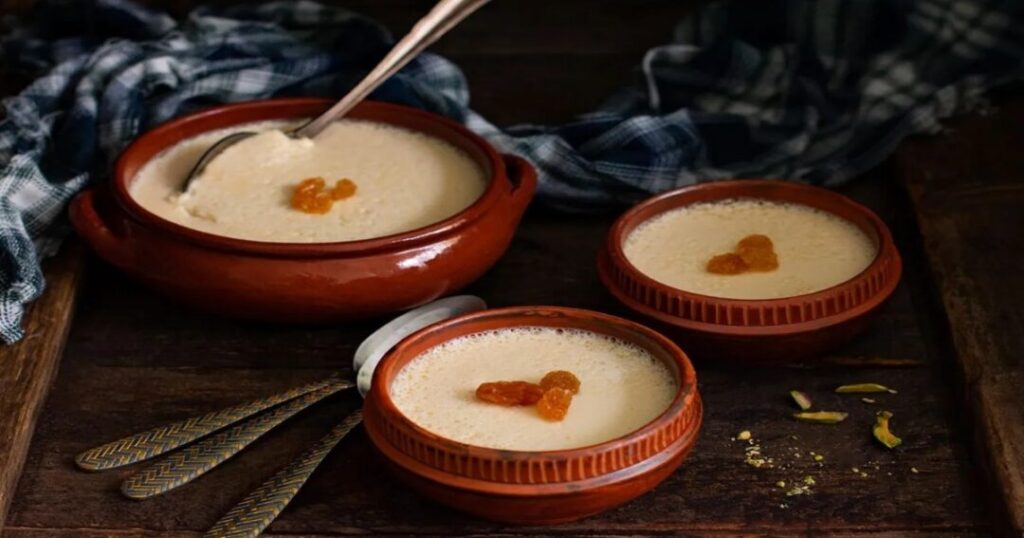
Mishti doi (sweetened, fermented yogurt set in earthen pots) and sondesh (a fresh cheese sweet made from chhena, shaped and sometimes flavoured with date palm jaggery or saffron) are the two most emblematic Bengali sweets. Both are available at street-side sweet shops across the city. The earthen pot for mishti doi is not decorative — it absorbs excess moisture and gives the doi its characteristic texture.
- Vegetarian: Yes
- Best areas: North Kolkata sweet shops, College Street, Bhawanipur
- Best time: Anytime; freshest in the morning
Rabri and Jilapi (Jalebis)

The combination of thick, reduced-sweetened milk (rabri) poured over hot, freshly fried jilapi (jalebis) is a Kolkata winter street staple — found at small stalls from October through February. The contrast of the crispy, syrup-soaked jilapi with the cold, creamy rabri is one of those combinations that makes a city’s street food reputation.
- Vegetarian: Yes
- Best areas: Esplanade, Burrabazar, Hatibagan
- Best time: Evening and winter months
Nolen Gur Ice Cream
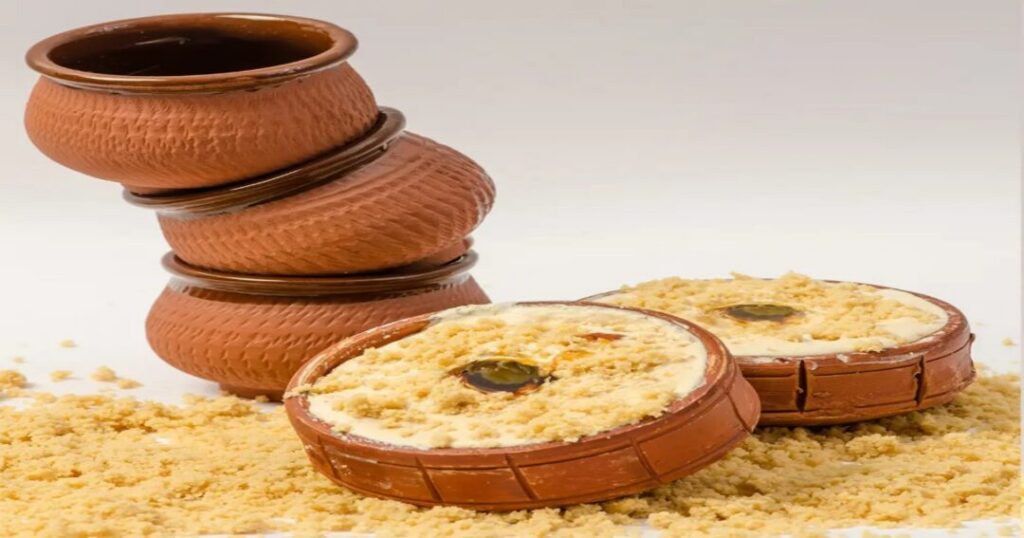
Nolen gur — date palm jaggery harvested in winter from Bengal’s date palms — has a distinctive smoky, caramel quality that sets it apart from other sweeteners. Nolen gur ice cream (also sold as kulfi in some stalls) is a seasonal item available from November to February, sold by street vendors and small sweet shops. Once you’ve had it, the regular version is a step down.
- Vegetarian: Yes
- Seasonal: November – February only
- Best areas: Ballygunge, Bhawanipur, College Street
Best Fast Food in Kolkata — Chinese, Chowmein & the Tangra Influence
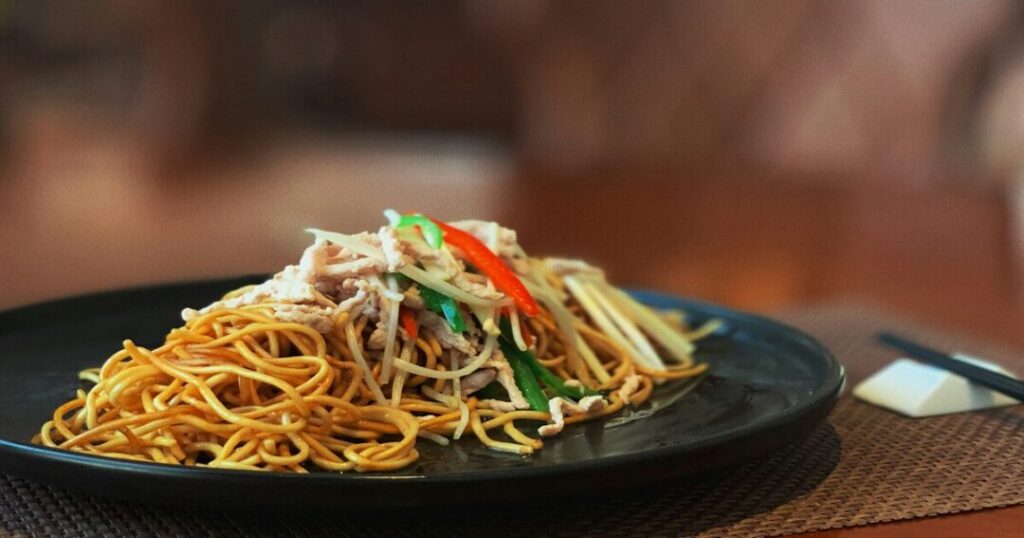
Kolkata has the oldest Chinatown in India — Tangra, in the eastern part of the city — and a long history of Hakka Chinese settlers who built their own food culture here. The result is “Calcutta Chinese”—a distinct Indo-Chinese style that predates the pan-Indian “Chinese food” category by decades.
Calcutta Chow and Tangra-Style Dishes
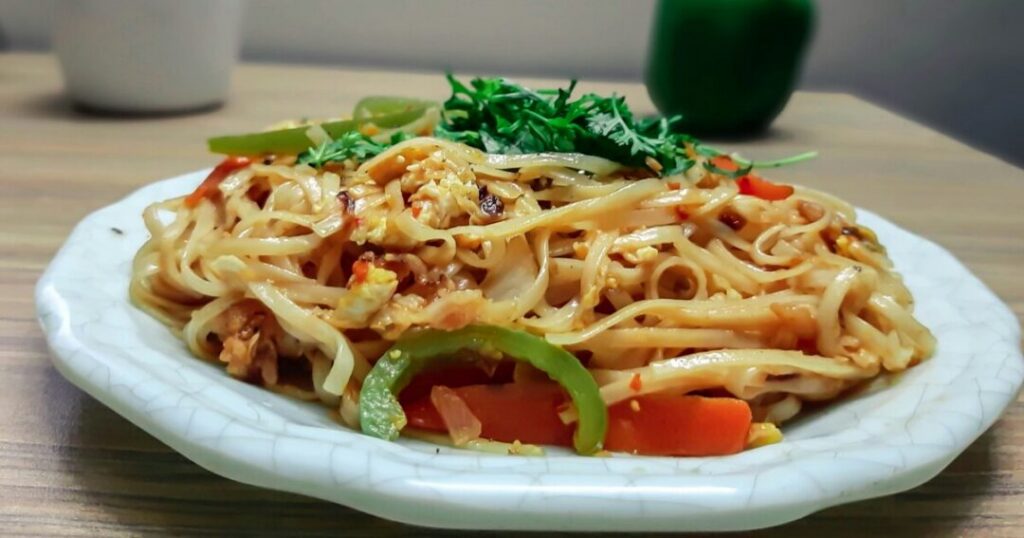
Calcutta Chinese is characterized by darker sauces, more soy, higher heat levels, and cooking techniques brought by Hakka immigrants from Guangdong province. The street-adjacent versions—chowmein, chili chicken, Manchurian, and fried rice—found at stalls across the city are descended from this tradition. The Tangra area itself has moved upmarket, but the food culture has dispersed across the city.
Key items in the Kolkata fast food street circuit:
- Chowmein: Wok-tossed noodles with vegetables (or chicken/egg), distinctly oilier and more soy-forward than other Indian Chinese versions—vegetarian option widely available
- Egg Devil or Egg Chop: Hard-boiled egg coated and fried—a cross between telebhaja and Chinese-influenced snacking
- Fish Fry: Basa or bekti fillet in breadcrumbs, fried and served with kasundi—a Kolkata street staple, found at parks and ferry ghats—non-vegetarian
Kolkata Famous Street Food Places—Neighborhoods to Eat Through
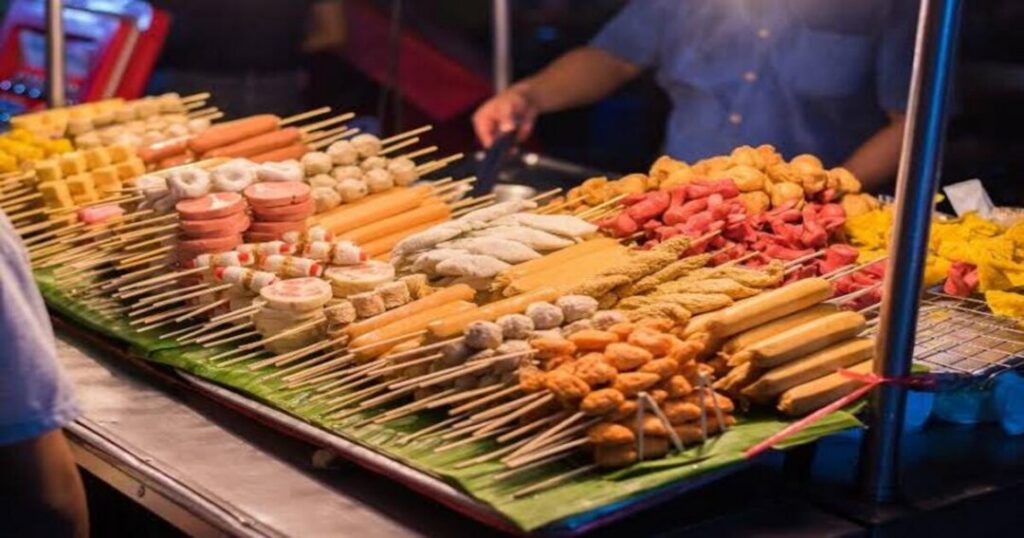
Rather than individual stalls (which open and close), these are the areas that reliably deliver the best street food in Kolkata across categories.
College Street and the Boi Para Belt
College Street is famous for its second-hand bookstores, but the food around it is equally serious — telebhaja stalls, puchka carts, ghugni vendors, mishti doi at small sweet shops, and the famous Presidency area chai circuit. Best eaten on foot between 5 PM and 8 PM.
Shyambazar Five-Point Crossing
The five-point crossing at Shyambazar is the beating heart of North Kolkata street food — telebhaja in the morning, puchka and jhal muri in the evening, biryani stalls nearby, and sweet shops in every direction. One of the most concentrated street food zones in the city.
Zakaria Street (Nakhoda Mosque Area)
The area around the Nakhoda Mosque in Central Kolkata is the hub for Kolkata’s Mughal- and Awadhi-influenced street food—biryani, seekh kebab, haleem, mughlai paratha, and sheermal. Best visited in the evening and especially during Ramzan when the entire street turns into an open-air iftar market from sunset.
Park Street and Esplanade
The southern end of the city’s street food geography is more mixed in terms of what’s available but reliable for kathi rolls, egg rolls, chowmein, and the fast food stalls that define what younger Kolkatans eat on the street.
Also Read: Monsoon in Delhi in August: A Celebration Of Rain, Culture, Food and Fun
Conclusion About street food in Kolkata
Kolkata’s food culture is built on the street. The finest expression of Bengali cooking — its precision with spice, its comfort with sweetness alongside heat, its specific mustard-and-mustard-oil logic — is not hidden in restaurants. It’s on a cart at a five-point crossing, in a newspaper cone, in a clay pot of mishti doi sitting on a wooden counter. The street food in Kolkata is the city’s most honest introduction, and it demands to be eaten slowly, across neighbourhoods, and across the hours of the day.
Download the Explurger app to log every stall, dish, and lane you eat through in Kolkata — and see what other food travellers are discovering across the city.
Start in the north, eat through the evening, and save room for nolen gur.
FAQs About Street Food in Kolkata
2. Is Kolkata street food safe to eat?
Generally yes, with standard precautions. Stick to stalls with visible turnover (high footfall means fresher ingredients), avoid pre-cut fruit from uncovered trays, and choose cooked items over raw preparations if you have a sensitive stomach. The puchka water is the most common concern for visitors — if you're unsure, ask the vendor to use bottled water for the jal, which many stalls now offer.
3. What are the best vegetarian street food options in Kolkata?
Kolkata's street food is heavily vegetarian-friendly. Puchka, jhal muri, ghugni, luchi-chholar dal, all telebhaja (beguni, alur chop, piaji), mishti doi, sondesh, jilapi with rabri, nolen gur ice cream, and egg-free chowmein are all vegetarian. The vegetarian options here are among the best in any Indian city's street food canon.
4. Where are the best street breakfast places in Kolkata?
North Kolkata has the strongest morning street food culture. The Shyambazar five-point crossing area, Hatibagan, and the lanes around Sovabazar and Kumartuli are the go-to zones for telebhaja, luchi-chholar dal, and ghugni from around 7 AM. College Street also has a good morning stall circuit, especially around the coffee house area.
5. What makes Kolkata biryani different from other styles?
The defining feature is the potato — a whole aloo cooked with the rice and meat, which is unique to Kolkata biryani. The style descends from Awadhi cooking traditions brought by Nawab Wajid Ali Shah when he was exiled to Metiabruz in 1856. Kolkata biryani is lighter on spice and more fragrant than Hyderabadi or Delhi styles, using saffron, kewra water, and a restrained masala blend.
6. What is the best time to eat street food in Kolkata?
For breakfast items (telebhaja, luchi-chholar dal), 7 AM – 10 AM. For biryani and heavier plates, 12 PM – 3 PM. The peak street food hour is evening — from 5 PM to 9 PM — when puchka, jhal muri, kathi rolls, and the sweets circuit all come alive simultaneously. Zakaria Street is best visited after dark.