
906 Total Views
Pondicherry — or Puducherry, as it was officially renamed in 2006, from the Tamil Puthu Cheri meaning “new settlement” — is one of India’s most genuinely layered small cities. It has a French Quarter that really does feel like a fragment of southern France dropped into the Coromandel Coast. It has a Tamil Quarter that predates the French by centuries and is far less photographed. It has a spiritual township north of the city that draws seekers from over 50 countries. And it has a fishing coast that was here before all of it, still pulling in the catch before dawn while the boutique hotels are still asleep.
Most guides to things to do in Pondicherry tell you the same things: walk the promenade, visit the ashram, have a croissant, stay in a heritage hotel. All of that is fine. None of it is wrong. But Pondicherry rewards the traveller who looks past the Instagram lanes — into the Tamil streets behind White Town, into the villages around Auroville, into the temples and the fishing ghats and the old French administrative buildings that have been quietly doing their government work since 1674. This guide gives you both: the heritage you came for, and what lies beneath it.
Best Time to Visit Pondicherry
October to March is the most comfortable window — temperatures between 20°C and 30°C, low humidity, and the northeast monsoon (which hits Tamil Nadu between October and December) having mostly cleared. January and February are the finest months — cool mornings, clear sea, and the city at its most walkable. April to June gets hot and humid but the beaches are quietest. Avoid the northeast monsoon peak in November — the rain can be heavy and the sea rough.
How to Reach Pondicherry?
- From Chennai (~160 km | 3 hours by road): The most common access point — by road via the East Coast Road (ECR), one of India’s finest coastal drives; by bus from Chennai CMBT (frequent services); or by train (Pondicherry Junction on the Chennai-Villupuram line, approximately 3.5–4 hours)
- From Bengaluru (~310 km | 5–6 hours by road): Direct buses and private cabs; no direct rail connection from Bengaluru
- By air: No commercial airport in Pondicherry; nearest is Chennai International Airport (160 km)
List of Things to do in Pondicherry
Heritage & French Quarter — The Story Underneath the Façade
White Town — But Read It Carefully
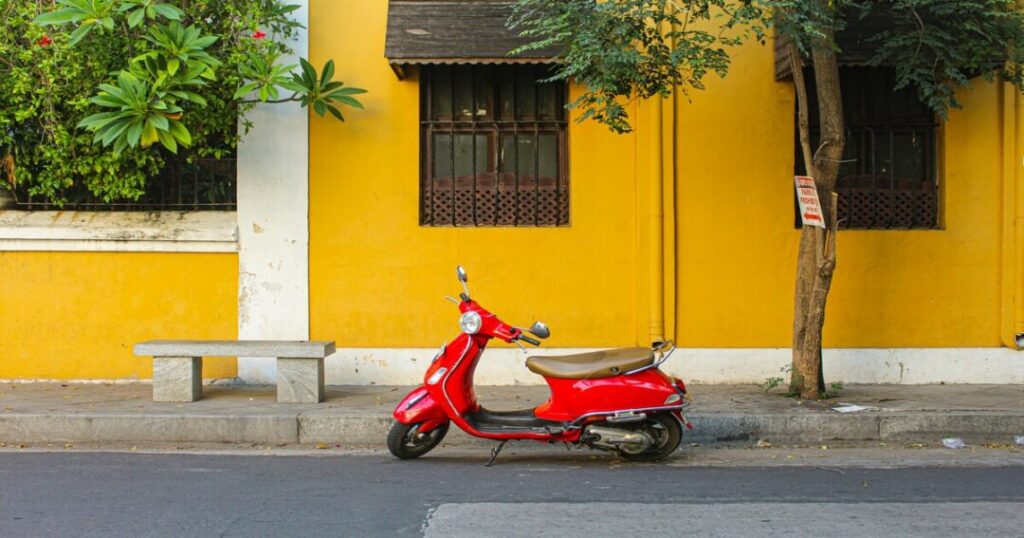
White Town is where Pondicherry’s French colonial history is most visible — the mustard-yellow and ochre buildings with blue shutters, the streets still named Rue Suffren, Rue Dumas, Rue de la Marine, the French war memorial, the statue of Governor Dupleix on the promenade. The French arrived in 1674 when François Martin established a trading post for the French East India Company. The colonial period lasted — with several interruptions when the British seized the town — until 1954, when Pondicherry was officially transferred to India after a referendum. The formal merger with the Indian Union followed in 1962.
But White Town is worth reading carefully rather than photographically. The Canal that once separated the French Quarter (White Town) from the Tamil Quarter (Black Town) — now filled and converted into a road — was not merely an administrative boundary. It was a racial one. The French colonial city was explicitly segregated: Europeans lived east of the canal, Tamil residents west. The mustard-yellow villas were built on that geography.
- The best way to experience White Town is on foot at dawn — before the cafés open, when the streets smell of jasmine and the light hits the facades at a low angle; this is when the neighbourhood is most honest
- The French consulate on Rue Suffren still operates — one of the very few French diplomatic posts remaining in a city that was once administered from Paris
- The Raj Nivas (Government House) — the official residence of the Lieutenant Governor — is a colonial-era building not open to the public but visible from the road; the French architectural detail is extraordinary
Also Read: Things to Do in Chennai: 15 Experiences Worth the Drive
The Tamil Quarter — What White Town Forgot
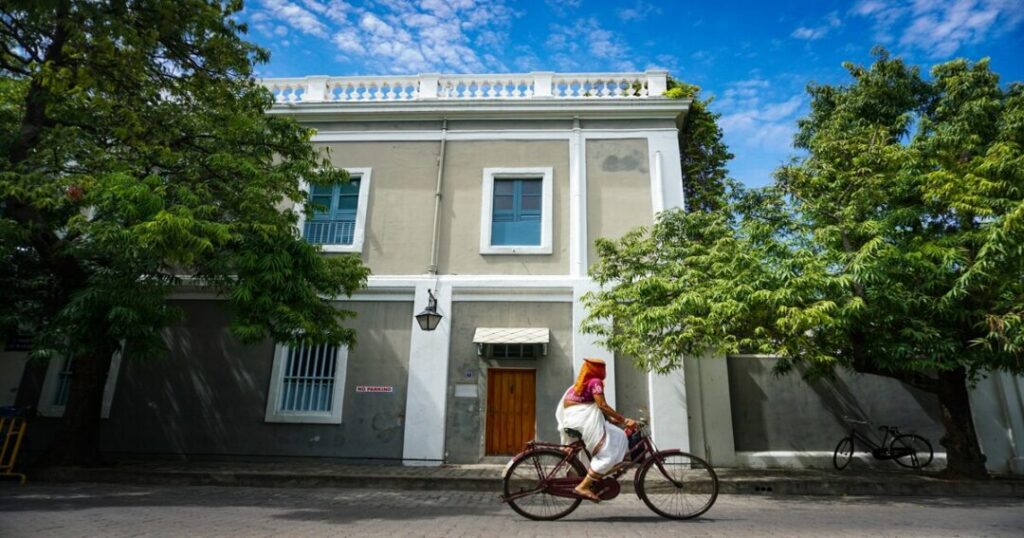
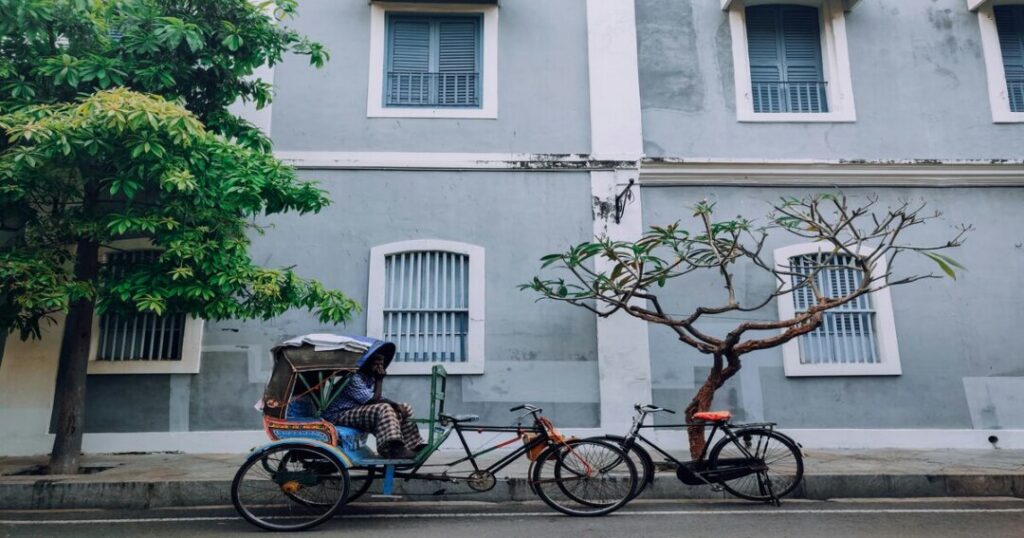
The Tamil Quarter (historically called Black Town — a designation most locals now reject) lies west of the old canal and is the most authentic and least visited part of Pondicherry. Traditional Tamil agraharam streets — long, continuous rows of attached homes with inner courtyards, wooden pillars, red-oxide floors, and kolam patterns at every threshold — run through this neighbourhood in a configuration unchanged for generations.
The temples here are working temples, not tourist sites: the Manakula Vinayagar Temple on the edge of the French Quarter is one of the most visited — a 300-year-old Ganesha temple that predates the French colonisation and has been continuously worshipped through every change of power the city has experienced. The idol of Ganesha here reportedly survived multiple attempts by the French to remove it. It stayed.
- Walk through the Muthialpet and Uppalam areas of the Tamil Quarter for traditional street life that the tourist circuit barely touches
- The Arulmigu Manakula Vinayagar Temple has 40 different forms of Ganesha carved on its gopuram — the detail is extraordinary and entrance is free
- The fish market near the Tamil Quarter waterfront is at its most active before 7 AM — the fishing boats come in, the catch is auctioned, and the Tamil coastal food culture is entirely on display
The Promenade — Best at the Hours Nobody Comes
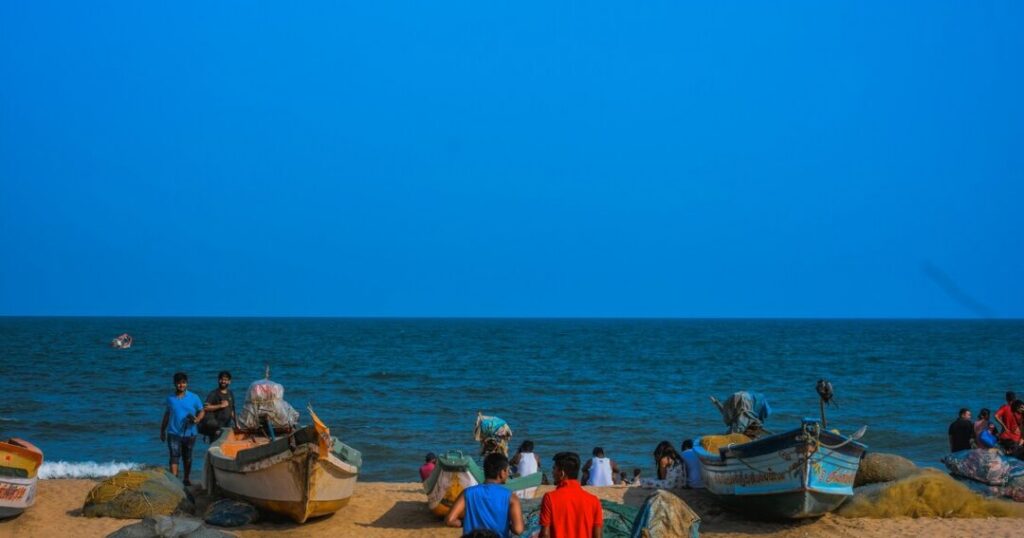
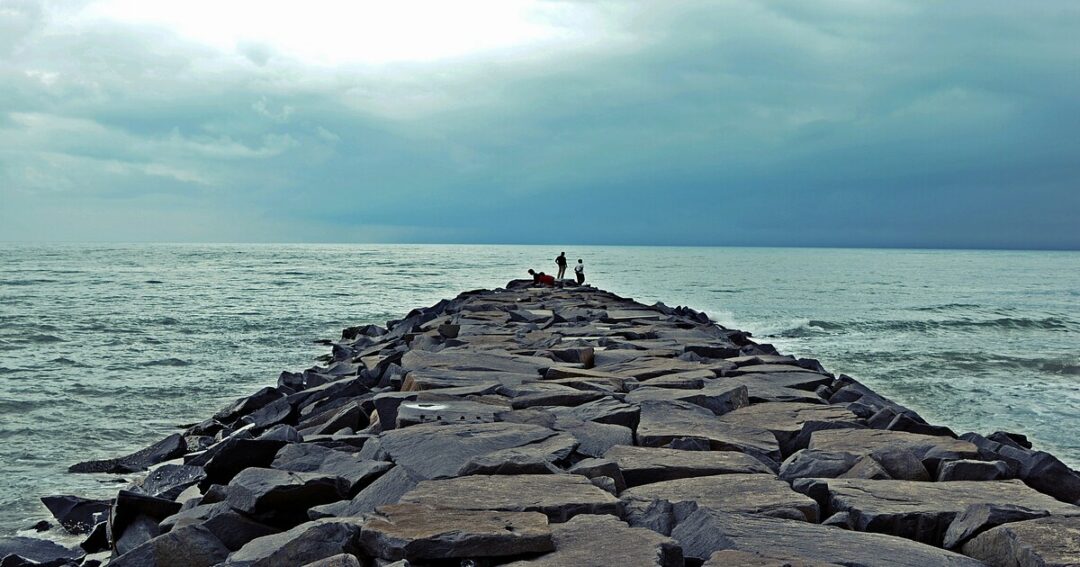
Pondicherry’s Promenade Beach (Beach Road) is 1.5 km of seafront boulevard along the Bay of Bengal — the Gandhi statue, the French war memorial, the old lighthouse, and the bay itself. It is genuinely beautiful. It is also, between 8 AM and 8 PM on weekends, genuinely crowded.
The promenade at 5:30–6:30 AM is one of the finest morning walks in South India. The entire city comes out — joggers, elderly couples, school children, fishermen returning, the French-era buildings turning gold in the early light. This is when the promenade earns its reputation rather than its Instagram feed.
- The old French lighthouse at the south end of the promenade is a protected heritage structure visible from the road
- The Gandhi statue on the promenade is a 4-metre bronze installed in 1974
- Cycling the promenade in the early morning is the single best thing to do in Pondicherry that costs nothing and disappoints no one
Spiritual & Wellness — Beyond the Surface
Sri Aurobindo Ashram — Presence Over Tourism
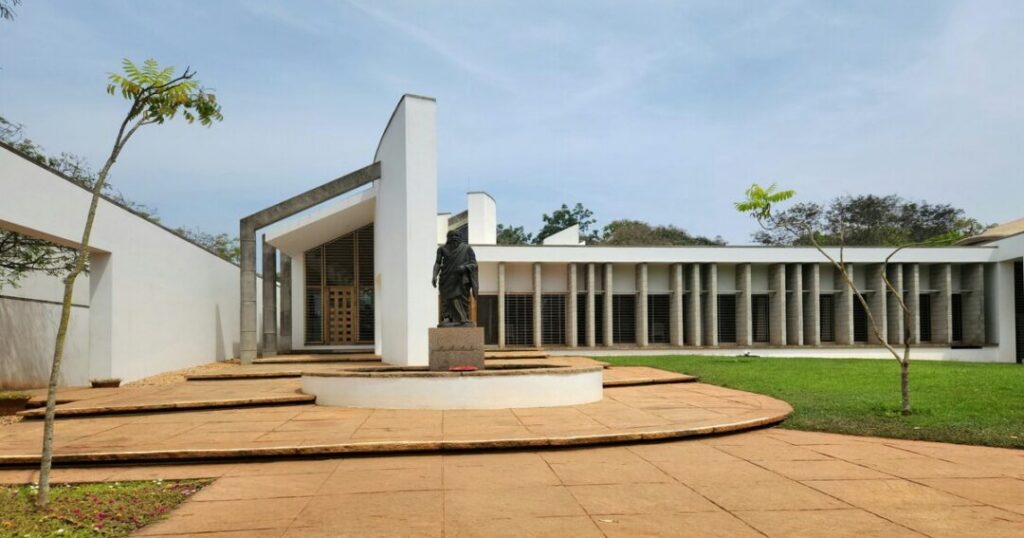
The Sri Aurobindo Ashram on Rue de la Marine is one of the most significant spiritual institutions in India — founded in 1926 by Sri Aurobindo Ghose, philosopher, poet, revolutionary, and spiritual master, and managed after his passing by his spiritual collaborator known as the Mother (Mirra Alfassa). The ashram continues to be a functioning spiritual community of several thousand members who live, work, and practice together in Pondicherry and the surrounding area.
The main ashram building is open to visitors — the samadhi (memorial tomb) of Sri Aurobindo and the Mother is the quiet, flower-covered centre of the compound. The atmosphere is one of the most genuinely peaceful in any busy Indian city. The ashram also runs a remarkable school (the Sri Aurobindo International Centre of Education), a publishing house, and multiple departments that produce handmade paper, incense, food, and crafts.
What most visitors miss: The ashram is not primarily a tourist site. It is a living community. The samadhi is the focal point for visitors, but the ashram’s departments — the farm at Udavi, the school, the library — are the parts that reveal what the institution actually is.
- Dress modestly; silence is expected in the main ashram courtyard; photography of the samadhi is restricted
- Open daily; the Wednesday evening meditation is open to visitors — one of the most extraordinary experiences in Pondicherry
- The ashram’s bakery and farms produce food sold at ashram outlets around the city — the bread and honey are worth seeking
Auroville — The Experiment North of the City
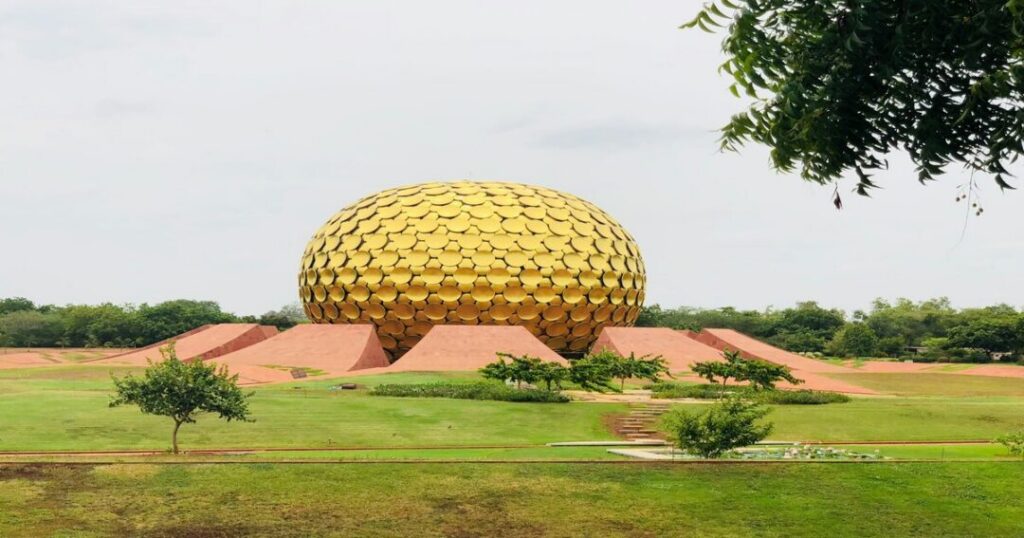
Auroville is not a tourist attraction. It is a functioning intentional community — founded in 1968 by the Mother on land 10 km north of Pondicherry, currently home to approximately 3,500 residents from over 50 countries, dedicated to the goal of human unity beyond nation, religion, and politics. It is a UNESCO-recognised cultural heritage entity.
The Matrimandir — a golden sphere 36 metres in diameter at Auroville’s centre, containing a meditation chamber with a single ray of sunlight directed onto a crystal — is the centrepiece of the community. Access to the Matrimandir’s inner chamber requires advance booking and a period of orientation; the viewing point is accessible more easily.
What Auroville actually is, beyond the Matrimandir, is a collection of farms, workshops, schools, research centres, and cafés run by the community across a forested plateau. Visitors who spend half a day walking between the community’s departments — the solar kitchen, the farms, the craft centres, the Visitors Centre — understand something the Matrimandir photograph alone cannot convey.
- Book Matrimandir inner chamber access at least a week in advance through the official Auroville website
- The forests of Auroville — planted on what was barren red earth when the community began — are now a significant biodiversity corridor; birdwatching here is excellent
Also Read: TOP FOOD DESTINATIONS IN INDIA: THE UNDERRATED EDITION
Beaches — Which Ones Actually Work
Serenity Beach — The One That Earns Its Name on Weekdays
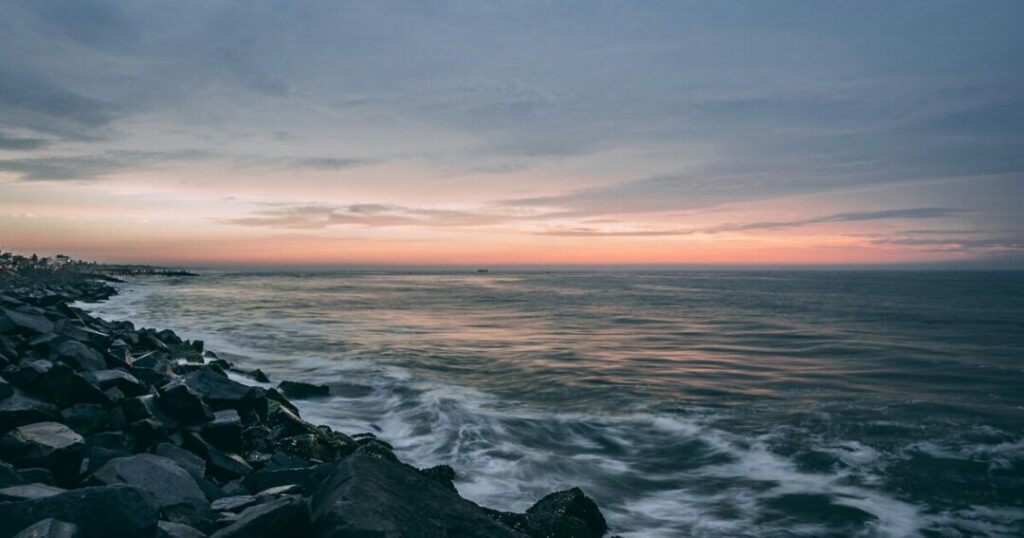
Serenity Beach in Kottakuppam, approximately 8 km north of Pondicherry, is the most consistent of Pondicherry’s beaches for anyone who wants actual sand and actual calm. It is a fishing village beach — the boats come in every morning, the nets are spread to dry, and the village temple sits at the northern end. Surf schools are operating here, and the water is clean enough for swimming in the calmer months.
- Come on a weekday — weekends draw crowds from Chennai, and the beach loses its character
- The surf season runs approximately from October to March; lessons and board rentals are available at the beachfront schools
- The village of Kottakuppam behind the beach is worth a short walk — the streets are old, the temple is active, and the fish stalls are some of the cheapest and best-sourced in the area
Paradise Beach — For the Journey as Much as the Destination
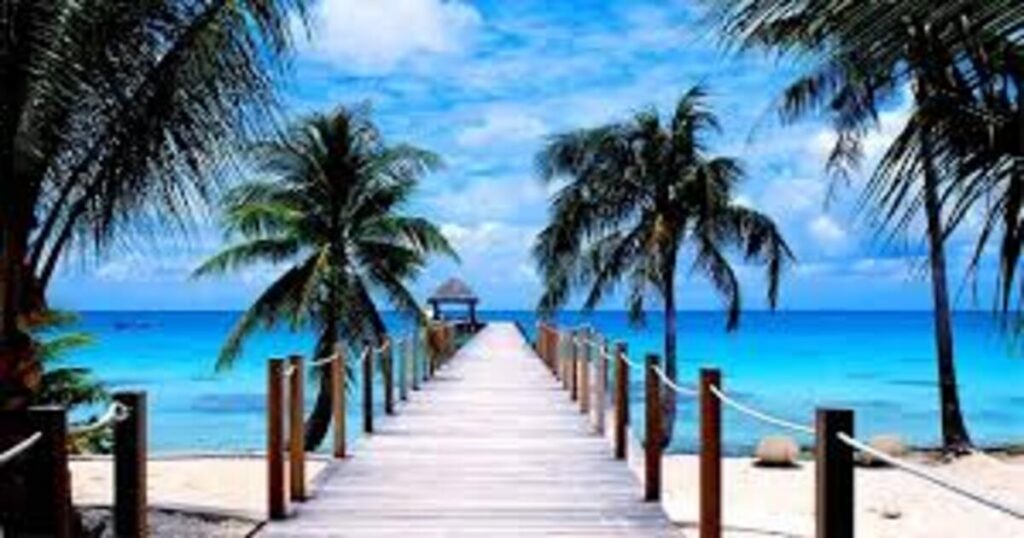
Paradise Beach is accessible only by a short backwater boat ride from the Chunnambar Boat House, approximately 8 km south of Pondicherry. The boat crosses the Chunnambar backwaters — a stretch of water surrounded by mangroves that is itself one of the most pleasant things to experience near Pondicherry. The beach on the other side is a long, relatively clean strip of sand backed by casuarina forest.
- The boat ride takes approximately 15–20 minutes each way; boats run from morning until late afternoon (verify current timings)
- The beach has minimal facilities; bring water and food
- The Chunnambar backwater itself is worth the trip, even if the beach is crowded — the mangrove boat ride is one of the quietest places to explore in Pondicherry’s surrounding landscape
Botanical Garden — The French Horticultural Legacy
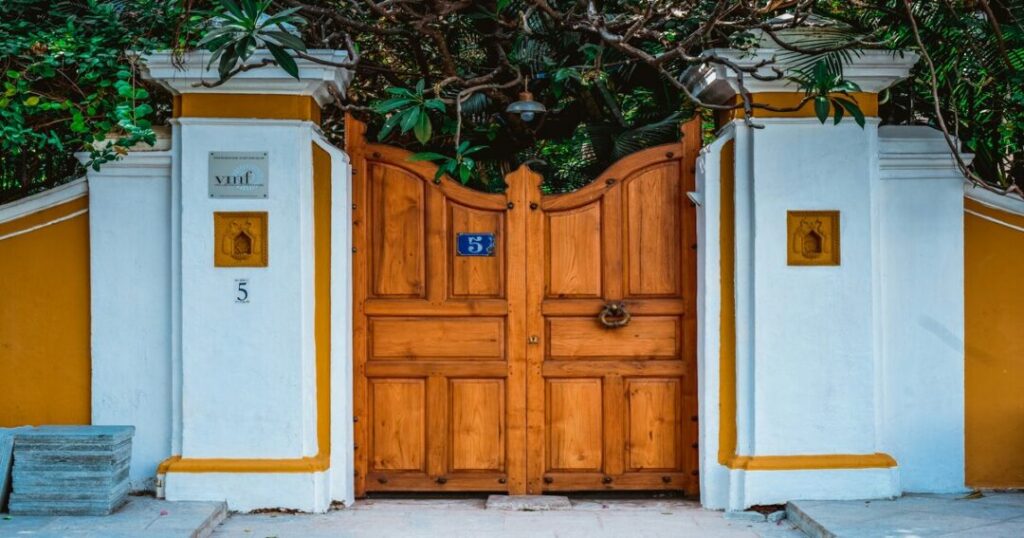
The Pondicherry Botanical Garden on Bharathidasan Salai was established in 1826 by the French colonial administration — one of the oldest botanical gardens in South India. It covers approximately 22 hectares and contains a significant collection of tropical and subtropical plants, including trees introduced by the French from their other colonial holdings.
- Almost entirely unvisited by the tourist crowd that fills White Town — often quiet even on weekends
- The avenue of palms that forms the garden’s main approach is one of the finest planted corridors in Tamil Nadu
- Entry is nominal; open daily; best in the early morning when the light filters through the tree canopy
Arikamedu — Rome on the Coromandel Coast
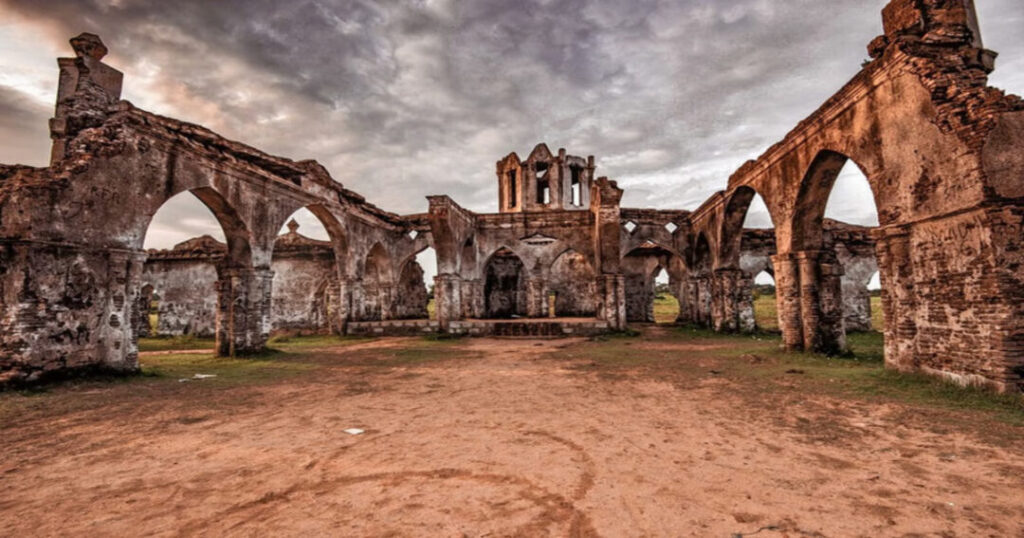
Arikamedu, about 4 km south of Pondicherry at the mouth of the Ariyankuppam River, is one of the most extraordinary and most ignored archaeological sites in South India. The first major excavations were conducted by British archaeologist Mortimer Wheeler in 1945, followed by French archaeologist Jean-Marie Casal in 1947–1950. These excavations revealed a Roman trading settlement active from the late 1st century BCE into the early centuries CE: amphorae, Arretine ware (red-glazed pottery from the Roman city of Arezzo in Tuscany), Roman lamps, glassware, and stone and glass beads. Wheeler identified the site as a Greek (Yavana) trading post that traded with Rome during the reign of Augustus Caesar. Subsequent excavations by Vimala Begley from 1989 to 1992 extended the known period of settlement from the 2nd century BCE to the 8th century CE.
This was an active Roman-era trading port, a place where Mediterranean merchants landed on the Coromandel Coast two thousand years ago. The site today is a quiet, partially excavated area next to a fishing village — almost entirely unmanaged for tourists but extraordinary for anyone interested in ancient trade routes or the deep history of the Coromandel Coast.
- Located approximately 4 km from the city centre; accessible by auto
- Combine with Chunnambar backwaters (nearby) for a full southern half-day circuit
- The site is identified as the port of Podouke, mentioned as an “emporium” in the ancient Periplus of the Erythraean Sea
The Tamil Nadu-Pondicherry Border Villages
Pondicherry’s Union Territory geography creates an unusual situation: the city is surrounded by Tamil Nadu on all land sides, and the border zigzags through villages. Cycling or walking the outer edges of the city — through the villages of Ariyankuppam, Villianur, and Nallur — takes you into the Tamil agricultural heartland that the tourist circuit never reaches: paddy fields, village temples, roadside flower sellers, and the sounds of a working South Indian village morning.
- The Villianur Temple (Sri Perumal Temple in Villianur, one of Pondicherry’s largest temple complexes) hosts the Ther festival — a massive chariot procession held annually that draws tens of thousands of devotees; one of the most spectacular places of interest in Pondicherry that most visitors never know about
- Cycling from central Pondicherry to Villianur (approximately 10 km) takes about 45 minutes — one of the finest half-day rides in the area
- Bicycle rentals are widely available in White Town
Day Trips — Places to Go from Pondicherry
Chidambaram (~60 km | 1.5 hours)
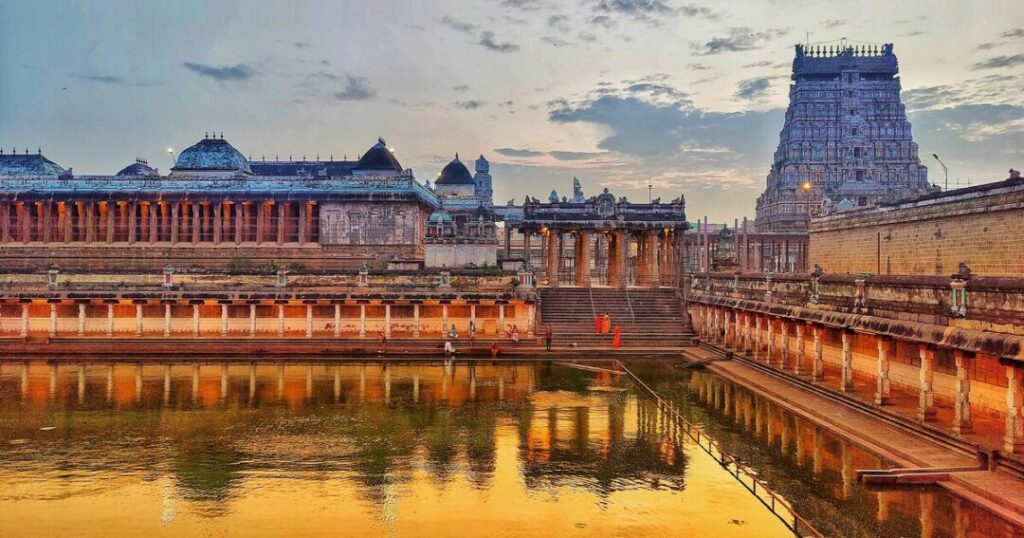
The Nataraja Temple at Chidambaram is one of the most significant Shiva temples in South India — the only temple in Tamil Nadu where Shiva is worshipped in his cosmic dance form (Nataraja), and one of the Pancha Bhuta Stalas (temples representing the five elements — here, sky/space/akasha). The temple complex covers approximately 40 acres and has been in continuous worship for over a thousand years. The Chidambaram secret (Chidambara Rahasyam) — a curtain in the innermost sanctum that, when parted, reveals empty space as the formless divine — is one of the most theologically significant concepts in Shaivism.
- The evening abishekam (ritual bathing of the deity) and the deeparadhanai (lamp offering) are extraordinary; plan to stay for sunset
- The temple is managed by the Dikshitar community — hereditary priests who have maintained the temple’s traditions for centuries
- Accessible by direct bus from Pondicherry bus stand; approximately 1.5 hours
Mahabalipuram (Mamallapuram) (~95 km | 2 hours)
The Pallava rock-cut monuments at Mahabalipuram — a UNESCO World Heritage Site — are among the most extraordinary examples of early medieval Indian art: the Shore Temple (built approximately 700–728 CE), the Five Rathas (monolithic rock-cut temples carved from single boulders), and the Arjuna’s Penance bas-relief (one of the world’s largest open-air rock reliefs, approximately 29 metres wide and 13 metres high, depicting scenes from the Mahabharata). These were built under the Pallava dynasty.
- Combine the UNESCO monuments with the less-visited Thirukadalmallai (Sthalasayana Perumal) Temple for a complete heritage circuit
- The beach at Mahabalipuram is long and much less crowded than Chennai’s beaches
- Accessible via the East Coast Road (ECR) from Pondicherry, the drive along the Coromandel Coast is one of the finest coastal drives in South India
Conclusion about Things to do in Pondicherry
The best things to do in Pondicherry are not the ones on the standard itinerary — they’re the ones that reveal the city’s actual layers. The Roman amphorae buried in the riverbank at Arikamedu (first uncovered by Wheeler in 1945). The Tamil temple that survived French colonial attempts to remove it. The Auroville forest planted on barren earth in 1968 and now a functioning biodiversity corridor. The fishing boats coming in at 5 AM on Serenity Beach. The Ganesha with 40 forms carved on a gopuram that has been watching over this city through every power that has claimed it.
Quick guide to the best places in Pondicherry:
- Heritage: White Town at dawn, Tamil Quarter agraharam streets, Manakula Vinayagar Temple (300 years old), Botanical Garden (est. 1826)
- Spiritual: Sri Aurobindo Ashram (founded 1926, Wednesday meditation), Auroville (3,500 residents, 50+ countries, book Matrimandir)
- Beaches: Serenity Beach on a weekday, Paradise Beach via Chunnambar backwater boat
- Hidden gems: Arikamedu (Roman-era port 4 km south, Wheeler 1945/Casal 1947–50, port of Podouke), Villianur Temple and villages, border village cycling
- Day trips: Chidambaram (Nataraja Temple, Pancha Bhuta Stala), Mahabalipuram (UNESCO, Shore Temple c.700 CE)
Download the Explurger app to discover what travellers actually recommend in Pondicherry, find experiences beyond the tourist trail, and log every dawn walk, temple courtyard, and Auroville morning on your trip.
The gates of the ashram open before the cafés. The fishing boats leave before the hotels wake. Pondicherry rewards early risers and slow walkers. Come ready for both.
FAQs about Things to do in Pondicherry
2. What are the best places to visit in Pondicherry for heritage?
The best places to visit in Pondicherry for heritage: White Town at dawn (French colonial grid, streets named in French, villas from the 1674–1954 French administration), the Tamil Quarter's agraharam streets and Manakula Vinayagar Temple, the Sri Aurobindo Ashram (founded 1926, functioning spiritual community), the Botanical Garden (established 1826 by French colonial administration), and Arikamedu (Roman-era trading port, first excavated by Wheeler in 1945, identified as the ancient port of Podouke). Day trip: Mahabalipuram's Pallava rock-cut monuments (UNESCO World Heritage, Shore Temple c.700–728 CE).
3. What are the tourist places in Pondicherry most visitors skip?
Three consistently overlooked tourist places in Pondicherry: Arikamedu (Roman-era trading settlement 4 km south, first excavated by Mortimer Wheeler in 1945 then Jean-Marie Casal 1947–1950, identified as the ancient port of Podouke in the Periplus of the Erythraean Sea, almost completely unvisited), the Villianur Temple and surrounding Tamil agricultural villages (accessible by bicycle, 10 km from centre), and the Botanical Garden (established 1826, 22 hectares, one of South India's oldest, almost always quiet). All three sit just outside the tourist circuit and reward the visitor who goes slightly further.
4. What is the best time to visit Pondicherry?
October to March is the most comfortable window — temperatures 20–30°C, low humidity, clear seas. January and February are the finest months overall — cool mornings, excellent beach conditions, and the city at its most walkable. Avoid the northeast monsoon peak in November (heavy rain, rough sea). Summer (April–June) is hot and humid but the beaches and heritage sites are quietest.
5. What are the best places to see in Puducherry for spiritual visitors?
The two most significant places to see in Puducherry for spiritual visitors: the Sri Aurobindo Ashram on Rue de la Marine (founded 1926, samadhi of Sri Aurobindo and the Mother, living community of several thousand members, Wednesday evening meditation open to visitors) and Auroville (international community of 3,500 residents from 50+ countries, founded 1968, Matrimandir golden sphere 36 metres in diameter — book inner chamber access in advance). Both require respectful, unhurried engagement rather than a standard tourist visit.
6. Is Pondicherry worth visiting for a weekend from Chennai?
Absolutely — Pondicherry is among the best weekend trips from Chennai, approximately 160 km via the East Coast Road (ECR), one of India's finest coastal drives (3 hours by road). Two nights is the ideal duration: one day for the French Quarter, Tamil Quarter, ashram, and promenade at dawn; a second day for Auroville, Serenity Beach, and Arikamedu. The combination of colonial heritage, spiritual depth, Tamil cultural texture, and coastline makes it genuinely unlike any other destination within weekend reach of Chennai.