
1,398 Total Views
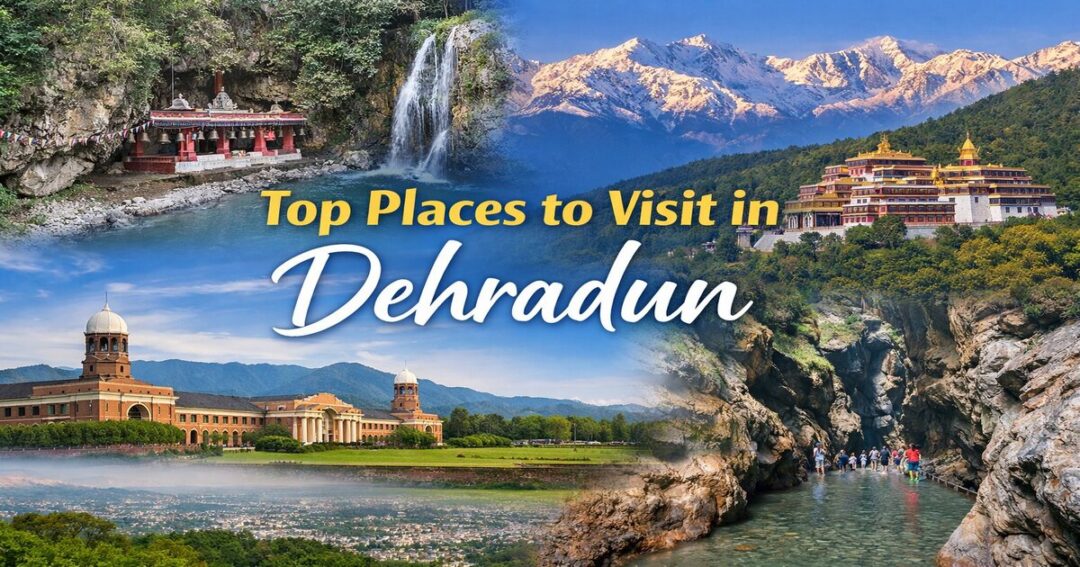
Dehradun is one of those cities that most people treat as a layover—the jumping-off point for Mussoorie, Rishikesh, or the Char Dham. And that is a mistake. The Doon Valley itself, cradled between the Himalayas and the Shivaliks, is home to some of the most fascinating places to visit in Dehradun, many of which remain overlooked by mainstream tourists. From a colonial-era forestry institute that was once listed in the Guinness Book of Records to a Tibetan monastery with one of the world’s largest stupas, the city offers far more than a quick stopover. You’ll also find pine-covered hillsides with barely a tourist in sight, a 1,400-year-old temple inside a cave, and wild elephant corridors just off the highway. If you’re looking for the best places to visit in Dehradun, this guide goes beyond the usual postcards to showcase the city that locals actually live in and love.
Nature & Outdoors — Dehradun Tourist Places Off the Beaten Path
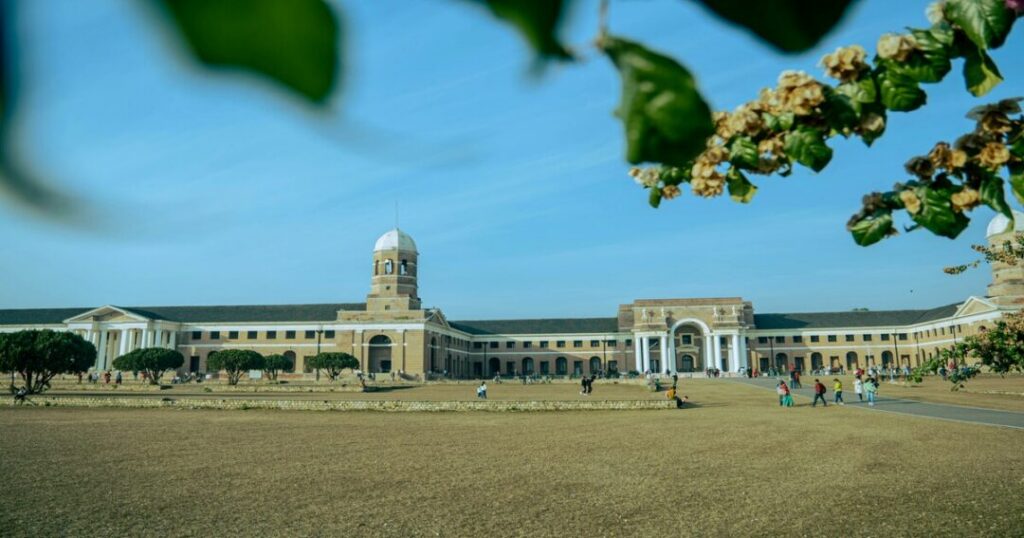
Most people drive past the FRI on the way to Mussoorie without stopping. That is a significant error. The Forest Research Institute, established as the Imperial Forest Research Institute in 1906, sits on a 450-hectare campus in the foothills of the outer Himalayas — and its main building, completed in 1929 and designed by British architect C.G. Blomfield in Greco-Roman style, was once listed in the Guinness Book of Records as the largest purely brick structure in the world. It is now a National Heritage Site. The campus feels like a university from another era—wide green lawns, rows of exotic trees, a Himalayan backdrop, and almost no crowds.
- Six museums on campus covering silviculture, pathology, timber, entomology, non-wood forest products, and social forestry—the Timber Museum is particularly extraordinary
- The botanical garden and the arboretum (over 2,000 species of plants) make the campus worth a slow two-hour walk
- Entry is free; open Tuesday to Sunday, 9 AM–5 PM; take an auto from Dehradun clock tower (~15 minutes)
Also read: Things to Do in Rishikesh: Beyond the Rafting Circuit
2. Lachhiwala Nature Park — The Quiet Stream Everyone Forgets
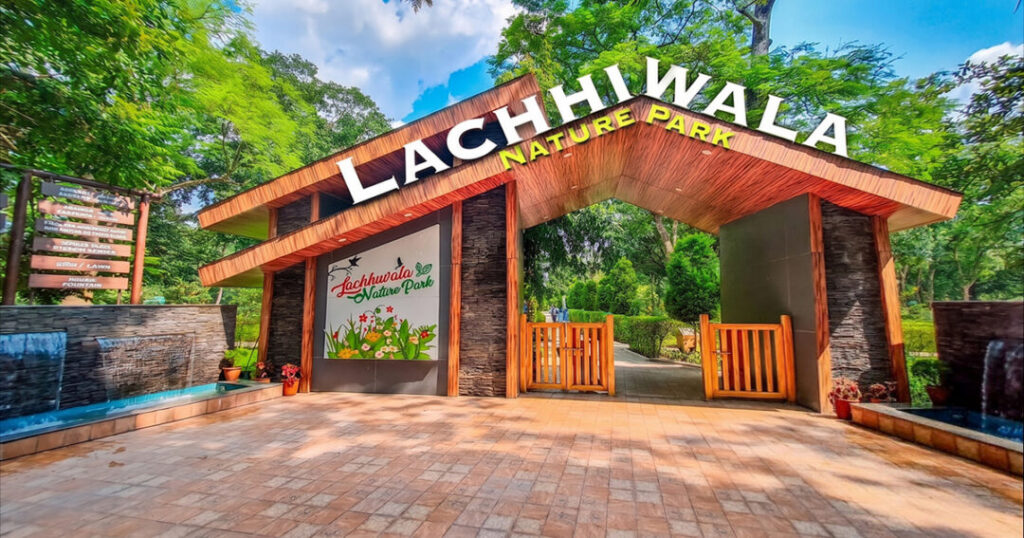
About 22 km from Dehradun on the Rishikesh Highway, Lachhiwala is a forest picnic spot managed by the Uttarakhand Forest Department—a stretch of shaded sal forest with a natural stream running through it. You can wade in the shallow water, sit under the trees, and watch the forest go about its business. During the week, it is almost entirely deserted.
- The stream is clean and shallow—families with children come here specifically for the safe wading experience
- Best on weekdays; weekends can get crowded with Dehradun day-trippers
- Entry is nominal (₹20–50); open throughout the year; best October–June
3. Rajaji National Park — Elephant Country, 30 Minutes from the City
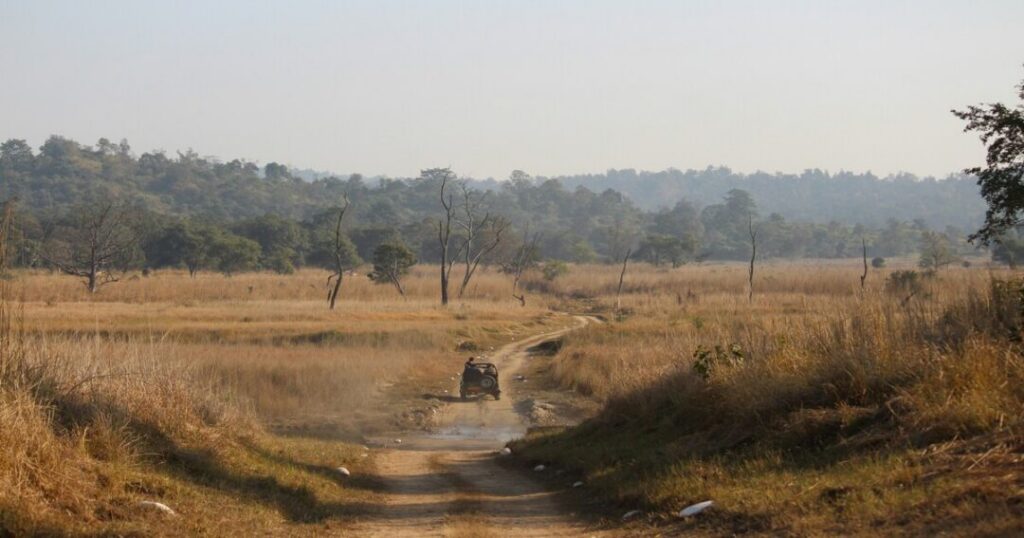
One of India’s most underrated national parks, Rajaji National Park covers 820 sq km of the Shivalik hills and Himalayan foothills—right at Dehradun’s doorstep. The park is home to tigers, elephants, leopards, king cobras, gharials, and over 315 species of birds. The Chilla range (near Haridwar) and the Motichur range (nearer Dehradun) are the two main safari zones. It is one of the few parks in India where you can do a jungle safari within a 30-minute drive of a state capital.
- Best season for wildlife: November to June; the park is closed from June 15 to November 15 during monsoon
- Jeep safaris available at the Ranipur and Motichur gates on the Dehradun side; forest department bookings through uttarakhandforest.gov.in
- Elephant sightings are almost guaranteed during morning safaris near the Ganges canal banks; tiger sightings are rarer but documented
4. Pine Forest Trails Around Mussoorie Road — The Local’s Detour
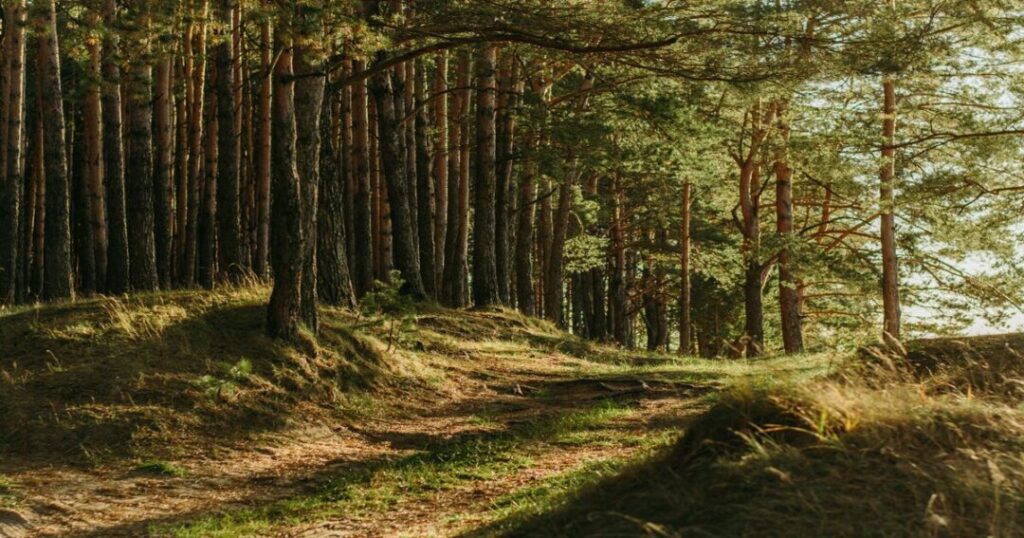
Between Dehradun and Mussoorie, where the road starts climbing through the Rajpur area and beyond, there are several sections of dense pine forest with walking paths that see almost no tourism. The Rajpur-Mussoorie stretch between the 5 km and 15 km marks has multiple pullover points from which forest trails cut into the pines—quiet, resinous, and genuinely beautiful, especially in winter mornings when the frost is still on the ground.
- The pine forests near Kyarkuli Bhatta (about 12 km from Dehradun on the Mussoorie road) are particularly dense—ask locals for the walking path that loops behind the ridge
- Not signposted and not touristy—that is the point; take a local guide or ask at the Forest Department
- Best October to February; the pine needles underfoot, the silence, and the occasional Himalayan bird are the attraction
Spiritual & Religious Sites — Dehradun Sightseeing Places
5. Mindrolling Monastery — Clement Town’s Tibetan World
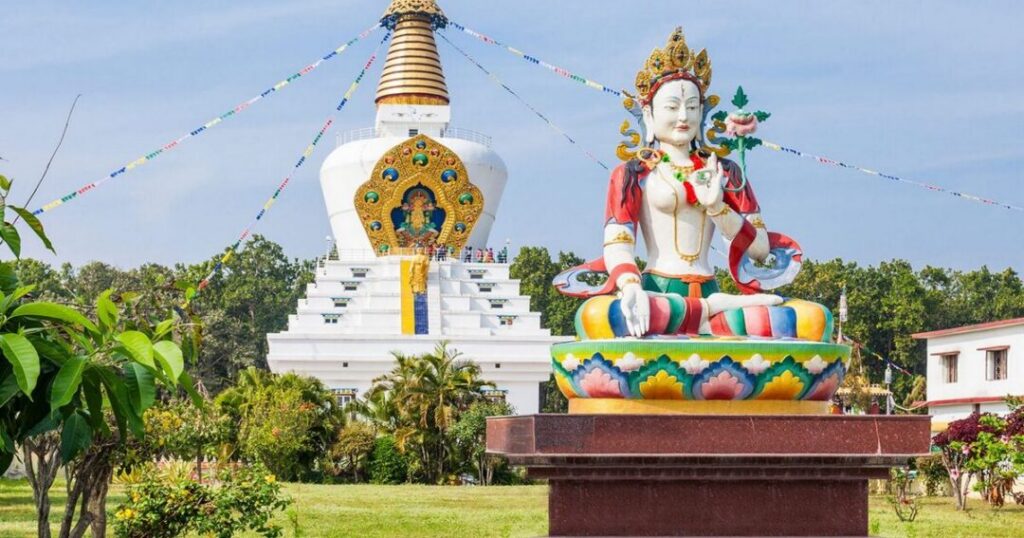
About 10 km south of Dehradun city center in Clement Town, the Mindrolling Monastery is one of the most visually extraordinary places to visit in Dehradun—and one that even many Delhi weekenders don’t know about. Established in 1965 by Khochhen Rinpoche after Tibetan exile, the monastery’s centerpiece is the Great Stupa (World Peace Stupa), inaugurated in 2002, standing approximately 185–220 feet tall (sources vary slightly) and considered one of the largest stupas in Asia. The five-floor stupa contains shrine rooms with murals, relics, and Tibetan art. An imposing 35-meter gold Sakyamuni Buddha statue presides over the complex.
- The monastery is free to enter (open 9 AM–7 PM); photography is permitted in outdoor areas but be respectful inside the prayer halls
- The streets around Clement Town are lined with Tibetan cafés—excellent momos, thukpa, and butter tea
- Take vikram/shared auto no. 5 from Dehradun city centre (₹20); auto-rickshaw costs around ₹250 one way
6. Tapkeshwar Mahadev Temple — Inside a Cave by a Stream
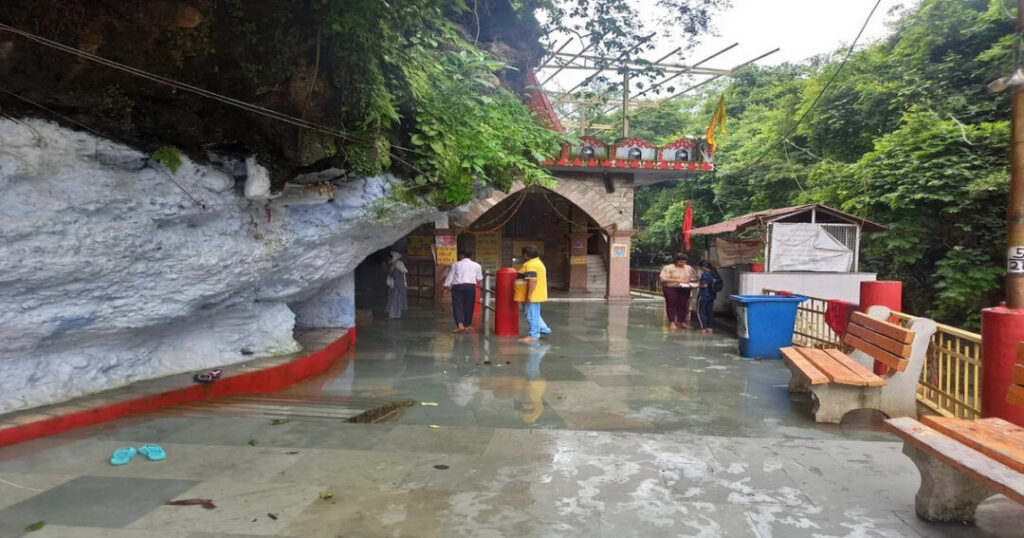
Tapkeshwar Temple is one of the most genuinely atmospheric Dehradun tourist attractions—a Shiva temple built inside a natural cave, through which a stream runs year-round, with water dripping from the cave ceiling directly onto the Shivalinga below (tapak means “drip” in Hindi). The temple is believed to be approximately 1,400 years old and sits in a forested ravine near the Tons River, about 6 km from Dehradun city center.
- The walk down to the temple through the forested ravine is as good as the temple itself — bring footwear you don’t mind getting wet
- Morning visits (6–8 AM) before the crowds arrive are the most atmospheric — incense, water sounds, and diffuse forest light
- Entry is free; the full cave complex extends further into the hillside — a smaller cave shrine for Goddess Durga is nearby
Also read: Dayara Bugyal Trek: The Complete Guide to Uttarakhand’s Most Beautiful Meadow
7. Ram Rai Darbar (Gurudwara) — The Oldest and Least Visited
The Ram Rai Darbar in the Paltan Bazaar area is one of Dehradun’s oldest and most historically significant religious sites—a large Sikh gurudwara founded in the 17th century and the reason Dehradun itself developed as a settlement. Ram Rai, the eldest son of the 7th Sikh Guru Har Rai, was sent to Delhi by his father and later settled in Dehradun with Mughal patronage, establishing a community here in the 1670s.
- The gurudwara complex is vast and ornately decorated—the langar (free community meal) is open to all visitors
- Significantly less visited than Mindrolling or Tapkeshwar—a genuinely peaceful place in the middle of the city
- Located near Paltan Bazaar; no entry charge; respectful dress required
Viewpoints & Hill Stations Near Dehradun
8. Landour—Mussoorie’s Quieter, Better Neighbour
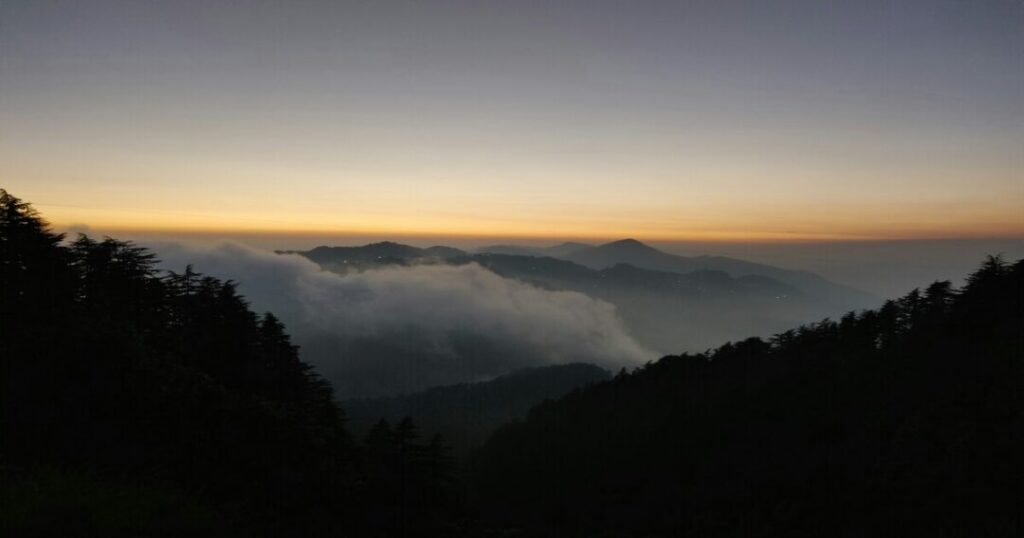
Landour sits just above Mussoorie—connected by road but distinctly separate in character. It is a small cantonment town at approximately 2,200 meters with colonial-era bakeries, a clock tower (Char Dukan), narrow winding roads through pine and oak forest, and almost none of Mussoorie’s commercial chaos. It was the long-time home of Ruskin Bond, India’s most beloved children’s author, who lived here for decades.
- Char Dukan (literally “four shops”)—four small establishments near the clock tower that have been selling omelets, biscuits, and Maggi to walkers for decades—is the most quietly famous food stop in the Garhwal hills
- The walk from Landour Clock Tower up to Lal Tibba (the highest point at 2,275 m) takes about 45 minutes and on clear winter days offers views of Kedarnath, Badrinath, Gangotri, and Yamunotri peak ranges
- Best visited October–March; take a shared jeep from Mussoorie library to Landour market
9. Dhanaulti — Empty Hill Roads and Apple Orchards
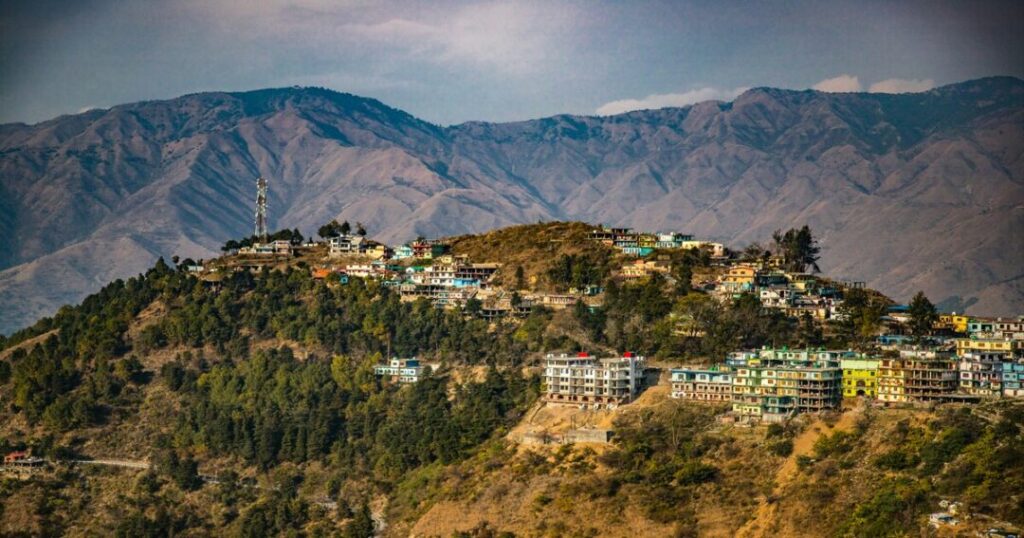
About 25 km from Mussoorie (and ~60 km from Dehradun), Dhanaulti is the destination for when you want to go further than Mussoorie without going as far as Chopta. At 2,286 meters, it’s a small settlement with eco-parks, dense deodar and rhododendron forests, and sweeping Himalayan views—and almost no tourist infrastructure, which is precisely the point.
- The Eco Park (run by the Uttarakhand Forest Department) is a simple, genuinely beautiful forest park at the top of the settlement—worth the entry fee (₹50)
- The drive from Dehradun to Dhanaulti via Mussoorie is excellent, particularly in spring (March–April) when rhododendrons are flowering
- Accommodation is limited and basic—the charm is in the quietness, not the facilities
10. George Everest’s House — Hanthala Ridge
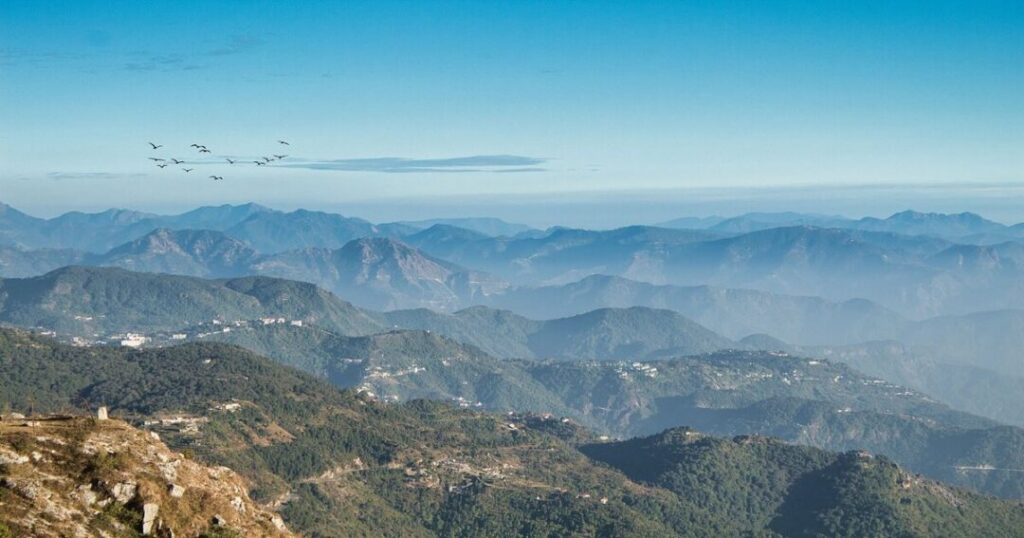
About 6 km from Mussoorie on a ridge above the town, the ruined estate of Sir George Everest—Surveyor General of India from 1830 to 1843 and the man after whom Mount Everest is named—sits at around 2,000 meters with one of the finest valley views in the Garhwal. The house is a ruin, but the walk to reach it through mixed forest is genuinely rewarding, and the panorama of the Doon Valley below on one side and the high Himalayas on the other is extraordinary.
- Trek from Mussoorie Library Point (~4 km one way, 1.5 hours each way, moderate difficulty)
- Very few visitors come here compared to Lal Tibba or Gun Hill—you may well have the viewpoint to yourself
- Free entry; the ruins are atmospheric—the survey pillars Everest used are still visible
11. Wadia Institute of Himalayan Geology Museum
Inside the Wadia Institute of Himalayan Geology campus in Dehradun is a small but extraordinary museum dedicated to Himalayan geology—fossils, minerals, tectonic models, ancient rocks, and a collection of marine fossils found at high altitude in the Himalayas (evidence of the ancient Tethys Sea that once covered the region before the Himalayas rose). It is the kind of place of interest in Dehradun that changes how you look at the mountains around you.
- Entry is free; the museum is small (1–2 hours maximum) but genuinely fascinating
- Call ahead or check opening hours—the institute is a working research facility and access may vary
- Located on Curzon Road, Dehradun; easily reached by auto from the clock tower
12. Tapovan — Dehradun’s Unmarked Green Belt
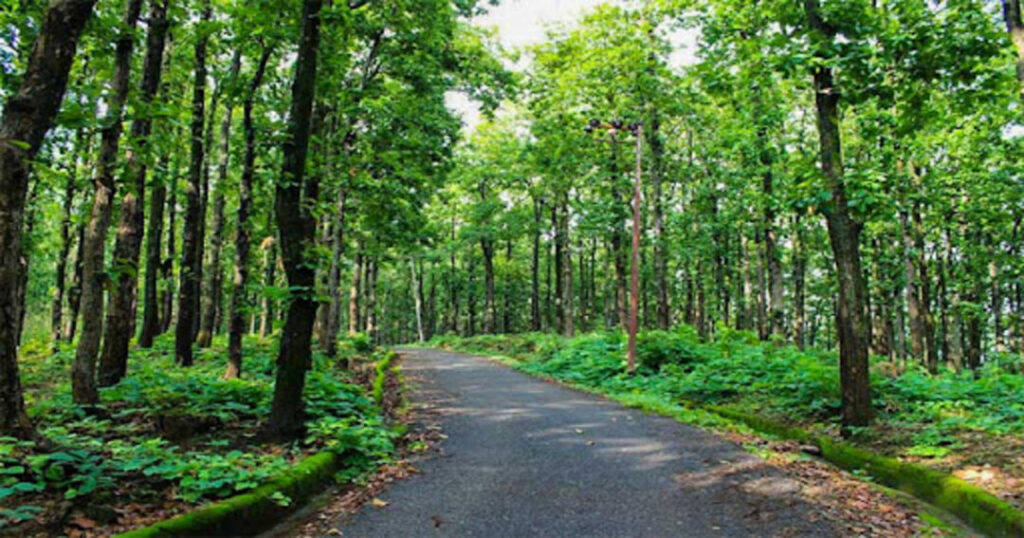
Tapovan is a small village and green belt on the western edge of Dehradun—close to the city but feeling like a different world, with farms, a canal, mango orchards, and a small temple. It is where Dehradun residents go for early morning walks when they don’t want to fight traffic. There is nothing “touristy” here at all—which is exactly what makes it one of the most pleasant places to roam in Dehradun if you want to see the city breathing rather than performing.
- Best visited early morning (6–8 AM) for the canal walk and the farmland light
- The area around IMA (Indian Military Academy) Road leading toward Tapovan is tree-lined and quiet—a genuinely nice city walk
- Combine with a visit to FRI if you’re spending a morning in the western part of the city
Day Trips from Dehradun — Best Nearby Getaways
13. Rishikesh (~45 km | 1 hour) — Beyond the Yoga Clichés
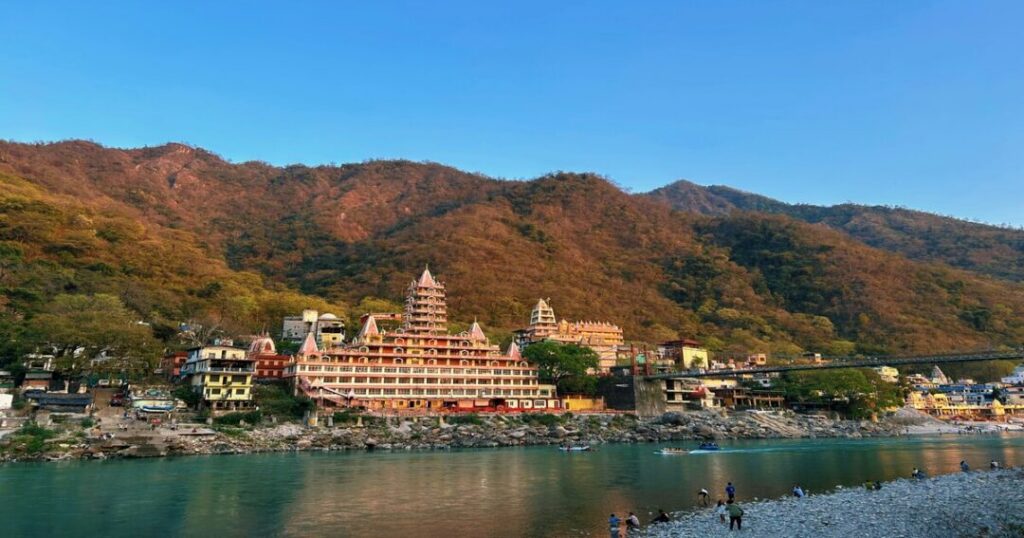
Everyone knows Rishikesh, but most visitors stick to the Laxman Jhula area and go home. The Neelkanth Mahadev Temple (22 km from Rishikesh town, at 1,330 m in dense forest), the Beatles Ashram (Chaurasi Kutia, where the Fab Four stayed in 1968 — now an atmospheric ruin open to visitors), and the white-water rafting stretches above Shivpuri are far less crowded than the central ghats and far more rewarding.
- Grade 1–4 rafting stretches run from Shivpuri to Rishikesh (~16 km)—book directly with operators at Shivpuri rather than through Rishikesh central
- The Beatles Ashram is inside Rajaji National Park—entry is ₹600 for Indians; the murals inside are extraordinary
- Best visited October–March and May–June; avoid holiday weekends when the Laxman Jhula area becomes genuinely impassable
14. Haridwar (~55 km | 1.5 hours) — For the Ganga Aarti
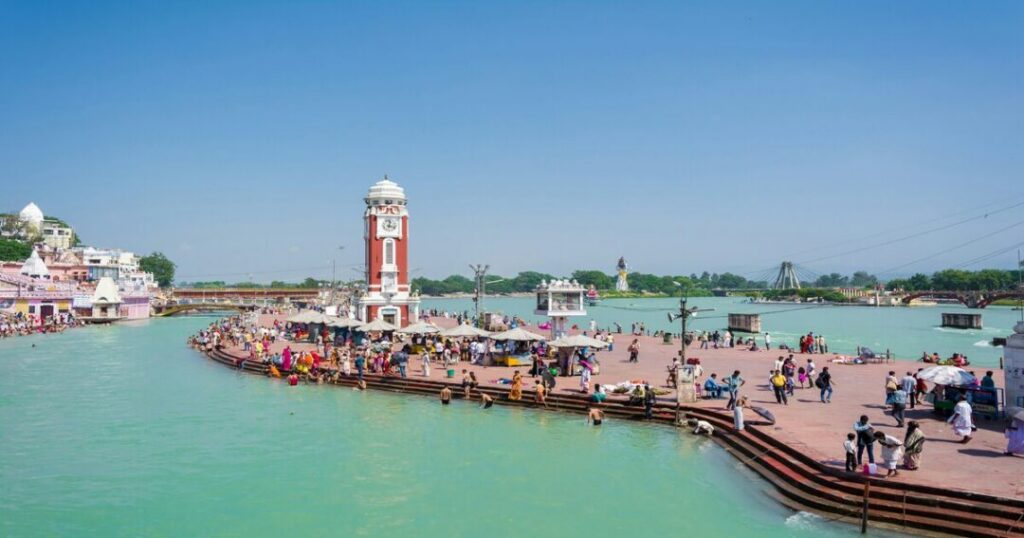
Haridwar’s Ganga Aarti at Har Ki Pauri is one of India’s most visually spectacular daily rituals—hundreds of priests performing synchronized fire rituals as the Ganges flows past at dusk, diyas floating on the river, and bells ringing across the ghats. It happens every evening at sunset and is free.
- Arrive at least 45 minutes before sunset to get a position with a view; the best positions are on the upper ghat level
- The Daksha Mahadev Temple and the market around Moti Bazar are the best additions to a Haridwar visit
- Note: Haridwar is a dry city—alcohol is not served or sold anywhere in the city limits
15. Mussoorie (~35 km | 1.5 hours) — Time It Right
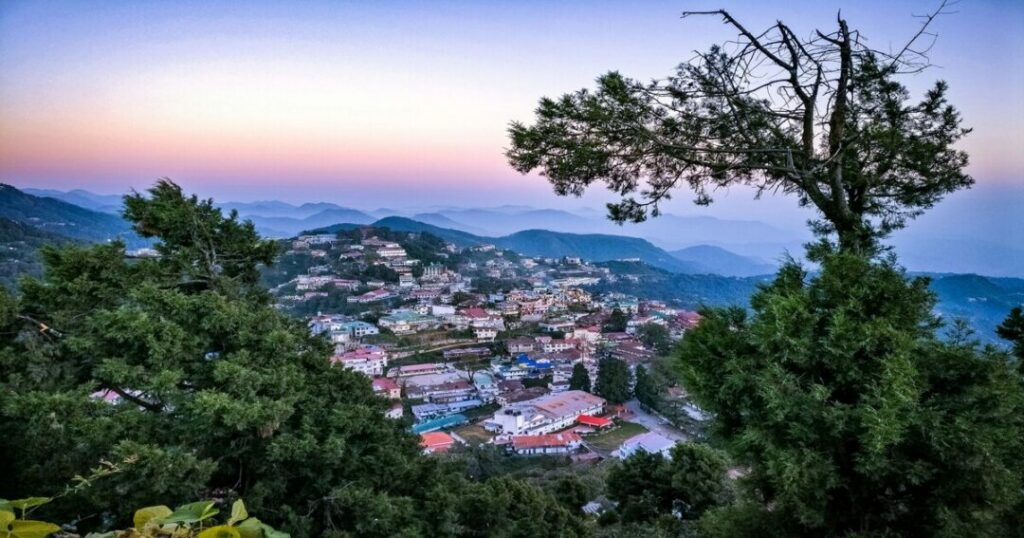
Mussoorie itself needs no introduction, but the version most people experience (crowded Mall Road, overpriced hotels, weekend traffic) is not the best version. Go on a weekday in October, November, or March, and the town transforms: the Mall Road is walkable, the views of the Doon Valley are clear, and the walks to Camel’s Back Road and Lal Tibba are genuinely pleasant.
- Camel’s Back Road is a 3 km heritage walk along the ridge behind the Mall Road—far quieter than the main strip and with equally good views
- The Landour Language School area and Char Dukan are worth the extra 3 km drive from Mall Road
- Best combined with Landour and George Everest’s House for a full ridge day
Best Time for Places to Visit in Dehradun
October to March is the most comfortable window — cool temperatures (8–25°C), clear Himalayan views, and ideal conditions for exploring the valley. November and December are particularly good for the pine forests. March to June is pleasant and lush, with pre-monsoon temperatures rising to around 35°C by May. The monsoon (July–September) makes the valley green and misty—beautiful, but the roads to hill stations like Mussoorie and Dhanaulti can get blocked by landslides. Winters (December–January) bring cold nights but clear blue days — the best time for mountain views.
How to Reach Dehradun
- From Delhi (~290 km | 5–6 hours): By road via NH58/NH72; multiple bus options from ISBT Kashmere Gate (Volvo and ordinary buses)
- By train: Dehradun Railway Station is well-connected—the Shatabdi Express from New Delhi takes ~5 hours; Jan Shatabdi and multiple overnight trains also available
- By air: Jolly Grant Airport (~25 km from Dehradun city) — connected to Delhi, Mumbai, and a few other cities
Conclusion About Places to Visit in Dehradun
The quick guide to the best places to visit in Dehradun:
- Nature: Rajaji National Park (elephants 30 mins from the city, open Nov 15–Jun 15), Lachhiwala stream forest, pine trail walks on Mussoorie road
- Heritage: Forest Research Institute (Guinness Book, National Heritage), Ram Rai Darbar (17th century, langar for all)
- Spiritual: Mindrolling Monastery (Great Stupa, one of Asia’s largest), Tapkeshwar Cave Temple (1,400 years old, water-dripping Shivalinga)
- Viewpoints: Landour + Char Dukan, Dhanaulti Eco Park, George Everest’s estate ruins
- Hidden gems: Wadia Institute Geology Museum, Tapovan green belt morning walk
- Day trips: Rishikesh (Beatles Ashram + rafting), Haridwar (Ganga Aarti), Mussoorie on a weekday
Also read: Things to Do in Mussoorie Beyond Mall Road: An Offbeat Guide for Real Explorers
Dehradun rewards the traveller who slows down. The best tourist places in Dehradun, Uttarakhand, are not the ones with the most footfall—they’re the ones with the most atmosphere.
Download the Explurger app to discover what Dehradun locals actually recommend, log your experiences across the Doon Valley, and plan your next Uttarakhand adventure with insights from real travelers.
Leave Delhi on a Friday evening. Arrive in Dehradun by midnight. Be at FRI by 9 AM. The rest will sort itself out.
FAQs About Places to Visit in Dehradun
2. What are the Dehradun tourist places most visitors miss?
Three consistently underrated Dehradun tourist attractions: the Wadia Institute of Himalayan Geology Museum (free, extraordinary fossil and mineral collection, evidence of the ancient Tethys Sea), George Everest's ruined estate on Hanthala Ridge above Mussoorie (panoramic valley views, almost no visitors), and the Ram Rai Darbar in Paltan Bazaar (17th-century Sikh gurudwara, historically the reason Dehradun exists as a city — the langar is open to all).
3. What is the best time to visit Dehradun?
October to March is the most comfortable window — cool temperatures, clear Himalayan views, and good conditions for all activities. December and January bring cold nights but spectacular clear days — the best time for mountain views from Lal Tibba and Landour. Monsoon (July–September) makes the valley lush and green but road closures to hill stations are common. April to June is pleasantly warm and a good time before peak summer crowds hit Mussoorie.
4. Is Dehradun worth visiting as a standalone tourist destination?
Yes — more than most people expect. The combination of FRI's colonial heritage, Mindrolling Monastery's Tibetan architecture, Tapkeshwar Temple's natural setting, Rajaji National Park's wildlife (open November 15–June 15), and the surrounding hill towns (Mussoorie, Landour, Dhanaulti) makes Dehradun a genuinely rewarding 2–3 day Dehradun tourist destination in its own right, not just a transit stop for the hills.
5. What are the best day trips from Dehradun?
The strongest day trips from Dehradun: Rishikesh (45 km, 1 hour — Beatles Ashram, Neelkanth Mahadev, rafting), Haridwar (55 km, 1.5 hours — Ganga Aarti at Har Ki Pauri), Mussoorie + Landour (35 km, 1.5 hours — best on weekdays), and Dhanaulti (60 km, 2 hours — quiet hill forests, Eco Park). All four are viable day trips from a Dehradun base without needing separate accommodation.
6. What is the Forest Research Institute Dehradun and is it worth visiting?
established in 1906 on a 450-hectare campus with a main building completed in 1929 by architect C.G. Blomfield in Greco-Roman style. The building was once listed in the Guinness Book of Records as the world's largest purely brick structure and is now a National Heritage Site. Six museums on campus cover forestry science, with the Timber Museum being a highlight. Entry is free. Open Tuesday to Sunday, 9 AM–5 PM. One of the most underrated Dehradun sightseeing places in the city.