

197 Total Views
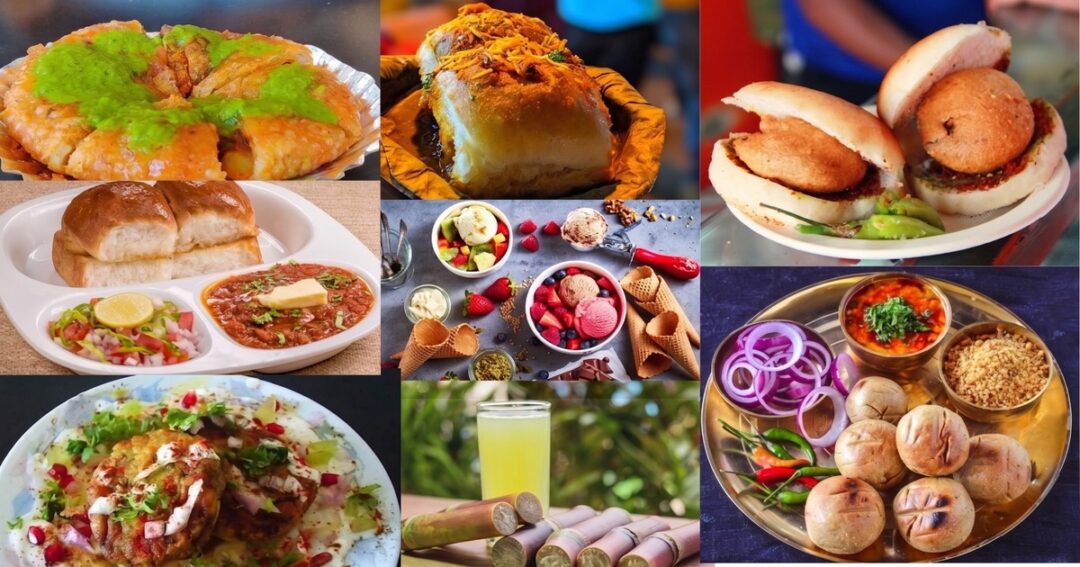
Most people come to Udaipur for the lakes and the palaces. They leave talking about the food. The street food in Udaipur is an underrated gem in Rajasthan’s culinary landscape—a city that sits at the intersection of Mewar royal cooking traditions and the deeply satisfying everyday snack culture of the Rajasthani market. While Jaipur and Jodhpur tend to grab the food headlines, Udaipur has its own fiercely local food identity: kachoris that shatter at the first bite, mirchi badas that are more potato than chili but all fire, mawa kachoris that are dessert disguised as snack, and a breakfast culture built on the unhurried morning ritual of poha and chai.
This guide covers the best street food in Udaipur—from the first bite of the morning to the late-evening falooda—with a dedicated section on the breakfast scene that most food blogs skip entirely.
Street Food in Udaipur: What Makes It Distinct?
Udaipur’s food culture is rooted in two parallel traditions. The first is the Mewar royal kitchen—the Sisodia Rajput dynasty that ruled Udaipur from its founding by Maharana Udai Singh II in 1559 produced a sophisticated cooking culture that balanced rich meat preparations (Laal Maas and Mohan Maas) with the vegetarian traditions of the trading community. The second is the everyday Rajasthani snack culture—kachoris, mirchi badas, and dal baati—that feeds the city’s markets, bazaars, and morning crowds.
The famous street food in Udaipur is primarily vegetarian—reflecting the strong Jain and Vaishnavite traditions of the city’s merchant and artisan communities. What spice levels exist, however, are genuine: Udaipur street food does not moderate its heat for visitors.
Street Food in Udaipur: Breakfast You Can’t Miss — The Morning Ritual
1. Poha with Bhajia and Chai — The Daily Opening Act
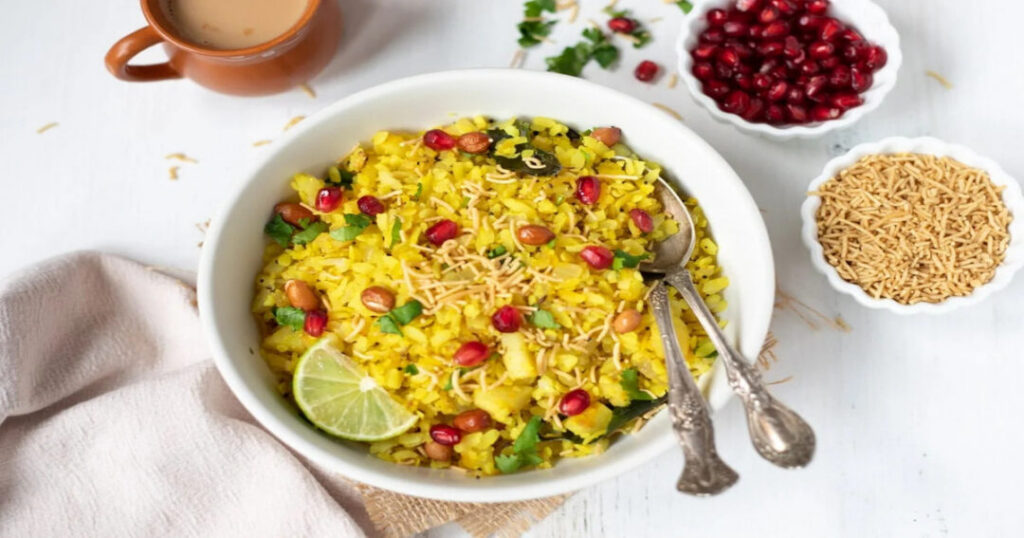
The Udaipur morning begins with poha—softly cooked flattened rice garnished with mustard seeds, curry leaves, green chilies, fresh coriander, and a squeeze of lemon. In Udaipur, poha is most often served alongside bhajia (crispy gram-flour fritters) and a glass of masala chai—a breakfast combination that is light, satisfying, and deeply aromatic.
The best poha in Udaipur is found at small nashta centers concentrated in the areas around Jagdish Mandir and the old city markets—open from approximately 6 AM and typically sold out or winding down by 10 AM. The crowds at the best stalls are the most reliable guide: if a poha stall has a line of auto drivers and college students at 7:30 AM, that is your stall.
2. Kachori Breakfast — The Udaipur Classic
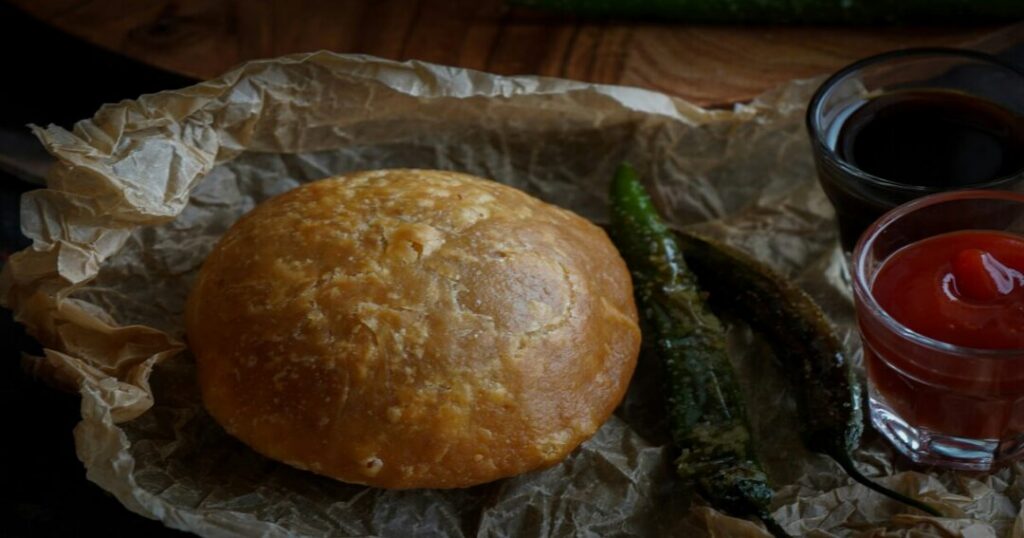
Kachori is the other pillar of the best street breakfast in Udaipur—and Udaipur’s kachori culture is serious. Two varieties dominate:
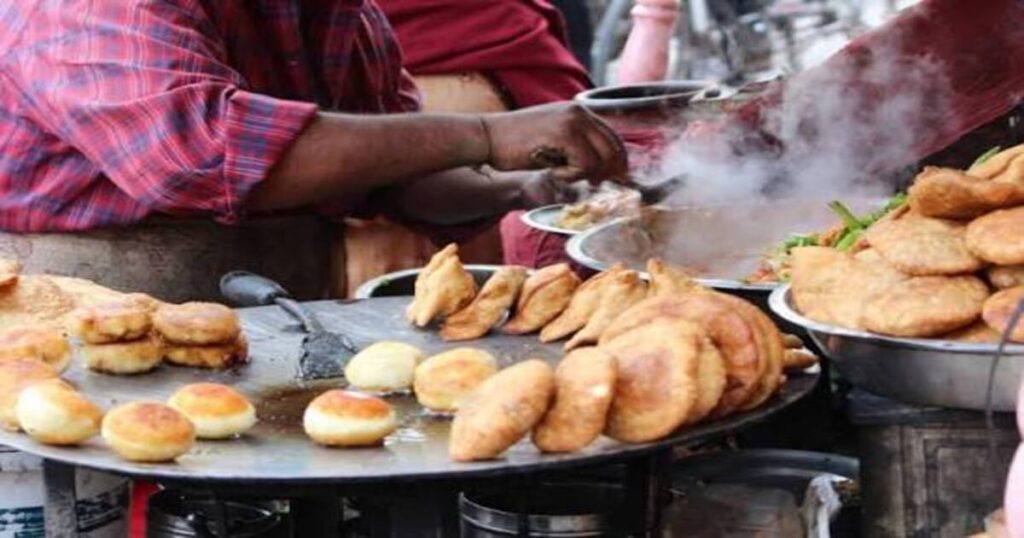
Dal Kachori (Moong Dal Kachori): A deep-fried pastry shell stuffed with a filling of spiced lentils—typically moong or urad dal cooked with cumin, coriander, dried mango powder, and red chili. The shell is crispy, flaky, and golden; the interior is dense and warmly spiced. Served with tamarind chutney and green coriander-mint chutney. This is breakfast eaten the Rajasthani way—a full, satisfying preparation that keeps you going until afternoon.
Pyaaz Kachori (Onion Kachori): The more famous of the two — a deep-fried pastry stuffed with a spiced onion filling, served with the same chutney combination. The onion filling is spiced with fennel seeds, coriander, dried mango powder, and red chili, slightly more pungent than the dal version and equally addictive. Pyaaz kachori is one of the most loved street foods in Udaipur—crispy from the outside and filled with spicy onion stuffing inside.
The best kachoris in Udaipur are found near Jagdish Mandir—the landmark temple in the old city draws foot traffic from early morning, and the surrounding stalls have been competing for the same breakfast crowd for generations.
Also read: Things to Do in Udaipur: Beyond the Palaces & Lakes — The Complete Guide
3. Samosa and Chai — The Universal Constant
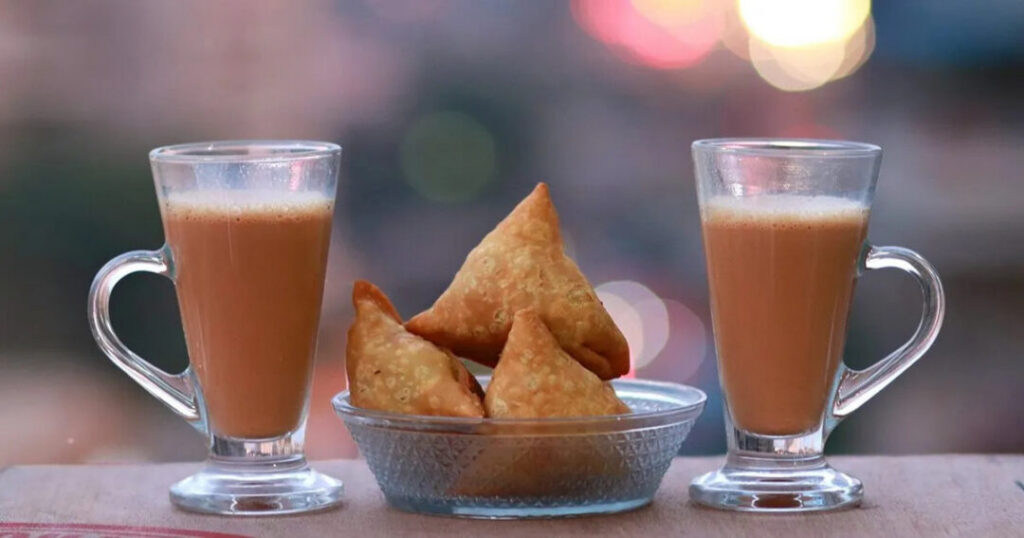
No Udaipur morning is complete without the option of a samosa—the triangle-shaped deep-fried pastry stuffed with spiced mashed potato and peas, universally available at every corner tea stall in the city. The Udaipur samosa tends to be larger and more heavily spiced than the Delhi or Mumbai equivalent; the chutney is always the combination of tamarind (sweet-sour) and green coriander (cooling), never one without the other.
Also Read: Street Food in Delhi: 12 Must-Try Dishes
The Iconic Dishes — Famous Street Food in Udaipur
4. Mirchi Bada—Green Chilli, Stuffed and Fried
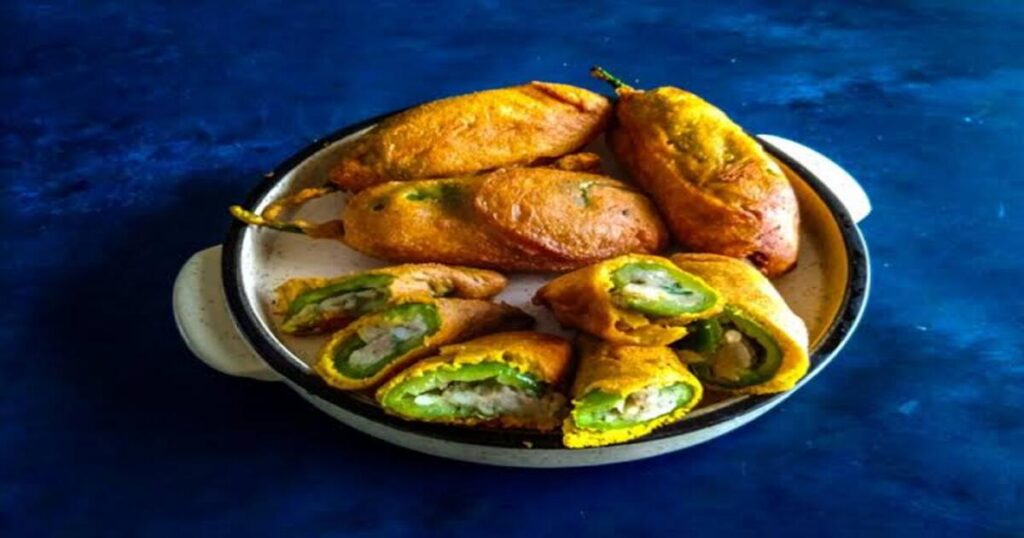
Mirchi bada is one of the most distinctive famous street food preparations in Udaipur—a large green chili (the Rajasthani long chili, milder than its appearance suggests) slit open, stuffed with a spiced mashed potato filling, coated in gram flour batter, and deep-fried until golden. Served with tamarind chutney. The combination of the slight heat of the chili skin, the spiced potato interior, and the crispy batter exterior is one of the most satisfying snack bites in Rajasthani street food.
The filling—mashed potato with red chili, dried mango powder, cumin, and coriander—is the same filling used in the kachori; the chili wrapper changes the entire flavor relationship. This is a preparation that is simultaneously spicy (the chili skin), tangy (the dried mango in the filling), and comforting (the potato). A Mirchi Bada with masala chai at 4 PM is one of the finest evening snack combinations in India.
Also Read: Street Food in Mumbai: 17 Dishes & Iconic Spots
5. Mawa Kachori — The Sweet Deception
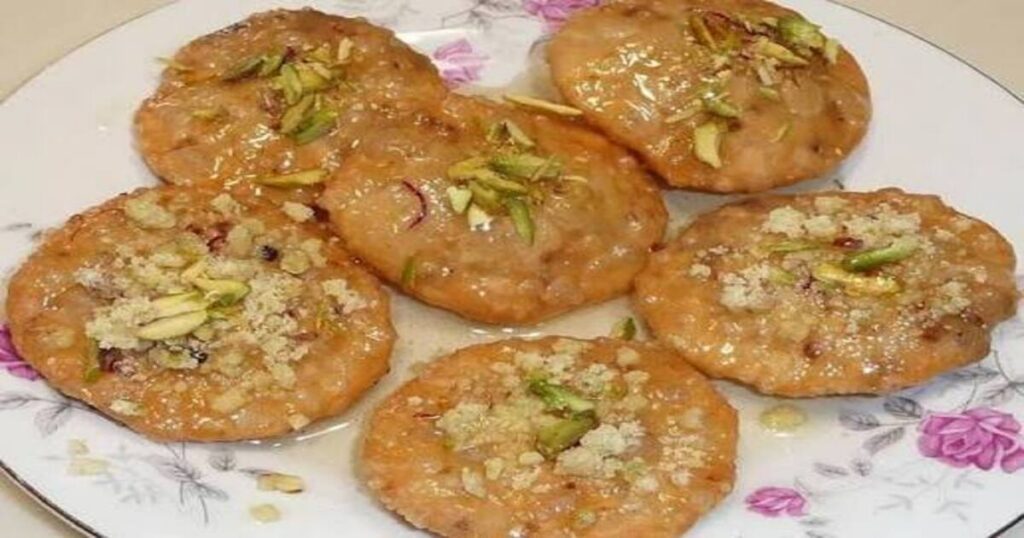
Mawa kachori is the dessert hiding in the kachori section of the menu—a deep-fried, flaky pastry shell filled with a sweet mixture of mawa (reduced milk solids), dry fruits, and sugar, soaked in sugar syrup and garnished with silver leaf and saffron. It is available at sweet shops (halwai) and at the better street food counters near Jagdish Mandir. The mawa kachori is one of the famous sweets of Rajasthan and specifically associated with Jodhpur, but Udaipur’s versions are excellent in their own right—particularly at the old city sweet shops.
What surprises visitors is the serving format: it is not a small sweet. A single mawa kachori—soaked in syrup, rich with mawa, and sticky with sugar—is an entire dessert experience in one piece.
6. Dal Baati — The Street Version of Rajasthan’s Signature Dish
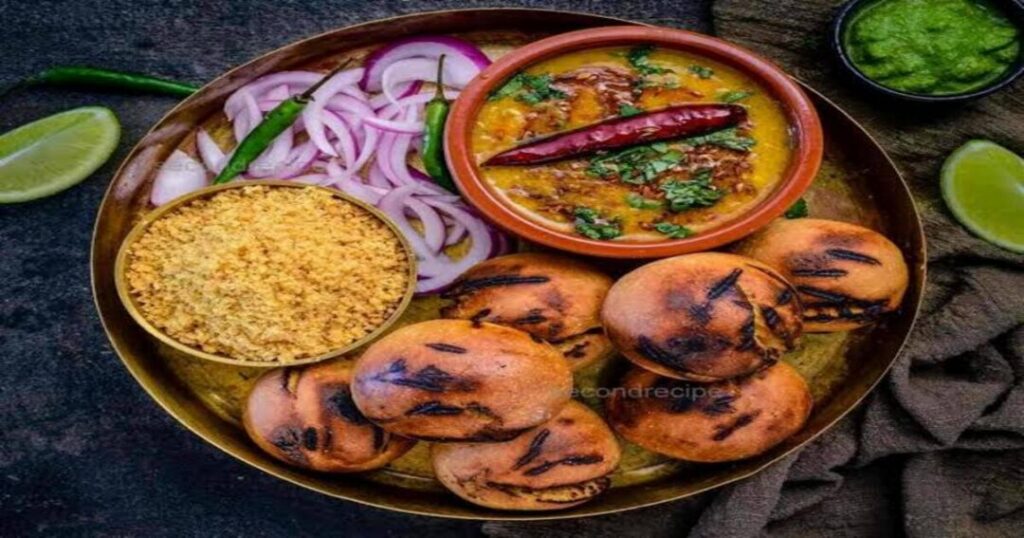
Dal Baati Churma—Rajasthan’s most celebrated dish—is primarily a restaurant or home preparation, but specific street stalls in Udaipur serve an accessible version. Dal Baati of Manoj Prakash Centre on Lake Palace Road near Gulab Bagh is an affordable treat for people who want to try traditional Rajasthani cuisine—a plate consists of dal, baati, and pooris with onions and lemons.
The baati—a hard-baked wheat ball cracked open and dunked in ghee—at a street counter is less elaborate than the restaurant version but more honest: the ghee is generous, the dal is thick and simply spiced, and the accompaniment is fresh onion and lemon rather than chutneys and ceremony.
7. Dabeli: Udaipur’s Adopted Street Snack
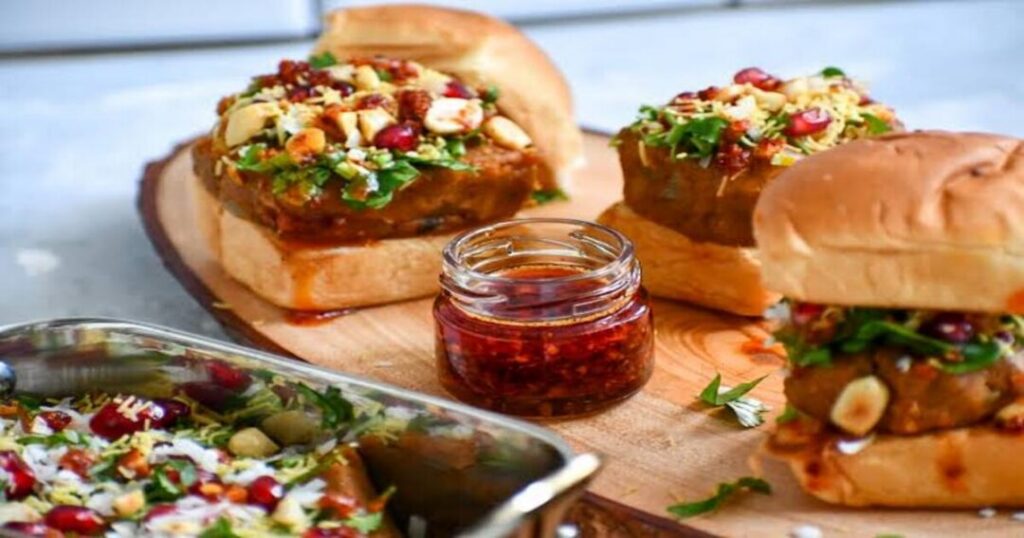
Dabeli—the Kutchi preparation of spiced potato in a pav roll with pomegranate seeds, roasted peanuts, coconut slivers, and tamarind chutney—is a permanent fixture of Udaipur’s street food scene despite originating in Gujarat. Dabeli is a hit street food in Udaipur—served hot with dollops of butter and the pav stuffed with potatoes and garnished with peanuts, pomegranate, and chutney. The pomegranate seeds and the sev crunch across every bite; the tamarind-coconut combination gives it a sweet-sour-spicy balance that is unlike anything else in the city’s street food vocabulary.
Also read: Food of Rajasthan: The Complete Guide to Rajasthani Cuisine, Dishes & Sweets
Best Non-Veg Street Food in Udaipur
Udaipur’s street food is predominantly vegetarian, but the city’s non-vegetarian tradition—rooted in the Mewar royal hunting culture—has its own street-accessible expressions.
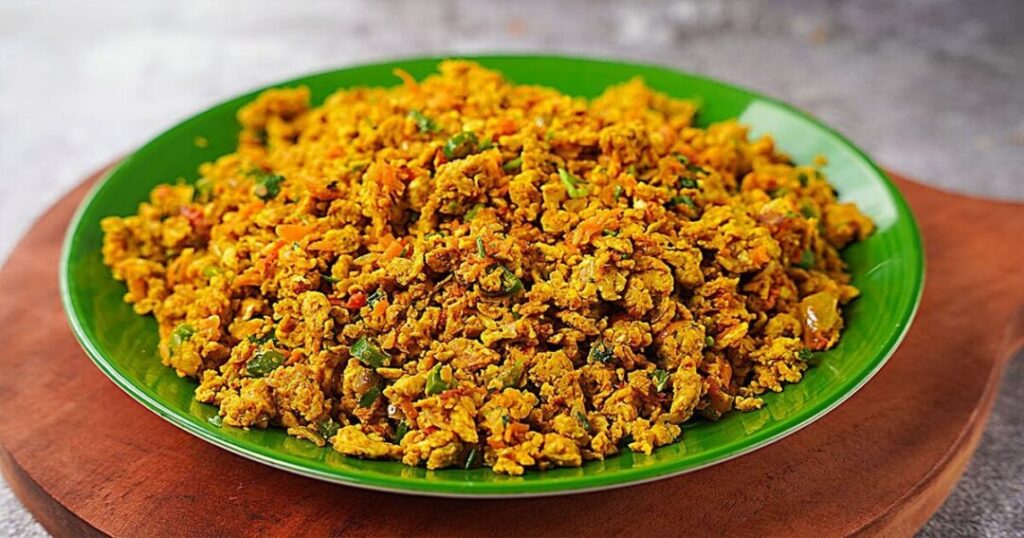
Egg Bhurji—scrambled spiced eggs, cooked with onion, tomato, green chili, and masala—is the most accessible non-veg street food in Udaipur, available at egg stalls near the Chetak Circle and Sukhadia Circle areas from evening onward. The Udaipur version is heavier on the spice than most—a generous hand with green chili and masala is the local preference.
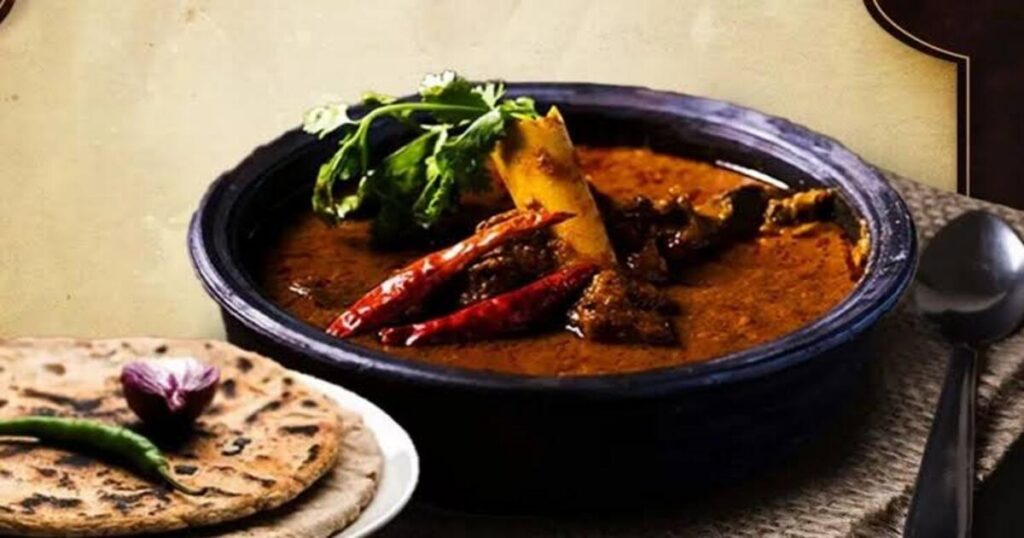
Laal Maas (Street Version)—the royal mutton curry of Rajasthan, typically served as a formal restaurant preparation, appears in simplified street form at specific mutton stalls near the old city area during evening hours. The street version loses some of the royal kitchen’s refinement but retains the defining flavor of Mathania red chili and slow-cooked mutton.
Also Read: Street Food in Ahmedabad: The Ultimate Guide
Where to Eat — Best Street Food Places in Udaipur
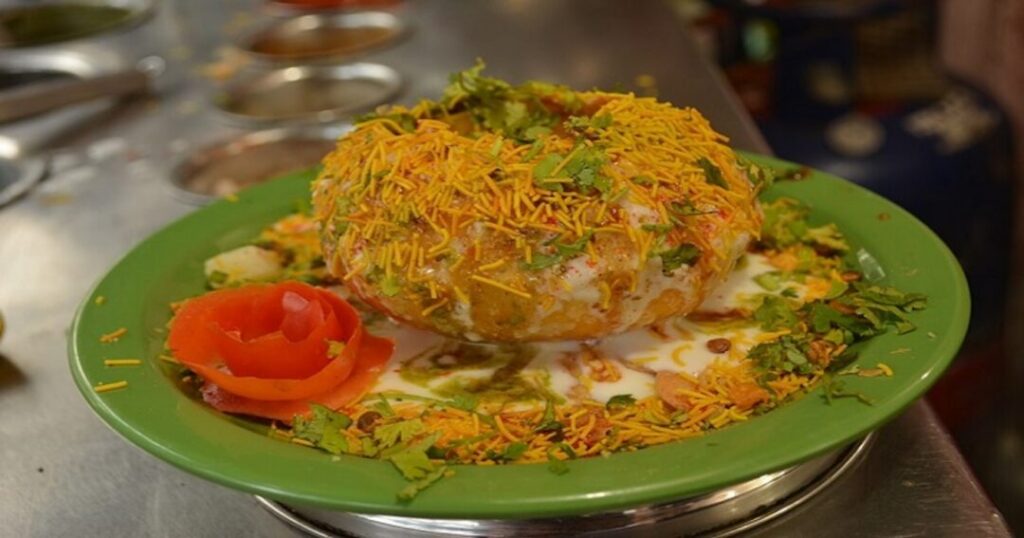
The Jagdish Mandir Area is the single most concentrated area for the best street food places in Udaipur—the temple draws foot traffic throughout the day, and the surrounding lanes have the highest density of kachori stalls, poha centers, mirchi bada vendors, and sweet shops in the city. Best in the morning (7–10 AM) and again in the evening (5–8 PM).
Fateh Sagar Lake Road—the road running along the western edge of Fateh Sagar Lake is the best place to eat street food in Udaipur for the combination of food and setting: bread pakoras, corn, kulhad chai, and seasonal snacks from evening stalls with the lake visible behind. Particularly good on weekday evenings when the tourist density is lower.
Bapu Bazaar—the market street running through the old city between Delhi Gate and Hathi Pol—is a working local market with authentic street food at genuinely local prices: samosas, kachoris, jalebis, and seasonal preparations.
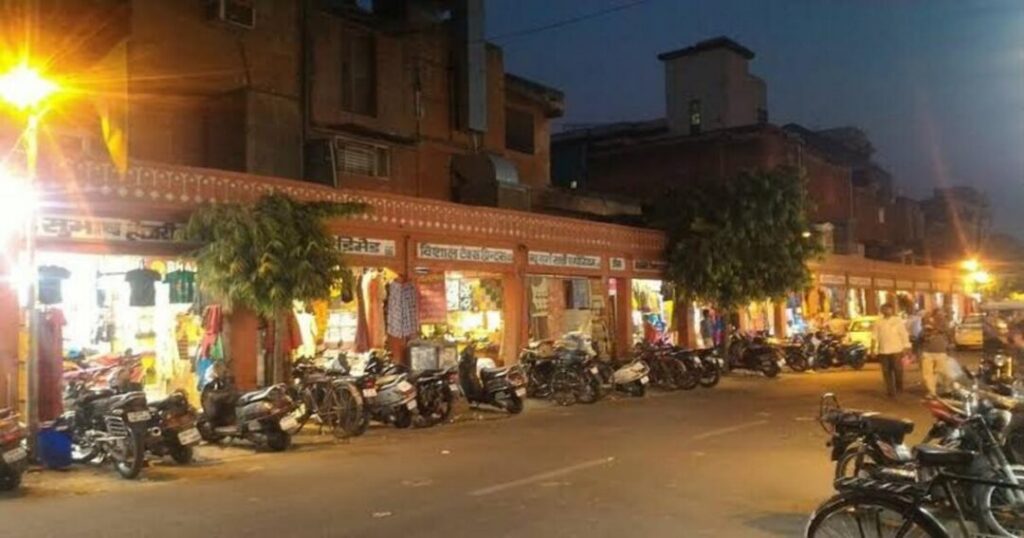
Sukhadia Circle — Udaipur’s primary evening social hub, with a concentration of chaat, pav bhaji, dabeli, and falooda stalls that operate from approximately 5 PM until 10 PM. More family-friendly and accessible than the old city lanes for first-time visitors.
The Sweets — Because You Cannot Leave Without Them
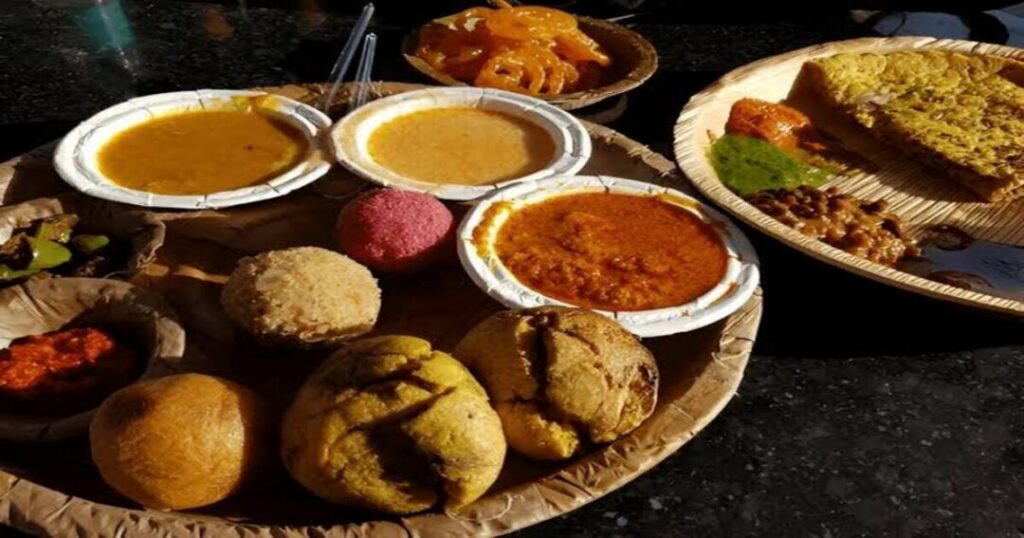
Jalebi—hot from the kadhai, dripping with syrup, and eaten with rabri (thick sweetened milk) at the better sweet shops—is the definitive end to any Udaipur food walk. The morning jalebi (fresh, crispy, and simple) and the evening jalebi (thicker, softer, sometimes served with cream) are two different experiences from the same basic preparation.
Churma Ladoo—coarsely crushed wheat roasted in ghee and compressed into balls with jaggery and dried fruits—is the sweet that most Udaipur tourists take home in boxes. Available at every sweet shop in the city, the versions at the old city hall ways are the most authentic.
Falooda — rose syrup, vermicelli, basil seeds, cold milk, and ice cream in a tall glass — is the definitive Udaipur summer drink and one of the finest khane ke baad (post-meal) experiences the city offers. The falooda stalls near Sindhi Colony and Ashok Nagar are the most consistently excellent.
Also read: Things to Do in Chittorgarh: The Complete Guide to Rajasthan’s Fort of Sacrifice
Quick guide to the best street food in Udaipur:
- Morning (6–10 AM): Poha with bhajia at nashta centres near Jagdish Mandir; Pyaaz and Dal Kachori with chutney; samosa and masala chai
- Afternoon/Evening (4–8 PM): Mirchi Bada at old city stalls, Dabeli at Sukhadia Circle, and Mawa Kachori at Bapu Bazaar sweet shops
- After dinner: Jalebi with rabri; Falooda at Sindhi Colony area
- Best areas: Jagdish Mandir (morning), Fateh Sagar Road (evening), Bapu Bazaar (all day), Sukhadia Circle (evening)
Conclusion About Street Food in Udaipur
Street food in Udaipur does not compete with the palaces for your attention—it just feeds you while you’re looking at them. And the best versions, found at the market stalls and old city corners rather than tourist restaurants, are among the most flavorful and most honest expressions of Rajasthani food culture available anywhere.
Download the Explurger app to discover what Udaipur locals and food lovers actually recommend, find the hidden kachori corners and morning poha stalls beyond the tourist circuit, and log every mirchi bada and mawa kachori on your Udaipur food journey.
The kadhai is already hot. The kachoris are already frying. Udaipur’s morning table is being set right now.
FAQs About Street Food in Udaipur
2. What is the best street breakfast in Udaipur?
The best street breakfast in Udaipur is the kachori combination—Dal Kachori or Pyaaz Kachori served hot with tamarind and green chutney, available from 7 AM at stalls near Jagdish Mandir. The second essential morning option is poha with bhajia and masala chai—light, aromatic, and found at nashta centers across the old city from 6 AM. Both are typically sold out or winding down by 10 AM; the earlier you arrive, the fresher the preparation.
3. Where is the best street food in Udaipur?
The best street food places in Udaipur are: the Jagdish Mandir area (kachori, poha, mirchi bada — best from 7–10 AM and 5–8 PM), Fateh Sagar Lake Road (bread pakora, kulhad chai, corn — best in the evening), Bapu Bazaar (working local market with authentic prices), and Sukhadia Circle (chaat, dabeli, falooda — from 5 PM). The old city lanes around Jagdish Mandir represent the highest concentration of the best places to eat street food in Udaipur for both quality and authenticity.
4. Is Udaipur good for food?
Yes, street food in Udaipur is one of the most underrated food scenes in Rajasthan. The city's food culture draws on Mewar royal cooking heritage and the everyday Rajasthani snack tradition, producing a street food scene that is predominantly vegetarian, intensely spiced, and genuinely distinctive. The best street food Udaipur offers ranges from the morning kachori-poha culture to evening mirchi badas, mawa kachori, dabeli, and falooda—all at prices that remain among the most affordable of any major Rajasthan tourist city.
5. Where can I find the best street food in Udaipur?
You can find the best street food in Udaipur at popular spots such as Sukhadia Circle, Bapu Bazaar, Hathipole Market, and the streets around Lake Pichola. These areas are known for serving authentic Rajasthani snacks and delicious local delicacies.