

1,790 Total Views
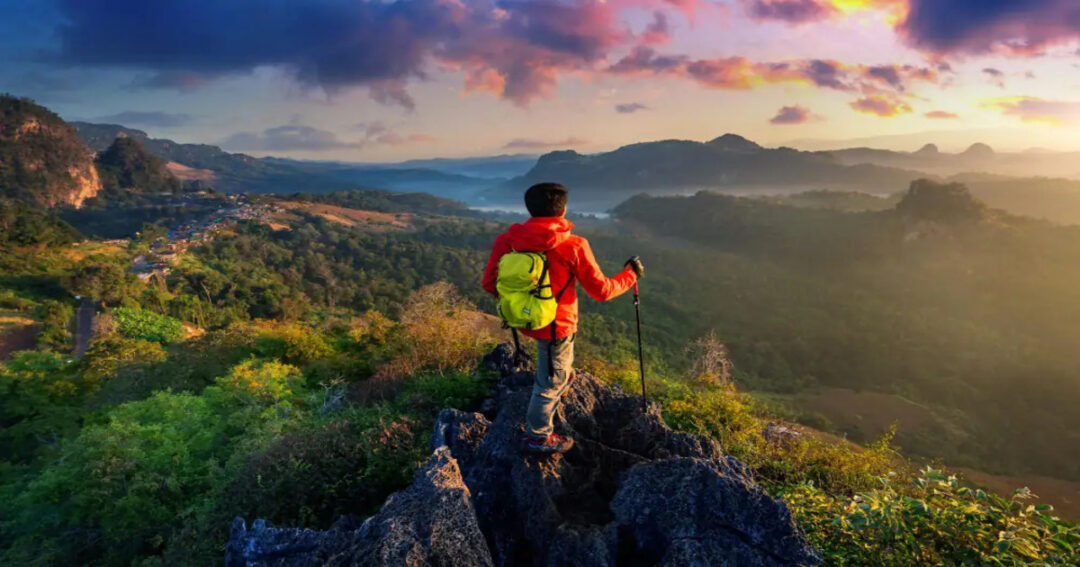
The Western Ghats are full of treks that promise forests, waterfalls, and wildlife. The Brahmagiri trek delivers all three—and then adds something most Ghats treks cannot: a summit that sits exactly on the Karnataka-Kerala border, where the two states are physically divided by a cleared border strip visible from above and where, on a clear day, you can see the high peaks of both Karnataka and Kerala spread across the horizon. At 1,607–1,608 meters, the Brahmagiri Peak is the highest point of the Brahmagiri Wildlife Sanctuary—an 181-sq-km protected forest on the Kodagu-Wayanad border that is one of the most biodiverse habitats in the entire Western Ghats.
The Brahmagiri trek is notable for reasons beyond its summit. The trail from Iruppu Falls passes through terrain that shifts dramatically — dense evergreen forest in the lower section, shola-grassland mosaics in the middle, and open rolling grasslands in the upper reaches where elephant herds move with complete freedom and the sense of genuine wilderness is unlike anything else in South Indian trekking. This is not a recreational trail. It is a forest track through one of the finest wildlife corridors in the country, which is exactly what makes it extraordinary.
Brahmagiri Trek: Key Facts at a Glance
Before planning your Brahmagiri trek, it’s helpful to know the essential details, including the trek height, distance, difficulty level, permits, and the best time to visit. Whether you’re starting from the Karnataka or Kerala side, these quick facts will help you prepare for a safe and enjoyable trekking experience.
| Detail | Information |
|---|---|
| Brahmagiri trek height | 1,607–1,608 m (5,270–5,276 ft) |
| Location | Kodagu (Karnataka) & Wayanad (Kerala) border |
| Sanctuary Area | 181 sq km |
| Starting Point (Karnataka) | Iruppu Falls |
| Starting Point (Kerala) | Thirunelli Temple |
| Trek Distance | 8–10 km one way (16–20 km round trip) |
| Duration | 1–2 days |
| Difficulty | Moderate |
| Brahmagiri trekking fees | ₹275 per person (approx.) |
| Guide | Mandatory (Forest Department) |
| Best Time to Visit | October to May |
| Nearest City | Madikeri (85 km) |
The Brahmagiri trek is an excellent choice for trekkers seeking scenic forest trails, rich biodiversity, and rewarding summit views in the Western Ghats. With moderate difficulty, well-defined routes from both Karnataka and Kerala, and mandatory forest permissions, proper planning is essential. Visit between October and May for the best weather conditions and a memorable trekking experience.
What Makes the Brahmagiri Trek Special: The Western Ghats at Their Most Intact
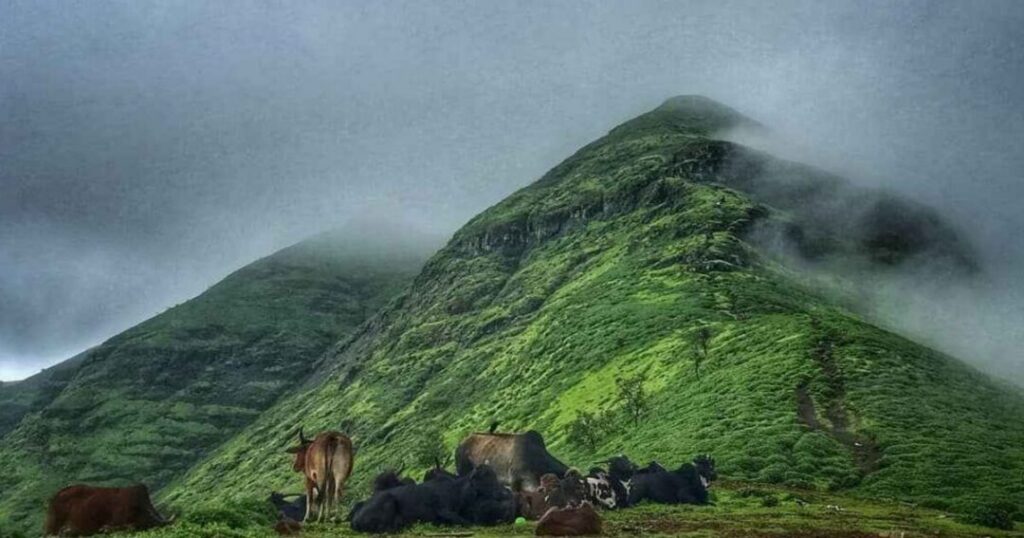
The Brahmagiri trek is not the most famous trek in Karnataka — that title belongs to Kumara Parvatha or Tadiandamol. It is, arguably, the most rewarding. The reasons are specific:
The biodiversity: The Brahmagiri Wildlife Sanctuary is home to elephants, gaur, tigers, leopards, lion-tailed macaques, Nilgiri langurs, Malabar giant squirrels, sambar, sloth bears, wild dogs, and over 200 species of birds—including the Malabar trogon, emerald dove, and several endemics of the Western Ghats. Elephant sightings on the trail are common; the forest department guide is not just a regulatory requirement but a genuine safety necessity. The Brahmagiri trek is one of the few trekking experiences in peninsular India where large wildlife encounters are a real and regular part of the experience.
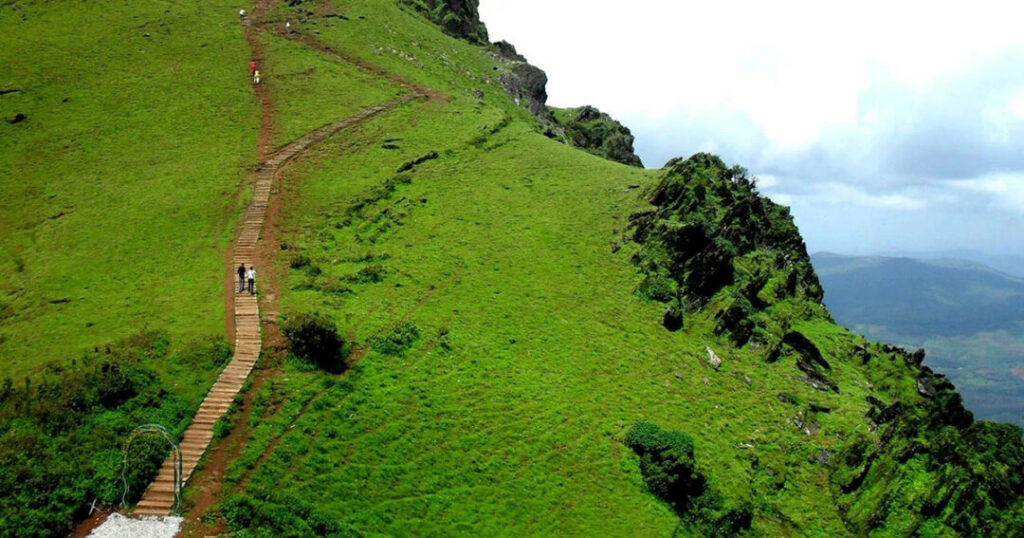
The terrain transitions: The trail from Iruppu Falls to the summit passes through three entirely distinct ecosystems—dense riparian evergreen forest along the Lakshmana Tirtha River, shola-grassland mosaics at mid-altitude, and open rolling grasslands in the upper reaches. The shift from closed-canopy forest to open meadow is sudden and extraordinary—the grasslands extend for kilometers in all directions, the Karnataka-Kerala border marked by a cleared strip visible from the air.
The legend of Iruppu: The trek begins near Iruppu Falls (Lakshmana Tirtha Falls)—a waterfall fed by the Lakshmana Tirtha River, which, according to legend, sprang from the earth when Lakshmana shot an arrow into the Brahmagiri hill while searching for water during the Ramayana. Lord Rama is said to have established a Shiva temple (Rajeshwara Temple) on the banks of the river where it emerged. The Iruppu Falls and the forest it flows through carry this mythological weight through the entire length of the trek.
Also read: Bhrigu Lake Trek: Complete Guide to Trek Distance, Height, Best Time & Packages
How to Reach Brahmagiri Trek Starting Points?
Karnataka Route — Iruppu Falls
From Bangalore (~250–270 km | 6–7 hours):
- Road: Bangalore → Mysore → Hunsur → Gonikkoppal → Srimangala → Iruppu Falls
- By bus: KSRTC buses to Gonikkoppal; connecting local buses or autos to Iruppu (approximately 10 km from Srimangala)
- By car: Most comfortable option; drive via Mysore Road through Nagarhole National Park (closes at 6 PM—plan timing accordingly if this route is used)
From Madikeri (Coorg) (~85 km | 2 hours):
- Road via Virajpet and Srimangala; the most common approach for visitors already in Coorg
From Mysore (~170 km | 3.5–4 hours):
- Road via Hunsur and Gonikkoppal
Also read: Bhimashankar Trek: Complete Guide to Ganesh Ghat, Shidi Ghat & Khandas Routes
Kerala Route — Thirunelli Temple
From Mananthavady, Wayanad (~30 km | 45 minutes):
- Road via Kattikulam to Thirunelli
- The road passes through dense forest and is one of the finest approaches to any trekking destination in Kerala
From Calicut (~170 km | 3.5 hours):
- Via Thamarassery mountain road to Kalpetta, then Mananthavady
Brahmagiri Trek Permission, Fees & Booking — The Complete Guide
This section covers the most frequently searched and most practically important aspect of the Brahmagiri trek — the permits, fees, and booking process.
Brahmagiri Trek Permission
Two separate permissions are required depending on your route:
Karnataka side (Iruppu route):
- Permission must be obtained from the Range Forest Officer (RFO) at Srimangala Forest Office, approximately 10 km from Iruppu Falls
- This must be arranged in advance—the forest office does not guarantee same-day approvals, especially during peak season
- The Srimangala Forest Office is typically open on weekdays; verify current timings before visiting
Kerala side (Thirunelli route):
- Permission must be obtained from the Thirunelli Forest Range Officer
- The Thirunelli temple complex has a forest checkpost where entry for the trek is registered
Important: Both states require the permission independently. If you plan to traverse from Karnataka to Kerala (or vice versa), crossing the state border at the summit, both permissions are technically required. Most trekkers do an out-and-back on their respective state’s route.
Brahmagiri Trekking Fees
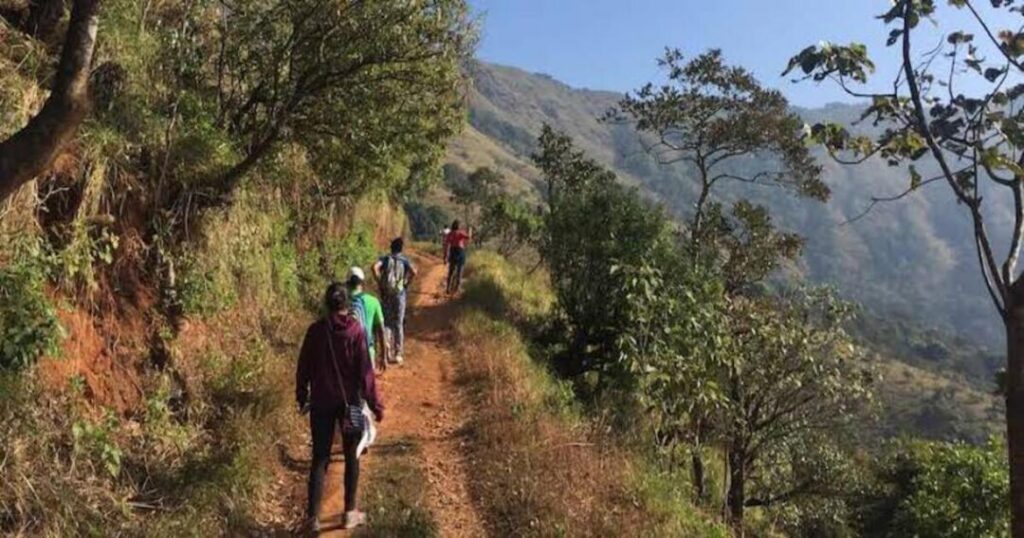
- Entry fee: ₹275 per head — covers permission and stay at Narimala Forest Rest House (overnight)
- Guide fee: Approximately ₹200–500 per day depending on the source—guides are mandatory and are arranged at or near the Iruppu trailhead; verify current rates with the Srimangala Forest Office before your trip; do not attempt without one (elephant encounters make the guide a genuine safety requirement, not bureaucratic formality)
- Forest Rest House (Narimale Camp): Included in the ₹275 fee for overnight stays; basic accommodation with utensils provided (bring your own food supplies)
Note: Fees are subject to change — verify current rates with the Srimangala Forest Office before your trip. All prices are approximate.
Also read: Bandaje Falls Trek: The Complete Guide for First-Time Trekkers
Brahmagiri Trekking Booking
There is no centralized online booking system for the Brahmagiri trek—the permission process is managed directly with the Forest Department:
- Contact Srimangala Forest Office by phone before your trip to confirm availability and current requirements
- For organised Brahmagiri trekking booking through operators—several Coorg- and Bangalore-based trekking operators arrange guided packages including permit facilitation, transport, and camping equipment; these are the most convenient option for first-time visitors
- Group size: The forest department typically restricts group sizes for ecological reasons—verify current limits when booking
Brahmagiri Trek Itinerary — Full Day-by-Day
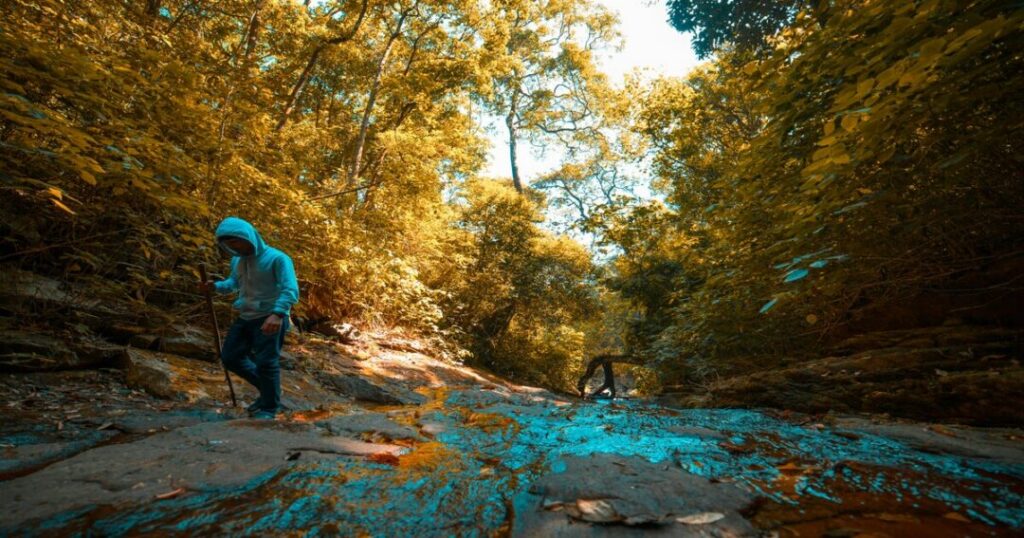
Option A: Single Day Trek (Iruppu Route)
Possible for very fit trekkers who arrange early permissions and guide.
- Start: Iruppu Falls trailhead, 6:00–7:00 AM
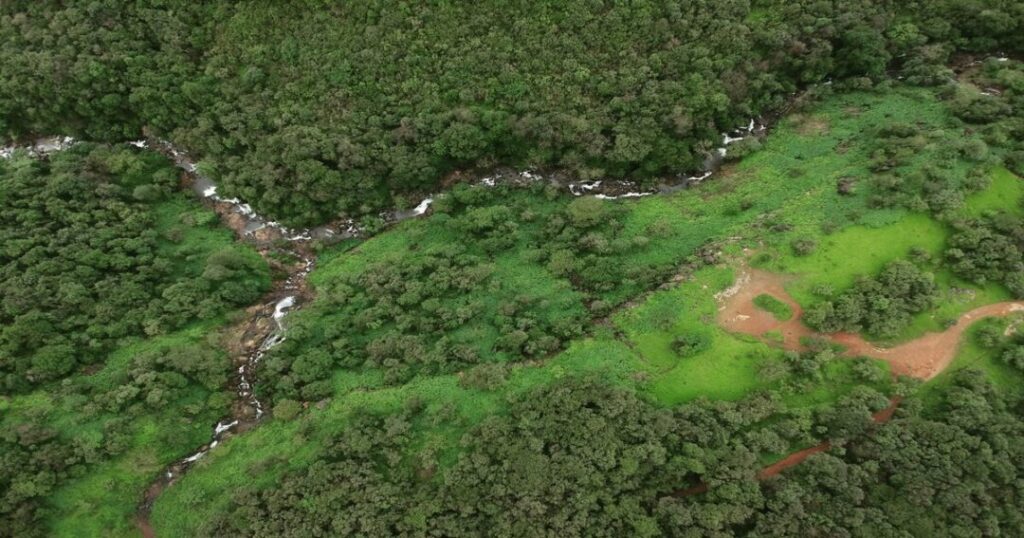
- Iruppu to Narimale Camp (~5 km | 2–2.5 hours): Through dense riparian evergreen forest along the Lakshmana Tirtha River. Multiple stream crossings; the forest canopy is closed and cool even in summer. The River Origin Point—where the Lakshmana Tirtha emerges from the hillside—is at approximately 3 km, worth a brief stop. Reach Narimale Camp (~1,400 m) by approximately 9:00–9:30 AM.
- Narimale Camp to Brahmagiri Peak (~5 km | 2.5–3 hours): The trail opens dramatically from the Narimale area—grasslands replace the closed forest; the Karnataka-Kerala border strip becomes visible ahead. The final approach to the peak involves the most demanding section: a 500-foot (150-meter) ascent over approximately 500 meters of steep, loose terrain. Reach the summit (~1,607 m) by approximately 12:30–1:00 PM.
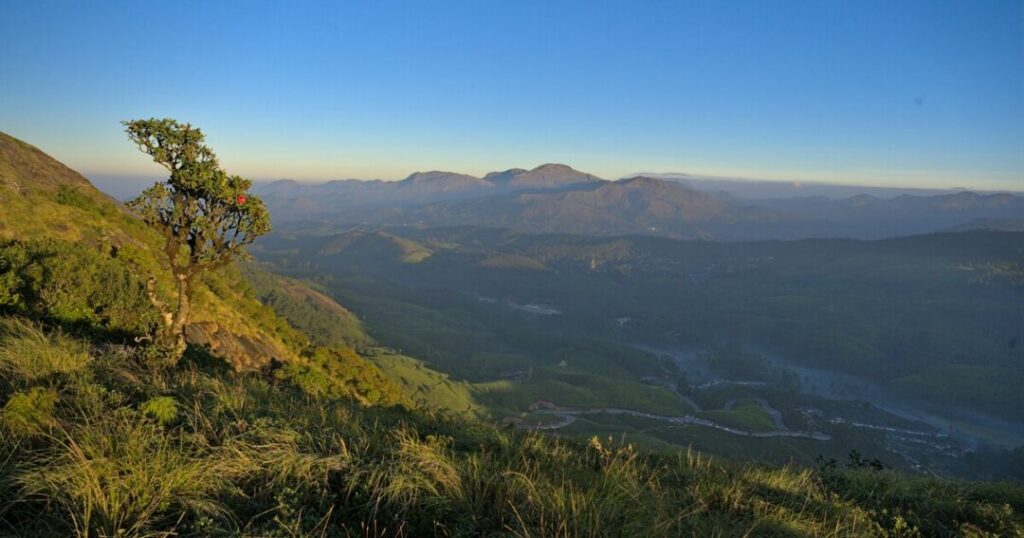
- At the summit: 360-degree views of Mullayanagiri, Baba Budangiri, Kumara Parvatha, Kudremukh, and — on clear days — Kerala’s Chembra Peak and Tamil Nadu’s Doddabetta. The Karnataka-Kerala border is visible as a cleared strip extending across the grasslands.
- Descent to Iruppu: 3.5–4 hours. Reach Iruppu by 4:30–5:00 PM.
Option B: Overnight Trek (Recommended Format)
Day 1: Iruppu Falls → Narimale Forest Camp (Overnight)
- Trek distance: ~5 km | Trek time: ~2–2.5 hours
- Begin at Iruppu Falls trailhead by 9:00 AM
- Trek through the Lakshmana Tirtha forest section—the finest forest walking of the entire route; multiple stream crossings, tall Banyan trees, strangler figs, and the constant sound of endemic bird species from the canopy
- Optional: Narimale Peak (~1.5 km from the camp) can be visited on Day 1 afternoon after settling camp—a shorter summit with excellent grassland views
- Night at Narimale Forest Rest House (~1,400 m): The basic forest department rest house has cooking utensils; carry all food supplies. The night sounds of the Brahmagiri Wildlife Sanctuary—the distant call of a sambar deer, the occasional elephant movement in the grasslands above—are the most memorable part of the overnight experience.
- Camp: Narimale Forest Rest House (~1,400 m)
Day 2: Narimale Camp → Brahmagiri Peak → Return to Iruppu
- Summit push: ~5 km to peak, 2.5–3 hours; depart camp by 6:00 AM
- The grassland section from Narimale opens into one of the most extraordinary landscapes in the Western Ghats — vast, rolling, and essentially wild. Elephant sightings are most likely in the morning hours in this section; stay close to your guide and maintain calm
- The final 500-foot ascent to the Brahmagiri Peak (~1,607 m) is the most physically demanding section—steep, gravel-covered, requiring hands in places. The summit rewards with the panoramic view that justifies the overnight approach
- Return to Iruppu: 3.5–4 hours descent; reach Iruppu Falls by approximately 1:30–2:00 PM
- Visit Iruppu Falls (immediately at the trailhead) before the drive back
Wildlife You May Encounter
The Brahmagiri Wildlife Sanctuary is a genuinely wild protected area. On the Brahmagiri trek, encounters with the following are possible and in some cases common:
- Elephants: The most frequently encountered large mammal; herds move through the grassland sections regularly. Never approach. Follow guide instructions immediately. Elephant encounters are the primary reason the guide requirement exists.
- Gaur (Indian Bison): The world’s largest bovine, commonly seen in the forest section, particularly near the River Origin Point area
- Malabar Giant Squirrel: Endemic to the Western Ghats; frequently spotted leaping between the canopy trees in the lower forest section—one of the most beautiful wildlife sightings in South India
- Lion-tailed Macaque: One of the rarest primates in India; the Brahmagiri sanctuary is one of its strongholds
- Birds: Malabar trogon, emerald dove, Malabar pied hornbill, black bulbul, and dozens of Western Ghats endemics in the forest section
Also read: Anthargange Trek: The Ultimate Guide to Night Trekking, Caves & Camping
Best Time for the Brahmagiri Trek
| Season | Conditions | Recommended? |
| October to February | Cool, clear skies, best wildlife visibility, comfortable trekking temperatures | ✅ Best overall — December to February is the finest window |
| March to May | Warmer but manageable; vegetation vivid; some dry-season wildlife concentration near streams | ✅ Good — carry extra water |
| June to September (Monsoon) | The Western Ghats receive extraordinary rainfall; trails slippery and flooded; leeches throughout; elephant movement unpredictable | ❌ Trek discouraged during peak monsoon; conditions can be genuinely dangerous |
December to February is the consistent recommendation: cool temperatures, clearest views, and the dry-season grasslands at their most atmospheric.
Brahmagiri Trek: Gear, Fitness & Safety Tips
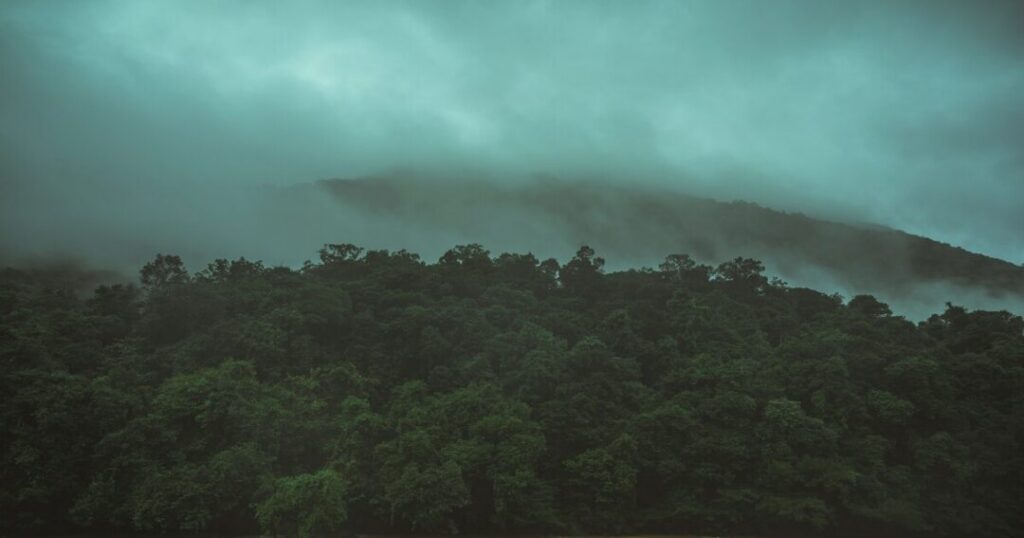
Gear List
- Footwear: Waterproof trekking boots with good grip — the stream crossings and the steep summit section require proper soles
- Clothing: Long-sleeved shirt and full trousers are strongly recommended regardless of heat—leeches (in the forest section, particularly post-monsoon) and the dense vegetation make skin exposure uncomfortable
- Water: Carry 3 litres minimum; there are sufficient water points on the trek path from natural streams
- Food: Carry all food for the overnight; the Narimale rest house has utensils but no kitchen supplies
- Leech socks: A pair of dedicated leech socks pulled over trekking boots is the single most useful piece of gear for post-monsoon or shoulder-season trekking in the Western Ghats
- Headlamp: For the overnight and early morning summit start
Fitness
The Brahmagiri trek difficulty is moderate — the lower forest section (Iruppu to Narimale) is manageable for fit beginners; the final 500-foot summit push is steep and demands good endurance. Fit beginners with prior short-trek experience can attempt the Thirunelli route, which is shorter and comparatively easier. The Iruppu route is best suited for those with intermediate experience.
Safety
- Never trek without the mandatory forest department guide—elephant encounters on the grassland section can happen with minimal warning
- Do not play music or make loud noise on the trail—the sanctuary’s wildlife is genuinely present
- Carry a whistle—standard wildlife trekking safety equipment
- Inform someone of your itinerary and expected return before beginning
Conclusion About Brahmagiri Trek
The Brahmagiri trek is what Western Ghats trekking was meant to be — a genuine forest experience in a genuinely wild sanctuary, with a summit that delivers panoramic views of two states and a trail that asks you to share the path with the elephant, the gaur, and the forest itself.
Quick recap:
- Brahmagiri trek height: 1,607–1,608 m (5,270–5,276 ft) — Karnataka-Kerala border
- Brahmagiri trek distance: ~10 km one way (Iruppu route); ~8 km (Thirunelli route)
- Brahmagiri trekking fees: ₹275 per head; guide ₹200–500 per day (verify with Srimangala Forest Office)—mandatory
- Brahmagiri trek permission: Srimangala RFO (Karnataka) or Thirunelli Forest Officer (Kerala) — advance arrangement required
- Overnight: Narimale Forest Rest House (~1,400 m) — included in permit fee; bring all food
- Wildlife: Elephants, gaur, lion-tailed macaques, Malabar giant squirrels, endemic birds
- Best time: December to February; October to May overall
- Difficulty: Moderate; steep 500-ft final ascent
Download the Explurger app to log your Brahmagiri trek, discover what other trekkers recommend for current trail and wildlife conditions, and plan your complete Coorg and Western Ghats adventure.
The forest is already deep. The grasslands are already rolling. The Brahmagiri summit is waiting — and so are the elephants.
FAQs About Brahmagiri Trek
2. What is the Brahmagiri trek distance?
The Brahmagiri trek distance depends on the starting route. The Karnataka route from Iruppu Falls is approximately 10 km one way — 5 km to Narimale Forest Camp and another 5 km to the Brahmagiri Peak. The Kerala route from Thirunelli Temple is approximately 8 km one way. The Brahmagiri trek distance for the full round trip (Iruppu route) is approximately 16–20 km depending on the exact path taken.
3. How do I get Brahmagiri trek permission?
Brahmagiri trek permission must be obtained from the Range Forest Officer (RFO) at Srimangala Forest Office (approximately 10 km from Iruppu Falls) for the Karnataka route, or from the Thirunelli Forest Range Officer for the Kerala route. Permission should be arranged in advance — same-day approvals are not guaranteed during peak season. A mandatory forest department guide must be hired at or near the trailhead. Forest department guides are compulsory due to regular elephant presence on the route.
4. What are the Brahmagiri trekking fees?
The Brahmagiri trekking fees are approximately ₹275 per head for permission and overnight stay at the Narimale Forest Rest House. A mandatory forest department guide costs approximately ₹200–500 per day — rates vary across sources; verify current charges directly with the Srimangala Forest Office before your trip. There is no centralised online booking system; Brahmagiri trekking booking is managed directly with the forest department or through registered trekking operators in Coorg or Bangalore.
5. What wildlife can you see on the Brahmagiri trek?
The Brahmagiri Wildlife Sanctuary is home to elephants, gaur, tigers, leopards, lion-tailed macaques, Nilgiri langurs, Malabar giant squirrels, sambar, sloth bears, and wild dogs. Elephant sightings on the grassland sections are common — this is the primary reason forest department guides are mandatory. The endemic bird life includes the Malabar trogon, emerald dove, and Malabar pied hornbill. The Brahmagiri trekking experience is one of the few in peninsular India where large wildlife encounters are a genuine and regular part of the trail.
6. What is the best time for the Brahmagiri trek?
The best time for Brahmagiri trekking is October to February — cool temperatures, clear skies, and the best wildlife visibility of the year. December to February is the finest window: the grasslands are dry and atmospheric, the summit views are clearest, and temperatures are comfortable for the full trek duration. Avoid the monsoon peak (June–August)—the Western Ghats receive extreme rainfall, trails flood, and elephant movement near the route becomes unpredictable.