
756 Total Views
The Markha Valley trek is the trek most people mean when they say they’re doing “a Ladakh trek” — a multi-day route through Hemis National Park that crosses two high passes, drops through villages running almost entirely on homestays, and offers a real shot at spotting blue sheep, marmots, and golden eagles along the way.
This guide covers everything from the day-by-day route to the two things people search hardest for and get the least straight answers on: how risky the altitude actually is, and whether October is a smart month to attempt it. Save the details that matter to your plan to your Explurger Bucket List as you read.
Markha Valley Trek Overview: Ladakh’s Most Popular Trek
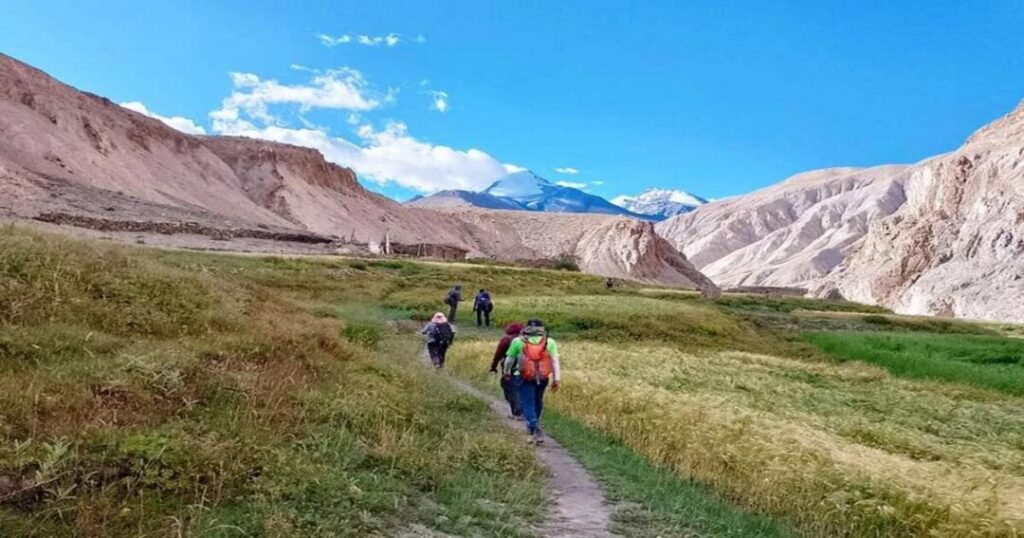
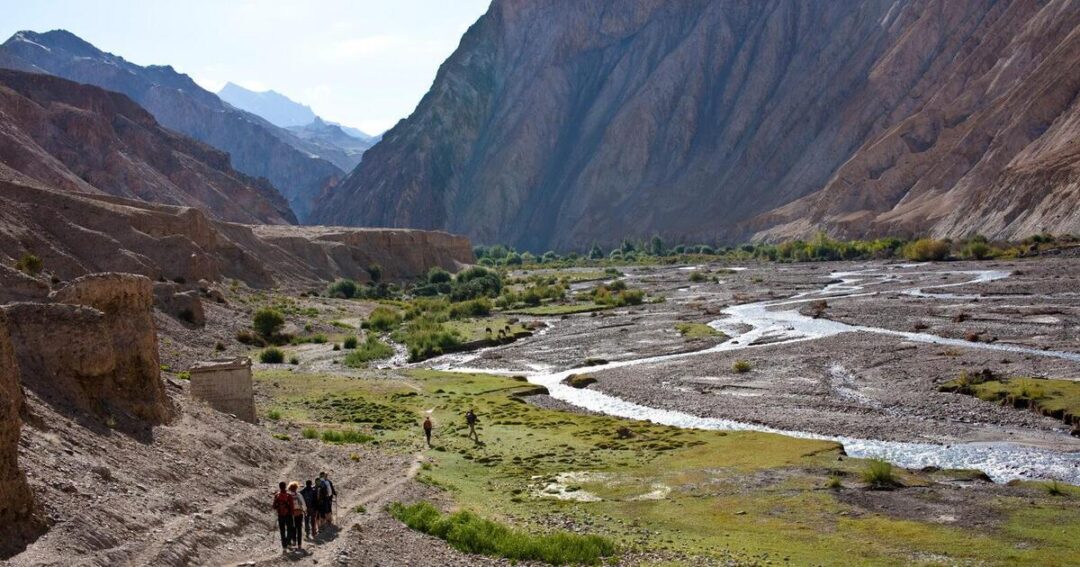
The Markha trek owes its popularity to a combination most other Ladakh routes don’t offer: real high-altitude scenery and two genuine mountain passes, but without requiring full camping self-sufficiency, since most nights are spent in village homestays rather than tents. The trail runs through Hemis National Park — home to snow leopards, though sightings are rare and mostly a winter phenomenon — and passes through a string of villages (Skiu, Markha, Hankar) that still run on subsistence farming and homestay tourism rather than anything built for mass tourism.
Markha Valley Trek Route: From Zingchen to Hemis
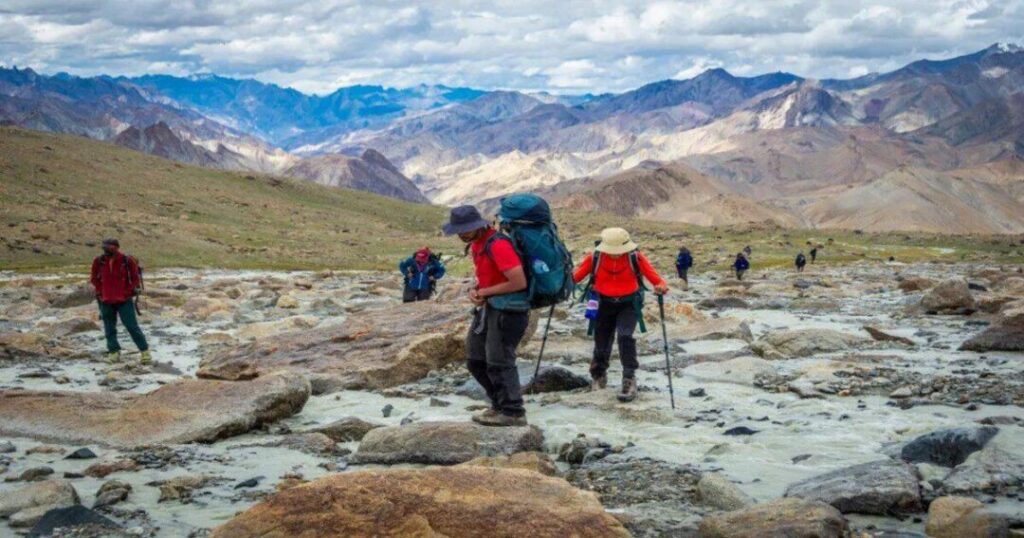
The most commonly followed Markha Valley trek route starts at Zingchen, just outside Leh, and finishes at Shang Sumdo near Hemis monastery, crossing the Markha Valley itself in between. The route follows the Markha River for a good stretch of the middle days, climbs over Gandala La (also spelled Ganda La) early in the trek, then a second, higher pass — Kongmaru La — near the end, before descending back toward the Indus Valley.
Other starting points exist: Spituk adds an extra day or two at the front of the trek, while Chilling shortens it into a faster 6-day version. Zingchen sits in between—long enough to properly experience the valley, short enough to be realistic for most trekkers with a week to spare.
Also read: Kumara Parvatha: Trek Distance, Height, Booking & Best Time Guide
Markha Valley Trek Itinerary: Day-by-Day Breakdown
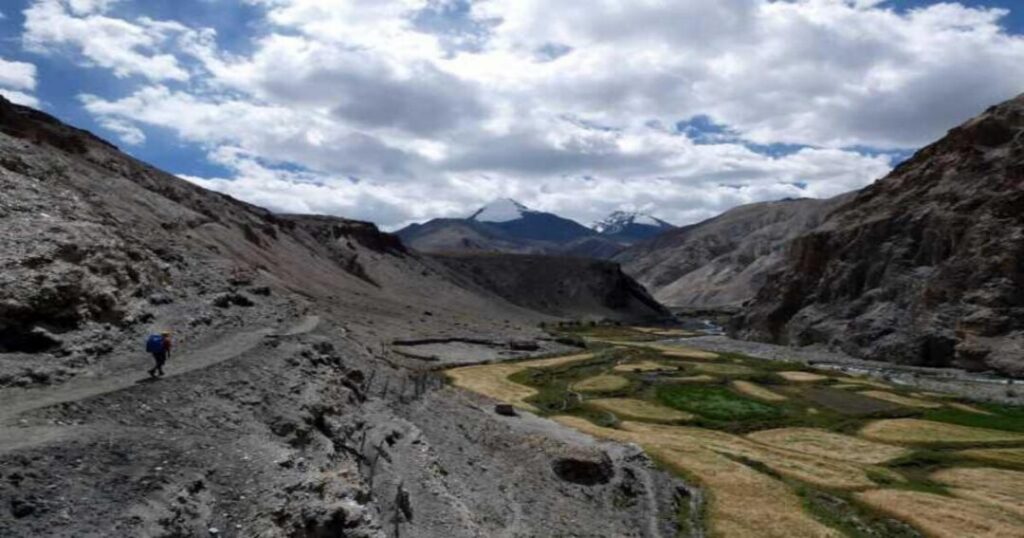
Here’s the standard 7-8 day Markha Valley trek itinerary starting from Zingchen:
- Day 1: Leh to Zingchen (~3,600 m)—short drive from Leh, easy walk to camp, mostly an acclimatization day.
- Day 2: Zingchen to Yurutse/Skiu (~4,000-4,200 m)—gentle ascent along a river gorge.
- Day 3: Cross Gandala La (~4,900m) and descend to Shingo village.
- Day 4: Shingo to Skiu, following the Markha River, homestay overnight.
- Day 5: Skiu to Markha village—the valley’s namesake village, with a ruined fort and gompa.
- Day 6: Markha to Hankar, then on to Thachungtse or Nimaling—high grazing meadows below Kongmaru La.
- Day 7: Cross Kongmaru La (the trek’s highest point) and descend to Chogdo or Shang Sumdo.
- Day 8: Shang Sumdo to Hemis, then drive back to Leh.
Some operators compress this into 7 days by combining stages; others stretch it to 9 with an extra buffer/acclimatization day. If you’re short on time, the Chilling-start version cuts out the Zingchen-to-Skiu section entirely, but it also means skipping the Gandala La crossing — a real trade-off if the passes are part of why you wanted to do this trek in the first place.
Markha Valley Trek Altitude: The Two Passes and Real AMS Risk
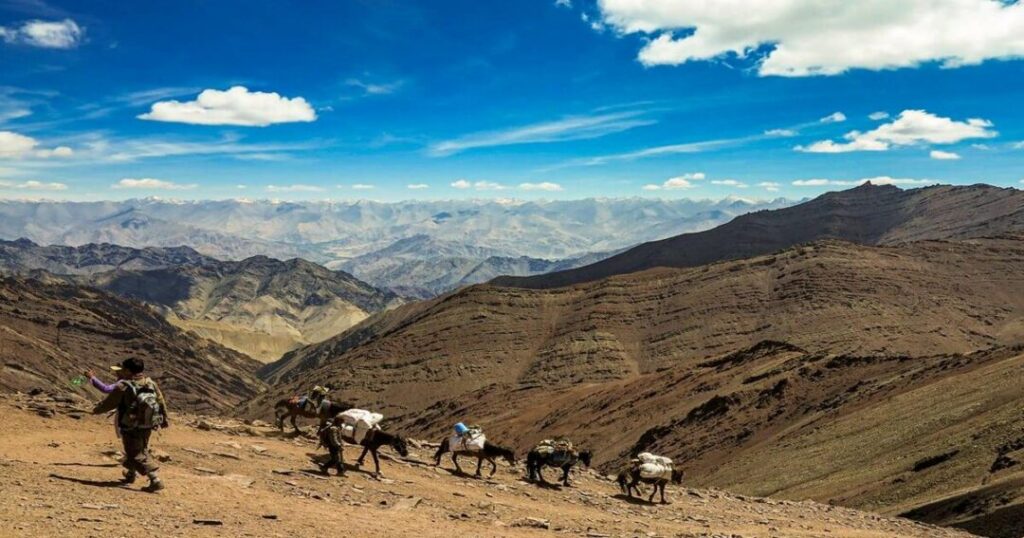
This is the part of the Markha Valley trek altitude profile worth taking seriously rather than skimming past. The trek starts around 3,200-3,600m (already higher than most trekkers’ baseline) and climbs to just over 5,000m at its highest point — high enough that altitude sickness (AMS) is a genuine risk, not a theoretical one. Sources report Gandala La at anywhere from roughly 4,800m to 4,970m, and Kongmaru La at either 5,150m or 5,260m depending on the source — the discrepancy likely comes down to different GPS readings and measurement points rather than one figure being simply wrong, so treat both as “just over 4,900m” and “just over 5,200m” rather than fixating on the exact meter count. [STAT: Kongmaru La, the trek’s highest point, sits at roughly 5,150-5,260m depending on the source, making it higher than Everest Base Camp on the Nepal side.]
At these altitudes, reduced oxygen makes breathlessness and fatigue normal even for fit trekkers, and real AMS symptoms — headache, nausea, dizziness, loss of appetite — are common enough that guides on this route build in at least one full acclimatization day, typically at Leh (3,500m) before the trek even starts, and sometimes a second short day early in the itinerary. The standard advice applies here as much as on any high Himalayan route: ascend gradually, stay hydrated, avoid alcohol in the first days, and know that if symptoms worsen rather than improve with rest, descending is the only reliable fix. Spending at least 2 full days acclimatizing in Leh before starting the trek is the single most effective thing you can do to reduce risk.
Also read: Har Ki Dun Trek: The Complete Independent Trekker’s Guide (2026)
Markha Valley Trek Difficulty: How Hard Is It, Really?
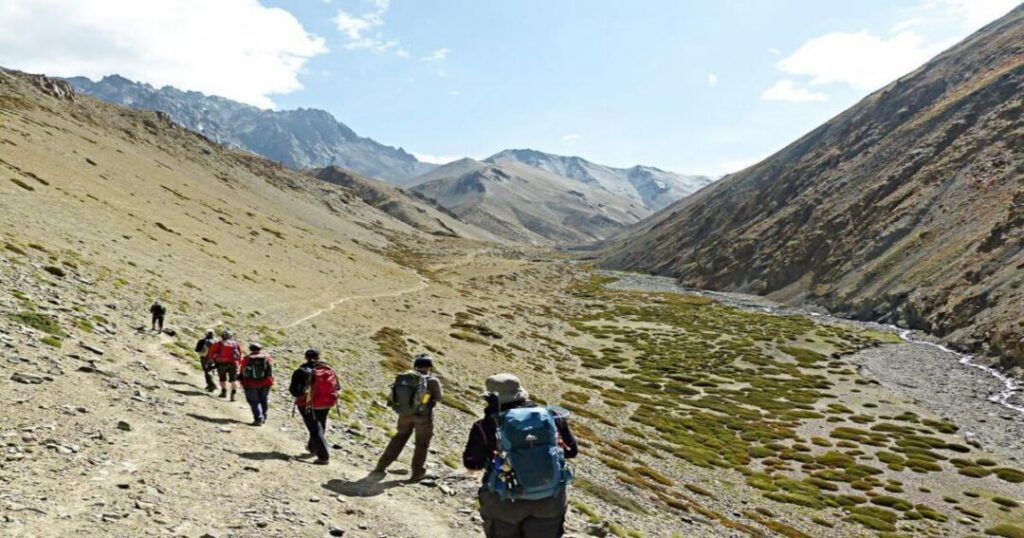
Most operators rate the Markha Valley trek difficulty as moderate — roughly a 3 out of 5 on the scale used for Ladakh treks, sitting well below genuinely technical routes but well above a casual walk. There’s no technical climbing or exposed scrambling involved; the challenge is almost entirely about altitude and stamina, with daily walking stretches of 8-10 hours on some days, particularly the two pass-crossing days. Reasonable fitness, proper acclimatization, and decent trekking boots matter far more here than any technical skill.
Markha Valley Trek Distance: How Far You’ll Actually Walk
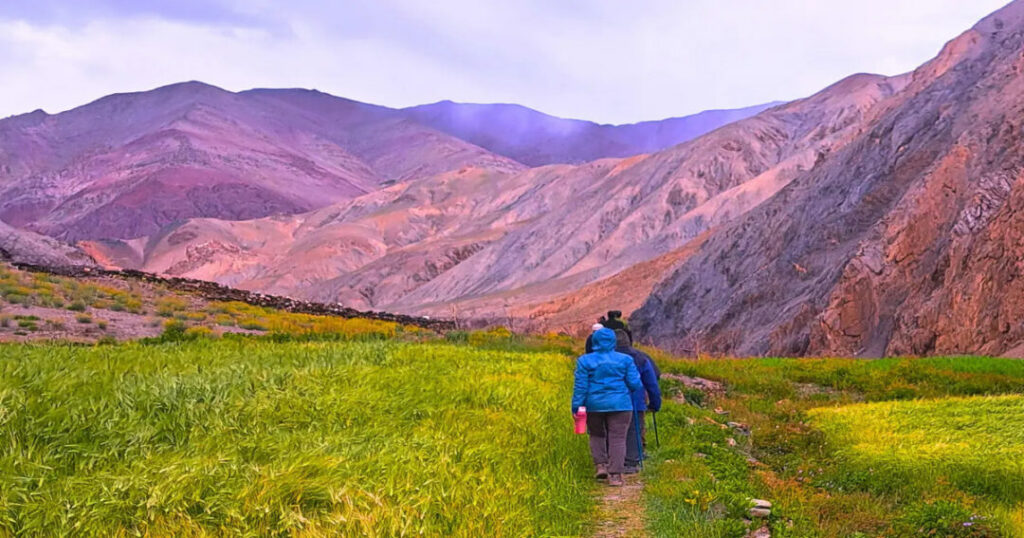
Distance figures for this trek vary more than you’d expect for something this well-documented — different sources cite anywhere from roughly 55km to 75km+ for the standard Zingchen-to-Hemis version, with longer figures usually reflecting the Spituk-start variant (which can stretch past 100km). [STAT: Total trek distance is commonly cited anywhere between 55km and 75km for the standard route, with the difference largely coming down to which start and end points are counted.] Rather than treating any single number as gospel, it’s more useful to think of it as roughly 8-12km of walking per day across 7-8 days — a workable daily pace for most moderately fit trekkers.
How to Reach the Markha Valley Trek Trailhead from Leh
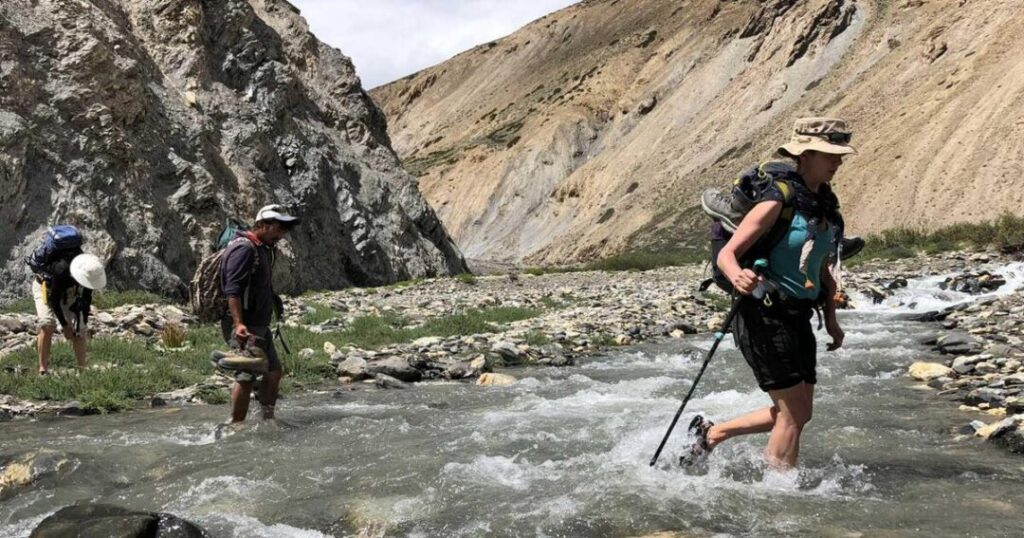
Zingchen, the standard starting point, is about 18 km from Leh—roughly a 45-minute drive along a road that also leads toward Spituk. Most trekkers arrange a shared taxi or a vehicle through their trekking operator directly from their Leh hotel; there’s no public bus service to Zingchen itself. At the other end, Shang Sumdo (near Hemis) is about 1.5-2 hours from Leh by road, and it’s from here that most groups arrange the return drive back into town.
Also read: Himalayan Treks for Beginners: Top 10 Easy Treks in India
Markha Valley Trek: Best Time to Visit
The Markha Valley trek’s best time is the summer stretch from mid-June through September, when the passes are reliably snow-free and daytime temperatures on the trail are manageable. July and August are the busiest months, coinciding with peak tourist season in Ladakh overall, while June and September offer a reasonable compromise between good conditions and slightly thinner crowds.
Markha Valley Trek in October: Worth the Risk?
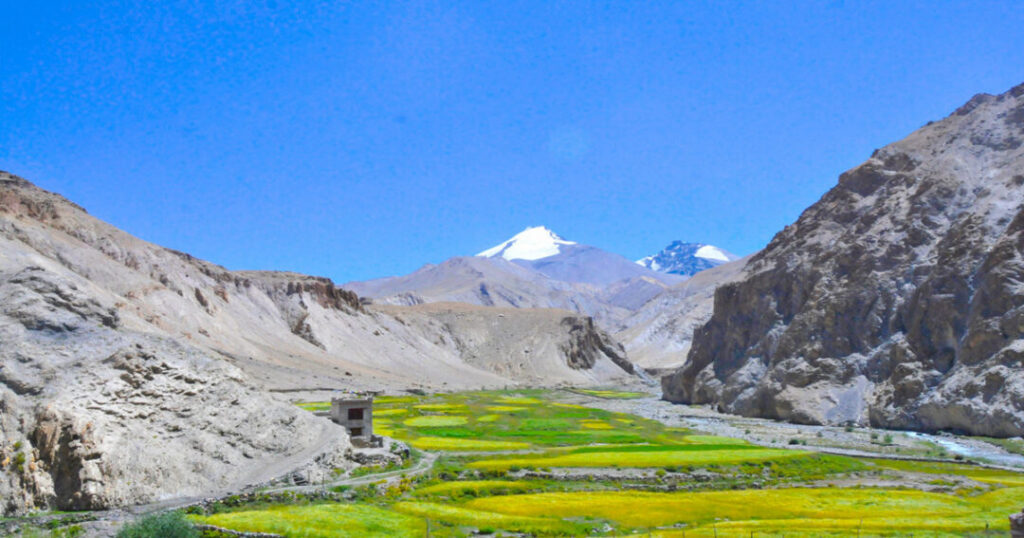
Given how specifically this gets searched, it’s worth answering honestly: October sits right at the edge of the reliable window, not comfortably inside it. The first one to two weeks of October are generally workable — cooler, with thinner crowds and often clearer light for photography — but risk of early snowfall on Gandala La and Kongmaru La rises noticeably as the month goes on, and both May and October are specifically flagged by guides as the higher-risk shoulder months for pass conditions. If enough snow falls, trekkers may only be able to reach as far as Markha village itself before having to turn back the way they came, rather than completing the full loop over Kongmaru La.
If you’re set on an October trek, the first week is the safer bet, nights will be genuinely cold in both homestays and tents, and it’s worth checking recent trail conditions with a local operator in Leh rather than assuming the passes will be clear just because they were the week before.
Markha Valley Trek Cost: Homestays vs. Organized Packages
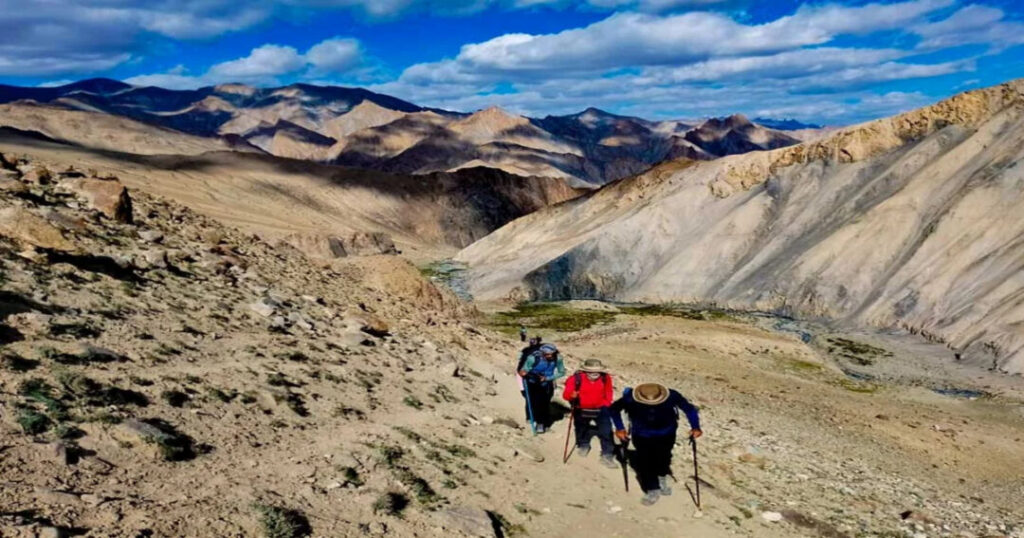
The Markha Valley trek cost varies enormously depending on how you do it. Homestays along the route typically run somewhere between ₹1,200 and ₹2,000 per person per night, generally including dinner, breakfast, and a packed lunch for the next day — making a fully independent, homestay-to-homestay trek genuinely affordable if you’re comfortable navigating without a guide.
Organized packages with a guide, permits, and logistics handled cost considerably more — commonly cited around ₹40,000 for Indian trekkers on a full guided package (or roughly $750 for international travelers), though rates as low as ₹4,000/day for a guide-only arrangement also exist, with meals and homestays billed separately. The gap between the cheapest DIY version and the priciest fully-guided package is large enough that it’s worth deciding early which experience you actually want — independent and budget-conscious, or fully supported and simpler to plan.
Markha Valley Trek Solo: Why This Route Works for Independent Trekkers
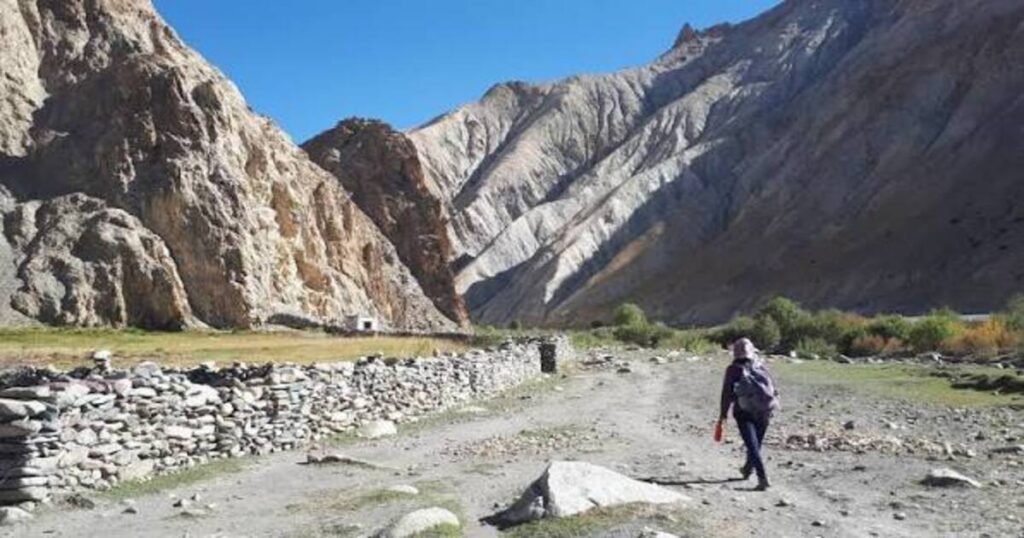
Compared to most high-altitude Himalayan treks, the Markha Valley trek solo experience is genuinely more accessible than the word “solo Himalayan trekking” usually implies, and it’s worth explaining why. The trail runs through a string of inhabited villages with homestays at nearly every stage, which means you’re not required to carry a tent, stove, or multiple days of food — you can walk from homestay to homestay, paying as you go, with a warm meal and a roof waiting most nights. The route itself is also reasonably well-trodden and marked in peak season, with other trekking groups usually somewhere on the trail if you need help.
That said, “solo-friendly” doesn’t mean “risk-free.” A permit is required since the trek runs through Hemis National Park, obtainable from the Leh DC office or through a trekking agency, and solo trekkers should still be experienced with high-altitude conditions, carry a way to communicate (many stretches have patchy or no mobile signal), and let someone know their planned route and timeline. Most guides recommend solo attempts only for trekkers who already have high-altitude experience elsewhere in the Himalayas — first-timers are generally better off joining a guided group or at minimum hiring a local guide for the pass-crossing days.
Also read: Madhugiri Trek: Distance, Difficulty, Cost & Booking Guide
Markha Valley Trek Blog: Practical Packing Notes
Rounding out this Markha Valley trek blog with a few practical notes worth packing around: layered clothing is essential given the swing between warm midday sun and cold nights, a good sleeping bag rated for sub-zero temperatures matters even in homestays (many aren’t heavily insulated), and water purification tablets or a filter are worth carrying since river water is the main source along most of the route. Cash is king — there are no ATMs once you leave Leh, and homestays are cash-only.
Conclusion: Markha Valley Trek
The Markha Valley trek delivers real high-altitude Ladakh scenery without demanding full expedition-style self-sufficiency—a rare combination that explains why it’s become the region’s most-walked route. Save the itinerary details and packing notes to your Explurger Bucket List, and once you’ve crossed Kongmaru La, your Automatic Travelogue will have the whole route mapped and waiting. Let Explurger App help you plan the Markha Valley trek that matches your fitness, timeline, and risk tolerance.
FAQs About Markha Valley Trek
2. What is the altitude of the Markha Valley trek?
The trek ranges from roughly 3,200-3,600m at the start to just over 5,000m at Kongmaru La, its highest point (sources cite this pass at 5,150-5,260m). Gandala La, the first pass, sits around 4,800-4,970 m depending on the source.
3. What is the best time for the Markha Valley trek?
Mid-June through September is the reliable window, when passes are snow-free and conditions are most stable. July and August are the busiest months; June and September offer a good balance of conditions and lighter crowds.
4. Can I do the Markha Valley trek in October?
The first two weeks of October are generally workable with cooler weather and thinner crowds, but the risk of early snowfall on the passes rises through the month. October is specifically flagged as a higher-risk shoulder month, so check current trail conditions with a local operator before committing.
5. How much does the Markha Valley trek cost?
Independent homestay-to-homestay trekking runs roughly ₹1,200-2,000 per person per night including meals. Fully guided packages with permits and logistics handled commonly run around ₹40,000 for Indian trekkers, or roughly $750 for international travelers.
6. Can I do the Markha Valley trek solo?
Yes—it's one of the more solo-friendly high-altitude treks in Ladakh, since it runs through villages with homestays rather than requiring full camping self-sufficiency. A Hemis National Park permit is required, and solo attempts are best suited to trekkers with prior high-altitude experience.
7. How long is the Markha Valley trek?
Total distance is commonly cited anywhere from 55km to 75km+ for the standard Zingchen-to-Hemis route, typically covered over 7-8 days at roughly 8-12km of walking per day.
8. Is altitude sickness a real risk on this trek?
Yes. With two passes over 4,800 m and a highest point above 5,000 m, AMS symptoms like headache, nausea, and dizziness are common. Spending at least 2 full days acclimatizing in Leh before starting, ascending gradually, and descending if symptoms worsen are the standard precautions.