
871 Total Views
Seychelles food runs almost entirely on what the surrounding ocean and a handful of imported spice plants can produce—grilled fish, octopus curry, breadfruit, and coconut milk in nearly everything—built on a genuinely dramatic 18th-century spice-smuggling story most guides never mention. Here’s what’s actually on the plate and how it got there.
Seychelles Food: Five Influences on One Plate
| Influence | Arrived | What It Contributed |
| French | From 1770 | Stews, broths, sauces, spice cultivation |
| African & Malagasy | Via colonial-era slavery | Bold spicing, resourceful cooking methods |
| Indian | 19th century (indentured labor) | Curries, dals, turmeric, coriander, cumin |
| Chinese | 19th-20th century (traders) | Stir-fry techniques, additional spicing |
Seychelles cuisine is built from five distinct culinary traditions layered onto a small archipelago over roughly two centuries: French, African, Malagasy, Indian, and Chinese. [STAT: Seychellois Creole cuisine draws on five documented cultural influences—French, African, Malagasy, Indian, and Chinese—each contributing distinct techniques and ingredients. The French, who settled the islands from 1770, brought slow-cooked stews, broths, and sauces; enslaved Africans and Malagasy brought bold spicing and hearty, resourceful cooking; Indian indentured laborers arriving in the 19th century brought curries, dals, turmeric, coriander, and cumin; and Chinese traders added their own techniques into the mix. What makes Seychellois food distinct isn’t any one of these on its own—it’s how thoroughly they’ve merged into dishes that don’t read as obviously French, African, or Indian anymore, just Creole.
Seychelles Dishes: Octopus Curry and the Other Everyday Staples
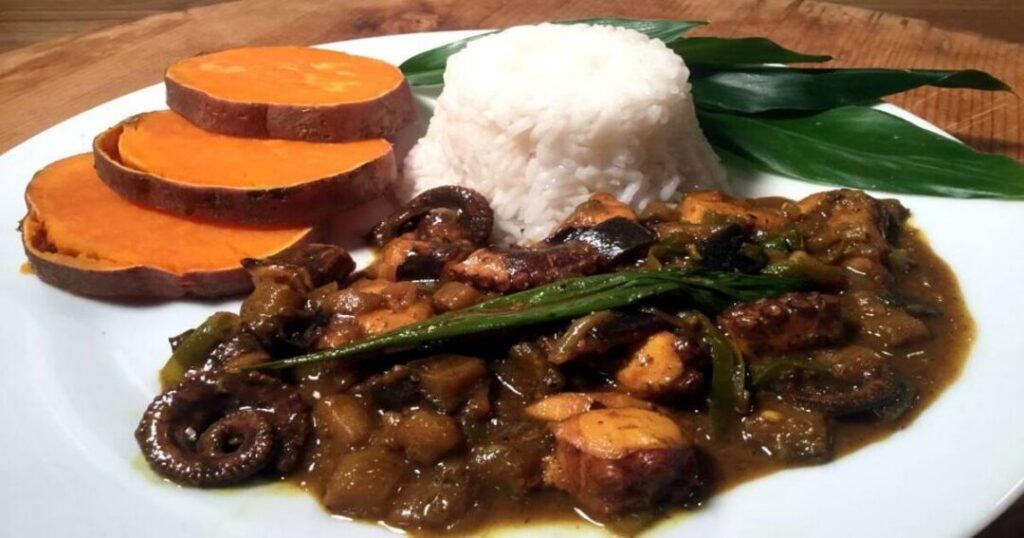
Ask for the most iconic of all Seychelles dishes, and most people will say kari koko zourit—octopus curry cooked in coconut milk with turmeric, garlic, ginger, cinnamon, and a curry-leaf-and-massalé spice base, usually served with rice, a chili relish, and pumpkin or papaya chutney. It’s worth correcting something here that gets repeated constantly online: Seychelles has no officially designated national dish. Octopus curry is simply the dish locals and visitors alike cite most often as representative of the islands—genuinely beloved, just not an official title. Grilled fish (poisson grillé) is the more everyday staple: whole fish marinated in garlic, ginger, and chili, grilled over charcoal, and finished with lime—the dish most Seychellois actually eat more regularly than the curry tourists come looking for.
Also read: Pattaya Street Food: The Real Pattaya Thai Street Food Guide
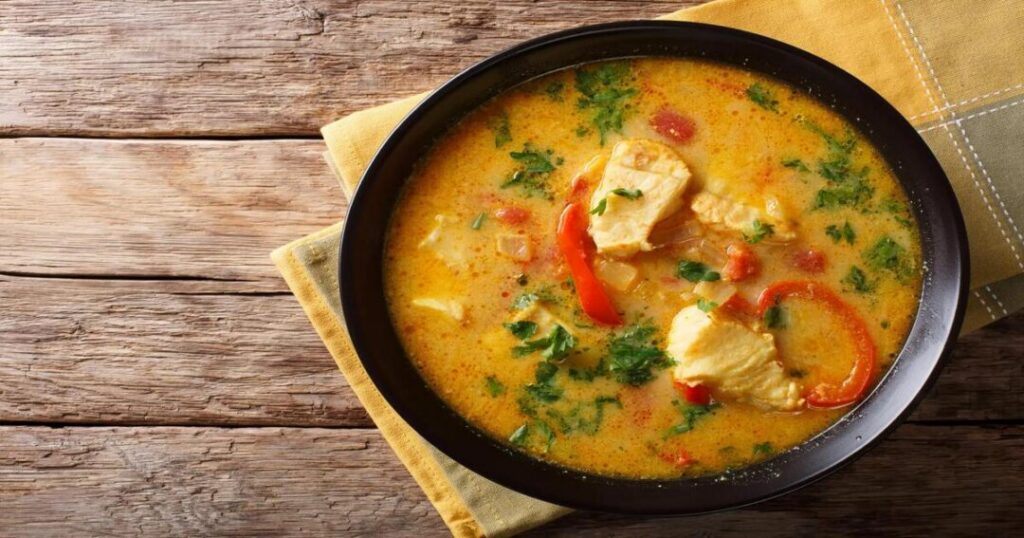
If you’re chasing the best food in Seychelles beyond restaurant menus, bouillon brede is the dish to seek out. It’s a nourishing leafy-green soup that functions as everyday home cooking—the kind of thing rarely printed on a tourist-facing menu but reliably found at local lunch counters. It’s a useful reminder that a lot of what Seychellois people actually eat day to day looks nothing like the curry-and-rice photos that dominate travel blogs about the islands.
Creole Food Seychelles: Ladob and the Daube Method
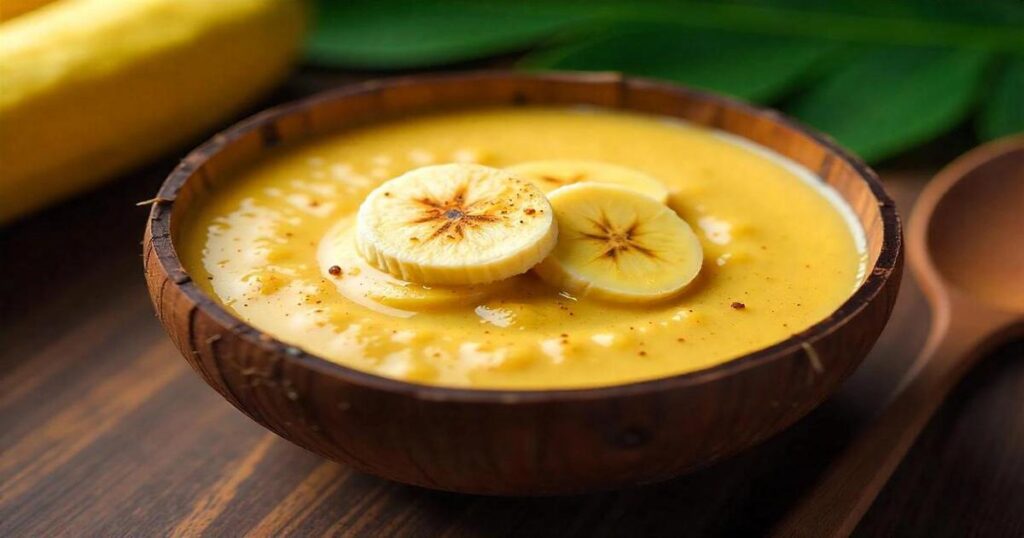
Among the more confusing terms in Creole food Seychelles guides is ladob, also spelled daube—the same word, likely derived from the French braised stew of the same name, but used in Seychellois Creole for two genuinely different things depending on context. As a savory dish, ladob (or daube) is a stew of meat or fish with fried potatoes and sometimes green peas. As a dessert, it’s plantain, breadfruit, or sweet potato simmered in coconut milk with nutmeg, vanilla, and sugar. This completely different dish happens to share the cooking method and the name. Both versions are common enough that it’s worth knowing which one you’re ordering before it arrives.
Also read: Los Angeles Food: The Complete Guide to Eating in LA
Seychelles Desserts: Banana Fritters, Coconut Cake, and the Sweet Side of Ladob
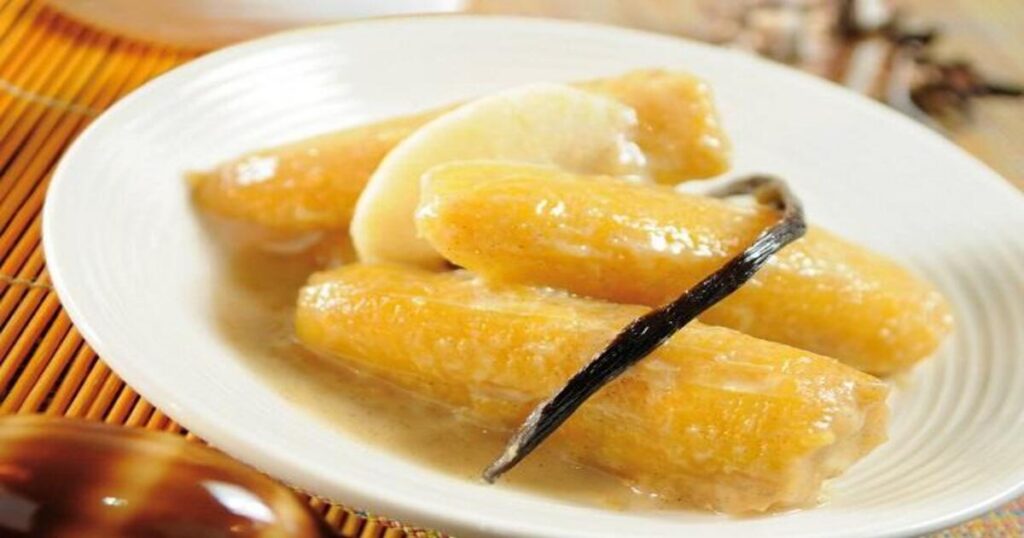
The dessert side of Seychelles desserts leans heavily on tropical fruit, coconut, and rum. Banana fritters—ripe bananas mashed with flour, sugar, and vanilla, then deep-fried until crisp outside and soft inside—are the most common, and the flambéed version, finished with rum set alight at the table, shows up on more upscale menus. Sweet ladob (daube de banane), vanilla cake made with fresh Seychelles vanilla, coconut cake with freshly grated coconut, and pineapple tarts round out the rest of the dessert table, alongside fruit-forward options like mango and passion fruit mousse.
Seychelles Local Food: Breadfruit, Rice, and What Actually Ends Up on the Table
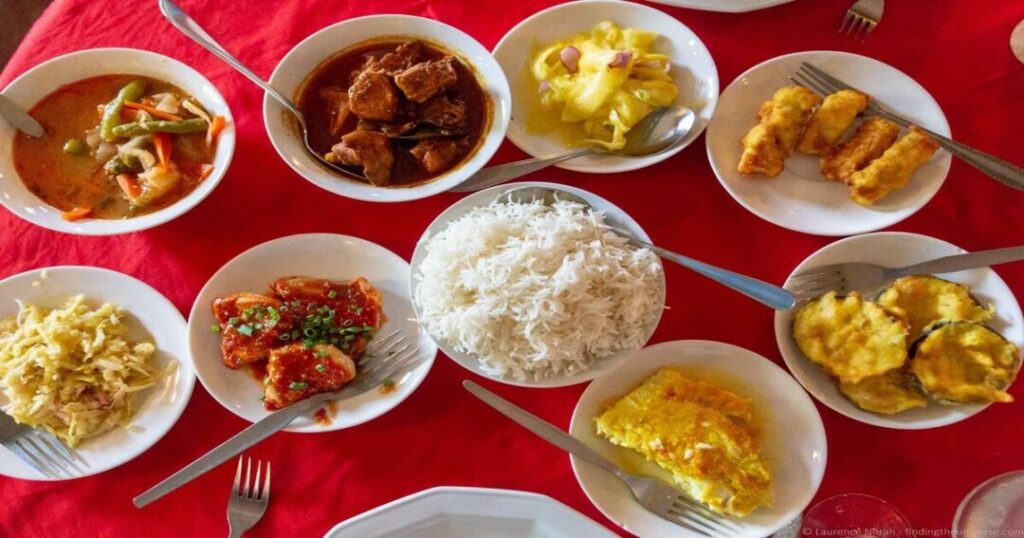
Rice and breadfruit form the real backbone of Seychelles local food, far more than the curry-heavy tourist framing suggests. Breadfruit gets boiled, fried, baked, grilled, or steamed and shows up in savory dishes as often as in the sweet ladob preparation. Rice is the standard base for nearly every main dish, curry, or otherwise—the everyday plate looks much closer to rice, grilled fish, and a vegetable side than the elaborate coconut-curry spreads shown in most food photography.
Seychelles Spices: Pierre Poivre’s Smuggled Cinnamon
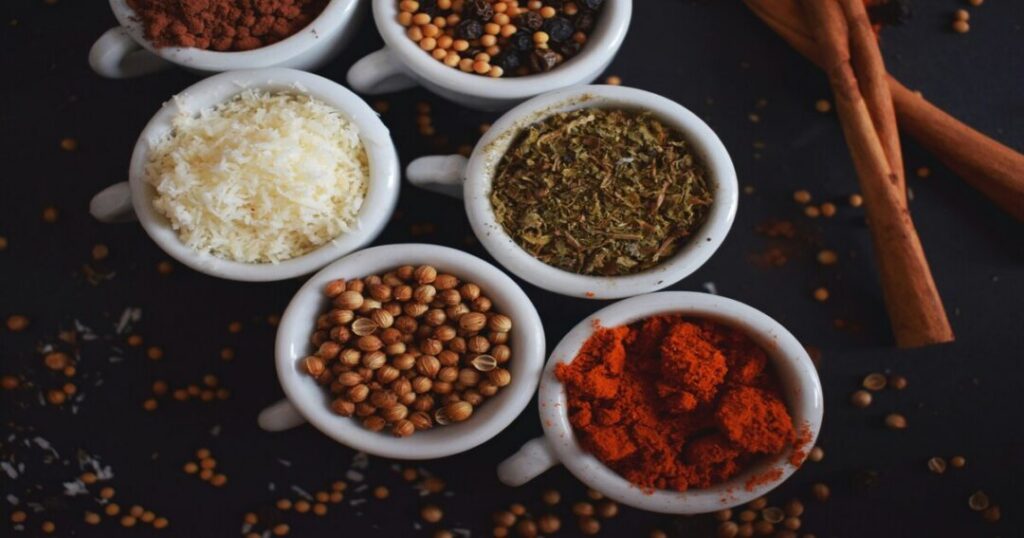
The story behind Seychelles spices is far more dramatic than a simple “grows well in a tropical climate” explanation. When the French settled the islands starting in 1770, the primary goal was breaking the Dutch monopoly on spices like cinnamon, cloves, and nutmeg. Pierre Poivre, the French colonial administrator behind the effort, personally undertook expeditions into Dutch-controlled territory in the East Indies to smuggle out cinnamon seedlings—a mission that carried the risk of execution if he’d been caught. [STAT: Cinnamon and other spice plants were introduced to Seychelles in 1772 by Pierre Poivre, planted at Le Jardin du Roi on Mahé Island, after seedlings were smuggled out of Dutch-controlled territory.] The seedlings were planted at Le Jardin du Roi at Anse Royale on Mahé, and for a few years, the plan worked. Then, in May 1780, a French commandant—fearing the islands might fall to enemy forces—deliberately ordered the entire spice plantation burned to the ground, destroying years of Poivre’s work overnight. What saved cinnamon in Seychelles wasn’t the plantation at all: the seeds had already scattered widely enough, likely carried by birds, that cinnamon took root across the islands’ hills on its own and has grown wild there ever since. Vanilla cultivation came later and developed commercially in the late 19th and early 20th centuries under both French and British colonial administration.
Also read: Laos Food: A Complete Guide to Lao Cuisine’s Must-Try Dishes
Seychelles Food: Traditional Condiments, Kalou & Street Eats
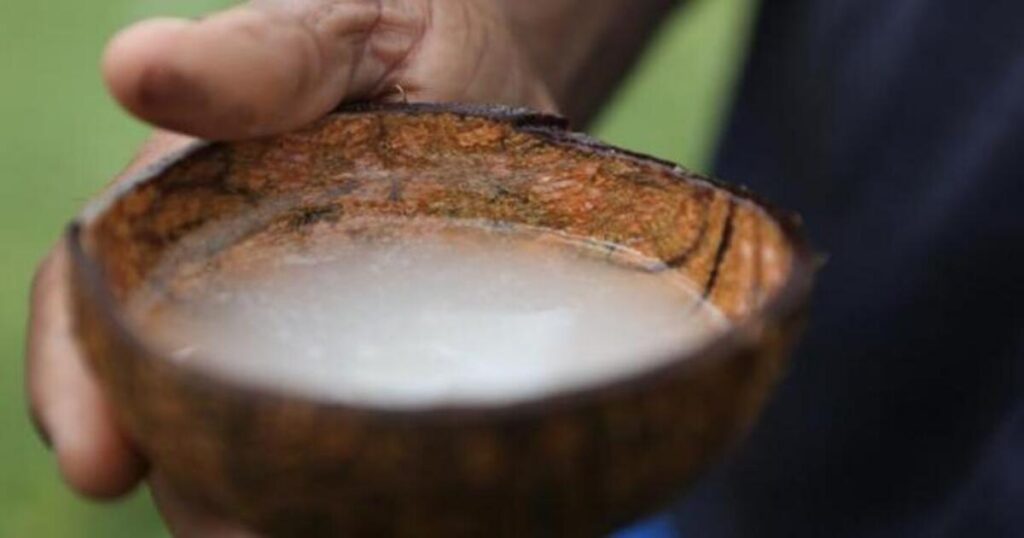
Rounding out Seychelles traditional food are the condiments and drinks that accompany nearly every meal: chatini (chutney) made from papaya or pumpkin, served alongside curries and grilled fish as a matter of course. On the street-food side, expect samosas, fried fish cakes, grilled octopus, coconut fritters, banana chips, breadfruit chips, and molouk—small deep-fried, salted snacks. To drink, kalou (palm wine), a fermented, sweet-and-tart drink made from coconut tree inflorescence, remains a genuinely traditional option alongside fresh fruit juices.
Conclusion: Seychelles Food
From a smuggled cinnamon plant to an “unofficial” national dish everyone still agrees on, Seychelles food carries more history on the plate than most tropical-island cuisines get credit for. Save the dishes you want to try to your Explurger Bucket List, and let NIVU AI help plan the rest of your Seychelles trip around them. Let the Explurger app help you eat your way through Seychelles properly.
FAQs About Seychelles Food
2. What is the most popular Seychelles food?
Octopus curry (kari koko zourit) and grilled fish are the two most commonly eaten and recommended dishes.
3. What is ladob in Seychelles?
A term (also spelled daube) used for two different dishes: a savory stew of meat or fish, or a coconut-milk dessert made with plantain, breadfruit, or sweet potato.
4. What are traditional Seychelles desserts?
Banana fritters (including a flambéed version with rum), sweet ladob, vanilla cake, coconut cake, and pineapple tarts.
5. Where did Seychelles get its spices?
From a deliberate French effort starting in 1772, when Pierre Poivre smuggled cinnamon seedlings from Dutch-controlled territory and planted them at Le Jardin du Roi on Mahé Island.
6. What is bouillon brede?
A leafy-green soup that's a staple of everyday Seychellois home cooking, rarely found on tourist-facing restaurant menus.
7. What is kalou?
A fermented palm wine made from coconut tree inflorescence, sweet and tart in flavor, a traditional Seychellois drink.
8. Is Seychelles food spicy?
It can be—curries lean on chili, ginger, and a massalé spice blend—but it's generally more aromatic than intensely hot, balanced by coconut milk.