
4,127 Total Views
You want a trek that isn’t just another hill climb—one with a story attached to every stone. That’s exactly what a Rajgad Fort trek gives you. Without the right route and season, though, the climb can turn into a long, confusing slog up unmarked forest trails. This guide walks you through the history, routes, difficulty, and logistics so you reach the top prepared, not exhausted.
Rajgad Fort Trek History: Inside Shivaji’s Mountain Capital
Long before it was a weekend trek, Rajgad was the nerve center of an empire. Chhatrapati Shivaji Maharaj captured the fort in 1647 and made it the first capital of the Maratha Empire, ruling from its ramparts for almost 26 years before shifting his capital to Raigad Fort.
That history is still visible in the fort’s layout today:
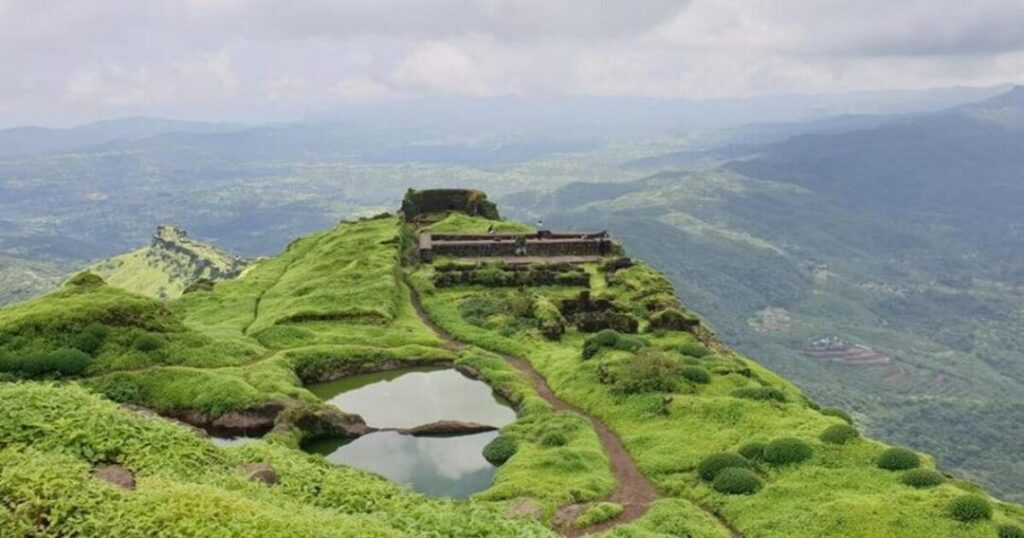
- Padmavati Machi—the largest fortified plateau, home to the Padmavati temple, granaries, and water cisterns that once supplied the entire fort.
- Sanjeevani Machi—the longest of the three machis, ringed with defensive walls that stretch for kilometers along the ridge.
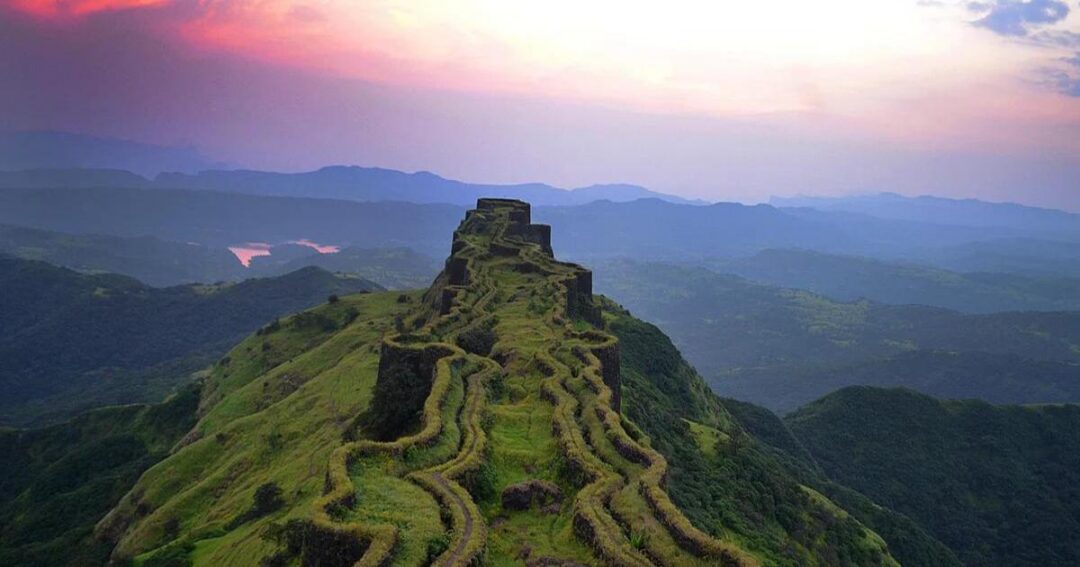
- Suvela Machi—a narrower, dramatic stretch with sheer drops on either side.
- Bale Killa—the highest citadel, where Shivaji’s private quarters once stood, reached by a steep, rope-assisted final climb.
This UNESCO recognition puts Rajgad in the same conversation as India’s most significant historical monuments, which makes the Rajgad fort history behind the climb worth pausing for, not rushing past.
Best Time to Visit Rajgad Fort Trek
Rajgad rewards you differently depending on the season, so pick the one that matches what you want to see:
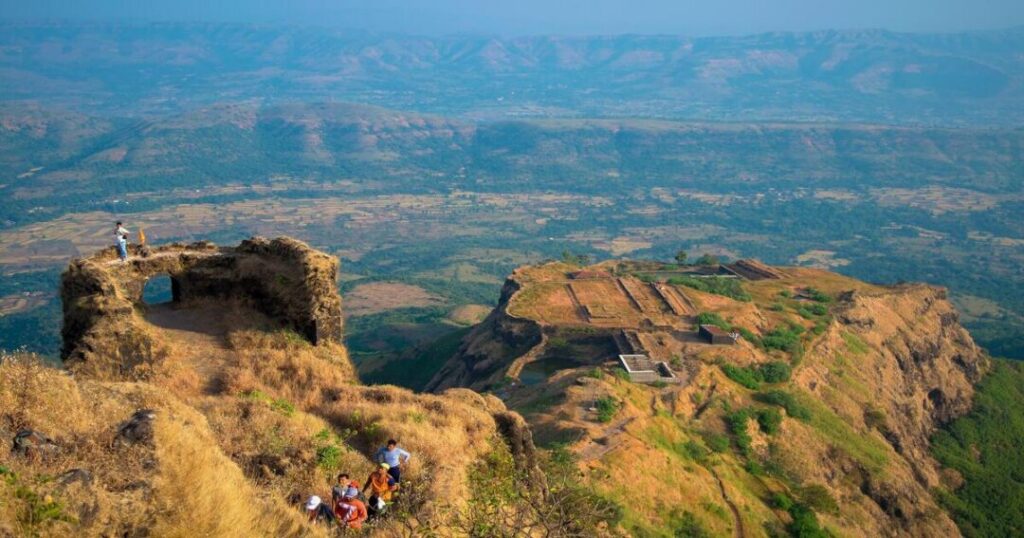
- October to February (winter): The best window for a Rajgad Fort trek. Skies stay clear, temperatures are cool, and you can spot over 20 surrounding forts from the summit.
- June to September (monsoon): The fort turns lush and green, waterfalls appear along the trail, but visibility drops and rocks get slippery.
- March to May (summer): Doable if you start before sunrise, though midday heat on the exposed ridges can be draining.
Also read: Peb Fort Trek: Vikatgad’s Rock Patch, Caves, and an Easier Climb Nearby at Sondai
How to Reach Rajgad Fort?
Rajgad sits in Pune district, roughly 60 km southwest of Pune city, in the Sahyadri range.
- Nearest Airport: Pune International Airport (Lohegaon), around 65–70 km away—about a 2 to 2.5-hour drive to the base village.
- Nearest Railway Station: Pune Junction, approximately 60–65 km from the trailhead, similarly a 2- to 2.5-hour road journey.
- By Road: Drive or take a state bus from Swargate Bus Depot in Pune toward Velhe, then on to Gunjavane village, the most common base for the climb. Buses to Gunjavane run infrequently, so a private taxi or self-drive is more reliable, especially for an early start.
Rajgad Fort Trek: Gunjavane, Pali & the Torna Ridge Routes
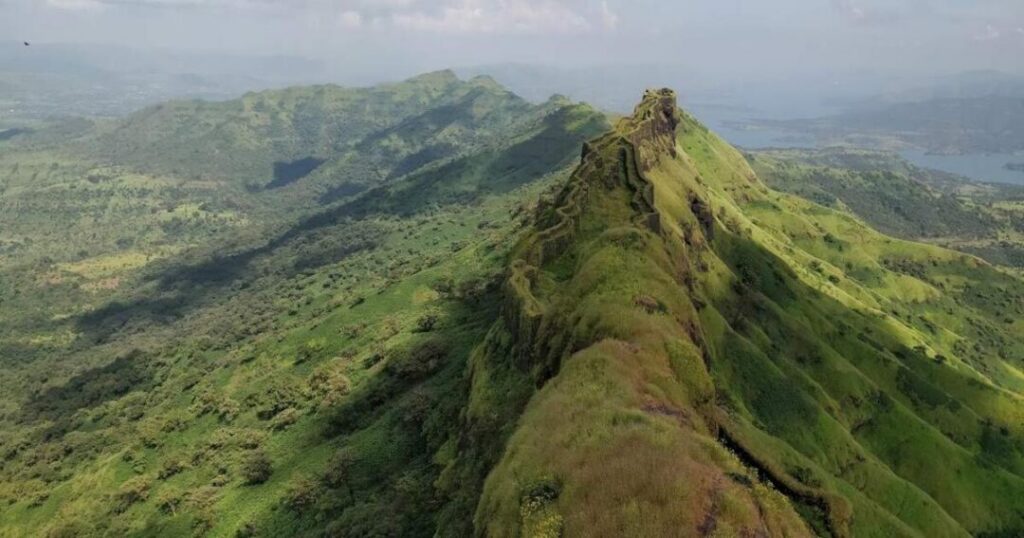
There are three main ways up, and each suits a different kind of trekker.
Gunjavane Route (Most Popular)
This is the standard Rajgad fort trekking guide route—a well-marked path of roughly 4 km one-way from the base to the fort. Steps and a defined trail make it manageable for most fitness levels, and it’s the route most first-timers and guided groups use.
Pali Route (Longer, Gentler)
Starting from Pali village, this path is longer but has a gentler gradient, making it a good pick if you’d rather take your time than climb steeply.
Torna–Rajgad Ridge Traverse (Advanced)
Starting from Velhe village, this route connects Torna Fort to Rajgad along a ridge line. It’s a multi-day trek best suited to experienced trekkers comfortable with longer exposure on open terrain.
Rajgad Fort Trek Difficulty and Fitness Level
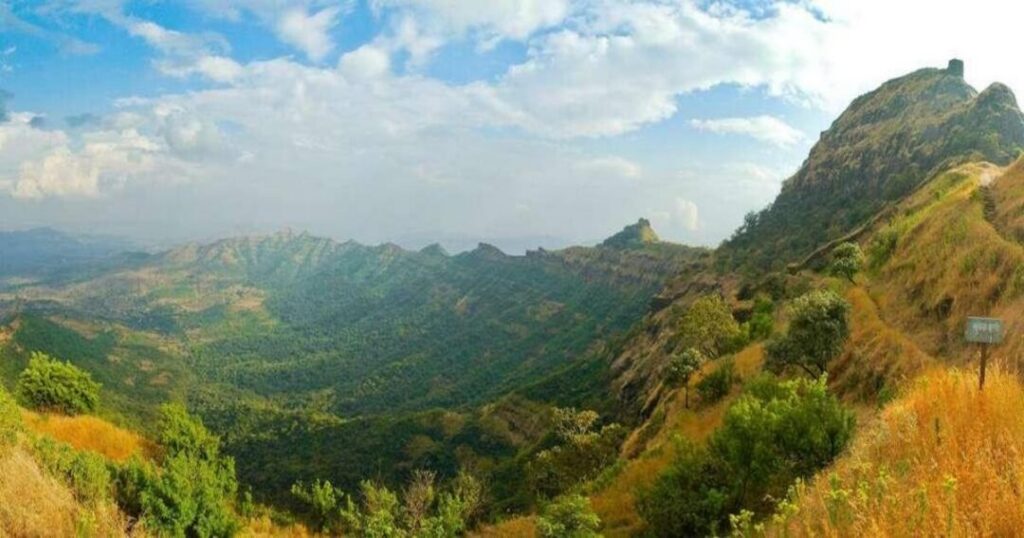
Most of the climb is graded easy to moderate, which is why Rajgad is a common choice for a first fort trek. That said, don’t mistake “moderate” for “”casual”—a few sections demand real attention.
- The main ascent involves gradual climbs, forest cover, and some rocky patches, manageable with basic fitness and decent trekking shoes.
- The final stretch to Bale Killa is steep, with fixed ropes and narrow rock-cut steps—this part is genuinely challenging and not optional if you want to see the citadel.
- Total time from base to summit is around 2 to 3 hours; budget 5 to 6 hours minimum if you want to explore all three machis as well.
Also read: Karnala Fort Trek: Distance, Time, Difficulty & Entry Fee Guide
Top Things to See on the Rajgad Fort Trek
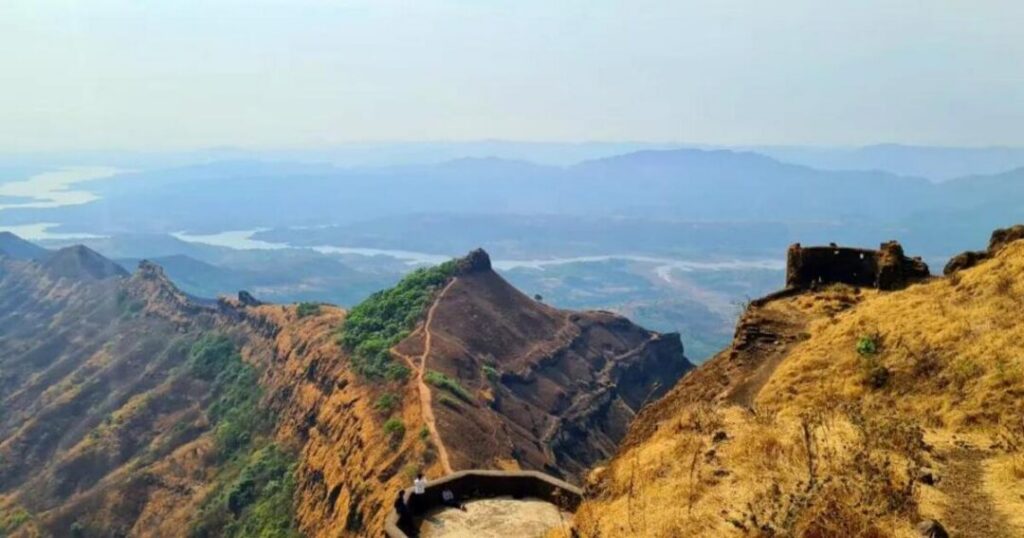
Once you’re at the top, the fort opens up into distinct zones worth exploring separately.
Padmavati Machi
Home to the restored Padmavati temple, old granary structures, and a large water tank that still holds water through most of the year.
Sanjeevani Machi
A long defensive stretch with double-walled fortifications—walk its full length for a sense of just how large this fort really was.
Suvela Machi
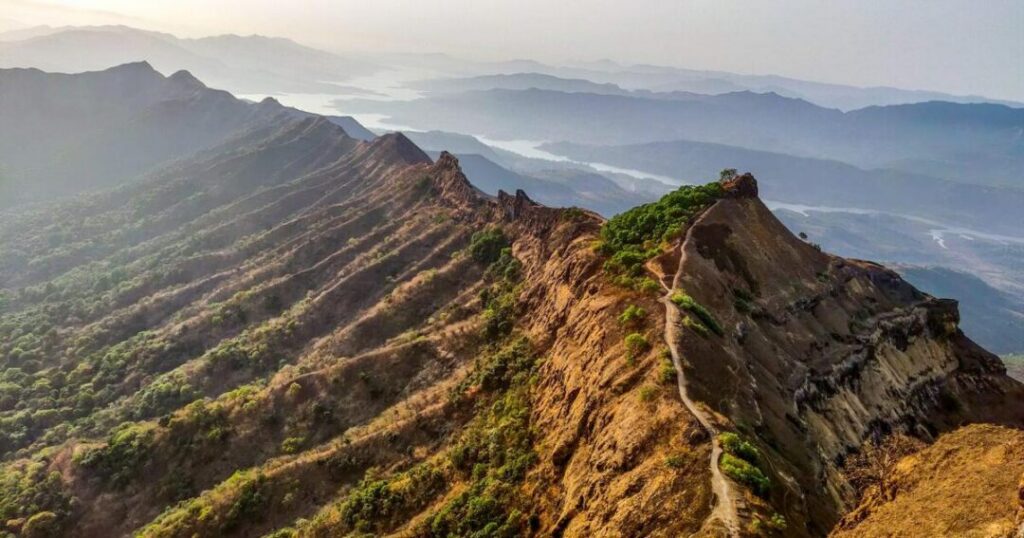
Narrower and more dramatic, with steep drops on both sides that make for some of the best photo spots on the fort.
Bale Killa
The citadel at the summit, reached via a rope-assisted rock climb. From here, on a clear winter day, you can pick out Torna, Sinhagad, Lohagad, Purandar, Pratapgad, Raigad, and even the Mahabaleshwar range in the distance.
Also read: Harishchandragad Trek: The Complete Guide to Maharashtra’s Most Dramatic Fort Trek
Rajgad Fort Trek: What to Pack & Trekking Safety Tips
A little preparation goes a long way on this climb:
- Carry 2–3 liters of water and light energy snacks—there are few reliable refill points on the trail.
- Wear trekking shoes with good grip; the rock sections get slick, especially in monsoon.
- Skip scented deodorants or perfumes—wild bees near Suvela Machi are known to react aggressively to strong scents.
- Wear a helmet for the Bale Killa climb, and use fixed ropes only for balance, never to pull yourself up quickly.
- If a large group is ahead of you on the Bale Killa ropes, consider exploring the machis first and returning later rather than crowding the narrow path.
- Never rush the descent—most trekking injuries happen on the way down, not up.
Also read: Alang Madan Kulang Trek: The Complete Guide to Maharashtra’s Toughest Fort Trek
Camping Beneath the Stars: A Rajgad Fort Trek Experience
Many trekkers choose to camp overnight on Padmavati Machi rather than do Rajgad as a rushed day trip. Watching the sun set over the Sahyadris from the fort walls, then waking up to mist rolling over Sanjeevani Machi, is a different experience from a quick afternoon visit—it’s also when the fort’s history as a lived-in capital, not just a monument, feels most real.
Conclusion: Planning Your Rajgad Fort Trek
A Rajgad fort trek rewards you on two levels: as a genuinely engaging climb with rope sections, ridge walks, and sweeping views, and as a walk through 26 years of Maratha history that shaped an empire. Keep these takeaways in mind before you go:
- Trek between October and February for the clearest views and easiest conditions.
- Choose the Gunjavane route if it’s your first fort trek, Pali if you want a gentler climb, and the Torna ridge only if you’re experienced.
- Budget a full day, or better, an overnight stay, to see Padmavati, Sanjeevani, and Suvela Machi along with Bale Killa without rushing.
- Pack water, sturdy shoes, and a helmet for the summit climb, and always prioritize a slow, careful descent.
Ready to explore? Download the Explurger app and start planning your Rajgad Fort trek today.
Once you’ve ticked Rajgad off your list, the Sahyadris have plenty more forts waiting—plan your next one before the season changes.
FAQs About Rajgad Fort Trek
2. How many days do I need for the Rajgad Fort trek?
A single day is enough to reach the summit and explore the main sections if you start early, typically taking 5 to 6 hours round trip including exploration. However, many trekkers prefer an overnight stay on Padmavati Machi to properly cover all three machis and Bale Killa without feeling rushed, and to experience sunrise from the fort.
3. What is the height of Rajgad Fort?
Rajgad Fort stands at approximately 1,376 meters (4,514 feet) above sea level, making it one of the taller forts in the Pune region. The elevation gain from the base village to the summit is roughly 1,250 meters, which is part of why the trek is considered moderately demanding rather than a casual walk.
4. Is Rajgad or Torna better for a first trek?
Rajgad is generally the better choice for a first fort trek because its main route is shorter and better marked, and only the final stretch requires technical care. Torna, by contrast, is steeper and more exposed throughout and is usually recommended for trekkers who already have some fort-trekking experience under their belt.
5. Can complete beginners attempt the Rajgad Fort trek?
Yes, beginners regularly complete this trek, which is why it's a common first choice for Pune-based trekking clubs. Basic fitness, proper trekking shoes, and a cautious approach to the Bale Killa rope section are enough for most first-timers to reach the top and enjoy the fort comfortably.
6. Is camping allowed on Rajgad Fort?
Camping is permitted and popular on Padmavati Machi, where flat, open ground makes for a comfortable overnight stay. Many trekkers combine camping with a sunrise view from Bale Killa the next morning, though you should carry your own tent, warm layers, and enough water, since facilities on the fort are minimal.
7. Which route should I choose—Gunjavane or Pali?
Choose Gunjavane if you want the shorter, more direct, and better-marked path, which is why it's the most commonly used route for a Rajgad Fort trek. Choose Pali if you prefer a longer but gentler climb with a less steep gradient, especially if steep steps aren't your preference.