
119 Total Views
Ask someone what festivals in Goa means and most will say Carnival or Sunburn and stop there. That’s only half the calendar. Between a four-century Portuguese Catholic tradition, a Konkani Hindu spring festival, and a state liberation day, Goa runs some kind of festival almost every month of the year — this is the full spread, not just the tourist-season highlights.
Festivals in Goa: Why There’s Almost Always One Happening?
Goa’s festival calendar reflects its layered history — 451 years of Portuguese colonial rule sitting alongside centuries-old Konkani Hindu tradition, plus a modern layer of film, art, and music events built for tourism. That’s why festivals in Goa range from a well-jumping monsoon ritual to Asia’s oldest film festival within the same 12 months, and why no single “best time” answer covers the whole state. Whichever season you land in, some version of festivals in Goa is usually within reach.
Carnival Festival Goa: The Four-Day Party Before Lent
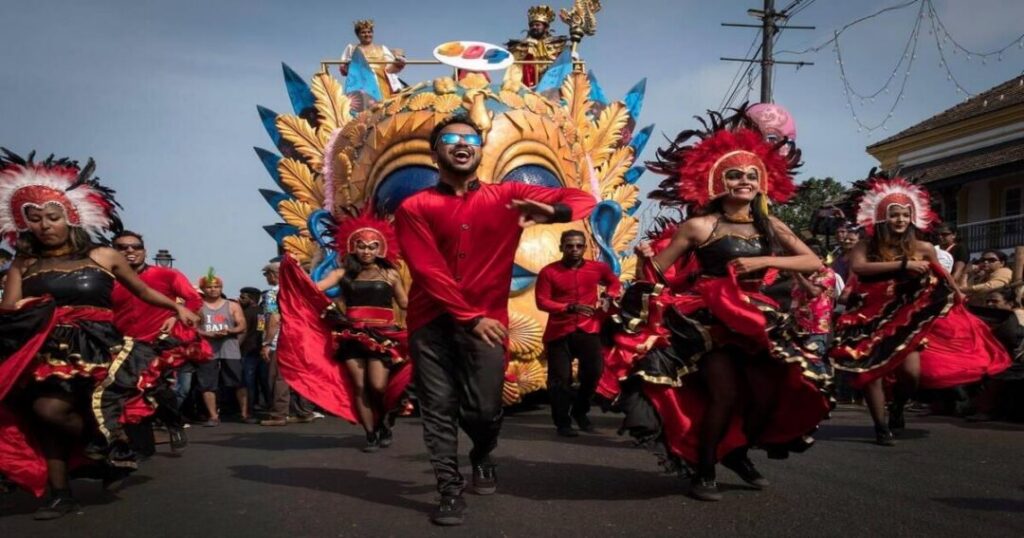
If one event defines outsiders’ idea of Goa’s festival scene, it’s this one.
Goa Carnival — King Momo and the Panjim-Margao-Vasco-Mapusa Parades
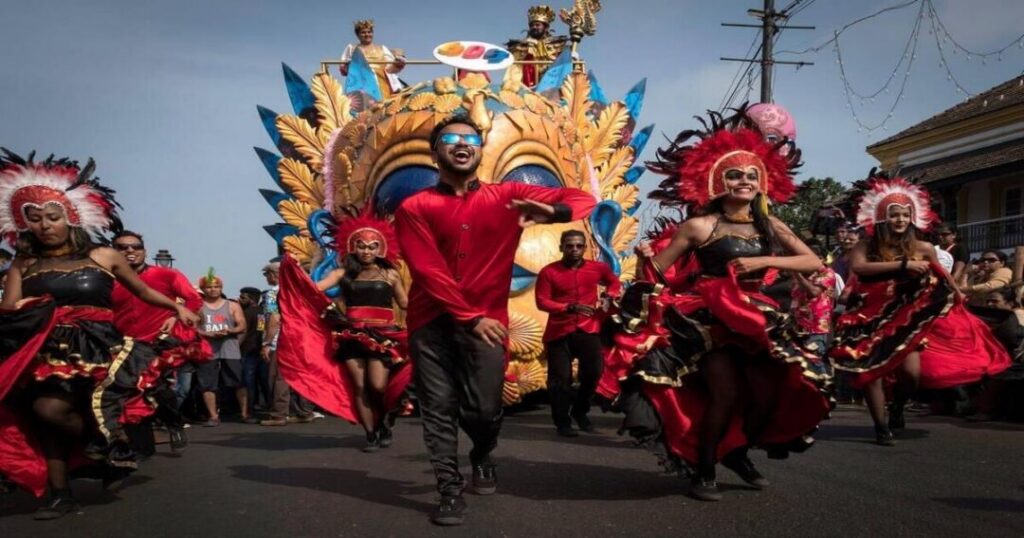
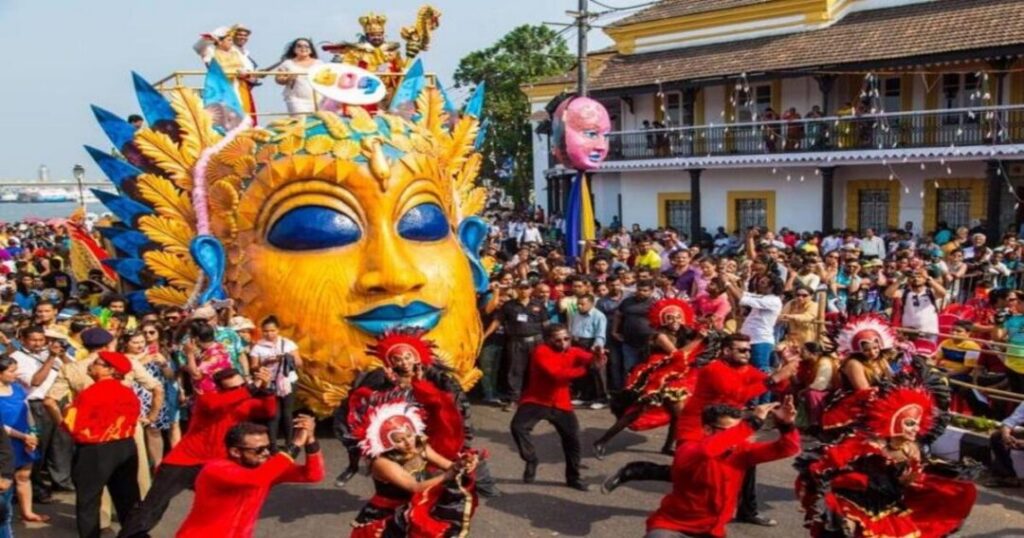
The carnival festival Goa is best known for traces back to Roman Catholic tradition introduced during the Portuguese conquest, but the modern version dates to 1965, when musician Timoteo Fernandes revived it — modelled loosely on Rio’s Carnival — to boost tourism after it had gone dormant under Portugal’s authoritarian regime. It runs for four days, from Fat Saturday to Fat Tuesday, right before Ash Wednesday and Lent. A local resident is crowned King Momo for the celebration, opening it with the Konkani directive to “eat, drink, and make merry,” while balloons, horse-drawn carriages, bullock carts, and elaborate floats parade through four cities: Panjim, Margao, Vasco, and Mapusa.
- When: February or March, four days ending on Shrove Tuesday
- Where: Panjim, Margao, Vasco da Gama, and Mapusa, each with its own parade
- Good to know: Each city’s parade has its own personality — Panjim’s is the biggest and most touristy, while Mapusa’s stays closer to a local street party, making Carnival one of the most photographed festivals in Goa
Also Read: Places to Visit in Sri Lanka: 7 Day Itinerary, Hidden Gems, Things to Do, Cuisine and Much More!
Festival Goa India Locals Actually Celebrate: Shigmo and Sao Joao
Away from Carnival’s spotlight, these two are the festival Goa India locals build their own year around.
Shigmo — Goa’s Konkani Spring Festival
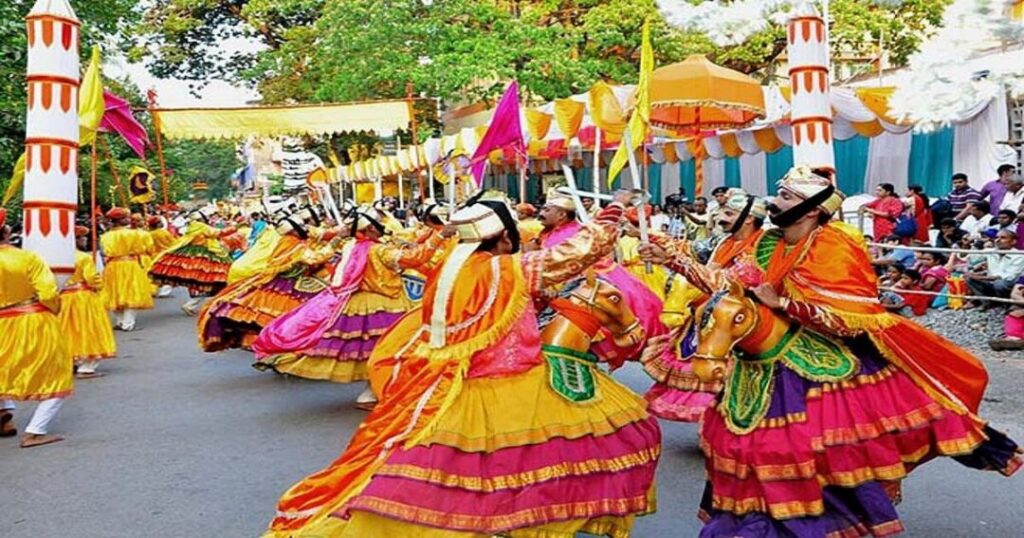
Shigmo is one of the major festivals of Goa’s Hindu community, its name rooted in the Sanskrit word for spring. Held around March in line with the Hindu lunar month of Phalguna, it coincides with Holi and comes in two forms: Dhakto Shigmo, built around folk songs and dance, and Vhadlo Shigmo, centred on temple celebrations. Public parades feature folk and street dancers alongside floats depicting scenes from regional mythology, accompanied by dhol and taso drumming.
- When: March, timed to the Hindu lunar calendar
- Where: Towns and temples across Goa, with the largest parades in Panjim and Margao
- Good to know: Look for the Ghode Modni dance, a mock-cavalry performance that’s one of Shigmo’s most distinctive sights, and one of the festivals in Goa most visitors never hear about
Sao Joao — The Well-Jumping Monsoon Festival
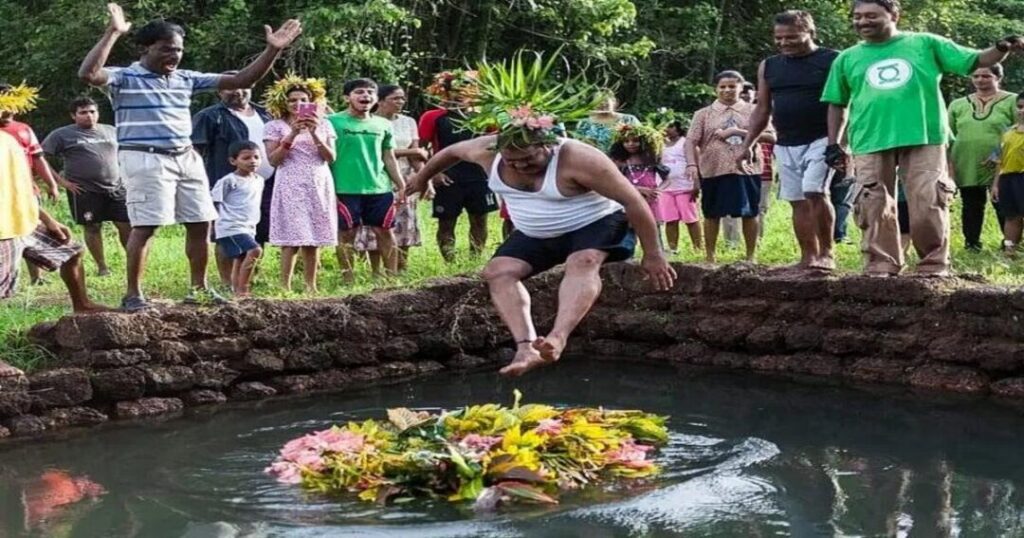
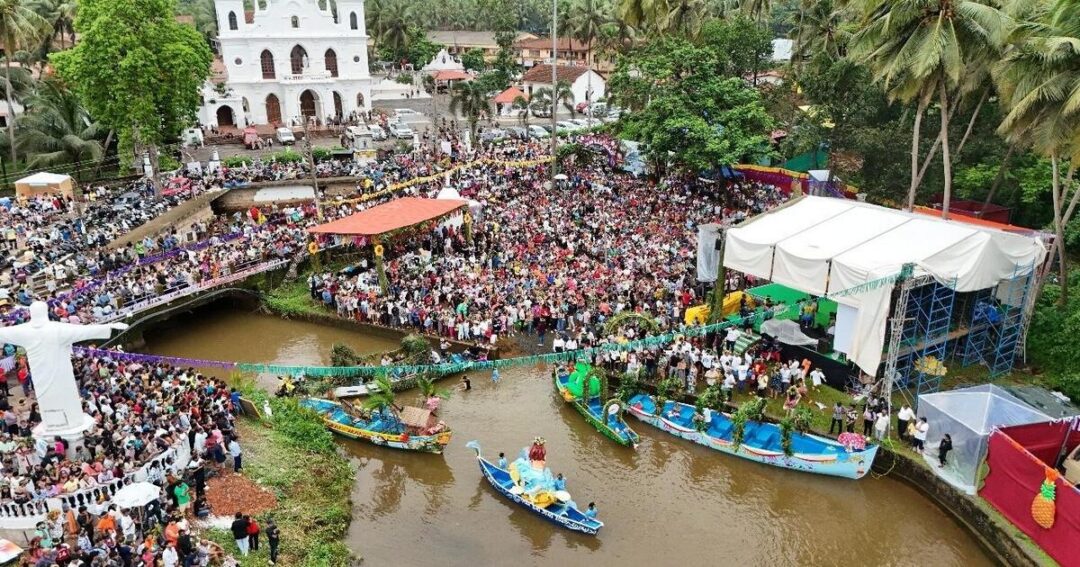
Marking the birth of Saint John the Baptist, Sao Joao is unique to Goa for one specific reason: young Goan Catholics leap into wells, streams, and ponds as part of the celebration, a custom found nowhere else in the world. Participants wear kopels — flower crowns made with sanjuachi vaal, a small red-flowered creeper found near wells during early monsoon — and the day includes prayers for a good monsoon season alongside music from the ghumot and kansallem.
- When: June 24, every year
- Where: Villages across Goa, especially in Catholic-majority areas like Siolim and Assagao
- Good to know: This is a monsoon festival by design — expect rain, mud, and a genuinely local (not touristy) atmosphere, and one of the few festivals in Goa built entirely around a single ritual moment
Fest in Goa for Film, Art, and Music Lovers
Beyond religion and folk tradition, this is where the modern fest in Goa calendar lives — three very different crowds, three very different months.
IFFI — Asia’s Oldest Film Festival, Every November
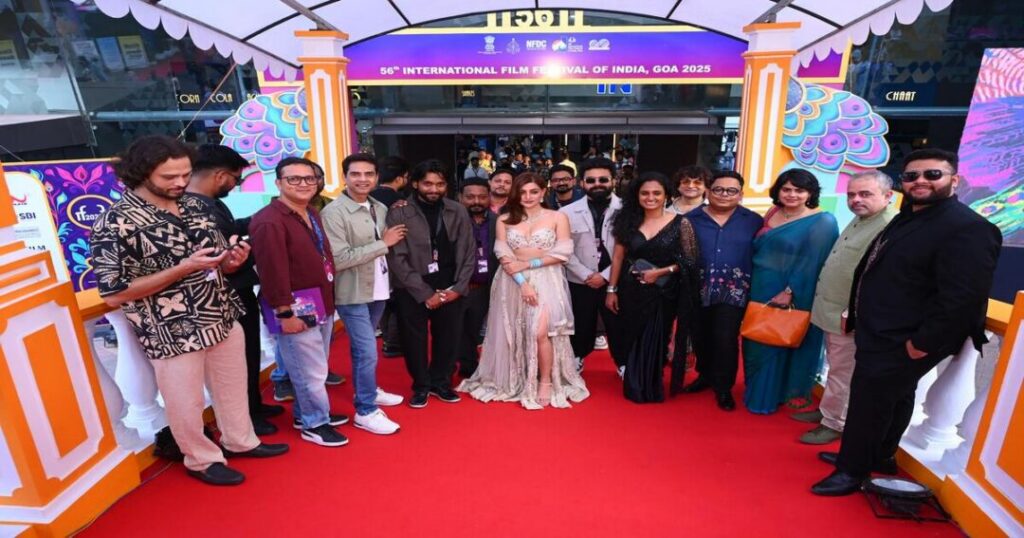
Established in 1952, the International Film Festival of India (IFFI) is Asia’s oldest competitive film festival and has been hosted in Goa for years, offering “a common platform for the cinemas of the world” through screenings, retrospectives, and masterclasses alongside the Film Bazaar industry event.
- When: November, roughly five days
- Where: Panjim, largely centred on the Kala Academy and INOX cinemas
- Good to know: It’s open to the public with delegate passes, not an industry-only event, so film lovers can genuinely attend one of the more prestigious festivals in Goa
Serendipity Arts Festival — Panjim’s December Arts Showcase
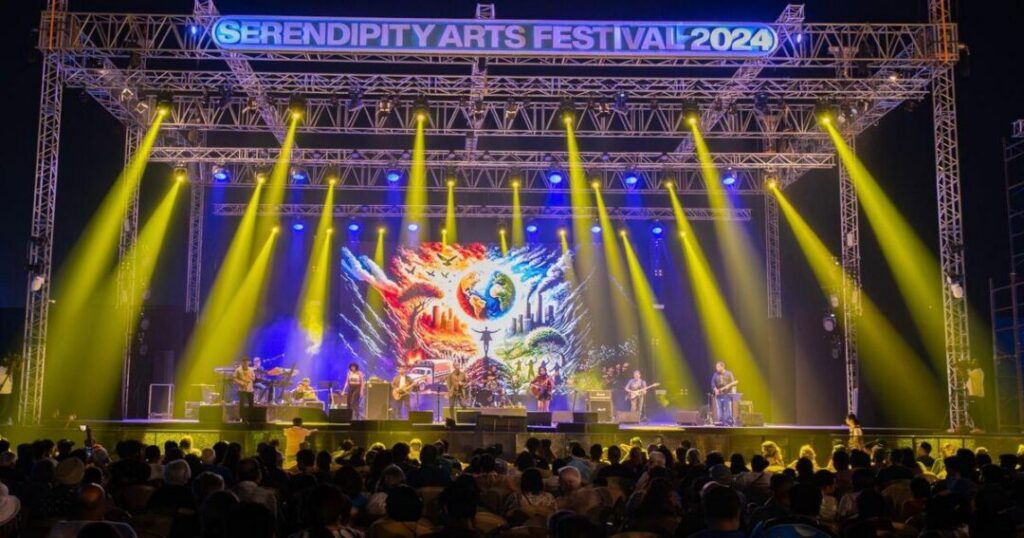
Founded in 2016 by Hero Enterprise chairman Sunil Kant Munjal, the Serendipity Arts Festival brings visual art, theatre, music, literature, dance, food, and craft together in Panjim every December, with each discipline programmed by a different specialist curator each year.
- When: Late December
- Where: Panjim, across multiple heritage venues
- Good to know: Much of the programming is free and open-air, making it an easy add-on to a Sunburn or Christmas trip, and one of the more accessible festivals in Goa for casual visitors
Sunburn Festival — Asia’s Biggest EDM Party
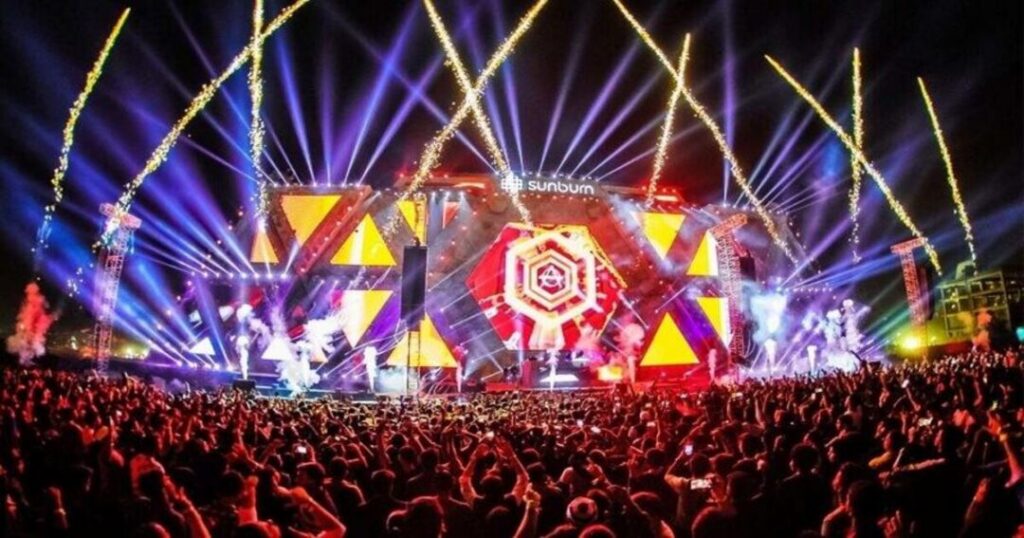
Founded in 2007 by entrepreneur Shailendra Singh, Sunburn Festival has grown into one of Asia’s largest electronic dance music festivals, once ranked by CNN among the world’s top ten festivals. It’s moved venues over the years — Candolim in its early editions, Vagator more recently — and regularly draws major international EDM headliners across multiple stages.
- When: Late December, typically December 28–29 onward
- Where: Varies by year; check the current edition’s venue before booking
- Good to know: Sunburn now runs spin-off events (Sunburn Arena, Sunburn Campus) outside Goa too, so confirm you’ve got the Goa edition — the original and still the biggest of these festivals in Goa
Also Read: Things to Do in Goa: 20 Best Experiences for Every Kind of Traveller
Goa’s Religious and National Festivals: St. Francis Xavier and Liberation Day
Two more dates matter if you’re trying to understand Goa’s festivals beyond its party reputation — these are festivals in Goa built around history and faith rather than tourism.
Feast of St. Francis Xavier — Old Goa’s December Pilgrimage
Held annually on December 3, the Feast of St. Francis Xavier commemorates the Jesuit missionary whose body is preserved at the Basilica of Bom Jesus in Old Goa, drawing pilgrims from across India during a lead-up period of novenas. Separately, once every ten years, the church holds a much larger Exposition of Relics — a distinct, decennial event, not the annual feast itself.
- When: December 3, annually (the decennial Exposition is a separate, larger event)
- Where: Basilica of Bom Jesus, Old Goa
- Good to know: Don’t confuse the yearly feast with the once-a-decade Exposition — the Exposition draws far larger crowds and isn’t an annual fixture among Goa’s regular festivals
Goa Liberation Day — December 19 and the End of Portuguese Rule
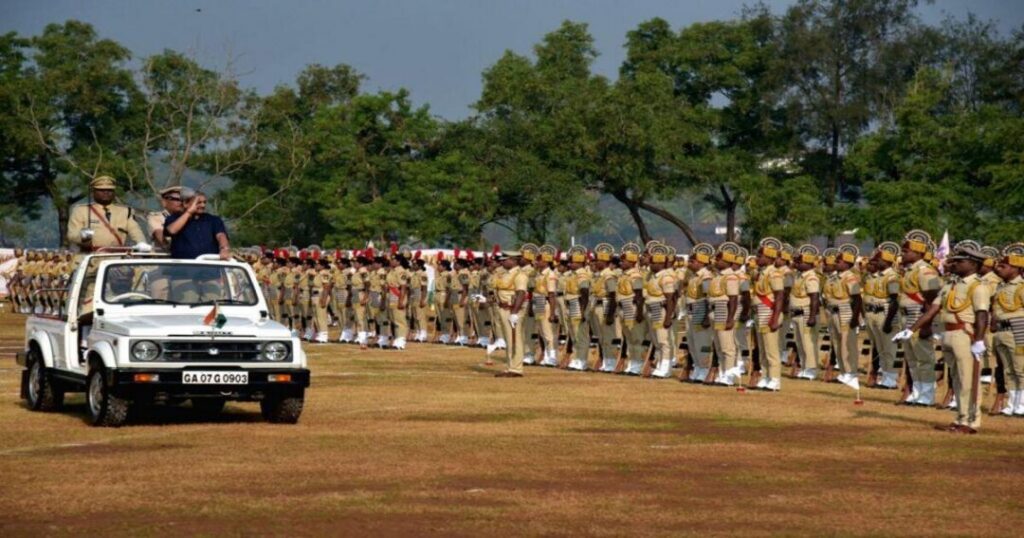
Goa Liberation Day marks December 19, 1961, when Indian Armed Forces ended 451 years of Portuguese colonial rule through Operation Vijay. It’s observed statewide with official programs and commemorations rather than street parties, honouring the movement that brought Goa into independent India.
- When: December 19, annually
- Where: Statewide, with official events in Panjim
- Good to know: It’s a solemn, civic observance rather than a tourist spectacle — worth knowing about even if it’s not one of the festivals in Goa you’d plan a party around
Also Read: Dudhsagar Waterfalls: The Complete Guide to Goa’s Milk Sea Waterfall & Trek
Goa Festival Today: A Month-by-Month Calendar to Check Against
If you’re trying to work out what festival in Goa today or on your specific travel dates might be running, use this as a starting reference for the festivals in Goa that repeat every year:
| Month | Festival |
| February/March | Goa Carnival |
| March | Shigmo |
| June | Sao Joao |
| November | IFFI |
| December 3 | Feast of St. Francis Xavier |
| December 19 | Goa Liberation Day |
| Late December | Serendipity Arts Festival, Sunburn Festival |
Exact dates shift year to year, especially for Carnival and Shigmo, which follow lunar and Christian liturgical calendars rather than fixed dates — always cross-check the specific dates against official Goa tourism listings closer to your travel dates rather than relying on last year’s calendar. This table won’t tell you the goa festival today status down to the exact date, but it narrows the search to the right month.
Also Read: Best Restaurants in Goa: 12 Must-Visit Eateries for Every Food Lover
Conclusion — Festivals in Goa Worth Building a Trip Around
A quick recap for planning purposes:
- December is the busiest month by far for festivals in Goa, stacking the Feast of St. Francis Xavier, Liberation Day, Serendipity Arts Festival, and Sunburn within a few weeks of each other
- Carnival and Shigmo both land in February–March but represent very different traditions — Catholic pre-Lent versus Konkani Hindu spring
- Sao Joao in June is the one to catch if you want something genuinely local rather than built for tourists — among all the festivals in Goa, it’s the least performed for visitors
Whichever month you land in, festivals in Goa rarely leave a long gap between one celebration and the next, and knowing the calendar in advance beats hoping there’s a festival in Goa today when you happen to arrive.
Ready to plan around it? Download the Explurger app and map your own Goa festival calendar today.
Cross-check exact dates before you book — Goa’s festival calendar shifts slightly every year, and this guide is your starting point, not the final word.
FAQs About Festivals in Goa
2. Is there a festival in Goa today?
It depends entirely on the date — Goa doesn't have festivals running literally every single day, but its calendar is dense enough that something is often close by, especially in December. Check the month-by-month calendar above against your travel dates, and confirm exact timing against official Goa tourism listings, since dates for Carnival and Shigmo shift with the lunar and liturgical calendar each year.
3. What is Goa's carnival festival known for?
Goa's Carnival festival is known for its King Momo figure, four days of parades across four cities, and floats, dancers, and street parties immediately before the Christian Lenten season begins. It's rooted in Portuguese Catholic tradition but was revived in its modern form in 1965 specifically to promote tourism.
4. What is the biggest festival in Goa India?
By scale and international turnout, Sunburn Festival and Goa Carnival are generally considered the biggest, though IFFI and the Feast of St. Francis Xavier draw comparably large, if very different, crowds. "Biggest" really depends on whether you mean tourist numbers, local participation, or media coverage.
5. What is Shigmo and how is it different from Holi?
Shigmo is Goa's Konkani Hindu spring festival, and Holi is actually part of the broader Shigmo observance rather than a separate event locally. What makes Shigmo distinct is its parade culture — folk dancers, mythological floats, and dances like Ghode Modni — layered on top of the colour-throwing associated with Holi elsewhere in India.
6. Why do people jump into wells during Sao Joao?
The well-jumping tradition at Sao Joao is unique to Goa and symbolises both the leap of the infant St. John the Baptist in his mother's womb and Jesus's baptism in the Jordan River. It also functions as a monsoon celebration, with prayers for a good rainy season built into the day's festivities.