
1,423 Total Views
Masan Ki Holi 2026 in Varanasi is expected to take place a few days before Holi on March 4, 2026. Unlike traditional Holi celebrations filled with colours and water, Holi in Varanasi includes a rare ritual at Manikarnika Ghat, where ash from funeral pyres is symbolically used instead of gulal.
This guide explains what makes Holi in Varanasi different, what Masan Ki Holi 2026 involves, where events take place, what to expect as a visitor, and how to plan your trip responsibly.
What Is Masan Ki Holi? Experiencing Holi in Varanasi
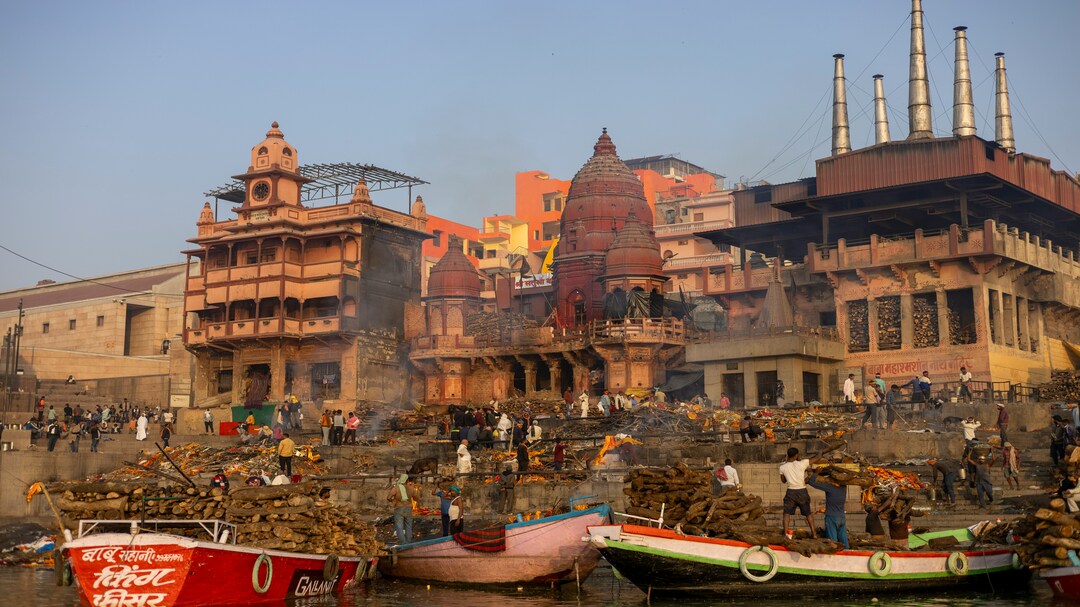
Masan Ki Holi is a ritual observed at Manikarnika Ghat, one of the oldest and continuously active cremation grounds in India.
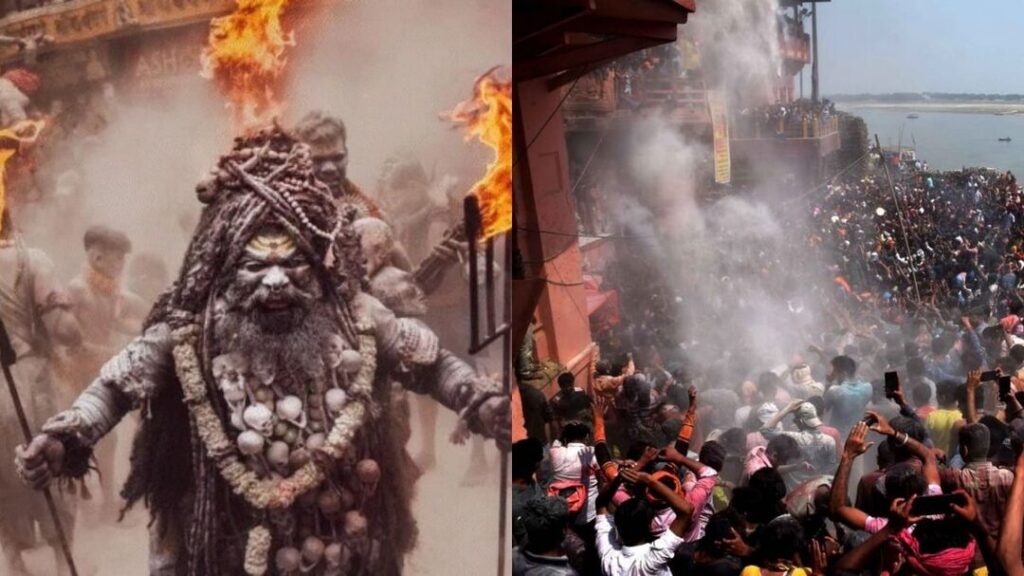
“Masan” means cremation ground. During this ritual, sadhus and devotees apply ash instead of colours, symbolising detachment from material life and acceptance of mortality.
The ritual is associated with Lord Shiva. According to local belief, after the death of Kamadeva, Shiva emerged from meditation and played Holi with ash from the cremation grounds. Masan Ki Holi continues that symbolic tradition.
This is not a staged event. It is a spiritual observance rooted in Varanasi’s religious identity.
For a complete overview of Holi 2026 date, traditions, and regional celebrations across India, read our detailed blog: 14 Different Types of Holi Celebrations in India
What makes Holi in Varanasi unique?
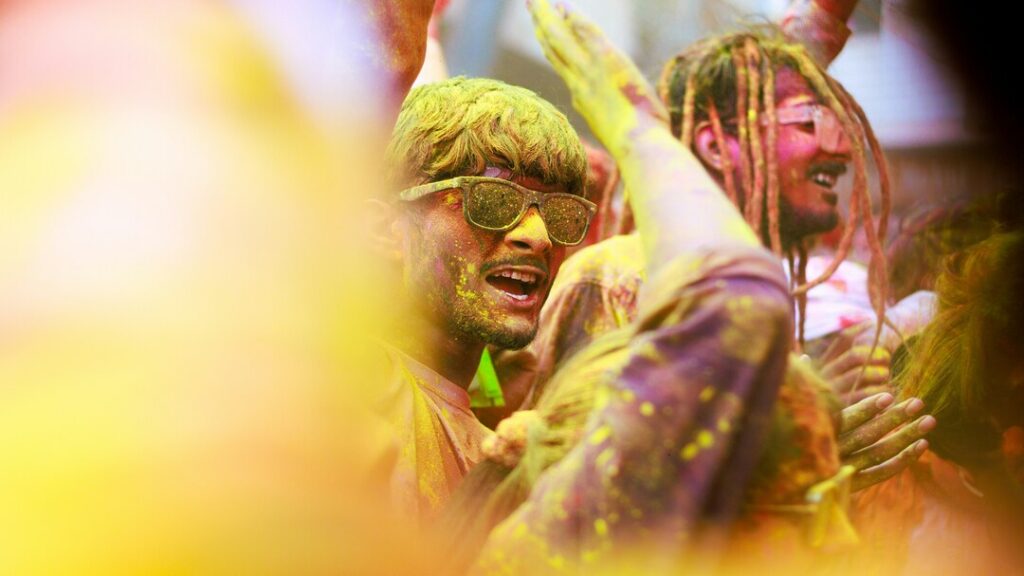
Most cities celebrate Holi with colours, water, music, and social gatherings. Holi in Varanasi includes all of that, but it also includes a ritual called Masan Ki Holi, which takes place at the cremation grounds. The city’s identity as a sacred site of liberation shapes how the festival unfolds. The festival here is not only about spring and colour. It also acknowledges mortality, detachment, and spiritual continuity.
Varanasi, also known as Kashi or Banaras, is regarded in Hindu tradition as the city of Shiva. It is believed that those who die here attain moksha, or liberation from the cycle of rebirth. That worldview influences Holi in Varanasi visibly and powerfully.
Masan means cremation ground. Masan Ki Holi 2026 will follow the same pattern as previous years, taking place a few days before the main Holi celebrations. The ritual is centred around Manikarnika Ghat, one of the most sacred and continuously active cremation grounds in India. During Holi at Manikarnika Ghat, Varanasi, ash from funeral pyres is symbolically used instead of coloured powder.
This is not a performance or tourist spectacle. It is a ritual observed by sadhus, Aghoris, and local devotees who associate the act with Lord Shiva. According to local belief, when Shiva emerged from deep meditation after the death of Kamadeva, he played Holi with ash from the cremation grounds. Masan Ki Holi 2026 will continue that tradition.
Masan Ki Holi 2026 Date
While official announcements may vary, Masan Ki Holi 2026 is expected to take place 2–3 days before Holi, which falls on:
- Holika Dahan 2026: March 3, 2026
- Holi 2026 (Rangwali Holi): March 4, 2026
Always verify local updates closer to the festival.
Holi traditions in Mathura and Vrindavan focus on Krishna legends, while Rajasthan celebrates with royal ceremonies.
Must Read: Check out 10 Best Places to Celebrate Holi in India
Key Locations for Holi in Varanasi
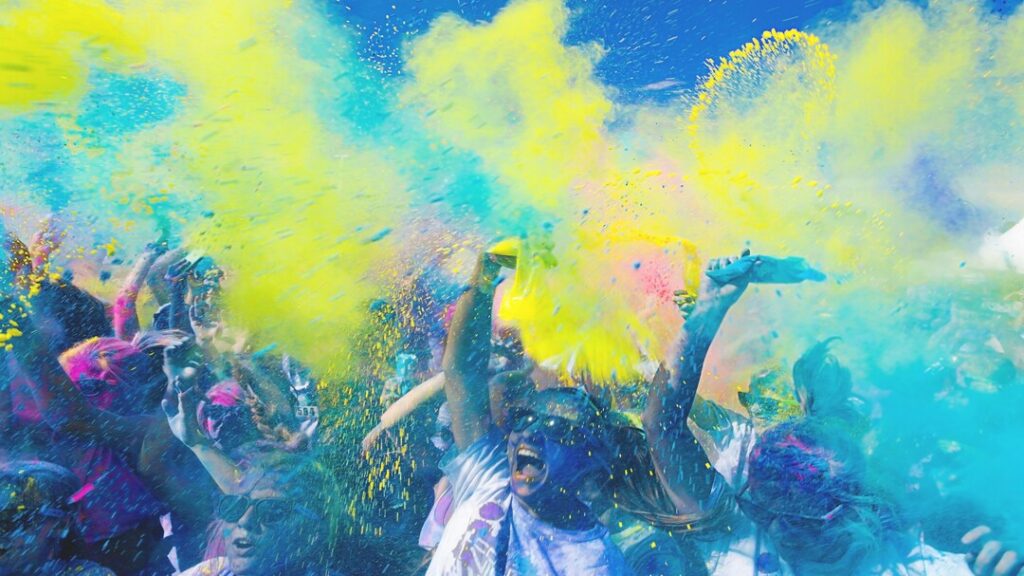
1. Manikarnika Ghat: Primary site for Masan Ki Holi.
2. Assi Ghat: Popular among travellers. Open spaces make it relatively easier to navigate during colour play.
3. Dashashwamedh Ghat: Known for the Ganga Aarti. During Holi in Varanasi, this area sees large gatherings.
4. Old City Lanes: Dense, chaotic, immersive. If you want to experience Holi in Banaras in its raw form, this is where it happens.
Cultural Significance of Holi at Manikarnika Ghat
Manikarnika Ghat operates 24 hours a day as a cremation site. The inclusion of Masan Ki Holi within the festival represents spiritual detachment rather than festivity.
Chants of “Har Har Mahadev” echo through the riverfront as ash becomes a symbolic reminder of impermanence. The ritual expresses Shaivite philosophy: destruction is part of cosmic renewal.
For cultural travellers and researchers, the Holi festival in Varanasi offers insight into living religious practice rather than staged performance.
Travel Guide: Practical Travel Planning for Holi in Varanasi 2026
Getting There
- Nearest airport: Lal Bahadur Shastri International Airport
- Major railway station: Varanasi Junction
Book tickets at least 4 to 6 weeks in advance if travelling for Holi in Varanasi.
What to Wear
- White cotton clothing
- Sandals instead of shoes
- Waterproof covers for phone and wallet
Photography and Ethical Considerations
- Do not photograph cremations at Manikarnika Ghat
- Always ask before photographing individuals
- Respect ritual space
Masan Ki Holi 2026 is a religious observance first and a travel experience second.
Comparing Banaras in Holi with Other Cities
Holi in Varanasi is structured around Shiva devotion and urban ritual continuity.
- Mathura and Vrindavan, which focus on Krishna traditions
- Jaipur, which blends royal pageantry
- Delhi, which tends to be party-driven
Who Should Visit During Holi?
- Cultural researchers
- Photographers interested in ritual documentation
- Travellers exploring Hindu sacred geography
- Solo travellers are comfortable navigating crowds
Is Holi in Varanasi safe for women?
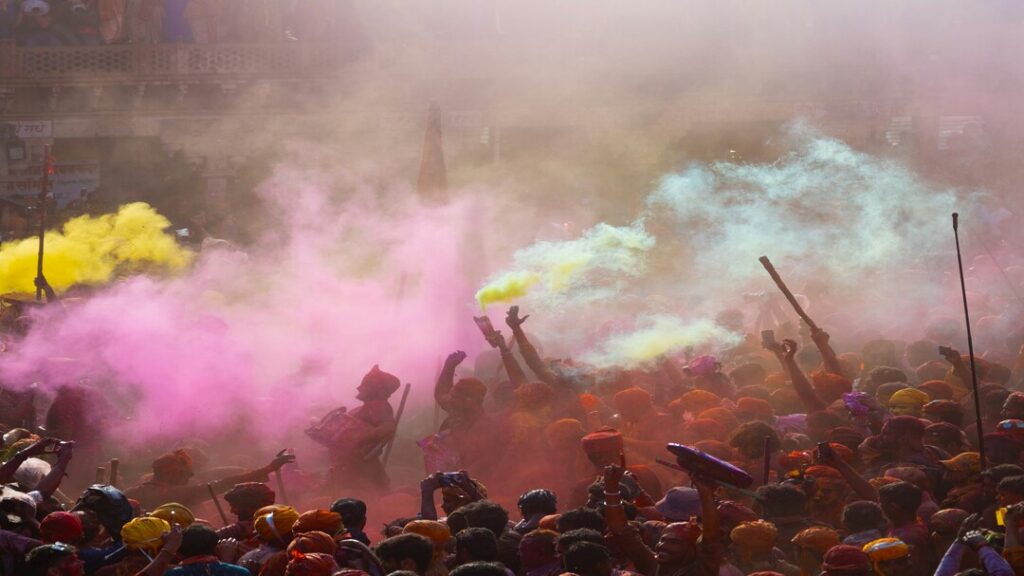
The short answer is No. The crowd gets rowdy, drunk and intense. But if you travel with caution, you might be able to escape that. Unwanted physical contact, forceful colour smearing, groping, and harassment are documented realities during Holi across multiple Indian cities, and Varanasi is not exempt. Alas that is what Indian streets are like, no matter what we pretend, things are not okay, and solo female travellers still face a myriad of issues. The intensity of Holi in Varanasi means escape routes are limited once you are inside dense crowds. Narrow alleys make it difficult to step away. Police presence exists, but enforcement in chaotic festival conditions is inconsistent. For solo female travellers, this environment requires serious risk assessment rather than rose-tinted expectations.
If you choose to be present during Holi in Varanasi, mitigation becomes essential rather than optional. Avoid interior lanes of the old city on the main colour day. Stay close to open ghats like Assi, where visibility is higher. Move in groups. Participate only during early daylight hours. Arrange return transport in advance. Leave immediately at the first sign of discomfort. Do not rely on bystanders to intervene.
This is not about discouraging travel. It is about clarity. Holi in Varanasi is culturally significant and compelling, but the ground reality is that festival crowds can become volatile. Women travellers should approach it with informed caution, not assumption.
Who Should Experience Masan Ki Holi?
- Cultural researchers
- Documentary photographers
- Travellers exploring Hindu sacred geography
- Experienced solo travellers are comfortable with crowds
This is not a casual tourist spectacle. It is an immersive religious experience.
If you’re planning a cultural trip around seasonal festivals, you may also explore other seasonal travel experiences across India.
Autumn season travel in Kashmir
The Experience of Holi in Varanasi
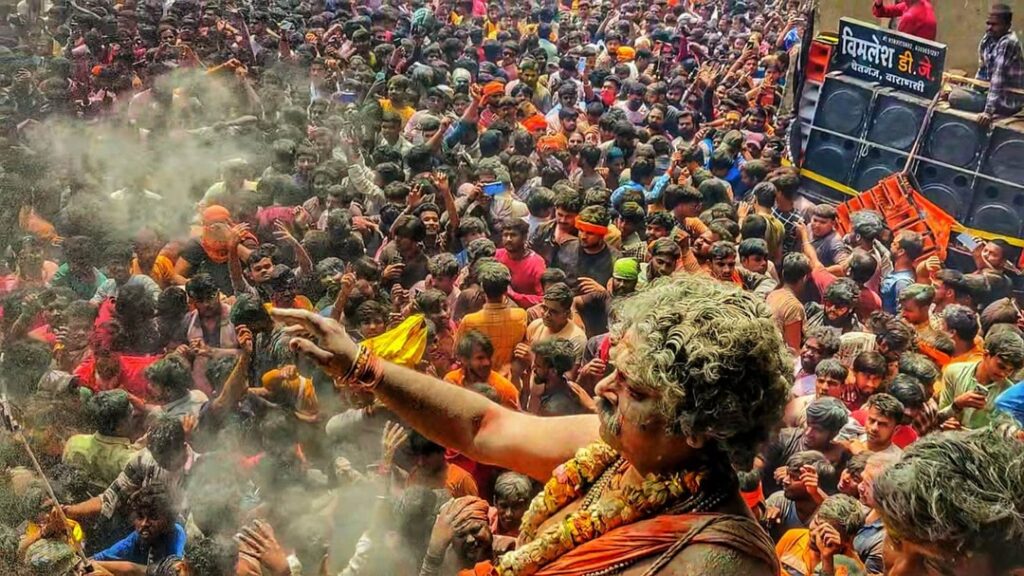
Holi in Varanasi is experienced in layers rather than as a single-day celebration. In the days leading up to the main colour play, the city gradually shifts in tone. Processions move through the old quarters, temple bells ring more frequently, and gatherings increase around the ghats. When Masan Ki Holi takes place near Manikarnika Ghat, the atmosphere is intense and devotional rather than festive in a conventional sense. Sadhus and Aghoris assemble near the cremation grounds, chants of “Har Har Mahadev” echo across the riverfront, and ash becomes a symbolic medium of participation. The focus is ritual continuity, not performance. Varanasi during Holi is a sight to behold and every traveler must put this destination in their Explurger bucket list.
On the main day of colour, Holi in Varanasi expands into public spaces. Assi Ghat and Dashashwamedh Ghat see steady gatherings where locals and travellers apply gulal, exchange greetings, and share sweets. Music plays from rooftops and boats drift along the Ganga, offering a different vantage point of the city in celebration. The mood is energetic but not detached from its religious setting. Even during open colour play, temples remain active and devotional songs continue. For travellers, the experience of Holi in Varanasi is immersive, crowded, and culturally grounded, shaped as much by faith as by festivity.
FAQs About Holi in Varanasi
2. What is special about Masan Holi?
What makes Masan Holi distinct is its setting and symbolism. It unfolds at an active cremation ground, where life and death coexist in public space. The use of ash represents impermanence and the idea that all physical existence ultimately returns to dust. Unlike mainstream Holi celebrations focused on colour and festivity, this ritual is devotional and philosophical.
3. What makes Banaras Holi so special?
Banaras Holi stands out because it blends public celebration with ritual continuity. In addition to street colour play, the festival includes temple processions, chants, and Masan Holi at the cremation ghats
4. What is Shamshan Holi in Varanasi?
Shamshan Holi, another term for Masan Holi, refers to Holi observed at the shamshan, or cremation ground.