
530 Total Views
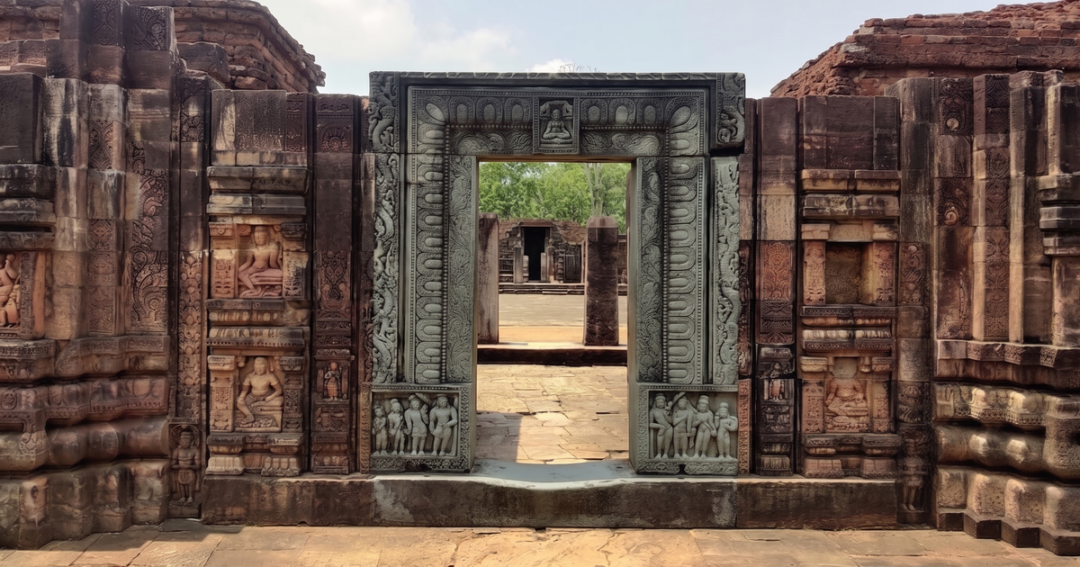
Gujarat is one of India’s most historically dense and geographically varied states — and one of the most consistently underestimated. Four UNESCO World Heritage Sites. An Indus Valley city, 5,000 years old. India’s first UNESCO World Heritage City. The largest salt desert on earth. A forest where Asiatic lions still roam. And one of the most sophisticated street food cultures in the country.
The places to visit in Gujarat span five millennia and five completely different landscapes. This guide covers them honestly — the well-known and the overlooked — across everything that makes the state worth a dedicated trip.
Gujarat Tourist Places — Best Places to Visit in Gujarat
1. Ahmedabad — Places to Visit in Gujarat’s First UNESCO World Heritage City
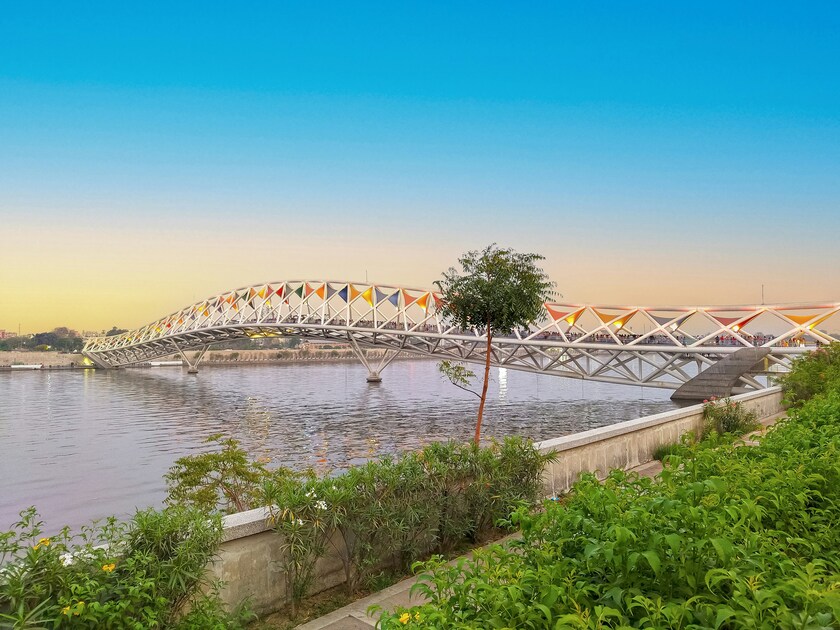
In 2017, Ahmedabad became the first city in India to receive UNESCO World Heritage City designation — recognised not just for its monuments but for a living urban fabric that has survived largely intact since the 15th century.
The old city’s Pol neighbourhoods are the anchor of any visit. Pols are traditional gated residential clusters, each historically home to a single community — merchants, craftspeople, specific religious groups. The urban design is extraordinary: narrow lanes that channel breezes and block heat, shared water-harvesting structures, chabutaras (raised bird-feeding platforms) at intersections, and intricately carved wooden facades on every other house.
Within and adjacent to the walled city: the Jama Masjid (1423), built by Ahmed Shah I using columns repurposed from Hindu and Jain temples; the Sidi Saiyyed Mosque (1573) and its famous jali window — a stone latticework screen depicting an intertwined tree that is among the finest examples of stone carving in India; and Adalaj Stepwell, a five-storey structure begun in 1498 by Rana Veer Singh of the Vaghela dynasty and completed by his widow Queen Rudabai with the patronage of Sultan Mahmud Begada.
The Sabarmati Ashram, Gandhi’s residence and the base from which the Dandi March departed in 1930, is one of the most significant tourist places in Ahmedabad for anyone with an interest in 20th-century history. The Calico Museum of Textiles in Shahibaug holds one of the finest collections of historic Indian textiles in the world — entry is by guided tour only, morning slots fill quickly. And Manek Chowk transforms after dark from a jewellery market into one of the most remarkable street food squares in India — one of Ahmedabad’s best places to experience the city at its most alive, and consistently on every list of Ahmedabad’s good places to visit for first-timers.
How to Reach: Sardar Vallabhbhai Patel International Airport is 16 km from the city centre. Ahmedabad Junction is the main railway station with trains from Mumbai, Delhi, Jaipur, and beyond. By road, ~550 km from Mumbai and ~950 km from Delhi via national highways.
2. Rani ki Vav, Patan — Places to Visit in Gujarat for Architecture Lovers
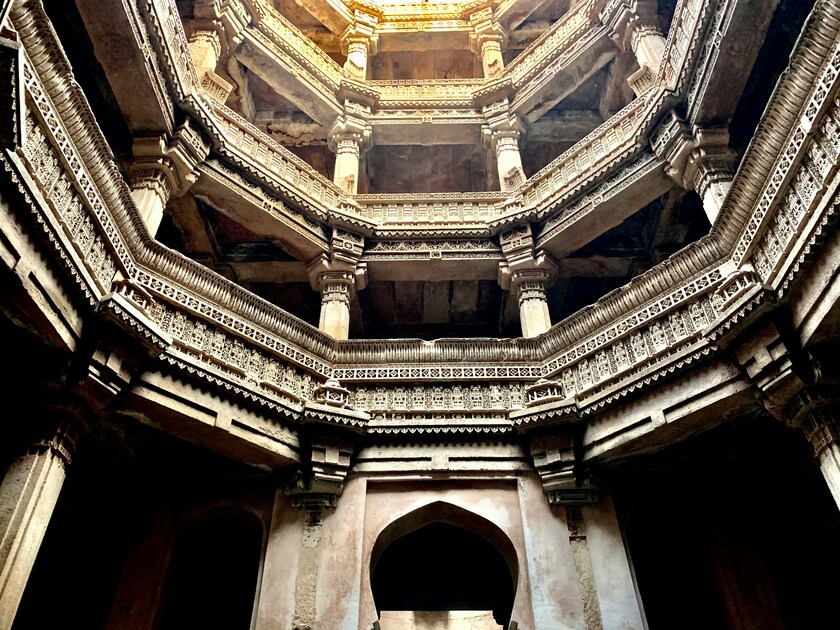
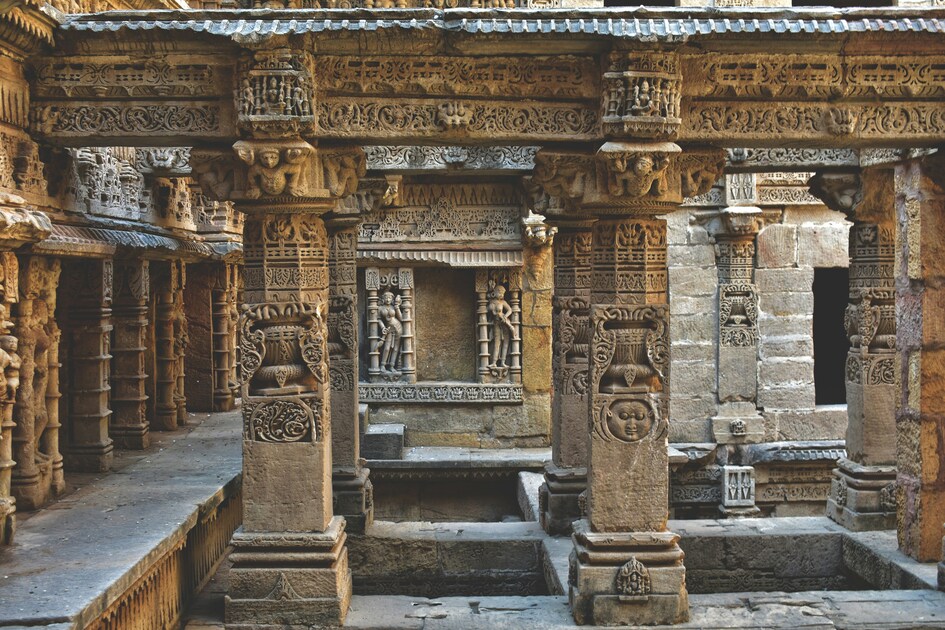
Rani ki Vav is the finest stepwell in India — and one of the finest pieces of medieval sculpture on the subcontinent. Built in the late 11th century by Queen Udayamati as a memorial to her husband King Bhima I of the Solanki dynasty, it descends seven storeys underground through more than 500 principal sculptures and a thousand minor ones. UNESCO inscribed it in 2014, describing it as an “inverted temple highlighting the sanctity of water.” The ₹100 note carries its image. In person, the scale and sculptural density are staggering — and the site is almost always quiet.
Patan, the former Solanki capital, also has a living tradition of Patola weaving — double ikat silk saris produced using a technique so demanding that a single sari can take several months. Only a handful of families still practice the craft. Workshops are open to visitors.
~35 km away: The Modhera Sun Temple (1026–27 CE), built by King Bhima I, is oriented so the sun illuminates the sanctum at sunrise on the equinoxes — located ~35 km from Patan. The Sabha Mandap — the assembly hall — is a masterpiece of perforated stone geometry. A stepped tank (kund) sits in front, its layered ghats reflected in still water.
How to Reach: Patan is ~125 km north of Ahmedabad — approximately 2.5–3 hours by road. Patan has its own railway station with direct trains from Ahmedabad (6–10 trains, journey time 1.5–2.5 hours). Modhera is ~35 km from Patan on the same road south.
3. Rann of Kutch — Places to Visit in Gujarat for Landscape and Culture
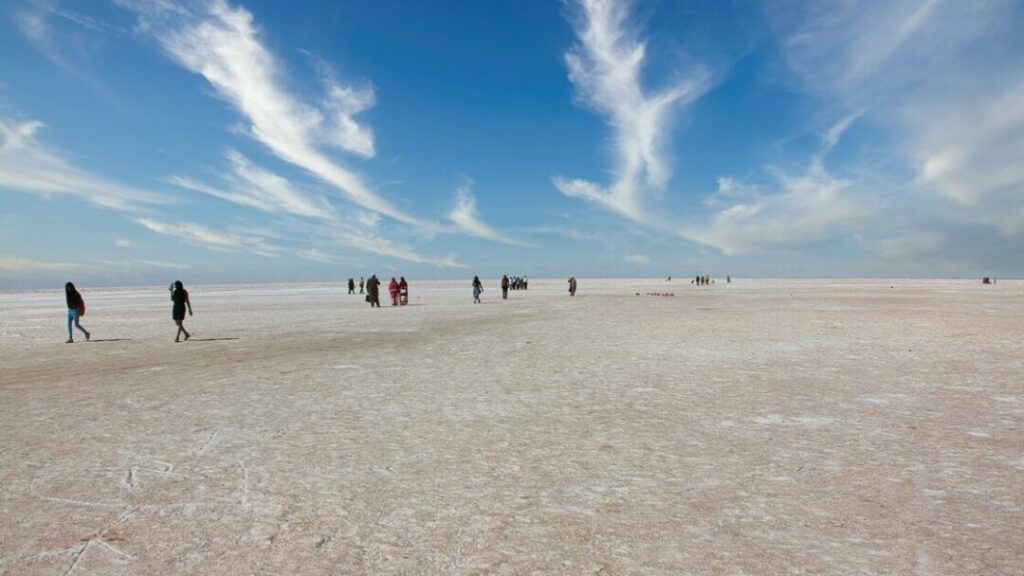
The Great Rann of Kutch, the world’s largest salt desert at approximately 10,000 sq km, is the state’s signature landscape. Between November and February, the white crust extends to the horizon under open sky, best experienced at full moon when the flats glow. The annual Rann Utsav festival brings folk performances, craft markets, and camel rides — spectacular, though the most crowded Gujarat gets.
Less visited but equally extraordinary: the Little Rann of Kutch, home to the Indian Wild Ass Sanctuary — the last stronghold of the Indian wild ass (khur), now numbering around 6,000. The landscape here is salt marsh and grassland, patrolled by wild asses, wolves, flamingos, and pelicans. Safaris focus on patience, not spectacle.
Bhuj, the regional hub, is a destination in its own right. The Aina Mahal (Palace of Mirrors), damaged in the 2001 earthquake and partially restored, contains an interior of European-influenced ornamentation — Dutch tiles, Venetian glass, mechanical fountains — commissioned by a Kutchi ruler in the 18th century. The surrounding tribal villages — Hodka, Nirona, Ludiya, Ajrakhpur — are where the state’s most celebrated craft traditions survive: Kutchi embroidery, ajrakh block printing, rogan art, and copper bell-making.
How to Reach: Bhuj has a domestic airport connected to Mumbai and Ahmedabad. By train, Bhuj is on the Ahmedabad–Bhuj line (~8 hours). By road, ~340 km from Ahmedabad (~6 hours).
Also read: Celebrate Rann Utsav with Explurger!
4. Dholavira — Places to Visit in Gujarat for Ancient History
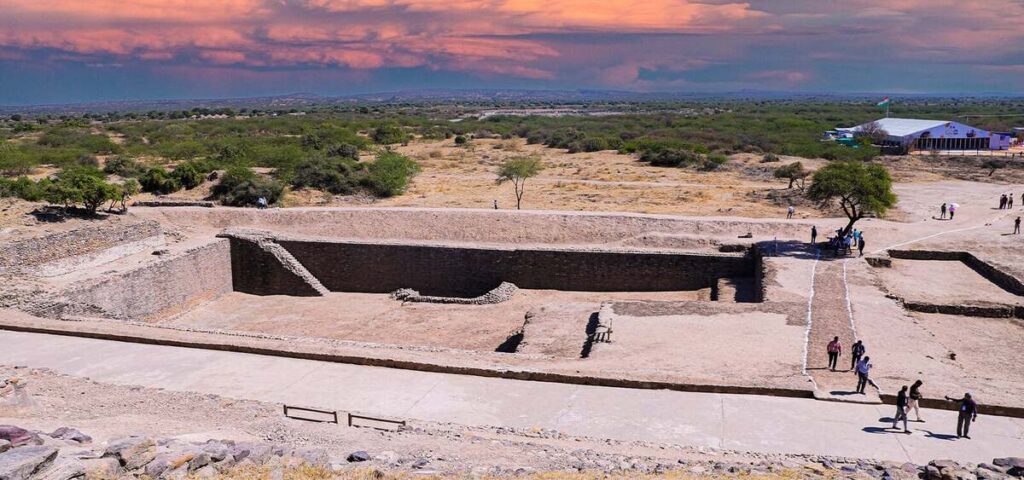
On Khadir Bet island in the Rann of Kutch, Dholavira is Gujarat’s fourth UNESCO World Heritage Site (designated 2021) and one of the largest known cities of the Indus Valley Civilisation — occupied for approximately 1,500 years between 3000 and 1500 BCE. The city’s planning is extraordinary: a tiered citadel, middle town, and lower town separated by walls, with a sophisticated water conservation system of reservoirs and channels. The scale of the ruins and the remoteness of the location — 385 km from Ahmedabad — make it one of the most immersive archaeological experiences in India. This is one of the most underrated places to see in Gujarat, period.
How to Reach: No direct train. Most visitors drive from Bhuj (~220 km, ~4 hours) or from Ahmedabad (~385 km, ~7 hours). Basic accommodation available in and around the site.
Also read: Creators Step Into 5,000 Years of History at Explurger’s Dholavira Creator Connect
5. Gir National Park — Places to Visit in Gujarat for Wildlife
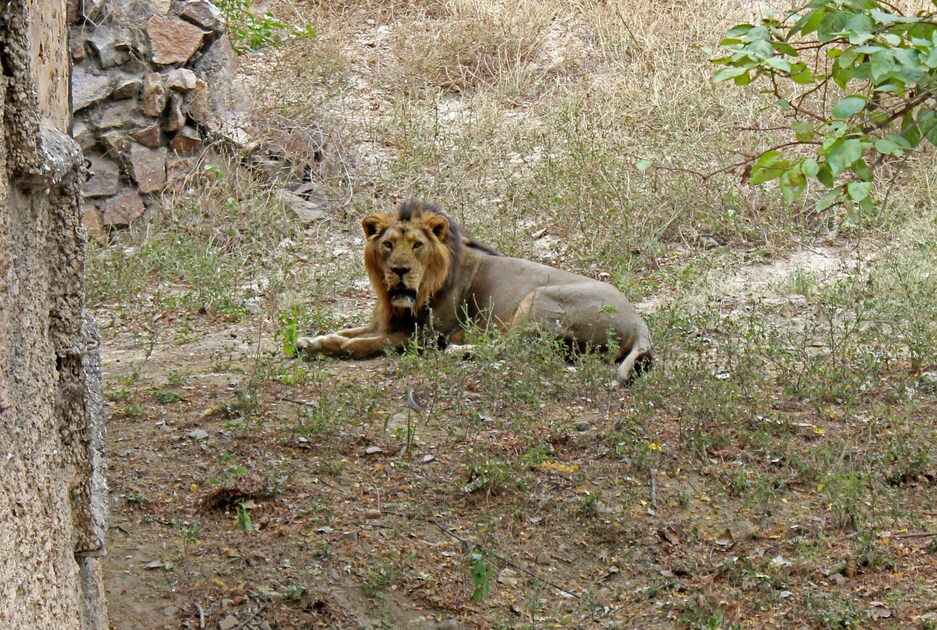
Gir National Park is the only place in the world where Asiatic lions live in the wild — a population of 891 (2025 census), a remarkable recovery from fewer than 200 in the early 20th century. The park is also home to leopard, hyena, crocodile, and over 300 bird species. Safari permits are required and fill up weeks in advance; book early, especially between December and March.
How to Reach: Nearest airport is Rajkot (~160 km) or Diu (~90 km). The nearest railway station is Junagadh (~60 km) or Veraval (~40 km). By road, Gir is ~360 km from Ahmedabad (~6 hours).
6. Palitana — Places to Visit in Gujarat for Spiritual Travellers
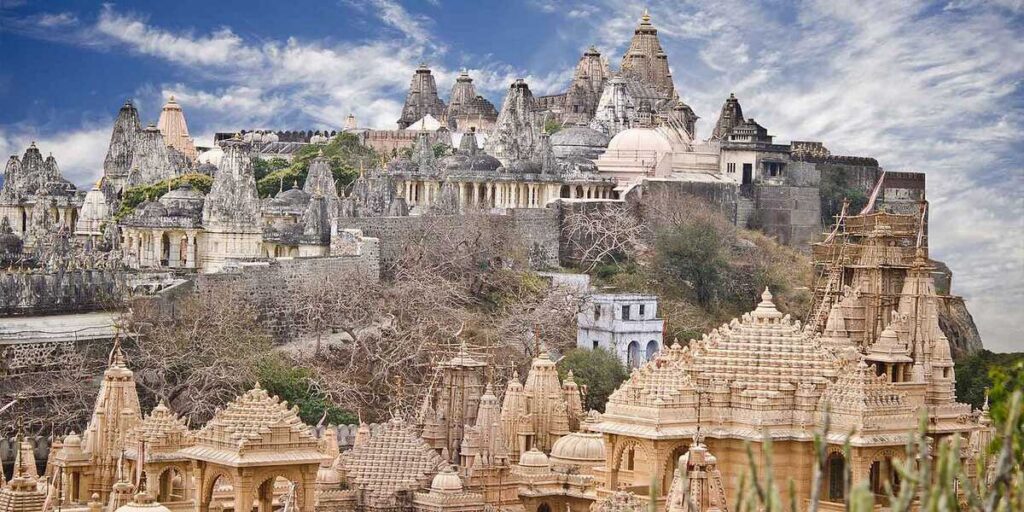
Palitana in the Bhavnagar district is one of the holiest sites in Jainism — 863 temples spread across the twin summits of Shatrunjaya hill, constructed over nine centuries. The climb is approximately 600 metres via 3,500 steps. The hill is closed to visitors after sunset, and the town of Palitana is entirely vegetarian — the only town in India to have legally prohibited the sale of meat and eggs. The effect, especially at sunrise when pilgrims begin the climb in silence, is unlike anything else among the Gujarat tourist places on this list.
How to Reach: The nearest railway station is Palitana itself, connected to Bhavnagar (~50 km). From Ahmedabad, ~220 km by road (~4 hours). Bhavnagar has a domestic airport.
7. Somnath Temple — Famous Places to Visit in Gujarat
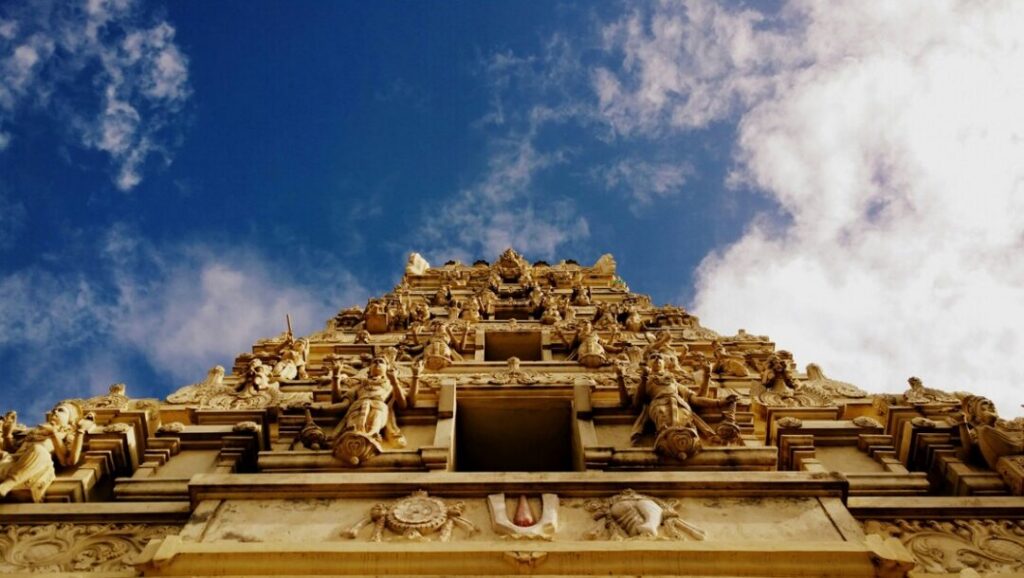
Somnath Temple, destroyed and rebuilt multiple times over the centuries, stands on the Arabian Sea coast at Prabhas Patan, Veraval. The current structure was completed in 1951, initiated by Sardar Vallabhbhai Patel and completed under K. M. Munshi. One of the twelve Jyotirlingas of Shiva, it draws hundreds of thousands of pilgrims year-round. The archaeological museum adjacent holds earlier architectural remains. A nightly sound-and-light show covers the temple’s history. Come early morning to experience the daily aarti at the seafront.
How to Reach: Nearest airport is Diu (~85 km) or Rajkot (~190 km). Veraval Railway Station is ~6 km from the temple with connections to Ahmedabad and Rajkot. By road, ~400 km from Ahmedabad (~7 hours).
8. Champaner-Pavagadh — Best Sightseeing Places in Gujarat for Heritage
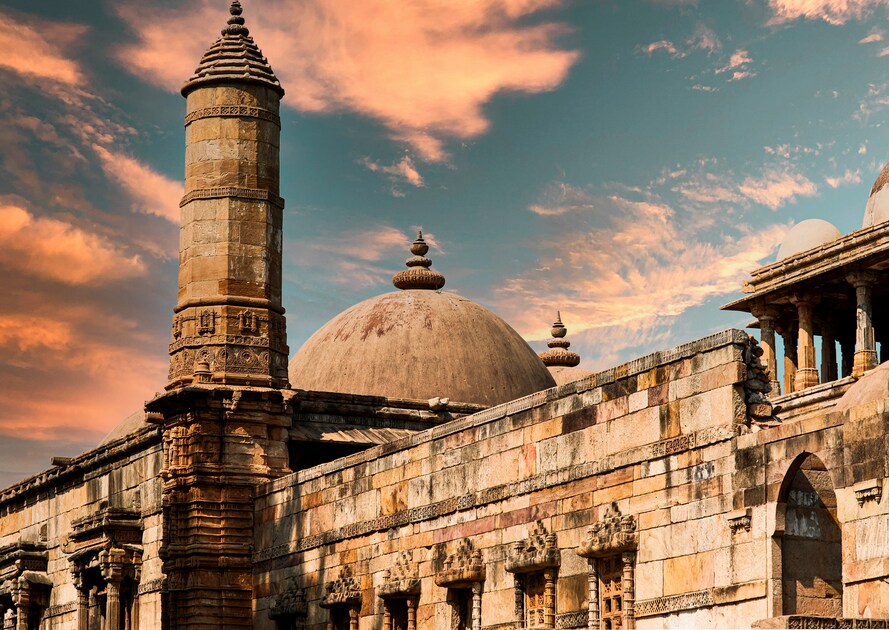
Champaner-Pavagadh Archaeological Park in the Panchmahal district is Gujarat’s third UNESCO World Heritage Site — a 16th-century fortified city built by Sultan Mahmud Begada alongside ancient Hindu temples on the Pavagadh hilltop. The combination of Islamic urban planning and pre-Islamic temple architecture within the same site is the point: Champaner was designed as a syncretic capital. The Jama Masjid here is considered one of the finest examples of pre-Mughal mosque architecture in India. Among the Ahmedabad attractions that can be combined as a day trip, this is the most historically rewarding.
How to Reach: ~150 km east of Ahmedabad (~2.5 hours by road). Vadodara (~45 km) is the nearest major railway junction. State buses run from Vadodara to Champaner regularly.
Best Time to Visit Gujarat
October–March is the recommended window across the state. Temperatures are 15–28°C, humidity is low, and all major sites are accessible.
November–February: Peak season for the Rann of Kutch — the Rann Utsav festival runs through this period, and the white salt flats under moonlight are at their most dramatic. Wildlife viewing at Gir and Velavadar is also best in this window.
April–June: Temperatures reach 40–45°C across central and northern Gujarat. Manageable for Ahmedabad’s indoor attractions, difficult for outdoor sites.
July–September (Monsoon): Saputara and Girnar are green and atmospheric. The Rann floods completely and is inaccessible. Coastal areas like Mandvi and Dwarka are dramatic but occasionally restricted by the weather.
How to Reach Gujarat?
- By Air: Ahmedabad’s Sardar Vallabhbhai Patel International Airport is the state’s main aviation hub, connected to all major Indian cities and several international destinations. Bhuj, Vadodara, Surat, and Rajkot also have domestic airports serving different regions.
- By Train: Ahmedabad and Vadodara sit on major rail corridors from Mumbai, Delhi, and Rajasthan with frequent services. Bhuj, Rajkot, and Veraval are also well connected by rail for onward travel into Kutch and Saurashtra.
- By Road: Gujarat has one of the best road networks in India. The Mumbai–Ahmedabad Expressway is the primary highway from the south. The Mumbai–Ahmedabad High Speed Rail corridor is under construction and will significantly reduce travel time between the two cities once operational.
Final Thoughts About Places to Visit in Gujarat
Gujarat is the kind of state that recalibrates what you think you know about India. The places to visit in Gujarat stretch from a 5,000-year-old city built on a desert island to a living neighbourhood system that UNESCO recognised as one of the world’s great urban achievements. From lions in a forest that came back from near extinction to stepwells that were engineering and sculpture simultaneously.
Most visitors come for the Rann of Kutch and leave thinking they’ve seen Gujarat. They’ve seen one landscape of one district. The state is at least ten trips deep.
Key takeaways:
- Ahmedabad — India’s first UNESCO World Heritage City, walled city poles, Adalaj Stepwell, Sabarmati Ashram
- Rani ki Vav, Patan — finest stepwell in India, 500+ sculptures, UNESCO 2014, on the ₹100 note
- Modhera Sun Temple — 11th-century solar-aligned temple, exceptional carvings, no crowds
- Rann of Kutch — world’s largest salt desert, Rann Utsav, tribal craft villages, Little Rann wild ass sanctuary
- Dholavira — Indus Valley city, 5,000 years old, UNESCO 2021, one of India’s most immersive archaeological sites
- Gir National Park — the only Asiatic lion habitat on earth, 891 lions (2025 census)
- Palitana — 863 Jain temples on a sacred hill, India’s only meat-free town, dawn climb, unlike anything else
- Champaner-Pavagadh — UNESCO syncretic medieval city, finest pre-Mughal mosque architecture in India
Discover every layer of Gujarat — log your Ahmedabad attractions, your Rann sunsets, your Dholavira walks — with the Explurger app.
The best Gujarat tourist places are not the ones that show up first in a search. They’re the ones who take the whole state seriously.
FAQs About Places to Visit in Gujarat
2. What are the best Ahmedabad tourist places to visit?
The most rewarding Ahmedabad tourist places include the pol neighbourhoods of the walled city (Khadia, Dariyapur, Kalupur), the Sidi Saiyyed Mosque jali window, Adalaj Stepwell (18 km out), the Sabarmati Ashram, the Calico Museum of Textiles, and Manek Chowk after dark for street food. Ahmedabad became India's first UNESCO World Heritage City in 2017 — the walled city alone warrants a full day with a heritage walk.
3. What are the places to see in Gujarat that most tourists miss?
The most overlooked places to see in Gujarat include Dholavira (an Indus Valley city, UNESCO 2021, 385 km from Ahmedabad), Champaner-Pavagadh Archaeological Park, the Little Rann of Kutch and Indian Wild Ass Sanctuary, Velavadar Blackbuck National Park near Bhavnagar, Polo Forest in Sabarkantha (15th-century Jain and Hindu temple ruins in dense deciduous forest), and the Patola weaving workshops in Patan.
4. What is the best time to visit tourist places in Gujarat?
October to March is the best window for Gujarat tourist places across the state. November to February is ideal for the Rann of Kutch (Rann Utsav festival, best salt flat conditions, peak wildlife viewing at Gir). March is excellent for Ahmedabad's heritage walks and North Gujarat before the heat builds. Avoid April to June for outdoor sites — temperatures exceed 40°C. Monsoon (July–September) is recommended only for Saputara hill station and the Girnar region.
5. How many days do you need to cover Gujarat properly?
Gujarat cannot be done in a weekend. A meaningful first circuit — Ahmedabad (2 nights), Patan and Modhera (1 night), Kutch including Bhuj and the Rann (3 nights) — takes 7 days minimum. Adding Saurashtra (Gir, Somnath, Palitana) requires 10–12 days. The state rewards slow travel; the distances between regions are significant and the sites within each region need time to absorb.