
611 Total Views
Kerala feeds you differently. Not just in what arrives on the plate — though a banana leaf carrying 24 dishes will rearrange your understanding of a meal — but in the story that comes with every bite. This is a coastline that Arab sailors charted, that Portuguese explorers reshaped, that spice merchants from across West Asia and Europe competed to control for centuries. All of that history—the trade routes, the settlements, the culinary exchanges across the Arabian Sea—ended up in the food. Kerala best food is not one cuisine. It is several, layered on top of each other across three distinct regions: Malabar in the north, Central Kerala (Kochi and surrounds), and the deep south of Travancore.
The Foundation: What Makes Kerala Food Kerala Food
Before the dishes, three things explain everything about Kerala’s kitchen.
Kerala Red Rice—The Grain That Holds It All Together
The base of most of the best food in Kerala is not white rice. It is Matta rice—also called Rosematta, Palakkadan Matta, or simply Kerala red rice. This indigenous variety is grown primarily in the Palakkad district of Kerala, in the black cotton soil that gives the grain its distinctive red-brown husk and earthy flavor. It holds a Geographical Indication (GI) tag.
Unlike polished white rice, Matta rice retains its outer bran layer—the pericarp—which is rich in anthocyanins, iron, zinc, and dietary fiber. The Hindu reported that traditional red rice contains five times more iron, three times more zinc, and twice as much fiber as polished Basmati. It requires more water and longer cooking than white rice, is traditionally double-cooked, and has a slightly nutty, robust flavor that pairs perfectly with the coconut-based gravies of the Kerala table. If you sit down at a Kerala restaurant anywhere in the country and a grain of red rice appears, you are getting something close to the real thing.
Coconut—The Ingredient Behind Every Dish
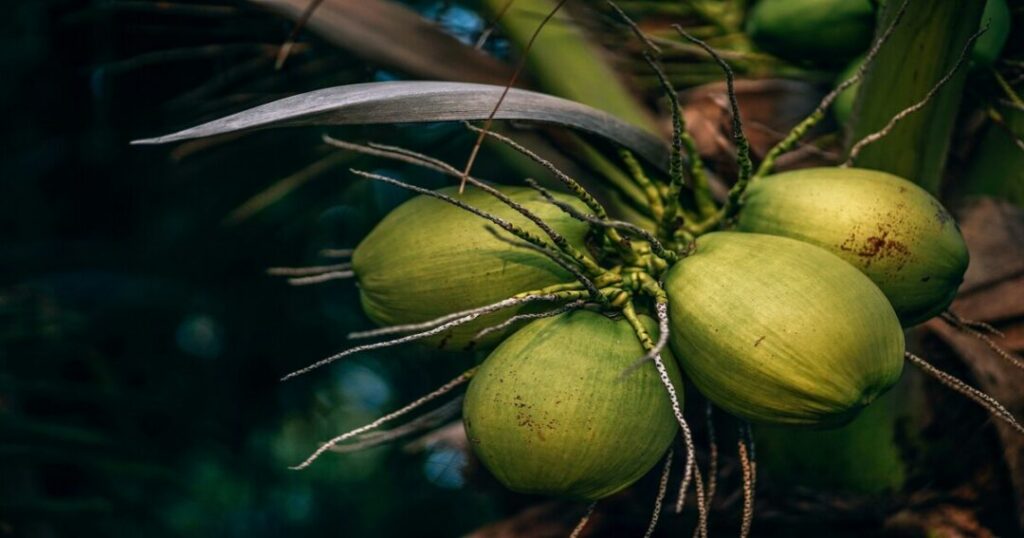
The name Kerala is popularly — though not definitively — understood to mean “land of coconuts,” from the folk etymology of Kera (coconut palm) and alam (land). Scholars note competing theories, including a derivation from Chera, the ancient dynasty that ruled the region; the name was first recorded as “Keralaputra” in a 3rd-century BCE Ashokan inscription. Whatever the etymology, the coconut’s centrality to the state is indisputable. Grated coconut, coconut milk, and coconut oil appear in virtually every special food of Kerala: thickening curries, softening fish preparations, enriching desserts, and providing the fat base for stir-fries. No other Indian regional cuisine uses coconut with the same depth and consistency.
The Spice Trade—The History in Every Bite
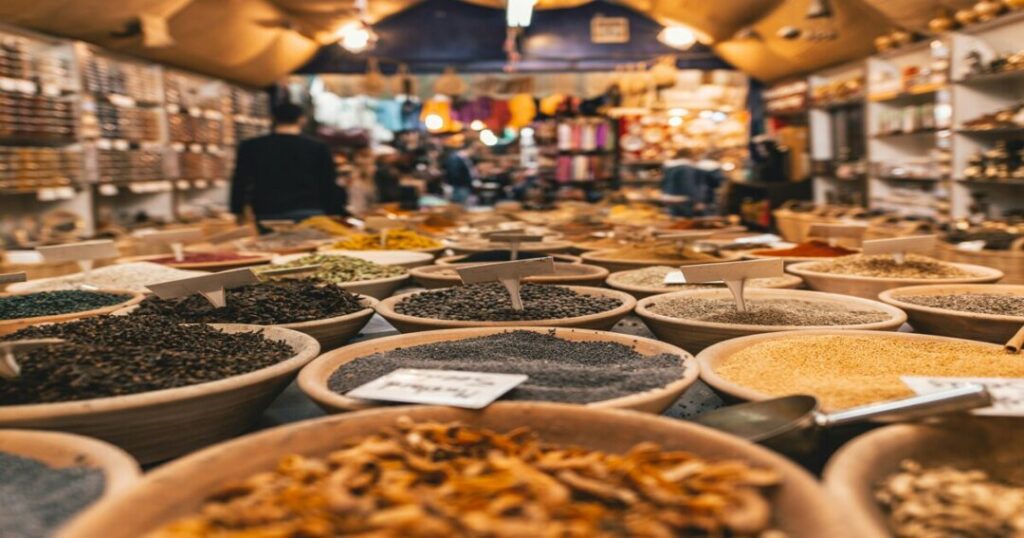
Kerala was the engine of the ancient spice trade. Black pepper — called “black gold” — cardamom, cinnamon, cloves, and ginger grew here in quantities that made this coastline one of the most economically significant territories on earth for over two thousand years. Arab merchants arrived on the Malabar Coast as early as the 7th century CE, bringing West Asian and Persian culinary techniques with them. The Portuguese arrived in 1498, the Dutch after them, and the British after that. Each wave of traders left something in the kitchen. The result is a cuisine of extraordinary range — from the Syrian Christian beef preparations of central Kerala to the Mappila Muslim biryanis of the north to the Brahmin vegetarian feasts of the south.
Malabar — North Kerala: The Spice Route Kitchen
The Malabar region—roughly the districts of Kozhikode, Kannur, Malappuram, and Palakkad — is where Kerala’s famous food gets most complex. This was the heartland of the spice trade, and the Mappila Muslim community that emerged from centuries of Arab-local intermarriage developed a cuisine unlike anything else in South India.
Thalassery Biryani — The Finest Biryani on the Coast
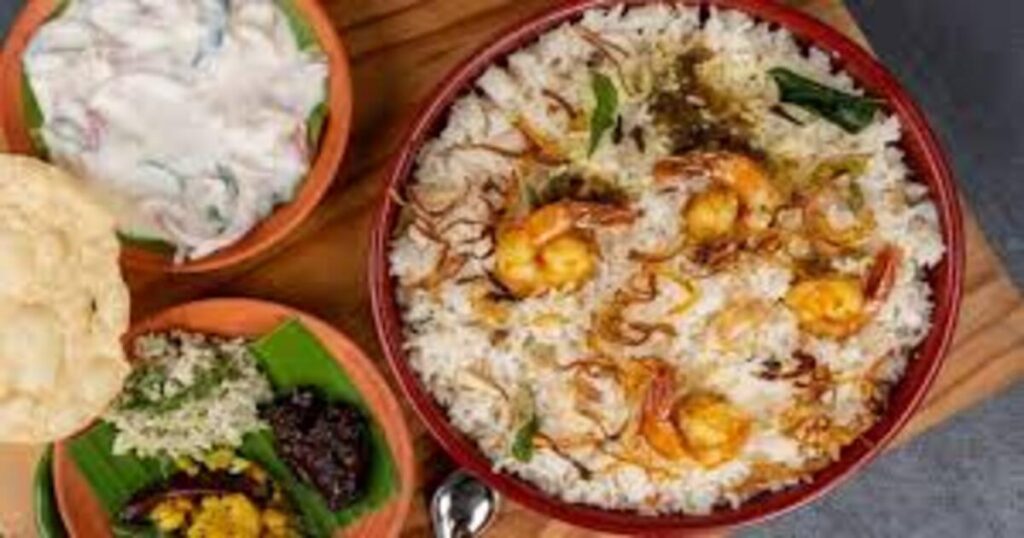
The most famous Kerala famous food from the Malabar region is, without question, Thalassery biryani. Unlike northern biryanis which use long-grain Basmati, Thalassery biryani is built on Jeerakasala (also called Kaima) — a short-grain, intensely fragrant rice native to Malabar. The dish reflects Mughal-Arab cultural influence in North Kerala, shaped by the trade that connected this coast to West Asia for centuries.
Each layer is finished with fried cashews, fried raisins, crispy browned onions (birista), saffron milk, and rose essence — a direct echo of Persian and Arab culinary sensibility. The meat is slow-cooked on dum without the yoghurt marinades of northern biryani traditions. There are two major variants: Kozhikode biryani and Thalassery biryani, each with devoted defenders and distinct preparation styles.
- This is one of the best food in Kerala experiences — do not leave Malabar without eating it at a local restaurant, not a hotel
- Best eaten at lunch, freshly made; the rice should be separate-grained but fragrant, the meat tender from the dum process
- Thalassery town itself is considered the origin point; Kozhikode’s SM Street (Sweetmeat Street) is the most famous food street for the Kozhikode variant
Pathiri — The Malabar Bread
Pathiri is a soft, thin rice flour flatbread — the Mappila equivalent of a roti, but made entirely from rice flour, making it naturally gluten-free. It is eaten with rich meat curries, fish curries, or coconut milk gravies. Unlike wheat-based breads, it is light enough not to overwhelm the flavour of what accompanies it.
- Ney pathiri (ghee pathiri) is the richer, fried variant—traditionally made for celebrations
- Reflects the Mappila tradition of rice-based breads that developed independently of the wheat-heavy North Indian bread tradition
Also Read: Odisha Food: A Cultural Guide to the Cuisine of Utkala
Central Kerala — Kochi & Surrounds: Where Communities Meet the Table
Central Kerala — Ernakulam district, the Kochi-Thrissur corridor — is where Kerala’s extraordinary religious diversity is most concentrated, and where the food reflects it most clearly. Syrian Christians, Hindu communities, Jain traders, Jewish settlers, and Muslim families have all cooked in this geography for centuries.
Kerala Sadya—The Greatest Vegetarian Feast in India
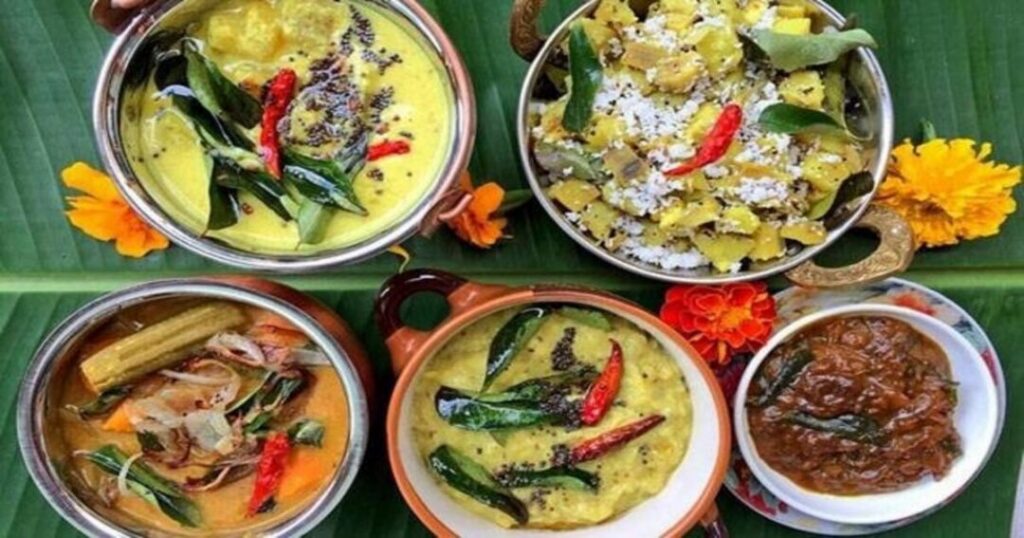
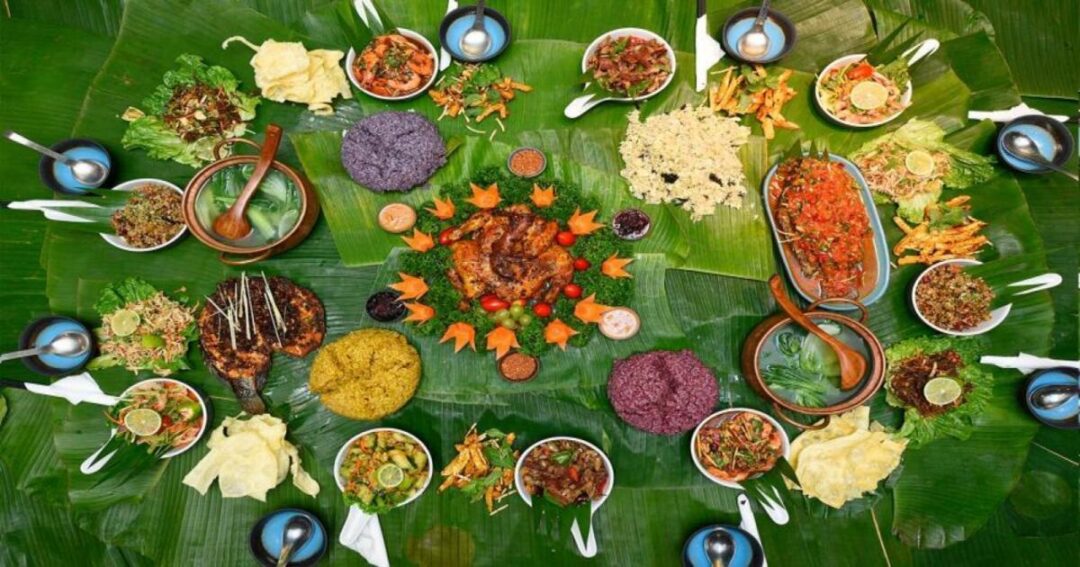
The Onam sadya is the single most culturally significant meal in Kerala. Sadya means “banquet” in Malayalam — and this is exactly what it is: a traditional vegetarian feast served on a banana leaf, typically featuring between 20 and 28 dishes arranged in a specific order that has been codified over generations.
The sadya is served for Onam (Kerala’s harvest festival), Vishu, weddings, and temple celebrations. The leaf is placed with its pointed end to the left of the guest; once the meal is complete, it is folded inward toward the diner — an act that signals satisfaction. Folding it away signals the opposite.
The hero of the sadya is Kerala red rice — plain boiled Matta rice, served in the centre of the leaf. Around it: parippu (dal) with ghee, sambar, rasam, pulissery (buttermilk curry), avial (mixed vegetable and coconut curry), thoran (dry coconut stir-fry), olan (ash gourd and coconut milk), erissery (pumpkin and lentil), inji puli (ginger-tamarind pickle), pachadi, kichadi, papadom, banana chips, sharkara upperi (jaggery-coated banana chips), and at least one payasam for dessert. The number of dishes is said to reflect the prosperity of the host.
- Every element is cooked to Ayurvedic principles — the meal is designed to be digestively complete, ending with thin rasam to aid digestion and buttermilk to cool the body
- This is the special food of Kerala that every visitor should experience at least once—not from a buffet, but seated at a proper banana leaf setting during Onam, if at all possible
Kerala Fish Curry — The Daily Essential
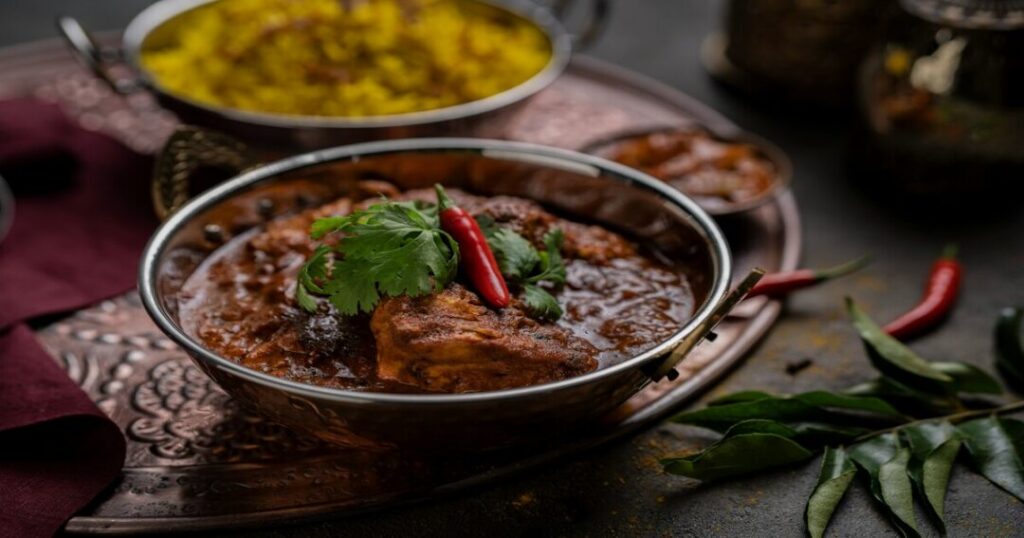
No single dish defines the everyday best food in Kerala more than fish curry. The most famous version uses raw coconut, Kodampuli (also called Kudampuli, Malabar tamarind, or fish tamarind — botanically Garcinia gummi-gutta — a dried black souring fruit that gives the curry its distinctive deep sourness), red chilli, and fresh fish — most commonly seer fish (king fish), sardines, or pearl spot (Karimeen). It is cooked and almost always served the next day, when the flavour has deepened.
Karimeen pollichathu — pearl spot fish marinated in spices and wrapped in banana leaf before being pan-fried — is one of the most celebrated Kerala famous food preparations, specifically associated with the backwaters region around Alleppey and Kottayam.
- The Kodampuli is non-negotiable: it cannot be replicated with tamarind or lemon; its specific, rounded, smoky sourness defines the dish
- Pearl spot (Karimeen) is a GI-tagged fish from Kerala’s backwaters — eating it in Alleppey is a different experience from eating it anywhere else
Appam with Stew — The Syrian Christian Breakfast
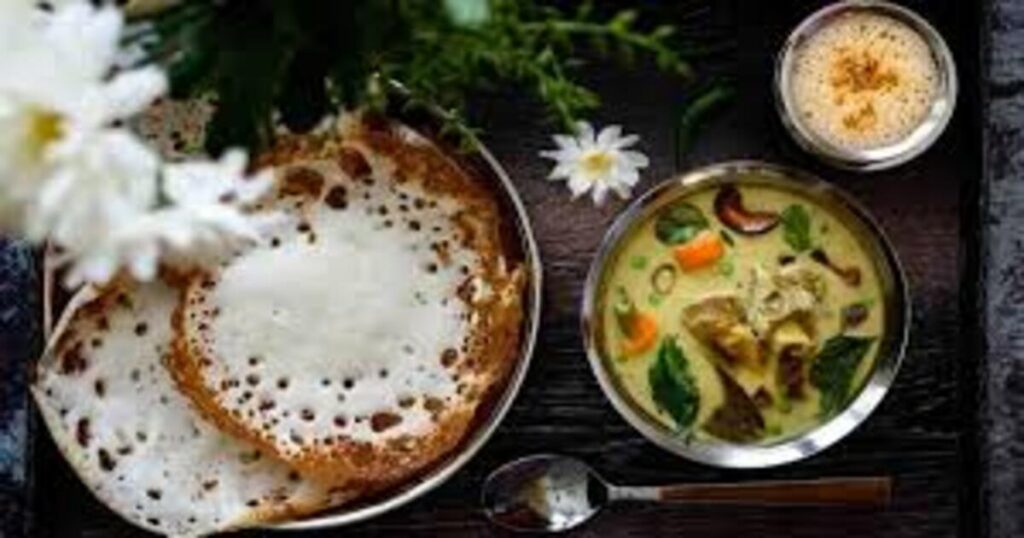
Appam is a bowl-shaped, lacey-edged rice pancake made from fermented rice batter and coconut milk — soft and spongy at the centre, crispy and thin at the edges. It is most famously paired with Kerala stew: a gently spiced coconut milk-based curry with vegetables or chicken, influenced by the Syrian Christian community’s distinct culinary tradition.
The Syrian Christian community of Kerala traces its origins to the 1st century CE. According to community tradition, St. Thomas the Apostle arrived at the ancient port of Muziris in Kerala in 52 AD — though historians note there is no definitive historical evidence for this claim, and the visit remains a matter of active scholarly debate. Regardless of the precise origin, the community’s food — beef fry, duck roast, stew, fish molee — is among the most distinctive cooking in the state.
- Appam stew is one of the most delicate breakfast combinations in Indian food—the stew should be thin, barely spiced, with the coconut milk flavour forward
- Beef fry (nadan beef ularthiyathu) — slow-cooked with coconut slices, curry leaves, and dry spices until almost dry — is considered the definitive Syrian Christian preparation and one of the best food in Kerala experiences for non-vegetarians
Also Read: Street Food In Surat: A Flavourful Guide To The City’s Best Local Eats
South Kerala—Thiruvananthapuram & Travancore: The Vegetarian Heartland
South Kerala—the old Travancore kingdom—is where the Brahmin vegetarian tradition is strongest, where temple food reaches its highest expression, and where the sadya achieves its most elaborate form.
Avial — The Dish That Belongs to Everyone
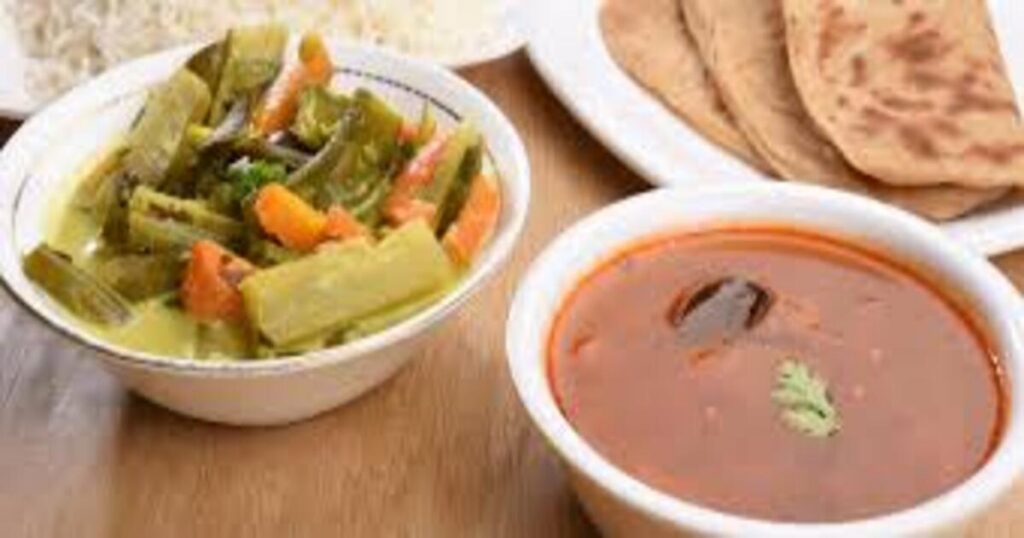
Avial (also spelt Aviyal) is a thick mixture of vegetables cooked in a coconut and yoghurt gravy, seasoned with curry leaves and coconut oil. It is one of the most beloved dishes on the Kerala sadya. According to popular legend, it was invented by Bhima — one of the Pandava brothers of the Mahabharata — during the Pandavas’ year of incognito exile, when he served as cook in the kitchen of King Virata and improvised a dish from whatever vegetables were available. The blog’s word “legend” is the right frame — multiple origin stories exist, and none is historically confirmed.
- A good avial uses a diverse mix of vegetables — raw banana, drumstick, elephant yam, ash gourd, carrot — and the coconut-yoghurt base should be thick enough to coat each piece without becoming a gravy
- The finishing pour of raw coconut oil and curry leaves is not optional; it defines the dish
Puttu and Kadala Curry — The Kerala Breakfast
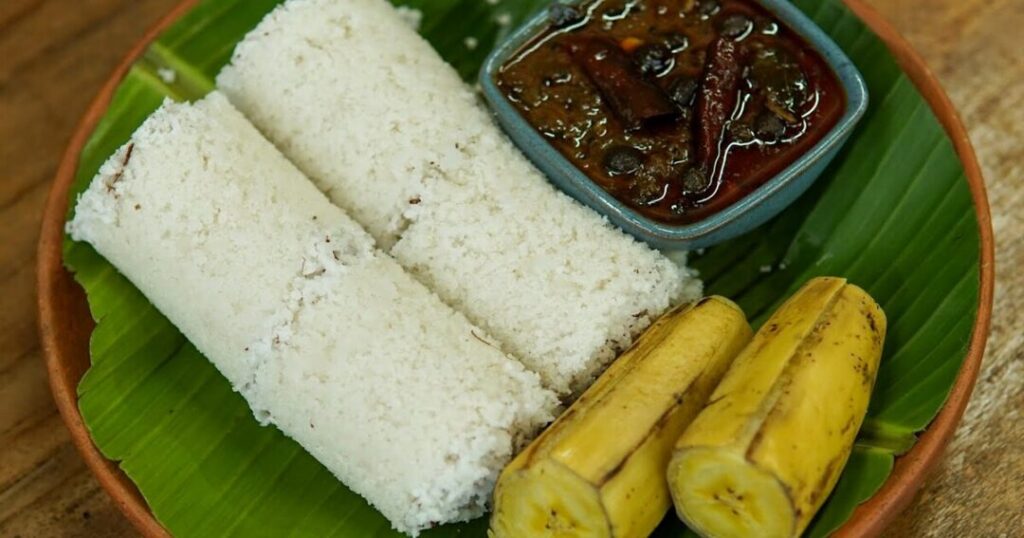
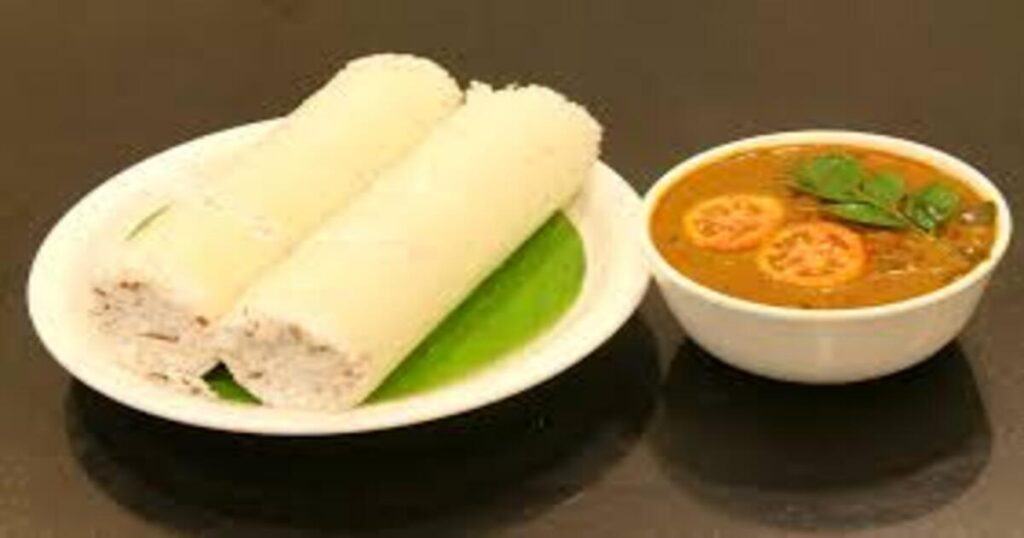
Puttu — cylindrical steamed rice cakes layered with grated coconut — is the quintessential Kerala breakfast. It arrives in a cylindrical steel mould, is pushed out to reveal the layers, and is eaten with kadala curry (black chickpea curry), ripe banana, or fish curry. It is believed to have been influenced by Portuguese techniques of steaming ground rice in cylindrical containers during colonial-era military campaigns.
- The ratio of rice flour to coconut inside the cylinder is everything — too little coconut and the puttu becomes dense and dry
- Puttu with ripe banana and jaggery is the traditional sweet breakfast version; puttu with fish curry is the coastal everyday version
What to Drink: The Full Kerala Table
Toddy — Kerala’s Ancient Palm Wine
Kallu (toddy) is fermented coconut palm sap—collected fresh each morning and consumed the same day before fermentation turns it too alcoholic. It has been part of Kerala’s drinking culture for centuries, and a toddy shop (kallu shappu) remains one of the most authentic cultural experiences in Kerala. Fresh toddy is mildly sweet and fizzy; aged toddy grows progressively more alcoholic.
- Toddy shops traditionally serve some of the best Kerala best food places experiences — spiced tapioca, fried fish, and prawn preparations alongside the toddy
- It is deeply tied to the fishing and farming communities of coastal and interior Kerala
Payasam — The Dessert That Ends Everything
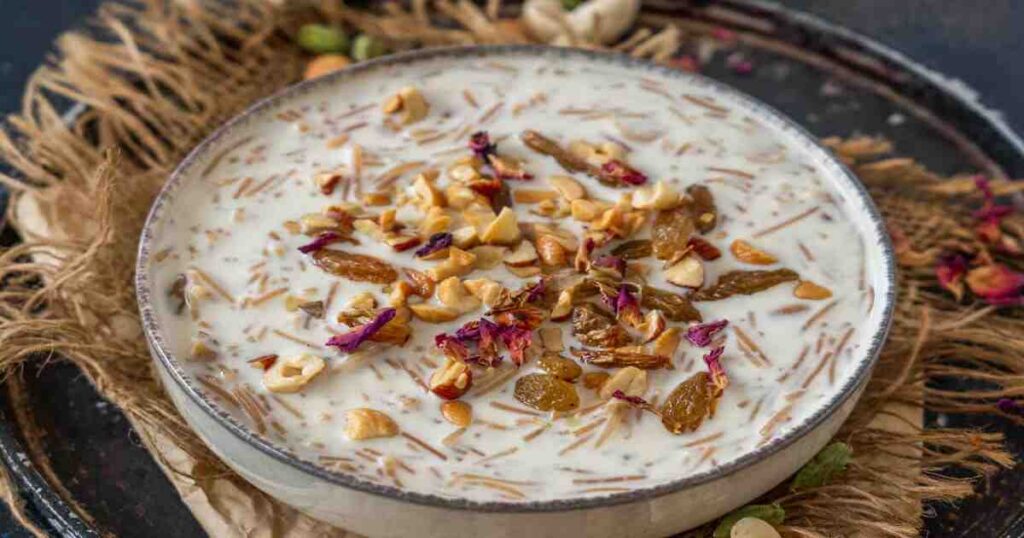
Payasam is a milk or coconut milk-based sweet pudding — the essential dessert of the Kerala sadya. Ada Pradhaman (rice flakes, jaggery, coconut milk) and Palada Payasam (milk-based rice pudding) are the two most celebrated versions. On the sadya leaf, payasam is considered the most expensive item to prepare — the quality of the payasam reflects the generosity of the host.
- Eaten with a ripe yellow Nendran banana alongside
- Pal Payasam from the Ambalappuzha Sree Krishna temple in Alleppey — prepared daily and distributed as prasad — is considered the finest in Kerala by devotees
Filter Coffee and Kerala Chai
Kerala’s plantation culture—coffee and tea grown in the Wayanad, Munnar, and Idukki hills—means both beverages are prepared with serious care. Kerala filter coffee (served in the traditional tumbler-and-davara set) and strong kadak chai with ginger are the default companions to breakfast across the state.
Conclusion About Kerala’s Best Food
Kerala best food is not a meal. It is an argument about history, a conversation between communities, and an understanding of a coastline that has been feeding the world’s curiosity for over two thousand years. From the Kerala red rice at the heart of the sadya to the Jeerakasala grains of a Thalassery biryani, from the coconut milk in every appam to the Kodampuli souring every fish curry — every element has a story that goes back centuries.
The best way to understand the special food of Kerala is not to read about it. It is to sit on the floor of a home in Thrissur during Onam, or to eat at a toddy shop in Alleppey, or to find a seat at a local lunch counter in Kozhikode when the biryani is fresh. Kerala feeds you. It also tells you everything about itself while doing it.
Download the Explurger app to discover the best Kerala food near you, log your banana leaf sadya experiences, and find authentic Kerala restaurants and food spots wherever you are.
The banana leaf is set. Sit down.
FAQs About Kerala’s Best Food
2. What is Kerala famous food?
The most Kerala famous food internationally includes appam, puttu, fish molee, Kerala fish curry, Thalassery biryani, Onam sadya, Kerala prawn curry, and beef fry. Within India, the Onam sadya — a 20+ dish vegetarian feast on a banana leaf — and Thalassery biryani (made with short-grain Jeerakasala rice, distinct from Basmati-based biryanis) are considered the most iconic. Kerala red rice (Matta rice), with its GI tag and distinct earthy flavour, is the foundation grain of the entire cuisine.
3. What is Kerala red rice and why is it special?
Kerala red rice — also called Matta rice, Rosematta, or Palakkadan Matta rice — is an indigenous variety grown in Palakkad district with a GI (Geographical Indication) tag. Unlike polished white rice, it retains its red-brown bran layer, which contains anthocyanins, iron, zinc, and dietary fibre. The Hindu reported it has five times more iron, three times more zinc, and twice as much fibre as polished Basmati. It has a distinctly earthy, robust flavour and forms the centrepiece of the Onam sadya.
4. What makes Kerala food different from other South Indian cuisines?
Three things set Kerala best food apart. First, coconut — grated coconut, coconut milk, and coconut oil appear in virtually every dish in a way no other South Indian cuisine matches. Second, the Kodampuli (Malabar tamarind/fish tamarind, botanically Garcinia gummi-gutta) — used in fish curries to create a unique deep, rounded sourness impossible to replicate. Third, extraordinary cultural layering — Arab, Persian, Portuguese, Dutch, Syrian Christian, and Brahmin culinary traditions have all shaped Kerala's kitchen over centuries, creating a range that goes from the Mappila biryani of the north to the Travancore vegetarian feast of the south.
5. Where can I find authentic Kerala food?
For authentic Kerala best food places, look for toddy shops (kallu shappu) for the most unfiltered local food experience — fried fish, spiced tapioca, prawn preparations. For sadya, seek out a Kerala restaurant that serves it on a proper banana leaf rather than a plate. In Kozhikode, SM Street (Sweetmeat Street) is the most famous food street for Malabar cuisine. For Thalassery biryani, local restaurants in Thalassery and Kozhikode will serve it better than hotel chains. For Syrian Christian food, the Kottayam and Alleppey regions are the heartland.
6. What should I eat first if I'm trying Kerala food for the first time?
Start with a Kerala restaurant that serves the full banana leaf sadya for lunch — it introduces you to the philosophy of the cuisine in one sitting. Follow with appam and stew for breakfast the next morning. If you eat non-vegetarian, Thalassery biryani and Kerala fish curry with Kodampuli are essential. For snacks, banana chips (ethakka upperi) and Kerala banana fritters (pazhampori) are available everywhere. End every meal with payasam if possible.