
612 Total Views
There are cities in India where you eat well. And then there is Amritsar — where eating is an act of devotion, a cultural statement, and a daily celebration of abundance all at once. The food in Amritsar is not subtle. The butter is not measured. The lassi is not sipped — it is eaten with a spoon. The kulcha comes out of the tandoor crackling and golden, wrapped in enough white butter to make a cardiologist wince and a Punjabi grandmother nod in approval. This is a city that has been feeding pilgrims, soldiers, traders, and travellers for centuries, and it has got very good at it.
Amritsar’s food culture sits at the confluence of three powerful forces: the Sikh langar tradition (which institutionalised feeding the hungry as an act of worship), the fertile Punjab agricultural heartland (which gave it wheat, mustard, dairy, and an extraordinary produce tradition), and the culinary legacy of Lahore — the undivided Punjab’s greatest food city, just 50 km away, whose dishes and families came across the border at Partition. What resulted is one of the most generous, most flavourful, and most deeply rooted food cultures in India.
The Anchors — Amritsar Famous Food
Amritsari Kulcha — The Defining Dish
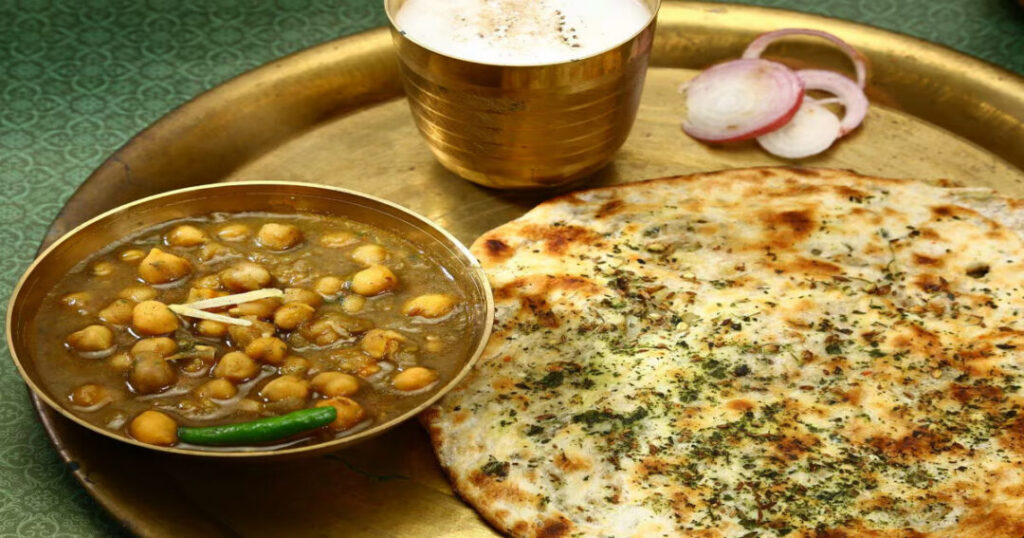
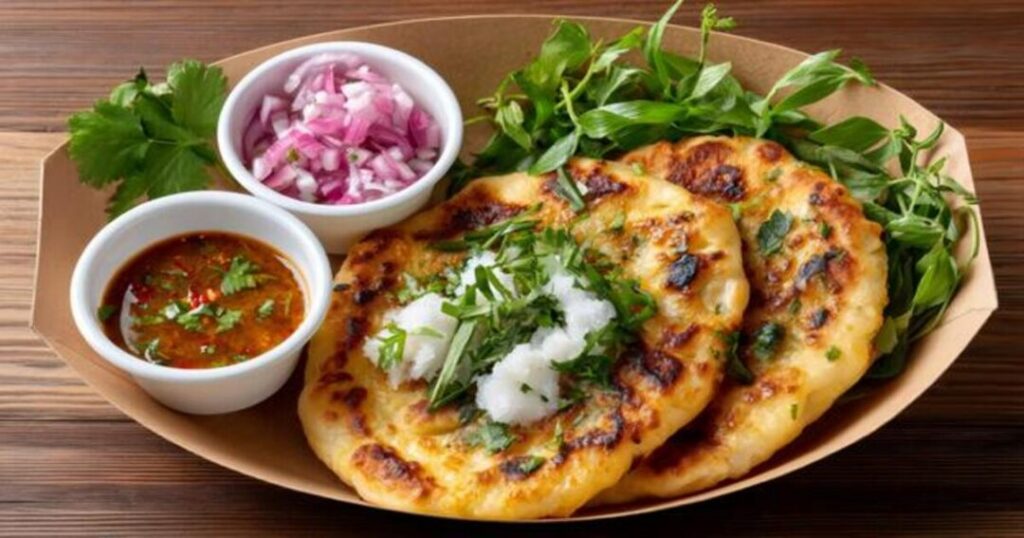
If Amritsar has a signature dish, it is the Amritsari kulcha — a leavened flatbread stuffed with spiced mashed potato (aloo), sometimes mixed with paneer, onion, or cauliflower, baked in a traditional clay tandoor until the exterior is blistered and golden and the interior is soft and steam-filled. It emerges from the oven crackling, is immediately slathered in white butter, and is served with a bowl of thick, dark chole (spiced chickpea curry), pickled onion, green chutney, and occasionally a sweet tamarind sauce.
What distinguishes the Amritsari kulcha from any other stuffed bread in India is the tandoor technique and the specific spicing of the filling — the potato mixture is seasoned with dried pomegranate seeds (anardana), green chilli, coriander, and a blend of spices that gives it a distinctive tangy, warming quality. The chole served alongside is Amritsar’s own preparation — dark, almost black from the slow-cooked onion and whole spice base, richer and more concentrated than the lighter North Indian versions.
Kulcha culture in Amritsar: The best kulchas are found at small, specialised shops rather than restaurants — establishments that have been baking the same dough in the same tandoors for decades. The area near the Golden Temple, Hall Gate, and Lawrence Road has the highest density of legendary kulcha shops. Many open only for breakfast and close when they sell out — typically by midday. The most celebrated spots in Amritsar’s kulcha culture include the dhabas and shops that have roots going back to pre-Partition Lahore, where many of these families originally operated.
Also Read: Places To Visit In Punjab: A Complete Travel Guide To Punjab’s Best Tourist Destinations
Amritsari Fish — The Non-Vegetarian Crown
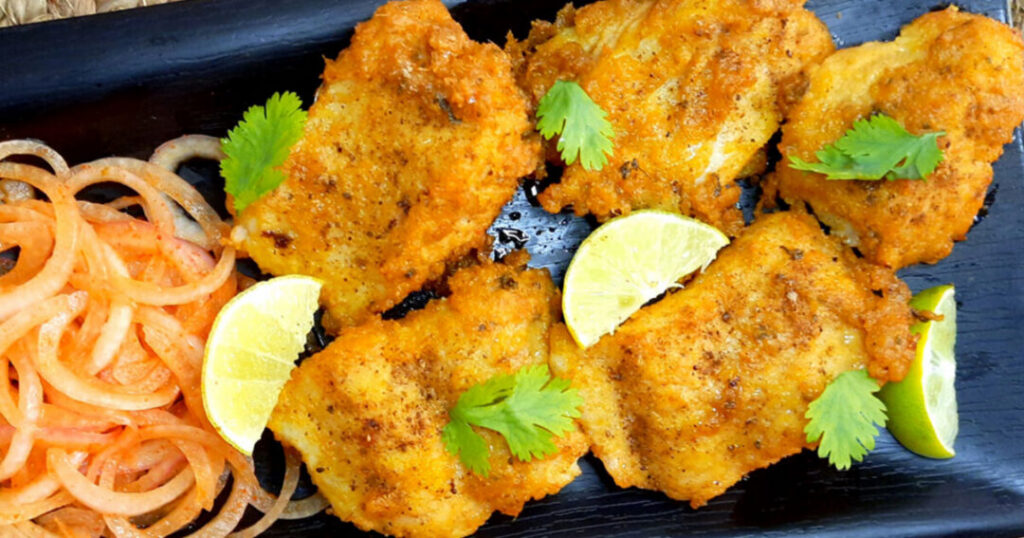
Amritsari fish (Amritsari machhi) is the most celebrated non-vegetarian dish in the city — freshwater fish (typically sole or singhara, though multiple varieties are used) marinated in a batter of gram flour (besan), carom seeds (ajwain), ginger, garlic, red chilli, and lemon juice, then deep-fried until shatteringly crispy on the outside while remaining soft and moist within. The carom seed is the defining flavour — its slightly thyme-like, digestive character is what makes the Amritsari version immediately distinguishable from any other fish fry in the country.
The fish is served with green chutney and sliced onion — no sauce, no garnish beyond these. The quality of the fish and the accuracy of the batter spicing are everything. It is one of the finest street snacks in India.
Fish shops in Amritsar are concentrated in the Lawrence Road area and the lanes near the Golden Temple. The best versions are served fresh from the fryer — never reheated — and the queue outside the most famous shops in the evening is itself a form of pilgrimage.
Lassi — Thick Enough to Eat with a Spoon
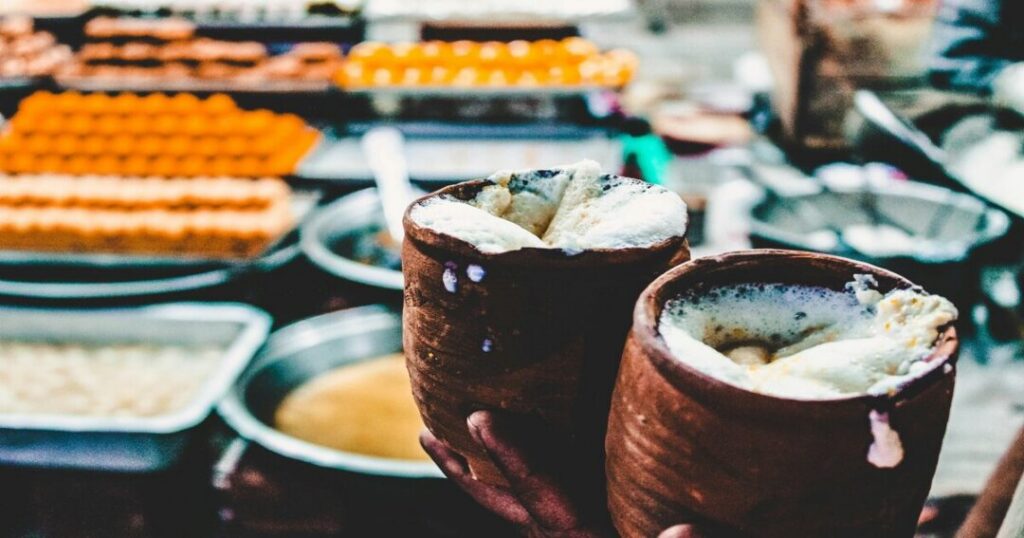
Amritsari lassi is not a drink. It is a meal. Made from full-fat dahi (yogurt) churned to a thick, creamy consistency and topped with a generous layer of fresh malai (cream), it is served in large steel glasses or earthen pots, at a temperature just above cold, sweet by default (though salted and spiced versions exist). The sweet version comes with a knob of white butter on top in many traditional shops — the combination of cold yogurt, cream, and butter is a full caloric experience and the most characteristically Punjabi of all beverage traditions.
The greatest Amritsari lassi shops are typically not in tourist areas — they are in the market lanes around the Golden Temple, in Katra Jaimal Singh, and in the residential mohallas where the same families have been churning yogurt since before Partition. The best lassi in Amritsar requires no menu, no decor, and no ambiance — just the churn, the cream, and the clay pot.
Also Read: Darjeeling Food: The Complete Guide to Famous Dishes, Momos & Street Food
The Dhaba Culture — Where Amritsar Actually Eats
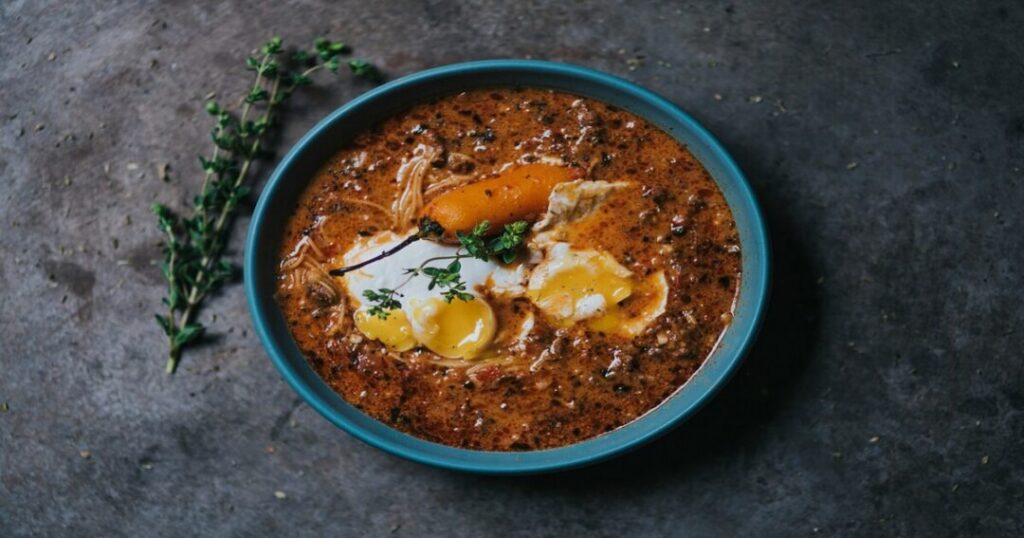
The Amritsar dhaba is one of India’s great culinary institutions — a small, no-frills eating establishment that has been serving the same dishes, often at the same address, for generations. The dhaba is not a lesser form of restaurant; it is a different thing entirely. It is a place where the food has been refined by decades of repetition rather than by ambition or innovation.
What to order at a classic Amritsar dhaba:
Dal makhani — black lentils (urad dal) and kidney beans (rajma) slow-cooked for hours with butter, cream, and a tomato-ginger base until the lentils break down into a thick, silky, deeply flavoured gravy. The Punjabi dal makhani is the source of the version known worldwide — but the original, cooked overnight on a wood-fired chulha (clay stove) at an Amritsar dhaba, has a smokiness and depth that no restaurant version replicates.
Pindi chole — a preparation of chickpeas named after Rawalpindi (now in Pakistan), where the method originated before crossing the border with Partition. The chickpeas are dark and concentrated, cooked with dried pomegranate seeds and black cardamom, with almost no water remaining in the final preparation. This is not the soupy chole of the plains — it is almost dry, intensely flavoured, and served with kulcha or bhature.
Sarson da saag and makki di roti — in winter, this is the meal that defines Amritsar. Mustard greens (sarson) slow-cooked with spinach and bathua (pigweed), spiced minimally, finished with white butter and jaggery, served with thick cornbread (makki di roti) that is hand-patted rather than rolled. It is not a restaurant dish — it is a farmhouse dish, the food of the fields, and the versions at small dhabas and homes in the villages surrounding Amritsar are its finest expression.
Kadhi pakora — yogurt-based curry with gram flour fritters (pakora), soured with yogurt and tempered with mustard seeds and dried red chilli. The Punjabi version is tangier and more robust than its southern or western cousins.
The heritage dhabas: Amritsar has several dhabas that are cultural institutions in their own right. Kesar da Dhaba is the most famous — originally founded in 1916 by Lala Kesar Mal and his wife Parvati in Sheikhupura (now in Pakistan), the dhaba relocated to its current home in Chowk Passian, Amritsar, after the Partition of India in 1947. The name comes from its founder, Lala Kesar Mal — not from saffron, as is sometimes assumed. The dhaba’s signature dish is dal makhani — black lentils slow-cooked overnight in a brass vessel over a wood flame, creamy and deeply layered, widely considered the finest version of the dish in Amritsar. Lala Lajpat Rai, Jawaharlal Nehru, and Indira Gandhi are among the celebrated patrons on record. It is now in its fourth generation of family stewardship and has deliberately never franchised or opened additional branches.
Also Read: Burmese Food: The Complete Guide to Myanmar Cuisine, Dishes & Food Culture
Street Food — The Real Amritsar Food Experience
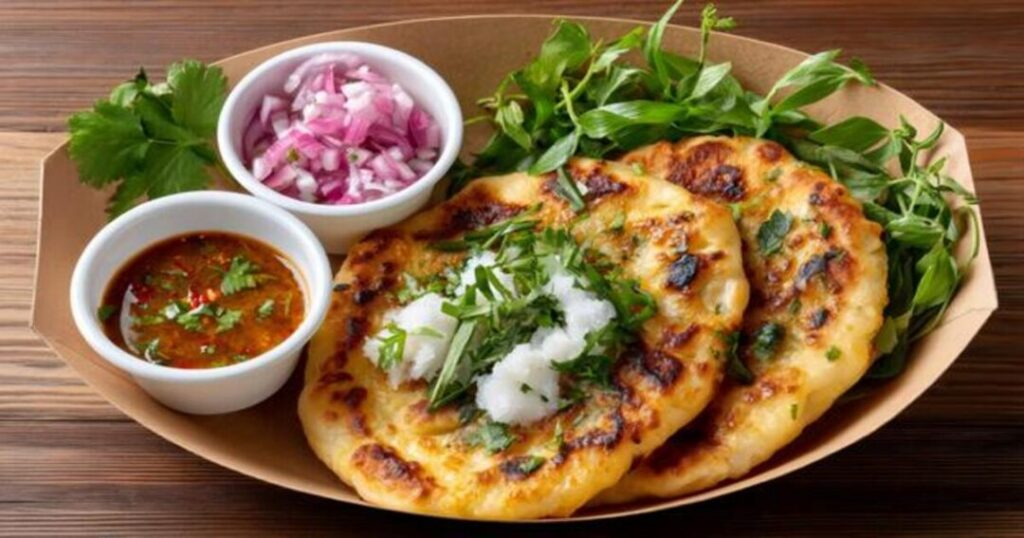
Chole bhature / chole puri — the classic Punjabi breakfast: deep-fried puri or bhature (leavened bread) with dark, spiced chole. The Amritsar version distinguishes itself with the spice profile — more whole spices, more dried pomegranate, a darker more concentrated gravy. Eaten with fresh lassi, this is the breakfast that sustains pilgrims, labourers, and food tourists alike from 7 AM onwards.
Pinni — the traditional Punjabi sweet associated with winter and festivals — is made from roasted whole wheat flour (atta) or lentils, cooked in ghee with sugar or jaggery, dry fruits, and sometimes sesame seeds. It is a dense, crumbly, intensely nourishing sweet — designed for cold weather and hard work. The finest pinnis in Amritsar are made by halwais (sweet makers) who have been preparing them for generations; look for them in the market lanes around the Golden Temple.
Jalebi — the city’s favourite immediate-gratification sweet — is served fresh from the kadhao (deep frying vessel), crispy and saturated with sugar syrup, eaten hot. The combination of jalebi with rabri (thickened sweetened milk) is the Amritsar version of a dessert course — available at sweet shops around the Golden Temple at almost any hour.
Papad ki sabzi — thin lentil crisps cooked in a tangy, spiced yogurt or tomato-based gravy — is an Amritsari speciality that rarely appears on restaurant menus but is a staple of home cooking and roadside dhabas throughout the Punjab. Simple, cheap, and deeply satisfying.
Also Read: Street Food In Surat: A Flavourful Guide To The City’s Best Local Eats
The Langar — Food as Worship
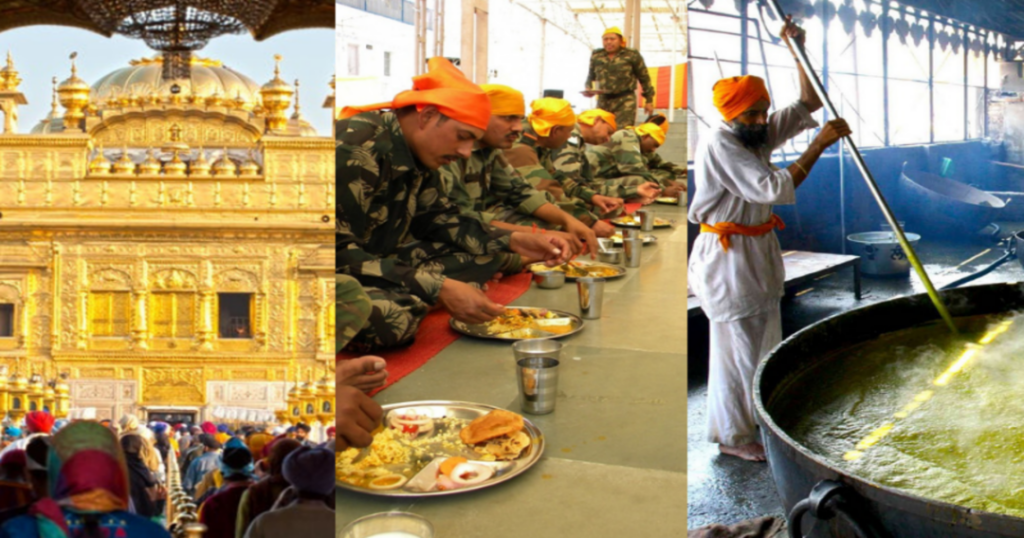
No guide to Amritsar famous food is complete without the langar at Sri Harmandir Sahib (the Golden Temple). The langar is the community kitchen of the Sikh faith — the institution of free communal food, open to everyone regardless of religion, caste, nationality, or economic status, running 24 hours a day, 365 days a year. The Golden Temple’s langar serves approximately 50,000 to 100,000 people daily — and up to 300,000 on festival days — making it the largest free communal meal operation in the world.
The langar food is deliberately simple and vegetarian: roti (flatbread), dal (lentils), sabzi (vegetable curry), kheer (rice pudding) on special occasions. It is served by volunteers (sevadars) who consider the service itself an act of worship. Eating langar is not a tourist activity — it is an act of participation in one of humanity’s most extraordinary institutions of generosity.
- Entry to the langar is free; sit in the langar hall and wait for the service
- The roti is baked continuously by dozens of volunteers working in shifts; the dal is prepared in enormous vessels
- Remove shoes before entering the temple complex; cover your head
- Donations are accepted but not required
What is the Best Time to Visit Amritsar for Food?
November to February is the golden window — the weather is cool, the markets are bustling, and most importantly, it is the season for sarson da saag and makki di roti — the mustard greens and cornbread preparation that is the soul food of Punjabi winters. The Lohri festival in mid-January is the most food-centric celebration in the Punjabi calendar. Year-round, the kulcha-chole, lassi, and fish are available — these are the permanent anchors of the Amritsar food map.
Amritsar Food Areas — Where to Go?
Hall Gate and the lanes around it — the most concentrated area of kulcha shops, chole-puri stalls, and sweet shops in the city. Open from early morning, the best kulcha establishments close by midday.
Lawrence Road — the main commercial food street of Amritsar, with a higher concentration of sit-down restaurants, fish fry shops, and the full range of Amritsar famous food places. Active from morning to late night.
Katra Jaimal Singh — the market area closest to the Golden Temple; the most authentic concentration of lassi shops, pinni sellers, and street food vendors in the city. The food here is priced for pilgrims and locals, not tourists.
Golden Temple perimeter — the lanes immediately around the temple complex have shops selling petha (ash gourd sweet), papad, pinni, and dried goods alongside the langar. This is the densest area for traditional Amritsari sweets and snacks.
Food in Amritsar is not cuisine in the self-conscious sense. It is sustenance elevated by generosity, tradition, and a culture that has always understood that feeding people well is one of the most important things a community can do. Quick guide to the essentials:
- The defining dish: Amritsari kulcha — stuffed, tandoor-baked, with dark chole and white butter
- The non-vegetarian crown: Amritsari fish fry — gram flour, carom seeds, deep-fried fresh
- The drink: Thick creamy lassi with malai — served in steel or clay, eaten more than drunk
- The dhaba experience: Dal makhani, pindi chole, kadhi pakora — at heritage dhabas like Kesar da Dhaba (since 1916)
- Street food: Chole puri for breakfast, jalebi with rabri for dessert, pinni in winter
- The extraordinary: Langar at the Golden Temple — free, 24 hours, for everyone
- Where to go: Hall Gate (kulcha), Lawrence Road (fish, restaurants), Katra Jaimal Singh (lassi, street food)
Download the Explurger app to discover what locals and pilgrims actually eat in Amritsar, find the authentic street food stalls beyond the tourist circuit, and log every kulcha, lassi, and bowl of dal makhani on your trip.
The tandoor is already hot. The lassi is already churning. Amritsar’s table has been set for a very long time.
FAQs about Food in Amritsar
2. What is Kesar da Dhaba in Amritsar?
Kesar da Dhaba in Amritsar is the city's most iconic and historically significant dhaba — founded in 1916 by Lala Kesar Mal and his wife Parvati in Sheikhupura (now in Pakistan), and relocated to Chowk Passian, Amritsar after the Partition of India in 1947. The name comes from its founder, Lala Kesar Mal. Its signature dish is dal makhani — slow-cooked overnight in a brass vessel over a wood flame, the restaurant's defining preparation. Now in its fourth generation of family stewardship, it has never franchised or opened additional branches. The Kesar da Dhaba Amritsar experience is unpretentious — simple seating, generous portions, and over a century of culinary tradition.
3. What is Kulcha Land in Amritsar?
Kulcha Land in Amritsar is one of the city's most celebrated kulcha establishments — originally founded in Lahore before Partition, the family relocated to Amritsar and continued the tradition near Gurudwara Bhai Salo Ji. It is renowned for its Amritsari kulchas — blistered, buttery, stuffed with perfectly spiced potato or paneer — served with dark chole and sweet lassi. It represents the deep connection between Amritsar's food culture and the culinary heritage of undivided Punjab's greatest city, Lahore.
4. What are the best food places in Amritsar?
The best Amritsar best food places by category: for kulcha — the dedicated kulcha shops near Hall Gate, the Golden Temple, and Lawrence Road (open early morning, closed by midday); for fish fry — the shops on Lawrence Road and near the Golden Temple (best in the evening, served fresh from the fryer); for lassi — the traditional churning shops in Katra Jaimal Singh; for full Punjabi meals — the heritage dhabas including Kesar da Dhaba (since 1916) for vegetarian Punjabi; for street food — Hall Gate lanes for chole-puri, pinni, and jalebi. The langar at the Golden Temple is the most extraordinary food experience in the city and is free to everyone.
5. Is Amritsar good for vegetarians?
Yes — food in Amritsar is overwhelmingly vegetarian-friendly. The Sikh tradition that shapes the city's food culture is deeply vegetarian — the langar is always vegetarian, most dhabas have full vegetarian menus, and the defining dishes of the city (kulcha-chole, dal makhani, pindi chole, lassi, sarson da saag) are all vegetarian. Amritsari fish is the primary non-vegetarian street food; most other non-vegetarian dishes appear at restaurants rather than the traditional dhabas and street food stalls.
6. What is the best time to visit Amritsar for food?
November to February is the finest window — cool weather, the winter food tradition of sarson da saag and makki di roti is active, and the Lohri festival (mid-January) is the most food-centric celebration in the Punjabi calendar. Year-round essentials — kulcha, lassi, fish fry, dal makhani, langar — are available in all seasons. Summer (April–June) is hot but the food quality does not diminish; the lassi becomes even more essential.