
944 Total Views
There is a saying in Myanmar: “Of all fruit, mango. Of all meat, pork. Of all leaves, lahpet.” That lahpet — fermented tea leaves — sits alongside mango and pork in this folk ranking of the country’s finest things tells you everything you need to know about how seriously Myanmar takes its food. Burmese food is one of Southeast Asia’s most underappreciated culinary traditions — a cuisine that sits at the crossroads of India, China, and Thailand, absorbs influences from all three, and somehow remains entirely, unmistakably itself.
The foundations are rice and fish — the Irrawaddy delta’s two great gifts. Above that: fermented ingredients that add depth without heat, a salad tradition unlike anything else in the region, noodle soups of extraordinary complexity, and a curry culture that learned from India but departed significantly from it. Burmese cuisine does not overwhelm. It layers. And the layers, once you start noticing them, are extraordinary.
The Foundation: Understanding Burmese Food Culture
Myanmar (also known as Burma — both names are in common use, the former the official designation since 1989, the latter still widely used internationally) has a food culture shaped by three forces:
Geography: A country that runs from tropical coast to cold highland plateau, from the Irrawaddy delta’s rice and fish to the Shan plateau’s fermented soybeans and mountain vegetables. Coastal cities favour seafood; inland regions lean toward pork and poultry; highland communities have their own grain and fermentation traditions entirely.
Religion: The majority Buddhist practice has shaped the cuisine profoundly — pork is the most commonly consumed meat (the cow is revered by devout Buddhists and largely avoided), vegetarian dishes are prevalent across the country, and the Buddhist monastic calendar influences when and how food is prepared and shared.
Cultural intersection: Burmese cuisine absorbed Mughal-influenced curry techniques from the long period of interaction with Bengal and Manipur to the west, Chinese noodle and stir-fry traditions from the northeast, and Thai/Shan flavour profiles from the east. What emerged is a cuisine that is none of these things and all of them simultaneously.
The earliest literary references to Myanmar’s most iconic dish, mohinga, appear in 18th-century Konbaung-era poetry — the Konbaung dynasty being the last ruling dynasty of Myanmar (1752–1885). The Myanmar Myanmese saying about lahpet dates to at least this period. Burmese food history runs as deep as the country’s own.
The National Dishes — Mohinga and Lahpet Thoke
Mohinga — The Soul of Burma in a Bowl
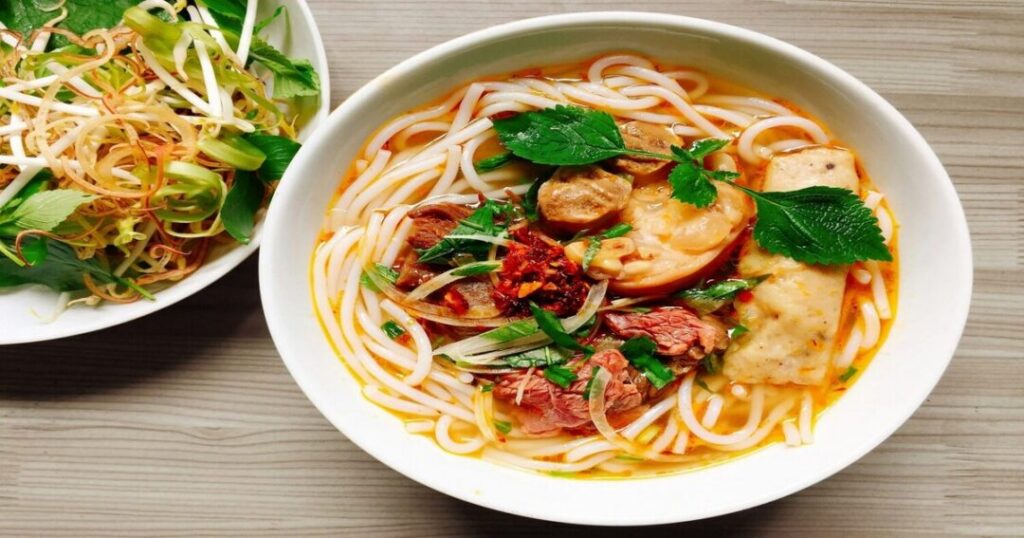
Mohinga is confirmed as the national dish of Myanmar — a fish soup served over thin rice noodles, traditionally eaten at breakfast but consumed at any time of day. Wikipedia describes it simply as “a fish soup made with rice noodles, typically served as a hearty breakfast” — but the simplicity of that description belies the depth and complexity of a dish that has been refined over centuries.
The broth of mohinga is built from catfish stock, thickened with chickpea flour and sometimes rice flour, fragrant with lemongrass, ginger, garlic, and banana stem. The result is a broth that is simultaneously rich and clean — deep with fermented fish paste (ngapi), warming with aromatics, thickened to a consistency that coats the noodles without becoming heavy. The rice vermicelli noodles are soft and silken, allowing the broth to penetrate without becoming mushy.
Mohinga’s earliest mentions appear in the poetry of U Ponnya from the Konbaung dynasty — suggesting it was already a beloved dish during the late 18th century. Historical researcher Khin Maung Nyunt has noted that no formal mohinga recipe appears in royal archives, suggesting it was a commoner’s dish — food of the markets, the hawkers, the streets — rather than court cuisine. This is part of its cultural power: mohinga belongs to everyone.
Toppings are the most personal part of the mohinga experience: crispy split-pea fritters (pe kyaw), hard-boiled egg sliced in half, crispy onions, fresh coriander, dried chilli flakes, a squeeze of lime, fish sauce on the side. Each bowl is different. Each vendor’s broth is different. Finding your mohinga in a new city is one of the great pleasures of travelling in Myanmar.
- The tradition of street hawkers carrying mohinga in bamboo poles or wheeling it by trishaw through neighbourhoods before dawn is centuries old — some vendors still operate this way
- Mohinga is traditionally served at community feasts during Thingyan (the Myanmar water festival and New Year celebration)
- Outside Myanmar, mohinga is the single most reliable test of a Burmese restaurant’s authenticity
Also Read: Places to Visit in Nagaland: 11 Untamed Destinations for Adventure & Culture Seekers
Lahpet Thoke — The Fermented Tea Leaf Salad
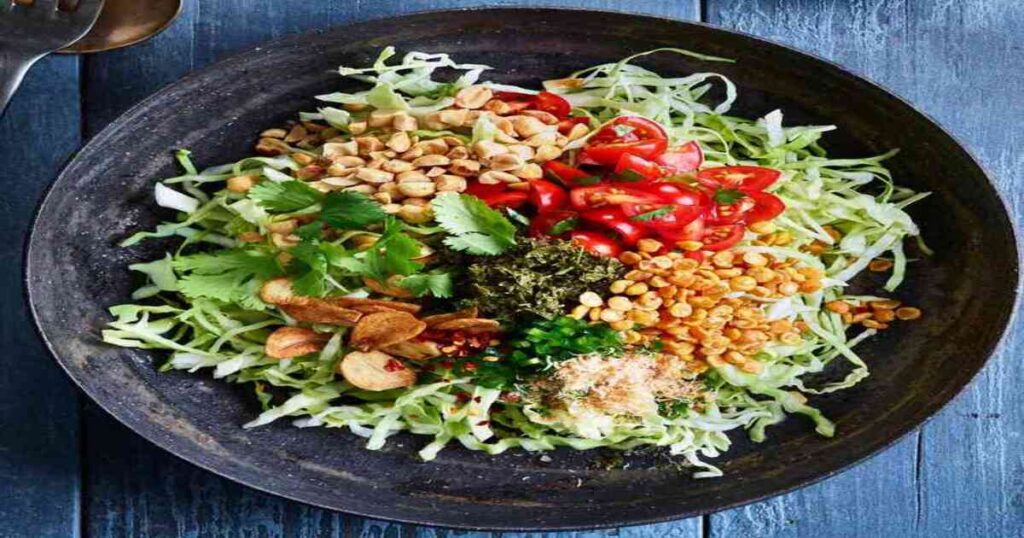
Lahpet thoke is Myanmar’s other national dish — and the one that most surprises first-time eaters. Lahpet means fermented or pickled tea leaves; thoke means salad or mixed. The dish is exactly what it sounds like: fermented tea leaves mixed with a combination of fried garlic, sesame seeds, peanuts, dried shrimp, sunflower seeds, fried split peas, fresh tomatoes, and sliced green chillies, dressed with a little oil and lime.
The taste is unlike anything in any neighbouring cuisine — sour from the fermentation, bitter from the tea, nutty from the seeds and peanuts, salty from the shrimp, crunchy from the fried elements, sharp from the garlic. It is an entire flavour spectrum in a single dish. The Myanmese saying — “Of all leaves, lahpet” — reflects how profoundly this preparation is embedded in the culture.
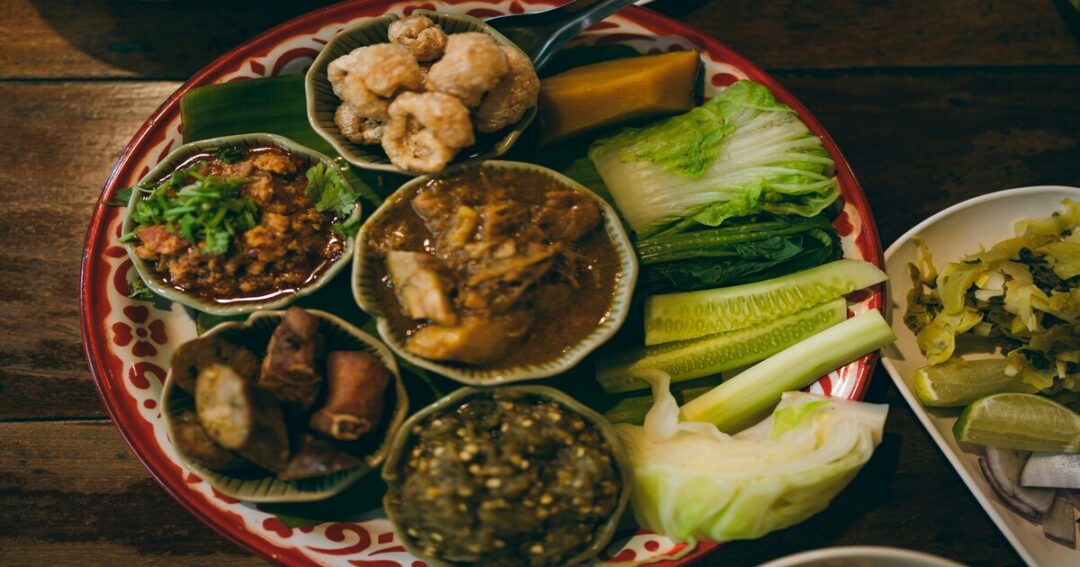
Traditionally, lahpet was offered as a peace offering between warring states — presenting a platter of fermented tea was a gesture of reconciliation. Today it is served at celebrations, religious gatherings, and as an everyday snack. The traditional presentation involves a lacquered wooden tray divided into compartments, each holding a different element — the diner mixes their own bowl.
Tea cultivation in Myanmar is significant: approximately 70,000 hectares of tea plantations, primarily in the highland Shan State, producing around 80 million kg annually — most of it consumed domestically, much of it fermented into lahpet rather than brewed into tea.
- Lahpet thoke is vegetarian if the dried shrimp is omitted — widely available in vegetarian form
- The lacquered tray presentation is one of Myanmar’s most distinctive food rituals
- For the Burmese dishes list at any serious restaurant, lahpet thoke in its traditional tray format is the definitive test of authenticity
Noodle Dishes — The Heart of Burmese Street Food
Ohn No Khao Swe — Coconut Chicken Noodles
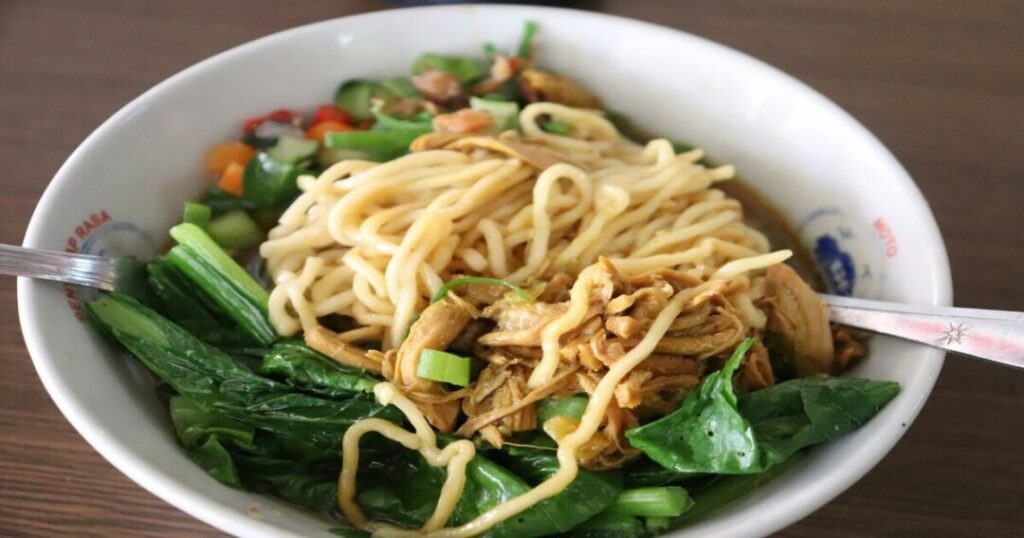
Ohn no khao swe (literally “coconut milk noodles”) is the most beloved noodle dish after mohinga — wheat noodles (or egg noodles) in a rich coconut milk and chicken curry broth, topped with crispy fried noodles, hard-boiled egg, fresh coriander, fried shallots, lime, and chilli. The coconut milk base gives it a creaminess and sweetness that balances the spiced curry underneath.
This is the dish that most reveals the Indian influence on Burmese cuisine — the curry base has echoes of Bengali and Manipuri cooking, filtered through a Burmese preference for gentler spicing and a richer, dairy-forward finish. It is simultaneously familiar to anyone who has eaten South Asian food and unlike anything they have eaten before.
- One of the most commonly available Burmese dishes outside Myanmar — a reliable indicator that a restaurant takes the cuisine seriously
- The crispy fried noodle topping is essential; without it the texture is incomplete
- Variations exist with fish instead of chicken — equally excellent
Nan Gyi Thoke — The Thick Noodle Salad
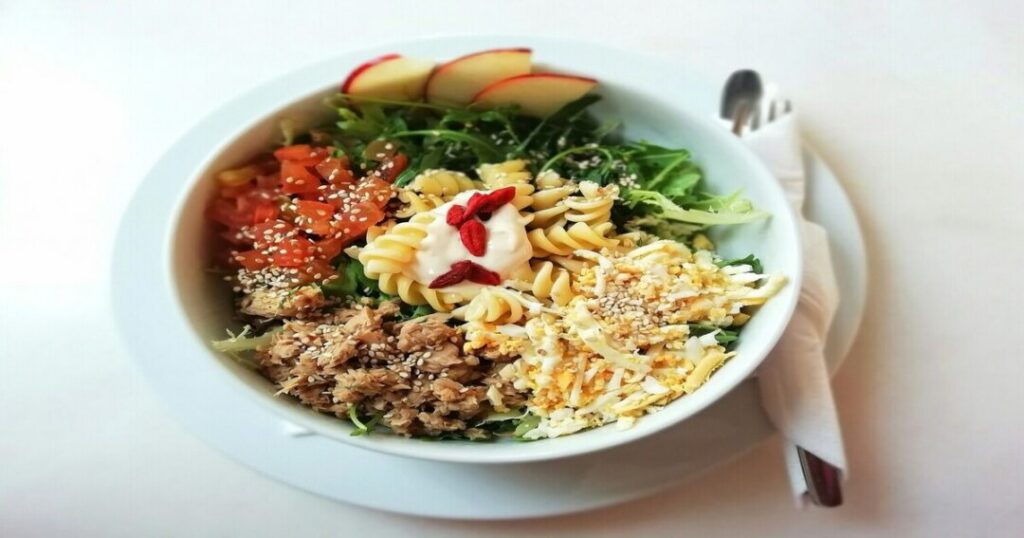
Nan gyi thoke is a noodle salad rather than a soup — thick round rice noodles tossed with chicken curry sauce, fish sauce, chickpea flour, sliced onions, coriander, and lime. It is one of the more unusual preparations in Burmese food: a dry noodle dish where the curry functions as a dressing rather than a broth. The chickpea flour coating on the noodles gives them a faintly nutty, slightly sticky exterior that carries the sauce extraordinarily well.
Shan Khauk Swe — Noodles from the Highlands
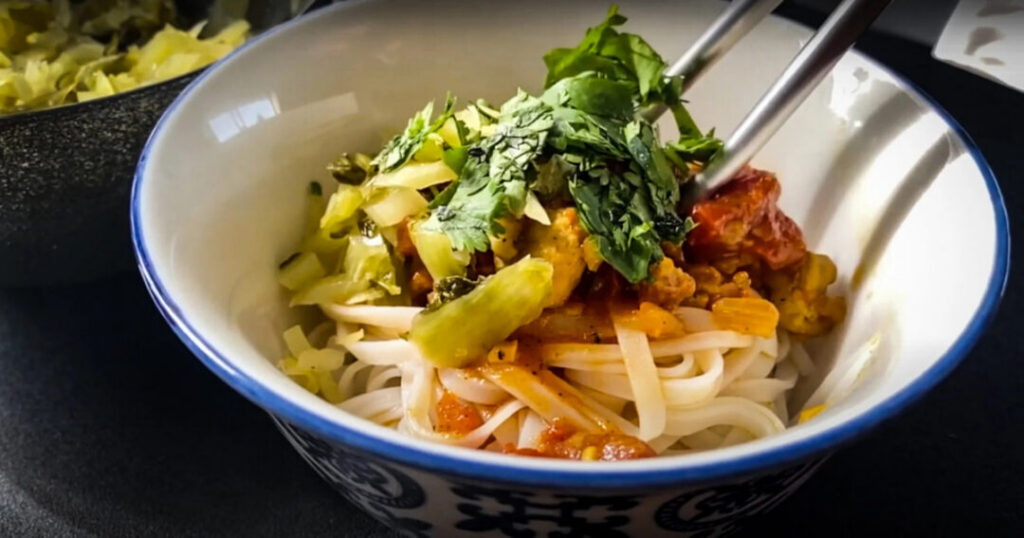
From the Shan Plateau comes Shan khauk swe — a completely different noodle tradition. These are flat rice noodles in a clear pork or chicken broth, garnished with preserved soybeans (tua nao), spring onions, and coriander. The Shan version uses fermented soybean in place of the fish-based flavourings of the Bamar tradition — the influence of the highland Chinese-adjacent food culture immediately apparent. Clean, slightly sour, and deeply savoury.
Curries — The Indian Inheritance, Burmified
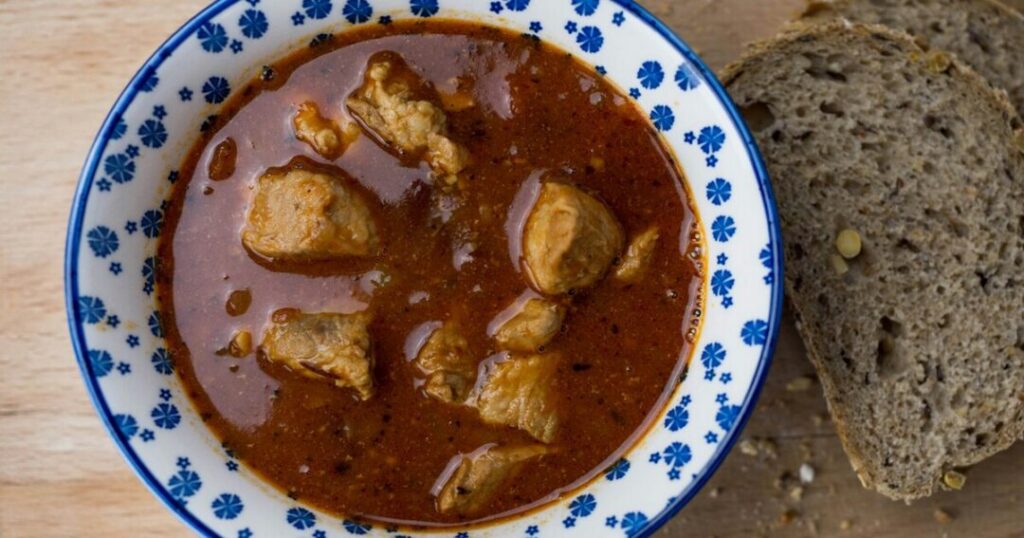
Burmese curries are unlike Indian curries — and unlike Thai curries. They are typically drier, oil-heavy (with the oil deliberately allowed to separate and float on the surface as a sign of properly cooked curry), less coconut-rich than Thai, and spiced more gently than their Indian counterparts. The aromatic base uses onion, garlic, ginger, and turmeric — similar to Indian cooking — but is cooked much longer until the onion virtually dissolves, creating a flavour base of extraordinary depth.
Pork curry (wet thar hin) is the most widely eaten — pork belly or shoulder slow-cooked until tender, the sauce reduced to a thick, caramelised coating. Chicken curry (kyat thar hin) and prawn curry in coastal regions are equally important.
The oil that floats on top of a Burmese curry is not a sign of excess — it is a deliberate technique called si cho (“oil return”) that indicates the aromatics have been properly cooked through. Trying to skim it off is missing the point.
- Burmese curries are almost always served as part of a spread — multiple dishes together with rice, soup, and salads simultaneously
- The traditional Burmese meal is not sequential; everything arrives at once
- Burma food near me searches that turn up Burmese curry are looking for the oil-forward, aromatics-deep version — quite different from Indian or Thai equivalents
Salads — The Thoke Tradition
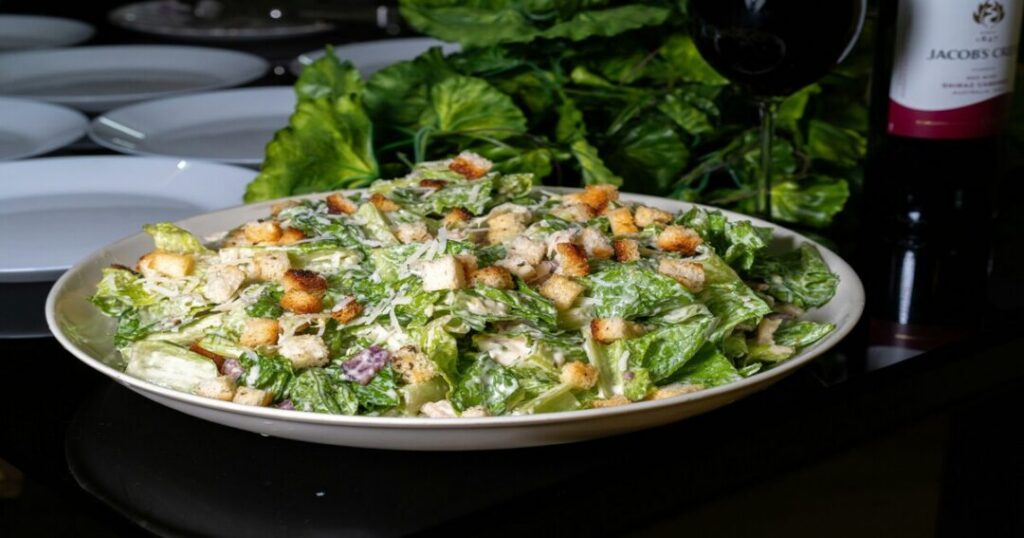
The thoke (salad) tradition is one of the most distinctive features of authentic Burmese cuisine — and one of the most underrepresented outside Myanmar. These are not green salads in any Western sense; they are complex mixed preparations of vegetables, noodles, or starches with fermented, fried, and fresh elements.
Ginger salad (gin thoke): shredded fresh ginger tossed with sesame seeds, fried garlic, peanuts, dried shrimp, lime, and fish sauce. The aggressive freshness of raw ginger is the centre of the dish — warming, slightly bitter, entirely addictive.
Green tea leaf salad (laphet thoke): covered above — the national dish in salad form.
Pennywort salad (myin kwa ywet thoke): the fresh herb pennywort (Centella asiatica) tossed with the standard thoke elements — one of the most nutritionally dense dishes in the cuisine and one of the most refreshing.
Potato salad (a-lu thoke): sliced boiled potatoes dressed with fried shallots, fresh herbs, lime, and chilli — deceptively simple, deeply satisfying.
The thoke format — fermented or fresh ingredient + fried crunchy element + seeds/nuts + fresh herb + lime/fish sauce dressing — is the organising principle of an entire category of Burmese dishes.
Rice, Snacks & Street Food
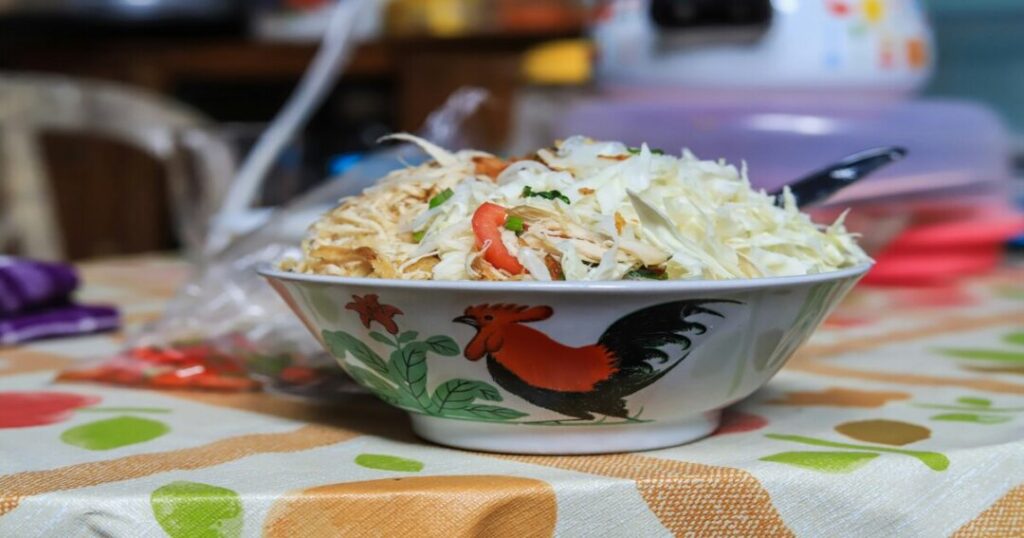
Htamin Jin — Fermented Rice
Htamin jin (“sour rice”) is a Burmese preparation where cooked rice is fermented overnight until slightly sour, then compressed into balls or blocks and served with accompaniments. The fermentation creates a complex, slightly acidic flavour that makes plain rice into something entirely different. It is the Burmese equivalent of the Indian poita bhat — fermented overnight rice transformed into a nutritional and flavourful staple.
Samosas and Indian-Burmese Street Snacks
Myanmar’s long historical connection with Bengal and India through the British colonial period created a street food culture with strong South Asian elements. Samosas (samusa) are ubiquitous at Burmese street stalls — often served not alone but floating in a mild curry soup (samusa soup), surrounded by noodles and topped with fried shallots and coriander. This is the Burmese adaptation: taking the Indian snack and embedding it in a completely different culinary context.
Mont lin maya — paired savoury snacks cooked in a griddle with round and oval moulds (one with egg, one with batter) — are one of the most beloved Burmese street foods, eaten together because they are considered a “couple.”
Drinks — From Tea to Palm Sugar
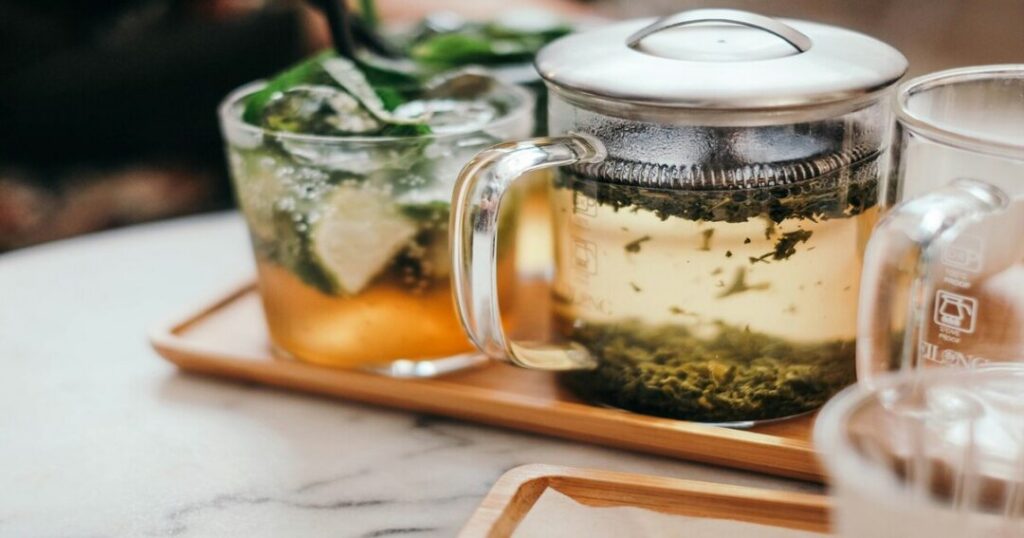
Green Tea — The Constant Companion
Myanmar green tea (laphet yay) is the accompaniment to every meal, every snack, every conversation. Served weak, slightly grassy, without milk or sugar, at room temperature or warm — it is the background of every eating experience in Myanmar. Green tea is always free at restaurants; it is not a luxury but a given, a statement about hospitality.
The same tea leaf that brews the daily drink is also fermented into lahpet — the plant occupying two completely different culinary roles simultaneously.
Shwe Yin Aye — Coconut Milk Dessert Drink
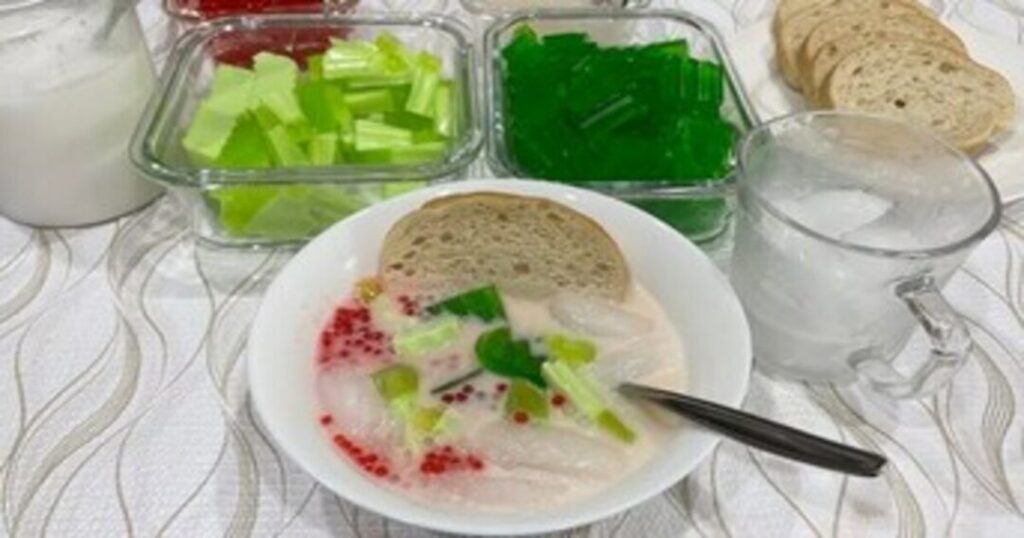
Shwe yin aye (literally “golden heart”) is a cold coconut milk drink layered with agar jelly, sago pearls, bread, and glutinous rice — eaten with a spoon as much as drunk, a dessert and a beverage simultaneously. The combination of cold coconut milk, chewy jelly, and soft rice is one of the most characteristically Burmese sweet experiences.
Palm Sugar and Palm Juice
The palmyra palm is one of Myanmar’s most culturally important trees — providing palm sugar (htan nyat) for sweetening, palm juice (htan ye) when fresh, and fermented toddy (htan ye hmwe) when left to ferment. Palm sugar has a deep, caramel-molasses quality that distinguishes Burmese sweets from those made with refined sugar.
Conclusion about Burmese Food
Burmese food is the cuisine of a country that has been at the intersection of civilisations for thousands of years — and has absorbed every influence while remaining stubbornly, beautifully itself. Quick guide to the essentials of Burmese cuisine:
- National dishes: Mohinga (fish noodle soup, breakfast and beyond), lahpet thoke (fermented tea leaf salad — “Of all leaves, lahpet”)
- Noodles: Ohn no khao swe (coconut chicken), nan gyi thoke (thick noodle curry salad), Shan khauk swe (highland clear broth)
- Curries: Oil-forward, aromatics-deep, drier than Indian — pork curry the most beloved
- Salads (thoke): Ginger salad, pennywort salad, potato salad — fermented + fried + fresh + lime + fish sauce
- Street food: Samusa soup, mont lin maya, htamin jin (fermented rice)
- Drinks: Green tea (always free, always present), shwe yin aye (coconut milk dessert drink), palm juice
The bowl of mohinga that a street hawker has been perfecting since before dawn is the most honest introduction to Burmese food there is. Start there. The rest will follow.
Download the Explurger app to discover Burmese restaurants near you, find authentic Burma food experiences, and log every bowl of mohinga and plate of lahpet thoke on your journey through Burmese cuisine.
The broth is already simmering. The tea leaves are already fermenting. Myanmar’s table is set.
FAQs about Burmese Food
2. What makes Burmese cuisine different from Thai and Indian food?
Burmese cuisine sits between its neighbours but is categorically distinct from both. Unlike Thai cooking, Burmese food uses relatively little coconut milk (except in specific dishes like ohn no khao swe) and far more fermented fish paste (ngapi). Unlike Indian cooking, Burmese curries are drier, more oil-forward, and use a more restrained spice palette with an emphasis on long-cooked aromatics. The fermentation tradition — lahpet, ngapi, fermented soybeans in Shan cooking, fermented rice — gives Burmese food a depth that is achieved without heavy spicing.
3. What are the must-try dishes on a Burmese dishes list?
The essential Burmese dishes list: mohinga (national dish, fish noodle soup), lahpet thoke (fermented tea leaf salad), ohn no khao swe (coconut chicken noodles), nan gyi thoke (thick noodle curry salad), Shan khauk swe (highland clear noodle broth), pork curry (wet thar hin), ginger salad (gin thoke), samusa soup (samosa in curry broth), mont lin maya (paired griddle snacks), and shwe yin aye (cold coconut milk dessert drink).
4. Is Burmese food vegetarian-friendly?
Burmese cuisine is more vegetarian-friendly than it may first appear. The Buddhist majority has maintained strong vegetarian traditions — most thoke salads can be made without dried shrimp, most curries have vegetable versions, and the Shan highland food tradition (using fermented soybeans rather than fish sauce as the umami base) is largely vegetarian by default. Lahpet thoke is available in vegetarian form. Green tea is always free and vegetarian. The main challenge is ngapi (fermented fish paste), which appears as a background ingredient in many dishes — worth specifying when ordering if fish products are a concern.
5. What should I know before visiting a Burmese restaurant?
At a Burmese restaurant, the traditional meal format involves multiple dishes arriving simultaneously rather than sequentially — rice, soup, curry, and salads all at once. The oil floating on top of a curry is intentional and desirable (the si cho technique). Mohinga and lahpet thoke are the two dishes that best demonstrate a restaurant's authenticity. Free weak green tea is the traditional accompaniment to every meal — ask for it if it doesn't arrive automatically. Most dishes are gently spiced by default; chilli and fish sauce are served on the side for individual adjustment.
6. What is Burma food like compared to other Southeast Asian cuisines?
Burma food is gentler in heat than Thai, less coconut-dominant than Malaysian, more fermentation-forward than Vietnamese, and more oil-forward than Chinese. The tea leaf salad and the fermented fish paste base are the most distinctively Burmese elements with no equivalent in neighbouring cuisines. The noodle tradition is as rich as Vietnam's or Thailand's but uses entirely different broths and flavour architectures. Burmese cuisine is frequently described as the most underappreciated food culture in Southeast Asia — complex, layered, and deeply rooted in a specific landscape and history.