
2,256 Total Views
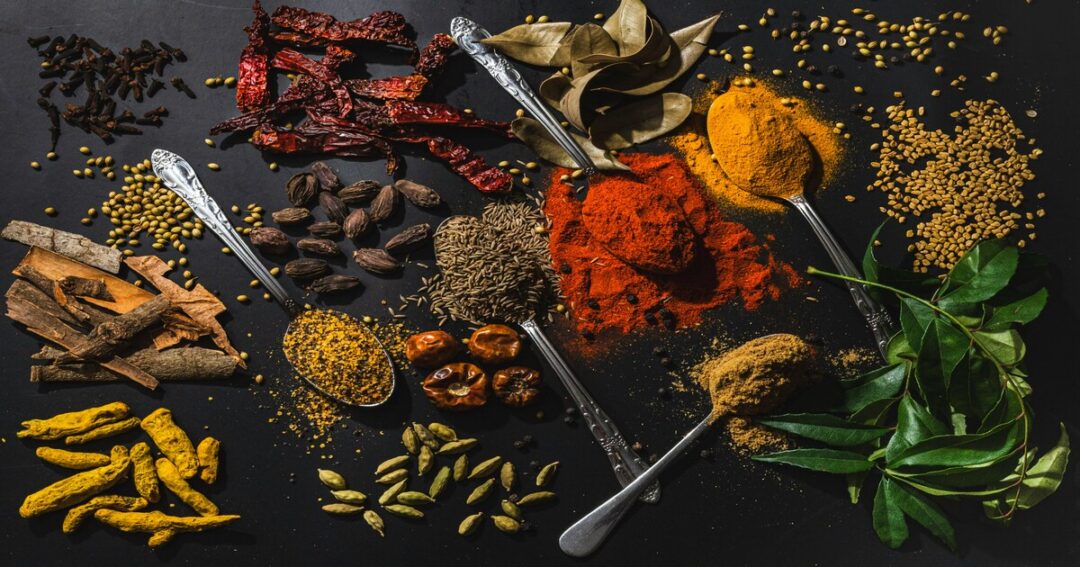
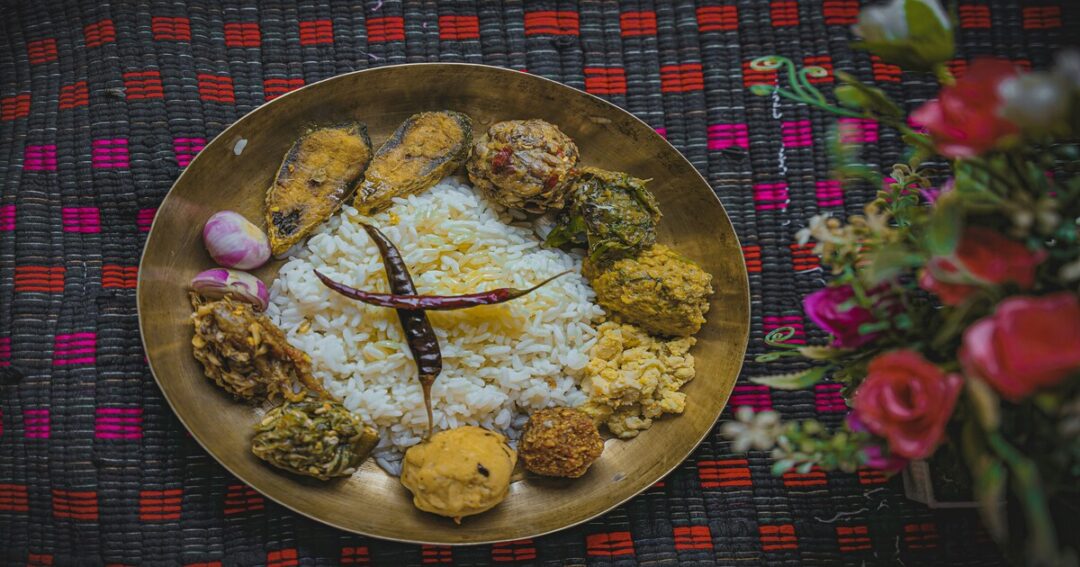
There is a quiet confidence to Assam food that you don’t find in many other Indian regional cuisines. No mountain of spices. No competition for the loudest flavor. What you get instead is something more honest—a cuisine built around the extraordinary abundance of the Brahmaputra Valley: over 200 varieties of rice, rivers teeming with freshwater fish, bamboo groves that supply shoots for fermenting, wild greens that grow at the edges of paddy fields, and one of the world’s great tea-growing traditions running through the hills. Assam cuisine is the food of a land that never needed to import drama because the ingredients always spoke for themselves.
The Foundation: Understanding Assam’s Food Culture
Assamese cuisine sits at a remarkable culinary crossroads—a confluence, as Wikipedia describes it, of the cooking habits of the hills (which favor fermentation and drying as preservation) and the plains (which offer an extraordinary variety of fresh vegetables, greens, fish, and meat). Both traditions center on a single, irreplaceable ingredient: rice.
Rice is not merely the staple of traditional Assamese food—it is the cultural anchor. Assam is believed to retain over 200 varieties of indigenous rice, including the famous bora saul (glutinous sticky rice), joha saul (scented short-grain rice with a naturally floral aroma), and many others that have almost disappeared from the food systems of other Indian states but survive here in village kitchens and ceremonial contexts. To eat in Assam is to eat within a rice civilization.
What makes Assam cuisine distinct from the rest of India—and from its Northeast Indian neighbors—is its defining restraint. Very little spice is used. Oil is minimal. Flavor comes from fresh, dried, and fermented endemic ingredients: sour fruits, wild greens, bamboo shoots, mustard seeds, and the gentle heat of dried chilies. Two concepts organize every traditional Assamese meal: khar (the alkaline, earthy beginning of a meal) and tenga (the sour, tamarind-free sourness that closes it). Traditionally, a meal that begins with khar must end with tenga—this is not merely custom; it reflects an Ayurvedic understanding of digestion that runs deep in Assamese food culture.
The food also reflects Assam’s extraordinary ethnic diversity — more than a hundred ethnic groups live in the state, each with its own food traditions. What this guide covers is the broad, shared favorite Assam food culture of the Brahmaputra Valley and its surrounding hills.
Also read: TOP 10 EXCUSES FOR YOUR NEXT VACATION: PLACES TO VISIT IN ASSAM
Khar—The Alkaline Beginning
Khar — The Dish That Opens Every Traditional Meal
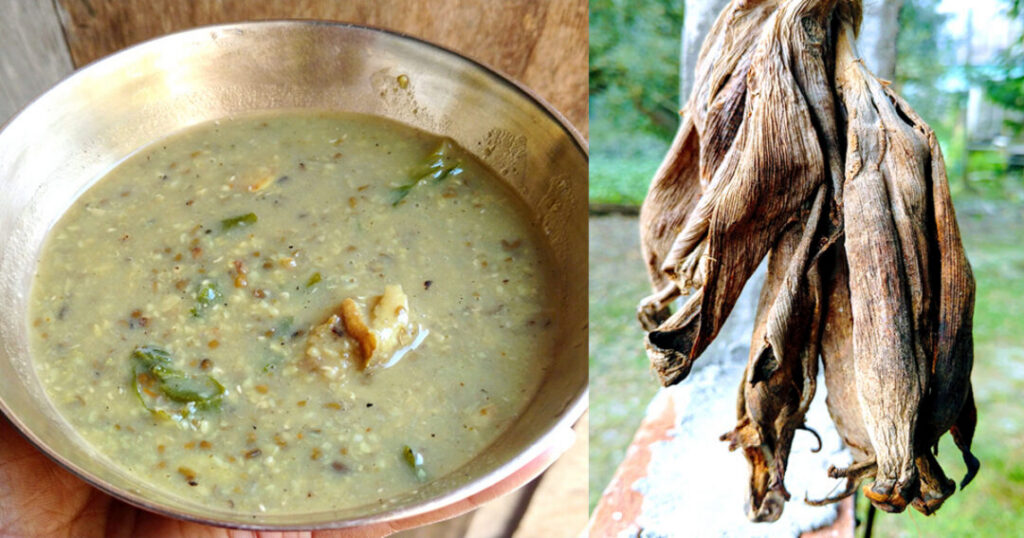
Khar is one of the most distinctive and culturally significant preparations in Assam’s famous food—and one of the least known outside the state. It is made by filtering water through the ash of sun-dried banana peel—specifically from the Bhim Kol variety (Musa balbisiana), an indigenous banana found in the Northeast—producing a naturally alkaline liquid. This filtered water—also called “khar”—is used as the primary cooking medium for the dish, giving it a uniquely silky, smooth texture and a gently bitter, earthy flavor that exists nowhere else in Indian cooking.
Khar can be made with raw papaya, raw banana, various gourds, or with fish and meat—the alkaline liquid tenderizes everything it touches and creates a consistency unlike any broth or curry in other cuisines. It is always the first dish served in a traditional Assamese meal, consumed to prepare the digestive system for what follows. This positioning is not incidental—it reflects centuries of nutritional wisdom embedded in the meal’s structure.
Khar is unique to Assam and the broader Northeast Indian food tradition—no Indian regional cuisine outside the Northeast has a comparable alkaline cooking preparation. Similar alkaline preparations are found among the Garo tribe of Meghalaya (called Kalchi or Kratchi) and other Northeast communities, reflecting a shared food philosophy across the region. Within Assam itself, the process of making khar water from banana peel ash is a disappearing folk technology that links every Assamese kitchen to its agricultural past.
Also read: Mayong Assam Black Magic: India’s Most Mysterious Village Explained
Rice-Based Staples — The Heart of Assam Cuisine
Bora Saul — The Sacred Sticky Rice
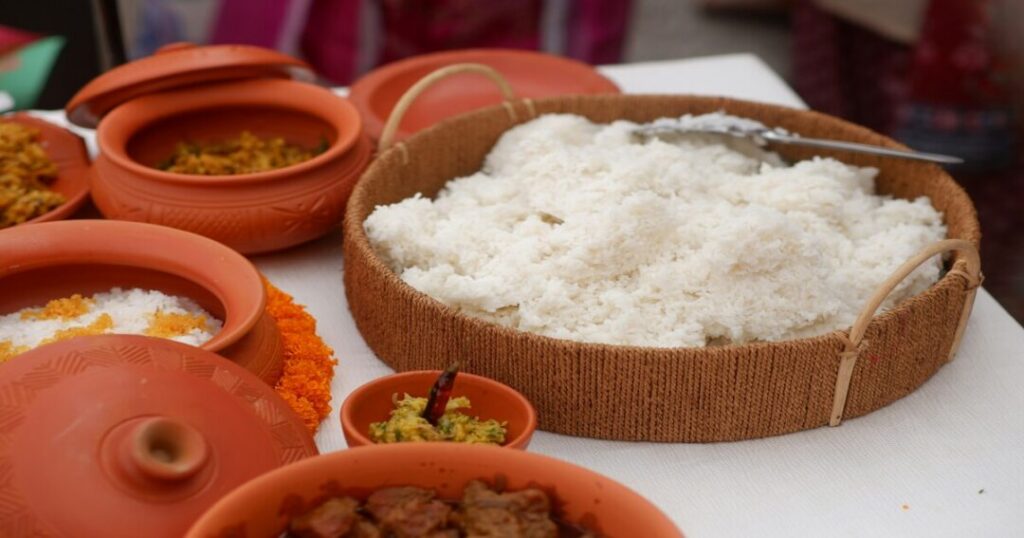
Bora saul is a glutinous, sticky short-grain rice indigenous to Assam—the variety most closely associated with the state’s festive and ceremonial food culture. It is used to make jolpan (the traditional Assamese breakfast offering of flattened rice, curd, and jaggery), various pithas (rice cakes), and rice preparations for religious offerings. Bora Saúl is also the base for apong, the traditional rice beer of the tribal communities.
The cultural weight of bora saul cannot be overstated. In Assamese tradition, rice — particularly sticky rice — is a symbol of prosperity, community, and the harvest. The Magh Bihu festival (also called Bhogali Bihu, the harvest festival) is centered almost entirely on food—communal cooking, rice cakes made overnight at temporary bamboo cooking huts called bhelaghar, and feasting that marks gratitude for the earth’s abundance.
Joha Saul — The Scented Rice
Joha saul is Assam’s naturally aromatic short-grain rice—a GI-tagged product (GI tag received in 2017)—with a delicate floral fragrance similar to Basmati but distinctly its own. It is the rice of celebration and hospitality, served at festivals and to honored guests. The scent of joha rice cooking is, for many Assamese, the smell of home.
Poita Bhat—Overnight Fermented Rice
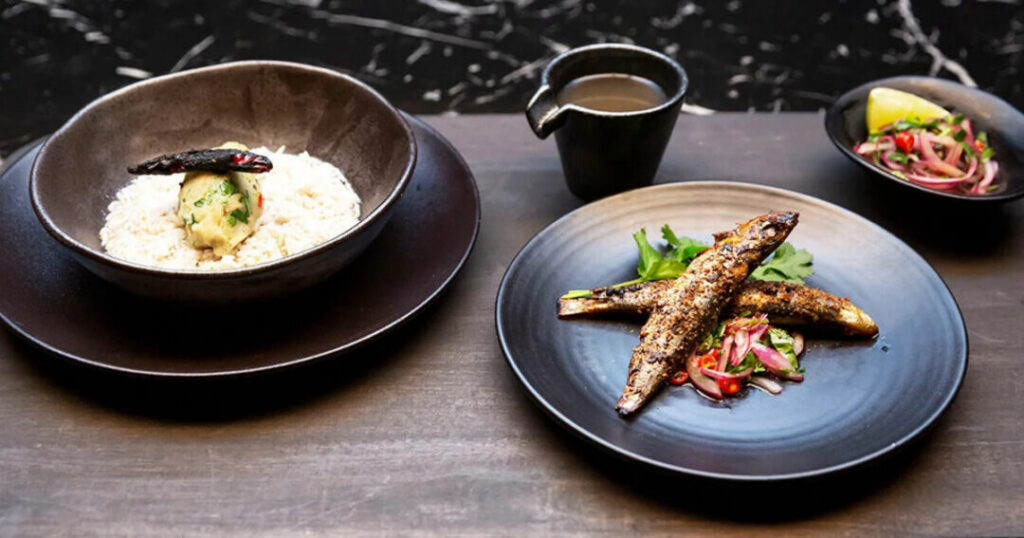
Poita bhat is cooked rice left overnight in water to ferment gently—by morning it has become slightly sour, soft, and cooling. It is the traditional summer breakfast of rural Assam, eaten with salt, raw onion, mustard oil, and green chili. The fermentation process enriches the rice with probiotics and B vitamins, making it one of the most nutritionally dense preparations in the entire Assam traditional food tradition.
Poita bhat is the food of farmers before a day in the fields—cheap, nourishing, cooling, and perfectly suited to the Assam valley’s humid summer mornings. It is also profoundly associated with the Rongali Bihu (spring festival), when eating poita bhat with raw onion and green chili is a ritual that connects every Assamese—urban or rural—to the agricultural roots of their culture.
Fish & Meat — The Protein of the Plains
Masor Tenga — The Sour Fish Curry That Closes the Meal
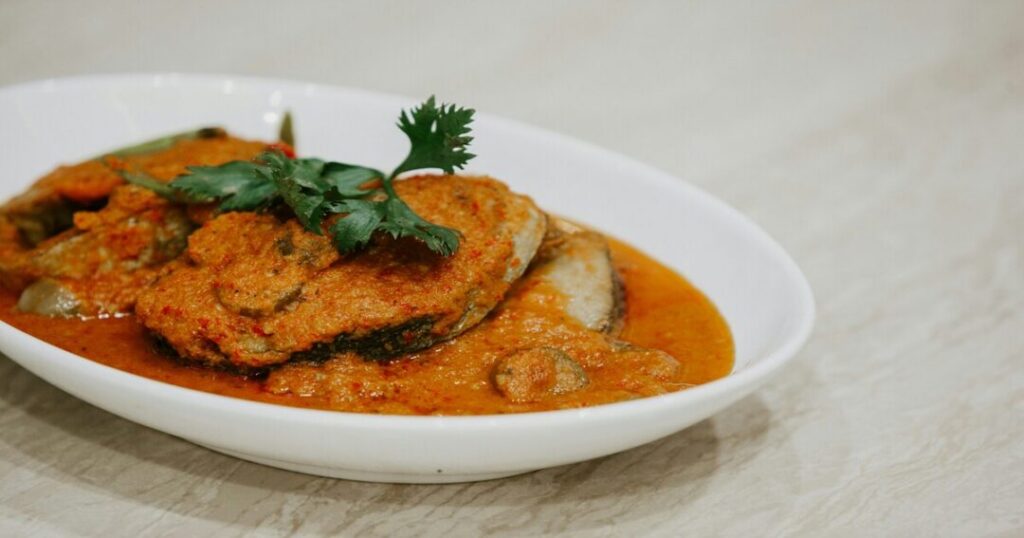
If khar opens a traditional Assamese meal, masor tenga—sour fish curry—closes it. “Tenga” means “sour” in Assamese, and this dish achieves its distinctive sourness not through tamarind (which is rarely used in Assamese cuisine) but through a range of endemic souring agents: thekera (dried Garcinia cambogia fruit), ou tenga (elephant apple), tomato, or nomi tenga (lemon). The result is a broth-like, oil-light fish curry—clean, tangy, and deeply refreshing—that is considered the digestive conclusion of every proper Assamese meal.
Masor tenga is most commonly made with rohu (a freshwater carp) or ilish (hilsa), though virtually any freshwater fish works. The dish uses minimal spice—typically only mustard seeds, turmeric, and the souring agent—which means the flavor of the fish itself becomes the center of attention. This simplicity is the defining philosophy of Assam cuisine: don’t obscure the ingredient; celebrate it.
Also read: Best Food in Gangtok: A Complete Guide to Sikkimese, Tibetan & Nepali Cuisine
Duck with Ash Gourd (Hah ko Kumura)—The Festive Meat Dish
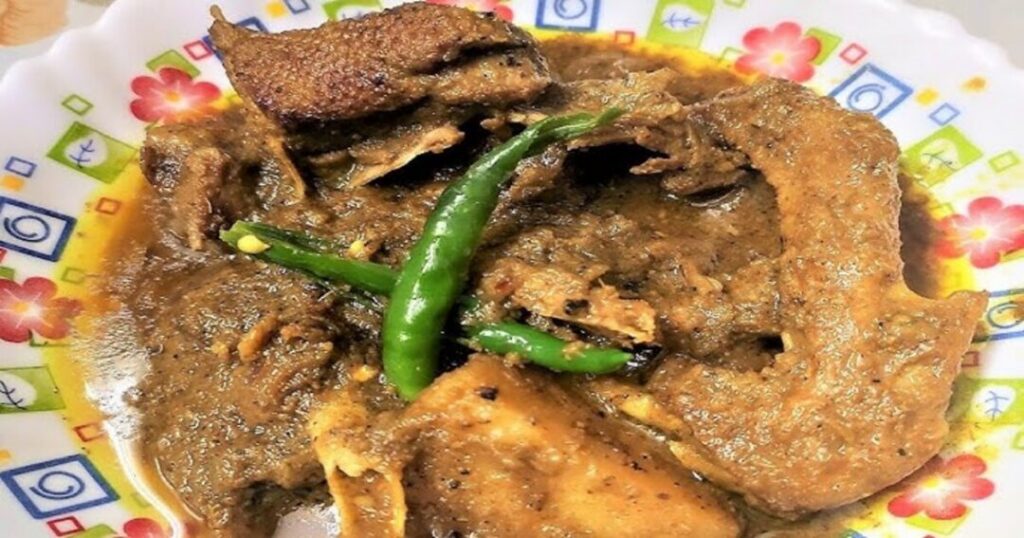
Duck is the celebratory meat of Assam—specifically, duck slow-cooked with ash gourd (kumura), black sesame seeds (til), and mustard. The combination of the rich, gamey duck with the cooling, neutral ash gourd is one of the great balancing acts in Assamese cooking. It is traditionally prepared for festivals, weddings, and important guests.
The use of duck reflects Assam’s geography—the state’s wetlands and river systems have always supported large wild and domestic duck populations, making it a more accessible and culturally rooted protein than chicken in many communities.
Pork in Tribal Cuisines — The Forest Tradition
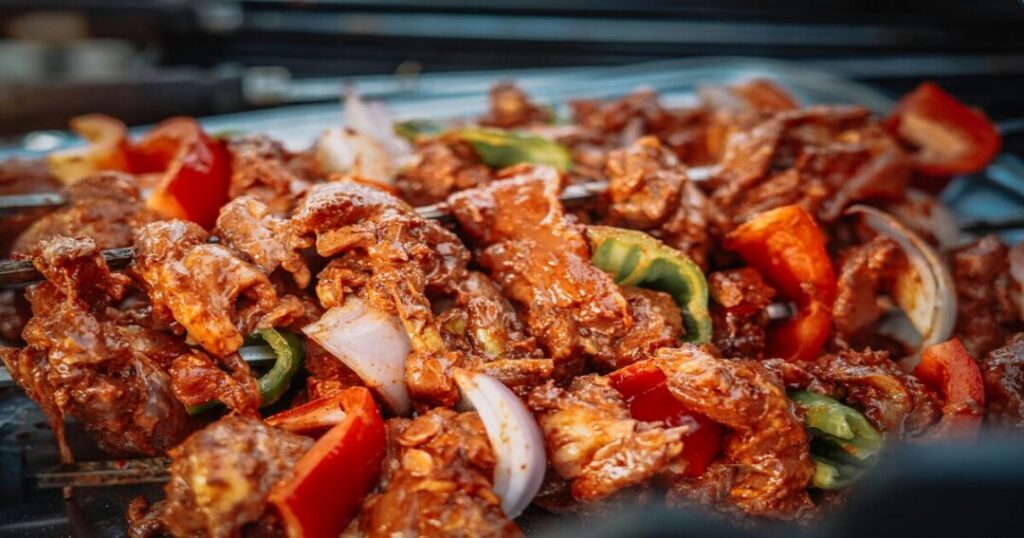
Among many of Assam’s tribal communities—particularly the Bodo, Dimasa, Karbi, and various hill tribes—pork is the most culturally significant meat. It is traditionally smoked, slow-cooked with bamboo shoots and local herbs, or prepared with fermented ingredients that give it a deeply complex flavor profile. Pork with bamboo shoot (khorisa) is one of the most beloved combinations in tribal Assam.
Fermented & Smoked Foods — Assam’s Preservation Tradition
Khorisa — Fermented Bamboo Shoot
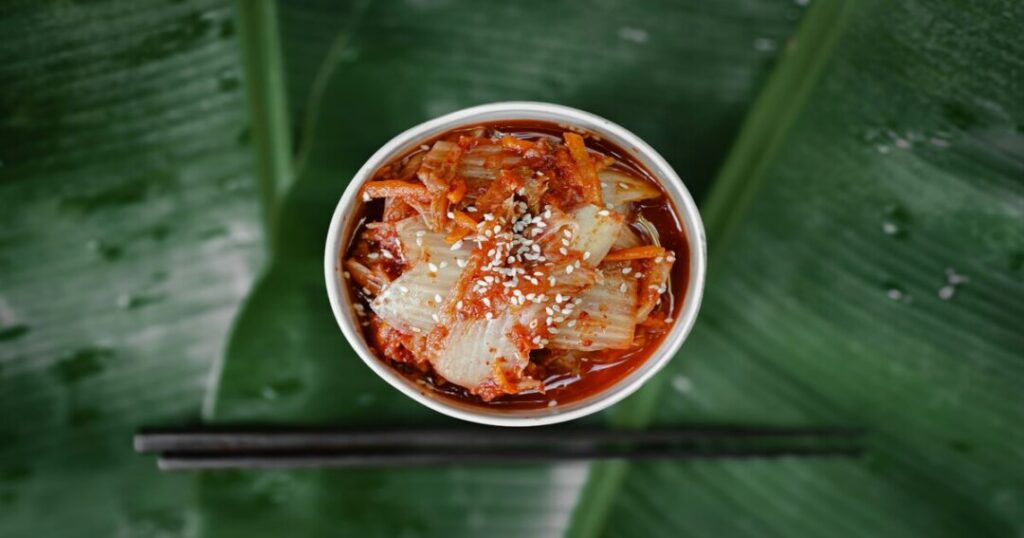
Khorisa is fermented bamboo shoot, one of the most important fermented foods in all of Northeast India. Fresh bamboo shoots are shredded, packed into containers, and allowed to ferment for days to weeks until sour and deeply pungent. The resulting product is used as a condiment, a flavoring agent, and an ingredient in fish and pork preparations.
Khorisa is to Assam what kimchi is to Korea—a living fermented product that connects the kitchen to the forest, that speaks of a pre-refrigeration culture of preservation, and that carries a flavor complexity achievable in no other way. It is an acquired taste for outsiders; for those who grow up eating it, it is one of the most irreplaceable flavors of home.
Akhuni (Axone) — Fermented Soybean
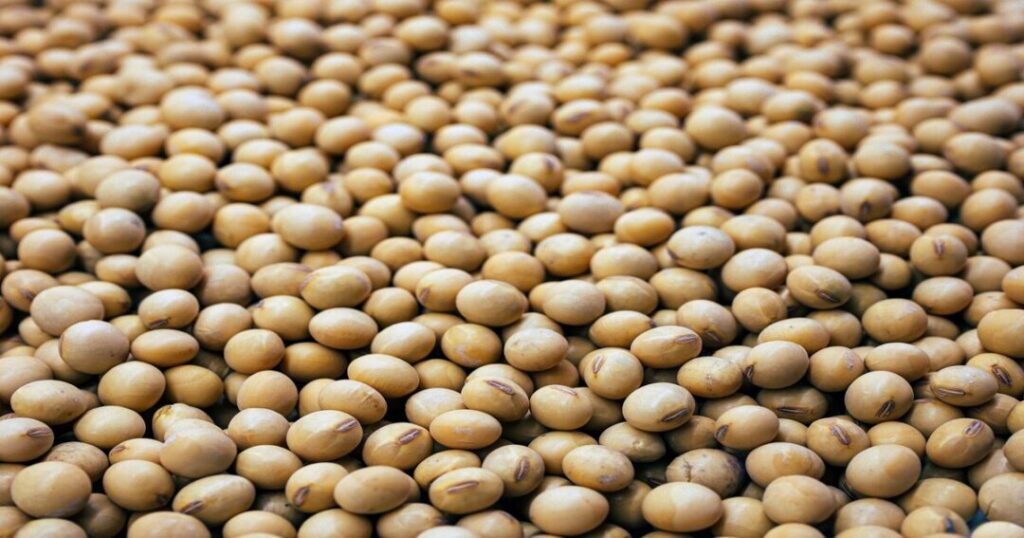
Akhuni (known in Nagaland as axone) is a fermented soybean preparation that crosses tribal food traditions across Northeast India. In Assam’s tribal communities, it functions as an umami base—pungent, sticky, and deeply flavored—used in meat and vegetable preparations to add depth that no fresh ingredient can replicate.
Sweets & Desserts — Assam Famous Sweets
Pitha—The Festival Rice Cake
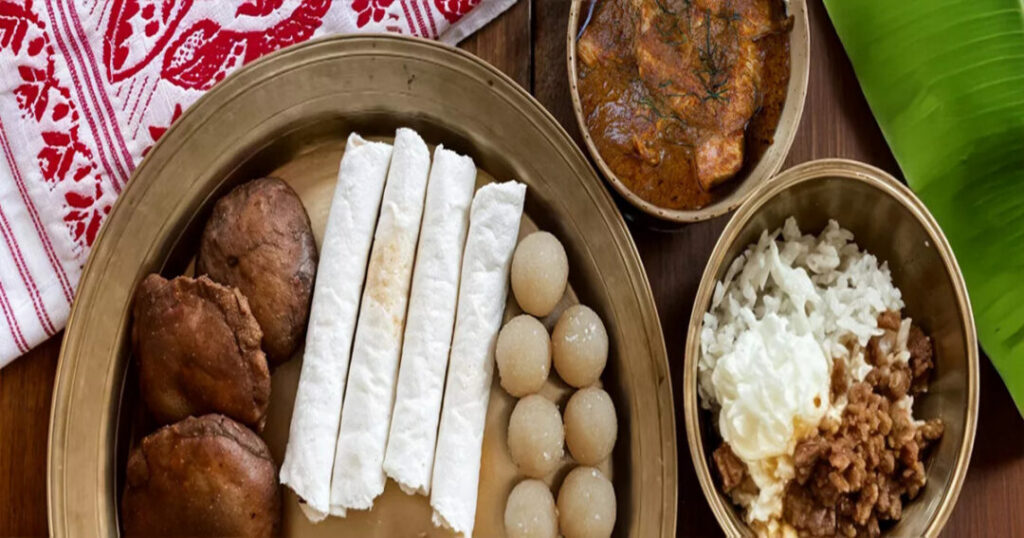
“Pitha” is the collective name for the rice cakes that are the most culturally significant Assam sweet tradition—made primarily during the Bihu festivals and not typically eaten as everyday food. The variety within the pitha family is extraordinary:
- Til pitha—thin sheets of sticky rice rolled around a filling of black sesame (til) and jaggery; the most iconic of all Assamese pithas; the sesame filling is toasted until fragrant and sweetened with aged jaggery
- Sunga pitha—rice batter poured into hollow bamboo tubes and slow-roasted over an open fire until cooked through; the bamboo imparts a faint woody, smoky note to the rice cake inside
- Ghila pitha — fried rice cakes made in a round mould, sometimes stuffed with coconut and jaggery
- Kol pitha—banana pancakes made from ripe banana mashed into rice flour batter and pan-fried
Pithas are made by hand, often overnight at Magh Bihu celebrations, by communities cooking together around fires in the bhelaghar. They are not restaurant food—they are a home food, a festival food, and the act of making them is itself a cultural transmission.
Narikolor Laru — Coconut Balls
Narikolor laru are round sweets made from grated coconut cooked with jaggery until thick and fragrant, then rolled into balls. They are one of the most beloved famous Assam sweets—associated with festivals, particularly Bihu, and with the concept of sharing sweetness as an act of hospitality. Simple in construction, deeply satisfying in flavor—the jaggery provides a molasses-like depth that refined sugar cannot replicate.
Payox — The Festive Rice Pudding
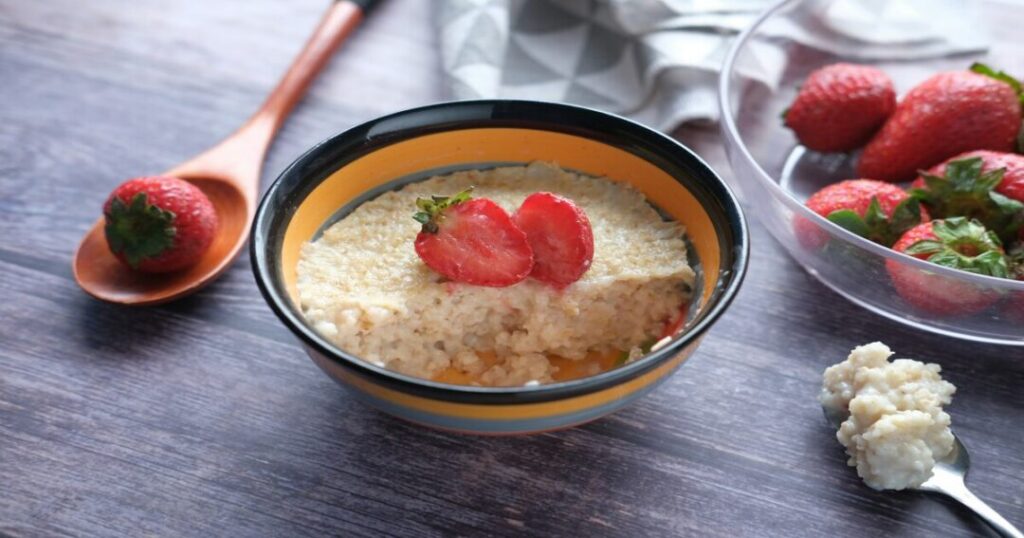
Payox (Assamese rice kheer) is a slow-cooked rice pudding made with fragrant joha rice, full-fat milk, and jaggery or sugar. It is richer, more fragrant, and more slowly cooked than most Indian rice puddings—the joha rice’s natural floral aroma perfumes the milk throughout the long cooking process. Payox is the sweet dish of celebrations—puja offerings, festivals, and meals honoring guests.
Vegetarian Assam Food — A Dedicated Guide
Assamese cuisine is remarkably generous to vegetarians—the tradition of minimal spice, abundant fresh greens, and rice-centered eating means that many of the most significant dishes in the cuisine are naturally plant-based.
Essential vegetarian Assam dishes:
- Khar (made with papaya or gourd) — the alkaline opening dish; entirely plant-based in its vegetable form
- Poita bhat—fermented overnight rice with raw onion, mustard oil, green chilli; entirely plant-based
- Xaak preparations — leafy greens (xaak) cooked with mustard seeds, garlic, and minimal oil; Assam has an extraordinary range of edible wild greens that form the backbone of everyday vegetarian eating
- All pithas—til pitha, sunga pitha, ghila pitha, kol pitha—are all vegetarian
- Narikolor laru — entirely plant-based
- Payox — dairy-based but vegetarian
- Jolpan — the traditional breakfast of flattened rice, curd, and jaggery; entirely vegetarian
- Tenga with tomato or lemon—a sour vegetable curry using tomato or lemon as the souring agent; entirely plant-based
The principle of minimum intervention that defines Assam cuisine means that vegetarian dishes here are not afterthoughts—they carry the same philosophy, the same restraint, and the same depth as the meat-based preparations.
Drinks — From Tea to Rice Beer
Assam Tea — The World’s Most Important Black Tea
Assam produces the world’s largest volume of black tea from a single region—the bold, malty, full-bodied tea that forms the base of most breakfast tea blends internationally. The tea gardens of the Brahmaputra Valley were first developed commercially under British colonial rule in the mid-19th century, though the indigenous Singpho community had been producing their own tea (falap—steamed and fermented in bamboo tubes) long before colonial cultivation began.
In Assam itself, tea is drunk strong, with milk, throughout the day. The ritual of chah (tea) is the beginning of every social interaction—a cup of strong Assam tea offered to a visitor is the first and most fundamental expression of Assamese hospitality.
Apong — The Rice Beer of the Tribes
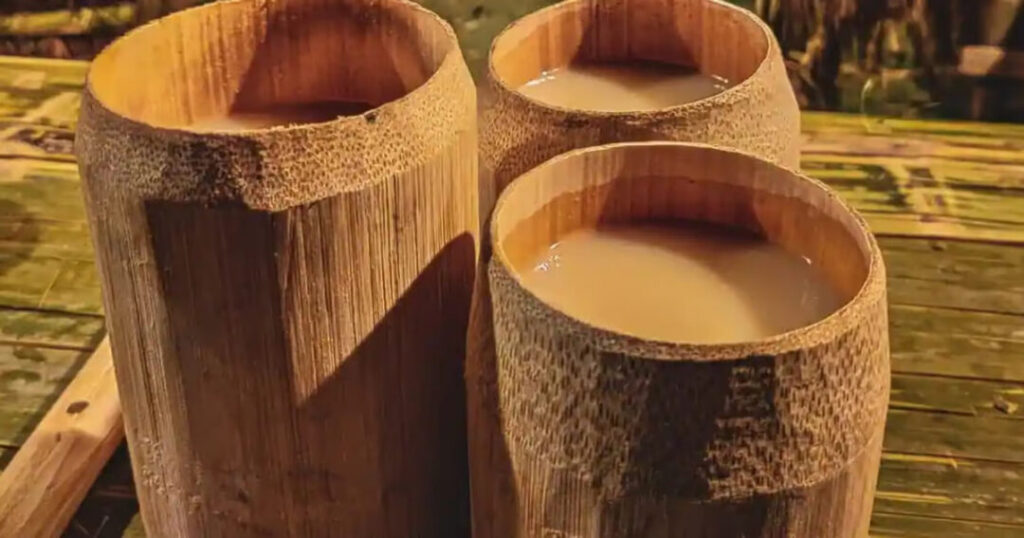
Apong is a traditional rice beer brewed by the Mising tribe of Assam—it is one of the most important fermented beverages in Northeast India. Made from fermented glutinous bora saul rice, apong is brewed using a traditional yeast cake called hepok that is prepared from a specific combination of herbs, roots, and wild fungi. The resulting drink is lightly alcoholic, mildly sour, and deeply connected to Mising cultural and spiritual life. Every important occasion—births, festivals, marriages, and the honoring of guests—involves a pong.
Apong is not a single product but a family—po:ro apong (rice beer served in a clay pot) and nogin apong are among the varieties. Drinking apong from a communal pot with bamboo straws is one of the defining social rituals of Mising culture.
Also read: Kerala Best Food: A Region-by-Region Guide to the Most Extraordinary Cuisine in India
Conclusion
Assam food is mountain and valley, hill tribe and plain village, fermented bamboo and fragrant joha rice—all of it connected by a philosophy that the most interesting flavor is almost always the one that requires the least interference. Quick guide to the essentials:
- The meal structure: Khar first (alkaline, earthy) → rice → fish, meat, and vegetables → tenga last (sour, digestive)
- Must experience: Masor tenga, til pitha at Bihu, poita bhat in summer, joha rice, narikolor laru
- Fermentation tradition: Khorisa (bamboo shoot), akhuni (soybean), apong (rice beer), poita bhat (overnight rice)
- Assam’s famous sweets: Til pitha, sunga pitha, narikolor laru, payox
- Drinks: Strong Assam tea (chah) for daily life; apong (Mising rice beer) for celebration
- Vegetarians: Khar (papaya/gourd), all pithas, xaak greens, jolpan, poita bhat
Assam cuisine is still finding its audience beyond the Northeast. But those who find it rarely leave without understanding something about restraint, fermentation, and the courage it takes to let an ingredient be exactly what it is.
Download the Explurger app to discover Assam’s special food experiences, log your masor tenga and til pitha moments, and find the most authentic Assamese food wherever you are.
The bhelaghar is already lit. The poita bhat is already fermenting. Assam’s table is set.
FAQs About Assam food
2. What makes Assam cuisine different from other Indian cuisines?
Assam cuisine is defined by three things that set it apart from the rest of India: extreme spice restraint (flavor comes from endemic fresh, dried, and fermented ingredients rather than spice blends); a structured meal philosophy (khar opens the meal, tenga closes it—reflecting Ayurvedic digestive principles); and an extraordinary fermentation tradition (khorisa, apong, akhuni, poita bhat) developed out of practical necessity in a geography of abundance. It is also the only Indian cuisine with over 200 indigenous rice varieties still in active use.
3. What are the famous sweets of Assam?
The most celebrated famous Assam sweets are til pitha (sticky rice rolled around black sesame and jaggery—the most iconic festival sweet), narikolor laru (coconut and jaggery balls), sunga pitha (rice cake baked inside bamboo), ghila pitha (fried rice cakes with coconut-jaggery filling), and payox (slow-cooked rice pudding with fragrant joha rice and jaggery). All are made primarily during the Bihu festivals — particularly Magh Bihu — and are culturally associated with the act of communal cooking and sharing.
4. Is Assam food vegetarian-friendly?
Yes, Assam food is more vegetarian-friendly than most people expect. The defining dishes of the cuisine include khar (in its vegetable form with papaya or gourd), poita bhat, all pithas, narikolor laru, payox, and an extensive tradition of xaak (leafy green) preparations. The cuisine's philosophy of minimal spice and fresh ingredients means vegetarian dishes carry the same depth and cultural significance as meat-based ones. Jolpan (the traditional Assamese breakfast of flattened rice, curd, and jaggery) is also entirely plant-based.
5. What is Khar in Assam food?
Khar is one of the most distinctive preparations in traditional Assamese food—made by filtering water through the ash of sun-dried banana peel (specifically the bhim kol variety, Musa balbisiana) to produce a naturally alkaline liquid used to cook raw papaya, gourds, or meat. The result is a silky, gently bitter, earthy dish that is always the first served in a traditional Assamese meal. Khar is unique to Assam and the broader Northeast Indian food tradition—similar alkaline preparations are also found among the Garo tribe of Meghalaya and other Northeast communities, reflecting a shared food philosophy across the region.
6. What is Assam's most important food festival?
Magh Bihu (also called Bhogali Bihu, the harvest festival) is the most food-centric festival in Assam—a celebration almost entirely organized around cooking, eating, and sharing. Communities gather to build temporary bamboo cooking structures (bhelaghar) and cook pithas overnight—til pitha, sunga pitha, ghila pitha, and other rice cakes—alongside narikolor laru and other sweets. The feast marks gratitude for the harvest and is one of the most significant expressions of Assamese food culture in the entire year.