
615 Total Views
Ask for top 10 holy places in India and Varanasi comes up before the question finishes. It deserves the reputation — but treating it as the whole conversation flattens a much bigger map. India’s sacred geography runs from Tamil Nadu’s temple cities, physically built around their gods rather than just containing them, to Gujarat’s Arabian Sea coastline, to a Himalayan gateway town where the Ganga first reaches the plains. This guide sets Varanasi aside deliberately and spends its attention on ten other places that carry just as much weight.
Save the ones that call to you to your Explurger Bucket List as you read — several of these reward a multi-day, unhurried visit rather than a rushed stop.
Top 10 Holy Places in India: What Is a Temple Town?
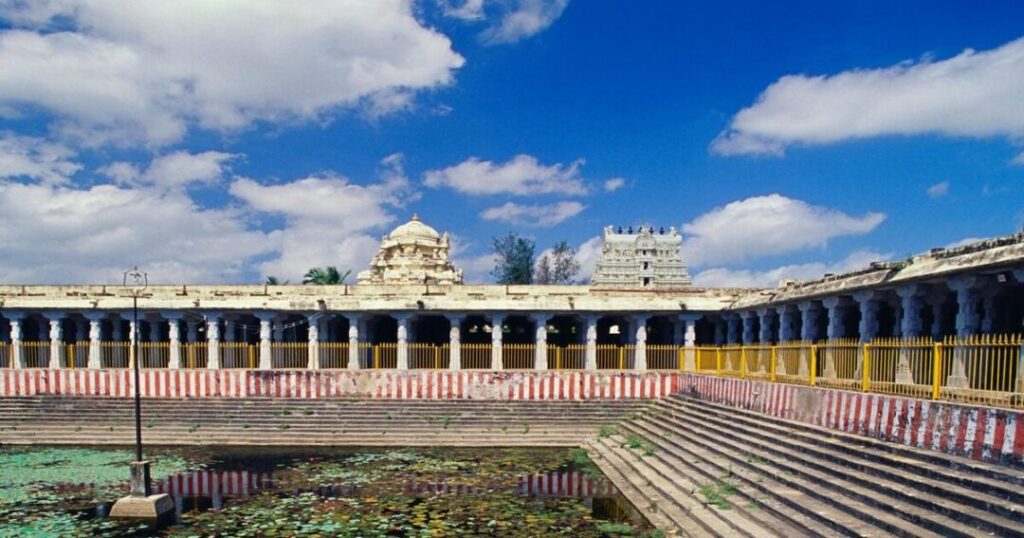
“Temple town” gets used loosely, but the actual temple town meaning is more specific than “a town that has a temple in it.” A genuine temple town is physically organized around its central shrine, following planning principles laid out in ancient texts like the Shilpashastras — the temple sits at the literal center, with streets radiating outward in concentric squares.
Madurai is the textbook example: its old city forms four concentric rectangles around the Meenakshi Amman Temple, connected by named streets — Chithirai, Avani Moola, Masi, and Veli — with a secondary grid of “mada veedhi” (temple streets) running perpendicular to them, leading directly to the temple’s entrances. [STAT: Madurai’s old city is structured as four concentric rectangular streets around the Meenakshi Amman Temple, a planning pattern still intact and walkable today.] Street width itself was meaningful — main processional streets stayed wide enough for temple chariots, while residential lanes narrowed the further they sat from the temple, with the whole layout also historically reflecting occupational and social hierarchy.
The other defining feature is the “car street” — a broad avenue built specifically for festival chariot processions, wide enough for enormous wooden temple cars to move through crowds once a year. Puri’s Bada Danda, discussed further down this list, is the most dramatic surviving example. Add a temple tank for ritual bathing, and you have the full architectural vocabulary of what actually makes a place a temple town, rather than just a town that happens to have one.
Top 10 Holy Places in India: Understanding the Sapta Puri
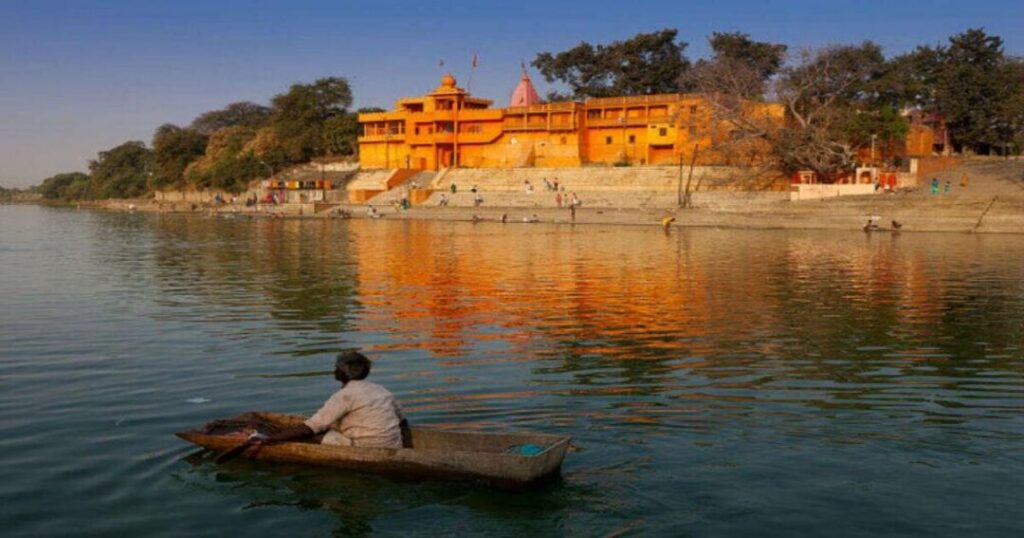
Much of what people mean by 10 sacred cities of India actually traces back to a specific, older concept: the Sapta Puri, or “seven cities,” also called the Sapta Moksha Puri — the seven cities whose pilgrimage is believed to grant moksha, liberation from the cycle of rebirth. If you’ve searched for 7 moksha places names in India, this is the list: Varanasi, Ayodhya, Mathura, Haridwar, Kanchipuram, Ujjain, and Dwarka.
Varanasi is the most famous of the seven, and exactly the reason this guide exists — to give the other six, plus India’s strongest South Indian temple towns, the deeper attention they deserve rather than being reduced to a footnote under Varanasi’s shadow.
Madurai: Tamil Nadu’s Temple City Built Around the Goddess
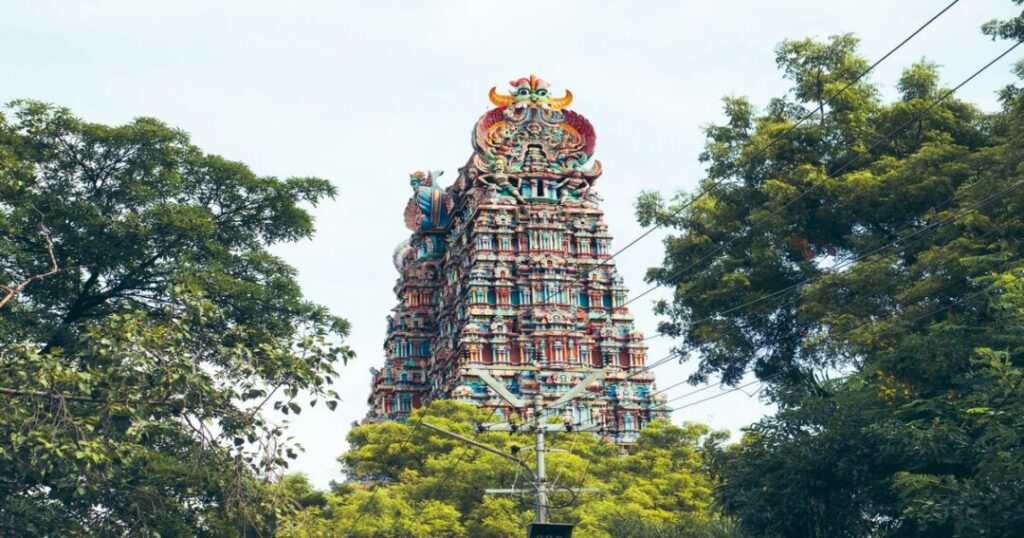
Madurai is arguably the most complete surviving example of a temple town in Tamil Nadu, and its Meenakshi Amman Temple is the reason the entire city grew in concentric rings around it. As the Madurai temple city of Tamil Nadu’s spiritual center, the temple complex itself is a maze of towering, intricately carved gopurams, its architecture substantially shaped by the Madurai Nayak kings who expanded it into the sprawling complex visitors walk through today. Beyond the temple, Madurai functions as a living demonstration of the temple-town planning concept covered above — walk its old-city streets and you’re tracing the same concentric grid laid out centuries ago.
Rameswaram: The Southernmost Jyotirlinga and a Char Dham Site
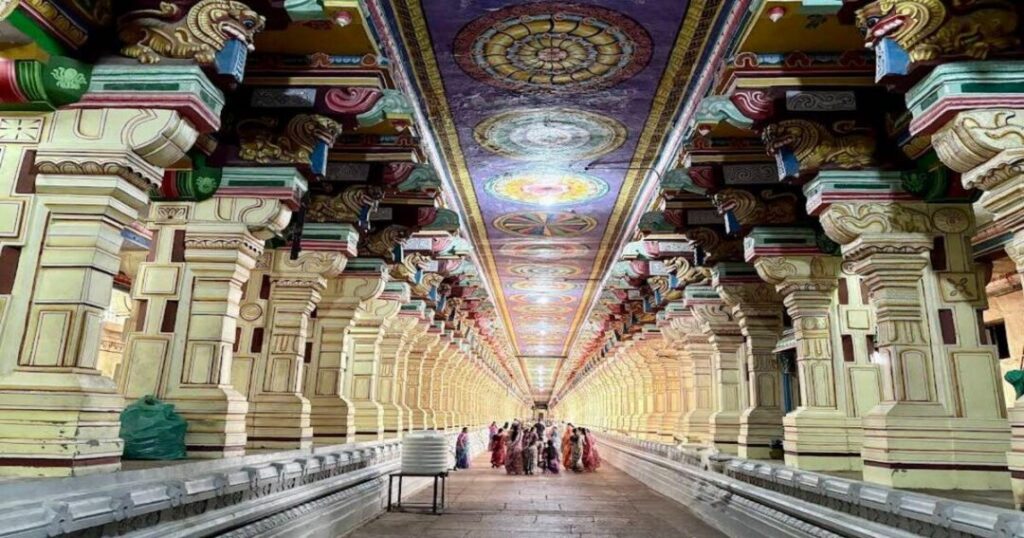
Rameswaram carries a double significance rare even among India’s major pilgrimage sites: its Ramanathaswamy Temple is both the southernmost of the twelve Jyotirlingas and one of the four Char Dham sites, alongside Badrinath, Puri, and Dwarka. Tradition holds that Rama, Sita, and Lakshmana worshipped Shiva here to atone for the war against Ravana in Lanka — making this island town in Tamil Nadu a rare point where the Ramayana and Shiva-centered Jyotirlinga traditions meet directly. Successive dynasties, from the Pandyas and Cholas to the Vijayanagara Empire, expanded and renovated the temple across centuries, giving it one of the longest, most corridor-heavy temple layouts in South India.
Also read: Places to Visit in Rameswaram: The Complete Guide to India’s Sacred Island
Tirupati: The Most-Visited Temple on Earth
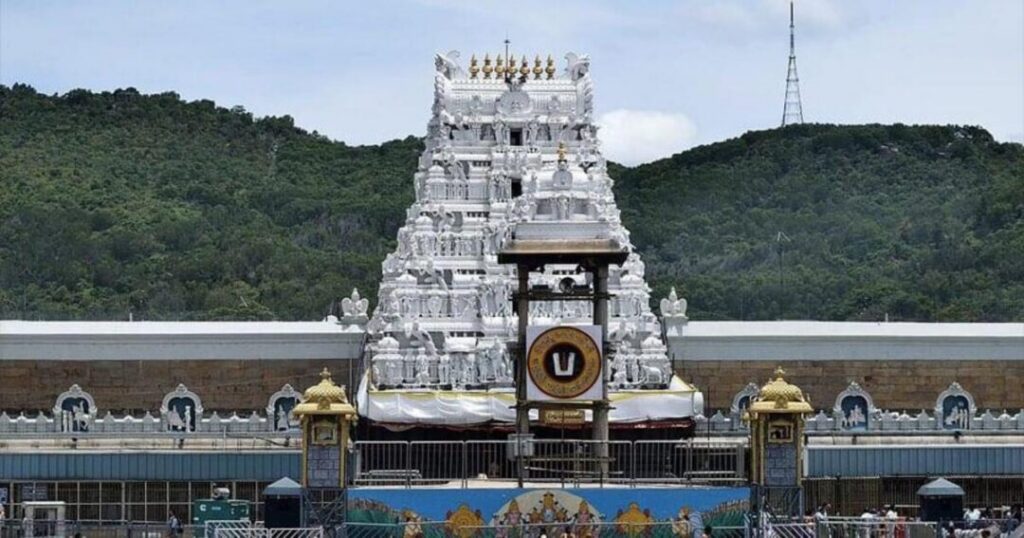
No list of India’s holy places is complete without Tirupati’s Venkateswara Temple, sitting atop the Tirumala hills in Andhra Pradesh — and the scale here is genuinely hard to overstate. The temple draws over 50 million pilgrims annually, many climbing the roughly 3,500 steps up Seshadri Hills on foot as an act of devotion. [STAT: The Venkateswara Temple at Tirupati receives over 50 million pilgrims annually, making it the most-visited religious site in the world — more than the Vatican, the Eiffel Tower, and the Great Wall of China combined.] Architecturally, it’s a striking example of Dravidian temple design with roots tracing back roughly to the 3rd century CE, and it also happens to be the wealthiest temple in India, a reflection of just how central it is to devotional life across South India and well beyond.
Kanchipuram: The City of a Thousand Temples
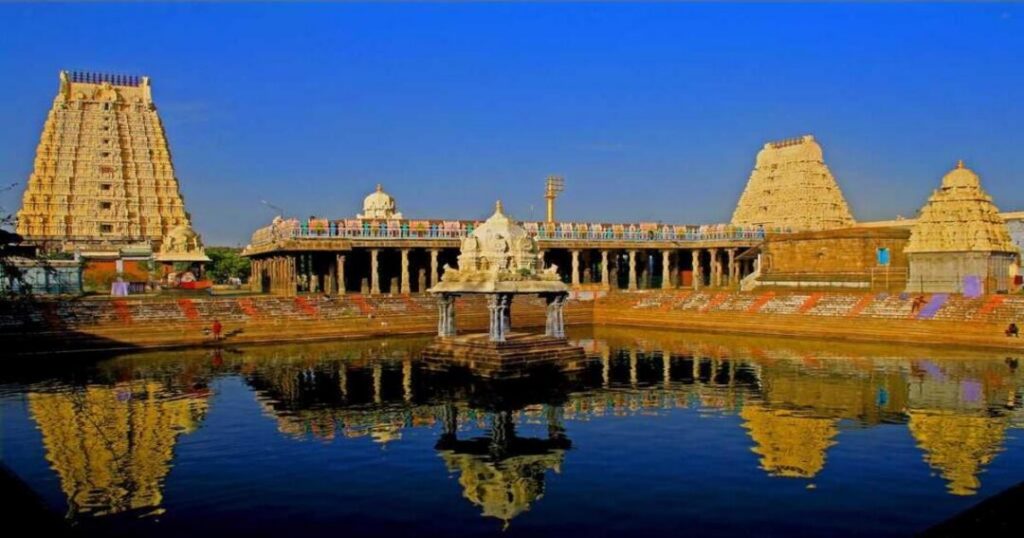
Kanchipuram earned its nickname honestly — under the Pallava dynasty, the city held more than 1,000 temples at its peak, built up progressively over roughly 1,500 years by the Pallavas, Cholas, and Vijayanagara rulers in turn. As both a temple town of South India and one of the seven Sapta Puri, it carries a rare double status: sacred enough to grant moksha by tradition, and historically significant enough to have served as capital for the Early Cholas as far back as the 2nd century BCE and later the Pallavas between the 6th and 8th centuries CE. Its temples dedicated to Goddess Kamakshi and various Shiva forms remain active pilgrimage sites today, alongside Kanchipuram’s equally famous silk-weaving tradition.
Ayodhya: Rama’s Birthplace and India’s Newest Great Pilgrimage Site
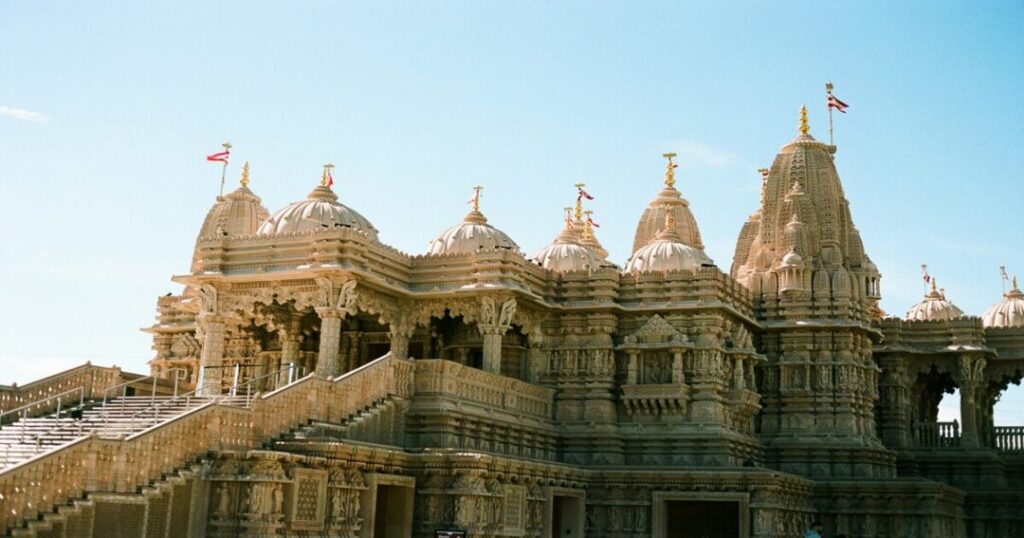
Ayodhya holds a place in the Sapta Puri as the traditional birthplace of Rama, central to the Ramayana and revered for centuries as one of Hinduism’s most sacred sites. In recent years, the city has also become the site of one of India’s newest major temples: the Ram Mandir, consecrated on January 22, 2024, in a ceremony attended by thousands. [STAT: Ayodhya’s Ram Mandir welcomed roughly 2.4 million visitors within its first 12 days of opening to the public in January 2024.] The pace of pilgrim visits since has been extraordinary, with projections suggesting it could become one of the most-visited pilgrimage sites in the world. For a city with such an ancient religious identity, Ayodhya’s current chapter is genuinely new — worth visiting with an understanding of both its deep tradition and its recent transformation.
Mathura: Krishna’s Birthplace
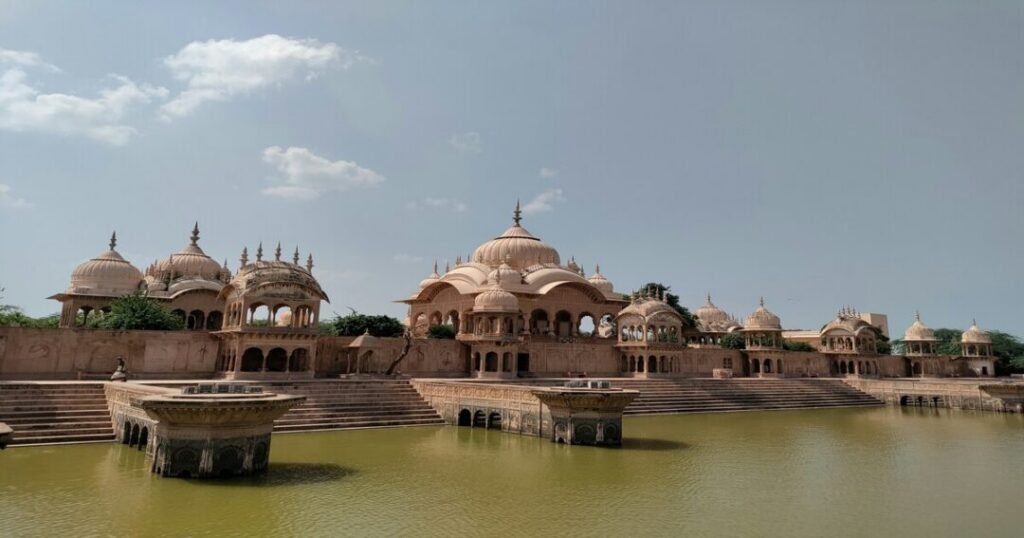
Mathura’s place among the Sapta Puri comes from its identity as Krishna’s birthplace, and its temples, ghats, and neighboring Vrindavan draw pilgrims year-round for exactly that reason. Rather than repeat everything here, this deserves its own deeper read — [INTERNAL LINK: Places to Visit in Mathura — The Complete Guide to Krishna’s Birthplace and Braj Bhoomi] covers Krishna Janmasthan, the Dwarkadhish Temple, Vrindavan’s essentials, and Mathura’s lesser-known Kushan-era art heritage in full.
Also read: Religious Places in India: The Complete Guide to India’s Most Sacred Sites
Haridwar: Where the Ganga Meets the Plains
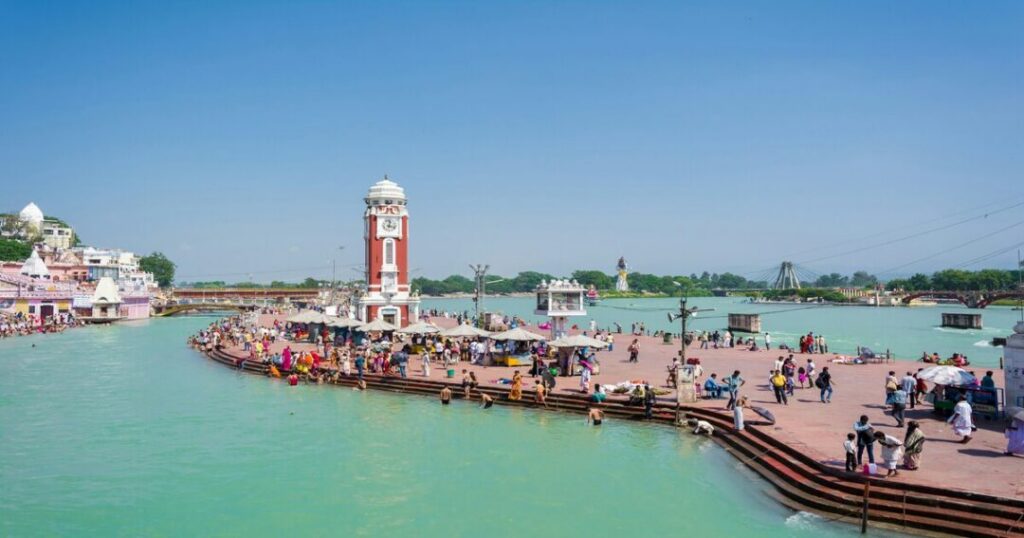
Haridwar earns its Sapta Puri status as the point where the Ganga descends from the Himalayas and reaches the plains for the first time — a genuinely symbolic threshold that shapes everything about how the city is experienced. Har Ki Pauri, its most significant ghat, is believed to mark that exact spot, and it draws enormous crowds for its nightly Ganga Aarti, when countless small lamps are set adrift on the river as the sun sets. As the gateway to the wider Char Dham Yatra route into the Himalayas, Haridwar functions as both a pilgrimage destination in its own right and the practical starting point for journeys much further north.
Ujjain: Home to the Mahakaleshwar Jyotirlinga
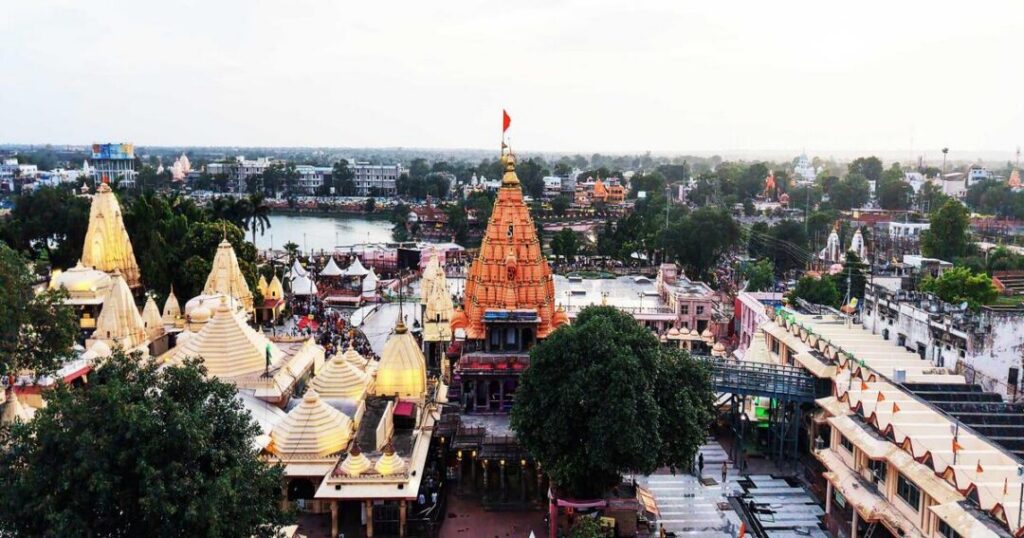
Ujjain, on the banks of the Kshipra River in Madhya Pradesh, holds its place among the Sapta Puri through the Mahakaleshwar Jyotirlinga — one of the twelve Jyotirlingas and among the most significant Shiva shrines in India. The city is also one of four sites hosting the Kumbh Mela, here known specifically as Simhastha, held once every twelve years and drawing pilgrims by the millions to bathe in the Kshipra during the auspicious window. Ujjain’s ancient identity as a center of astronomy and learning adds another layer entirely, distinct from its purely devotional significance.
Also read: 12 Jyotirlinga Across India: A Complete Spiritual and Travel Guide
Dwarka: Krishna’s Kingdom by the Arabian Sea
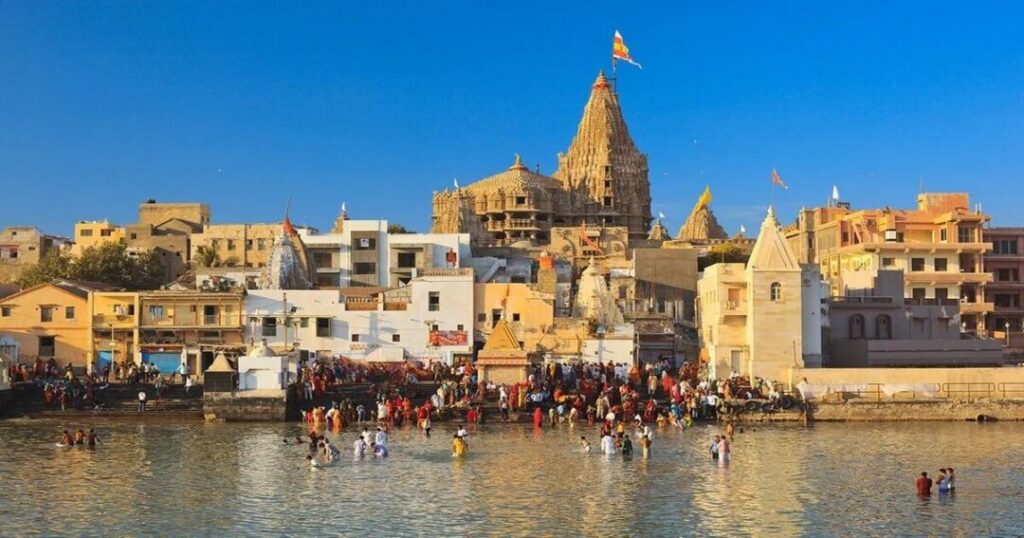
Dwarka holds a particularly poignant place in Krishna’s story: tradition holds this as the kingdom he established after leaving Mathura, and the Dwarkadhish Temple standing here today, right on the Arabian Sea coast, is believed to have origins going back roughly 2,000 to 2,500 years, though estimates vary across archaeological and traditional sources. [STAT: Estimates for the Dwarkadhish Temple’s origins vary from around 1,200 to 2,500 years depending on the source, with tradition crediting its earliest construction to Vajranabha, Krishna’s great-grandson.] It also holds Char Dham status, one of the four cardinal pilgrimage sites established under the Adi Shankaracharya tradition, making it one of the few cities in India carrying both Sapta Puri and Char Dham significance simultaneously.
Puri: Where the Car Street Comes Alive Every Year
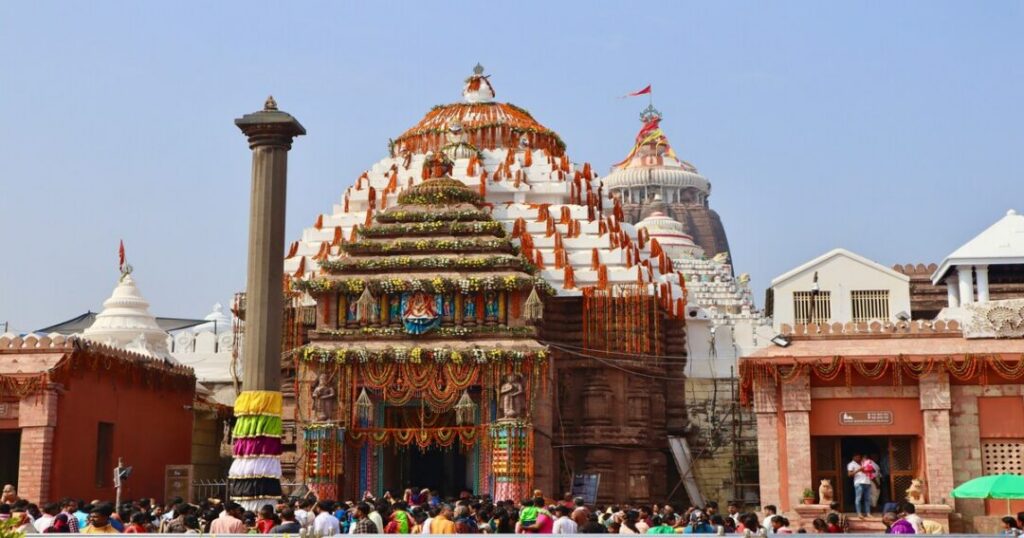
Puri belongs on this list for a very specific reason connected directly back to the temple-town concept explained earlier: Bada Danda, its Grand Road, is the clearest surviving example of a genuine “car street” anywhere in India. This roughly 3-kilometre avenue, recently widened to about 75 metres, connects the Jagannath Temple to the Gundicha Temple and transforms completely during the annual Rath Yatra, when Lord Jagannath’s chariot — around 45 feet high and fitted with sixteen 7-foot wheels — moves down it surrounded by immense crowds. [STAT: Puri’s Bada Danda, the ceremonial road used for the Rath Yatra, has been widened to roughly 75 metres to accommodate the enormous crowds and towering temple chariots.] As one of the four Char Dham sites, Puri’s religious weight matches its architectural significance — a rare case where a city’s urban form and its spiritual role are literally inseparable.
Also read: Tourist Places In Odisha: Temples, Beaches, Wildlife, And Hidden Gems
Best Time to Visit the Top 10 Holy Places in India
Timing varies by region. South India’s Madurai, Rameswaram, Tirupati, and Kanchipuram are most comfortable November through February, avoiding the region’s punishing pre-monsoon heat. Ayodhya and Mathura, both in the Gangetic plains, follow the same broad pattern — October through March for manageable temperatures. Haridwar works well most of the year outside peak monsoon, while Ujjain and Dwarka are best visited October through March as well. Puri’s coastal climate stays relatively temperate, though it’s worth planning specifically around the Rath Yatra dates (typically June or July) if that’s the experience you’re after, since accommodation books out well in advance.
Trying to sequence several of these into one trip without overloading your itinerary? NIVU AI inside the Explurger app can help weigh travel time between these cities against how much time you actually want to spend at each one, rather than cramming everything into a single rushed circuit.
Conclusion: Top 10 Holy Places in India
Varanasi will always anchor conversations about India’s sacred geography, but these top 10 holy places in India prove the map is far wider than one city — from Madurai’s living temple-town architecture to Puri’s car street coming alive once a year. Save the ones that fit your next trip to your Explurger Bucket List, and once you’ve made the journey, log each stop as an Explurge-in — your Automatic Travelogue will keep every sacred city mapped alongside the rest of your travels. Plan your own pilgrimage route with Explurger App.
FAQs About Top 10 Holy Places in India
2. What does "temple town" actually mean?
A genuine temple town is physically organized around its central shrine according to traditional planning principles, with streets laid out in concentric squares radiating from the temple. Madurai is the clearest surviving example, with four concentric rectangular streets surrounding the Meenakshi Amman Temple. A true temple town also typically includes a "car street" wide enough for festival chariot processions and a temple tank for ritual bathing.
3. What is the most significant temple town in Tamil Nadu?
Madurai is generally considered Tamil Nadu's most complete temple town, with its old city built in concentric rings around the Meenakshi Amman Temple. Kanchipuram and Rameswaram are close contenders — Kanchipuram for its historic density of over 1,000 temples, and Rameswaram for its dual status as a Jyotirlinga and Char Dham site.
4. Why is Tirupati considered the most-visited temple in the world?
The Venkateswara Temple at Tirupati receives over 50 million pilgrims annually, a figure that surpasses the combined annual visitors to the Vatican, the Eiffel Tower, and the Great Wall of China. Many pilgrims climb the roughly 3,500 steps up Tirumala hill on foot as a devotional act, and the temple is also the wealthiest in India.
5. What is the significance of Ayodhya's Ram Mandir?
Ayodhya is traditionally revered as Rama's birthplace and one of the seven Sapta Puri cities. Its newly consecrated Ram Mandir, opened to the public in January 2024, welcomed roughly 2.4 million visitors within its first 12 days, and current projections suggest it could become one of the most-visited pilgrimage sites in the world.
6. What makes Puri's Bada Danda unique?
Bada Danda, or Grand Road, is one of the clearest surviving examples of a temple town's "car street" — a roughly 3km avenue, recently widened to about 75 metres, built specifically to accommodate the massive wooden chariots used during Puri's annual Rath Yatra, when Lord Jagannath's chariot travels from the main temple to the Gundicha Temple.
7. Which South Indian temple towns should I prioritize on a single trip?
Madurai, Rameswaram, Tirupati, and Kanchipuram all sit within a manageable travel radius of each other in Tamil Nadu and Andhra Pradesh, making them realistic to combine on one well-planned trip. Each offers a genuinely different angle — Madurai for temple-town architecture, Rameswaram for its Jyotirlinga and Char Dham status, Tirupati for sheer pilgrimage scale, and Kanchipuram for historical density.