

1,148 Total Views
The Philippines is famous for its islands, its people, and its sunsets—but Philippines Food is where the real adventure begins. With over 7,600 islands, a history shaped by Malay, Spanish, Chinese, and American influences, and a cuisine built on bold, contrasting flavors—sour, salty, savory, and sweet all in one bowl—the Filipino table is one of Southeast Asia’s most underrated culinary destinations.
But knowing where to start when you land can be the difference between a truly memorable trip and settling for something safe. This guide covers 15 of the most famous Filipino dishes you need to try, organized by category—from legendary main dishes to daring street food delicacies, iconic desserts, and practical dining tips for first-time visitors.
Famous Food in Philippines — Must-Try Main Dishes
These are the dishes that define Philippine cuisine. Order at least three of these on any trip and you will understand what Filipino food is truly about.
1. Adobo — The National Food of Philippines
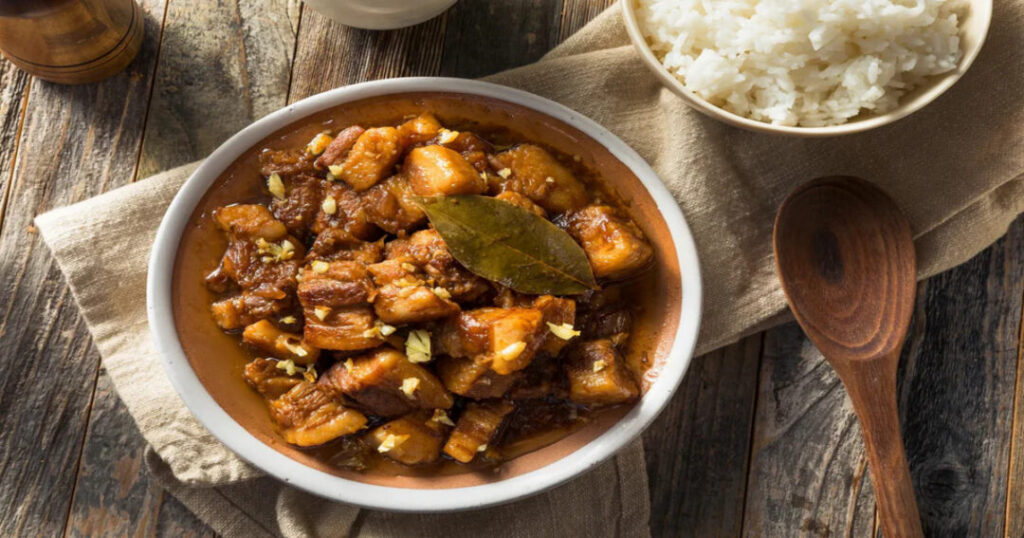
No dish represents the national food of the Philippines more completely than adobo. Chicken or pork (or both together) is marinated and slow-simmered in a combination of soy sauce, vinegar, garlic, bay leaves, and black peppercorns until the meat is fall-off-the-bone tender and the sauce is rich and deeply savory.
What makes adobo remarkable is its endless regional variation. In some provinces, it is dry-fried after simmering for a caramelized finish. In the Visayas, it might be made with coconut milk. In Cavite, it can be made yellow with turmeric. Every household has its own version, handed down across generations.
Order it with steamed white rice or garlic fried rice
Find it at virtually every Filipino restaurant, karinderya (local canteen), or home kitchen in the country
2. Sinigang
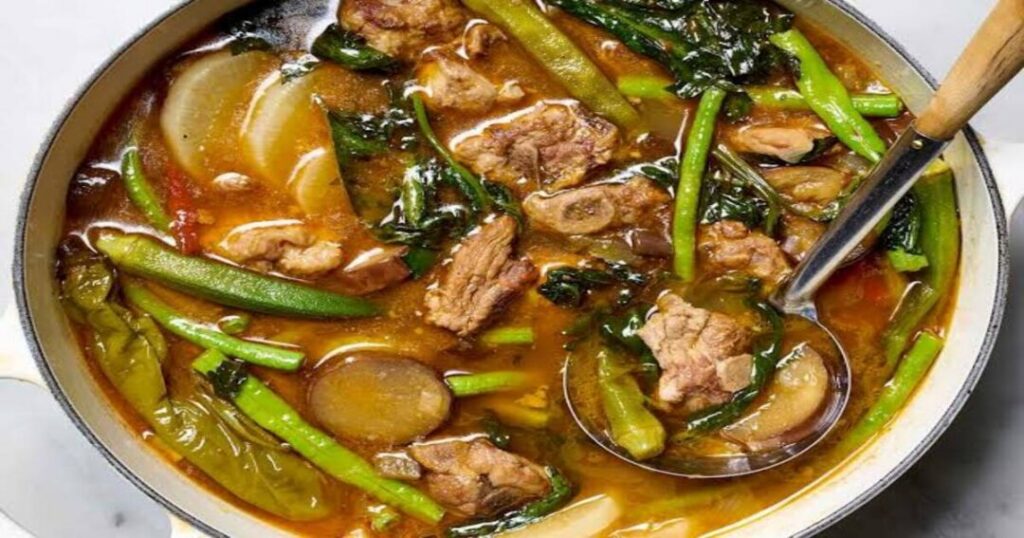
If adobo is the unofficial national dish, sinigang is its closest challenger. This is a sour, savory soup made with pork, shrimp, fish, or beef, cooked with vegetables like kangkong (water spinach), eggplant, okra, and daikon radish, and soured with tamarind—though green mango, calamansi, guava, or kamias are also used depending on the region.
The defining characteristic is the tang. It is sharp, bracing, and deeply comforting—particularly on a rainy afternoon. Sinigang is one of the Philippines’ oldest dishes, predating Spanish colonization.
Order it with steamed rice and a side of fish sauce with calamansi
Best version: Sinigang na baboy (pork sinigang) is the most traditional
3. Lechon — The Festive Centrepiece
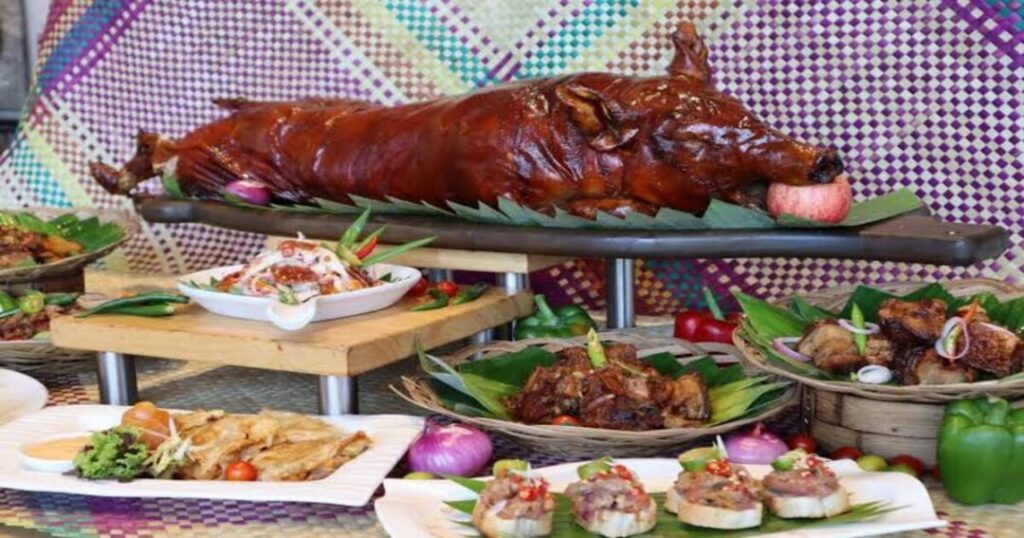
Lechon is a whole pig, skewered on a bamboo pole and spit-roasted slowly over hot coals for several hours until the skin turns crackly, mahogany-brown, and impossibly crisp while the meat inside stays juicy and tender. It is the centerpiece of every major Filipino celebration—fiestas, birthdays, and weddings—and its arrival at the table signals that something important is being marked.
Cebu lechon is widely considered the finest in the country, seasoned from the inside with lemongrass, garlic, spring onions, and native spices rather than covered in sauce. Luzon lechon is typically simpler in seasoning and served with a rich liver-based dipping sauce.
Where to try: Rico’s Lechon in Cebu; La Loma district in Manila
4. Kare-Kare
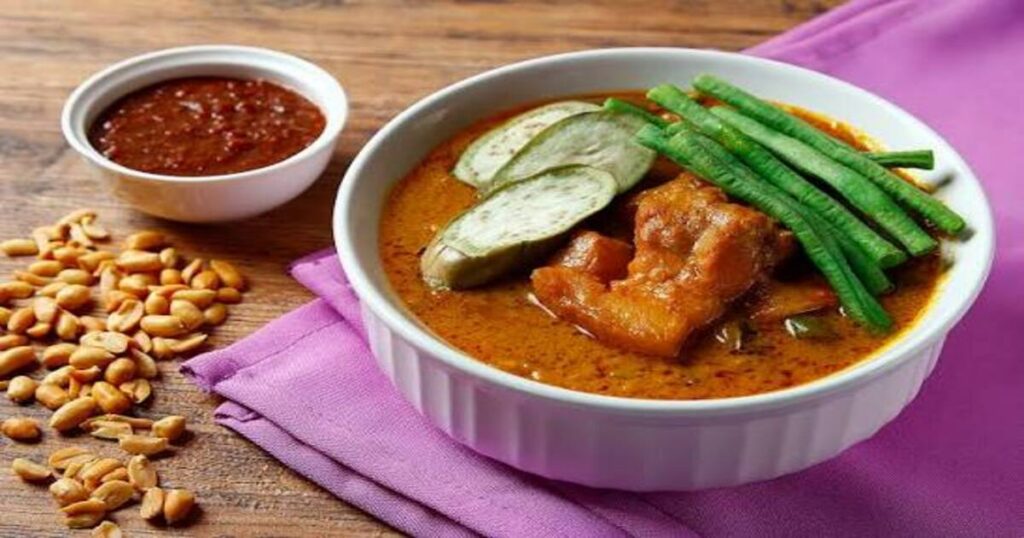
A rich, peanut-based stew featuring oxtail, tripe, or pork hock, slow-cooked with vegetables like eggplant, string beans, and banana blossom in a thick, nutty sauce made from ground peanuts. Kare-kare is always served with bagoong—fermented shrimp paste—on the side. The contrast between the creamy, mild stew and the salty, pungent shrimp paste is what makes this dish extraordinary.
Tip: Always stir a generous spoonful of bagoong into your kare-kare before eating. Do not skip this step.
5. Bicol Express
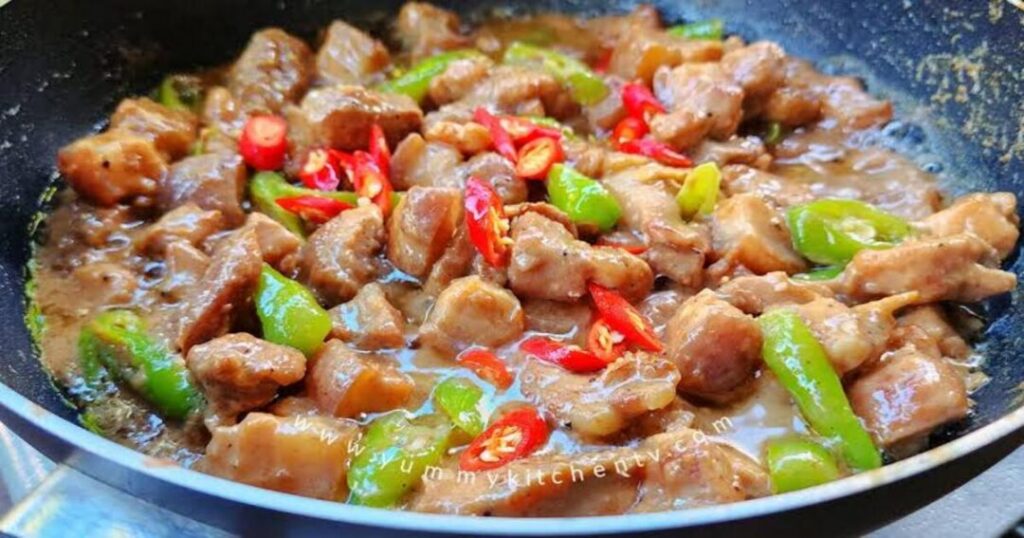
From the Bicol region in Southern Luzon, this is a fiery, creamy pork stew cooked in coconut milk with generous amounts of chili and shrimp paste. The heat level is real — Bicol’s cuisine is the spiciest in the Philippines, and Bicol Express lives up to that reputation. The coconut milk tames the chili just enough to make it addictive rather than punishing.
Named after the train that runs between Bicol and Manila, this dish is a favorite among Filipinos who want bold, unapologetic flavor.
Also read: Indonesian Food: Exploring the Rich Flavors of the World’s Largest Archipelago
6. Bulalo
A clear, slow-simmered beef shank soup where the collagen from the bones gradually melts into the broth, creating a deeply nourishing, almost silky liquid. The marrow — the real prize — is scooped out of the bone and spread over rice or stirred directly into the broth. Bulalo is particularly associated with the cool highland climate of Tagaytay, where a steaming bowl of it feels exactly right.
7. Chicken Inasal
Bacolod’s most famous export: chicken marinated in garlic, ginger, annatto oil, and calamansi (a local citrus), then grilled slowly over charcoal until the skin blisters and chars while the meat stays deeply juicy. The annatto gives the chicken its distinctive golden-orange color. It is always served with garlic rice and a small cup of the chicken’s drippings—pour this over the rice before eating.
Why Is Adobo Considered the Heart of Philippines Food?
The national dish of the Philippines is a topic Filipinos debate with genuine passion. Adobo is widely recognized as the de facto national dish, though it has never been officially designated as such by the Philippine government. Sinigang has its vocal advocates, too. But adobo holds the emotional edge.
The word “adobo” comes from the Spanish “adobar,” meaning to marinate or season. But the cooking technique itself predates Spanish colonization. Long before the Spanish arrived in the 16th century, early Filipinos were already preserving meat in vinegar and salt to keep it fresh in the tropical heat. The Spanish gave the dish its name, but the method is genuinely Filipino.
What makes adobo the national food of the Philippines is not just its taste but its universality. It is eaten at every income level, in every region, at breakfast, lunch, and dinner. It travels well, tastes even better the next day, and every Filipino family has a version they will passionately defend as the only correct one.
Philippines Street Food and Snacks You Cannot Miss
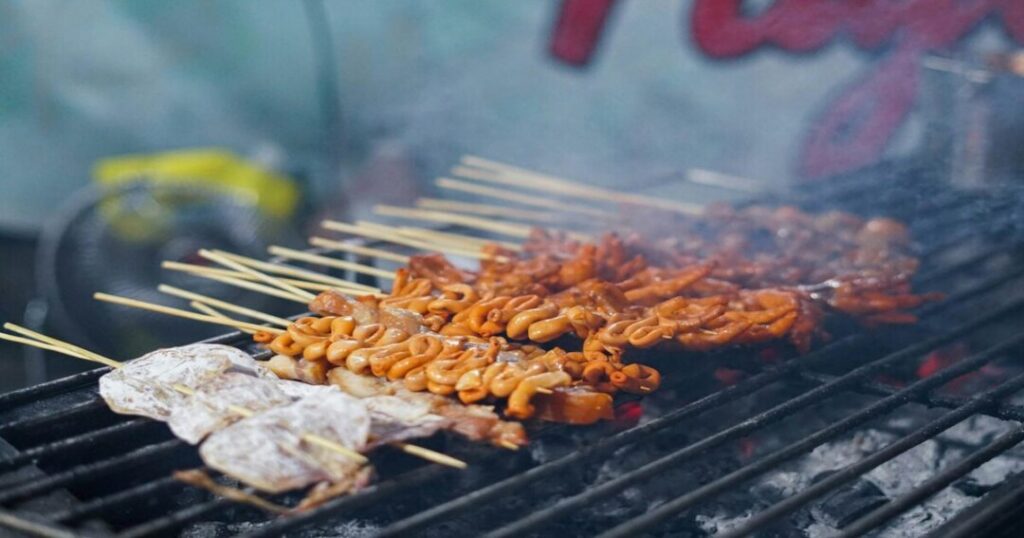
Street food is one of the most direct, honest ways to eat in the Philippines. Look for the barbecue stalls with the billowing smoke, the market stalls piled with fried snacks, and the push-cart vendors at night markets.
Sisig
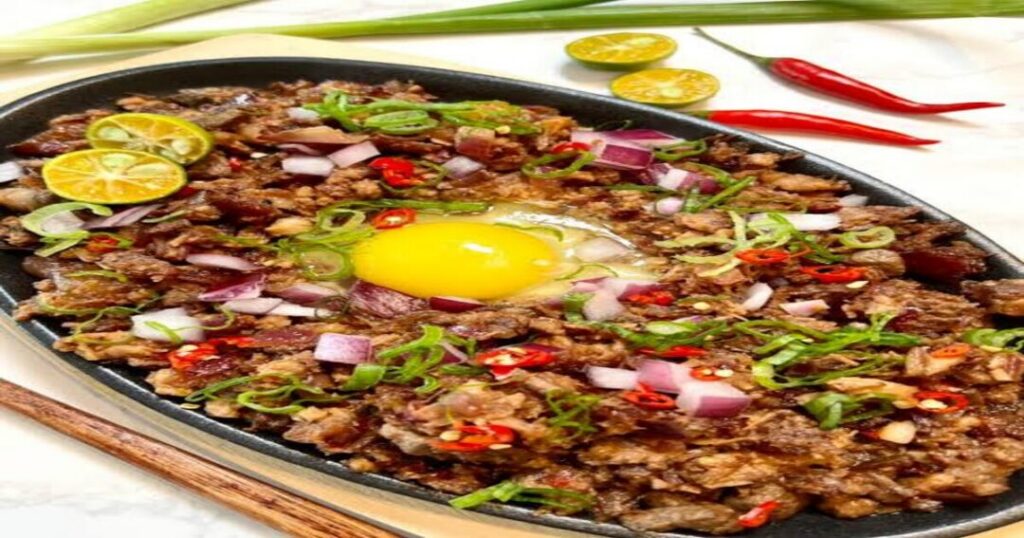
Originally from Pampanga Province, sisig is now one of the most beloved Filipino snacks nationwide. Chopped pig ears, cheeks, and belly are boiled, then grilled and pan-fried until crispy and smoky, seasoned with calamansi, chili, and onion; and served sizzling on a cast-iron plate. It is the perfect accompaniment to cold San Miguel beer and is best ordered at a roadside grill or casual restaurant.
Lumpia (Lumpiang Shanghai)
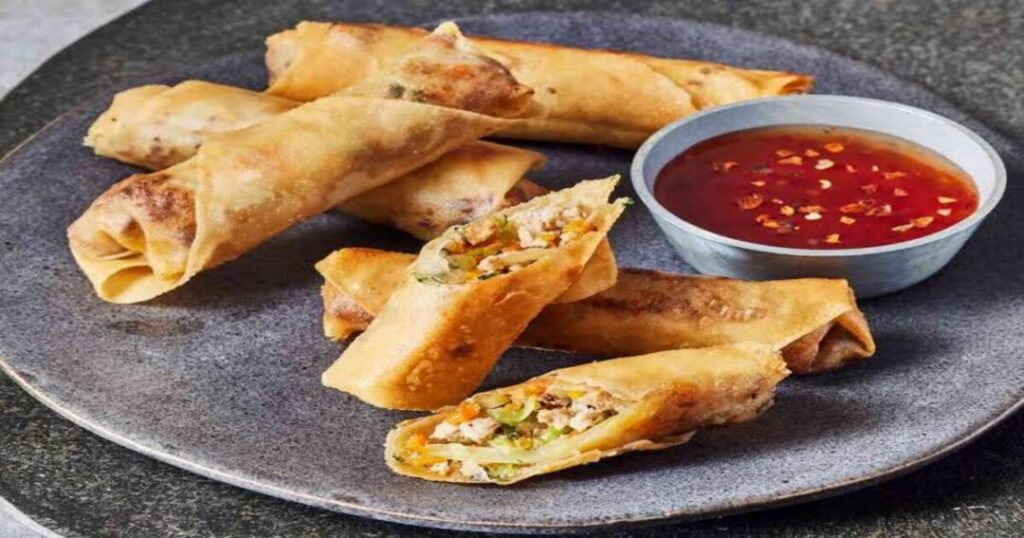
Evolved from Chinese spring rolls, lumpia is a deep-fried roll stuffed with seasoned ground pork (or a mix of pork and vegetables), served with a sweet chili or vinegar dipping sauce. It is a staple at every Filipino party, gathering, and street food market. The crispy shell gives way to a hot, savory filling—simple and completely satisfying.
Pancit
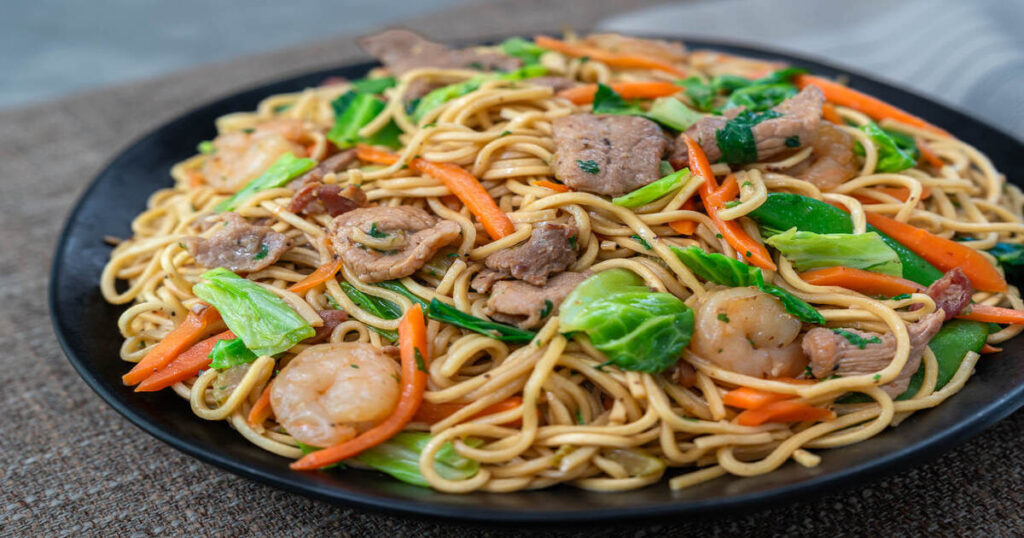
A broad category of noodle dishes with clear Chinese origins. Pancit bihon uses thin rice noodles stir-fried with soy sauce, chicken, and vegetables. Pancit Canton uses thicker egg noodles. Both are comfort food in the deepest sense—eaten at birthdays (noodles symbolize long life in Filipino tradition), family gatherings, and everyday meals.
Also read: Croatian Food: 15 Traditional Dishes You Must Try in Croatia
Chicharon
Deep-fried pork rinds that puff into airy, crunchy crackers. Chicharon is the Philippines’ answer to potato chips—sold in large bags at every supermarket and wet market, eaten as a snack, or crumbled over dishes as a garnish. The best versions are fresh from the fryer, almost weightless, and deeply porky.
Isaw
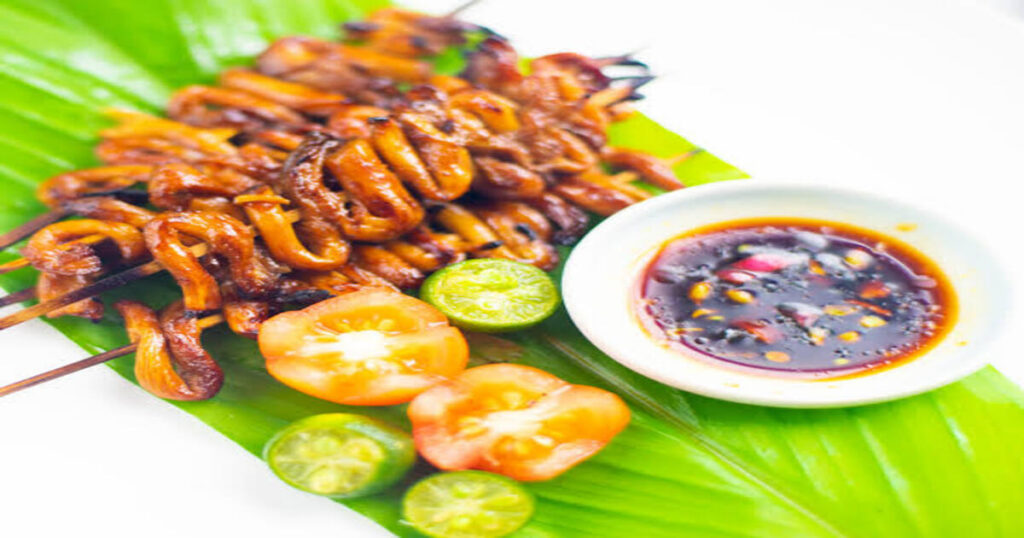
Chicken intestines cleaned, threaded onto skewers, and grilled over hot coals until charred and slightly crispy. Sold as street food outside schools, parks, and night markets, isaw is eaten dipped in spiced vinegar. It is a rite of passage for any visitor willing to eat beyond their comfort zone.
What Are the Most Adventurous Delicacies in Philippines Food?
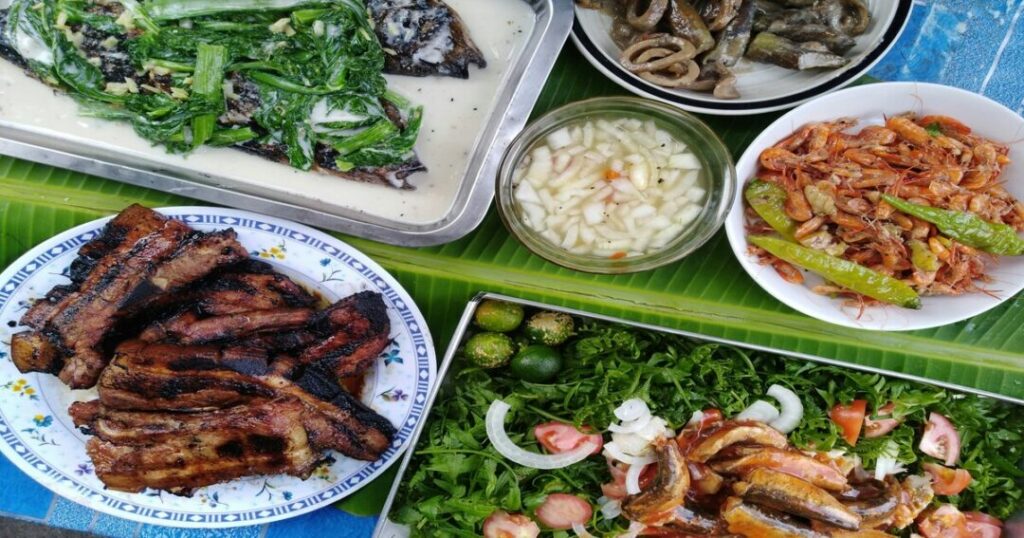
These are the dishes that separate the curious tourist from the cautious one. Both are famous delicacies in the Philippines, and both are genuinely worth trying.
Balut
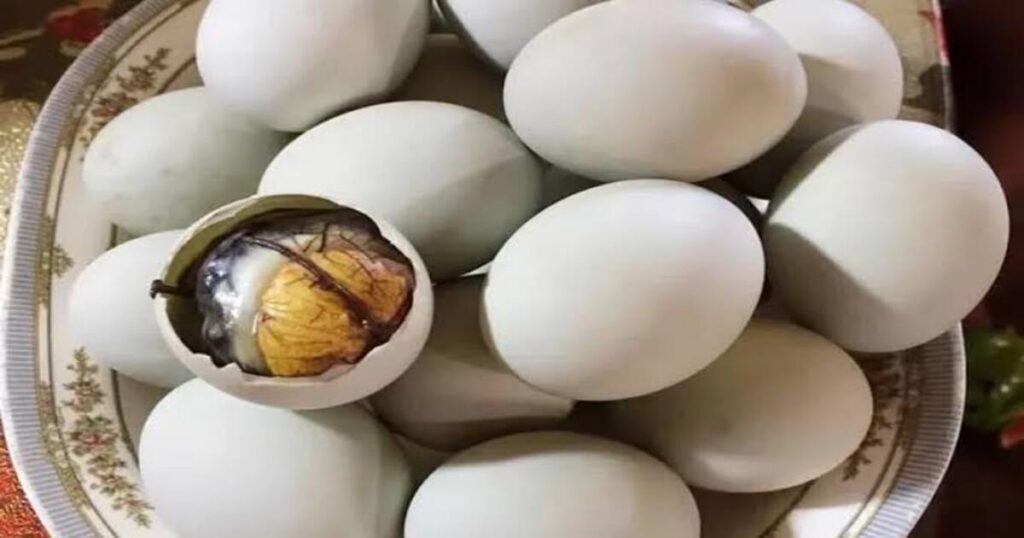
A fertilized duck egg incubated for around 17–21 days, then boiled and eaten straight from the shell—seasoned with salt, vinegar, or chili. The egg contains a partially developed embryo alongside a rich, savory broth. Balut is one of the Philippines’ most famous street food delicacies, found at night market stalls and street vendors across the country. The texture and flavor are uniquely their own—gamey, rich, and unlike anything in Western food culture. Order it from a warm street vendor, crack the top of the shell, sip the broth first, and then season and eat.
Dinuguan
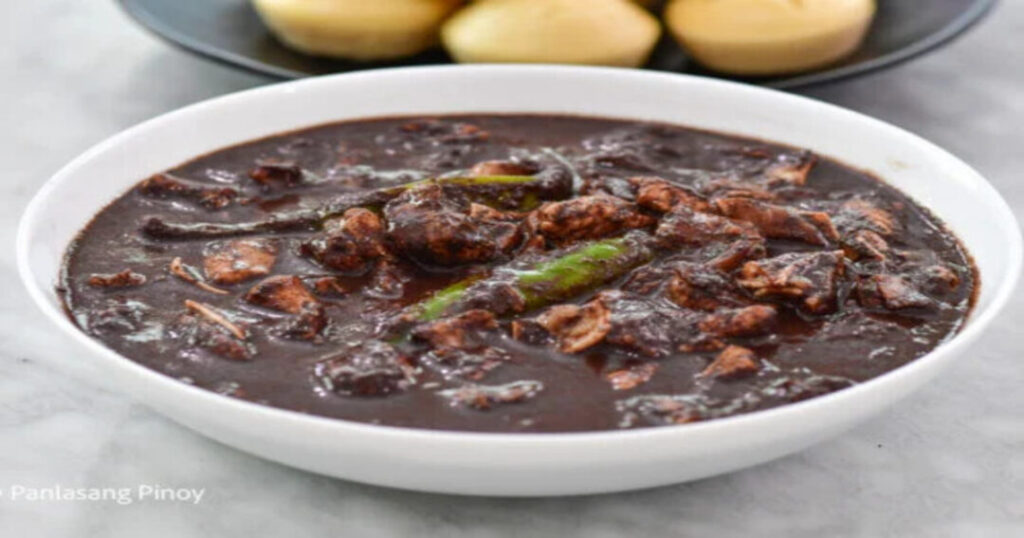
A dark, intensely savory stew made from pork offal (ears, intestines, and snout), slow-cooked in pig’s blood with vinegar, garlic, and chili. The blood turns the sauce a deep, glossy black. It sounds confronting but tastes like a rich, slightly tangy meat stew. It is almost always served with puto — soft steamed rice cakes—which balance the richness of the stew perfectly.
What Are the Most Famous Desserts in Philippines Food?
Filipino desserts are as bold and creative as the savory food—leaning on coconut, purple yam, and tropical fruit as their foundations.
Halo-Halo

Literally “mix-mix” in Tagalog, halo-halo is the Philippines’ most iconic dessert. A tall glass is layered with sweetened beans, jackfruit, coconut strips, jellies, sago pearls, and sliced banana, then piled with finely shaved ice, drizzled with evaporated milk, and topped with ube (purple yam) ice cream and a slab of leche flan. The ritual is simple: mix everything together before eating. Every region adds its own ingredients, so no two halo-halos are exactly the same.
Also read: Famous Nepalese Food: Discovering the Flavors That Define Nepal
Best time to eat: on any afternoon, but especially during the hot, dry season (March–May)
Leche Flan

The Filipino version of crème caramel—but richer. Made with egg yolks, condensed milk, and evaporated milk, steamed in an oval mold until silky-smooth, then unmolded to reveal a glossy amber caramel top. Filipino leche flan is denser and more intensely sweet than its French or Spanish counterparts. It is the dessert of celebrations and appears on every special occasion table.
Ube Desserts
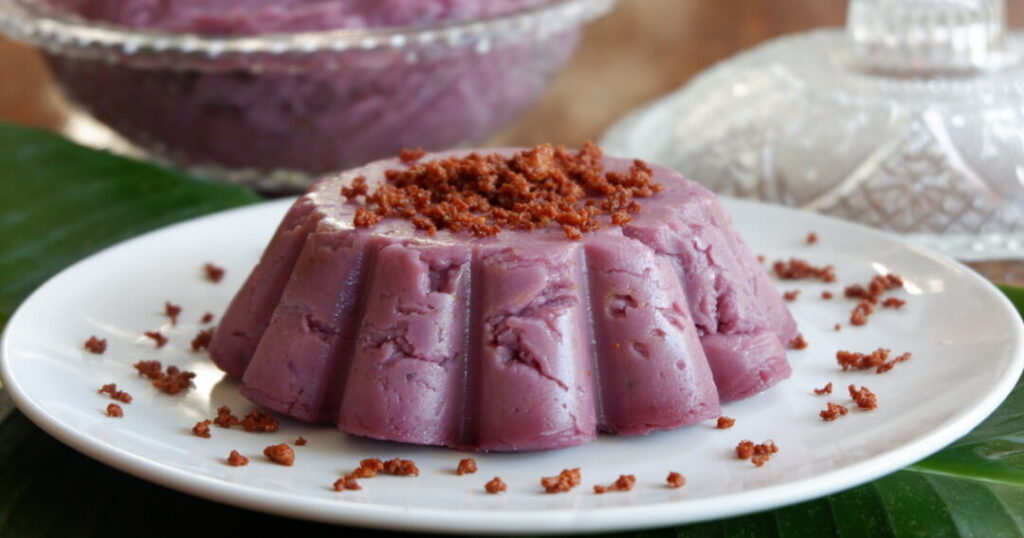
Ube is a purple yam native to the Philippines with a mildly sweet, earthy, vanilla-like flavor and a striking violet color. Filipinos have turned ube into everything: jam (halaya), ice cream, cakes, pastries, and chips. Ube halaya — a thick, sweet jam made from mashed purple yams, condensed milk, and butter — is one of the oldest and most beloved forms. If you see anything ube-flavored, try it.
Bibingka
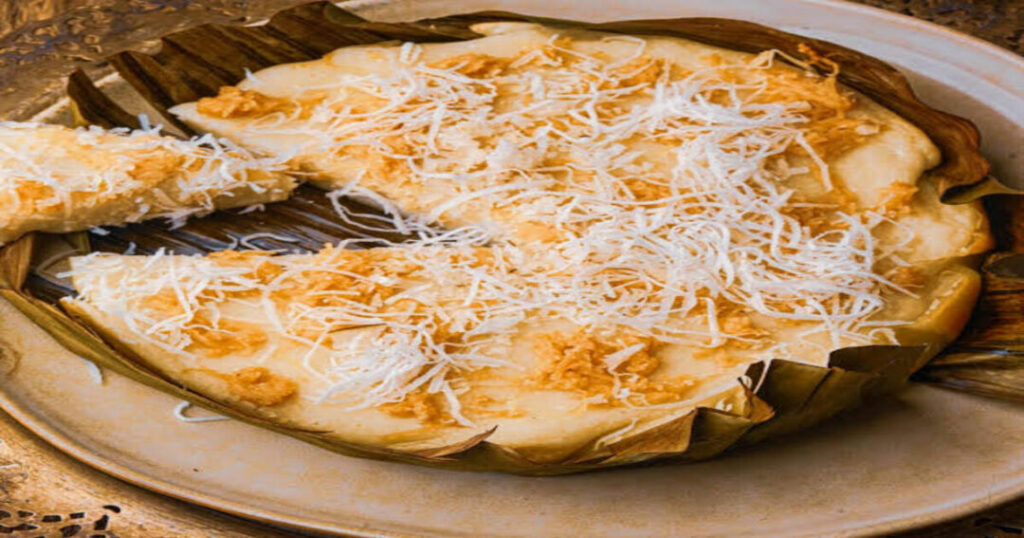
A soft, slightly chewy rice cake made from rice flour, coconut milk, eggs, and butter, baked traditionally in clay pots lined with banana leaves and topped with salted duck egg and cheese. It is quintessentially Filipino and quintessentially festive—sold outside the church during the Christmas season (Simbang Gabi, the nine-day dawn Mass), and eaten hot with a cup of salabat (ginger tea). The combination of sweet, salty, and slightly smoky from the banana leaf is unforgettable.
Philippines Food Dining Tips for First-Time Tourists
A few things to know before you sit down to eat:
Understand the dining culture
Filipino meals are communal. Dishes are placed in the center of the table and shared. Order several dishes for the table rather than one per person.
Elders begin the meal first—wait until the oldest person starts eating before you do. This is a deeply ingrained Filipino tradition.
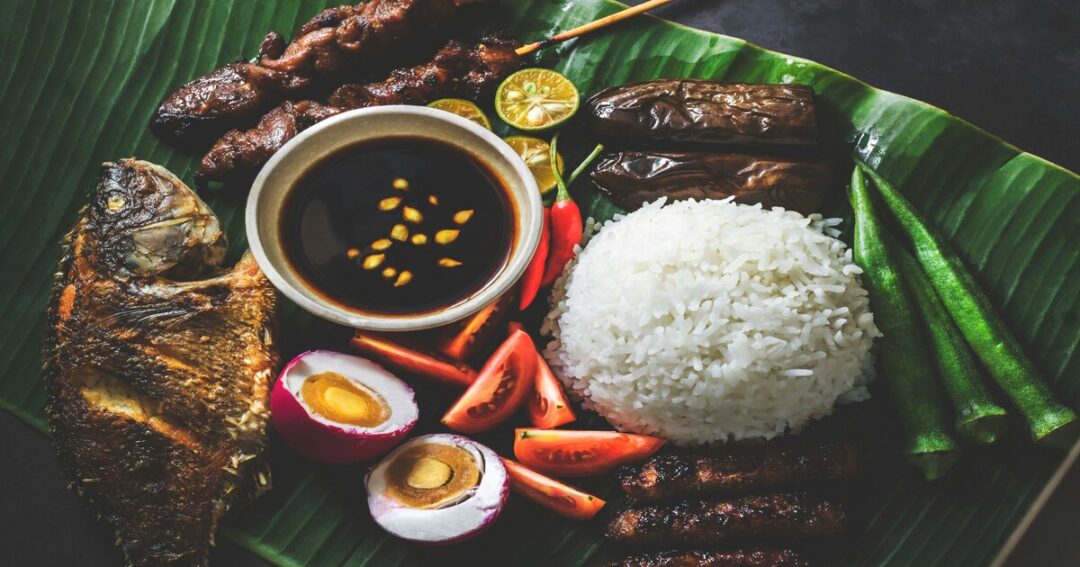
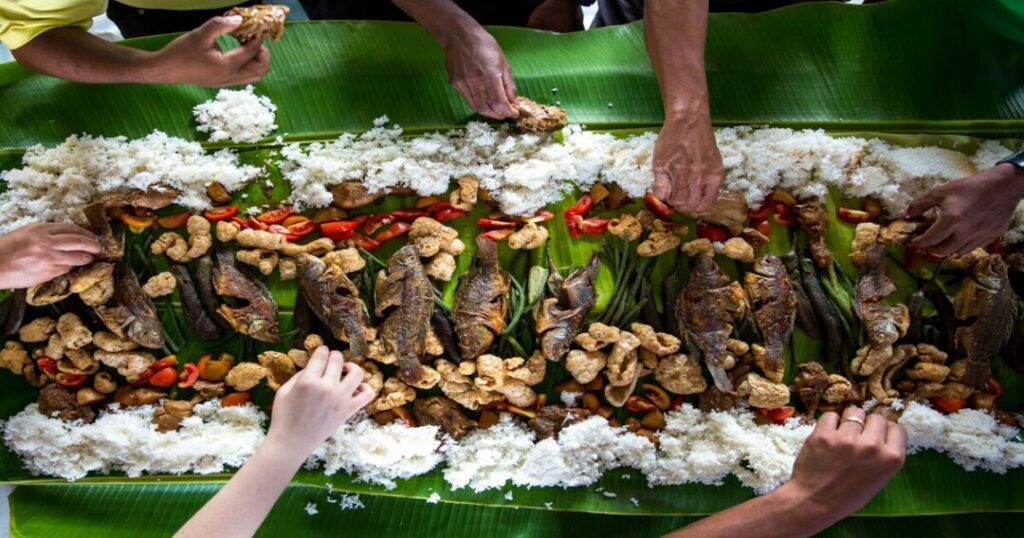
Kamayan meals (eating with hands on banana leaves spread with rice and dishes) are a traditional Filipino dining experience offered at many restaurants. Try one at least once.
Finishing your plate is considered a compliment to the host. Leaving food is often interpreted as a sign the meal was unsatisfactory.
Where to eat?
Karinderyas (local canteens with pre-cooked food displayed in trays) are the most authentic and affordable way to eat everyday Filipino food—point to what you want, and it is served with rice.
Paluto markets (bring-your-own-seafood markets where you pick your fish and choose how it is cooked) are excellent for fresh seafood, particularly in coastal cities.
Fine dining Filipino cuisine is genuinely world-class—Metro Manila’s dining scene has grown significantly since the arrival of the MICHELIN Guide Philippines in 2025.
Also read: e-Visa for Indians: Your Complete Guide to Visa-Free, Visa on Arrival & e-Visa Travel
Food safety basics
Stick to cooked food from busy, well-frequented stalls—high turnover means fresher food.
Drink only bottled or purified water. Do not use tap water, including for brushing teeth, in most areas outside Metro Manila.
If you have a sensitive stomach, approach raw dishes (like kinilaw, the Filipino-style ceviche) with care during your first few days.
Conclusion About Philippines Food
Philippines food is one of travel’s great underrated pleasures. It is a cuisine shaped by geography, colonization, trade, and five thousand years of island culture—bold in flavor, generous in portion, and deeply communal in spirit. Whether you are working through your first plate of adobo, cracking open a balut at a night market, or digging into a towering halo-halo on a warm afternoon, every meal tells you something true about where you are.
Here is what to remember:
- Start with the national dish: adobo is the entry point that makes everything else make sense
- Do not leave without trying lechon, sinigang, and halo-halo—these three dishes alone define Philippine cuisine
- Eat where locals eat—karinderyas and paluto markets serve the most authentic food in the country
- Be adventurous: the famous delicacies in the Philippines, like balut and dinuguan reward the curious
- Filipino cuisine is regional—eaten differently in Cebu, Manila, Bicol, and Ilocos
Log every dish, share every plate, and document your Philippines food journey on the Explurger app before your next meal.
Ready to eat your way through the islands? The Philippines’ food scene is waiting—and it is far better than anyone tells you before you go.
FAQs About Philippines Food
2. What are the most famous Filipino foods for tourists?
The most famous Filipino foods for first-time tourists are adobo, lechon, sinigang, halo-halo, and lumpia. Adobo is the essential entry point — a savory, slightly tangy braised meat dish found everywhere in the country. Lechon is the festive roasted whole pig, best experienced in Cebu. Sinigang is the sour tamarind soup that functions as daily comfort food. Halo-halo is the colorful shaved ice dessert that is impossible to miss in any Filipino city. Lumpia are crispy fried spring rolls available at street food stalls and restaurants across the archipelago.
3. Is Philippines food spicy?
Most Philippines food is not spicy by default. Filipino cuisine tends to be savory, sour, and salty rather than hot. The significant exception is the cuisine of the Bicol region in Southern Luzon, where dishes like Bicol Express (pork in coconut milk and chili) and laing (taro leaves in coconut milk and chili) are genuinely hot. Sisig can also be ordered with added chili. If you are sensitive to spice, simply ask before ordering anything described as from the Bicol region or with references to siling labuyo (bird's eye chili).
4. What is halo-halo in the Philippines?
Halo-halo, meaning "mix-mix" in Tagalog, is the Philippines' most iconic dessert. It is a tall glass layered with sweetened beans, jackfruit, coconut strips, jellies, sago pearls, and sliced banana, topped with finely shaved ice, drizzled with evaporated milk, and finished with ube (purple yam) ice cream and a slice of leche flan. The correct way to eat it is to stir everything together before taking the first spoonful. Every region of the Philippines has its own version with slightly different ingredients and toppings, making no two halo-halos exactly alike.
5. What is balut and should I try it?
Balut is a fertilized duck egg that has been incubated for 17–21 days, boiled, and eaten directly from the shell. The egg contains a partially developed embryo, a small amount of yolk, and a savory broth. It is one of the most famous delicacies in the Philippines and is widely available from street vendors and night markets. Whether to try it is entirely a personal choice — adventurous eaters consistently report that it tastes rich and savory rather than unpleasant. The recommended way to eat it is to crack the top of the shell, sip the warm broth first, add a pinch of salt or a dash of vinegar, then eat the contents.
6. What is Filipino breakfast food?
The classic Filipino breakfast is called "silog"—a compound word combining "sinangag" (garlic fried rice) with "itlog" (fried egg). The silog meal is served alongside a protein: longsilog has longganisa (sweet or savory pork sausage), tapsilog has tapa (cured beef), and bangsilog has bangus (milkfish). Filipino breakfast is hearty, rice-centric, and almost always savory. Pandesal—soft, slightly sweet bread rolls dusted with breadcrumbs and baked until golden—is also a quintessential morning staple, eaten warm from the bakery with butter, cheese, or peanut butter.