
572 Total Views
Ask any weekend trekker from Delhi or Dehradun which trek they would recommend for a first Himalayan experience and the answer comes up again and again: Nag Tibba. And for good reason. At 3,022 metres (9,915 feet), Nag Tibba is the highest peak in the Lesser Himalayan range of the Garhwal Division — close enough to Delhi for a Friday night departure, dramatic enough for genuine Himalayan views from the summit, and rewarding enough in every season that it works whether you’re showing up in December snow or March wildflowers. This is the Nag Tibba trek guide — from the key facts to the full itinerary, the overnight camp, and everything you need for a seamless Nag Tibba trip.
Important Things to Know Before the Nag Tibba Trek
How to Reach Pantwari (Nag Tibba Base Village)?
Pantwari is the starting point for the Nag Tibba trek — a small village in Tehri Garhwal district, approximately 85–100 km from Dehradun and 57–60 km from Mussoorie.
From Delhi (~350 km | 7–8 hours):
- By road: Delhi → Dehradun → Mussoorie → Kempty Falls → Nainbagh → Pantwari
- Overnight buses from ISBT Kashmere Gate Delhi to Dehradun; then taxi/cab to Pantwari (~2–3 hours from Dehradun)
- Most weekend trek groups depart Delhi on Friday evening, reach Pantwari by midnight–1 AM, and begin the trek at dawn Saturday
Nag Tibba — Key Facts
| Detail | Info |
| Nag Tibba height | 3,022 m (9,915 ft) |
| Nag Tibba elevation classification | Highest peak in the Lesser Himalayan region, Garhwal Division |
| Location | Jaunpur Range, Tehri Garhwal district, Uttarakhand |
| Base village | Pantwari village |
| Pantwari altitude | ~1,350–1,400 m (~4,430–4,600 ft) |
| Nag Tibba base camp altitude | ~2,900 m (9,514 ft) |
| Nag Tibba trek distance | ~10 km one way (Pantwari to summit) |
| Duration | 2 days / 1 night (standard); 1 day (fast day trek) |
| Difficulty | Easy to Moderate |
| Best season | Year-round; winter (Dec–Feb) for snow; spring (Mar–May) for flowers |
| Nearest city | Dehradun (~85–100 km) / Mussoorie (~57–60 km) |
| From Delhi | ~350 km / 7–8 hours by road |
The Name: Serpent’s Peak
Nag Tibba translates directly as “Serpent’s Peak” — Nag means snake or serpent in Sanskrit/Hindi, and Tibba is the local Garhwali word for hill or peak. The mountain is believed to be the abode of Nag Devta (the God of Snakes), and a small temple dedicated to Nag Devta sits at the summit — one of the first things you encounter at the top after the climb. The tradition of Nag Devta worship is ancient in the Garhwal hills, and the serpent deity is associated with fertility, protection, and the rain. Villagers from the surrounding area make regular offerings at the summit temple.
The Nag Tibba Range — named after the peak — is one of the three principal ranges of the Lesser Himalayas, along with the Dhauladhar and the Pir Panjal. It branches off from the Great Himalayas and runs southwest, forming a distinct fold in the Himalayan geography.
From Dehradun (~85–100 km | 2–3 hours):
- By road via Mussoorie road or the Nainbagh route
- Shared cabs and private taxis available from Dehradun city and Dehradun railway station
From Mussoorie (~57–60 km | 1.5–2 hours):
- The most scenic approach — through the Kempty Falls area and into the Tehri Garhwal valley
- Taxis available from Mussoorie taxi stand
Key note: Pantwari has a small parking area and a couple of dhabas. Most organised trek groups arrive Friday night and rest before beginning the trek at dawn.
Also Read: Dayara Bugyal Trek: The Complete Guide to Uttarakhand’s Most Beautiful Meadow
Nag Tibba Trek Distance & Route — Full Day-by-Day Itinerary
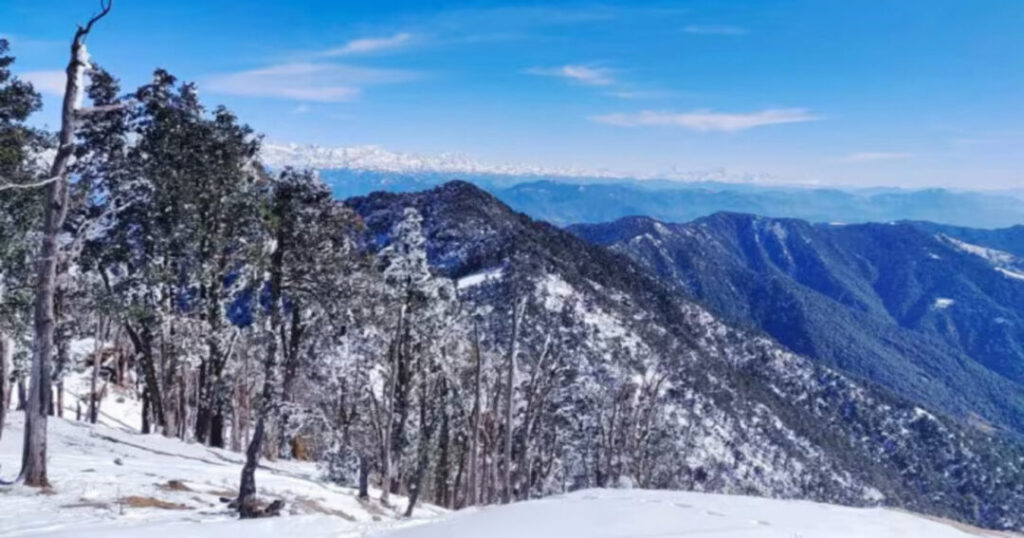
This is the most popular format for the Nag Tibba trip — a Friday night departure from Delhi, Saturday trekking to base camp, Sunday summit and return.
Day 1: Pantwari to Nag Tibba Base Camp
- Trek distance: ~7 km
- Altitude gain: ~1,550 m (Pantwari to base camp)
- Starting altitude: Pantwari ~1,350–1,400 m
- Ending altitude: Nag Tibba base camp ~2,900 m (9,514 ft)
- Trek time: Approximately 4–5 hours
The trek begins at Pantwari village and enters the oak and deodar forest almost immediately. The trail is well-marked and steadily ascending — passing through dense forest sections, a small settlement known as the Goat Village, and into rhododendron forest (brilliant red flowers in spring) before reaching the open camping ground. At approximately 7 km from Pantwari, the trail reaches the Nag Tibba base camp — a large, open meadow clearing in the forest at approximately 2,900 metres. This is the overnight camping ground, near the Nag Tibba temple area.
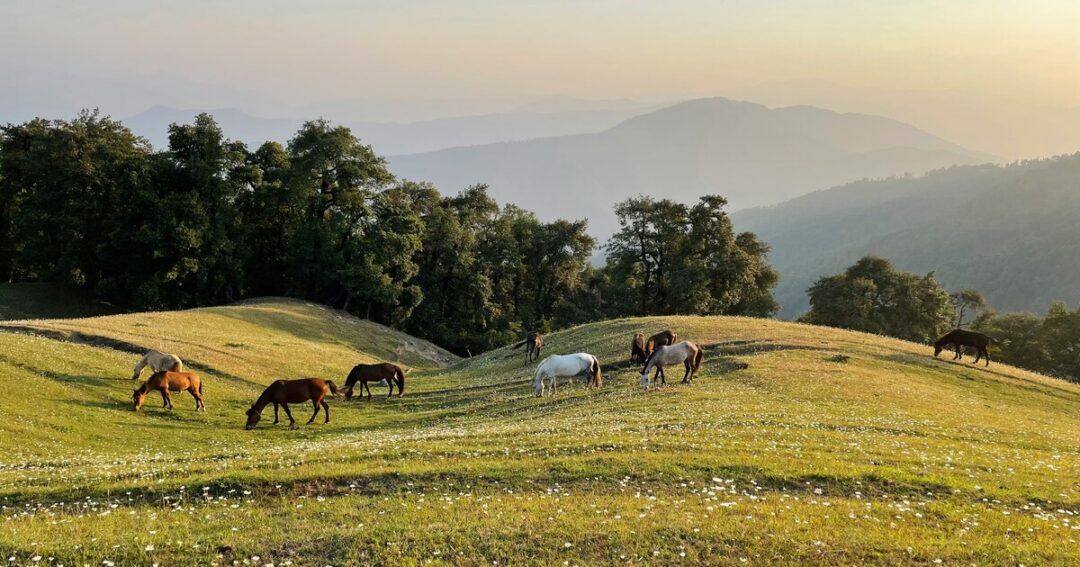
The base camp meadow is one of the finest camping spots on any lower Himalayan trek — the forest opens into a grassy clearing with views beginning to open toward the higher ridgeline above. In winter (December–February), the base camp is covered in snow and surrounded by snow-laden oak trees. In spring and summer, it is green and wildflower-covered.
- The trail from Pantwari passes through the hamlet of Nag Tibba village — a small cluster of houses about 4 km from the start — where water is available and a small tea stall may operate seasonally
- The trail enters increasingly dense rhododendron forest in the middle section — magnificent in March–April when in full flower
- Camp: Nag Tibba base camp (~2,900 m)
Day 2: Base Camp to Nag Tibba Summit and Return to Pantwari
- Summit push distance: ~3 km from base camp
- Altitude gain: ~122 m (base camp to summit)
- Starting altitude: ~2,900 m
- Summit altitude: 3,022 m (9,915 ft)
- Summit push time: 1–1.5 hours from base camp
- Descent to Pantwari: ~10 km, approximately 4–5 hours
The summit day begins early — most groups leave base camp at approximately 5–6 AM to reach the Nag Tibba peak for sunrise. The trail from base camp to the summit involves a steeper, more open ridgeline section — in winter, this section requires care as the path may be icy; microspikes recommended.
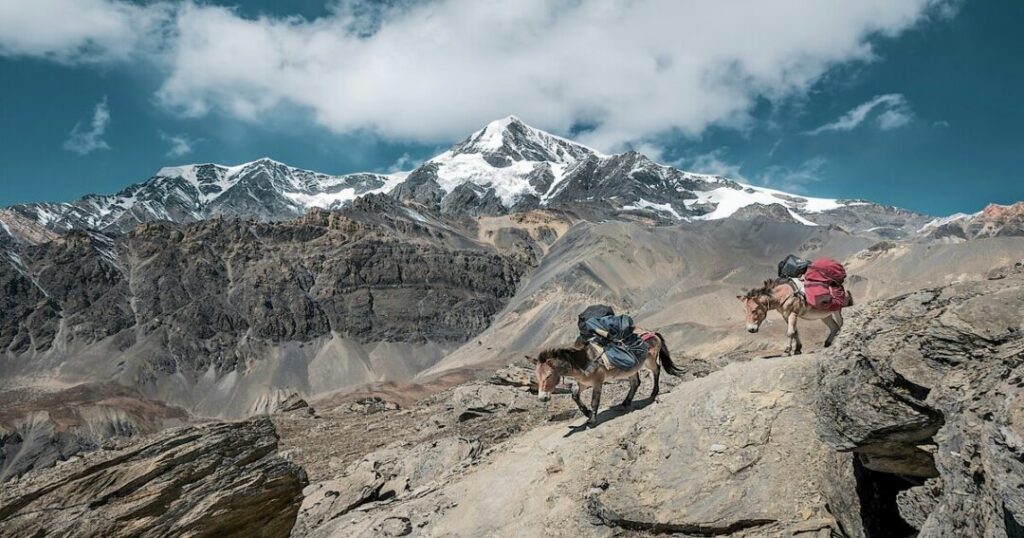
At the Nag Tibba summit (3,022 m / 9,915 ft): The summit is a broad, open area with the small Nag Devta temple at the top. The panoramic view on a clear day includes: Bandarpoonch, Swargarohini, Kedarnath, Gangotri, and the Chandrashila range — a sweeping visual of the Greater Himalayan wall that makes the entire two-day effort completely worthwhile.
- The Nag Devta temple at the summit is a small stone structure; respectful visitors leave offerings
- The summit view faces northeast — cloud formation builds from midday; an early start is strongly recommended
- After the summit, the descent all the way to Pantwari is completed the same day
Descent: The full descent from the summit back to Pantwari is approximately 10 km and takes 4–5 hours. Most groups reach Pantwari by 1–2 PM, allowing time to drive back to Dehradun or Delhi.
Also Read: Kedarkantha Trek: The Complete Guide to India’s Best Winter Snow Trek
The Nag Tibba Night Trek — What You Need to Know?
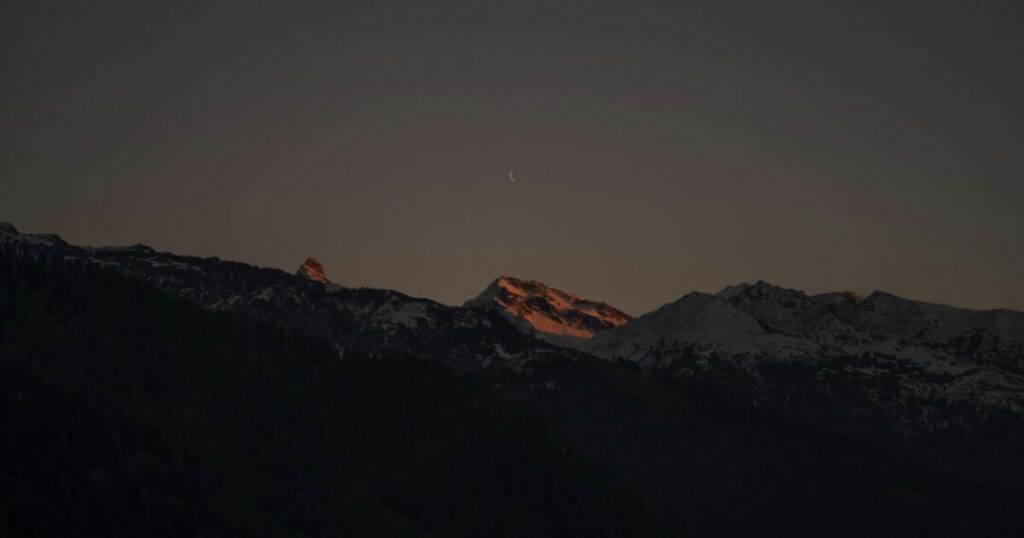
The Nag Tibba night trek is one of the most popular formats for Delhi weekend trekkers — a Friday evening departure that gets you to the trail after dark for a moonlight or headlamp ascent. Here is exactly what this looks like:
The standard night trek format:
- Depart Delhi Friday evening (~6–8 PM)
- Drive through the night, reaching Pantwari at approximately 1–2 AM Saturday
- Brief rest/tea at Pantwari, then begin the ascent by 2–3 AM
- Reach Nag Tibba base camp by approximately 5–6 AM as dawn breaks
- Continue to the summit for sunrise (~6:30–7 AM)
- Descend to Pantwari and drive back to Delhi, reaching by Sunday evening
What makes the night trek special: The forest trail at 3 AM — the sounds of the mountain at night, the headlamps making circles on the deodar trunks, the gradual appearance of the Himalayan ridgeline against a lightening sky as you approach the summit — is a genuinely different experience from a daytime trek. The sunrise from the Nag Tibba peak after a night approach is one of the most rewarding experiences on any lower Himalayan trek.
Safety considerations for the Nag Tibba night trek:
- Headlamps are mandatory — not phones, actual headlamps with spare batteries; the trail has no lighting
- The trail is well-worn and clearly marked, but darkness significantly increases disorientation risk — go with a group and a local guide
- Winter night temperatures at Pantwari (~1,350–1,400 m) can drop to near freezing — carry warm layers; at base camp (~2,900 m) temperatures drop much further
- Do not attempt the night trek in heavy rain or immediately after snowfall — the trail becomes slippery and dangerous
- Inform someone of your itinerary and expected return before departing
What is the best time for the Nag Tibba Trek?
One of the great things about the Nagtibba trek is that it genuinely works in every season — each offers a different version of the same mountain.
| Season | Conditions | Recommended? |
| December to February (Winter) | Snow-covered trail, sub-zero temperatures at night at base camp, microspikes needed above base camp, spectacular winter landscape | ✅ Most popular season — the snow experience |
| March to May (Spring) | Rhododendron and wildflowers on the trail, clear skies, comfortable temperatures, excellent summit views | ✅ Excellent — best for first-timers |
| June to September (Monsoon) | Lush green, some rain, leeches on the trail, reduced visibility on the summit | ⚠️ Manageable but reduced visibility |
| October to November (Autumn) | Post-monsoon clarity, crisp air, excellent summit views, stable trail | ✅ Excellent — best mountain visibility |
The most popular window is December to February — the snow on the trail and at base camp (~2,900 m) makes this feel like a proper Himalayan trek, even though the difficulty level remains accessible. Many trekkers specifically seek out the Nag Tibba night experience in January when fresh snow makes the moonlit trail extraordinary.
Practical Tips for Nag Tibba Trek — Gear, Fitness & AMS
Gear List
Essential for winter (December–February):
- Footwear: Waterproof trekking shoes or boots with ankle support; thick wool socks
- Microspikes: Strongly recommended above base camp when snow is present; the summit approach can be icy
- Layers: Thermal base layer, fleece, down jacket — temperatures at base camp (~2,900 m) can drop to -5°C to -10°C in deep winter
- Sleeping bag: Rated to -10°C for winter camping at the base camp
- Headlamp: Mandatory for night treks; carry spare batteries
- Gloves, balaclava, neck gaiter: Essential for pre-dawn summit pushes in winter
Essential for all seasons:
- Water: 2 litres minimum from Pantwari; refill at Nag Tibba village (approximately 4 km from Pantwari)
- Trekking poles: Recommended for the descent
- Sunscreen and UV sunglasses: The open ridge above base camp has significant sun exposure
Fitness Requirement
The Nag Tibba trek difficulty is rated easy to moderate — one of the most accessible Himalayan treks for beginners. The trail is approximately 10 km one way with a total altitude gain of approximately 1,600–1,700 m from Pantwari to summit. While the total altitude gain sounds large, it is spread across a full day’s walking with steady gradients. A person who is comfortable walking 8–10 km on flat terrain and who does moderate physical activity can complete this trek without prior trekking experience.
AMS
At Nag Tibba, altitude of 3,022 m, the risk of Acute Mountain Sickness is present but relatively low — the trail starts at ~1,350 m and ascends gradually over a full day. However:
- Allow adequate rest at Pantwari before beginning if arriving after a long overnight drive
- If you experience persistent headache, nausea, or dizziness above base camp, do not push to the summit — descend immediately
- The gradual altitude gain helps with natural acclimatisation
Conclusion about Nag Tibba Trek
The Nag Tibba trek earns its reputation as India’s best weekend trek for one simple reason: it delivers a genuine Himalayan summit experience — snow in winter, wildflowers in spring, a sweeping Himalayan view from the top — within reach of a Delhi Friday evening departure.
Quick recap:
- Nag Tibba height: 3,022 m (9,915 ft) — highest peak in the Lesser Himalayas, Garhwal
- Base village: Pantwari (~1,350–1,400 m), ~85–100 km from Dehradun
- Nag Tibba trek distance: ~10 km one way; ~20 km round trip
- Duration: 2 days/1 night (standard); 1 day (fast)
- Nag Tibba base camp: ~2,900 m — open meadow, overnight camping, near Nag Tibba temple
- Total altitude gain: ~1,600–1,700 m (Pantwari to summit)
- Best for snow: December–February (microspikes needed above base camp)
- Best for views: October–November
- Night trek: Friday night departure from Delhi → dawn summit → back Sunday evening
Download the Explurger app to log your Nag Tibba trek, discover what other weekend trekkers recommend for current trail conditions, and plan your next Himalayan adventure.
The summit temple is already there. The Himalayan wall is already waiting. The only question is which Friday night you’re leaving.
FAQs about Nag Tibba Trek
2. What is the Nag Tibba trek distance?
The total Nag Tibba trek distance is approximately 10 km one way from Pantwari village to the summit. This breaks down as: Pantwari to Nag Tibba base camp (~7 km, 4–5 hours), and base camp to summit (~3 km, 1–1.5 hours). The complete round trip from Pantwari to summit and back is approximately 20 km, completed over the standard 2-day/1-night format.
3. What is the best time for the Nag Tibba trek?
The Nag Tibba trek is a year-round destination. December to February is the most popular window — snow-covered trail and base camp (~2,900 m), sub-zero temperatures, microspikes needed. March to May is best for wildflowers and comfortable first-timer conditions. October to November offers post-monsoon clarity and the best summit views. Monsoon (June–September) is manageable but visibility on the summit can be reduced.
4. How long does the Nag Tibba trek take?
The standard Nag Tibba trip format is 2 days and 1 night — Day 1: Pantwari to base camp (~7 km, 4–5 hours); Day 2: base camp to summit and return to Pantwari (~13 km, 5–7 hours total). A fast day trek (one day, no overnight) is possible for very fit trekkers. Most weekend trekkers from Delhi do the 2-day format departing Friday evening.
5. Is the Nag Tibba trek good for beginners?
Yes — the Nag Tibba trek is one of the most recommended first Himalayan treks. The trail is well-marked, the summit altitude (3,022 m) is manageable, and it is available year-round. The Nag Tibba trek distance (10 km one way) is achievable in a single day at a steady pace. The winter version requires microspikes and warm gear but involves no technical climbing.
6. What do you see from the Nag Tibba peak?
From the Nag Tibba peak (3,022 m) on a clear day, the visible peaks include: Bandarpoonch, Swargarohini, Kedarnath, Gangotri, and the Chandrashila range. A small Nag Devta temple at the summit is the focal point. The sunrise view on a clear winter morning — with the Himalayan peaks catching the first light above a sea of clouds — is one of the finest easily accessible Himalayan summit experiences in India.